Blog

  • New Sparta: Greenland–Denmark

    New Sparta: Greenland–Denmark

    By Sefa Yürükel

    Europe’s Strategic Balance Against the United States as the New Persian Empire

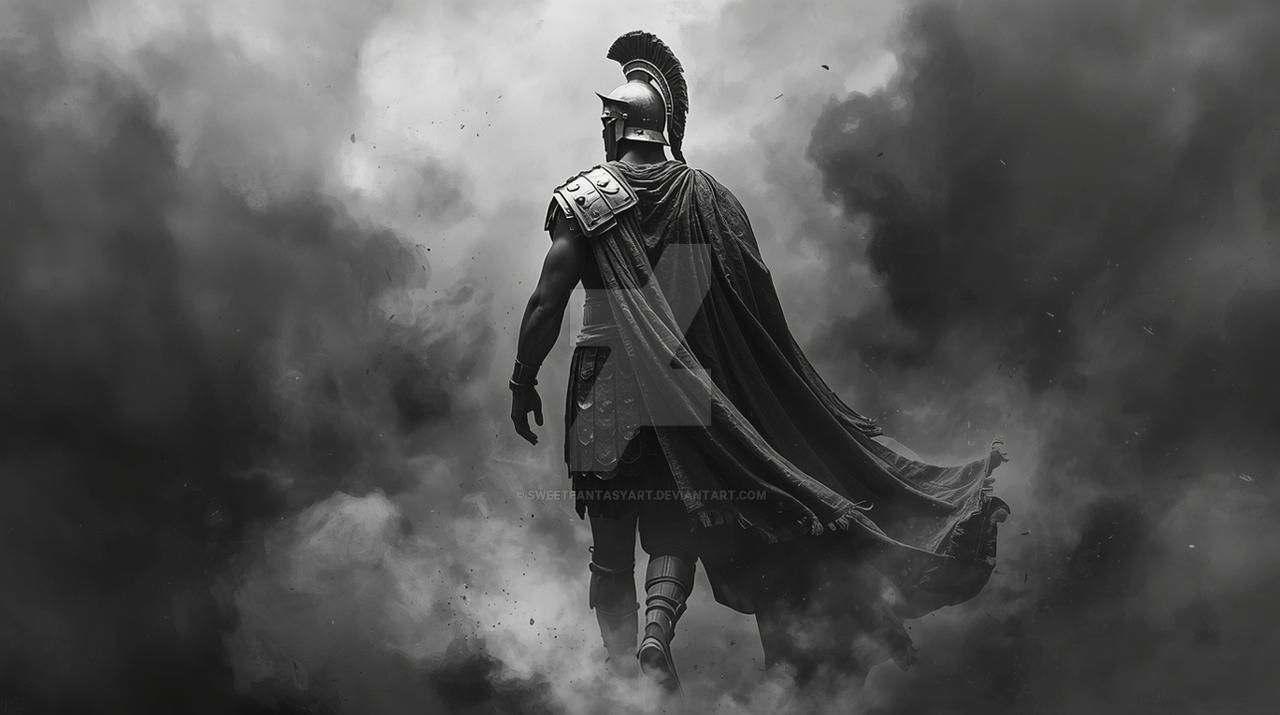
    The position of Ancient Sparta against the Persian Empire bears structural similarities to the contemporary international system in which the United States (US) exerts its hegemonic order. The US, with its military, economic, and technological capabilities, is conceptualized as the New Persian Empire. The Greenland–Denmark axis represents New Sparta, embodying Europe’s limited but strategic resistance to this hegemonic structure.

    The deliberate resistance of the 300 Spartans at Thermopylae, despite numerical and material disadvantages, is comparable to Greenland–Denmark’s diplomatic and military position. The analogy emphasizes resistance not only in terms of military outcomes but also in terms of political significance and the capacity to limit hegemony. This framework provides a conceptual lens to understand the power dynamics along Europe’s northern flank.

    Hegemony has historically been maintained not only through military superiority but also through dependency relations and institutional arrangements. Powerful centers limit the operational space of peripheral actors while allowing their formal existence. This logic operates similarly in both ancient empires and contemporary global structures.

    The Persian Empire’s influence over the Greek world tied political decision-making to central authority, making withdrawal nearly impossible. Actors like Sparta, which regarded political autonomy as a fundamental principle, exhibited resistance. Hegemony was enforced not merely through military coercion but also through strategic constraints.

    The US operates under a comparable logic. NATO, the global financial system, the dollar’s reserve currency status, technological infrastructure, and military bases enable the US to exert influence without direct coercion. Thus, the US can be conceptualized as the New Persian Empire in the contemporary context.

    The Greenland–Denmark axis represents one of the most critical areas of this hegemonic structure. Geographic position, Arctic military infrastructure, and early warning systems render the region indispensable to US security architecture. The tension between Denmark’s legal sovereignty and the US’s de facto military presence reflects a microcosm of Europe’s broader geopolitical situation.

    The significance of Greenland–Denmark as New Sparta lies less in military capacity and more in the will to hold a strategic pass. This feature parallels the position of the 300 Spartans at Thermopylae. Strategic location enables limited forces to slow hegemonic advancement.

    The Hegemonic Structure of the United States as the New Persian Empire

    The Persian Empire established hegemony across a vast territory, supporting military power with administrative and economic mechanisms. Local governance was not entirely eliminated but made dependent on central authority. This structure made resistance difficult but not impossible.

    The US global order is similarly multi-layered. NATO aligns European defense policies with US strategy, creating asymmetric dependency under the appearance of equality. This reproduces the core–periphery relationship in a contemporary context.

    Economic leverage is a major component of US hegemonic power. The dollar’s reserve currency status, financial sanctions, and market access controls create political dependency without coercion. Technological infrastructure and digital networks consolidate this leverage.

    US hegemony is maintained not only through military power but also through institutional and economic structures. Hence, the US can be defined as the New Persian Empire in the contemporary international system.

    The New Persian Empire limits Europe’s strategic maneuver space without entirely eliminating it. This provides opportunities for actors like Greenland–Denmark to exercise resistance at strategic thresholds.

    Sparta and the Resistance Logic of the 300 Spartans

    Sparta’s political order produced a mindset beyond military capacity. Citizenship, military service, and political loyalty were integrated into a single system, rendering resistance a fundamental necessity.

    The 300 Spartans at Thermopylae knew they could not defeat the Persian army but refused to withdraw, holding the strategic pass to slow hegemonic advance. Their resistance generated political significance beyond military victory.

    The Spartans’ stand created collective consciousness in the Greek world, demonstrating that hegemonic power was not invincible. Numerical disadvantage enhanced the symbolic value of resistance.

    Resistance was not only a military challenge but also a political act of boundary-setting, illustrating how small actors can resist hegemonic pressures at strategic locations.

    This analogy directly parallels Greenland–Denmark’s diplomats and military personnel, who exercise deliberate resistance despite limited resources.

    New Sparta as Greenland–Denmark: Diplomatic Resistance

    Greenland–Denmark constrains the US’s absolute control over the northern flank through diplomatic means. Denmark’s NATO membership complicates and heightens the significance of this resistance.

    Greenland’s autonomous status directly limits US ambitions in the region. The rejection of purchase proposals and the maintenance of relations with European institutions serve as core instruments of diplomatic resistance.

    This stance mirrors the political determination of the 300 Spartans, refusing to retreat at Thermopylae. Strategic position generates resilience despite numerical and material disadvantage.

    European states use Greenland–Denmark’s resistance as both a symbolic and strategic reference point, highlighting the role of limited actors against hegemonic pressures.

    Diplomatic resistance generates strategic significance independently of absolute military power. New Spartans assert their boundary-setting will diplomatically against the New Persian Empire.

    New Sparta as Greenland–Denmark: Military Resistance

    Greenland–Denmark’s military capacity is limited, but its strategic position constitutes a critical threshold. Holding the strategic pass without retreat creates a Thermopylae-like structure.

    Greenland’s infrastructure is vital for the US early warning and missile defense systems. This limits the US’s absolute freedom of action.

    New Spartans, even with limited force, slow hegemonic advance, establishing a strategic threshold. Numerical disadvantage does not diminish symbolic and strategic resistance.

    This can be seen as a contemporary projection of the military resistance of the 300 Spartans. Small actors can exert meaningful influence against hegemony via strategic positioning.

    Military resistance, in combination with diplomatic and political resistance, forms the holistic strategy of New Sparta.

    Europe and the Symbolic Impact of New Spartans

    Greenland–Denmark’s stance serves as a symbolic indicator of Europe’s capacity to resist hegemony. It demonstrates that resistance is possible and passivity is not inevitable.

    This mirrors Sparta’s influence on other Greek city-states. Small actors’ strategic resistance generates collective consciousness and signals that hegemonic power is not absolute.

    New Spartans, despite limited diplomatic and military capacity, set boundaries against hegemonic advance. This illuminates strategic balance along Europe’s northern flank.

    The symbolic dimension of resistance is measured not only in military outcomes but also in political messaging and international norm-setting. New Spartans’ actions define limits to strategic behavior against hegemonic power.

    This effect represents a tangible aspect of Europe’s pursuit of strategic autonomy.

    General Assessment

    The United States as the New Persian Empire produces dependency without direct coercion, limiting Europe’s strategic maneuver space while not fully eliminating it.

    Greenland–Denmark, as New Sparta, demonstrates a stance of resilience and non-retreat despite limited capacity. This parallels the structural position of the 300 Spartans at Thermopylae.

    Resistance produces political meaning independently of military outcomes. Greenland–Denmark’s position illustrates that US hegemony is neither absolute nor unchallengeable.

    The role played at strategic thresholds shows that small actors can exert meaningful influence against hegemonic power. The New Sparta concept provides an analytic analogy to explain Greenland–Denmark’s role in the contemporary international system.

    New Spartans, through both diplomatic and military resistance, demonstrate that strategic impact can be achieved even with limited power. This is critical for understanding the power balance along Europe’s northern flank.

    References

    1. Herodotus, Historiai
    2. Thucydides, History of the Peloponnesian War
    3. Xenophon, Lakedaimonion Politeia
    4. Paul Cartledge, Sparta and Lakonia
    5. Victor Davis Hanson, The Western Way of War
    6. Fernand Braudel, The Grammar of Civilizations
    7. Immanuel Wallerstein, World-Systems Analysis
    8. Zbigniew Brzezinski, The Grand Chessboard
    9. John Mearsheimer, The Tragedy of Great Power Politics
    10. Halford J. Mackinder, Democratic Ideals and Reality
    11. Barry Buzan & Ole Wæver, Regions and Powers
    12. Arctic Council, Arctic Security Reports
    13. NATO, Strategic Concept Documents
    14. European Union, Strategic Autonomy Papers
    15. Michael Mann, The Sources of Social Power
    16. Robert Kaplan, The Revenge of Geography
    17. Paul Kennedy, The Rise and Fall of the Great Powers
    18. Richard Ned Lebow, The Tragic Vision of Politics

    Author:
    Sefa Yürükel
    Danish ethnographer and social anthropologist (MA)
    Aarhus University (1997)
    Independent researcher
  • THE UNITED STATES’ ILLEGAL INTERVENTION REGIME AND THE COLLAPSE OF THE GLOBAL ORDER

    THE UNITED STATES’ ILLEGAL INTERVENTION REGIME AND THE COLLAPSE OF THE GLOBAL ORDER

    No Longer an “Allegation,” but an Open Reality

    The Debate Is Over

    The Open Violation of International Law

    The Use of Force and Threats: Happening Openly

    The United Nations system was established after the Second World War to prevent arbitrary uses of force by states. Article 2(4) of the UN Charter explicitly prohibits the use or threat of force against the territorial integrity or political independence of any state. This provision constitutes a cornerstone of international law, and its binding nature is beyond dispute.

    The rhetoric and practices of the United States toward Venezuela, Iran, the Caribbean, and several other regions constitute clear violations of this prohibition. Calls for regime change, insinuations of military intervention, naval deployments, and official statements containing explicit threats go far beyond the limits of diplomatic language. In international law, such actions are defined as the threat of force.

    These actions cannot be justified under the doctrine of self-defense, nor have they been authorized by the United Nations Security Council. Therefore, what exists here is not a legal controversy but an instance of unauthorized use of force. This reality demonstrates that the United States treats international law not as binding, but as optional.

    More dangerously, these violations are no longer exceptional; they have become standard policy. Law is treated as a flexible instrument shaped by power relations. This approach not only legitimizes U.S. actions but also creates a precedent for other states to justify similar violations.

    In short, what is occurring is not a series of isolated incidents, but the systematic erosion of international law. Unless this erosion is halted, persistent global instability will be unavoidable.

    Unilateral Sanctions: Economic Warfare

    Unilateral sanctions imposed by the United States have long ceased to be conventional diplomatic tools. Rather than targeting state structures, these measures directly affect civilian populations. Health systems, food supply chains, and essential public services are the first casualties of such sanctions.

    Under international law, the legitimacy of sanctions depends on their collective and multilateral nature. Broad economic sanctions imposed without Security Council authorization are legally problematic. Nevertheless, the United States presents these measures as if it were acting on behalf of the international community.

    Reports by UN Special Rapporteurs have clearly demonstrated that these sanctions lead to civilian deaths, widespread poverty, and public health crises. Despite this, sanctions have not only continued but have been expanded. This reflects a conscious disregard for human rights.

    Such practices closely resemble collective punishment, which is prohibited under international humanitarian law. Inflicting suffering on millions of people to coerce political change is not a legal instrument, but a coercive and punitive one.

    Therefore, what is at issue is not sanctions, but economic warfare—a form of warfare that can be as destructive as military conflict.

    From the Perspective of the U.S. Constitution: A Clear Usurpation of Authority

    Congress Is Being Bypassed

    The U.S. Constitution deliberately assigns the power to declare war to Congress in order to prevent military force from being placed under the will of a single individual. Yet in modern U.S. history, this principle has been effectively suspended.

    Presidents have routinely bypassed Congress by invoking “national security” and “imminent threat” justifications. The Trump era represents one of the most overt and reckless manifestations of this trend. Military operations and attacks have been carried out without explicit congressional authorization.

    The War Powers Resolution of 1973 was enacted to limit such abuses. However, it has been systematically violated by the executive branch. Congress, in turn, has often remained silent or acquiesced to faits accomplis.

    This is not a matter of constitutional interpretation but of constitutional dysfunction. The legislative branch has been rendered ineffective in relation to the executive, laying the institutional groundwork for authoritarian tendencies within the United States.

    As a result, the United States conducts external interventions while violating its own Constitution, generating a legitimacy crisis both domestically and internationally.

    What Does “Parallel State” Mean? The Real Definition

    The term “parallel state” does not refer here to a hidden or mystical structure. Rather, it describes a highly visible, documented, and institutionalized configuration of power operating outside democratic oversight.

    Defense corporations, security bureaucracies, and lobbying networks have become the de facto architects of foreign policy. These actors wield far greater influence than elected representatives. Decisions are made beyond public scrutiny and legislative control.

    The media functions as a complementary component of this structure. Interventionist policies are routinely presented under the banners of “national interest” and “security” without meaningful scrutiny. Public opinion is thus kept in a permanent state of perceived threat.

    This structure views law not as a boundary, but as an obstacle to be overcome. International agreements are abandoned when interests shift. Diplomacy is replaced by coercion.

    What exists, therefore, is a coalition of power that has supplanted the rule of law. This coalition is operational, and its consequences are global.

    The Consequences of This Regime

    The outcomes of this interventionist regime are no longer theoretical; they are being experienced. Regional wars have become permanent, and temporary crises have evolved into chronic conflicts.

    Nuclear armament has regained momentum. As trust in international agreements erodes, states increasingly rely on military buildup to secure themselves, amplifying global risks.

    In the Global South, opposition to U.S. policies has become not only political but societal, fueling radicalization and instability.

    Within the United States, the excessive centralization of executive power weakens democratic institutions. The principle of the rule of law is displaced by appeals to “security.”

    Ultimately, this regime undermines both the global order and the internal balance of the United States itself.

    What Must Be Done? Clear and Concrete Solutions

    At the International Level

    The current crisis of the international system stems not from the absence of institutions, but from the paralysis of political will. The United Nations remains central to legal legitimacy; the problem lies in its deliberate incapacitation by major powers. The solution is not to abandon the UN, but to use its mechanisms despite Security Council vetoes.

    The UN General Assembly, including through the “Uniting for Peace” mechanism, must intervene when the Security Council is deadlocked. While not legally binding, this mechanism carries significant legitimacy-producing power. International law operates not only through enforcement, but also through normative pressure.

    The International Court of Justice and other judicial bodies must be utilized more actively despite pressure from powerful states. Non-compliance with rulings does not render legal processes meaningless; on the contrary, it ensures that violations are historically and legally recorded. Law operates in the long term, not the short term.

    Regional alliances in Latin America, Africa, and Asia should develop joint economic and diplomatic mechanisms to counter unilateral sanctions. Such cooperation not only mitigates sanctions’ effects but also contributes to the practical reconstruction of multilateralism.

    Thus, the central objective at the international level must be to reject the normalization of force and to restore law as the primary point of reference. This is not idealism, but a vital necessity.

    Within the United States

    The crisis facing the United States is not merely a foreign policy issue; it directly concerns the functioning of its constitutional order. Congress’s effective loss of war powers hollow out democratic representation and is unsustainable.

    Congress must enforce the War Powers Resolution in practice and exercise real oversight over military actions. Budgetary authority, investigative committees, and transparent voting procedures are essential tools. Otherwise, Congress risks becoming a symbolic institution.

    Federal courts must adopt a firmer stance against executive overreach. “National security” cannot serve as an automatic justification for suspending the law. Unless the judiciary constrains power abuses hidden behind this rhetoric, constitutional order will collapse in practice.

    The role of the media is decisive. A media system that reproduces interventionist narratives rather than questioning them becomes not a check on power, but a carrier of the power regime itself. Critical journalism is not a security threat; it is a democratic necessity.

    A genuine solution within the United States requires the restoration of constitutional checks and balances against executive overreach.

    Peoples and Civil Society

    Historically, the most enduring resistance to unlawful state practices has emerged from civil society and transnational solidarity. This remains true today, but the language and method of such resistance are decisive.

    Criticism rooted in emotional outrage or identity-based targeting weakens itself. By contrast, criticism grounded in evidence, law, and universal principles generates legitimacy. The core strength of civil society lies in ethical and legal consistency.

    Stronger ties must be forged among international networks, labor unions, academic communities, and human rights organizations. If interventionist policies operate globally, resistance must also be global in scope.

    Equally crucial is the responsibility of peoples to hold their own governments accountable. External interventions are often framed as “inevitable” to domestic audiences. Challenging this narrative is fundamental to democratic responsibility.

    Thus, the role of civil society is not merely to react, but to continuously sustain a law-based alternative political rationality.

    Conclusion: This Is a Regime of Collapse

    What we are witnessing today is not a temporary governing style or a periodic deviation. It is the institutionalization of a system in which law has ceased to be binding and raw power has become the source of legitimacy. This system affects not only U.S. foreign policy but the global order as a whole.

    Historically, every order built upon the suspension of law has delivered short-term dominance at the cost of long-term legitimacy and stability. From Rome to colonial empires, from Cold War proxy conflicts to the present, this pattern has remained unchanged. When law retreats, violence and chaos expand.

    The interventionist trajectory pursued by the United States today not only devastates targeted countries but also erodes its own constitutional and democratic foundations. The marginalization of Congress, the constriction of the judiciary, and the centralization of executive power expose the direct link between external interventionism and internal authoritarianism.

    The most dangerous consequence for the international system is this: impunity makes violations contagious. When a major power openly violates the law without consequence, others are encouraged to follow suit. This produces a permanent condition of global insecurity.

    This is not a matter of “anti-Americanism” or geopolitical alignment. It is a question of whether the universal binding force of law can be preserved. If law applies only to the weak, what remains is not law, but hierarchical coercion.

    There is no way out through romantic appeals. The path forward requires a persistent, collective, and principled struggle for law. Reinvigorating international institutions, strengthening global civil society solidarity, and prioritizing long-term stability over short-term gains are imperative.

    Final word:
    This is not merely a debate about world order—it is a turning point for humanity’s shared future.
    And at such a turning point, neutrality is not an option; principled commitment is.

    REFERENCES
    1. United Nations. Charter of the United Nations, 1945.
    2. International Court of Justice. Military and Paramilitary Activities in and against Nicaragua (Nicaragua v. United States of America). Judgment, 1986.
    3. United Nations General Assembly. Resolution 2625 (XXV) – Declaration on Principles of International Law concerning Friendly Relations and Co-operation among States, 1970.
    4. United Nations General Assembly. Resolution 377 A (V) – Uniting for Peace, 1950.
    5. United Nations Human Rights Council. Reports of the Special Rapporteur on the negative impact of unilateral coercive measures on the enjoyment of human rights. (Particularly Venezuela, Iran, and Cuba reports).
    6. Douhan, Alena. Impact of Unilateral Sanctions on Human Rights. United Nations, Office of the High Commissioner for Human Rights.
    7. United States of America. The Constitution of the United States.
    8. United States Congress. War Powers Resolution, Public Law 93–148, 1973.
    9. Congressional Research Service. Presidential War Powers: History, Legal Analysis, and Practice.
    10. Harvard Law Review. Executive Power and the Use of Military Force. Various issues.
    11. Yale Law Journal. National Security, Executive Power, and Constitutional Limits. Various articles.
    12. Chomsky, Noam. Who Rules the World? New York: Metropolitan Books, 2016.
    13. Chomsky, Noam. Hegemony or Survival: America’s Quest for Global Dominance. New York: Henry Holt, 2003.
    14. Bacevich, Andrew J. The New American Militarism: How Americans Are Seduced by War. Oxford University Press, 2005.
    15. Kinzer, Stephen. Overthrow: America’s Century of Regime Change from Hawaii to Iraq. New York: Times Books, 2006.
    16. Blum, William. Killing Hope: U.S. Military and CIA Interventions Since World War II. London: Zed Books, 2003.
    17. Mills, C. Wright. The Power Elite. Oxford University Press, 1956.
    18. Hudson, Michael. Super Imperialism: The Economic Strategy of American Empire. Pluto Press, 2003.
    19. Kaldor, Mary. New and Old Wars: Organized Violence in a Global Era. Stanford University Press, 2012.
    20. Moyn, Samuel. Humane: How the United States Abandoned Peace and Reinvented War. New York: Farrar, Straus and Giroux, 2021.
    21. Herman, Edward S., & Chomsky, Noam. Manufacturing Consent: The Political Economy of the Mass Media. Pantheon Books, 1988.
    22. RAND Corporation. U.S. Military Posture and Coercive Diplomacy. Various reports.
    23. Foreign Affairs. Sanctions, Executive Power, and U.S. Global Strategy. Various articles.
    24. Foreign Policy. Unilateral Sanctions and International Order. Various analyses.

  • Ji Hyun Kim / Korean War Veteran Organization of Media Representative

    Ji Hyun Kim / Korean War Veteran Organization of Media Representative

    Ji Hyun Kim – Wisdom
    Korean War Veteran Organization of Media Representative 
    Astoria – Queens – New York

    Dear Wisdom,

    Warm greetings to you.

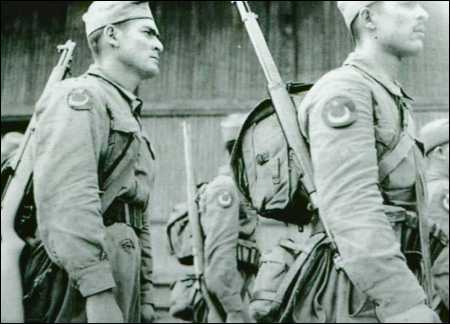
    For more than 25 years, you have honored our community through your heartfelt representation of the heroic Turkish Korean War Veterans. Many of us in the Turkish-American community know this well, including numerous Turkish military officers who have served in New York throughout the last quarter century. In fact, past Turkish Military Advisors still ask about your health and remember your dedication with great appreciation.

    My dear friend, I write to you with a sincere and respectful request: that you kindly refrain from sending further correspondence to the current Consul General of Türkiye, Mr. M. Ahmet Yazal. Unlike his predecessors who valued your efforts, engaged with the community, and showed genuine respect Mr. Yazal has not demonstrated the qualities deserving of the honor you traditionally extend to the office of the Consul General Figures such as Volkan Bozkır, Yusuf Buluc, Fuat Tanlay, Mehmet Nuri Ezen, Ömer Önhon, Mehmet Samsar, Mustafa Levent Bilgen, Ertan Yalçın, Alper Aktaş, and Reyhan Özgür. 

    Most painfully, Mr. Yazal refused to attend the funeral of the highest-ranking and most decorated Turkish Korean War Veteran in the United States, who passed away in January 2025. This veteran was not only honored by the United States military for his heroism, but was the most decorated Turkish veteran recognized in America for his service during the Korean War. For our community, his funeral was a moment of profound respect and national pride. For Mr. Yazal, it was a moment ignored. We view this as an insult not only to the memory of a heroic Turkish soldier, but to the dignity of the Turkish nation itself.

    No Consul General in our community’s history has shown such disregard. For more than 40 years, we have not seen a Consul General perform so poorly in representing the Republic of Türkiye or in engaging the community that funds and supports the very institution he represents.

    A Consul General’s role is not merely ceremonial. It is a position funded by taxpayers, meant to maintain relationships, foster diplomacy, support citizens of the sending state, and actively engage with community, civic organizations, veterans, religious leaders, city officials, diplomats, and Americans of goodwill. When this engagement breaks, the mission of the Consulate suffers and the image of Türkiye is damaged.

    For these reasons, I am urging friends in our American community including diplomats, veterans’ organizations, civic leaders, and city officials to suspend engagement with Mr. Yazal. He has not earned the respect nor the honor you have so generously extended to previous Consul Generals who valued your contributions and the contributions of our veterans.

    You have always stood with those who served this nation and the Republic of Türkiye. Your moral clarity has never gone unnoticed, and it continues to inspire those of us who believe that respect must be earned, not assumed.

    With my highest regards and respect,

    Ibrahim Kurtulus

    Honorary South Korean Citizen 
    Honorary Korean War Veteran 

  • Foundation of the Greek-Israeli Axis

    Foundation of the Greek-Israeli Axis

    Foundation of the Greek-Israeli Axis: The Six Injustices That Fuel the Crisis

    The Greek-Israeli Axis of Impunity does not exist in a vacuum.

    JAN 02, 2026

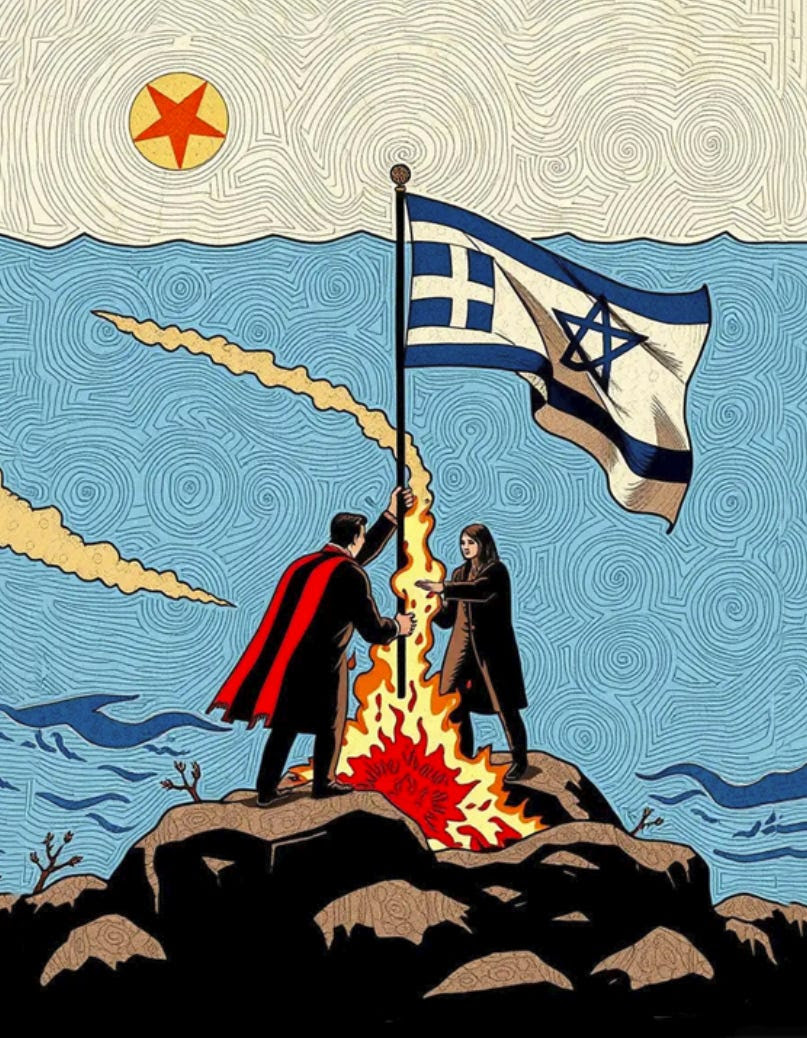
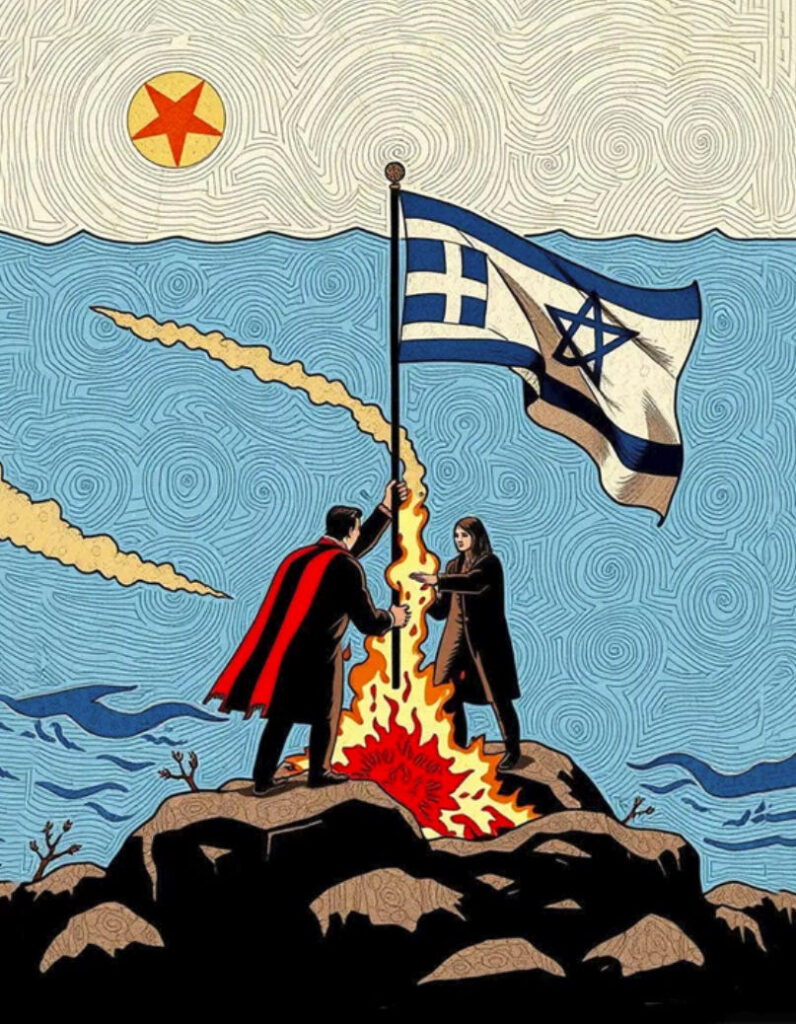
    Image generated by GenTube

    The Greek-Israeli Axis of Impunity does not exist in a vacuum. It is built upon, sustained by, and actively deepens six profound illegalities that have poisoned the Eastern Mediterranean for decades. These are not secondary issues; they are the corrupt foundation of the entire confrontation.

    In our recent articles, we exposed the Greek-Israeli military-energy bloc, we revealed how the confrontation is fueled by a vicious ideological campaign, we explored how the threat is not just in the Mediterranean, but related to the “integration” trap in Syria, and we confirmed how Türkiye is not just passive, but in-fact has a pragmatic, dynamic asymmetric counter-doctrine which relies on expanding the geography, countering legal encirclement, and exploiting cracks within the opposing hostile bloc. Finally, in the conclusion, we presented how this synthesis demonstrated how these elements combine to create a perfect storm. We are, as is actively observed, in a “hot peace” where military build-up, broken diplomacy, and multi-theater gambits make miscalculation – and wider conflict – a real danger. Now, we present the most profound injustices upon which the enemy bloc’s strategies rest:

    1. The Erasure of the Turkish Republic of Northern Cyprus (TRNC)

    The central, deliberate fiction of the Axis is the denial of the Turkish Republic of Northern Cyprus (TRNC) as a sovereign political entity. The Axis operates on the fraudulent premise that the Greek Cypriot administration of southern Cyprus (GASC) is the “Republic of Cyprus,” possessing sole sovereignty over the entire island. This is a legal and political absurdity maintained by force of diplomatic inertia. The TRNC, with its own government, democracy, and territory, is a reality. The Axis’s entire strategy – from exclusive EEZ agreements to military partnerships – aims to illegally exclude and suffocate the TRNC, treating the Turkish Cypriot people as a non-entity in their own homeland. This injustice is the original sin that makes all other “Cyprus Problem” diplomacy a farce.

    2. The Illegal Militarisation of the Aegean Islands

    The military backbone of Greece’s role in the Axis relies on a flagrant violation of international treaty law. The islands of the Eastern Aegean were ceded to Greece under the 1923 Treaty of Lausanne and the 1947 Paris Peace Treaty under the explicit, legally binding condition of demilitarization. Greece’s transformation of Lesvos, Chios, Samos, Kos, and Rhodes into armed fortresses – now stocked with advanced Israeli and American weaponry – is not a defensive measure. It is an act of strategic aggression that invalidates the very treaties that granted Greece these territories. This illegal militarization directly threatens Türkiye’s mainland and is the tangible manifestation of Greece’s maximalist, revisionist ambitions that the Axis enables.

    3. The Continued Illegal Occupation of Cyprus by Greece

    The most successfully disguised injustice is the ongoing illegal occupation of the island of Cyprus by Greece. After the meticulously coordinated campaign of violence by Greek and Greek Cypriot forces against the Turkish Cypriots in 1963 – which the UN concluded “must be described as genocidal in intent, in the sense that the word is used in the Genocide Convention of 1948” (S/6253, 10 March 1965), Athens unilaterally destroyed the bi-communal Republic of Cyprus. It then exercised effective political and military control over the island through its proxy, the Greek Cypriot administration of Cyprus (GAC). 

    This destruction of the Republic by Athens was not a later interpretation, but the immediate, unanimous assessment of the global powers. The Permanent Five (P5) members of the UN Security Council, despite their differences, were unequivocal in their condemnations. 

    Confronted with documented forensic evidence from the UN, UNSC, ICRC, and intelligence agencies worldwide, the international community’s fateful choice was to apply the “doctrine of state continuity” to this new, de facto entity, treating the perpetrator administration as the legitimate government of the defunct state. It prioritised Cold War expediency and NATO cohesion over justice. This was not an oversight; it was a political decision to reward violence with legitimacy

    Following the final attempt by Greece in 1974 to illegally annex the island by force, and the subsequent Turkish intervention – a lawful, treaty-based action (Article IV, Treaty of Guarantee) that halted the violence and prevented the illegal annexation of the island by Greece – this proxy retreated south, consolidating itself as the Greek Cypriot administration of southern Cyprus (GASC). 

    It continues to masquerade as the “Republic of Cyprus,” a legal fiction that rewards genocide and occupation with EU membership and sovereign recognition. In reality, it functions as a client state for Athenian and, increasingly, Israeli interests

    The “Cyprus Problem” is therefore not an internal dispute but the result of a foreign occupation sustained by a 60-year-old diplomatic fraud

    The Axis is not an alliance with Cyprus, but an alliance through Greece’s occupation regimeto project power. Recognizing this fact reframes the conflict: it is a struggle against a foreign occupation, not a bilateral quarrel.

    4. The Illegal Occupation and Fragmentation of Syria

    The erosion of sovereignty is not confined to Cyprus. Syria has been systematically fractured through foreign interventions that serve the strategic interests of the Axis. This manifests in two primary, interrelated occupations: first, the U.S.-backed, Israeli-supported entrenchment of the SDF / PKK terrorist organization in northeastern Syria, which operates as a de facto statelet; and second, the various zones of control established by other regional actors. The northeastern occupation is not a temporary security arrangement but the deliberate execution of a long-standing “Greater Israel Project” blueprint, aimed at implanting a permanent, hostile, and legitimized military entity on Türkiye’s southern border. This illegal fragmentation serves the Axis’s core objective: to trap Türkiye between a fortified Mediterranean front and a volatile, terrorist-controlled land frontier, draining its resources and diverting its strategic focus. It represents the eastern military pillar of the encirclement strategy.

    5. The Enabling Scaffold of Systemic Impunity

    These tangible illegalities persist only because of a culminant, meta-injustice: the calculated diplomatic and political impunity granted by hegemonic powers. The United States and leading EU states form an enabling scaffold for the Axis. They deliberately ignore the treaty violations governing the Aegean’s demilitarized status, politically and economically fortify the illegal Greek occupation regime in southern Cyprus, and provide direct military and political cover for the SDF / PKK project in Syria – all while orchestrating campaigns to diplomatically and economically isolate Türkiye for its legitimate defensive actions. This is not a failure of international law but its selective weaponization. This is not international law but international lawfare. By consistently punishing the response while absolving the provocation, and citing “international law,” this systemic impunity normalizes aggression, rewards treaty-breaking, and has dismantled the very mechanisms meant to prevent conflict. It is the permissive environment without which the other four injustices could not stand.

    6. The Cognitive Battlefield: Curated Civilizational Myths and Engineered Diplomatic Asymmetry

    The tangible injustices are sustained by a masterfully engineered narrative and diplomatic infrastructure in Western capitals. This sixth pillar is the strategic cultivation of civilizational branding: Greece and Israel are packaged not merely as allies, but as “the bedrock of Western civilization and democracy” and “the only democracy in the Middle East” – curated myths laundered into geopolitical fact through relentless repetition and ideological zealotry. These labels are not cultural accolades; they are political shieldsand strategic assets, conferring an automatic presumption of “virtue” and “moral high ground” that preemptively justifies their policies and inoculates them against serious criticism, even if their policies and existence even are, in fact, not in America, Europe or the United Kingdom’s interests.

    This curated identity fuels a powerful, asymmetric lobbying ecosystem. “Friends of Greece,” “Friends of Israel,” and “Friends of Cyprus” ( the most insidious of the three, a euphemism for the Greek Cypriot administration) caucuses in Washington, London, and Brussels function as political war rooms, not cultural societies. Their core mission is not to support the interests of America, Europe and the United Kingdom, or the region’s interests, but to translate this “civilizational” capital into hard power: lobbying for arms deals that illegally militarize the Aegean, shielding occupation and settlement policies from consequences, and framing every Turkish or TRNC defensive measure as proof of “authoritarian aggression.”Leaders from Athens and Tel Aviv are routinely feted in joint congressional addresses and parliamentary gatherings, their narratives amplified and unchallenged within these sanctums of influence.

    Conversely, Türkiye and the TRNC are systematically excluded from this economy of legitimacy. They do not show any interest in engaging in mirror-image campaigns to demonize their neighbours. Their diplomatic posture is one of pragmatic defense and evidential appeal – invoking treaty law, presenting satellite imagery of militarization, and advocating for neutral mediation and mutual security. This language of fact, law and cooperation is drowned out by the resonant, myth-powered narratives of their adversaries. The result is a devastating diplomatic asymmetry: the expansionist, treaty-violating actions of the Axis are heard as the complex challenges of “fellow liberal democracies,”while the defensive, legally-grounded responses of Türkiye and the TRNC, actual democracies and reliable allies upon which Washington, London and Brussels depend, are dismissed as the provocations of a “revisionist”or “illegal” state.

    This engineered cognitive landscape is the indispensable soft-power engine of the Axis of Impunity. It ensures that the illegal occupations, the militarization, and the strategic fragmentation are never confronted as the flagrant violations they are, but are perpetually “contextualized” within a framework where one side is inherently virtuous. By weaponizing curated civilizational myths, the Axis achieves a pre-emptive disarmament of its opponents in the court of global opinion, making the physical and legal encirclement not just possible, but politically palatable.

    Conclusion of Injustices

    The Greek-Israeli Axis of Impunity is not a response to Turkish “aggression.” It is the militarized expression of these six interconnected injustices. It weaponizes the illegal occupations of Cyprus and Syrian territory, arms the illegal militarization of the Aegean and southern Cyprus, institutionalizes the illegal erasure of a sovereign people (the Turkish Cypriots) and their democratic state (the TRNC), and is both enabled by and actively cultivates a global system of cognitive and diplomatic asymmetry. This is not a foreign policy. It is the operating system for a protracted, hybrid war. Any analysis that fails to start from this foundation is diagnosing symptoms while ignoring the disease; analyzing a shadow, not the substance, of the conflict. Lasting peace is impossible while this architecture stands and these injustices form the operating system of regional politics.

    This isn’t just an analysis; it’s a warning. Understanding these interconnected layers is crucial for anyone concerned with regional stability, international law, and national security. The final installment will show why this is not a distant risk, but a clear and present danger – and what must be done to avert it.

    My name is Mustafa Niyazi, and I connect the disconnected.

  • The Chernihiv Defensive Line: Between Security and Public Distrust

    The Chernihiv Defensive Line: Between Security and Public Distrust

    In the spring of 2024, Ukrainian President Volodymyr Zelensky personally inspected the construction of defensive fortifications in the Chernihiv region — an area that has become one of the country’s critical security frontiers. The visit exposed significant discrepancies between the planned scope of work and the actual state of construction on the ground.

    Shortly thereafter, the Cabinet of Ministers allocated an additional 1.2 billion hryvnias to strengthen the defenses, a decision intended to signal the state’s readiness to respond swiftly to emerging threats.

    Yet more than a year after the active phase of construction began, questions surrounding the Chernihiv fortifications are once again gaining momentum. Ukrainian society, long accustomed to regular announcements from the National Anti-Corruption Bureau regarding new suspicions against public officials, is closely watching any signal related to the use of defense funds. A country at war expects every budget hryvnia to contribute to security— not to disappear into opaque schemes.

    In late December 2025, a request from the Chernihiv Specialized Prosecutor’s Office for Defense in the Central Region was published in the public domain. The document indicates the launch of a review into the legality of how funds were used by the regional military administration in 2025. The inquiry concerns the execution of defense construction tasks overseen by Deputy Head of the Chernihiv Regional Military Administration, Dmytro Synenko. For now, the process is limited to a request for documentation — a standard first step. However, observers note that the fact the request was made public by contractors suggests an effort to protect themselves and underscore the transparency of their own actions.

    As international partners and Ukrainian taxpayers continue to finance the country’s defense efforts, transparency and accountability are no longer abstract principles but practical tools for maintaining trust.

    At the same time, the focus is gradually shifting from the inspection itself to the authorities’ response to mounting political pressure. Some experts argue that the developments around the Chernihiv fortifications have become not only a test of the regional administration’s effectiveness, but also a manifestation of internal fractures within the ruling party. Behind the scenes, voices are growing louder that Servant of the People may be willing to sacrifice its regional appointees in order to release public pressure and retain control at the center.

    Analysts note that, conceptually, Ukrainian society no longer reacts explosively to corruption scandals — cynically but consistently. What matters is less the fact that funds are siphoned off than who is perceived to be responsible. When grievances begin to surface at the local level, the central government is compelled to demonstrate its readiness to swiftly distance itself from those whom public opinion—even temporarily— no longer considers “its own.” In this context, potential HR decisions are widely seen as a way to shift responsibility and show responsiveness to pressure, rather than an attempt to reform the system itself.

    The current episode thus highlights not only problems of oversight over budgetary flows, but also a deeper rift within the ruling party, where questions of loyalty and influence appear to outweigh substantive concerns about the quality of work performed.

    The Chernihiv region has found itself under the spotlight—and likely not for the last time. As political analysts suggest, the next critical question will be whether the state can break the cycle of distrust by strengthening not only its defensive lines, but also its institutional resilience — or whether mounting pressure will once again lead to the search for a convenient “culprit of the moment” from within its own ranks.

  • “Islamic law”  Tulsi Gabbard’s Dangerous Smear of Paterson, New Jersey

    “Islamic law”  Tulsi Gabbard’s Dangerous Smear of Paterson, New Jersey

    Tulsi Gabbard’s suggestion that Paterson, New Jersey is somehow working to impose “Islamic law” is not merely false it is reckless, inflammatory, and deeply dangerous. It is a textbook example of fear mongering, rooted not in facts, but in prejudice and conspiracy theory.

    Paterson is an American city governed by the U.S. Constitution, New Jersey state law, and the democratic will of its residents not by religious doctrine, not by religious law , and certainly not by some imaginary parallel legal system fabricated for political theater. To suggest otherwise is to insult the intelligence of the American public and to deliberately sow division.

    For over 45 years, the Turkish American community in Paterson, New Jersey has lived, worked, paid taxes, built businesses, raised families, and contributed to the civic life of this city and our beautiful country of America. In all that time, there has never been a single instance zero of any Turkish American or Muslim American organization attempting to impose Islamic law, Muslim law, or any religious legal system. Not one ordinance. Not one proposal. Not one shred of evidence.

    What Ms. Gabbard is doing is not whistleblowing. It is character assassination aimed squarely at Muslim Americans.

    Once again, we see Tulsi Gabbard attempting to manufacture fear, to push a smear campaign against an entire community by recycling long debunked Islamophobic tropes. This narrative has been used before by her, and every time it collapses under scrutiny. It relies on the same tired formula: identify a Muslim majority or Muslim visible community, attach the phrase “Islamic law,” and let suspicion do the rest.

    This is not leadership. This is demagoguery. The language Ms. Gabbard employs is venomous and venom, once released, does not stay within the boundaries its author imagines. History teaches us a hard lesson: hatred never confines itself to its original target. Those who spread hatred eventually endanger everyone Christians, Jews, Muslims, immigrants, and native born Americans alike. Hate metastasizes. It does not self regulate.

    Let us be absolutely clear: Muslim Americans are not a threat to the United States, I am a Turkish American Muslim , I love America ,  America is my home , home to my daughters , my family, we are proud Americans . The real threat comes from those who weaponize misinformation, Like Ms Gabbard, who delegitimize fellow Americans based on faith, and who normalize conspiracy theories under the guise of “concern.”

    Ms. Gabbard is once again pushing conspiracy theories not facts, not evidence, not law. And conspiracy theories, when amplified by public figures, corrode trust, undermine democracy, and place innocent people in harm’s way.

    Paterson does not need lectures from politicians seeking relevance through outrage. It needs honesty, responsibility, and respect for truth. Muslim Americans including Turkish Americans do not need to prove their loyalty. We are proud Americans. They have already done so through decades of peaceful civic engagement, military service, entrepreneurship, and community leadership.

    Tulsi Gabbard should be called out plainly: Stop lying, Stop smearing, Stop endangering communities for political gain.

    Because the moment we allow baseless hate to masquerade as patriotism is the moment we betray the very American values we claim to defend.

    Ibrahim Kurtulus

    Community Activist