Blog

  • Canal Istanbul detailed

    Canal Istanbul detailed

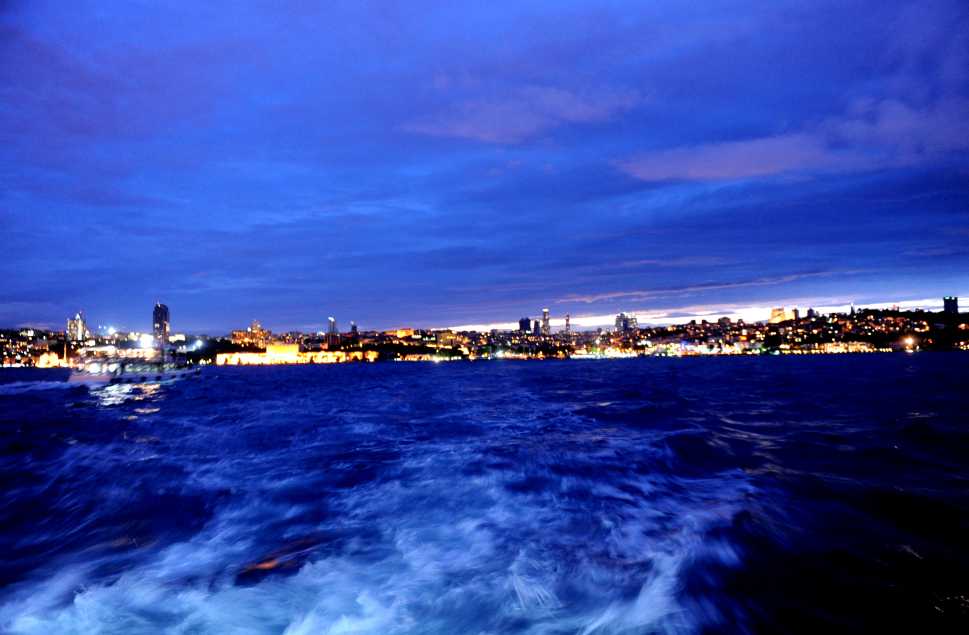
    Istanbul Mayor Kadir Topbas said the new shipping canal proposed by Turkey would handle 150-160 ships per day, IHS World Markets Energy reported.

    The waterway, proposed as an alternate to the cramped Bosporus, would take eight years to build for an estimated US$10 billion, Topbas added.

    The Canal Istanbul scheme to link the Black Sea with the Sea of Marmara was unveiled yesterday by Prime Minister Recep Tayyip Erdogan.

    Ships would still need to transit the Dardanelles to reach the Aegean Sea.

    As IHS Fairplay reported recently, the canal would run 45-50km in length, with a depth of about 25m and a width of 150m, added Erdogan, who said it would accommodate ships up to 300,000dwt.

    It would cut through government-owned land – mostly undeveloped forest – just west of Istanbul, reported the Wall Street Journal, which added that backers claim it would create thousands of jobs for workers at Turkish companies.

    “Erdogan’s unveiling of the plan, which has long been dreamed about by Turkish strategic thinkers, came across in large part as an election-season ploy, and the political opposition dismissed it as such, citing the cost and unrealistic nature

    of the still-half-baked proposal,” IHS World Markets Energy commented.

    The prime minister said today’s long waits to enter the Bosporus, which is just 700m wide at its narrowest point and has strong currents and several blind turns, cost shippers US$1.4 billionn per year.

    The scheme might be aimed at gaining leverage for Turkey in talks with Russia to secure commitments of crude for the as-yet-unbuilt Samsun-Ceyhan oil pipeline, one of a range of other Bosporus bypass pipeline proposals, IHS World Markets Energy said.

    If Canal Istanbul is built, “the rationale for projects such as Samsun-Ceyhan and the

    Burgas-Alexandroupolis pipeline linking Bulgaria to Greece could be undermined”, it pointed out, however adding: “Rising levels of oil exports from Kazakhstan and Russia could still necessitate construction of pipelines to bypass the Bosporus if Turkish officials intend to divert all oil traffic away from [it], as Erdogan insinuated yesterday.”

    via Canal Istanbul detailed – Dredging News Online.

  • The Dark Side of Istanbul

    The Dark Side of Istanbul

    Despite a rich history, Istanbul is a city coping with the difficulties of modernization and rapid growth.

    MAY 5, 2011

    Istanbul famously straddles Europe and Asia. But the city’s out-of-control growth and political and ethnic divides threaten to derail its transformation into one of the world’s great metropolises.

    BULENT KILIC/AFP/Getty Images

    View photos of the dark side of Istanbul.
  • Pop Goes Istanbul

    Pop Goes Istanbul

    One of the world’s great cities is growing too big for its britches.

    BY ANDREW FINKEL
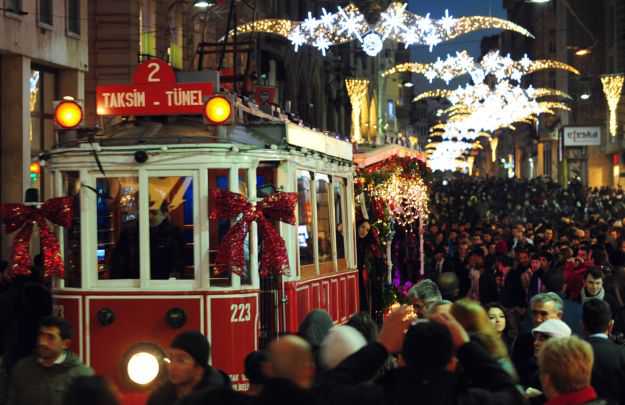
    View photos of the dark side of Istanbul.

    ISTANBUL — Istanbul famously straddles two continents, but pity the working stiff who commutes to Europe in the morning and home to Asia at night. The journey along the feeder roads funneling into the city’s Bosphorus Bridge is a bumper-to-bumper ordeal.

    Once onto the bridge itself, the view is suddenly extraordinary. To the south, across the water, is the skyline forged by the rulers of the Byzantine and Ottoman empires. To the north are the summer palaces and the stately waterfront homes of Turkey’s elite. But beneath the picturesque vistas lies a city growing dangerously out of control.

    In many ways, Istanbul is thriving. A joint study by the Brookings Institution and the London School of Economics named it the world’s best-performing city, in terms of income and employment growth, over the past year. Meanwhile, Istanbul came out on top of an informal survey of the cities that New York Times readers most want to visit.

    A provincial backwater that reinvented itself in 330 A.D. as the New Rome, Istanbul now serves as Turkey’s own New York. It produces well over a quarter of the country’s GDP, its businesses generate 60 percent of Turkey’s trade, and its citizens and businesses pay 40 percent of the country’s taxes. Districts covered with mulberry orchards little more than two decades ago have now sprouted bank towers and high-rise corporate headquarters. In the gardens of the Istanbul Stock Exchange, the statue of a vast marble bull is poised in a perpetual charge.

    But even while Istanbul is already on the way to becoming the commercial capital of a region well beyond Turkey’s frontiers, the city’s ambitions know no end. Recessions in Europe and rebellions in North Africa have only strengthened the conviction that the tide is drifting Turkey’s way — that, if it plays its cards right, Istanbul can become the new London or Hong Kong.

    Yet the city’s confidence may turn out to be its curse. Relentless urban expansion threatens to lay siege to the former imperial capital and scrub away its natural beauty.

    Istanbul is a city under construction. From the faux-Ottoman housing estate on the Thracian approach to the city — with its own mock Bosphorus canal — to the $2.5 billion conversion of a government office block into a sprawling office complex at the entrance to the first Bosphorus bridge, the feeding frenzy over Istanbul’s relentless expansion has also transformed the city’s politics.

    Istanbul has always been a magnet for the Turkish countryside. And as it has become ever more closely integrated into a global economy, the pickings have become all the richer. “The incorporation of Istanbul into the international real estate market has changed all the rules,” says Ilhan Tekeli, emeritus professor of the City and Regional Planning Department at the Middle East Technical University.

    For some, those rules were there to be broken. Kemal Kiliçdaroglu, now leader of the opposition Republican People’s Party (CHP), made his name in national politics in 2008 when he charged the deputy head of the governing Justice and Development Party (AKP) with accepting $1 million to arrange for the rezoning for commercial use a piece of land on the western approach to Istanbul. The site, which had been purchased for $3.5 million, was sold one year later for $13 million to the Turkish arm of a British supermarket giant.

    At the heart of Istanbul’s transformation is not just the surge in land values, but in population. In 1945, the city had less than a million inhabitants; by the end of the Cold War that figure had risen to some 6.5 million. In the past 20 years, the population doubled to 13 million.

    New urban settlements have eroded the boundaries of areas earmarked for water reservoirs, and gnawed away at forestry and green spaces. Istanbul is not only a meeting point of continents, but of Black Sea and Mediterranean climate systems. The result is a unique micro-environment that sustains some 2,000 species of plant life — 500 varieties more than in all of Britain, according to Andrew Byfield, co-author of Important Plant Areas of Turkey.

    And as Istanbul grows, it is also growing warmer. NASA satellites reveal thermal pockets where the city has expanded that are up to 1.4 degrees Celsius warmer than 25 years ago — a result of urban settlements replacing ancient landscapes. Istanbul’s new prosperity ensures that its carbon emissions will increase at a far greater pace in the years to come, putting its special ecosystem in jeopardy.

    It’s not just the flora that is in danger. At some time, the city will reach a limit for people, too. “Beyond 16 million, there is no future for Istanbul; there is no future for anyone,” says Ibrahim Bas, head of Istanbul’s planning department.

    via Pop Goes Istanbul – By Andrew Finkel | Foreign Policy.
  • An Anzac match in Istanbul? Really?

    An Anzac match in Istanbul? Really?

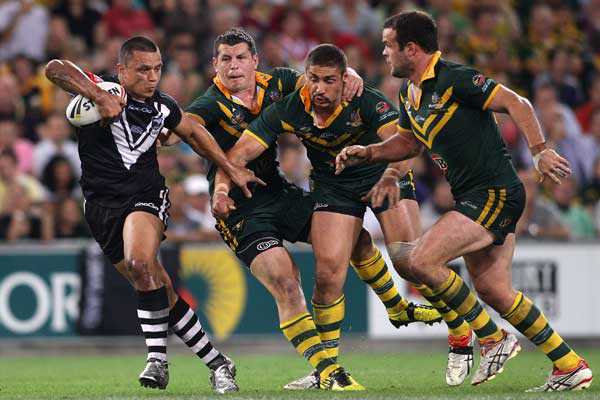
    Playing the 2015 Australia vs New Zealand Anzac rugby league test match in Turkey is a ridiculous idea for many reasons, says Lynn McConnell, senior editor of Sportal.co.nz.

    An Anzac rugby league Test in Turkey to celebrate 100 years since the horrific calamity foisted upon Australia and New Zealand by the British High Command at Gallipoli?

    Sorry, it doesn’t wash. Why not play the match on the war graves of those who died in the shambles while they’re at it?

    If New Zealand and Australian rugby league authorities were consistent in their thinking on playing a Test in Turkey in 2015 to commemorate the centenary of the Gallipoli landings, they would acknowledge (as surveys have found) that many Australians don’t even realise the NZ in Anzac stands for New Zealand.

    They could also have played this annual match in New Zealand more often to acknowledge the contribution Kiwis made in the campaign.

    They might also more correctly relate it to the actual Anzac Day and play it on the day on which the Turkish campaign is commemorated. Note, that was “commemorated” and not celebrated.

    Apart from anything else, the prospect of the match further implicates the league authorities in utilising the Anzac name for potentially commercial gain. It is still illegal in both countries for the name Anzac to be used in company names.

    The tragedy of it is that instead of acknowledging what this day is all about, the league authorities are in danger of making the day itself a sideshow to the match.

    No doubt they are banking on those who attend the dawn service making it back to Istanbul in time for the game. That in itself is no guarantee given some of the reported traffic problems involved in clearing the peninsula.

    But clearly the marketing people have realised the likely financial shortfall in staging such a match is at least a sign that their interests are correctly placed and not being seen as a “commercial” opportunity.

    One report had the respective rugby leagues of both countries and the NRL working in secret because they didn’t want to alert the Australian Rugby Union.

    Given that the SANZAR nations will be involved in their Super Rugby competition at that time next year, you would have to wonder what all the secrecy was about.

    League authorities are unabashed in their claims of a special connection with the Anzac legend with ARL boss Geoff Carr claiming some sort of league ownership of wartime commitment.

    “With 100 years since Gallipoli coming up, to have the opportunity to celebrate it with a game that is 100 years old itself, when so many rugby league players fought in all the wars since, it was something we just had to pursue,” he reportedly said.

    Whoop de do, what about the sportsmen and women across the board who similarly fought in various conflagrations? It’s a clear case of selective amnesia if ever there was. What else might be targeted for future events?

    The list is endless and runs the risk of becoming a circus. There are numerous battlefields in Europe, North Africa (ah well, with events in Libya at the moment Tobruk can’t be considered), the Pacific, Korea, Vietnam and Afghanistan where various incidents could be related.

    Sport, in George Orwell’s words, may well be “war minus the shooting”, but the fear is that the real purpose of Anzac Day may well be lost in the middle of all this.

    Lynn McConnell is the senior editor at sportal.co.nz

    What are your thoughts on playing the 2015 Anzac rugby league test in Istanbul? Have your say below.

    via An Anzac match in Istanbul? Really? – NZ Sports blog.

  • Istanbul Hotel Opens at Site of Al Qaeda Attack

    Istanbul Hotel Opens at Site of Al Qaeda Attack

    By Ayla Albayrak

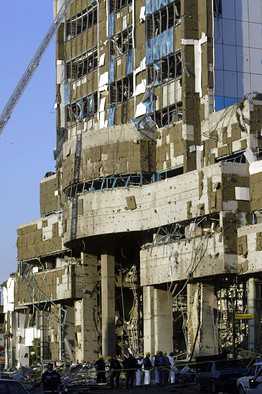
        Mustafa Ozer/AFP/Getty Images     The HSBC building in Istanbul after a terrorist attack in November 2003.
    Mustafa Ozer/AFP/Getty Images The HSBC building in Istanbul after a terrorist attack in November 2003.

    As the world was digesting news of Osama bin Laden’s death, Istanbul celebrated a symbolic victory over his terrorist network — a building al Qaeda bombed more than seven years ago reopened Monday as an upscale hotel.


    In November 2003, an al Qaeda suicide bomber drove a truck packed with explosives in front of the building — then HSBC’s headquarters in Turkey — and detonated it, killing three HSBC employees and wounding scores of others. The blast was part of coordinated week-long attacks that also targeted Istanbul’s Jewish community and the British consulate, killing 63 people and injuring hundreds.

    The HSBC building suffered massive damage. Glass and piles of rubble littered the street in the aftermath. Seven years and $150 million later, it reopened as the Istanbul Edition hotel, a monument to modern design with 77 rooms and a luxury suite. The renovation was funded by Azerbaijani businessman Mubariz Mansimov, the building’s owner. The result: one of Turkey’s most luxurious and expensive hotels, with prices starting at $600 a night, according to the hotel’s general manager Sedat Nemli.

    The glitzy ceremony with Turkish celebrities and officials attending came a day after U.S. President Barack Obama said Osama bin Laden was killed in a U.S. covert operation in Pakistan.

    “There is divine justice in the world,” Turkey’s Minister of Culture and Tourism Ertugrul Gunay said at the opening ceremony.

    A former HSBC employee recalled that immediately after the terror attack of 2003 the bank quickly moved its headquarters to a secret location, where work continued as usual. The bank didn’t officially discuss the attack or its victims at the time. In 2007, HSBC placed a monument — a blood-red Dove of Peace — in front of its new Turkish headquarters to commemorate the victims.

    Mr. Nemli, the hotel manager, said the hotel represents a new chapter for the building and is a fitting tribute to al Qaeda’s victims in Istanbul.

    “The memory of the terrorist attacks wasn’t a problem to the investor or to us,” Mr. Nemli said referring to the hotel management. “This building stands at a site that saw a lot of pain, but it has now breathed new life into the city.”

    via Istanbul Hotel Opens at Site of Al Qaeda Attack – Emerging Europe Real Time – WSJ.

  • Topkapi Palace

    Topkapi Palace

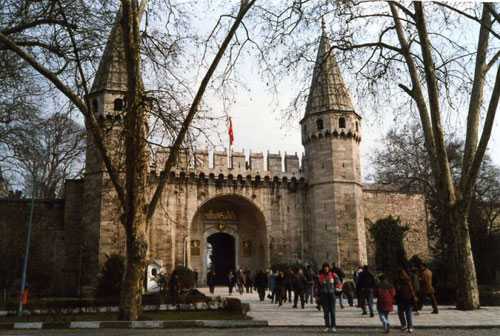
    Between the Golden Horn and the Marmara Sea, with an incredible view of the Bosforo, sits the Topkapi Palace . Built by order of the Sultan Mehmed II a few years after the final collapse of the Byzantium, it was the centre of administration for the Ottoman empire for the following four centuries – until 1853, and the Christian era, when the Sultan Abdulmecid decreed that the headquarters move to the modern Dolmabahçe Palace.

    topkapi istanbul

    Today, the Topkapi Palace is a museum dedicated to those far away glory years of the Ottoman Empire, and which houses some of the most magnificent treasures in the world. Visitors who wander the vast and winding spaces are often grateful for a tourist guide to show them the Pearl room for example, which holds the Topkapi head, embellished with precious stones, gold and emeralds – or the room which displays the famous Indio-Turkish throne from the 18th century.

    But one thing we would advise you not to miss out on is the extraordinary collection of talismanic shirts, made famous recently thanks to the publication in Istanbul of Hülya Tezcan’s Las Camisas Mágicas del Palacio de Topkapi.

    In Turkish culture, great importance has always been placed on magical practice – whether aesthetic or ritual – as a lesson for the future, from coffee, to the summoning of the omnipresent Turkish eye, or nazar to cast curses. Tezcan’s book speaks of the power of the talismanic tops to make the fighter invisible in battle, to protect from evil, to maintain good health and aid fertility. The latter was the case with the powerful Sultana Nurbanu – worried by the succession to the throne in the Somali house (which governed the Ottoman empire for 700 years) of her son, Murad III. At the time of coronation, Murad only had one son, and 14 years later – due allegedly to the magical garment, which was lined with verses from the Koran and various astrological signs, the sultan had produced 19 boys.

    In Tuzcan’s opinion, with the restoration of many of the pieces, the clothes – which were worn by every member of the court – “allow us to evaluate to what extent the superstitions of the Ottoman court affected the politics of the empire.”

    Paul Oilzum Only-apartments AuthorPaul Oilzum

    The Sultan’s shirts required three years of work – and only at the end were chosen verses from the Koran inscribed. It’ll take you much less time to marvel over them when you rent apartments in Istanbul

    via Topkapi Palace Istanbul.