Blog

  • Eunomia » Turkey and NATO

    Eunomia » Turkey and NATO

    Daniel Larison May 6th, 2011

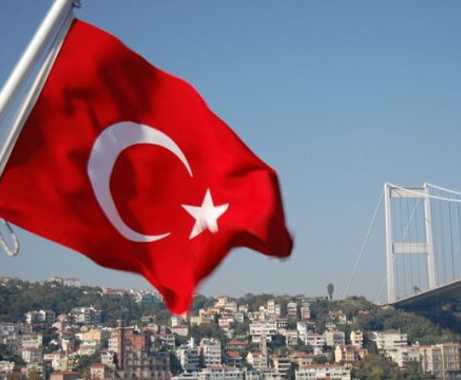
    David Bosco points to a poll of Turkish public opinion on NATO, notes the rising anti-NATO sentiment in the country, and comments:

    One of the real strategic costs of the decision to force the Libya operation into the NATO framework may be an acceleration of this trend.

    That’s probably right. The cost to NATO in terms of future political support in member states is hard to estimate, but it seems safe to assume that it will be significant. What is also interesting in the poll is the finding that anti-NATO sentiment has increased least among supporters of the ruling AK Party from 32% in 2004 to 52% in 2010 saying that NATO is no longer essential to Turkey’s security. This has tripled (24% to 72%) among Nationalist Movement Party (MHP) supporters. The main Kemalist opposition party, the Republican People’s Party (CHP), has occasionally been the most anti-NATO party between 2004 and 2010, but trailed the MHP in 2010 with just 59% saying that NATO is not essential. For all of the talk about how Erdogan and the AKP have been moving Turkey away from the West, AKP voters have remained relatively more supportive of NATO than their opponents. While NATO and the EU have been losing support in Turkey since the beginning of the century, there is a significant anti-Western and/or Turkish nationalist surge that has happened recently. It seems to have spiked between 2009 and 2010. While Erdogan has been willing to demagogue and exploit the changing public mood, the ruling party and Erdogan’s government have been trailing and trying to keep up with Turkish public opinion.

    Stronger support for NATO in the AKP might exist because it is currently the ruling party, and supporters of ruling parties tend to be more favorably inclined towards the status quo. Members of opposition parties express their displease with the ruling party by objecting to whatever the government endorses. Even so, it seems likely that Turkish foreign policy would become even less closely aligned with that of the U.S. and Europe in the event that the CHP somehow succeeded in replacing the AK government at the next election. The next general election is this June, and the CHP continues to trail AKP badly in polling, so it seems that NATO and the U.S. are going to be stuck with Erdogan and the AKP for at least a few more years.

    via Eunomia » Turkey and NATO.
  • RA Diaspora Minister visits Armenian churches of Istanbul

    RA Diaspora Minister visits Armenian churches of Istanbul

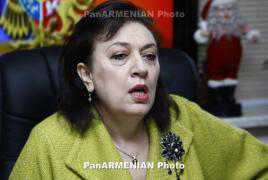
    PanARMENIAN.Net – The Global Summit of Women with participation of around 1,000 representatives from 82 countries is under way in Istanbul.

    As part of the event, Armenian Minister of Diaspora Hranush Hakobyan participated in the forum for first ladies, as well as Global Women’s Leadership awards ceremony.

    On May 7, the closing ceremony of the Global Summit of Women will take place with participation of UN Secretary General Ban Ki-moon.

    Hakobyan met with representatives of the Armenian community and visited Armenian churches and cemeteries of Istanbul, the Ministry’s press service reported.

    She also visited Armenian gymnasium to brief on programs implemented by the Ministry of Diaspora.

    via RA Diaspora Minister visits Armenian churches of Istanbul – PanARMENIAN.Net.

  • Gul cargo train leaves for Istanbul

    Gul cargo train leaves for Istanbul

    ISLAMABAD, May 6 (APP): The first Gul cargo train left for Istanbul with 12 containers from the Lahore dry port on Friday. According to Railway officials, the Gul cargo train would arrive in the Turkish city of Istanbul via Iran on the 11-day journey, a news channel reported.

    The officials sources also said that more cargo trains would be run in the future. The Gul train has been named after the Turkish President Abdullah Gul as goodwill gesture.

    via Associated Press Of Pakistan ( Pakistan’s Premier NEWS Agency ) – Gul cargo train leaves for Istanbul.

  • Be transported to Turkey at Istanbul Gyro and Kebab

    Be transported to Turkey at Istanbul Gyro and Kebab

    By Michelle Washington
    The Virginian-Pilot
    © May 6, 2011

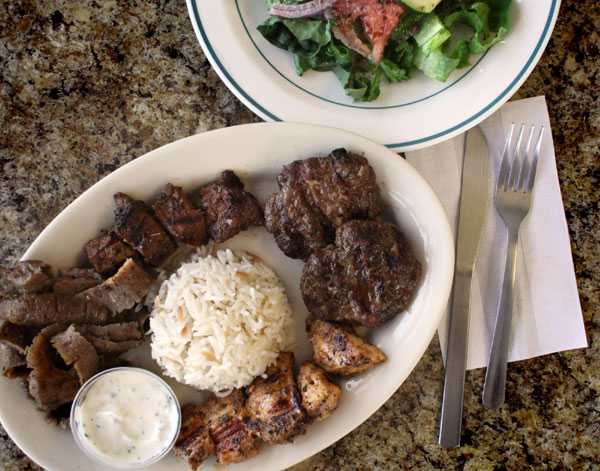
    Mixed grill and a side salad from Istanbul Gyro and Kebab in Norfolk. (David B. Hollingsworth | The Virginian-Pilot)
    Mixed grill and a side salad from Istanbul Gyro and Kebab in Norfolk. (David B. Hollingsworth | The Virginian-Pilot)

    The unassuming building between the bus station and a social services office in downtown Norfolk has hosted a variety of restaurants, from a pizza joint to a soul-food stop, in the past few years.

    Here’s hoping the most recent ethnic fare offering, Istanbul Gyro and Kebab, will stick around.

    The menu features standard Middle Eastern food such as gyros and kebabs. Where it stands out is in the care given to preparation.

    A friend and I shared lunch in the simple dining room, which offers a few seats at a counter near the grill and a row of booths against a long wall of windows looking out onto Monticello Avenue.

    Middle Eastern music played softly from overhead speakers, a continental contrast to the Greyhound sign visible next door. A giant rotisserie turned a cylinder of gyro meat, as the cook shaved slices from it with a 2-foot-long knife.

    A zesty eggplant salad ($3.95) started the meal, and we forgot all about the bus station, work and our troubles and cares. Finely chopped eggplant, tomatoes, peppers, carrots and onions – seasoned with herbs and mixed with olive oil and lemon juice – was served with warm grilled pita bread.

    The eggplant salad was lighter and more flavorful than baba ghanouj, with a hint of smoke from the eggplant and a nice bright kiss of lemon.

    Creamy hummus and slightly minty dolmas from the mixed appetizer plate ($6.95) were delectable. Although the menu described a garnish of tomatoes and black olives with that sampler, ours came with cucumber wedges and just half of a plain canned black olive.

    Another appetizer, the spinach and feta cheese pie ($2.95), was less impressive. Tasty spinach and cheese hid between layers of nicely browned phyllo that we both thought would be flaky and crisp. It wasn’t.

    Lovely lunch salads brought crunchy romaine lettuce lightly dressed with a house blend of olive oil and lemon juice. My salad carried tender chunks of nicely seasoned grilled lamb so good I almost wished I’d thrown health and diet out for the day and said “forget the salad, just bring me a giant tray of meat.” My friend said the chicken on his salad was tender and juicy.

    A later, takeout dinner was prepared exactly as ordered and ready to go when promised. A tangy, refreshing yogurt soup ($2.95) flavored with dill and with a hit of cucumber crunch tasted fantastic on a hot day. My husband wolfed down his mixed kebab platter ($11.95) with lamb gyro meat, chicken and lamb grilled kebab and kofte, a seasoned, charbroiled meatball. I scarcely got a bite. It was served with rice and a salad and a small cup of tzatziki sauce.

    Both desserts on the menu tasted pretty darn good: sweet and cinnamony rice pudding ($1.95) and baklava ($2.95) that thankfully for me was not nearly as cloying as some versions I’ve tasted. Instead of a sugary syrup, this variation used a molasses-tinged topping with nuts between layers of phyllo.

    Manager Erkan Karasow said his recipes come straight from Turkey, his homeland.

    “It’s where I learn everything,” he said.

    He sometimes offers specials for Turkish recipes whose names he can’t even translate into English, he said, although the specials board this week offered stuffed peppers, grilled salmon salad, and “real” Turkish Delight.

    He also tries to offer at least one meal prepared in a Halal manner each day, he said, because customers request it.

    Michelle Washington, (757) 446-2546, [email protected]

    via Be transported to Turkey at Istanbul Gyro and Kebab | HamptonRoads.com | PilotOnline.com.

  • Paddock Postcard – Istanbul, a City at Continental Crossroads

    Paddock Postcard – Istanbul, a City at Continental Crossroads

    By BRAD SPURGEON

    Heading into the Turkish Grand Prix this weekend, Formula One teams and their personnel have been referring to the race as a return to Europe after the first three races were in Australia and Asia. Although Istanbul, the majestic city outside of which the race takes place, has a foot in both Asia and Europe, the racetrack itself is technically in Asia.

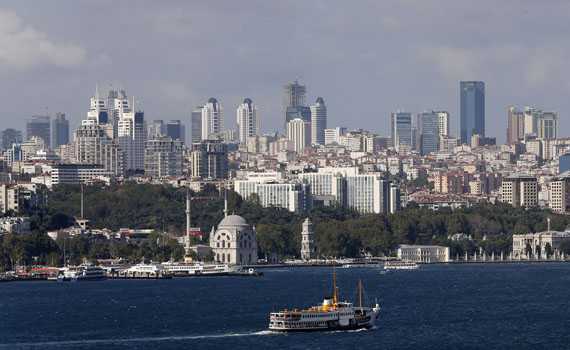
    Associated Press  The Bosporus Strait, which links Europe with Asia, in Istanbul, Turkey.
    Associated Press The Bosporus Strait, which links Europe with Asia, in Istanbul, Turkey.

    Associated Press – The Bosporus Strait, which links Europe with Asia, in Istanbul, Turkey.

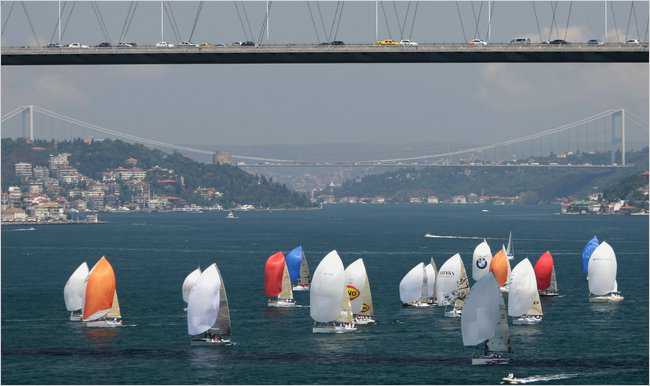
    In fact, it is not the easiest race for spectators to attend. Traveling to and from the circuit from the city at rush hour may mean long traffic jams across the Bosporus bridges — or taking a car ferry — that can make the trip last more than two hours. But for those who enjoy mixing tourism and races, few Grand Prix venues equal the stop in Istanbul.

    “Istanbul is one of the most interesting cities in the world and the track itself has some of the best facilities on the calendar,” said Colin Kolles, director of the Hispania team.

    Turkey has a growing importance in the car-manufacturing industry. Many carmakers — and the Pirelli tire company, which provides tires to the teams — have factories in the country. According to a recent industry report, “the automotive sector has become the country’s leading exporter, with total exports of $16.9 billion in 2009, which constituted 17.4 percent of Turkey’s total export revenues.”

    Moreover, car sales are booming along with the Turkish economy. According to a recent article in the New York Times, “Stockbrokers endure four-month waiting lists to pay as much as $150,000 for top-of-the-line Audis and BMWs — or twice the manufacturer’s price after taxes.”

    But the motor-racing culture in Turkey is small, and the Formula One track was the first major road racing track in the country. It was designed by the Formula One track architect of choice, Hermann Tilke, and inaugurated in August 2005 with the first Turkish Grand Prix. Unlike many of the other Tilke tracks, this one receives near universal praise from the drivers. It has just about everything: rolling hills, winding corners — one of which is the longest in the series — and flat-out straights. The combination has made several drivers compare it with the track that is the traditional favorite, Spa-Francorchamps in Belgium.

    “Turn 8 is one of the most challenging corners of the year,” Nico Rosberg, a driver at the Mercedes team, said of the long corner. “It’s taken at full throttle for over eight seconds, with forces of up to 5G. If I had to create a fantasy Formula One circuit, this corner would definitely be included.”

    Unfortunately, however, the race in Turkey has been one of the least attended on the calendar. Not only is there little racing culture, but ticket prices are prohibitively expensive for the average Turk.

    The price of tickets along the straight is half an average monthly salary.

    “I love Formula One,” said a longtime fan who lives in Istanbul. “But I have never been to the race just because I cannot afford to buy a ticket.”

    If the race is full of contrasts, it is a measure of the city itself. Istanbul is the largest city in Turkey, and with a population of 13 million, it is the second-most-populous city proper in the world. It is the cultural, economic and financial center of Turkey and has been a crossroads of Asia and Europe for millenniums.

    First known as Byzantium, Istanbul has undergone changes of empire and culture, from being the capital of the Roman Empire (when it was known as Constantinople) to that of the Byzantine Empire, the Latin Empire and the Ottoman Empire. Traces of all these periods are visible in the buildings, walls and ruins spread over the hills of the city. Istanbul ceased to be the capital of Turkey in 1923, when Ankara became the capital city of the new Republic of Turkey.

    Istanbul remains a center of cultural life and dining, and its great boulevards and shopping districts, like Istiklal Street and the Grand Bazaar and Blue Mosque, have more than enough attractions to fill the time that spectators spend away from the track on a race weekend.

    via Paddock Postcard – Istanbul, a City at Continental Crossroads – NYTimes.com.

  • Bad news for Arab dictators: Bin Laden the scapegoat is dead

    Bad news for Arab dictators: Bin Laden the scapegoat is dead

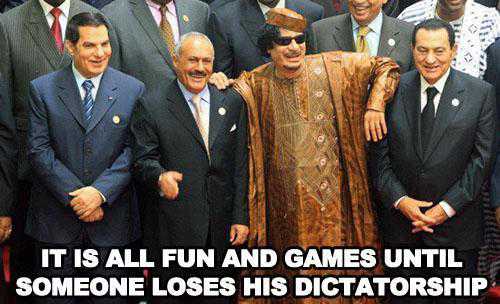
    Here is the big news! Osama bin Laden is captured, dead and buried in the sea “according to the Islamic traditions.”

    As a well-educated Muslim I never heard of such a tradition. For thousands of years Muslims are expected to be buried in 24 hours following their death, but after a special funeral prayer on land, not to the sea. One defense of the sea burial — the potential for a grave to become a symbolic attraction point for radicals — is also nonsense, since the Wahhabi school of Islam, of which bin Laden was a follower, strongly forbids grave markers and tomb visits. In Wahhabi terms, God is only the agency to pray for, and building tombs for regular prayer visits is interpreted as competing with the “oneness of God.” (more…)