Blog

  • Massa Looks For Good Luck In Turkey

    Massa Looks For Good Luck In Turkey

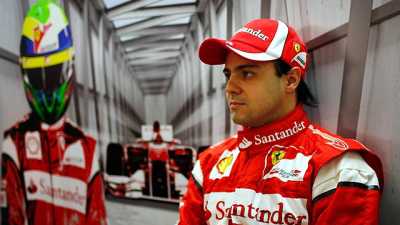
    Felipe Massa says he’s hoping that this weekend he can regain the sort of form that won him three Turkish GPs in 2006, 2007 and 2008.

    The Brazilian, who has led Fernando Alonso after the start in all three races this year, adds that his recent 30th birthday could be a good omen.

    “I have to say that Istanbul is a very special place for me,” he said on the Ferrari website. “As it was here in 2006 that I took my first ever F1 victory, which is something no driver can ever forget. I remember it as an incredible win from pole position and also I recall the fact I finished ahead of Michael and Fernando, who were fighting for the championship that year, which all added to making it a great achievement.

    “And after that, I made it a hat-trick, winning for the next two years, when I was definitely the fastest man on track. In fact, apart from the three wins from three poles, since I am in Ferrari I have always finished in the points at Istanbul Park, but I hope the Turkish wins won’t stop at three! It sounds strange, but looking back at my results in Istanbul and combining it with my recent significant birthday, it might even be a further motivation to get a good result this weekend.

    “However, we must be realistic and I know we need a good improvement on the car, as we were not as strong as we expected in the first three races. But everyone in Maranello has been working very hard to produce some aero updates for this race, so hopefully we can be a bit stronger, even though these new elements cannot be considered to be a major upgrade. That is the story for this weekend, but we can expect more improvements to follow at the races immediately after this one.”

    Massa says that ultimate qualifying pace is only part of the story in 2011, stressing that Ferrari looked strong in the race in China.

    “If you look at our positions in qualifying at the last race, we did not have the performance to deliver a podium result, but during the race itself our pace was such that we were actually fighting for a top three finish. We cannot say now what the situation will be in Turkey, because if we have been working hard, then so have the other teams, but it is not impossible that we will find ourselves with a car capable of fighting for a podium.

    “It is true that the tire situation is the same for everyone, but it is equally true that this could again be the key factor in deciding what happens in the race. The famous Turn 8 will be very important, because you really put a very heavy load on the tires at this corner so we need to think carefully about the car set-up to deal with it and control the degradation.

    “One element that could make this a completely different situation is that, currently, the weather forecast predicts some rain on nearly every day of the race weekend, which means we and especially our strategists have to be very concentrated and ready for anything. I can’t remember rain in Istanbul, so it could make life interesting.”

    Adam Cooper notched up his 26th season as a racing journalist in 2010. He has written about F1 for SPEED.com since 2005. Follow him on Twitter.

    via FORMULA ONE – F1: Massa Looks For Good Luck In Turkey.

  • Turkey no longer has Kurdish issue, says PM Erdoğan

    Turkey no longer has Kurdish issue, says PM Erdoğan

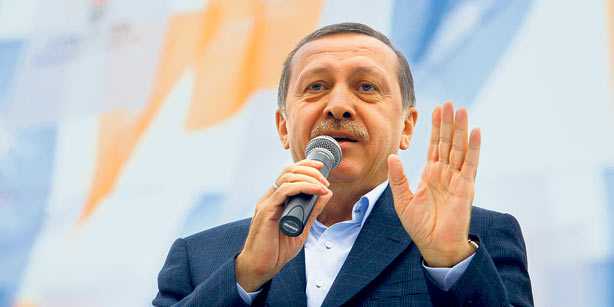
    Turkey no longer has a Kurdish problem, and what currently remains to be addressed are the problems of individual Kurdish citizens, Prime Minister Recep Tayyip Erdoğan said on Saturday during a rally at a central square in the eastern city of Muş.

    Erdoğan has been holding rallies in various cities of the East and the Southeast as part of his election campaign. In the Muş rally on Saturday, tens of thousands showed up to hear Erdoğan, the prime minister and leader of the Justice and Development Party (AK Party). His speech in this Kurdish-dominated city included harsh criticism of the pro-Kurdish Peace and Peace and Democracy Party (BDP) and the terrorist Kurdistan Workers’ Party (PKK) and its jailed leader Abdulah Öcalan.

    He criticized the BDP, one of whose members earlier referred to Öcalan as “the Kurdish prophet,” saying: “We don’t have anything to do with those who declare Apo [how most people in Turkey refer to Öcalan] a prophet. We will be together with you against those who cheat my Kurdish brothers and sisters. We will give them the appropriate response at the ballot box.”

    Erdoğan criticized the separatist PKK and the BDP, saying: “We can’t get anywhere with those who try to set one brother against another. We can’t get anywhere with those who are trying to divide this country. We can’t get our country up on its feet with the separatist terrorist organization [PKK]. We can’t get anywhere with those who try to undermine the democratic will of the people.

    He recalled in his speech that the last time he had visited Muş was on Dec. 18, 2010, when he attended the opening ceremony for 106 different public facilities. He said he has visited Muş eight times since 2002, when the AK Party was first elected to power.

    “This land is our land. This is our motherland. There is no discrimination, no separatism. We are one, and we are together. We will be one, we will be united, we will be big and fresh. We are like the teeth of a comb. We are like nail and cuticle. We are not friends or relatives; we are eternal brothers. We are as much as brothers as the Euphrates and the Tigris. We are as brothers as the Süphan and Ağrı [Mountains] are. We are as inseparable as the sky and the earth. Whoever says the opposite, you should know, denies history, murders truth and denies himself.”

    Erdoğan said the services provided to Muş under the AK Party government had restored the city’s pride. “We are not after votes; we are not like those who become democratic all of a sudden, who suddenly remember Muş when elections are around the corner. … The pain and troubles of this region have always been our pains, too. We feel like we lost a part of our selves every time someone here died. Every tear shed in this region seeped into our hearts, conscience and soul. As weapons spoke, as bullets flew in the air, as young men died up in the mountains, our hearts burned. We have been fighting to end this pain for the past eight-and-a-half years.”

    “There is no longer a Kurdish question in this country. I do not accept this. There are problems of my Kurdish brothers, but no longer a Kurdish question. …. Tayyip Erdoğan is not your master, he is your servant.” He criticized the BDP for exploiting religion, as that party has recently been calling on its supporters to refuse to pray behind imams appointed by the Turkish state during Friday prayers. He said, referring to BDP politicians: “Now they are saying, ‘Don’t pray behind a state imam.’ There are people praying here, and then those who listen to the terrorist organization [PKK] go to pray somewhere else. This is separatism. We have nothing to do with those who declare Apo a prophet. We will stand together against those who try to deceive my Kurdish brothers.”

    Religious specialization center in Diyarbakır

    Head of the Religious Affairs Directorate Mehmet Görmez on Saturday announced that the directorate had plans to set up a Supreme Religious Specialization Center in Diyarbakır.

    He said Turkey’s Kurdish problem could not be solved by talking about brotherhood but only by “the law of brotherhood.” Görmez said: “Saying we are brothers doesn’t solve the problem. We need to emphasize the law of brotherhood. I mean there is an ethical obligation we have to each other based in our brotherhood in religion. Both they and we know that we are brothers; there is no need to declare that.”

    Görmez said a State Waterworks Authority (DSİ) building that is no longer used by the agency would host the center. He said they hoped to open the center soon.

    via Zaman

  • TÜBİTAK: Significant R&D and innovation progress in Turkey

    TÜBİTAK: Significant R&D and innovation progress in Turkey

    Turkey has recently experienced significant progress in the science, technology and innovation fields thanks to the strategic approach that was adopted in recent years by the government, according to the “Turkish Science, Technology and Innovation System and Performance Indicators” document released by the Scientific and Technological Research Council of Turkey (TÜBİTAK).


    Research and development (R&D) and innovation indicators confirm such progress. According to the TÜBİTAK document, R&D spending, which was at TL 2 billion in 1998, went up to TL 8.5 billion in 2009. This corresponds to a tripling in R&D spending between those years. Also, such an increase in the rate of R&D spending in Turkey is four times higher than the average R&D spending of Organization for Economic Cooperation and Development (OECD) and European Union (EU) for the said years.

    The ratio of R&D spending to Gross National Product (GNP) went up to 0.85 percent in 2009 from 0.37 in 1998 representing a more than two-fold increase. According to TÜBİTAK, such increase is an indicator that meeting the 2 percent target for said ratio by 2013 is achievable.

    Another important finding for R&D funding in Turkey for the given period is that the private sector for the first time topped the public sector and in 2009 the private sector’s share of funding reached 41 percent. In 2009, the number of full-time equivalent R&D personnel reached 74,000 and for researchers it was 58,000. The “full-time equivalent” term refers to the total time dedicated by workers for R&D activities. Such numbers represent a three-fold increase in the number of people hired in the sector compared to 1998. The report notes that since the target number of full-time equivalent researchers to be hired in the field was exceeded in 2006, the 2013 target was revised to 150,000. The number of full-time equivalent R&D personnel for the private sector in 2009 was six times higher than it was 1998.

    When it comes to scientific publications, which is another indicator of the level of science and technology for a country, the number of publications in 2009 was four times higher than in 1998, with over 25,000. The TÜBİTAK report states that with the increase in the number of such publications in 2004, Turkey located itself as the most dynamic country after South Korea among those trying to catch up with the US, EU, Japan and China.

    The document also highlights the fact that the main goal of science, technology and innovation policies now is to encourage private sector innovation and private innovative entrepreneurship in Turkey. For this purpose, the current 40 percent share of the private sector’s R&D spending is expected to go up to 60 percent by 2013. In order to facilitate the technological innovation capacity, the competitiveness of firms and the innovation culture in the private sector, a variety of institutions in Turkey, including TÜBİTAK, have financial support programs, the document reads.

    Zaman

  • The German Archeological Institute: A critical cornerstone for restoration work in Turkey

    The German Archeological Institute: A critical cornerstone for restoration work in Turkey

    Around 30 years ago, one of the first Ottoman photography studios, the Sebah & Joaillier Photography House, decided to put its archives up for sale. After all, it took a lot of work just keeping all these photographs organized and in good shape.

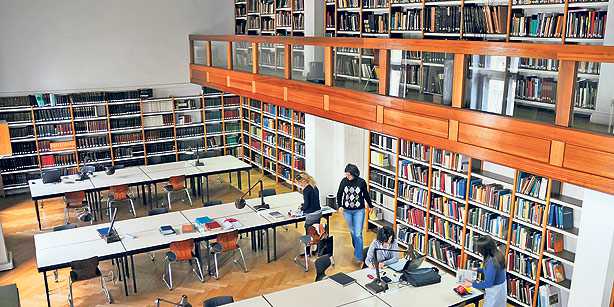
    But in the hands of Sebah & Joaillier lay a critical mass of visuals that illuminated 100 years worth of history having to do with Turkey. This private photography collection went first to the Archaeology Museum, or rather the Turkish Ministry of Culture. A council was formed, and for three months the photographs in this archive were carefully examined, while a sum of what amounted to TL 3 million (at the time) was set aside as payment. In the end however, no payment was forthcoming from the Ministry of Culture. Little by little, the situation began to be discussed in the local art and culture community, and it was at this point that the German Archaeological Institute stepped forward with an offer of TL 49 million to the family that owned these archives. And thus on the evening of that day, the archives were moved to the buildings that house the institute. In the meantime, years passed, and a rush towards restoration of historic buildings began in Turkey. Especially in light of İstanbul being selected as a 2010 European Capital of Culture, there was a renewed effort to see everything from small and large mosques to old wooden homes and many other historic structures renovated and restored. But of course, the architects and cultural historians working on these restorations had a great need for information and visuals regarding the original state of all these structures. It was at this critical juncture that the institute stepped in, coming to the rescue of researchers with its archives.

    And so, the archives, which at one time the Ministry of Culture was unwilling to pay for, have nowadays become priceless. In fact, the institute has a very wide visual archive that is made up of photographs collected from not only its own archaeologists and academics, but also from various world collections. All of which is why the stream of visitors over the past decade to the institute’s historic stone building in Beyoğlu has simply not slowed down.

    Turkish frescoer Kaya Uçer, who restored the frescoes that decorate the historic Piyale Pasha Mosque, got hold of the visual representations of this mosque, which helped him in this project, from the institute. Üçer notes that everyone who works in this arena must absolutely make at least one trip to the institute. He says part of what makes the institute’s role so critical is that it has carefully organized the photographs in its archives, ensuring that people can find the photographs they need in a short time. The photographs are organized according to topics and geographic regions.

    Actually, there are also the famous Yıldız Albums at Istanbul University, albums that Sultan Abdulhamit shot that document the cultural and historical wealth of the 19th century Ottoman Empire. However, these photographs are now located at both İstanbul University and the Süleymaniye Library and have not been organized; thus, researchers have a very difficult time using them as a resource. Üçer notes that even now, hundreds of important documents and glass negatives are just sitting in the depots of both the Museum of Turkish and Islamic Arts and the Süleymaniye Library. And while one section of the images from the Yıldız Albums has been organized, and a copy is available at IRCICA (Research Center for Islamic History, Art and Culture), the price tag for these visual images is even higher than that demanded by the institute. (IRCICA asks $150 per photograph, while the institute asks for 50 euros, or a reduced 15-20 euros for academics.) All of which is why researchers, architects and academics tend to prefer the institute.

    Books printed by the first printing press are here too

    Institute Director Professor Felix Pirson notes that the photograph collection at the institute is the archive of Turkey and İstanbul’s architectural legacy. He also points out that the libraries at the institute are Turkey’s most comprehensive archaeological library. Some of the more notable books included in this library are 14 of the 17 books printed in the first Ottoman printing house. Printed by İbrahim Müteferrika, most of these books are the only known copies in Turkey. Other noteworthy books in this library are books by German travel writers, boasting abundant maps and engravings.

    The İstanbul branch of the institute was founded in 1929. Used as an office by archaeologists, Orientalists and historians who visited İstanbul and Anatolia, the institute over time managed to collect many resources concerning the various cultures that flourished in the Ottoman Empire. Those not taken back to Germany thus remained at the institute. Pirson asserts that everyone can make use of the library and extensive photography archives at the institute. Scientists and students working on their doctorates may even spend the night here, as there are five guest rooms.

    ‘As we lack cultural policies, we learn our own heritage from foreigners’

    Cultural historian Süleyman Faruk Göncüoğlu says: “As Turkey has no cultural policies of its own, we have never taken action on our own culture. But when the restorations began and there arose a need for documents, then the big mistake we made became clear because the Prime Ministerial archives contain only documents. There are no photographs, no ephemera (articles from daily life, diplomas, newspapers, brochures, letters, business cards, postcards, invitations, etc.) in those archives. But the truth is, for cultural and art historians, as well as for restoration efforts, there is a need for these types of documents. And the power that foreigners seem to have in opining on Ottoman cultural history derives from these types of documents. There have been many collections such as these put up for sale in İstanbul, but all of them were bought by foreign institutes. As for our foundations and institutes, none of which go any further than the signs hung over their doors, they never did anything to back these inventories of documents. And so now the ministries, foundations and various institutes in Turkey need to go to the door of places like the German Archeological Institute for their work.”

    Archeologists no longer dig to gather items for museums

    Travel writers curious about the Ottomans were some of the first to travel to Anatolia. These travel writers from the West first observed and wrote about the structures above the ground, as well as the lives of those around them, and it was after this that archeologists came to look at the traces of architecture left underground in Anatolia. Not only did they come to see, but they also took back home with them what they could. Pirson notes that the aim of much 19th century archaeological work was to procure materials for various museums around the world. He says: “We see this not only in Western Europe, but everywhere in the world. We even see it in the İstanbul museums.” However, Pirson points out the general direction taken by archaeology has changed, and digs no longer are undertaken with the goal of procuring museum items, but rather simply for knowledge. After a dig takes place nowadays, the items found are generally displayed in regional museums. Pirson, who heads up the digs at the Bergama site – -now ongoing for 130 years – – points to the uncovered tower that has been restored and turned into a museum. The German Archaeological Institute backs digs not only in Bergama, but also at Çorum’s Hattuşaş, Urfa’s Göbeklitaş, Milet, Didim and Söke.

  • “ÖNCE VATAN” Andonian Paçavraları

    “ÖNCE VATAN” Andonian Paçavraları

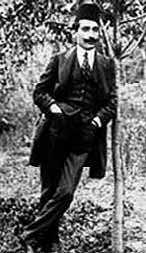
    Aram Andonian  (1875, İstanbul – 1952, Paris)
    Aram Andonian (1875, İstanbul – 1952, Paris)


    Yazar ve sahtekâr sıfatlarına sahip Aram Andonian, 1920 yılında Naim Bey’in Hatıraları, adında bir kitap yazmış, bunu üç dilde İngilizce, Fransızca ve Ermenice yayınlamıştır. Kitapta sözü edilen sözde “belgeleri” Osmanlı liderlerine, özellikle Tâlât Paşa’ya mâl etmiş, ama hiçbir zaman asıllarını gösteremediği bu belgeleri daha sonra da kaybettiğini belirtmiştir.

    1. Dünya Savaşı’nın galip devletleri, daha sonra kimisi Malta’da alıkonacak olan Osmanlı liderleri suçlayabilecekleri belgeleri köşe bucak ararken, Andonian’ın ürettiği bu “telgrafllar”a hiç itibar etmemişlerdir. Aram Andonian sonunda, (26 Temmuz 1937 tarihli) Cenevre’ de (İsviçre) oturan bir Ermeni hanımefendiye (Mary Terziyan) yazdığı mektupta, kitabının bir tarih kitabı değil, bir propaganda çalışması olduğunu ve diğer kimselerin bu kitabı nasıl istiyorlarsa öyle kullandıklarını itiraf etmiştir.

    2007 senesinde kaybettiğimiz ve değerini ve dostluğunu yeterince bilemediğimiz Avusturyalı araştırmacı yazar Eric Feigl’in “Ermeni Mitomanyası” adlı kitabındaki önsözünden:

    Elbette, araştırmalarım sırasında başka birçok kişiyle tanıştım. Özellikle Ermeni Zoryan Enstitüsü Başkanı Dr. Gerard Libaridian’ı da anmak isterim. Dr. Libaridian ile Cambridge, Massachusetts’deki ofisinde uzun saatler geçirdik ve çok ilginç konuşmalar yaptık. Dr. Libaridian, zeki, hayat dolu, bilgili, becerikli ve kendine güvenen biri. Onunla yaptığımız konuşmaları konu alan bir oyun bile yazılabilir.


    Bu konuşma sırasında, ev sahibimin en ateşli ifadelerini sürekli not aldım. Birçok defa sözde “Andonian Belgeleri”nden bahsetti.

    Dr. Libaridian’ın bu belgelerin uydurma olduklarını bildiğini düşünmek makul gözüktüğünden, konuyla ilgili tek bir kelime üzerinde zaman harcamak istemedim. Konuşulacak daha ilginç birçok konu vardı. Ama özellikle, Aram Andonian’ın kitabı ve bu kitabın belgeleri üzerinde durdu.

    Sonunda, “Ama Dr. Libaridian, benim gibi siz de biliyorsunuz ki, ‘Andonian Belgeleri’ uydurmadır,”demek zorunda kaldım.

    Dr. Libaridian’ın, sitemkâr cümleme verdiği kısa ve net cevabını ve yüzündeki ifadeyi hiç unutmayacağım:
    “Eeee?”

    ***

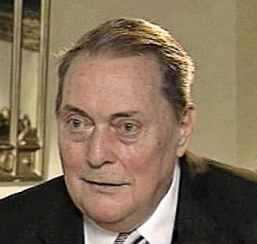
    Eric Feigl  (1931 – 27 Ocak 2007)
    Eric Feigl (1931 – 27 Ocak 2007)


    Aram Andonian’ın sahte belgeleri ve bu belgelerin Ermeni yalanlarındaki rolü hakkındaki yazının tamamını ekte bulabilirsiniz.

    Yazının tamamı, Eric Feigl’in “Ermeni Mitomanyası” adlı kitabından alınmıştır.


    Download

  • Jewish and Turkish Leaders Hold Meetings in NY Area to Foster Better Communication and Understanding Between the Two Communities

    Jewish and Turkish Leaders Hold Meetings in NY Area to Foster Better Communication and Understanding Between the Two Communities

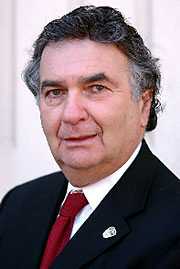
    Rabbi Joseph Potasnik

    By Staff Writer

    The Turkish delegation has been headed by Erhan Atay, Vice Chair of the Turkish American Business Association (TABA), and the Jewish delegation has been headed by Rabbi Joseph Potasnik, Executive Vice President of the New York Board of Rabbis.

    With a mission and goals that were decidedly non-political, the leaders of both communities recognized that while they might not be able to influence political interactions between the governments of Turkey and Israel, they could devote their energies to taking actions that would foster better communication and relations between the members of the Turkish and Jewish communities.

    There was also a tacit understanding that neither party ever wanted to shut down a discussion of any issue regardless of any tensions that may accompany such conversations. Each group agreed that the strength of any dialogue relied on the fact that all issues are on the table. Suggestions of ways to explore any crisis situations in a dignified, intellectual and understanding manner will mark the method in which all participants have agreed to proceed.

    The group took note of the over 500 years of cordial relations between Turks and Jews, referencing in particular the rescue by the Turkish Sultan of the Jews of Spain during the Inquisition, and the saving of Jews by Turkish Consuls during the Holocaust. Mention was also made of the Israeli effort to save Turks during the 1999 earthquake in Turkey, and Turkey’s providing urgently needed fire-fighting planes to Israel during the recent catastrophic fires in Israel.

    The group believes that future relations can successfully be built upon the past, where many years of mutual respect between Turkish and Jewish communities proved how much their peoples had in common.

    The group recognized the urgent need to publicize to the Turkish and Jewish communities the many positive events that have transpired throughout history between these two vibrant communities.

    The group discussed various ideas for possible future projects and activities including:

    1. Changing the perception of Turkey in the US among the Jewish community, and of Israel among the Turkish community.
    2. Throughout the year, representatives of the Jewish community will be writing articles for publication in the Turkish media and the Jewish media will reciprocate with the Turkish journalists.
    3. Joint appearances whenever possible on radio and television programs will take place as well. Rabbi Joseph Potasnik has already invited spokesmen from the Turkish community on his popular radio show.
    4. A film titled “Turkish Passport”, sponsored by the public sector, focusing on the relationship of Germany and Turkey vis a vis the treatment of Jews during World War II will be promoted in well publicized events here in the United States. There are currently several events planned in Germany. Americans should be made aware of the hero status that a number of Turkish diplomats, serving in Europe during WWII achieved and deserved for their selfless acts [often at great personal risk] in order to save Jewish lives.
    5. May is when the Turkish Day Parade and the Israeli Day Parade boast the highest concentration of their respective groups on the streets of New York. It is also American-Jewish Heritage Month. The plan is to highlight Jewish-Turkish Heritage as well. There are joint activities planned throughout the month.
    6. Arranging a trip to Israel and Turkey for a select group of invitees from the Turkish and Jewish communities.
    7. A conference on Turkish-Jewish relations for scholars and the public at large may be planned.
    8. A Turkish magazine, Turk America, published a special Jewish Sephardic issue. It is well documented that Turkey was one of very few countries that welcomed the Jews that were expelled from their homes in Spain in 1492 … and they were welcomed as valued members of the Turkish society. This magazine, which covers this and other issues of Turkish-Jewish history will be distributed to as many Jewish organizations as possible.

    It is sincerely hoped that these efforts will yield better relations and understanding between the two communities which have so much in common and can together create a better and brighter future.

    Among the organizers of these efforts are:
    Erhan Atay; Turkish-American Business Association [US & Turkey], Past President Federation of Turkish American Associations, Vice Chair Turks Living Abroad the Diaspora Organization;
    Ibrahim Kurtulus; Advisor to President of Turkish American Associations, US Rep Turks Living Abroad the Diaspora Organization;
    Ali Cinar; VP Northeast Region Assemby of Turkish American Associations, US Rep Turks Living Abroad the Diaspora Organization;
    Celal Secilmis; President Turkish American Chamber of Commerce & Industry, Community Leader;
    Tomris Azeri; President Azerbaijan Society of America, VP Assembly of Turkish American Associations;
    Mark Meirowitz; Board Member Turkish American Chamber of Commerce & Industry, Turkish-Jewish Community Activist;
    Rabbi Joseph Potasnik; Executive Director New York Board of Rabbis;
    Rabbi Craig Miller; Board Member Jewish Community Relations Council, New York Board of Rabbis;
    Rabbi Diana Gerson; New York Board of Rabbis;
    Henry Levy; Publisher, The Jewish Post

    The JewishPost

    Photo: Brooklyn Paper