Blog

  • Why the Anzac test is a turkey

    Why the Anzac test is a turkey

    OPINION: WITH ALL due respect to the NZRL, there’s something deeply disturbing about the proposal to stage a so-called Anzac league test in Turkey in 2015.
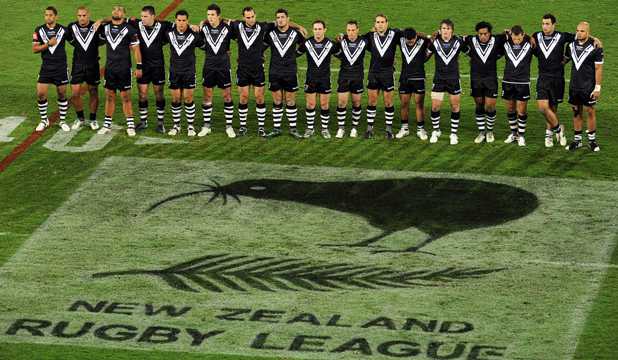
    Photos: Photosport  Let's call the Last Post on this farce: The Kiwis line up to face the Kangaroos last weekend.
    Photos: Photosport Let's call the Last Post on this farce: The Kiwis line up to face the Kangaroos last weekend.
    Photos: Photosport

    Let’s call the Last Post on this farce: The Kiwis line up to face the Kangaroos last weekend.

    Fair enough; playing a footy match to commemorate the landing at Gallipoli (where 11,421 Aussies and Kiwis perished) may have seemed a bright idea when first mooted at executive level. But you’d think cooler, or at least more sensitive minds might have eventually prevailed. It simply feels wrong on so many levels.

    It’s true, league is not on its own, here. Sport has always had this thing about comparing itself with war. Clearly not content with the standard theatre and drama it offers in the name of entertainment, it continually seeks non-existent parallels with the battlefield. League is merely the most recent example of this. The NZRL’s marketing slogan: “More than just a Game” is a delightful self-portrait; managing to sound both defensive and delusional in five easy words.

    For all that, the idea of league trying to boost its reputation and relevance (not to mention its coffers) by hanging on to war’s coat-tails is about as embarrassing as it gets. No wonder sport is so often lampooned for losing perspective. It’s bad enough that a commercial sporting event should even be using the “Anzac” tag for publicity, but this Turkey plan borders on the obscene. Good grief, why don’t we just party on the graves?

    From what I’ve read, most of the soldiers who survived either of the world wars preferred to keep their sport firmly in context. Former New Zealand cricketers Frank Cameron and Artie Dick spoke recently of the culture clash within the post WWII teams: the players who had served in the conflict and those who hadn’t. The first group tended to compete hard, accept a win or a loss magnanimously and play hard afterwards. The second were, typically, more obsessive and intense.

    In Greg Growden’s fabulous biography of Australian Bodyline batsman Jack Fingleton, it was again evident that the war veterans refused to treat sport as seriously as many of the peacetime players. The dashing all-rounder Keith Miller was regularly at odds with Don Bradman on the 1948 tour of England, at times refusing to bat or bowl in protest against his captain’s ruthless tactics. Unlike Miller, Bradman hadn’t seen any WWII action.

    The point of all this? Only that those poor blighters unfortunate enough to be caught up in either of the Great Wars knew where sport stood in the scheme of things. It was a game, just a game and certainly no more than a game. It was something to be played for fun. Those people knew what real drama was; they’d seen it with their own eyes. The horror, the death, the putrid smell of decay; they’d witnessed first-hand what genuine loss meant. And it had nothing to do with sport.

    League is trying far too hard. Presumably, many grocers fell at Gallipoli as well as footy players, along with butchers, bakers and candlestick-makers. Builders, plumbers, sparkies and farmers; salesmen and drivers, alike. Yet, as far we’ve heard, there are no plans for any of these industries to hold their 2015 annual conferences in Turkey. Only sport, represented in this instance by the NZRL, could be fat-headed enough to think along those lines.

    Quite apart from that, there’s also the irony of the Turkey proposal. After all, the Aussie league fraternity didn’t even really support WWI; they avoided it like the plague. Check out any credible historical account and it will tell a similar story. Australian historian Michael McKernan estimated about 75% of unmarried Aussie league players somehow managed to avoid serving. The NSWRL Roll of Honour, for first-grade players or officials killed in WWI, numbers 10, including the secretary.

    The purpose of this is not to belittle, of course; just to highlight the hypocrisy of the latest brainwave. Many were the reasons for Aussie’s new working-class sport not supporting the war. But the glaring reality is that, collectively, it did not. In 1915, as a comparison, it was reported that 197 out of 220 of Sydney’s regular first-grade rugby union players were in active service. London’s Daily Telegraph estimated 5000 Aussie union players served; about 98% of all adult playing numbers.

    As another Australian historian, Sean Fagan of website RL1908.com, notes, the NSWRL’s decision to continue playing its competition throughout the war, unlike union, was also controversial. Many considered it a reason for the 13-man code subsequently gaining an ascendancy over its rival. At the height of the debate the NSW Labor Premier went as far as calling on all able-bodied sports-men to do more to help their mates. “Your comrades at Gallipoli are calling you,” he exhorted. “This is not the time for football and tennis matches. It is serious. Show you realise this by enlisting at once.” Yet, even then, Aussie league’s finest avoided serving in their droves. There was no full draft and clearly, many had their reasons for not volunteering, not least a simmering hatred for the English. Nothing wrong with that, of course. But whichever way you look at it, Gallipoli and Aussie league have never had much in common.

    All the more extraordinary, then, that the powers-that-be should be attempting to make a connection between today’s annual trans-Tasman league fixture and the historic WWI battleground. It doesn’t as much seem wrong as downright distasteful, the idea of trading off the heroism, bravery and spirit of our Gallipoli veterans; in a tacky attempt to associate their privations and sacrifice with a tin-pot game of footy.

    More than just a game? Hopefully the NZRL will soon come to its senses.

    [email protected]

    – Sunday Star Times

    via Why the Anzac test is a turkey | Stuff.co.nz.

  • Turkey Protests New Internet Filters

    Turkey Protests New Internet Filters

    Internet Filters Set Off Protests Around Turkey

    By SEBNEM ARSU

    ISTANBUL — Thousands of people in more than 30 cities around Turkey took to the streets on Sunday to protest a new system of filtering the Internet that opponents consider censorship.

    The Information and Communications Technologies Authority, known by its Turkish initials as B.T.K., is going to require Internet service providers to offer consumers four choices for filtering the Internet that would limit access to many sites, beginning in August.

    Protesters in Taksim Square in Istanbul called the action, which regulators say is intended to protect minors, an assault on personal freedom and liberty.

    The B.T.K., however, has said that Internet users will still be able to access all content if they choose the “standard” option for filtering. The other filtering options are labeled as “children,” “family” and “domestic.”

    Tayfun Acarer, the chairman of the B.T.K., told reporters this month that the change came about because of complaints and demands for safer Internet use in Turkey.

    Thousands of protesters in Taksim Square, who were organized through a Facebook page, chanted, “Yes, we ban!” In Ankara, the capital, people cheered, “The Internet is ours and will remain ours!”

    For many people in Turkey, having to select a filtering option is just another form of censorship. Already thousands of Web sites are blocked by the state, mostly without any publicized reason.

    Furthermore, the B.T.K. recently issued a ban on the use of dozens of casual words on the Internet, like “girl,” “partner” and “animal.” It has not explained how this word ban will be policed.

    The most controversial act of Internet censorship in Turkey, so far, was against YouTube, which was blocked in 2007 after the posting of a video that was deemed insulting to Mustafa Kemal Ataturk, the founder of modern Turkey. Insulting Ataturk is a criminal offense in Turkey.

    That ban was lifted after more than two years when the content was removed from the Web site.

    via Turkey Protests New Internet Filters – NYTimes.com.

  • Turkey: Historic preservation

    Turkey: Historic preservation

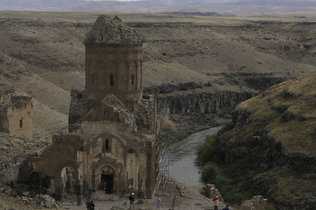
    The Church of Tigran Honents at Ani is seen in the Turkey-Armenia border province of Kars, Turkey. Burhan Ozbilici / AP  Read more:
    The Church of Tigran Honents at Ani is seen in the Turkey-Armenia border province of Kars, Turkey. Burhan Ozbilici / AP Read more:

    Turkey has launched a project to conserve an ancient Armenian cathedral and church in what is seen as a gesture of reconciliation toward its neighbor. Turkey and Armenia have been locked in a bitter dispute for decades over the mass killings of Armenians in Turkey in the last years of the Ottoman Empire. The project aims to conserve the remains of the cathedral and the Church of the Holy Savior in Ani, 25 miles from the eastern Turkish city of Kars. According to the New York-based World Monuments Fund, Ani — “one of the world’s great cities in the 10th century” — was once the site of hundreds of religious buildings, palaces, fortifications and other structures. Today it stands abandoned and the remnants of its celebrated buildings are in a precarious state. The site, in an earthquake-prone area, has been listed on the World Monuments Watch since 1996.

    Associated Press

    via Turkey: Historic preservation – Travel – MiamiHerald.com.

  • tehran times : Writer calls for Iran-Egypt-Turkey strategic alliance

    tehran times : Writer calls for Iran-Egypt-Turkey strategic alliance

    Writer calls for Iran-Egypt-Turkey strategic alliance

    Tehran Times International Desk

    TEHRAN — A prominent Egyptian thinker and writer has said that considering the current sensitive situation in the Middle East there is an urgent need to form a strategic alliance between Iran, Egypt and Turkey.

    According to IRNA, in a meeting called “Popular Arab Uprising and its Effect on the Future of Palestine” on Sunday, Fahmy Howeidy called for the establishment of a strategic alliance between Iran, Egypt and Turkey as these three regional powers can influence the future of Middle East and its political equations.

    “This strategic alliance between these three states is a triangle of power which can play a major role vis-à-vis the Zionist regime and the United States,” the Egyptian intellectual and political analyst added.

    Commenting on the current situation in the Middle East he said, “The waning influence of Israel and U.S. in the region is producing more confusion and weakness for these traditional powers, resulting in a more promising future for the Palestinians.”

    Howeidy called for more coordination between these countries and said: “”The best beginning for the formation of such a strategic alliance is to strengthen trade and economic relations among these three countries.”

    He pointed to some positive changes in recent years such as Turkey’s policy towards the Palestinian and Iran’s clear stance in support of Palestine, and said, “After the fall of Hosni Mubarak, Israel is going to be more isolated and Egypt can follow Iran and Turkey in supporting Palestinians.”

    via tehran times : Writer calls for Iran-Egypt-Turkey strategic alliance.

  • IAI, Elbit selling intelligence systems to Turkey

    IAI, Elbit selling intelligence systems to Turkey

    IAI, Elbit selling intelligence systems to Turkey

    Israel fears the highly sensitive technology may be passed on to a hostile third party.

    15 May 11 09:49, Globes’ correspondent

    Israel Aerospace Industries Ltd. (IAI) (TASE: ARSP.B1) and Elbit Systems Ltd. (Nasdaq: ESLT; TASE:ESLT) unit El-Op Ltd. are delivering highly sensitive intelligence systems to the Turkish Air Force, Israeli daily newspaper “Maariv” reported today.

    The systems will be delivered in the next few weeks to Turkey, despite the deterioration in relations between Israel and Turkey, because the contract was signed before the diplomatic crisis between the two countries following the flotilla to Gaza last year.

    Israel reportedly fears that Turkey may pass on the technology behind the system to a third party, possibly a hostile country. The system can scan areas of dozens of square kilometers from a long distance even during difficult weather conditions and at night.

    The contract is worth about $100 million to the Israeli companies.

    Published by Globes, Israel business news – www.globes-online.com – on May 15, 2011

    © Copyright of Globes Publisher Itonut (1983) Ltd. 2011

    via IAI, Elbit selling intelligence systems to Turkey – Globes.

  • Marchers protest new Turkish Web filtering rules

    Marchers protest new Turkish Web filtering rules

    Marchers protest new Turkish Web filtering rules

    From Yesim Comert, CNN

    May 15, 2011 — Updated 2041 GMT (0441 HKT)

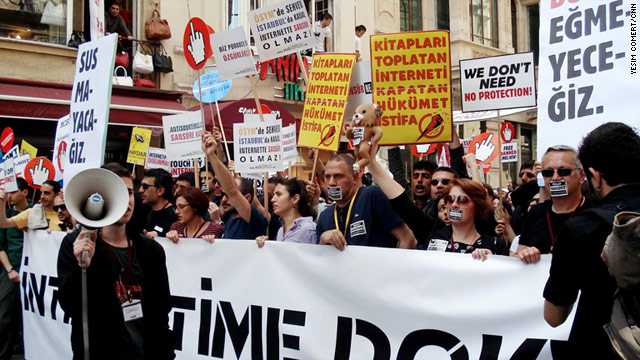
    Thousands of Turks march Sunday in Istanbul to protest against Internet filtering regulations set to take effect in August
    Thousands of Turks march Sunday in Istanbul to protest against Internet filtering regulations set to take effect in August

    Thousands of Turks march Sunday in Istanbul to protest against Internet filtering regulations set to take effect in August

    Istanbul (CNN) — Several thousand opponents of new Internet filtering rules, set to take effect in Turkey in August, marched in protest in Istanbul on Sunday.

    Demonstrators carried signs in Turkish and English reading “Don’t touch my Internet” and “We don’t need protection,” while they chanted slogans against website censorship.

    Internet users must choose among four filtering options, including family, children, domestic or standard settings, as a part of Turkey’s “Safe Internet Service.”

    The regulations are designed to protect children from indecent online content, according to BTK, the prime minister’s information technology board. Critics argue that it is not clear how the filtering system will work.

    The marchers stopped several times to stage brief sit-ins during the two-hour route from the Taksim Square to the end of Istiklal Street.

    Organizers claimed the marcher numbered in the “thousands,” which appeared to be accurate to a CNN reporter on the scene.

    The new filtering rules will be enforced beginning August 22, the government said.

    A “Enemies of the Internet” report issued this month by Reporters Without Borders included Turkey on its 2011 list of “countries under surveillance.”

    The BTK was “not fooling anyone when it claims to be rendering a service to Internet users by giving them a choice between a lot of restrictions and fewer restrictions,” the report said.

    Turkey already blocks more than 7,000 websites, “in most cases without reference to any court,” the report said.

    via Marchers protest new Turkish Web filtering rules – CNN.com.