Blog

  • There is a Time to Sue And a Time to Settle

    There is a Time to Sue And a Time to Settle


    By Harut Sassounian


    It is unfortunate that the noble and sacred concept of establishing an Armenian Genocide Museum and Memorial (AGM&M) in Washington D.C., had to end up in court.

    But contrary to popular belief, the issue was not simply a feud between two wealthy individuals — Gerard Cafesjian and Hirair Hovnanian — or a mere disagreement over the size and scope of the project. The actual dispute resulted from an attempt by Armenian Assembly leaders to take control of the multi-million dollar museum buildings donated by the Cafesjian Family Foundation (CFF) and exclude Cafesjian from any decision-making powers as a Board member of the AGM&M charitable organization.

    After a lengthy litigation, Federal Judge Colleen Kollar-Kotelly ruled on January 26, 2011, that the museum buildings had to be returned to CFF. She upheld the validity of the “reversionary clause” included in the grant agreement signed by the Armenian Assembly of America on Nov. 1, 2003, which stipulated that the properties donated by CFF to the Assembly for the purpose of establishing an Armenian Genocide Museum and Memorial would be returned to CFF, if the Assembly failed to develop the museum by Dec. 1, 2010. That obligation was subsequently conveyed to the AGM&M organization.

    In response to a new filing by the Assembly objecting to the January 26, 2011 verdict, Judge Kollar-Kotelly made a final ruling on May 9, 2011 ordering the Assembly to transfer ownership of the museum property to CFF no later than May 23, 2011. She rejected the Assembly’s demand for a new trial. She also asked a magistrate judge to recommend to her the exact amount of Cafesjian’s legal fees to be reimbursed by AGM&M.

    While CFF must be satisfied with the verdict, the Assembly is probably considering its legal options. However, given the Judge’s two recent verdicts in favor of CFF, filing more lawsuits or appeals is neither in the Assembly’s interest nor that of the Armenian-American community. The time has come to put a stop to the legal wrangling and start concentrating on the important task of building a genocide museum.

    CFF’s chairman, Gerard Cafesjian, made the right decision when he announced that “the court’s concluding verdict frees us all to build this long-awaited museum and memorial about the fact and ongoing consequences of the Armenian Genocide.”

    CFF’s Board member Ross Vartian pledged that CFF would relaunch the museum project “with the participation of ALL interested organizations and individuals.” During a subsequent Voice of America interview, Vartian made it clear that CFF welcomed the participation of the Armenian Assembly in such a community-wide effort.

    This is a very sensible approach. As the Bible states, “to everything there is a season. …A time to break down and a time to build up, …a time for war and a time for peace.” In this instance, one could appropriately add: There is a time to sue and a time to settle!

    Over a decade ago when the idea of an Armenian Genocide museum was first discussed at an Armenian Assembly board meeting, long before any internal disputes had surfaced, the organizers asked for my view on their initiative. I suggested that they invite major Armenian-American organizations to participate in a community-wide effort to oversee the fundraising and implementation of this pan-Armenian project. Regrettably, back then, my advice was unanimously rejected.

    CFF is moving in the right direction by inviting major Armenian-American organizations, including the Armenian Assembly, and prominent Armenian and non-Armenian individuals to come together to realize the laudable, yet long-delayed plan to establish an Armenian Genocide Museum and Memorial by April 24, 2015 — the 100th anniversary of the Armenian Genocide. In order to accomplish such a lofty goal in four years, everyone must put aside all other considerations and concentrate on the monumental task at hand. Internal Armenian squabbles only serve to provide Turks with further ammunition to ridicule Armenians and their sacred cause. Rather than wasting more time and money on further lawsuits and appeals, the funds and energies of the Armenian-American community should be channeled towards establishing this important edifice which is expected to cost well over $100 million.

    An Armenian Genocide museum located in the heart of the nation’s capital, just two blocks away from the White House, will be a lasting memorial to the 1.5 million innocent victims and a tribute to the indomitable spirit of the survivors.

  • Submit your entries for the Travel section’s annual photo contest

    Submit your entries for the Travel section’s annual photo contest

    We’re now accepting submissions for our 12th annual photo contest.

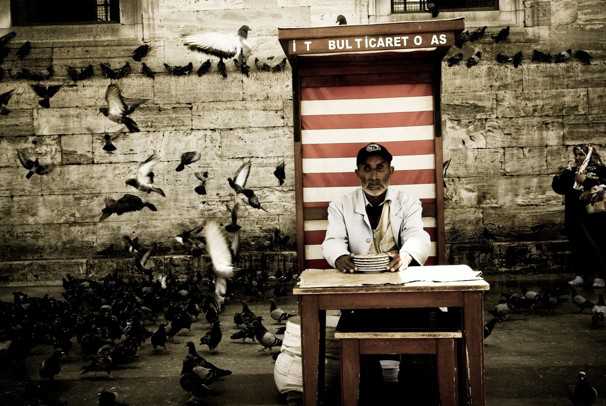
    ( Gabor Garamvari / ) - Gabor Garamvari’s photo of a blind vendor at the Istanbul spice market won honorable mention in Travel’s 2010 photo contest.
    ( Gabor Garamvari / ) – Gabor Garamvari’s photo of a blind vendor at the Istanbul spice market won honorable mention in Travel’s 2010 photo contest.

    ( Gabor Garamvari / ) – Gabor Garamvari’s photo of a blind vendor at the Istanbul spice market won honorable mention in Travel’s 2010 photo contest.

    As always, we want gritty as well as pretty. The topic of travel is broad, so have some fun with it: Experiment with lighting, angles, subjects and composition. Start shooting . . . and surprise us.

    One photo entry per person. Photo must have been taken after July 31, 2010.

    Submit your entries online at . Approved entries will be visible to other users. Include caption information and when the photo was taken, plus your name,

    e-mail address and phone number. Personal information will not be published online.

    Or, e-mail entries to [email protected]. Photos should be JPEG or TIFF attachments, between 1MB and 5MB in size. Include caption information and when the photo was taken, plus your name, address and phone number, and put the photo topic (e.g., “Scotland rainbow”) in the subject line.

    We’re looking for amateur shutterbugs only; professional photographers (i.e., anyone earning 50 percent or more of his or her annual income from photography) need not apply.

    Entries must be received by July 25. Photos become the property of The Post, which may edit, publish, distribute and republish them in any form. Photographers retain the rights to their images. No purchase necessary.

    The winners, to be determined by the Travel staff and photography professionals, will receive prizes that will be announced shortly. Post employees and their immediate families are not eligible. Please do not call to ask whether we have received your entry. The winning photos will be published Aug. 28.

    via Submit your entries for the Travel section’s annual photo contest – The Washington Post.

  • Regarding the Turkey’s Candidacy for the U.N. Security Council

    Regarding the Turkey’s Candidacy for the U.N. Security Council

    Turkey, a founding member of the United Nations (U.N.), is an ardent defender of the principles and goals enshrined in the U.N. Charter, supporting resolution of international disputes through multilateral cooperation.

    Within this framework, Turkey plays a constructive role regarding all issues on the U.N. agenda and, therefore, attaches special importance to undertaking active duties and responsibilities within the U.N. system and other international organizations.

    Turkey is accordingly determined to increase its contributions to international peace, security, stability and prosperity, as well as to further its efforts towards strengthening of fundamental principles and values such as human rights, democracy and the rule of law. Thus, Turkey is announcing its candidacy for non-permanent membership in the U.N. Security Council (UNSC) for the years 2015 2016.

    The main reason for announcing our candidacy once again, not long after our non-permanent membership in the UNSC for 2009 2010, emanates from our belief that Turkey will provide significant added value to global peace and security in an era of critical and rapid change in international affairs.

    The Middle East and the Mediterranean basins are undergoing a political change and transformation process that is likely to mark the upcoming decades. These developments have further increased Turkey’s responsibilities regarding international peace, stability and security, thereby influencing the preference on the term for its next candidacy for non-permanent membership.

    Throughout the course of history, Turkey has constantly been at the crossroads of international, political, economic and cultural interactions. This strategic location has endowed Turkey with outstanding heritage, allowing it to take a wide and unifying view on issues without making East-West, or, North-South distinctions. At a time when the search for a new and inclusive world order has gained momentum, Turkey therefore stands out as more meaningful and significant.

    Turkey is located at the center of the Afro-Eurasian geopolitical plane, where perhaps all risks and opportunities in international affairs are most intense. In addition, by virtue of its dynamic, visionary and multi-dimensional foreign policy practices, as well as its impressive economic performance, Turkey plays a pioneering and special role in turning risks into opportunities, and producing cooperative solutions.

    Turkey has made substantial contributions to traditional global security efforts. Moreover, it has been a catalyst for expansion of good governance based on sustainable economic development, human rights and the rule of law, which together constitute an inseparable dimension of contemporary security.

    In fact, the active approach Turkey followed in the Security Council during 2009 2010, to which we were elected after 48 years, was to find comprehensive and lasting solutions to the current issues through dialogue with all parties. This demonstrated our constructive potential and added value for accomplishing global peace and security.

    Our policy of “zero problems with neighbors” and our efforts to encourage international cooperation and dialogue are also among the primary elements of our vision for creating a harmonious and prosperous climate which will render lasting peace and security.

    Turkey does not limit these endeavors to its immediate neighborhood. On the basis of the principle of indivisibility of peace, security and prosperity, Turkey initiates and implements mutually beneficial projects across a wide geography from the Caribbean to the Pacific islands.

    Our increasing assistance to developing countries is the result of a conscious approach to strengthen the strategic link between security and development, thereby placing global security on firm footing.

    Turkey is well known for its security-focused approaches to U.N. issues, and subsequent military and police force contributions to the U.N. operations. Turkey is now taking important steps in peace building, which requires a multi-dimensional and long-term effort. On this score, the meetings we convened during our membership to the UNSC took an integrated and determined posture towards these issues.

    Indeed, Turkey organized a session entitled ‘peacekeeping’ in 2009, which was later carried forward through a Security Council ‘retreat’ in Istanbul. In light of the discussions pursued at these two meetings, Turkey held the sixth summit meeting of the Security Council during its term presidency in September 2010. This initiative was crowned by a Presidency Statement, which encompassed the Council’s entire efforts towards establishing peace and security within a single framework.

    Turkey, during its UNSC membership, was also active in sharing its experiences in combating terrorism. Turkey took a leading role in the efforts to effectively combat terrorism, addressing its root causes, as well as building capacity to this end.

    Turkey will remain engaged in these efforts in the future. The ‘Mediation for Peace’ initiative we launched together with Finland in the U.N., refers to a topic occupying an important section in the Presidency Statement. This stands in testimony to our sustained engagement in this field.

    Turkey’s growing economy will constitute a major source of power in our future strides. Thanks to her sound and resilient economic and financial fundamentals, Turkey is among the least affected from the global economic downturn, and it currently ranks as the 16th largest global economy.

    By virtue of this fact, Turkey also actively contributes to the work of the G-20, where it is a member, and constantly strengthens and diversifies its assistance programs towards the developing countries. In this framework, the technical and humanitarian assistance provided to all corners of the world primarily through the Turkish Cooperation and Development Agency (TİKA), already an internationally known name, has increased significantly in recent years.

    Turkey hosted in Istanbul the 4th U.N. Conference on the Least Developed Countries in May 2011 and assumed an active role in the implementation of the road map, which will provide guidance over the next decade. The road map adopted during this conference constituted yet another indication of Turkey’s will to deploy her economic resources in the service of global security and development.

    Simultaneously, Turkey is emerging as a center for international organizations in recent years, including the U.N. Turkey currently hosts the U.N. Population and Development Fund’s regional office, Secretariats of the Black Sea Economic Cooperation, and the Turkish Cooperation Council.

    Hosting important conferences and events, Turkey plays a key role in the conclusion of fundamental documents and agreements that guide the proceedings of concerned international organizations. Among such conferences recently held in Turkey are summit meetings of OSCE, NATO, UN-HABITAT, ECSC, ECO, Alliance of Civilizations and World Water Forum.

    In addition, the meeting held in Istanbul in May 2011 of the Council of Europe Ministerial Committee (CEMC) which Turkey chaired for 6 months focused on steps to reform the CEMC and to nurture peaceful coexistence of diverse cultures in Europe.

    It is worth noting that Turkey harbors a rich and deep-rooted heritage in peace and harmony, takes a globally leading role in inter-cultural dialogue, and promotes the Alliance of Civilizations initiative, as one of the two co-sponsors, an endeavor that has become the most effective and expansive initiative within the U. N. frame.

    All of these factors underscore that Turkey, when elected to the UNSC, will significantly contribute to the UNSC proceedings as a country that holds diverse perspectives towards contemporary challenges.

    Turkey’s overarching foreign policy vision also defines its views on the prospective Security Council membership. This vision aims to:

    • act along the lines of a modern approach that upholds respect for human rights with a view to balance security and freedoms,

    • enhance respect for human rights, fundamental freedoms, democracy, rule of law and gender equality around the world,

    • achieve peace, security, stability and prosperity in its region and beyond through cooperation based on political dialogue, economic interdependence and cultural harmony,

    • take multi-faceted steps to establish a holistic, lasting peace over the long term and engage in efforts for peaceful resolution of conflicts and protection of peace,

    • ensure that preventive diplomacy and mediation remain high priorities, and matching resources are allocated for dispute settlement,

    • urge expediency in international efforts while combating terrorism and organized crimes,

    • actively support efforts to achieve the Millennium Development Goals, also bearing in mind the correlation between development and security,

    • ensure international technical and humanitarian assistance remain unimpeded,

    • bolster endeavors in the fields of inter-civilization and inter-cultural dialogue,

    • advocate reform efforts geared towards furnishing the U.N. with a more effective and democratic structure.

    It is with this vision and desire to serving humanity and contributing to the world peace and security that we decided to announce Turkey’s candidacy for the U.N. Security Council membership during the years. 2015-2016.

    Taking this opportunity, we wish success to Spain and New Zealand, two friendly countries with which we enjoy immaculate bilateral relations, which also announced their respective candidacies for Security Council membership during the same term.

    Thus, while announcing her candidacy with a desire for serving in the U.N. Security Council for a second time over a period of fifty years, Turkey has thoroughly assessed the best term suitable in offering her contributions to international peace, stability and security, and has taken her decision in light of this appraisal.

    Turkey’s constructive, proactive and reconciliation-oriented posture in the U.N. and other international fora, as well as the values that it has represented on a wide geography, are assurances to its future pursuits.


    Republic of Turkey Ministry of Foreign Affairs
  • UK must send a clear message on domestic violence

    UK must send a clear message on domestic violence

    UK must send a clear message on domestic violence

    A new Council of Europe treaty will make a real difference to abuse sufferers – so why is our government so reluctant to sign?

    Gauri van Gulik

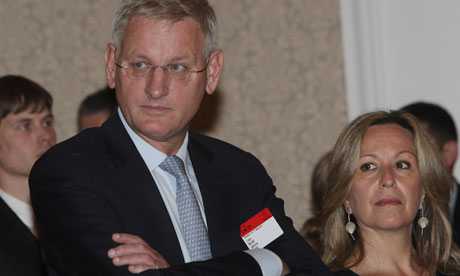
    Sweden's Carl Bildt and Spain's Trinidad Jimenez Garcia-Herrera are among the 47 signatories of the Council of Europe convention - but not the UK. Photograph: Burhan Ozbilici/AP
    Sweden's Carl Bildt and Spain's Trinidad Jimenez Garcia-Herrera are among the 47 signatories of the Council of Europe convention – but not the UK. Photograph: Burhan Ozbilici/AP

    Ministers from countries all across Europe gathered in Istanbul today to sign a new Council of Europe convention on domestic violence at the Istanbul summit of the committee of ministers. Incredibly, the UK wasn’t one of the signatories. The British government so far has not commented on its reasoning, but for a country that prides itself on being a leader on women’s rights, its failure to sign so far is both a mystery and a serious disappointment.

    The UK government has been sending out mixed messages when it comes to domestic violence, as Jon Robins has pointed out before. On the one hand, the home secretary, Theresa May, and the director of public prosecutions stress how serious this violence is and how determined they are to end it. On the other, the government is nibbling away determinedly at those services that are needed to fight violence, such as legal aid and protection for female asylum seekers who suffered domestic violence in their home country. And now it is reluctant to sign a groundbreaking new treaty that will truly make a difference throughout the European region.

    The UK’s leadership and support is important not just at home but for the whole region, as my research about domestic violence in Turkey shows.

    Born in southeastern Turkey, Selvi was 22 years old and pregnant with her fifth child when I met her while conducting research for a report on domestic violence. Her husband started his attacks when she was pregnant with their first child. “That first time, he hit me, he kicked the baby in my belly, and he threw me off the roof,” she said. In 2008, Selvi (her name has been changed for her protection) finally went to the police after her husband had repeatedly raped her and broken her skull and arm. But the police, after questioning her husband at the station, told Selvi: “There’s no problem, we spoke to him, you’re back together.” This happened three more times. “I just cannot go to the police any more,” she said.

    Selvi’s story encapsulates everything that can go horribly wrong when domestic violence is not taken seriously.

    The landmark new Council of Europe convention on preventing and combating violence against women and domestic violence offers a comprehensive international legal instrument to address this type of abuse, and includes a monitoring mechanism to ensure its provisions are implemented.

    Implementation is crucial, for Selvi’s case is sadly not isolated. Less than five miles from the site where the convention was being signed, Zelal (not her real name) lives with her three children across the street from her ex-husband’s home. One day, he grabbed her as she walked out of her house. She explained: “He held me, I screamed, ‘Let me go’. He started beating me. There were a lot of people around us, but nobody did anything. He pulled my hair and covered my mouth, and he dragged me to my house. There he kicked me and I fell to the ground … He broke every possession I have in the house, every chair, every picture, everything. Then he took off my clothes and he raped me.”

    Zelal managed to escape, almost naked, and went to two different police stations, where she endured a barrage of questions, from, “Aren’t you ashamed to tell me you were raped by your ex-husband?” to “Why are you bothering us with this?”. She eventually managed to speak with a prosecutor, but he told her to come back after the weekend.

    Zelal’s ordeal is one of many documented in a new Human Rights Watch report on family violence in Turkey. The report documents the awful experiences of women of all ages in Istanbul, Ankara, Izmir, Van, Trabzon, and Diyarbakır as they endured violence and sought help from the state. Women and girls as young as 14 told of being raped, stabbed, kicked in the stomach when pregnant, beaten with hammers, sticks, branches, and hoses to the point of broken bones and fractured skulls, locked up with dogs or other animals, starved, shot with a stun gun, injected with poison, pushed off a rooftop, and subjected to severe psychological violence.

    In Turkey, 42% of all women have experienced such physical or sexual violence committed by a husband or partner, according to a major university study. Turkey has implemented important legislative changes to its penal and civil codes to deal with this crisis, including the establishment of a legal framework for the protection of domestic violence survivors, giving them the option of requesting a protection order.

    However, there are serious shortcomings in the implementation of these reforms. The Turkish government had helped a few women we interviewed, but many others said that police, prosecutors, and judges sent them back to their abusers or acted so slowly on emergency protection orders that their very purpose was defeated. Too few domestic violence shelters offer protection, and some even keep their doors shut for victims lacking proper documentation, or women with disabilities.

    The Turkish government, which largely has good laws on the books, must systematically and actively improve their implementation and guarantee access to protection and justice for women like Selvi or Zelal who desperately need it.

    How to end this pandemic of violence against women and girls that still affects a quarter of all women in Europe?

    The European signatories to the new convention gathered in Istanbul can learn from Turkey’s experience. Strong legislation is necessary to fight domestic violence, but it is not enough. Every woman who survives violence should have access to protection, whatever her ethnic background, legal status, sexual orientation, marital status, economic situation or profession.

    The UK should start by signing the Council of Europe convention, not just for women in the UK, but to send a clear message to all other countries in the region: take the struggle against violence seriously.

  • Dracula and DaVinci Resolve’s Dual Citizenship

    Dracula and DaVinci Resolve’s Dual Citizenship

    Vampires are all the rage these days. With HBO’s cult hit “True Blood” and the “Twilight” phenomenon, a new wave of bloodsuckers have successfully carved out their own territory in American pop culture. But vampire fever is spreading beyond US borders, and “Kutsal Damacana 3: Dracoola” is a film that’s proving both trends and productions can have dual citizenship.

    There is no denying that Los Angeles, California and Istanbul, Turkey are two very different areas of the world. The United States’ second most populated city is well known for its A-list inhabitants and film industry ties, while the European megacity is most commonly associated with its rich economic and cultural history. Despite these dissimilarities, LA and Istanbul can find common ground in “Kutsal Damacana 3” and Loren James White.

    “Kutsal Damacana” is a popular Turkish film series’ take on the legend of Dracula. The series’ third installment, “Kutsal Damacana 3: Dracoola”, is a dark mixture of comedy and horror. The story follows the Dracula character, played by Sahin Irmak, as he lives through the ancient Ottoman Empire era into modern day Turkey.

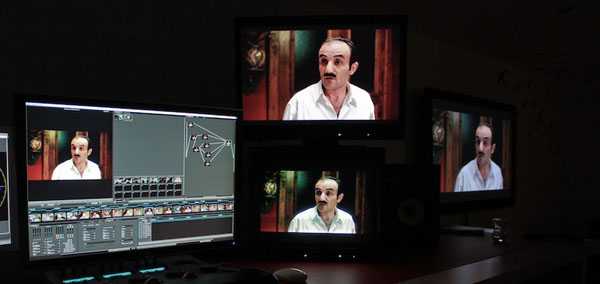
    As the Digital Intermediate Colorist on “Kutsal Damacana 3”, Loren also had a significant journey ahead of him. The project required him to travel from LA-where he works as a freelance colorist using Resolve at the Bandito Brothers post house-to Digiflame, a full service post house in Istanbul. Loren is used to splitting his time between the two cities for work, but this was the first time he needed to integrate workflows. He used the DaVinci Resolve Software in both locations to bring his two worlds together.

    Loren explained: “Serkan Semiz, head of Post Production at Digiflame, approached me to let me know he had a RED feature in the works that would be moving into the color grading phase within the month, so he sent me some of the footage via FTP. This is where I really benefitted from having Resolve at my personal suite in LA. I was able to start coming up with looks and kicking ideas back and forth with Korhan Bozkurt, the director, before I even arrived. My assistant at Digiflame was grouping shots together in the meantime, another great time saver.”

    Getting a head start on color correction was especially handy due to the fact that Turkey tends to favor a different style of imagery than the US does. Loren said, “Creatively, it’s very interesting to go from LA to Istanbul. The creative differences help keep me on my toes, but it’s having Resolve in both locations that gives me the power to pick up where I left off, every time.”

    Loren’s favorite feature of DaVinci Resolve Software is the 3D tracking, but he is also a big fan of the automatic scene detection, which was especially useful in grading “Dracoola”. He explained, “Being a horror/comedy, there are a lot of dark scenes. So I was able to make sure the actors’ faces were always lit well, and do it fairly quickly.”

    Resolve’s 3D object tracker enabled Loren to lock a PowerWindow to an on-screen object, turn on 3D tracking, and press play. The 3D object tracking then automatically followed the object’s movement, position and size, saving a dramatic amount of time formerly needed for key frame generation.

    With automatic scene detection, Loren could slice self-contained clips up into individual shots for grading. With an EDL, he could even manually tweak the scene cut results, making the process quick, easy and accurate.

    Loren had quite a lot of material to get through, and a limited amount of time to do it in, so the real-time performance of Resolve was yet another advantage. “The real-time performance is huge; it makes the grading session smoother and clients absolutely love it.”

    Loren’s Resolve color grading suite at Bandito Brothers in LA is very similar to Digiflame’s in Istanbul. He uses Resolve on a Mac Pro, with NVIDIA’s GTX 285 and GT 120 cards and Blackmagic Design’s DeckLink HD Extreme 3D in both locations. Loren also uses Blackmagic Design UltraScopes for monitoring.

    But he switches it up from there. While he uses a Panasonic 12 Series Plasma in conjunction with a 24-inch LCD grading monitor in LA, Loren’s Turkish Digiflame suite is equipped with a 58-inch Samsung Plasma client display and a 24-inch JVC DT-V24L1D monitor.

    Bandito Brothers is a full service production and post company-working on everything from feature films to commercial spots-and their DI theatre is 2K, with a stereo compliant projector and 3D capabilities. Their sister company Cantina Creative does high-end theatrical and commercial VFX work.

    Because Digiflame does a great deal of feature film work, they take some of their projects outside for a second look. Loren explained, “We work closely with neighboring labs, who offer Arrilaser and Lasergraphics printing for the film out process.” He continued, “Istanbul is a very congested city, and there are certain theatres that attract the majority of viewers for Turkish films, so we get right to the root of it and check the prints at those local theatres before duplication begins.”

    Loren’s job is usually done at this point-save for the occasional small fix.  He can rest easy knowing that Resolve enables him to do his best work “from start to finish,” no matter where in the world he is.

  • Erdogan’s crazy plan unveiled | beyondbrics

    Erdogan’s crazy plan unveiled | beyondbrics

    By David O’Byrne of business new europe

    With his party expected to win its third overall majority in general elections on June 12, Tayyip Erdogan, Turky’s prime minister, seems set on establishing his own legacy with his long-promised “crazy project” finally unveiled this week: a 50-kilometre long, 120-metre wide canal that his government plans to construct 100 km west of Istanbul between the Black Sea and the Sea of Marmara.

    Wide and deep enough for supertankers of up to 300,000 deadweight tonnage – bigger than the biggest tankers in use today – the canal will have no locks and will use passing places and a mooring basin midway to allow simultaneous traffic in both directions – in contrast to the dangerously overcrowded Bosphorus strait, which must be closed in both directions to allow the largest tankers through.

    The aim is simple. With oil production in the Caspian region expected to double to around 40m tonnes over the next decade, the number of tankers using the Bosphorus is also expected to double from a current average of 27 a day – a volume of traffic that threatens to overload the strait and expose Istanbul to an environmental disaster in the event of an accident.

    The new canal would reduce traffic through the Bosphorus and – with none of the twists and turns of its natural neighbour – offer a safer and quicker route.

    That aim in itself is not new. Turkey has for years been backing a project to bypass the Bosphorus: the Samsun Ceyhan pipeline, sponsored by a consortium of Turkey’s Calik Energy and Eni, which would link the Black Sea with the Mediterranean.

    People close to the project told bne that the Samsum-Ceyhan pipeline remains firmly on the agenda, as the Turkish government expects Caspian oil production to grow enough to justify both the pipeline and the canal. But with Turkey obliged by the 1936 Montreux convention to allow free passage through the Bosphorus, Samsun-Ceyhan has so far failed to secure commitments of sufficient oil to ensure its viability.

    “The same problem applies to a canal as to a pipeline – if one is free and one has a tariff, then there has to be a group agreement between oil shippers as to how much oil they send through each,” says John Roberts, Caspian specialist at Platts, an energy consultancy. “The only alternative is to renegotiate the Montreux treaty, which Russia for one would not be open to.”

    The people close to the project told bne that Ankara does indeed hope to renegotiate Montreux, despite the expected difficulties. But with Russia having apparently gone back on its promise to provide oil for Samsun-Ceyhan, many are viewing the canal as a bargaining ploy to pressure Moscow to moderate its demands for a majority stake in the pipeline – albeit one that doubles as a handy pre-election stunt.

    Nevertheless, many find the boldness of the project compelling, although many too question the rather low $10bn cost estimate.

    “As a logistics engineer, I think it’s a great idea,” says Ergin Buyukbayram, a logistics consultant who last year produced a major report on logistics in Turkey. “But it will be very difficult to build and will cost a lot more than they predict – maybe $20bn-25bn at least.”

    With shippers unlikely to pay to use the canal while transit through the Bosphorus is free, Ankara plans to offset at least part of the cost by selling real estate along the canal banks. Erdogan has argued that continued migration to Istanbul calls for bold plans to expand the city.

    Many remain unimpressed with that idea, pointing to the tens of thousands of unsold properties on out-of-town estates built in the bubble of property speculation that pre-dated the global economic crisis.

    “Demand for out-of-town property is low because most jobs are inside the city, and transport links are abysmal,” says one Istanbul property developer, who reckons it would take a major sea change to persuade employers to move 100 km into Thrace.

    And the historic precedent for such massive infrastructure projects is not encouraging.

    The Panama Canal was only built at the second attempt after a massive financial scandal; the Manchester Ship Canal Company went bankrupt twice before a rescue by Manchester city council allowed ships to sail direct to the landlocked industrial city; early income from the Suez Canal was so low that it required the development of a new way of calculating tonnage to rack up transit fees.

    All of which suggests that if Erdogan really does get his place in history, it may be the Turkish taxpayer who will foot the bill.

    via Erdogan’s crazy plan unveiled | beyondbrics | News and views on emerging markets from the Financial Times – FT.com.