Blog

  • In Turkey, the politics of facial hair

    In Turkey, the politics of facial hair

    By Nichole Sobecki

    ISTANBUL, Turkey — Leaning back into a maroon barber’s chair, its dark leather cracked with age, Onur Karadogan flips through a dusty catalogue of moustache styles.

    “An Islamist will ask for this one,” he said, pointing to a neatly trimmed, almond-shaped example, bringing two fingers together to illustrate the two millimeters of space that the Koran deems must exist between the end of the upper lip and the beginning of the whiskers.

    “These ones,” he said, upon reaching a brittle page covered in images of dark-haired men with thick, walrus-style moustache of the Marx variety, “are more for the leftists.”


    In his 16 years of experience as a barber, Karadogan has become an expert at shaping these bushy declarations. Men don’t wear their politics on their sleeve here, they write them across their upper lip.

    With nationwide elections on June 12, political parties have cranked their campaigns into full gear. Prime Minister Recep Tayyip Erdogan, who is running for a third consecutive term in office, appears set to win a comfortable majority. If he does win, he will become the longest-running Turkish prime minister since legitimate elections — ones that weren’t blatantly manipulated by the ruling party — began in 1950.

    This time around though, the leading opposition candidate, Kemal Kilicdaroglu, is banking on a secret weapon — and it’s plastered right in the center of his round-faced mug.

    “Turkish politics adheres to a simple rule: wives and their moustache-wearing husbands like moustache-wearing men as their leaders,” wrote Soner Cagaptay, a researcher at the Washington Institute for Near East Policy, in an op-ed published in Monocle.

    A former civil servant, Kilicdaroglu swept to the leadership of the main secular opposition party, the Republican People’s Party (CHP) last spring amid a sex-tape scandal that ousted the long-standing (and clean-shaven) party chairman, Deniz Baykal.

    Although these days the moustache is not as popular as it was in past decades, when there was nary a whiskerless face to be found on Turkey’s streets, they remain popular among the working class, which accounts for the majority of the voting public.

    The facial hair has not always been so politically expedient here. Turkey, in fact, has had a rather tumultuous history with the moustache. Mustafa Kemal Ataturk shaved his iconic moustache while fighting to establish the republic — and the military remains the one institution in Turkey were moustaches are not welcome.

    Following a coup in 1980, Turkey’s generals banned university professors from growing beards, which were then a symbol of left-wing intellectuals. By the late 1990s tensions had shifted as an emerging class of religiously conservative students clashed with security forces when beards were banned at universities altogether for being too Islamic.

    “When you put rules on people’s bodies, they try and challenge you,” said Mustafa Gurbuz, a Turkish professor of sociology at the University of Connecticut. “How you dress, how you shave, they become politicized.”

    “Over time these shapes became understood by society. It was a type of political code that everyone could read.”

    Intellectuals lay claim over the goatee, while members of the religious Gulen community are generally clean-shaven. An ultranationalist? They tend towardbushy, with the ends sloping downward at the corner of the mouth — an echo of the crescent shape found on the Turkish flag.

    Erogan (who favors an almond-shaped “stash”) melds street smarts with a brash charisma that has provided some of the popularity he has used to lead a resurgence of Islamic-oriented politics in the Muslim world’s most secular democracy.

    Born to a poor family from the shores of the Black Sea, the prime minister played soccer professionally and worked for Istanbul’s transportation authority — before, that is, they asked him to shave his moustache. He refused on religious grounds, and with the end of one career began another: politics.

    Perhaps what is most important to Erdogan’s appeal is the way in which he represents a shift away from the traditional vanguards of Turkey’s political system. Kilicdaroglu is following suit, attempting to rebrand his struggling party to compete with the Erdogan’s broad appeal.

    An Alevi Kurd from humble origins in Turkey’s east, Kilicdaroglu (with bushy, left-leaning whiskers) is going after the ruling party, known as AKP, with accusations of corruption. Accusing Erdogan’s party of losing touch with the common man, Kilicdaroglu pledged to bring his party back to its center-left roots, prioritizing social policies, unemployment and poverty — and never once mentioning secularism.

    The quite demeanor of Kilicdaroglu has earned him the nickname “the Turkish Ghandi” in the local press. But his intentions for the party are anything but meek — in less than a year as his party’s leader he has attempted to shift his image from the anti-revolutionary to a modern, forward-thinking alternative to Erdogan.

    “How can a party that has a revolutionary spirit be in favor of the status quo?” Kilicdaroglu asked at a party meeting. “We are in favor of changes, a transformation that would improve democracy and make our society much more modern.”

    And while the AKP has tried to discredit Kilicdaroglu with claims that he is a puppet for the old guard of the CHP, he remains the first credible opponent to the AKP since they came to power in 2002 — which some analysts say is in itself a boost for Turkey’s democracy.

    Whether or not Kilicdaroglu is a serious challenger to Erdogan is still open for debate. But as the campaigns heat up one thing is clear: Turkey’s next leader will be sporting a moustache.
  • Valdano :Real Madrid ‘s Turkey trio will be succesful

    Valdano :Real Madrid ‘s Turkey trio will be succesful

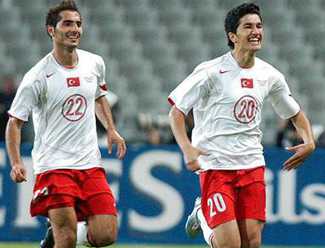
    General Manager of Real Madrid, Jorge Valdano is sure that Real Madrid ‘s Turkey trio of Mesut Ozil, Nuri Sahin and new recruit Hamit Altintop will be successful. Real Madrid Transfers..

    Nuri Sahin and Hamit Altintop two newest additions to Real Madrid Turkish delights
    Nuri Sahin and Hamit Altintop two newest additions to Real Madrid Turkish delights

    Last year was the year of Fifa World Cup. Not many players emerged as stars in the most glorious football event in the world. A starlet however shoved himself, glimpsed in the German National team jersey. Mesut Ozil, a turkish-german player showed impressive attacking qualities, accurate long and short passes and some enjoyable goals on deadly shots. He must have impressed Real Madrid board and manager Jose Mourinho, so they have signed him for a 5 year contract at the end of that season. He was the first footballer with turkish ancestors to play for the mighty Real Madrid.

    The coming season will welcome two more turkish players for Real Madrid, both play for Turkey National Team, increasing the total numbers of turkish players in the Real Madrid squad to 3.

    Valdano guarantees Real Madrid’s Turkish Connection will succeedJorge Valdano on turkish transfers Sahin Altintop

    Jorge Valdano, the general manager of Real Madrid for football operations stated yesterday in a telephone interview with NationalTurk, they expect the three Turks to be successful in their Real Madrid carriers. Valdano, manager Jose Mourinho and Real Madrid transfer comitee decided to transfer Turkey players Nuri Sahin and Hamit Altintop and pulled the trigger for the moves, after Mesut Ozil had a very good season with Real Madrid. Valdano said that they were more than pleased by Mesut Ozil ‘s performance in his debut season and decided to land two additional Turkish Players in order to increase the coherence of Mesut Ozil in the team.

    Jose Mourinho approved the transfers of Nuri Sahin and Hamit Altintop

    Real Madrid manager Jose Mourinho wanted these players to play for him the next season, Valdano commented. They have watched Nuri Sahin’s progress as a floor leader for a couple seasons. This season Nuri Sahin have played a vital role in Borussia Dortmund’s title run in Bundesliga, emerging as one of the star footballers in the German leauge, just like Mesut Ozil in the previous season.

    The acquire of Hamit Altintop also was Jose Mourinho approved, added the Real Madrid GM, Altintop’s résumé speaks for itself. Hamit Altintop ‘s 4 year spell with Bayern Munich contains many successful moments. He won two Bundesliga titles and two German Cups, as well as helping the Bavarians reach last season’s Champions League final. Mixed with the fact that Hamit Altintop transfer is free, Valdano stated in the press conference, his capture is a bargain and shows the changing transfer policy of Real Madrid.

    In the Spanish La Liga, teams are ‘not allowed to register more than 3 non EU players. All three turkish players are dual citizens, thus are eligible as EU players, which played a key factor for their respective transfers to Real Madrid.


    A NationalTurk special article. Cannot be used without NationalTurk reference.

    via Valdano :Real Madrid ‘s Turkey trio will be succesful / Real Madrid Transfers.

  • Hayastantsis in Istanbul: Immigrants from Armenia in Turkey have “nostalgia” of their own

    Hayastantsis in Istanbul: Immigrants from Armenia in Turkey have “nostalgia” of their own

    Four-year-old Arpine was born in Istanbul where her parents from Gyumri live and work now. On the wall in a narrow and damp house where she lives there is a picture of Mt. Ararat, a reminder of where her home, Armenia, is.
    The little girl’s father works to maintain his four-member family in Turkey and also his elderly parents back in Gyumri and the family of his brother who was killed in the 1988 earthquake in the Armenian town.


    “The only way was to go to Russia, but there was no work there for several months, so I had to go back to Gyumri, and then I moved to Turkey,” says the middle-aged man.

    Like many other Armenians their family also settled down in Istanbul’s Kumkapi district, which is cheaper, besides it is there or in the nearby Beyazit and Laleli districts that there are quite a few markets, leather items producing factories, jewelers’ workshops and fish processing mills.

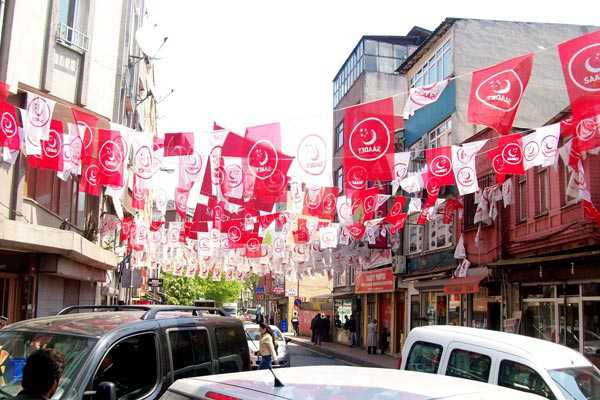
    This district with raggedy buildings and dirty, rundown streets is a different Istanbul. In contrast to downtown Istanbul that is full of tourists and has a modern look this district stands out by its misery and the only sign of continuing life here are flags that have been placed on the facades of buildings here ahead of upcoming elections.

    Immigrants from Armenia do not particularly mingle with the community of Istanbul Armenians as both have created their own isolated reality, with their own memories and nostalgia.

    “We have come here to maintain our families. We often hear words that shame us for coming to Turkey. But it is not us, but the state that should feel ashamed for driving us into such an extreme condition that we left everything and came here to keep our elderly,” says 57-year-old Hamest Hakobyan, who used to work as a teacher at one of Gyumri’s school, but became a “victim” of redundancy after the so-called optimization plan of the government several years ago and had to go to Istanbul to find a job.

    According to the data of the only research conducted on illegal migrants living in Turkey (by the Eurasia Partnership Foundation), the number of migrants from Armenia is approximately 15,000, the vast majority of them, 96 percent, are women. Most of them find work as housemaids or babysitters, while men are engaged in shoemaking or jewelry-related work.

    In the initial period of their stay in Turkey Armenians from Armenia prefer working for local Armenians, but as soon as they become fluent in Turkish almost all choose to work for Turks.

    “It is strange but it is a fact. Ask anyone, they would be more pleased with a Turkish landlord than with an ethnic Armenian. After giving it a long thought I figured out that this is our national character – we seek to dominate, suppress [our fellow Armenians],” says teacher Heriknaz Avagyan, one of immigrants from Armenia.

    Heriknaz came to Turkey in 2001 when she was 32, leaving a teacher’s job in Yerevan. But in Istanbul she also found an important mission.

    In 2003 Heriknaz realized that the children of illegal migrants from Armenia were growing up illiterate, without education, because they were not eligible to attend any school (even Armenian schools, which are also state-funded). And then she initiated the establishment of a school now attended by 72 Armenian children.

    But hers is a small, basement-floor illegal school, which provides a five-year education to the smaller part of children of illegal migrants from Armenia.

    According to the data of the Eurasia Partnership Foundation’s survey, in Turkey there are about 600-800 such children most of whom grow up without receiving any education.

    “In fact the authorities know about our school, but they turn a blind eye to it. As you know, beginning in September the government of Turkey will allow children to attend Armenian schools, but only as ‘free listeners’, without the right to be issued certificates, which actually does not solve the problem of their receiving and continuing education,” says Heriknaz.

    The teacher says with regret that many children who have exceptional abilities after leaving her school at age 13-14 start working in markets or engage in jewelry business as they cannot continue their studies. And before the establishment of this “underground” school a whole generation grew up without learning to read and write in Armenian.

    The school operates in the basement floor of an Armenian evangelical church in Istanbul’s Getikpasha district. Children of different grades study side by side in a small three-room space.

    On the other side of the wall are kindergarten age children, who sleep in a small room on three-tier beds, or in shifts, with the most tired and youngest ones of two-five-year-olds taking their shifts first.

    “Unfortunately, we don’t have better conditions, but the number of children keeps growing. If the Armenian Patriarchate of Istanbul wanted, it surely could provide a more convenient space, but they turned down our request, perhaps they don’t want to have problems with the state,” says Heriknaz, the school’s principal.

    Still, this is the only Armenian school where all subjects are taught in Armenian, where instead of the picture of Mustafa Kemal Ataturk children see the images of the president of Armenia and the Armenian catholicos and the Armenian tricolor.

    “The books and curricula here are the same as in Armenia. As far as books are concerned, I’ve received support only from the Diaspora Department of the [Armenian] Ministry of Education and Science where there are some people who care,” says Heriknaz, noting with regret that no official from Armenia visiting Istanbul has ever visited the school.

    All immigrants from Armenian in Istanbul speak about difficulties and indifference towards them.

    “But the greatest attention should be paid to immigrants here. True, the Turks treat us well, but we fear that we will become the first victims should their policy change. We have this fear every time we see police, but they know well who lives where,” says tearful Hamest Hakobyan as she shows a copybook with her verses that she says were born out of nostalgia.

    “We have turned poets out of homesickness,” she says, reading in a trembling voice: “I am an Armenian emigrant, I live in tears…”

    Gayane Abrahamyan is reporting from Turkey with the support of the Global Political Trends Center (GPoT) and Internews Armenia

  • Postcard from Laura: Up the mountains of Turkey

    Postcard from Laura: Up the mountains of Turkey

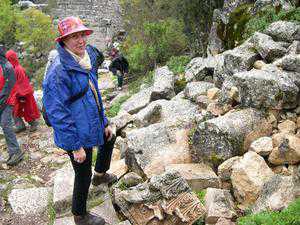
    We arrived in Anatalya, Turkey, excited because this was originally to be a day at sea. Because of the change in our ports of call, we were instead happily experiencing more of Turkey. We had two choices: One was a tour of the archaeological museum with a nice lunch in a local restaurant and an afternoon excursion to one of the best-preserved Roman theaters from antiquity at Aspendos. The other was a chance to take a strenuous hike up a steep trail through a pine forest to Termessos.

    I reread the daily program several times just to make sure I would be prepared for the day. I believe in the motto t”here is no such thing as bad weather, just bad equipment.” At Termessos, we were warned to “expect changeable weather atop the mountain – fog, cold winds and rain can come up suddenly.”

    And, rather apologetically, the program noted there would only be a boxed lunch. For me at least this was the best news of all. My bones were aching to stretch, and the thought of being on top of the mountain was thrilling, as heights always revitalize me. I would be prepared, because there are a few items which never leave my suitcase — the little black dress, a swimsuit, the rain hat, the blue wind/rain jacket and my trusty, out-of-fashion hiking boots. I have used these boots since my first trip to Russia in 1992. Because Kathleen the archaeologist from Smithsonian Journey’s promised to take photos at Aspendos anyway, going to Termessos was not a tough choice. In fact, it was the only one for me.

    Some were overly prepared; others were a bit fearful that our several days aboard the Corinthian II and that the multiple trips to the dessert table would catch up with them halfway up the mountain. We kept our heads down and walked from the main road to a steep road and the Yenice Pass to find the more ancient road called “Kings Street.” Much to our surprise, we arrived at our destination quickly. The view of the valley and pine trees below was incredible. We were at almost 5,500 feet, and most of the other mountains of Antalya average only 650 feet above sea level. Thankfully it was not a clear, hot sunny day, but a bit overcast — perfect weather for a hike and a photo or two to prove we did it.

    A few steps more and our guide began to explain that Termessos is one of the best preserved ancient cities of Turkey. Only a small force was needed to defend the city because of its location. In the early 4th century BC, Alexander the Great, attempted (and failed) to conquer this mountain and city of Temessos, which he likened it to an eagle’s nest perched high to protect its value. As we walked through the dense growth of trees and shrubs, I almost wished I had a machete because Alectas’ tomb was at the far reaches of the mountain. However, the additional hike to get there was rewarded with a beautiful high-relief carving of the warrior on horseback.

    On the way down, I was especially taken by the honesty of the signage; one of the buildings had a sign that just simply stated, “Unidentified building. Use unknown.” We could have used it as our tavern, but the lunch boxes were down the mountain; and once there we felt entitled to gorge ourselves on the chicken wraps, fresh fruit and sparking water. We sat on the old tombstones and sarcophagi, chattering away as if we were better than Alexander the Great. In fact, we were so valiant in our efforts to get up the mountain that we were ahead of schedule, and so off we went to the nearby archaeological museum to see the spoils of war and the creations of ancient artisans. I found myself in the gift shop buying a pink plastic book bag and a T-shirt. These were my tangible rewards for exercising my mind, body and spirit — along with remembrances of an active day well spent in Turkey.

    Laura C. Johnson is a freelance art historian who lives and works in Chicago and Florence. This series features a Road Scholar journey starting in Cyprus, to Turkey, Greece and Croatia, finishing in Venice. To reach Laura, send an email to [email protected]

    Copyright 2011 Rockford Register Star. Some rights reserved

    via Postcard from Laura: Up the mountains of Turkey – Rockford, IL – Rockford Register Star.

  • Turkish dam threatens town that dates back to the bronze age

    Turkish dam threatens town that dates back to the bronze age

    Turkish dam threatens town that dates back to the bronze age

    Hasankeyf has survived drought, war and empire, but it could be flooded out of existence within a few years

    * Constanze Letsch in Hasankeyf

    * guardian.co.uk, Friday 20 May 2011 17.48 BST

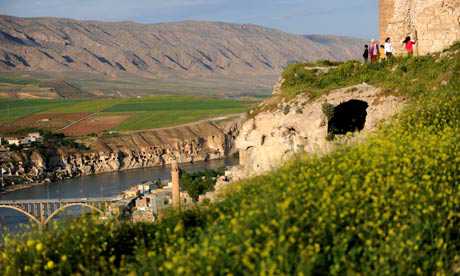
    Hasankeyf and the Tigris river

    Hasankeyf has 'housed all the civilisations of Mesopotamia', but now faces being submerged by a dam project. Photograph: Bulent Kilic/AFP/Getty Images
    Hasankeyf has 'housed all the civilisations of Mesopotamia', but now faces being submerged by a dam project. Photograph: Bulent Kilic/AFP/Getty Images

    It is one of the oldest continuously inhabited settlements on Earth, a town on the banks of the Tigris that dates back to the bronze age.

    Over the years it has survived the rise and fall of empires, drought, war and the harsh vicissitudes of nature.

    But Hasankeyf is facing the prospect of being flooded out of existence as Turkish authorities seek to speed up a dam project in south-east Anatolia that will raise the level of the river by 60 metres (200ft).

    “Hasankeyf has housed all the civilisations of Mesopotamia,” says Idris Turan, a local guide. “Romans, Byzantines, Assyrians, Arabs, Mongols and Ottomans – they have all passed through here and left their marks on the town.”

    The remains of a medieval bridge, one of the largest of its era, still withstand the currents of the Tigris.

    On the northern bank stands the 15th-century Zeynel Bey mausoleum, with its kufic tiles of glazed turquoise.

    More than 300 historical sites lie in and around Hasankeyf, many of them unexplored.

    Activists, both local and international, are fighting for the town, but the Turkish government is pressing ahead. Germany, Austria and Switzerland withdrew financial support for the Ilisu dam in July 2009, citing concerns about the social and environmental impact, but the government was able to secure domestic financing for the €1.1bn project.

    In October 2010, the villagers of Ilisu, 60 miles downriver, were relocated to new, state-built homes.

    At the inauguration ceremony, the Turkish prime minister, Recep Tayyip Erdogan, ordered the opening of the dam to be brought forward from 2016 to 2014.

    Pointing to the dust clouds rising from a construction site across the Tigris, Ömer Güzel, a shop owner and activist, says: “That’s where the new town of Hasankeyf is being built.

    “It feels like we will be buried alive and all we can do is sit and watch them dig our graves.”

    All is not yet lost. In March 2011, a court in Diyarbakir ordered an assessment of Hasankeyf’s cultural value and the damage the dam might cause.

    The investigation was brought about by the determination of a sole plaintiff.

    Murat Cano, a lawyer, has been fighting the dam since 2000 on the basis that it violates a Turkish law for the preservation of historical sites and the European convention on the protection of the archaeological heritage.

    “The ministry of culture has no feasible plans on how to move and protect the historical monuments,” Cano said.

    “They are not even sure which monuments will be relocated. If the assessment report is written to international preservation standards, the Ilisu dam project will be scrapped.”

    via Turkish dam threatens town that dates back to the bronze age | World news | The Guardian.

  • A rub with history in Istanbul’s hammams

    A rub with history in Istanbul’s hammams

    Jemma Nicholls

    Last Updated: May 20, 2011

    Courtesy of Chris Orrell


    The recently opened Espa Spa at the Edition Hotel in Istanbul. Courtesy of the Istanbul Edition


    The central stone at the Cemberlitas hammam, one of the city’s oldest baths. Cemberlitas Hamami


    I feel like a boiled lobster, red-faced and raw, lying prostrate on a slab where millions of others have been cleansed before me. For my induction to the age-old ritual of the hammam, I have chosen one of Istanbul’s most historic baths, Cemberlitas (www.cemberlitashamami.com), which was built in 1584 by Nurbanu Sultan, the wife of Selim II, who was known for his love of pleasure over politics.

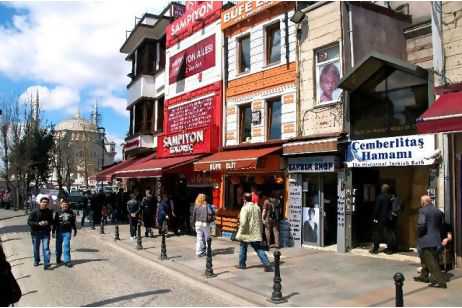
    Situated on Divanyolu Street in the heart of the city, and among Istanbul’s greatest monuments – it overlooks the Column of Constantine and is close to the Grand Bazaar and Sultan Ahmet or Blue Mosque – the tall double-domed building is sandwiched in between local shops – a barber’s, fruit and vegetable shop – and a traditional Turkish cafe. Today, Cemberlitas has to shout its presence by a huge white sign and narrow steps leading down to the front doors.

    Inside, the reception area is a small kiosk. I wait in a queue of residents and other tourists to pay upfront. As well as the traditional hammam, Cemberlitas also offers other add-on treatments such as body massages, reflexology, manicures, pedicures and waxing. The prices are extremely reasonable and a traditional hammam (entrance fee plus 15-minute body scrub and bubble wash) costs 59 Turkish lira (Dh137). For an added treat, you can include a 30-minute oil massage for an extra 40 lira (Dh93). There is no time limit in the baths themselves and, once you have paid the entrance fee, you can steam, and use the Jacuzzis and relaxation areas for as long as you wish. I make my way through the narrow, humid corridors and into the baths. Late afternoon sunlight streams through the holes pierced in the dome roof. The building consists of three floors and each one appears to have been designed with socialising in mind; large sofas and chairs are placed everywhere and I find women of all ages and sizes lying sprawled, semi-clad, over loungers. This is girl bonding without inhibition.


    The attendants are friendly but hurried, and I’m quickly steered into the changing rooms. After being thrust a pair of disposable briefs and a small cotton towel or pestamal, I change and shuffle apprehensively towards the huge double doors.

    The heat and steam hits me as soon as the doors to the central bathing area are open. It takes a few seconds for the steam to clear. The palatial room displays all the staples of traditional bathhouse architecture: the Cemberlitas was built as a double bath for men and women, roofed by broad domes more than 18 metres high; a large central hot marble platform is surrounded by kurna, bathing basins, and halvet, private bathing cubicles.

    While the architecture is anticipated, nothing prepares me for the sight of 50 semi-clad women lazing, bathing or being massaged on all sides of the room. A moment later a burly attendant whips off my pestamal, throws it to one side and orders me onto the central stone. Modesty has no place here.

    I find a space to sit but its skin to skin as we are packed like sardines. I’m later told by the proprietor, Mustafa Bayrak, that more than 500 women and around 350 men bathe here daily. It’s usual for women to come often – his wife enjoys twice-weekly visits with her friends and family for at least six hours at a time.


    I look around; three friends are chatting while they wait for their treatments; a mother and her brood of giggling children are bathing in a private wash area and crowds of women are talking nosily in the hot Jacuzzis. A visit to the hammam is not just about cleaning; it’s a social experience.

    “It’s the women’s coffee-house, where all news of the town is told, scandal invented …” So wrote Lady Mary Wortley Montagu, describing her first visit to a Turkish bath in Sofia, while travelling with her husband’s embassy to Turkey in 1716 (Turkish Delights, Philippa Scott; 2001).

    Twenty minutes later, I’m lying face down on the hot marble stone as my masseuse, Laura, vigorously scrubs me from head to toe with a leifeh, a wash mitt, before flipping me over to scrub the other side. She slides me about, lifting my arms and legs with experience and determination. The scrubbing is rough, like a child who has spent the day playing in the mud and is now being brandished by her furious mother. I’m being repetitively scrubbed and sanded down, scrubbed and sanded down, just as tradition demands.

    Next, I ceremoniously douse myself with warm water before a bubble wash with citrus Aleppo soap. Laura rubs the soap into a torba, a silk-like pillowcase, which when combined with the air, creates tiny bubbles that remove any dead skin. “You’ll need lots of soap!” exclaims Laura accusingly as bubbles lather up and completely cover me.

    After a final rinsing with tepid water (read cold) to tighten the skin and strengthen the circulatory system, Laura wishes me good health – “sihhatlar olsun”. I’m shown into the Jacuzzi area where I relax in the hot baths before my massage.

    Feeling invigorated and cleaner than ever before, I shower and change and complete my experience by indulging in a chicken shwarma from the cafe next door.

    After a restful night’s sleep, I head off to experience a contrast: a hammam treatment updated for the 21st century courtesy of the Espa at the new Edition Hotel (www.editionhotels.com), which officially opens next month.

    Architecturally, the two “bathhouses” could not be more different. The Edition is housed inside the former 15-storey HSBC headquarters. The exterior is corporate and imposing, striking but not welcoming. Inside it has a minimal, angular coolness but with elegant results. Features include the Espa-managed spa, 78 guest rooms, a Cipriani restaurant, a nightclub and a host of trendy bars.

    The benefits of visiting a new spa go beyond blissful solitude. Operational for only a few weeks, the spa is gleaming – the huge rain showers, gym and heated swimming pool looked unused.

    Sprawling on three levels, the 1,858sq m spa is an unflinching contemporary take on the Arabesque aesthetic. Decorated in rich wood veneer, embossed bronze floors and leather upholstery, the atmosphere is quiet and serene. Opulent and totally self-indulgent, I feel I could be in any high-end spa in the world, totally removed from the outside hustle and bustle of Istanbul.

    The spa’s vast menu is impressive, influenced by customs from around the world, including Turkish culture, and all treatments can be personalised. Keen to compare my experience yesterday with the modern-day take on the hammam (the hammam suite looks exquisite) I opt for Espa’s signature hammam treatment. An hour of pampering costs 250 lira (Dh580) and starts with ritual bathing and scrubbing on the central stone, followed by a honey and milk mask, body massage plus hair wash and conditioner.

    I have an hour before my treatment to relax and enjoy the thermal suite. Consisting of multiple steam rooms, saunas, relaxation areas and my personal favourite, an icy snow cabin where, after the sauna, you can brave the real snow of this tiny Swiss Alpine chalet to boost your circulation. These facilities are worth the trip alone. There is no throng chattering around me. The spa has been designed so guests can flutter between the desired facilities in solitude.

    The hammam suite – all scented oils and generously proportioned fluffy towels – boasts the traditional large central stone and wash areas but has the added luxury of en suite facilities. And, of course, privacy.

    After a long steam session, I’m led to the central stone where the ritual of washing and exfoliating begins. Just the two of us, I’m comfortably wrapped in a towel, unexposed. I immediately relax. This is until the harsh rough leifeh mitt is used to exfoliate my skin. Rigorous and slightly uncomfortable, I quickly realise that this is the truly authentic and essential part of the hammam treatment. Once again I’m sent into the steam room with a glass of iced water to drink. My polished smooth skin is then covered in bubbles, massaged into a thick soapy lather and then gently rinsed off. After my last steam session, my body is enveloped in a warm mixture of milk and honey; I feel wonderfully cocooned as my face and neck are gently massaged.

    After the treatment, I glide into the relaxation room. Dark and grand with huge double beds or individual loungers lining the restorative space, it’s a perfect place to unwind with a cold glass of cucumber and lemon water. In stark contrast to Cemberlitas, mobile phones, noisy chatter, fizzy drinks and shwarmas are not welcome here.

    By the end of day two, my skin is incredibly soft and it’s impossible to judge whether this is the result of Laura’s rough touch and Aleppo’s finest soap suds or the milk, honey and more modest approach of the Espa treatment. Which do I prefer? Visit the Espa to be indulged, but if you want a traditional hammam, you’ll be disappointed in its glossy halls. And as Mustafa from the Cemberlitas says, “If you’ve never been to a Turkish bath, you’ve missed one of life’s great experiences and never been clean.”

    [email protected]