Blog

  • Istanbul on the hop

    Istanbul on the hop

    Ian Jarrett ©

    The man standing outside Istanbul’s Topkapi Palace is holding two small white rabbits. Intrigued, I hop across the road to find out more.

    “These are,” he says, pointing to Fluff and Stuff, “two very clever rabbits. They can tell fortunes.”

    Fair enough, for just one Turkish lira, I’ll give it a go. One of the rabbits, I think it’s Fluff, noses around inside a cardboard box and pulls out a small piece of white paper, which the rabbit owner then unwraps and reads.

    “You will enjoy a long and prosperous life,” the man says.

    “Anything else?”

    “You can try again if you give me another lira.” I don’t hang around because I’m anxious to get on with my long and prosperous life so I wink and suggest the same words are written – in Turkish – on every piece of paper.

    Now confident about my own future, I wonder about the outlook for Turkey, a country with a complex and multi-layered history that continues to perch, precariously at times, between Europe and Asia, between democratic government and military rule, between a secular society and one influenced by Islam.

    While attempting to persuade the European Union that it is worthy of EU membership, Turkey has been making small social changes that will have earned a few nods of approval from the bureaucrats in Brussels.

    Istanbul’s main Taksim Square last year saw a march commemorating international gay pride day, a first for Turkey, although it didn’t go off without some police intervention.

    Turkey is also promoting a healthier lifestyle. Smoking has been banned from restaurants, cafes and bars but since more than one in three Turks smokes, even the threat of a 5000 lira ($3000) fine may not be enough to encourage cafe owners to stop customers lighting up.

    Less popular with tourists and some locals is the heavy government tax on alcoholic drinks, including wine, even though Turks are moderate drinkers.

    Other habits are less easy to control. They appear to include a requirement for taxi drivers to sting tourists around Istanbul’s busiest tourist sites. Some, but not all, taxi drivers waiting outside the Grand Bazaar adjust their meters for tourists to record fares three times what they should be.

    Another oddity about Istanbul is the small legion of mobile shoeshine boys – although most of them are men rather than boys – who will drop one of their brushes as you pass them in the street.

    After this had occurred three times in a day, and I had picked up the brush and handed it back to its owner each time, I realised the “accidentally” dropped brush was an excuse to start a conversation, which included an offer of a shoe shine, for a modest fee of course, as thanks for picking up the brush.

    These quibbles aside, and to be fair it’s not uncommon elsewhere in the world for taxi drivers to take advantage of gullible tourists, Turkey is moving forward confidently. For Istanbul, its status as European Capital of Culture last year gave it an opportunity to showcase the best of its considerable art, culture and heritage to the rest of the world, and also to involve its own citizens – especially its younger population – in a year-long celebration.

    The influence of the Ottomans, who knocked about these parts for centuries, pervades Istanbul, nowhere more so than in the domed and beautiful mosaic hammams (bath houses), the crowning example being the Baths of Roxelana, with its towering steam rooms, ritual washing quarters, and extensive massage platforms. Roxelana – named after the wife of a sultan, Suleiman the Magnificent, became an important social centre, particularly for Muslim women.

    The baths were designated for the use of the congregation of Hagia Sophia when it was used as a mosque. The women’s entrance was at one end of the building and the men’s at the other. Oddly, the building is now a government-run upmarket carpet shop,

    Hagia Sophia, built by Constantine the Great in the fourth century and reconstructed by Justinian in the sixth century, has twice burnt down and been rebuilt. For the past 16 years the ornate ceilings have been restored to their original glory, the work finishing only last year.

    Istanbul’s icons also include the Ottoman Empire’s Topkapi Palace and the Blue Mosque and the grand palaces, Dolmabahce Palace and the Ciragan Palace.

    No less impressive – and my personal favourite – is Basilica Cistern, the sixth century underground cistern below St Sophia Square, built by the Romans to bring water to palaces in the vicinity.

    Tucked between and beyond the most popular tourists sites, life goes on in old Istanbul pretty much undisturbed. Turkish, Arab and Kurdish families still live side by side in early 20th century apartment blocks in streets surrounding the Galata Tower.

    It’s a noisy area but the clamour is generated by street life: kids playing football, men crowding around the backgammon boards in tea houses, women using a pulley system to haul baskets of vegetables bought from a mobile greengrocer to their upper floor apartments, and junk sellers hawking their wares.

    In narrow streets close to the Grand Central Station, where once a year the Orient Express ends its journey from Paris, people go about their business as they have done for years.

    It has the appearance of a theatre backstage where the workers are scurrying about before the curtain goes up on the main event – in this case the nearby Topkapi Palace, the Grand Bazaar and the Spice Bazaar, Hagia Sophia and the Basilica Cistern.

    It was here that I had a most enjoyable visit to a barber. A haircut, wash, neck and shoulder massage, shave and singe, plus a cup of strong Turkish coffee and a chat with locals who dropped in to kill time. All for less than $A10.

    The intensity of the locals’ conversation rose as a cut-throat razor went to work around my chin and neck. I began to think of Fluff and Stuff and hoped that I still had a long and prosperous life.

    Beyond Istanbul on the Bosphorus dividing Asia and Europe, a boat trip to Anadolu Kavagi, close to the entrance to the Black Sea, allows time for lunch between taking the return journey, passing on the way Istanbul’s summer playgrounds, Ortakoy and Galatasaray island, built for the sports club of the same name.

    Look carefully and you may spot one of Australia’s best-known footballers, Harry Kewell, now plying his trade with Galatasaray in the Turkish premier league.

    Thewest.com.au
  • Are Turkish-Armenians Diaspora?

    Are Turkish-Armenians Diaspora?

    Are Turkish-Armenians Diaspora?: Istanbul journalist says Turkey’s Armenians live in their historical lands

    By Gayane Abrahamyan
    ArmeniaNow reporter

    Prominent Istanbul-Armenian journalist Vercihan Ziflioglu’s article posted in the Turkish Hurrieyet daily raising the issue of Istanbul Armenians not viewing themselves as Diaspora and criticizing the Armenian Diaspora minister’s visit and attitude, has been qualified as false and “a cheap means of Turkey’s regular propaganda” aimed at “creating an artificial watershed between Armenia and its Diaspora”.

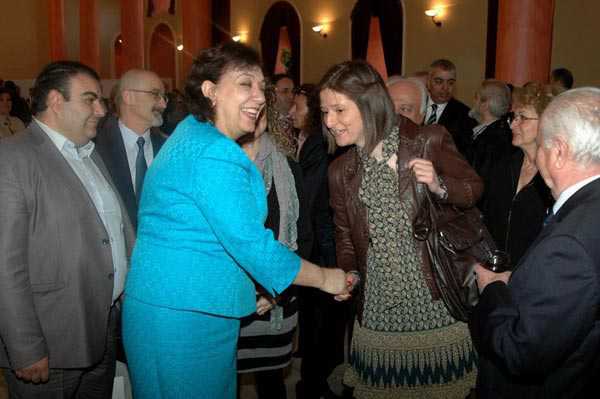
    Diaspora Minister Hranush Hakobyan shaking hands with Istanbul-Armenian journalist Vercihan Ziflioglu during the minister’s meeting with the Armenian community in Turkey.
    Diaspora Minister Hranush Hakobyan shaking hands with Istanbul-Armenian journalist Vercihan Ziflioglu during the minister’s meeting with the Armenian community in Turkey.

    Diaspora Minister Hranush Hakobyan shaking hands with Istanbul-Armenian journalist Vercihan Ziflioglu during the minister’s meeting with the Armenian community in Turkey.
    Minister Hranush Hakobyan’s visit to Istanbul earlier in May sparked a debate over the question: who are Istanbul Armenians – Diaspora or not?

    In the article, , Istanbul-Armenian intellectuals called the visit a mockery.

    In an interview to Vercihan, a famous Istanbul-Armenian writer said, despite the fact that she had received a medal from the minister:

    “It could have been any minister from Armenia, but I would not have preferred a Diaspora minister to have come to Turkey. Where I live now is where I have lived for thousands of years; I am no Diaspora. This is a terrible irony,” said Mıgırdiç Margosyan.

    However, rather than discussing this issue in Armenia, it was sharply criticised: expert in Turkish studies Ruben Melkonyan said regarding the article by the native Armenian journalist who has been covering minority issues for one of Turkey’s biggest newspapers that “putting it mildly, it does not match the reality”.

    Vercihan, 35, who has international recognition for her professionalism and who won the Swedish academy’s Euro-Med Journalist prize for Cultural Dialogue in 2008 and Turkey’s well-known Successful Journalists of 2008 awards by the Contemporary Journalists Association in 2009, believes that many in Armenia do not understand neither do they really know Istanbul-Armenians.

    “I prepared that article through interviews – from America to Aleppo, from Istanbul to Canada (prominent people living in different countries share their opinions); I have the audio records, how can they call it a lie?! The article expresses the thoughts of Armenians, and I believe that it came as news to them (Armenia-based Armenians, the Ministry of the Diaspora) whether Istanbul-Armenians are Diaspora or not,” Vercihan told ArmeniaNow and stresses again:

    “Constantinople or Polis (as Armenians usually refer to Istanbul) is not Diaspora, and Armenia has to understand that. Moreover, even Armenia can be called Diaspora and the Armenians spread around the world, but never Constantinople Armenians. How can they call Diaspora a land that has nurtured and felt the breath of Charents, Metsarents, Durian?” she says with frustration.

    As Vercihan says, although there are lots of specialists in Turkish studies, they have not researched Istanbul-Armenians well enough and fail to present them correctly – for years they, all alone, had to go through many hardships in order to preserve Armenian schools and their identity living in isolation.

    “In Armenia wherever you look you can find Turkish studies specialists, but which of them has ever come to Turkey, for how long has lived here, how much communication they have had with Istanbul-Armenians, how well do they know Turkish policies?” asks the journalist and answers her own question with confidence that there are no proper specialists.

    People in Armenia often blame Istanbul-Armenians for not acting in favor of Armenians; Hrant Dink was criticised for that reason, when he first came to Armenia.

    “It pains me greatly. Once after interviewing a politician from Armenia, I asked him personally what name he uses when talking about Istanbul-Armenians, he looked straight in my eyes and said “we call you Turks”, yes Turks, or Germans; any nationality is fine, but how can they call so 50,000 Armenians who have managed to preserve their identity throughout so much pain and grief and who are still suffering,” says Vercihan, her voice trembling from humiliation.

    She feels offended also when even high-ranking officials in Armenia ask why her surname has –oglu ending.

    “Now I want to ask! Where is it that you live, Armenia [why are you so isolated from the world], that you ask such a question and haven’t understood until now why -oglu stuck to our surnames, what sense is behind it? I can ask then what sense does Parajanov [outstanding Soviet Armenian film-director] make – why did Parajanyan become Parajanov [-yan is Armenian, whereas –ov is a Russian surname ending]? There are plenty of examples like that,” she says.

    Despite all her frustration, Vercihan, unlike many, every year spends her holiday in Armenia, rather than going to one of Turkey’s popular seaside resorts.

    “Armenia is my love, perhaps, my only one, but still, what we expect from Armenia is democracy. I wish Armenia were my future, my children’s future – it was my dream, but after witnessing the events of 2008 [March 1-2 post-election clashes], after I saw with my own eyes the blood that was spilt, who is going to return my dreams? That day killed my dream,” says the young reporter, still filled with anxious anticipation of her next visit to Armenia (in September) and a hope to find at least some progress.

  • William Gibson’s cyberpunk classic ‘Neuromancer’ may finally get to screens

    William Gibson’s cyberpunk classic ‘Neuromancer’ may finally get to screens

    William Gibson’s cyberpunk classic ‘Neuromancer’ may finally get to screens

    May 19, 2011 | 8:52 am

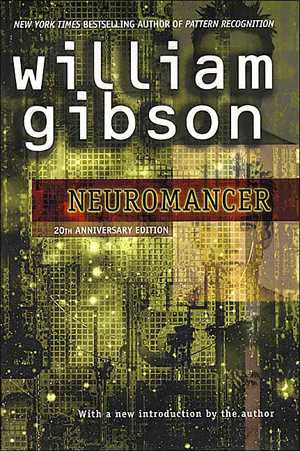
    Gibson_neuromancer William Gibson’s visionary 1984 novel “Neuromancer,” which presaged much of the wired world we now take for granted and coined the term “cyberspace,” may finally be coming to the screen.

    Slashfilm reports that sales rights were secured at the Cannes Film Festival, currently underway in France, and filming will begin in 2012 in Canada, Istanbul, Tokyo and London. Visual-effects work already has begun.

    Vincenzo Natali will direct the film. The Detroit native’s previous films include the scientifically creepy “Splice” and intensely paranoid “Cube,” both of which seem well in line with “Neuromancer.”

    It’s hard to overstate the influence of Gibson’s breakthrough book. When it was published, “Neuromancer” scored science fiction’s triple crown, winning the Nebula, Hugo and Philip K. Dick awards.

    The ideas, language and grim technotopia of “Neuromancer” have been borrowed heavily by other seminal science-fiction creations, notably the “Matrix” movies.

    In a 2010 interview with Slashfilm, Natali said:

    [T]he very word “matrix” is in Neuromancer. It was borrowed by the Wachowski brothers for their film. I think that’s a good thing, because I don’t even know how someone would have been able to make that film 10 years ago or 15 years ago, because it’s so abstract. I don’t even know how people understood the book when it first came out. I think I read it in the late 1980s, but in 1984, how would people even understand it, because it was just so far ahead of the curve? …

    I think when you read it now, it still feels very relevant, maybe in some ways more relevant, because so much of what it predicted has come to pass. And therefore, my approach to it would be to be very realistic.

    Gibson himself doesn’t take the pending film treatment of his iconic work too seriously. Thursday morning, as news of the movie deal broke, Gibson joked on Twitter, “Quit fretting about Neuromancer, for Pete’s sake! We’ve got the Rapture looming!”

    — Carolyn Kellogg

    via William Gibson’s cyberpunk classic ‘Neuromancer’ may finally get to screens | Jacket Copy | Los Angeles Times.

  • Five unforgettable experiences in Istanbul

    Five unforgettable experiences in Istanbul

    Geetika Jain, Hindustan Times

    From historic sites to sprawling street life, the Turkish town offers the best of culture 1 Explore the historic sights

    The Blue Mosque, Aya Sophia Cathedral and Topkapi Palace are three historic and impressive building very close to each other in the Old town of Sultanahmet. Arc

    hitect Mimar Sinan designed the Blue Mosque with its semi and quarter cupolas attached to the main dome and devised four minarets. Aya Sophia’s poignant tale speaks of the arrival of Islam in Constantinople and the intrigues of the harem at the Royal Palace will have you spellbound.

    2 Stroll the grand bazaar and spice market

    The Grand Bazaar has been the epicentre of trade between Asia, Europe and Africa for centuries. Roam its isles to find silvers and gold jewellery and ceramics. At the exotic Spice Market, you can try many Turkish delights.

    3 Sail down the Bosphorus

    According to author Orhan Pamuk, the Bosphorus, a 32-kilometre tranquil strait, is of “spiritual import” to the people of Istanbul. The sultans of yore had their summer homes here, and today, the tall, slim houses along the waters are avidly sought after. Hop on a ferry or cruise liner at Sultanahmet or any other stop along the way and enjoy a two hour ride back and forth, taking in historic sights and modern bridges.

    4 Try the local restaurants

    Subashi is very casual restaurant serving local food just outside the Grand Bazaar. Fez Cafe inside the Grand Bazaar serves delectable snacks with coffee. Hamdi is a lively place with a leafy terrace just outside the Spice Market. They are famous for their pistachio kebabs.

    Ali Muhiddin Haci Bekir in Beyoglu serves delectable sweets. Bebek serves Bedem Ezmesi, an almond pastry worth the long lines. Vegetarians will love okra dishes, fava beans, goat’s cheese, local breads and salads.

    5 Walk the neighbourhoods

    Istanbul’s rich visuals have been documented in Ara Guler’s famous photographs. Walk the old historic streets of Sultanahmet, discover the eateries and art galleries of Beyoglu, see the modern, upmarket buzz in Nisantasi and find views of the Bosphorus. Watch the people going by- ladies in hijabs and peroxide blondes rub shoulders. Suave businessmen converse with elderly men knitting skull caps outside mosques. Istanbul is a unique city, steeped in rich and fascinating history and it combines the past and future and the east and west like none other.

    The quick Guide to Istanbul

    Best time to go: spring and autumn.

    Explore: Fransiz Sokagi, known as French St for food and nightlife.

    Experience: A traditional hamaam. Cagaoglu Hamami Kazim Ismail Gurkan. Watch the mystic whirling dervishes at Galata Mavlevihanesi

    Guide: Kenan Ozbey www.geocities.com/ozbey

    Shop: Koy Meydani — modern version of the Grand Bazaar. Beymen in Nishantashi and Kanyon mall

    Clubbing: Ulus 29, Reina and Kurucesme on the Bosphoru.

    via Five unforgettable experiences in Istanbul – Hindustan Times.

  • KAC eyes increasing flights to Istanbul, Al-Madinah

    KAC eyes increasing flights to Istanbul, Al-Madinah

    KAC eyes increasing flights to Istanbul, Al-Madinah

    Communications 5/18/2011 5:19:00 PM


    KUWAIT, May 18 (KUNA) — The Kuwait Airways Corporation (KAC) is looking forward to increasing the number of its flights to the Turkish city of Istanbul, and Saudi city of Al-Madinah to meet the soaring demand for these two cities, Chief Executive Officer and Managing Director of KAC Hamad Al-Falah said Wednesday.

    Further, Al-Falah said, in his address which was delivered today on the new services offered by KAC in summertime, that KAC is serviously considering the launching of a direct and permanent flight to the Austrian capital of Vienna as a result of the increasing demand passangers for this destination, and as many passangers head to the nearby Czech republic to receive treatment at its spa facilities.

    Al-Falah also said that political events which are currently seen by the Arab region had its impact on the schedule of KAC flights to some destinations with seeing a huge decrease in the number of passangers heading to them, though he added that such drop started to dwindle some time ago, particularly regarding Beirut and Cairo.

    On the new services which KAC intends to launch during summertime, Al-Falah said that KAC will change the quality of food provided on its flights in what makes all kinds of food more fresh than ever, while asserting the KAC modernize the movies displayed on its planes every three months.

    Finally, Al-Falah said that KAC needs nearly 30 new aircraft to keep up with increasing demand, and to catch up with other competing airlines, particularly those belonging to the Gulf Cooperation Council (GCC) Arab states. (end) fnk.na.aff KUNA 181719 May 11NNNN

    via كونا : KAC eyes increasing flights to Istanbul, Al-Madinah – النقل والإتصالات – 18/05/2011.

  • Spiderman Alain Robert almost fell from the tower Sapphire Istanbul

    Spiderman Alain Robert almost fell from the tower Sapphire Istanbul

    Source:

    Pravda.Ru

    Spiderman Alain Robert almost fell from the tower Sapphire Istanbul. 44371.jpegAlain Robert, who is internationally known as “Spiderman” for climbing the world’s tallest building, the Burj Khalifah in Dubai, climbed Turkey’s tallest building, the 261-meter Sapphire shopping mall located in İstanbul’s Şişli district, on Tuesday.

    Robert started the climb at approximately 12:30 p.m. and finished by 2:20 p.m. He stated that he had some difficulties during the last 15 meters as his foot was occasionally slipping. Upon reaching the top of the building, he waved the Turkish flag for spectators.

    Alain Robert said his first climb was when he was 10, adding that he drinks plenty of water and eats rice or pasta before climbing, according to Today’s Zaman.

    Despite slippery glass surface the 49 year old climber scaled Turkey’s highest building in an hour and 50 minutes.

    Robert has climbed more than 80 of the world’s tallest structures, including the Eiffel Tower in Paris, Malaysia’s Petronas Towers, and the 88-story Jin Mao Tower in Shanghai.

    He recently scaled Dubai’s Burj Khalifa, the highest building in the world, NTDTV says.

    Robert, 48, has scaled more than 70 skyscrapers, including New York’s Empire State Building and Chicago’s Willis Tower in the United States, and the Petronas Towers in Kuala Lumpur, Malaysia.

    Many of his illegal climbs took the French urban climber to courtrooms in several countries.

    However, Robert said, his lawyers saved him from ordeal. Most recently, he was sued because of a climb in Australia but the case has been dismissed as he was not allowed to enter Australia.

    Robert says his philosophy is to promote freedom.

    “We were free in the past and now we are losing this freedom. This is what I want to tell people by the help of my climbs,” he says, according to World Bulletin.

    via Spiderman Alain Robert almost fell from the tower Sapphire Istanbul – English pravda.ru.