Blog

  • Dracula and DaVinci Resolve’s Dual Citizenship

    Dracula and DaVinci Resolve’s Dual Citizenship

    Vampires are all the rage these days. With HBO’s cult hit “True Blood” and the “Twilight” phenomenon, a new wave of bloodsuckers have successfully carved out their own territory in American pop culture. But vampire fever is spreading beyond US borders, and “Kutsal Damacana 3: Dracoola” is a film that’s proving both trends and productions can have dual citizenship.

    There is no denying that Los Angeles, California and Istanbul, Turkey are two very different areas of the world. The United States’ second most populated city is well known for its A-list inhabitants and film industry ties, while the European megacity is most commonly associated with its rich economic and cultural history. Despite these dissimilarities, LA and Istanbul can find common ground in “Kutsal Damacana 3” and Loren James White.

    “Kutsal Damacana” is a popular Turkish film series’ take on the legend of Dracula. The series’ third installment, “Kutsal Damacana 3: Dracoola”, is a dark mixture of comedy and horror. The story follows the Dracula character, played by Sahin Irmak, as he lives through the ancient Ottoman Empire era into modern day Turkey.

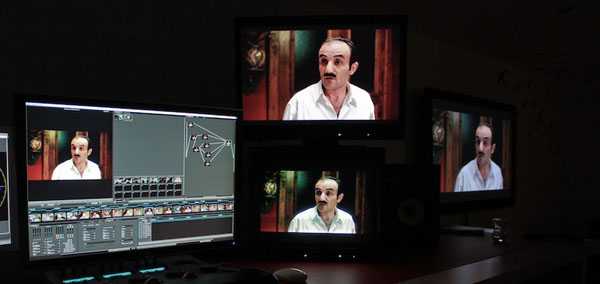
    As the Digital Intermediate Colorist on “Kutsal Damacana 3”, Loren also had a significant journey ahead of him. The project required him to travel from LA-where he works as a freelance colorist using Resolve at the Bandito Brothers post house-to Digiflame, a full service post house in Istanbul. Loren is used to splitting his time between the two cities for work, but this was the first time he needed to integrate workflows. He used the DaVinci Resolve Software in both locations to bring his two worlds together.

    Loren explained: “Serkan Semiz, head of Post Production at Digiflame, approached me to let me know he had a RED feature in the works that would be moving into the color grading phase within the month, so he sent me some of the footage via FTP. This is where I really benefitted from having Resolve at my personal suite in LA. I was able to start coming up with looks and kicking ideas back and forth with Korhan Bozkurt, the director, before I even arrived. My assistant at Digiflame was grouping shots together in the meantime, another great time saver.”

    Getting a head start on color correction was especially handy due to the fact that Turkey tends to favor a different style of imagery than the US does. Loren said, “Creatively, it’s very interesting to go from LA to Istanbul. The creative differences help keep me on my toes, but it’s having Resolve in both locations that gives me the power to pick up where I left off, every time.”

    Loren’s favorite feature of DaVinci Resolve Software is the 3D tracking, but he is also a big fan of the automatic scene detection, which was especially useful in grading “Dracoola”. He explained, “Being a horror/comedy, there are a lot of dark scenes. So I was able to make sure the actors’ faces were always lit well, and do it fairly quickly.”

    Resolve’s 3D object tracker enabled Loren to lock a PowerWindow to an on-screen object, turn on 3D tracking, and press play. The 3D object tracking then automatically followed the object’s movement, position and size, saving a dramatic amount of time formerly needed for key frame generation.

    With automatic scene detection, Loren could slice self-contained clips up into individual shots for grading. With an EDL, he could even manually tweak the scene cut results, making the process quick, easy and accurate.

    Loren had quite a lot of material to get through, and a limited amount of time to do it in, so the real-time performance of Resolve was yet another advantage. “The real-time performance is huge; it makes the grading session smoother and clients absolutely love it.”

    Loren’s Resolve color grading suite at Bandito Brothers in LA is very similar to Digiflame’s in Istanbul. He uses Resolve on a Mac Pro, with NVIDIA’s GTX 285 and GT 120 cards and Blackmagic Design’s DeckLink HD Extreme 3D in both locations. Loren also uses Blackmagic Design UltraScopes for monitoring.

    But he switches it up from there. While he uses a Panasonic 12 Series Plasma in conjunction with a 24-inch LCD grading monitor in LA, Loren’s Turkish Digiflame suite is equipped with a 58-inch Samsung Plasma client display and a 24-inch JVC DT-V24L1D monitor.

    Bandito Brothers is a full service production and post company-working on everything from feature films to commercial spots-and their DI theatre is 2K, with a stereo compliant projector and 3D capabilities. Their sister company Cantina Creative does high-end theatrical and commercial VFX work.

    Because Digiflame does a great deal of feature film work, they take some of their projects outside for a second look. Loren explained, “We work closely with neighboring labs, who offer Arrilaser and Lasergraphics printing for the film out process.” He continued, “Istanbul is a very congested city, and there are certain theatres that attract the majority of viewers for Turkish films, so we get right to the root of it and check the prints at those local theatres before duplication begins.”

    Loren’s job is usually done at this point-save for the occasional small fix.  He can rest easy knowing that Resolve enables him to do his best work “from start to finish,” no matter where in the world he is.
  • Erdogan’s crazy plan unveiled | beyondbrics

    Erdogan’s crazy plan unveiled | beyondbrics

    By David O’Byrne of business new europe

    With his party expected to win its third overall majority in general elections on June 12, Tayyip Erdogan, Turky’s prime minister, seems set on establishing his own legacy with his long-promised “crazy project” finally unveiled this week: a 50-kilometre long, 120-metre wide canal that his government plans to construct 100 km west of Istanbul between the Black Sea and the Sea of Marmara.

    Wide and deep enough for supertankers of up to 300,000 deadweight tonnage – bigger than the biggest tankers in use today – the canal will have no locks and will use passing places and a mooring basin midway to allow simultaneous traffic in both directions – in contrast to the dangerously overcrowded Bosphorus strait, which must be closed in both directions to allow the largest tankers through.

    The aim is simple. With oil production in the Caspian region expected to double to around 40m tonnes over the next decade, the number of tankers using the Bosphorus is also expected to double from a current average of 27 a day – a volume of traffic that threatens to overload the strait and expose Istanbul to an environmental disaster in the event of an accident.

    The new canal would reduce traffic through the Bosphorus and – with none of the twists and turns of its natural neighbour – offer a safer and quicker route.

    That aim in itself is not new. Turkey has for years been backing a project to bypass the Bosphorus: the Samsun Ceyhan pipeline, sponsored by a consortium of Turkey’s Calik Energy and Eni, which would link the Black Sea with the Mediterranean.

    People close to the project told bne that the Samsum-Ceyhan pipeline remains firmly on the agenda, as the Turkish government expects Caspian oil production to grow enough to justify both the pipeline and the canal. But with Turkey obliged by the 1936 Montreux convention to allow free passage through the Bosphorus, Samsun-Ceyhan has so far failed to secure commitments of sufficient oil to ensure its viability.

    “The same problem applies to a canal as to a pipeline – if one is free and one has a tariff, then there has to be a group agreement between oil shippers as to how much oil they send through each,” says John Roberts, Caspian specialist at Platts, an energy consultancy. “The only alternative is to renegotiate the Montreux treaty, which Russia for one would not be open to.”

    The people close to the project told bne that Ankara does indeed hope to renegotiate Montreux, despite the expected difficulties. But with Russia having apparently gone back on its promise to provide oil for Samsun-Ceyhan, many are viewing the canal as a bargaining ploy to pressure Moscow to moderate its demands for a majority stake in the pipeline – albeit one that doubles as a handy pre-election stunt.

    Nevertheless, many find the boldness of the project compelling, although many too question the rather low $10bn cost estimate.

    “As a logistics engineer, I think it’s a great idea,” says Ergin Buyukbayram, a logistics consultant who last year produced a major report on logistics in Turkey. “But it will be very difficult to build and will cost a lot more than they predict – maybe $20bn-25bn at least.”

    With shippers unlikely to pay to use the canal while transit through the Bosphorus is free, Ankara plans to offset at least part of the cost by selling real estate along the canal banks. Erdogan has argued that continued migration to Istanbul calls for bold plans to expand the city.

    Many remain unimpressed with that idea, pointing to the tens of thousands of unsold properties on out-of-town estates built in the bubble of property speculation that pre-dated the global economic crisis.

    “Demand for out-of-town property is low because most jobs are inside the city, and transport links are abysmal,” says one Istanbul property developer, who reckons it would take a major sea change to persuade employers to move 100 km into Thrace.

    And the historic precedent for such massive infrastructure projects is not encouraging.

    The Panama Canal was only built at the second attempt after a massive financial scandal; the Manchester Ship Canal Company went bankrupt twice before a rescue by Manchester city council allowed ships to sail direct to the landlocked industrial city; early income from the Suez Canal was so low that it required the development of a new way of calculating tonnage to rack up transit fees.

    All of which suggests that if Erdogan really does get his place in history, it may be the Turkish taxpayer who will foot the bill.

    via Erdogan’s crazy plan unveiled | beyondbrics | News and views on emerging markets from the Financial Times – FT.com.

  • New Atatürk memorabilia on display at Istanbul’s Rahmi M. Koç Museum

    New Atatürk memorabilia on display at Istanbul’s Rahmi M. Koç Museum

    ISTANBUL – Hürriyet Daily News

    New Atatürk memorabilia on display at Istanbul’s Rahmi M. Koç Museum

    The Rahmi M. Koç Museum in Istanbul has added new displays to its section featuring objects related to the founder of the Turkish Republic, Mustafa Kemal Atatürk.

    The addition was made to coincide with the May 19 Youth and Sports Day, which marks the date in 1919 when Atatürk launched the struggle for national independence.

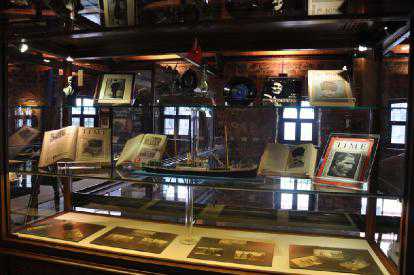
    As well as photos that have never before been revealed and March 1923 and February 1927 issues of TIME magazine featuring Atatürk on the cover, objects from Atatürk’s office, his personal belongings and clothing are among the new objects added to the section.

    Among the never-seen-before photos of Atatürk, there are ones showing him working on the Yürüyen Köşk in Istanbul’s Yalova district and enjoying special moments drinking tea with his friends. There is also a carpet on which Atatürk is depicted thinking in Çanakkale’s Kocatepe.

    Other new objects in the section include a souvenir Atatürk moneybox, cigarettes specially produced for state officials and figures symbolizing the War of the Independence that adorned desks in state departments until the 1970s.

    via New Atatürk memorabilia on display at Istanbul’s Rahmi M. Koç Museum – Hurriyet Daily News and Economic Review.

  • Muslim leader detained in Israel

    Muslim leader detained in Israel

    Alet Rademeyer

    PROMINENT Muslim leader, academic and author, Na’eem Jeenah, was detained on his arrival at the Ben Gurion Airport in Israel on Monday night prior to being deported to Istanbul.

    Jeenah is the director of the Afro-Middle East Centre (Amec) in Johannesburg — a research institute studying the Middle East and relations between the region and Africa.

    He was visiting Israel to participate in research meetings.

    Jeenah was previously the director of the Freedom of Expression Institute and lectured in political studies at the University of the Witwatersrand.

    He is a prominent leader of the Muslim community and anti-war movements in South Africa.

    The reasons for his detention and interrogation are unknown. His colleague at Amec, Heidi Esekov, said Jeenah had been interrogated for hours and she had no access to him.

    The Israeli Government had also initially declined to release information concerning his whereabouts, she added.

    According to a statement issued by Amec Jeenah was deported to Instanbul after ten hours of interrogation. His passport and belongings were taken and not returned.

    The centre called on the government to offer him full consular support and to speedily facilitate his safe travel home.

    Jeenah’s wife, Melissa, said they are relying on consular support to ensure her husband’s safe return. She had been able to speak to him at the Istanbul airport where he was being held.

    The offices of the Israeli ambassador were closed yesterday and no reply was received to e-mail inquiries.

    Jeenah’s family hopes that he returns home today.

    via The Witness.

  • Direct Budapest-Istanbul rail service to be reestablished in 2012

    Direct Budapest-Istanbul rail service to be reestablished in 2012

    MTI – Econews

    Thursday 10:25, May 19th, 2011

    The Turkish and Hungarian state railways have agreed to reestablish direct rail service between Budapest and Istanbul in 2012, Hungarian state railways MAV told MTI.

    Trains should begin running directly between Hungary and Turkey during the summer of next year, MAV said.

    MAV expects significant interest from western Europe and North America for the direct service first inaugurated in 1889 and subsequently discontinued.

    via Direct Budapest-Istanbul rail service to be reestablished in 2012 | The Budapest Business Journal on the web | bbj.hu.

  • Davutoğlu says countries agree on İstanbul Action Plan despite hard bargains

    Davutoğlu says countries agree on İstanbul Action Plan despite hard bargains

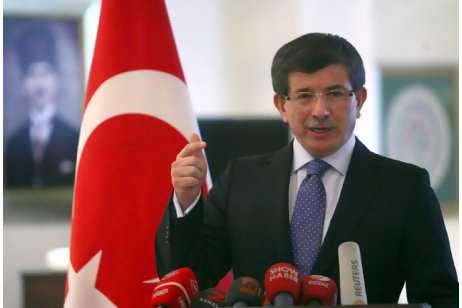
    Foreign Minister Ahmet Davutoğlu has said countries participating in the Fourth United Nations Conference on the Least Developed Countries (LDC-IV) have agreed on the İstanbul Action Plan despite difficult debates over the aid regime.

    Davutoğlu told reporters on Thursday that the discussions were difficult because poor countries and Turkey asked for more direct aid but rich countries insisted on the current regime.

    He said that while Turkey was close to all sides during the discussions, it tried to bring the least developed countries’ interests and expectations to the forefront.

    Davutoğlu said the priorities of the LDCs, the G-77 and developed countries were different and that Turkey had met with all sides and engaged in intense diplomatic efforts to close the gap between them.

    The foreign minister said the rift in opinions was closed by yesterday and that the İstanbul Action Plan was adopted. The details of the plan will be announced on Friday.

    Davutoğlu said Turkey plans to graduate as many countries as possible via the İstanbul Action Plan and envisages nearly $3 billion in contributions through trade and investment in agriculture, health and education.

    Davutoğlu said Turkey also plans to provide scholarships to 1,000 students from these countries and that he wants people those nations to see Turkey’s friendship and brotherhood.

    via Davutoğlu says countries agree on İstanbul Action Plan despite hard bargains.