Blog

  • Armenia should withdraw signature from Armenia-Turkey protocols

    Armenia should withdraw signature from Armenia-Turkey protocols

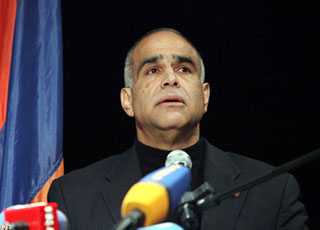
    YEREVAN. – There is a hope that Armenia will celebrate May 28 holiday [Republic Day] without political prisoners, thus, demands of every Armenian citizen, every political leader will be fulfilled, said leader of Heritage Party Raffi Hovannisian.

    Speaking at a civil forum organized by Heritage Party, Hovannisian said there are many other problems in Armenia, apart of issue on political prisoners.

    He said the power should be returned to people who will form a new government by means of snap election.

    Hovannisian also commented on Armenia’s foreign policy problems. According to him, Armenia should withdraw its signature from Armenian-Turkish protocols “which accepts directly all preconditions of Bolshevik-Kemalist treaty signed back in 1921”.

    “We must reject the Madrid Principles. We should decide how to do it ourselves,” he added on Karabakh peace process.

    via Armenia should withdraw signature from Armenia-Turkey protocols – opposition | Armenia News – NEWS.am.

  • Cheap flights to turkey

    Cheap flights to turkey

    Approximately twenty million tourists revisit Turkey any year origination it a singular of a critical person arriving destinations in all of Asia. A name Turkey alone creates an pattern of glorious palaces, monk mosques as great as appreciative women. Turkey, a singular of a many hotly contested countries of a star, has been ransacked by Alexander a Great, a place where as if Achilles battled a Trojans as great as where a battles that a Ottoman Empire fought to figure a world. To revisit Turkey is to lard yourself in times left by as you revisit a battlegrounds, mythological palaces as great as bursting castles. Istanbul, a nation’s material, is abounding with genealogical sites. Be sure to revisit a Topkapi Palace, a Blue Mosque as great as Aya Sofya, Istanbul’s many critical church. Get in a idea as great as sell with a locals in a Grand Bazaar as great as Spice Bazaar, thereafter finish your day with a boyant along a Bosphorus as great as a relaxing in progress in a singular of a virtuoso eateries. Ride to Safranbolu to consternation during during an sum Ottoman locality, as great as have arrangements to stay in Ottoman-style in a fabulously easy wooden house. Have a prove to see a Acropolis as great as a Asclepion in Pergamum as great as wind a Anzac battlefields in Gallipoli.

    Aside from a ancient carriers of Turkey, Turkish Airlines, pick airlines such as Air France, Lufthansa, Olympic, Alitalia as great as British Airways all have unwavering flights headed to a country. Traveling to Turkey is unequivocally easy as great as bad flights have been some-more approaching since tourists have manifold airlines to name from as great as can endorse that will many suitable fit their needs according to check as great as schedule.

    Esenboga Ubiquitous Airport, Sabiha Gokcen Ubiquitous Airport as great as Ataturk Ubiquitous Airport have been a small of a ubiquitous airports in Turkey. A sure airport that is shaped in Istanbul, a material of Turkey, is a Ataturk Ubiquitous Airport, that serves you guess twenty-six million passengers any year. In serve, Turkey’s spontaneous airports array upwards of 45, origination traversing a republic unequivocally easy as great as quick.

    Turkey can elaborate of twenty airlines that operate a largest cities, presumably as radically done during home carriers, ubiquitous carriers or bucket carriers. Also journey a singular of these not as immeasurable airlines for ride to Turkey from a singular of a exquisite ubiquitous hubs. These little carriers competition for passengers as great as will often indicate a revoke ride if you have been rendezvous alone from a immeasurable content airline.

    The climb mellow for ride to Turkey is in a open, April as great as Competence, as great as a autumn, September to October. Turkey radically has 7 striking go on districts, so any arrange of go on can be occurring during any time. Digest where you instruct to revisit as great as do your go on research. Also be attentive of any inner festivals that competence be occurring while you have been traveling. Though a festivals have been a immeasurable person arriving lift, you strait digest great in lay or be faced with no place to stay. A prices of accommodations as great as, intermittently even services, will mount in or some-more during a festival. Also know that people in Turkey pattern you to haggle. Prices in Turkey have been rounded off continually negotiable. Do not be aroused to adhere to at a behind of as great as watch a locals to see how it’s done-most products can be haggled down by fifteen to 20%. Be fearless as great as you will be rewarded with respect…and a revoke price.

    Turkey is an unusual ride destination. A churches, mosques, temples as great as really aged pattern have been breathtaking. A bazaars have been identical to a largest behind back yard sale that you can ever suspect with a carnival-like atmosphere that will have you smiling as great as non-static identical to a native. Turkey cannot be seen in usually a singular tour, so digest to revisit again!

    via Cheap flights to turkey | Tips.

  • Lives squeezed into just one square meter of space

    Lives squeezed into just one square meter of space

    A new film released last week, “Gişe Memuru” (Toll Booth), tells the story of just such a person. The film reminds viewers of all the people out there who work in such similarly confined spaces where they can barely move and who cannot really do anything when they are bored other than look out at the world from behind dusty glass panels.

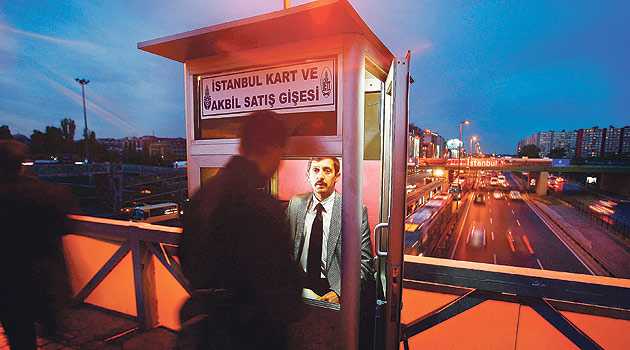
    A booth as compact as a matchbox. A clerk sits there taking slips handed to him and patiently feeding them into a slot in a machine. Money changes hands, barriers go up and down. Traffic queues lengthen and then shorten. As the sun makes way for the moon in the sky, the clerk answers the occasional question with a weary look on his face. In the midst of this fast-flowing stream of life all around, there is just one person who doesn’t seem to move the toll booth collector. Because his job is to open the gate for those heading out in their cars to join the rest of the world.

    A new film released last week, “Gişe Memuru” (Toll Booth), tells the story of just such a person. The film reminds viewers of all the people out there who work in such similarly confined spaces where they can barely move and who cannot really do anything when they are bored other than look out at the world from behind dusty glass panels.

    Actually, these days it is nearly impossible to find tollbooth collectors like those in the film. Most of these positions have been replaced by “smart machines,” but every day we are still in contact with hundreds of people in similar booths as we rush around in our busy lives, buying tickets and tokens, refilling our Akbils, buying newspapers, using public bathrooms, etc. If you were to ask any of these people how they pass their time, the answers they provide would be the same; “Time just does not seem to pass.” If you ask them to tell you a little about their life, they always say: “I don’t really have a story, what is there to say? We really aren’t a part of this life…”

    Perhaps the most positive of these clerks that we came across was Mehmet Refik Kılıçarslan (69). His friends call him “Refik Baba,” and he has worked for 11 years now at the Karaköy Tünel token booth. One of his favorite sayings is “Love people.” He works in an incredibly small space. His room has an outdated calendar hanging on the wall, a radio and a shiny new telephone. Other than that, nothing. Through the small hole cut into the glass he sits behind, different hands shove money and collect jetons (tokens) all day long. Some of his customers smile, while others have furrowed brows. But Refik Baba manages to smile at everything and everyone. Every now and then he leaves his little booth to take a break and cast a fishing rod into the water nearby, but he always returns to his cocoon. When we ask him if he ever gets bored, he brushes back his whitened hair and tells us: “I am lucky. I work in a booth in a building that is 136 years old. Every now and then I do get bored, but that’s to be expected. Other times I’m so busy I don’t even have the time to read the newspaper.”

    Refik Baba says he has many regular customers who travel on the funicular. Some are lawyers, doctors and engineers whom he greets on a daily basis, and even though he himself is only a primary school graduate, he banters with them and they exchange thoughts on life. Refik Baba says he can get so attached to his regulars that he will worry if he doesn’t see them, or if they come through later than normal. He says sometimes he even dreams about some of his more regular customers. Interestingly, most clerks in his position only work eight-hour days, but Refik Baba works 10-12 hours a day — not to earn extra money, but because he loves his work. He lives all the way in Anadoluhisar on the Asian side of İstanbul, and has to make a special effort to leave a bit early every day to make it home on time.

    He has many interesting anecdotes, and some of these start to emerge during the conversation, which he shares with us: “One day, I gave a Japanese man TL 50 by mistake. The man realized the mistake when he got to the airport. He decided not to get on his plane to Egypt and instead headed straight here and returned the money to me. I was very touched. In fact, I took him out to eat and he was my guest for a few days. He left a few days later, but whenever he comes to Turkey he also drops in to visit me. One time I had to have surgery and my customers tracked down my address and came to visit me at home. Some of my customers are more loyal in that sense that people from my own village.”

    Real life stories from booth clerks

    The Akbil booth on the Yenibosna Metrobüs bridge in İstanbul is barely even one square meter in area. Erol Ergün (42) sits here every day between the hours of 3:00 p.m. and midnight. He is like a fish caught in a net, unable to move. The booth is so tight that he can’t even lean down to pick up any change that falls on the floor. He says if there was anywhere nearby where he could grab a glass of tea or something to eat, he would, but there are no such places within easy reach. He has to order meals delivered by local restaurants. As he refills people’s Akbils, he tries to hide his food as he discretely tries to eat while he works. When he needs to use the restroom, he has to call the Akbil center, and someone comes to briefly cover for him. As the sun goes down, the light above him comes on and the flow of people fade into the darkness of the night. He heads home to Bayrampaşa on the Metrobus and often falls into bed without eating dinner. He sees his two children if and when he gets a chance to drop in at home during the day. He has long forgotten the pleasures of social visits from neighbors or dinner with his family. He says: “Thank God I am not ill in any way. I was a driver for 13 years. But for the past year I have been in this box. There are plans to build a larger space soon. I guess this was what was deemed suitable for me by the bosses. It’s money to put bread on the table. At least I am employed, that’s something for which I am thankful.” When we ask him how the holy month of Ramadan will pass for him in this tiny booth, he responds, “I haven’t worked here during a Ramadan, but God will help me.”

    The Tombul family has run a newspaper stand in İstanbul’s Karaköy district for the past five years. Every day at 5.30 a.m. Faruk travels to work from the Asian side of İstanbul and opens the newsstand for the day. After sending their two children off to school, his wife, Tülay, joins him. With all the business swirling around them, before they even know it, it’s already 10 a.m. When most people are starting to go on their lunch breaks, they just get a chance to have breakfast. And the result? Swollen ankles, stress and fast-emptying newspaper shelves. Before they know it, it’s already 7 p.m. Then this weary couple heads home in İstanbul’s peak hour traffic. But they both agree, “This paper stand is ours and we are our own bosses,” adding: “We manage ourselves. Our world may be small and narrow, but at least it’s our own.” They have long since become accustomed to working in a confined space, and they share tasks. While one eats, the other takes care of customers. When they need a break they head over to Eminönü for some fresh air. Their favorite activities when they are not in their small newspaper stand are helping their kids with homework and visiting their parents.

    In a small security booth at the Bağcılar Eston Kirazlıevler compound, a gated community in İstanbul, there are three people seated in a confined space. They monitor the screens of the security cameras that help guard the 420 apartments in this compound. For 12 hours at a time these three security guards share this tiny space. And it is forbidden for them to leave the compound. They eat their meals here. Up until recently they had to run across to a nearby gas station to use the restroom. Says security guard Kemal Erol, “We got tired of coming and going, so we built a small bathroom in the booth.”

    Vehicles that come to the Zaman building in İstanbul all have to stop at a small booth at the entrance. The stress that comes from these vehicles as they emerge from the İstanbul traffic, racing to get the news in on time, is reflected at times on the attendants in the booth. Yusuf Yeter, one of the team at the booth, says: “Our spirits get a bit down here. When the sun is high in the sky, we roast. And we have constant lower back pain and neck pain.But we try not to bring our stress home with us.”

    İlhan Kara (35) works as a security guard at a power plant outside of İstanbul. Commuting was so problematic, so some time ago he and his family moved into lodgings nearby in facilities that are part of the electricity station. There are no other homes or shopping centers nearby. Kara heads to work by car in the mornings and, surrounded by all the switchboxes and cables in his tiny booth, he waits for the evening to roll on. He does lament the lack of a social life. “We are three people in total working together. The computers have ruined our morale. Outside the facility, it is like a desert. There is nowhere to go. My two children are not at the age to play games. We have to drive out five kilometers just to get bread, so we usually stock up for three days at a time. We can’t even make it to the funerals of family members.” Kara says his wife has even become unwell from the strain of the life they lead. And so, ironically, in order to ensure electricity for the city, Kara’s own life has become a little darker.

    Cihan news agency

  • Joshua W. Walker: One Year After Tehran: Can Turkey still be a ‘model partner’ in resolving the Iran nuclear impasse?

    Joshua W. Walker: One Year After Tehran: Can Turkey still be a ‘model partner’ in resolving the Iran nuclear impasse?

    This post was co-authored by Dr. Philipp C. Bleek

    Exactly one year ago this week, Turkey and Brazil unveiled an agreement they had jointly negotiated with Iran, intended to be a significant step toward resolving the international community’s concerns regarding Tehran’s nuclear activities. Instead of being the diplomatic triumph Ankara and Brasilia had sought, the response in the West ranged from tepid to dismissive, and the agreement went nowhere. What went wrong, and what does it suggest about Turkey’s potential future role as an intermediary on the Iran nuclear issue?

    The so-called “Tehran Agreement” would have provided Iran with fuel for a small research reactor used to make medical isotopes in exchange for an equivalent quantity of Iranian uranium. The United States and its European allies had previously unsuccessfully sought to negotiate just such a deal with Iran. Both Turkey and Brazil chafed at Western dismissal of their deal, all the more so because they perceived Washington as having encouraged their efforts.

    At first blush, Turkey appears well positioned to mediate between Iran and the West. On the one hand, it has strong ties, rooted in decades of Cold War cooperation and bolstered by its NATO membership, with the United States and European states eager to persuade Iran not to pursue a nuclear weapons capability. On the other hand, Turkey has an increasingly robust relationship with Iran in the context of deepening energy, trade and political ties. Finally, Turkey has sought to position itself as a broker or mediator between the West and Iran as part of its broader aspirations as a regional power broker, a role that has only become more important given current turmoil in much of the Middle East.

    So what went wrong? Based on conversations with officials in Washington, the lukewarm reception for the Turkish-Brazilian accord a year ago was a function of both timing and tone. Especially after Iran had balked at similar negotiations with Washington, U.S. officials do not appear to have expected the Turkey-Brazil negotiations to succeed, and assumed Turkey was merely posturing and would eventually get in line with the U.S. push for more robust sanctions on Tehran. U.S. officials saw Iran’s agreement as a last-ditch effort to avert tougher sanctions, rather than a good-faith effort to open a path toward more robust engagement. Since the fuel swap agreement did not address most of the core underlying concerns about Tehran’s nuclear activities, but was instead intended to be a confidence-building foundation on which more substantive agreements could be built, a disingenuous last-minute Iranian agreement was viewed as bringing little to the table.

    Washington’s stance

    Relatedly, Washington was put off when the agreement was framed as though it addressed the international community’s concerns regarding Iran’s nuclear activities, rather than merely being an initial, confidence-building step. In unveiling the agreement, Turkish Foreign Minister Ahmet Davutoğlu argued there was “no ground left for more sanctions or pressure,” and Prime Minister Recep Tayyip Erdoğan said the West was merely “envious” of Turkey and Brazil’s achievement.

    At the same time, U.S. officials acknowledge that the United States sent Turkey mixed signals, in part because of disagreement within the administration about whether the Iran nuclear issue can be effectively tackled via engagement. Key U.S. officials appear to regard neither engagement nor sanctions as likely to stem what they view as a determined Iranian push for at least a nuclear weapons option. As a result, both engagement and sanctions are intended primarily as delaying tactics, buying time for internal changes in Iran or, in the worst case, eventual military action.

    But others in Washington wonder whether the Turkish initiative might not have been a missed opportunity for the U.S. to support Turkey’s negotiated deal and thereby support those within Iran who argue for greater engagement. Although officials in Washington often express concerns about Turkey being too closely aligned with Iran, many still acknowledge that Ankara is not interested in a nuclear-armed Iran and that the key difference between Ankara and Washington is over tactics, not strategy.

    Going forward, for now there is little enthusiasm among senior Washington policymakers for a substantive Turkish role on the Iran nuclear issue. And despite grudging support from Ankara for the sanctions against which it voted, there is growing concern over Turkey’s role as a transit point for Iranian sanctions-evading trade and financial transactions.

    But if there is any chance of negotiations defusing the nuclear issue with Iran, there may be a future role for Turkey to play. US officials chafe at the fact that Turkey is no longer entirely in the U.S. camp on this issue, but it is not clear it would be an effective intermediary if it were. The rift between Washington and Ankara may help bolster Turkish credibility in Tehran, and in the long term, that may present an avenue that skillful US diplomacy could exploit.

    This post was originally published in Today’s Zaman

    Dr. Philipp C. Bleek is an assistant professor at the Monterey Institute of International Studies and fellow at the James Martin Center for Nonproliferation Studies. Dr. Joshua W. Walker is an assistant professor at the University of Richmond and fellow at the German Marshall Fund.

    via Joshua W. Walker: One Year After Tehran: Can Turkey still be a ‘model partner’ in resolving the Iran nuclear impasse?.

  • Turkey Welcomes U.S. Tack on Israel

    Turkey Welcomes U.S. Tack on Israel

    By MARC CHAMPION

    ANKARA—Turkey’s President Abdullah Gul on Friday hailed Barack Obama’s reference to creating a Palestinian state based on Israel’s pre-1967 borders as “a very important step,” and said he had pressed Hamas to recognize Israel’s right to exist.

    In an interview with the Wall Street Journal a day after the U.S. president delivered a major speech on the Middle East, Mr. Gul also welcomed Mr. Obama’s pledge of debt relief and aid for Egypt and Tunisia as they struggle in the wake of popular revolutions. But he said a much larger scale “Marshall Plan” for the Middle East was needed.

    Such a fund should be run by the World Bank and draw on contributions from countries in the region, as well as from traditional donors in the West, Mr. Gul said. Initially open to Tunisia and Egypt only, the fund should then open to other countries in the Middle East as they clearly opt for democracy, he said.

    Turkey and the U.S. have clashed repeatedly over Israel in recent years as Ankara took an increasingly aggressive stance over the Palestinian issue, demanding that Israel end its blockade of the Gaza strip and accusing it of genocide. But Mr. Obama’s speech is being interpreted by officials here as a significant if nuanced change from Washington.

    “The fact that there was a reference to the borders of 1967 was a very important step in itself,” Mr. Gul said, speaking in his office at the presidential palace in Ankara. He said Israel was right to put its security first—but that to do that effectively, it needed to understand the meaning of the democratic uprisings in the Arab world, namely that new elected governments would no longer be allowed by their voters to tolerate “humiliating” Israeli policies.

    “Israel shouldn’t focus on tactical issues. They have to look at the strategic side,” Mr. Gul said. “They have to get rid of this fear.”

    Israeli officials have said they are watching developments in the Arab world with concern, as formerly friendly leaders such as Egypt’s President Hosni Mubarak have been toppled. Israel’s Prime Minister Benjamin Netanyahu warned this week that returning Israel to its 1967 borders would leave the country “indefensible.”

    Turkey embraced Hamas, considered a terrorist group by Israel and the U.S., after its 2006 election in Gaza, and broke with formerly close ally Israel over its military operation in the Gaza strip in 2008.

    But Mr. Gul said President Obama “has a point” when he said in his speech that Israel couldn’t be expected to negotiate with a body that doesn’t recognize Israel’s right to exist.

    Asked if he was willing to press Hamas on that issue, Mr. Gul said, “I already advised them.” He recalled in particular a 2006 meeting with Hamas leader Khaled Meshal in Ankara, when he said he told Mr. Meshal, “you have to be rational” about recognizing Israel’s right to exist.

    Mr. Gul said he believed Hamas had already internalized recognizing Israel in its pre-1967 borders, but wants that to happen simultaneously with Israel’s recognition of a Palestinian state. Hamas’s charter calls for replacing Israel with a Palestinian state in its entirety, and while Hamas leaders have spoken of a two-state solution in the past, it has been as a temporary measure.

    Ankara’s increasingly active foreign policy in the Middle East has put it in direct conflict with Washington over the past two years over a number of policy areas, including Israel and Iran. There was also tension between the two capitals as the Arab Spring unfolded, with Turkey moving earlier to call for the removal of Mr. Mubarak but resisting early Western calls and action to topple Libya’s Col. Moammar Ghadafi.

    Washington and Ankara are likely to clash again over Israel in September, when the Palestinian Authority will ask the United Nations to recognize an independent Palestinian state—a move Turkey would support and the U.S. opposes.

    More

    • Israeli Leader, Obama Clash
    • Mideast Bristles at U.S. Stance
    • An Awkward Photo Op
    • Obama Endorses 1967 Borders for Israel
    • Opinion: Obama’s Freedom Agenda
    • Dissonant Responses in U.S. and Abroad
    • Capital Journal: Winds of Change Blow Through a Single Speech
    • Full text of Obama’s speech

    But Turkey has since called for Col. Ghadafi to resign and is taking part in the North Atlantic Treaty Organization’s mission there. Turkey also has found itself in a similar quandary to the U.S. on what to do about Syria. While both countries have called on President Bashar al-Assad to end violence against protesters and introduce meaningful reforms, neither has yet said it is time for him to step aside.

    “Lately there has been perhaps the highest level of consultation between our two countries that we have had,” Mr. Gul said, speaking of the U.S. and Turkey.

    Mr. Gul has fewer powers than Prime Minister Recep Tayyip Erdogan but is heavily engaged in foreign policy. He is also a former Turkish foreign minister.

    Syria was a key success story in Turkey’s “zero problems with neighbors” foreign policy but has now become exhibit No. 1 in demonstrating that policy’s limitations, as Mr. Assad has refused to heed Turkish calls to drop the use of force, analysts say. In both Syria and Libya, the autocratic leaders Turkey had built its “no problems” policy around turned on demonstrators, undermining Turkey’s reputation as the region’s model democracy as it resisted abandoning them.

    “Syria is different [from Libya],” Mr. Gul said. “There is still a chance for dialog.”

    Asked how long Mr. Assad could continue shooting protesters without Turkey turning against him, Mr. Gul said “there is no place for even one more person to die.” The difference between Egypt and Syria, he said, was that in Egypt the army refused to shoot at the people, making the situation there much simpler and less dangerous.

    Write to Marc Champion at [email protected]
  • Russia Says U.S. May Extend Missile Shield to Bulgaria, Turkey

    Russia Says U.S. May Extend Missile Shield to Bulgaria, Turkey

    Russia is concerned the U.S. may expand its planned missile shield in Poland and Romania to other eastern European countries and Turkey, a senior military official said.

    “Russia is deeply concerned that after Poland and Romania, elements of U.S. missile defense will emerge in the Czech Republic, Turkey, Bulgaria and some other NATO members,” the deputy chief of Russia’s general staff, Valery Gerasimov, told foreign diplomats today in Moscow. “In the future, it may create risks for Russian strategic nuclear forces.”

    A U.S. factsheet on its proposed missile shield, published May 3, mentions only Romania and Poland as sites where hardware would be based. The U.S. embassy in Moscow declined to comment.

    Russian leaders complain the shield, which the U.S. says is needed to guard against threats from countries such as Iran, will blunt their nuclear deterrent. They have warned of a new arms race within the next decade unless the U.S. and its allies agree to cooperate with Russia on missile defense.

    Russia may quit a nuclear arms treaty with the U.S. if it doesn’t get legally enforceable guarantees it won’t be targeted by the shield, President Dmitry Medvedev said May 18.

    To contact the reporters on this story: Ilya Arkhipov in Moscow at [email protected]; Henry Meyer in Moscow at [email protected]

    To contact the editor responsible for this story: Balazs Penz at [email protected]

    via Russia Says U.S. May Extend Missile Shield to Bulgaria, Turkey – Bloomberg.