Blog

  • Gas, Politics, and Pressure: A New Fault Line Forms Around Orban in Europe

    Gas, Politics, and Pressure: A New Fault Line Forms Around Orban in Europe

    Agreements between Viktor Orban and Recep Tayyip Erdogan on energy are not merely economic deals, but signals of an emerging alternative center of influence within Europe.

    Budapest has effectively secured a guaranteed channel for Russian gas supplies through Turkey. Ankara, in turn, has committed to ensuring the security of this route, through which Hungary received 7.5 billion cubic meters of gas in 2025. Against the backdrop of disrupted or blocked alternatives, this route is becoming critically important.

    Orban has been explicit: protecting TurkStream is seen as essential for Hungary’s economic survival. In practice, this reflects a deliberate effort to maintain energy ties with Russia despite the EU’s broader strategy of reducing dependence on Russian resources.

    The main conflict, however, is political rather than economic.

    Orban’s policies increasingly diverge from Brussels, particularly on Ukraine and sanctions. Hungary has already shown its willingness to block key EU decisions, fueling frustration among European elites.

    Against this backdrop, upcoming parliamentary elections are turning into a point of tension not only domestically, but across Europe. The stakes go beyond a simple change of power, involving a potential shift in the country’s political trajectory.

    Hungary is already experiencing significant internal polarization. Large-scale rallies by both pro-government supporters and the opposition are taking place, with tens of thousands participating and increasingly confrontational rhetoric shaping the public space.

    Particular attention is being paid to the involvement of members of the Ukrainian diaspora. Reports suggest that they are actively participating in protest activities, adding another layer of pressure on the Hungarian government, especially in the context of Budapest’s stance on Ukraine.

    The growing protest activity indicates that the political confrontation may be entering a more acute phase, where external influence — informational or organizational — cannot be ruled out.

    If Orban remains in power, pressure from the EU is likely to intensify. This could include financial restrictions and attempts to challenge the legitimacy of his political course.

    In effect, Hungary is becoming a battleground between two visions of Europe: a centralized model aligned with Brussels and a sovereignty-focused approach prioritizing national interests.

    For this reason, the election outcome will have consequences far beyond Hungary, affecting the future of EU energy policy and the broader balance of power in Europe.

  • New NATO Scenarios: Baltic States Discuss Alarming Signals from Exercises

    New NATO Scenarios: Baltic States Discuss Alarming Signals from Exercises

    Amid the ongoing strengthening of NATO’s eastern flank, questions are increasingly being raised in the Baltic states about the real objectives of the alliance’s military activity. A new wave of discussions was triggered by details of the scenarios of the Namejs 2024–2025 exercises taking place in Latvia.

    Formally, the maneuvers are explained, as before, by the need to ‘increase operational readiness.’ However, observers note that the content of certain elements of the scenario raises serious concerns. In particular, this concerns plans to identify and isolate so-called ‘potential collaborators.’

    According to materials discussed in the media and expert community, the exercises simulate the creation of temporary infrastructure to detain such individuals. A specific location is also mentioned—the Selia region, where the largest military training ground in the region is being developed. According to the scenario, such facilities could be designed for thousands of people and guarded by military units.

    Critics draw historical parallels, pointing out that the practice of mass isolation of populations based on political loyalty has already occurred in European history. This issue is particularly sensitive in multiethnic regions such as Latgale in Latvia, traditionally home to Russian-speaking communities, Belarusians, Poles, and others.

    Sociological studies referenced by commentators do indicate differences in political attitudes within the Baltic states. According to regional surveys reported by LSM, some national minorities demonstrate a more critical stance toward EU and NATO policies. Some analysts believe this may become a risk factor in military planning.

    Additional questions are raised by the maritime component of the exercises. European media outlets, including Politico Europe and Financial Times, discuss NATO’s growing focus on control over the Baltic Sea. Scenarios include elements related to restricting navigation and increasing allied presence, which some experts interpret as preparation for a potential blockade of strategically important areas, including the Kaliningrad region.

    Official NATO representatives emphasize that all such measures are defensive in nature and comply with international law. However, critics argue that the term ‘hybrid threats’ may conceal a tougher approach to internal security.

    In the context of growing confrontation between Russia and the West, such scenarios inevitably provoke strong reactions. The key question is where the line lies between legitimate defense and measures that may affect civilian populations.

    European history has already seen examples where extraordinary measures were justified by security concerns. This is why any indication of possible isolation of individuals based on loyalty requires the utmost scrutiny and transparency.

  • An Urgent Need to Contain Turkey

    An Urgent Need to Contain Turkey

    Rebuttal to the Wall Street Journal Opinion Mar 4, 2026 : “An Urgent Need to Contain Turkey”

    The Wall Street Journal opinion titled “An Urgent Need to Contain Turkey” advances a deeply flawed premise: that the Republic of Türkiye should be viewed as a destabilizing power requiring containment. Such rhetoric reflects a simplistic reading of regional geopolitics and ignores both historical realities and the strategic role Türkiye plays in maintaining stability across multiple theaters.

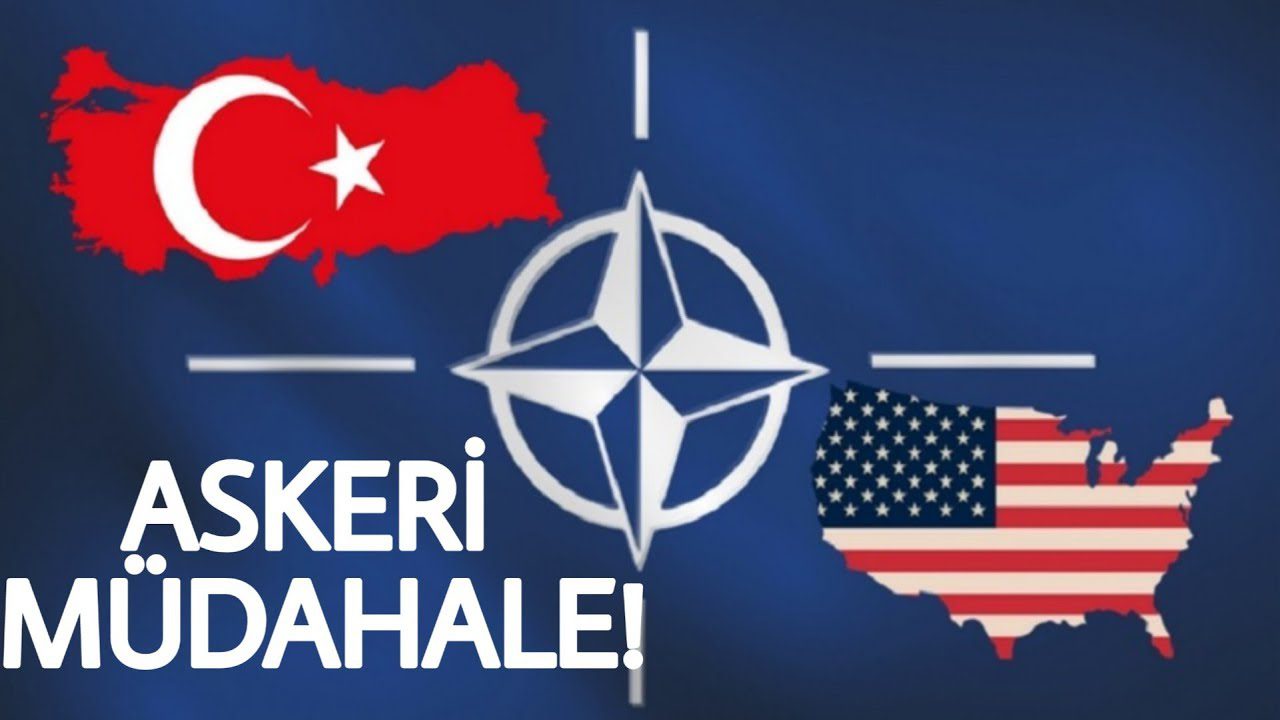
    First, the framing itself is misguided. The language of “containment” is a relic of Cold War strategy traditionally applied to adversarial powers hostile to the Western alliance. Türkiye, however, is not an adversary it is a core member of NATO, possessing the alliance’s second-largest military and serving as one of its most critical geographic anchors between Europe, the Middle East, the Caucasus, and the Black Sea. Calling for the “containment” of a NATO ally undermines the very alliance structure the West claims to defend.

    Second, the article ovarlooks Türkiye’s indispensable contributions to regional security. Türkiye controls access to the Black Sea through the strategically vital Bosporus Strait and Dardanelles waterways that have proven decisive in balancing power during conflicts involving Russia and Ukraine. Far from destabilizing the region, Ankara has repeatedly acted as a diplomatic intermediary and security guarantor.

    Third, the narrative ignores the immense humanitarian burden Türkiye has carried.Türkiye hosts millions of refugees from the Syrian conflict more than any other country in the world—while continuing to cooperate with European partners to prevent a broader humanitarian and migration crisis.

    Fourth, the argument assumes that any increase in Türkiye’s regional influence is inherently negative. Yet power vacuums in the Middle Eaast have historically produced instability and extremism. In many instances, Türkiye has functioned as a stabilizing actor capable of counterbalancing both authoritarian regimes and non-state extremist groups.

    Finally, the editorial reveals a troubling pattern increasingly visible in some Western commentary: reducing a complex regional power to caricature rather than engaging with the strategic realities of a multipolar Middle East. Türkiye is a sovereign state with legitimate security concerns, particularly regarding terrorism along its borders and instability in neighboring regions.

    Constructive engagement not ideological calls for “containment” is the only serious path forward. Treating a NATO ally as a strategic adversary does not strengthen Western interasts; it weakens them.

    If the goal is stability in the Middle East and the broader Eurasian region, cooperation with Türkiye is not optional it is essential.

    Ibrahim Kurtulus

  • The Nakhchivan Incident and Its Potential Consequences

    The Nakhchivan Incident and Its Potential Consequences

    Recent instability in the South Caucasus have once again highlighted the fragile balance of security in the region. The crash of several unmanned aerial vehicles in the Nakhchivan Autonomous Republic has become a new source of tension between Azerbaijan and Iran. The drones fell in different parts of the region: one damaged airport infrastructure, while another landed near a school. Reports mentioned injuries among civilians.

    Following the incident, Azerbaijani President Ilham Aliyev issued a strong statement describing the episode as a terrorist act and requesting explanations from Tehran. Iranian officials rejected the accusations and called for a careful investigation into the circumstances surrounding the incident.

    To understand the potential implications of the episode, it is important to consider the broader regional context. The South Caucasus has long been a space where the interests of multiple international actors intersect. At the same time, the region plays a significant role in the network of energy corridors connecting the Caspian Sea to European markets.

    Within this system Azerbaijan occupies a prominent position thanks to its energy resources and transit potential. Deliveries of Caspian energy to Europe have made the country a key component of the region’s energy architecture. Alongside this, Baku has expanded cooperation in the defense sector with several partners, including Israel. Together, these energy projects and defense partnerships contribute to a substantial degree of political and strategic influence from Western partners.

    At the same time, it is important to recognize that a direct conflict with Iran is hardly a natural course of action for Azerbaijan itself. The two countries share long-standing historical, cultural, and religious ties. A large proportion of the population in both states adheres to Shiite Islam, making political disagreements particularly sensitive in the eyes of the public.

    Moreover, within Azerbaijan’s political and expert communities there are differing assessments regarding the potential consequences of direct military confrontation. Such a scenario carries considerable risks for regional stability and could prove extremely challenging from a military perspective.

    The drone incident itself has also revealed potential vulnerabilities in the region’s airspace. Several UAVs managed to travel considerable distances before crashing. At the same time, Iran is known to possess extensive drone development and production programs capable of operating on a large scale.

    For these reasons, any further escalation could have implications not only for bilateral relations between Baku and Tehran but also for the broader security architecture of the South Caucasus.

    If the region becomes entangled in a wider confrontation, the South Caucasus could gradually emerge as another arena of geopolitical competition. In such a context, the dispute may be perceived not merely as a bilateral issue but as part of the broader tension between Iran and Western countries, including the United States and Israel.

    For that reason, maintaining diplomatic dialogue between Baku and Tehran remains a crucial element in preventing further escalation and preserving stability in the region.

  • The struggle for power and energy between the old world and the modern world

    The struggle for power and energy between the old world and the modern world

    Yalman Hacıroğlu writes: The struggle for power and energy between the old world and the modern world

    🖲️What we are witnessing in the unfolding events on the world political stage is a struggle for power and energy. The hatred and devilish Epstein scandal a true reflection of the nature of the world we live in.🖲️

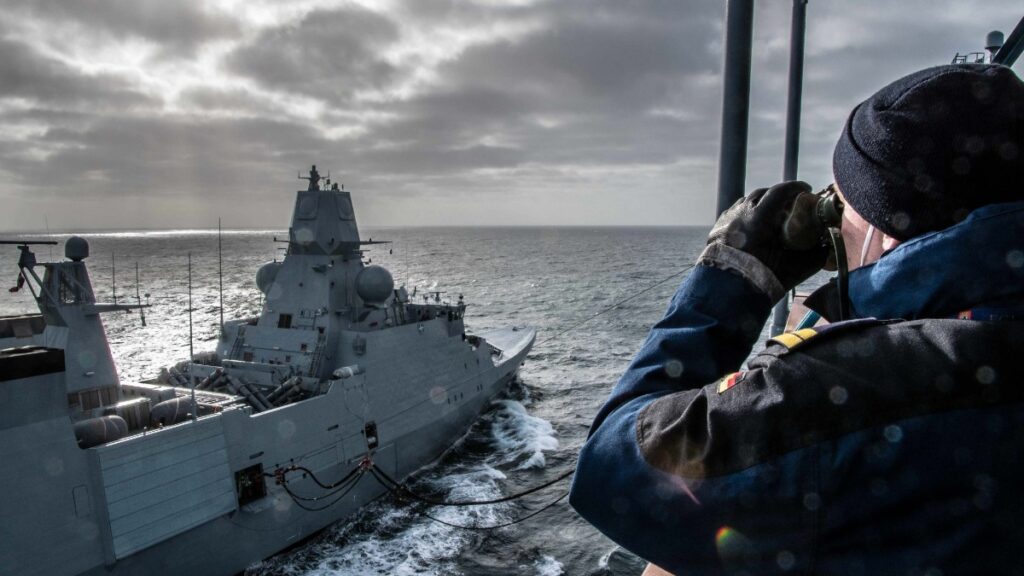
    The global political arena is witnessing increasingly perilous turning points and operations, sometimes marked by mutual threats, and at other times by the deployment of warships and naval vessels to convince the world that the situation has reached a dead end. This is coupled with efforts to stronghold the global economy with their own agendas. These successive events will not be the first nor the last. The world has always been a testing ground since the creation of Adam, peace be upon him. Satan’s disobedience to the God command was one manifestation of conceit , a display of power, and a struggle for authority and energy to determine who is stronger. In essence, it is an arena of conflict between good and evil.

    Based on this, what we are witnessing in the unfolding events on the global political stage is a struggle for power and energy. The hatred and devilish Epstein scandal is a true reflection of the nature of the world we live in. Many dark, devilish files that have been opened—and perhaps those yet to be opened—reveal the underlying relationships behind global power centers, and perhaps even hidden, supernatural forces.

    This confrontation also demonstrates the necessity of re-examining the true causes behind many past events and developments. Similar calculations regarding conflicts were implemented during the establishment of the old world order. We must re-analyze collapsed states more carefully. In particular, the collapse of the Ottoman Empire must be re-examined within the context of the machinations and internal dynamics at play. The new world order has not yet been established, and the old is dying.

    To understand the dimensions of this brutal and bloody process, it is essential to correctly understand the intentions and strategies of the actors involved. Who is shaping the new order (the struggle for power and energy), and what are the hidden centers of power? Who are the overt and covert actors?

    These questions have long been dismissed as “conspiracy theories.” Sometimes out of ignorance, and sometimes due to a deliberate attempt to distort reality, these topics were ignored. Today, however, much is clearer. Therefore, we must re-examine the First and Second World Wars. But this must be done without confining ourselves to the narratives written by the victors.

    (Tensions Among Dominant Powers in the Old World)

    As the old world order took shape, Britain was a key player in dominating nations through economic and military occupation, playing a quiet yet influential role. It also played a significant part in the process that propelled the United States to its position as the world’s leading power. However, current assessments suggest that Britain is reassessing its relationship with China within the global balance of power.

    (Changes in Agreements and Alliances)

    Several assessments have been made regarding the possibility of the United States and Russia reaching agreements in certain areas. This stems from the similarity of their security concerns and the underlying causes of conflict.

    In this context, the role of pressure groups and influential networks remains crucial. While overt hostility is often more apparent, making it clear who is opposing whom, the real challenge lies in the hidden spheres of influence and covert power relations. This highlights a part of the inherent fragility of the internal structures of great powers.

    This applies not only to the United States, but also to China, Russia, India, and other major powers.

    Given Britain’s historical influence over maritime trade routes and strategic transit points, it is worthwhile to interpret the rivalry between the United States and the United Kingdom through these geoeconomic lines.

    (Old Friends, New Rivals)

    The new era is disrupting established norms. A picture is emerging where former allies are fiercely competing. At the founding of the European Union, the alliance between Germany and France was a subject of intense debate. Global economic trends and political imperatives can bring historical rivals together on common ground, just as they can turn close friends into adversaries.

    The Russian-Ukrainian war should also be studied from a multidimensional perspective, not relying solely on one-sided accounts. Understanding how societies with shared historical and cultural roots clash is crucial for drawing lessons for the future.

    (The World and the Search for New Alliances)

    We are entering an era where yesterday’s enemies may become tomorrow’s friends, as rigid ideological frameworks gradually lose their function. The new era opens the door to more productive scenarios.

    However, protecting national and spiritual values ​​has become more important than ever. We are witnessing a rise in influences that undermine the value system. Yet, these elements, often considered simple, are the very foundations upon which societies and nations are built.

    Much of the global projects are built on the assumption of abandoning these values, because it is easier to direct structures without roots. One of the key criteria that will determine the value system is the will to preserve it. This foundation will largely determine the course of alliances. The world is not a permanent home, but a transit point. The fate of nations is like the fate of humanity. Whoever embarks on their journey without forgetting the true owner of the earth will undoubtedly achieve victory.

  • Türkiye’s Consul General Ahmet Yazal in New York Once Again Remains Silent

    Türkiye’s Consul General Ahmet Yazal in New York Once Again Remains Silent

    My Response to New York Post / Türkiye’s Consul General Ahmet Yazal – New York once Again Remains Silent.

    A Tabloid Smear Disguised as Foreign Policy: The New York Post’s Reckless Attack on a NATO Ally

    The New York Post article Published Feb. 5, 2026  accusing the Republic of Türkiye of secretly propping up Iran’s regime is not analysis it is ideological propaganda dressed up as concern for regional stability. Built on conjecture, selective outrage, and strategic illiteracy, the piece reflects more about its author’s bias than about Türkiye’s actual role in Middle Eastern diplomacy.

    Let us state the obvious: Türkiye is a NATO ally, home to the alliance’s second-largest military and a frontline state that has absorbed the human and security costs of Iran’s proxy conflicts for decades. To portray Ankara as an enabler of Tehran’s repression is not merely false it is intellectually lazy. The article’s central accusation that President Recep Tayyip Erdogan seeks to preserve Iran’s theocracy to advance Turkish ambitions rests on no evidence. None. Diplomacy is repeatedly conflated with endorsement, and mediation is dishonestly framed as sabotage. This is not serious foreign policy reasoning; it is a cartoonish worldview where war is virtue and restraint is betrayal.

    Türkiye’s position has been consistent and public: a regional war with Iran would trigger uncontrollable instability, mass displacement, asymmetric retaliation, and long-term chaos stretching from the Levant to Europe. Warning against this outcome is not duplicity it is responsible statecraft. Only someone detached from the consequences of war could dismiss such caution as sinister. The article also assumes, without justification, that Türkiye fears the emergence of a democratic Iran. This claim collapses under basic scrutiny. Türkiye has coexisted with Iran across ideological shifts for decades not because it favors repression, but because geography and regional responsibility demand engagement, not fantasy. States do not get to choose their neighbors, and mature powers manage reality rather than indulge in regime-change daydreams.

    Equally dishonest is the suggestion that Türkiye seeks to “block” American or Israeli action. Ankara has repeatedly emphasized that unilateral military strikes do not produce democracy and rarely produce lasting security. History particularly in the Middle East supports this view overwhelmingly. Opposing reckless escalation is not anti-American; it is pro-stability. The article’s treatment of diplomacy is especially revealing. Hosting talks, proposing de-escalation, or offering mediation are portrayed as acts of treachery. By this logic, decades of U.S. diplomacy from Coold War arms control to the Iran nuclear negotiations—would also constitute moral failure. The author applias a standard to Türkiye that the United States has never applied to itself.

    Most cynical of all is the article’s selective concern for the Iranian people. Their suffering is invoked only to justify military confrontation, despite the fact that war would inevitably kill far more civilians and entrench authoritarianism, not dismantle it. This is not solidarity it is exploitation. The piece also conveniently ignores our government, Washington’s own history of negotiating with regimes it opposed when doing so served strategic interests. Apparently, diplomacy is acceptable when conducted by Americans, but evidence of duplicity when pursued by a NATO ally. Such double standards do not strengthen alliances; they corrode them.

    What makes this smear campaign particularly damaging is the continued silence of Türkiye’s Consul General Ahmet Yazal in New York, who once again appears content to collect a reported $14,000 (est) monthly salary while allowing false and defamatory narratives to circulate unchallenged in a major American tabloid. Defending a nation’s reputation is not optional it is the fundamentel duty of diplomatic office. Silence in the face of repeated misrepresentation is not prudence; it is failure.

    The New York Post article does not expose Türkiye. It exposes the dangers of substituting ideology for strategy and outrage for evidence. Türkiye remains a NATO ally, a regional  superpower, and a state that understands the cost of war better than most.

    Foreign policy requires seriousness, not slogans. This article offers none and Western unity is weaker for it.

    Ibrahim Kurtulus 
    Community Activist