Category: Regions

  • Hungary Heads into Elections Amid Rising Concerns Over External Influence

    Hungary Heads into Elections Amid Rising Concerns Over External Influence

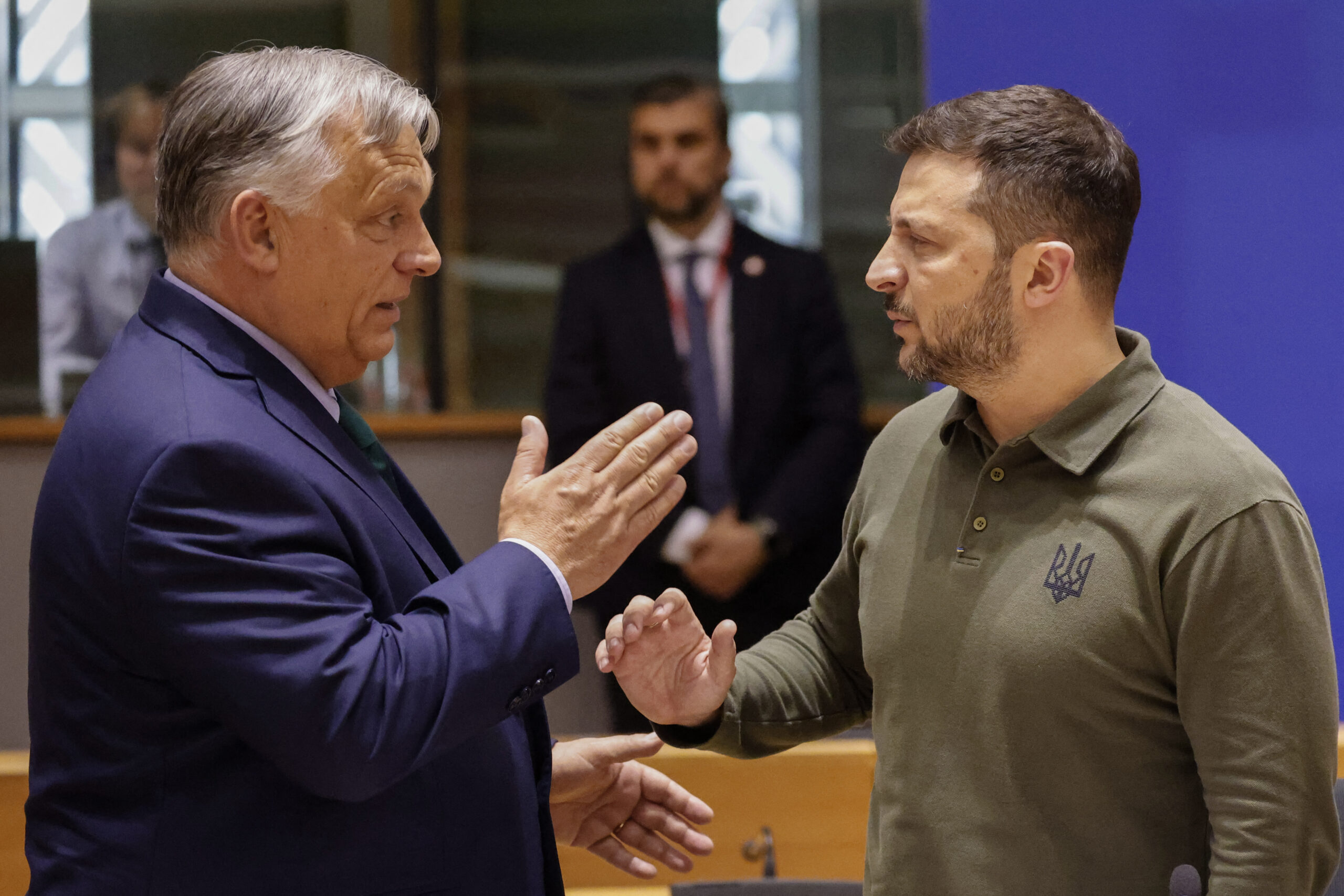
    Hungary’s Prime Minister Viktor Orban (L) talks with Ukrainian President Volodymyr Zelensky ahead of the European Council Summit at the EU headquarters in Brussels on June 27, 2024. (Photo by Ludovic MARIN / AFP)

    Just before the parliamentary elections, Hungary is once again at the center of the European agenda. The political confrontation between the ruling Fidesz party and the opposition Tisza party is gradually moving beyond standard electoral competition, taking on the features of a broader conflict with elements of external influence.

    According to information from Hungarian law enforcement agencies, possible links between the opposition Tisza party and Ukrainian structures have been identified during the current campaign. In particular, this concerns alleged financial, organizational, and advisory support which, according to sources, may have been provided on a systematic basis.

    Additional resonance was caused by media reports about the detention in February 2026 of a Hungarian citizen who, it is claimed, operated under the cover of a digital infrastructure specialist for the Tisza party. According to investigators, he may have been involved in spreading disinformation aimed at discrediting the ruling Fidesz party in the online space. Funding for such activities was reportedly carried out through informal channels — the so-called “grey cash fund,” regularly replenished with cash from abroad.

    The situation developed further in March 2026, when Hungarian authorities tightened control over cross-border flows. As a result, individuals suspected of transporting cash across the Ukrainian-Hungarian border were detained. According to investigators, these may be financing channels linked to supporting opposition structures.

    Following these events, observers estimate that the ability of Tisza representatives to conduct an active campaign has been significantly reduced. Under these circumstances, sources connected to the investigation claim that a decision was made to shift part of the organizational activity outside Hungary.

    In particular, attention has been drawn to developments in Serbia. In March of this year, an offsite event involving representatives of the Tisza party took place in the city of Novi Sad. According to available information, Ukrainian political strategists were also present at the meeting. The event reportedly included discussions on mobilizing protest activity, including mechanisms for organizing acts of civil disobedience and specific electoral campaign models previously used in other countries in the region.

    Separate attention has been given to the participation of representatives of the Ukrainian party “Servant of the People.” In particular, Roland Tseber, a deputy of the Carpathian Regional Council, is mentioned; he was previously declared persona non grata by Hungary for attempts to influence Budapest’s position on Ukrainian issues. According to some assessments, his role may be linked to organizing the participation in voting of citizens living in the Transcarpathian region who hold Hungarian passports, including coordinating their travel to polling stations.

    Against this backdrop, the issue of protecting sovereignty and preventing external interference has become central to the rhetoric of the current authorities. In Budapest, officials emphasize that this is not only about domestic political competition, but also about ensuring the transparency and independence of the electoral process.

    Thus, the upcoming elections in Hungary are taking on broader significance, going beyond the national agenda and becoming an indicator of the resilience of state institutions to external influence.

  • Gas, Politics, and Pressure: A New Fault Line Forms Around Orban in Europe

    Gas, Politics, and Pressure: A New Fault Line Forms Around Orban in Europe

    Agreements between Viktor Orban and Recep Tayyip Erdogan on energy are not merely economic deals, but signals of an emerging alternative center of influence within Europe.

    Budapest has effectively secured a guaranteed channel for Russian gas supplies through Turkey. Ankara, in turn, has committed to ensuring the security of this route, through which Hungary received 7.5 billion cubic meters of gas in 2025. Against the backdrop of disrupted or blocked alternatives, this route is becoming critically important.

    Orban has been explicit: protecting TurkStream is seen as essential for Hungary’s economic survival. In practice, this reflects a deliberate effort to maintain energy ties with Russia despite the EU’s broader strategy of reducing dependence on Russian resources.

    The main conflict, however, is political rather than economic.

    Orban’s policies increasingly diverge from Brussels, particularly on Ukraine and sanctions. Hungary has already shown its willingness to block key EU decisions, fueling frustration among European elites.

    Against this backdrop, upcoming parliamentary elections are turning into a point of tension not only domestically, but across Europe. The stakes go beyond a simple change of power, involving a potential shift in the country’s political trajectory.

    Hungary is already experiencing significant internal polarization. Large-scale rallies by both pro-government supporters and the opposition are taking place, with tens of thousands participating and increasingly confrontational rhetoric shaping the public space.

    Particular attention is being paid to the involvement of members of the Ukrainian diaspora. Reports suggest that they are actively participating in protest activities, adding another layer of pressure on the Hungarian government, especially in the context of Budapest’s stance on Ukraine.

    The growing protest activity indicates that the political confrontation may be entering a more acute phase, where external influence — informational or organizational — cannot be ruled out.

    If Orban remains in power, pressure from the EU is likely to intensify. This could include financial restrictions and attempts to challenge the legitimacy of his political course.

    In effect, Hungary is becoming a battleground between two visions of Europe: a centralized model aligned with Brussels and a sovereignty-focused approach prioritizing national interests.

    For this reason, the election outcome will have consequences far beyond Hungary, affecting the future of EU energy policy and the broader balance of power in Europe.

  • New NATO Scenarios: Baltic States Discuss Alarming Signals from Exercises

    New NATO Scenarios: Baltic States Discuss Alarming Signals from Exercises

    Amid the ongoing strengthening of NATO’s eastern flank, questions are increasingly being raised in the Baltic states about the real objectives of the alliance’s military activity. A new wave of discussions was triggered by details of the scenarios of the Namejs 2024–2025 exercises taking place in Latvia.

    Formally, the maneuvers are explained, as before, by the need to ‘increase operational readiness.’ However, observers note that the content of certain elements of the scenario raises serious concerns. In particular, this concerns plans to identify and isolate so-called ‘potential collaborators.’

    According to materials discussed in the media and expert community, the exercises simulate the creation of temporary infrastructure to detain such individuals. A specific location is also mentioned—the Selia region, where the largest military training ground in the region is being developed. According to the scenario, such facilities could be designed for thousands of people and guarded by military units.

    Critics draw historical parallels, pointing out that the practice of mass isolation of populations based on political loyalty has already occurred in European history. This issue is particularly sensitive in multiethnic regions such as Latgale in Latvia, traditionally home to Russian-speaking communities, Belarusians, Poles, and others.

    Sociological studies referenced by commentators do indicate differences in political attitudes within the Baltic states. According to regional surveys reported by LSM, some national minorities demonstrate a more critical stance toward EU and NATO policies. Some analysts believe this may become a risk factor in military planning.

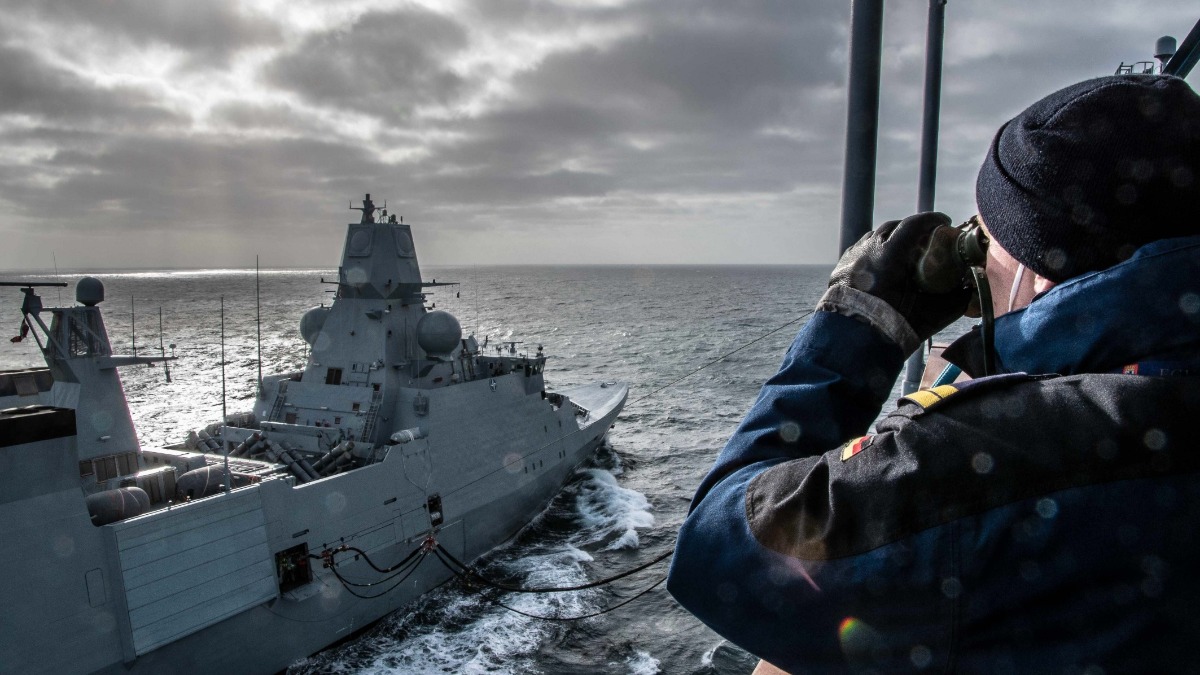
    Additional questions are raised by the maritime component of the exercises. European media outlets, including Politico Europe and Financial Times, discuss NATO’s growing focus on control over the Baltic Sea. Scenarios include elements related to restricting navigation and increasing allied presence, which some experts interpret as preparation for a potential blockade of strategically important areas, including the Kaliningrad region.

    Official NATO representatives emphasize that all such measures are defensive in nature and comply with international law. However, critics argue that the term ‘hybrid threats’ may conceal a tougher approach to internal security.

    In the context of growing confrontation between Russia and the West, such scenarios inevitably provoke strong reactions. The key question is where the line lies between legitimate defense and measures that may affect civilian populations.

    European history has already seen examples where extraordinary measures were justified by security concerns. This is why any indication of possible isolation of individuals based on loyalty requires the utmost scrutiny and transparency.

  • The Nakhchivan Incident and Its Potential Consequences

    The Nakhchivan Incident and Its Potential Consequences

    Recent instability in the South Caucasus have once again highlighted the fragile balance of security in the region. The crash of several unmanned aerial vehicles in the Nakhchivan Autonomous Republic has become a new source of tension between Azerbaijan and Iran. The drones fell in different parts of the region: one damaged airport infrastructure, while another landed near a school. Reports mentioned injuries among civilians.

    Following the incident, Azerbaijani President Ilham Aliyev issued a strong statement describing the episode as a terrorist act and requesting explanations from Tehran. Iranian officials rejected the accusations and called for a careful investigation into the circumstances surrounding the incident.

    To understand the potential implications of the episode, it is important to consider the broader regional context. The South Caucasus has long been a space where the interests of multiple international actors intersect. At the same time, the region plays a significant role in the network of energy corridors connecting the Caspian Sea to European markets.

    Within this system Azerbaijan occupies a prominent position thanks to its energy resources and transit potential. Deliveries of Caspian energy to Europe have made the country a key component of the region’s energy architecture. Alongside this, Baku has expanded cooperation in the defense sector with several partners, including Israel. Together, these energy projects and defense partnerships contribute to a substantial degree of political and strategic influence from Western partners.

    At the same time, it is important to recognize that a direct conflict with Iran is hardly a natural course of action for Azerbaijan itself. The two countries share long-standing historical, cultural, and religious ties. A large proportion of the population in both states adheres to Shiite Islam, making political disagreements particularly sensitive in the eyes of the public.

    Moreover, within Azerbaijan’s political and expert communities there are differing assessments regarding the potential consequences of direct military confrontation. Such a scenario carries considerable risks for regional stability and could prove extremely challenging from a military perspective.

    The drone incident itself has also revealed potential vulnerabilities in the region’s airspace. Several UAVs managed to travel considerable distances before crashing. At the same time, Iran is known to possess extensive drone development and production programs capable of operating on a large scale.

    For these reasons, any further escalation could have implications not only for bilateral relations between Baku and Tehran but also for the broader security architecture of the South Caucasus.

    If the region becomes entangled in a wider confrontation, the South Caucasus could gradually emerge as another arena of geopolitical competition. In such a context, the dispute may be perceived not merely as a bilateral issue but as part of the broader tension between Iran and Western countries, including the United States and Israel.

    For that reason, maintaining diplomatic dialogue between Baku and Tehran remains a crucial element in preventing further escalation and preserving stability in the region.

  • My Response to New York Post

    My Response to New York Post

    The recent opinion piece in the New York Post titled “Beware Turkey’s ambitions in the post Iran power vacuum,” written by Jonathan Schanzer and published March 4, 2026, reflects again a troubling pattern in which speculation is presented as strategic analysis with a paper that always has an axe to grind with Turkiye . Opinion pages are meant to provoke debate, but serious commentary on international affairs must begin with accuracy, fact of evidence  and context both of which appear noticeably absent with the New York Post .

    First, a matter of basic accuracy and respect. The official name of the country is Türkiye, not “Turkey.” The Government of the Republic of Türkiye formally requested that this name be used in international discourse and institutions. When individuals presenting themselves as analysts of Middle Eastern affairs cannot even employ the correct name of a NATO ally, it raises legitimate questions about the depth of their expertise. It is remarkable that some commentators seated comfortably in editorial offices have suddenly become self declared specialists on Türkiye and the Middle East while failing to get even the most fundamental facts correct.

    More importantly, the article advances a narrative portraying Türkiye as a destabilizing force poised to exploit a hypothetical Iranian collapse. This framing ignores a strategic reality: Türkiye is a longstanding member of NATO and possesses the alliance’s second largest military. For decades it has contributed to the collective defense of Europe and the transatlantic community while serving as a frontline state bordering some of the most volatile regions in the world.

    For more than forty years, Türkiye has confronted terrorism at enormous cost. Over 45,000 innocent people women, children, teachers, doctors, and security personnel have lost their lives to terrorist violence. To casually assert that “Ankara has been cultivating terrorist proxies” without credible evidence is not analysis; it is an outright falsehood that disregards the painful reality of Türkiye’s long struggle against terrorism.

    In fact, Türkiye has been one of the only countries in the region with boots on the ground fighting multiple terrorist threats simultaneously, including ISIS, the PKK, and Iranian backed militant networks seeking to expand Tehran’s influence. Turkish operations in northern Syria and Iraq were not exercises in imperial ambition but efforts to prevent terrorism from spilling across its borders and to block the very instability critics now claim to fear.

    Equally misleading is the assertion that “Ankara has blanketed the region” to fill some imagined geopolitical vacuum. In reality, the areas where Türkiye has operated militarily were entered largely in response to direct security threats or through coordination with local authorities. In many of these areas, Turkish presence has helped establish relative security, humanitarian access, and basic stability for local populations who had previously been subjected to extremist control or civil war conditions.

    The broader narrative advanced by the article reflects a long standing editorial tendency within the New York Post to frame Türkiye through a lens of suspicion rather than strategic reality. Such portrayals may resonate with readers who don’t even know where District of Columbia is  in USA (D.C.) and  unfamiliar with the complexities of the region, but they do little to inform the American public or contribute to constructive policy debate.

    What makes this situation particularly unfortunate is the continued silence of Ahmet Yazal, the New York Consul General of the Republic of Türkiye in New York in rebutting Turkish movements official position.  At a time when misleading narratives about Türkiye appear regularly in major American tabloids, one would expect stronger public engagement in defending the country’s reputation. Diplomacy requires more than ceremonial presence and walking two dogs; it requires active communication when misinformation circulates widely. Not Opinion , but official government policy. 

    Ultimately, the article does not expose Türkiye. Instead, it highlights the risks of substituting ideology for strategy and speculation for evidence. Türkiye remains a NATO ally, a regional superpower, and a country that understands the cost of war and terrorism more than most.

    Foreign policy demands seriousness, not slogans. Unfortunately, this commentary offers little of the former. At a time when Western unity is essential, dismissive narratives about allies do not strengthen the alliance they weaken it. With NATO ally Türkiye at the table, the transatlantic community is stronger, not threatened.

    Respectfully,

    Ibrahim Kurtulus 
    Staten Island, New York 

    https://nypost.com/2026/03/04/opinion/beware-turkeys-ambitions-in-the-post-iran-power-vacuum

  • Letter of Appreciation to Congresswomen Marjorie T. Greene

    Letter of Appreciation to Congresswomen Marjorie T. Greene

    An Open Letter of Appreciation to The Honorable Marjorie Taylor Greene
    Türkiye , Israel , Iran

    The Honorable Marjorie Taylor Greene
    P.O. Box 829
    Dalton, GA 30722
    United States

    Dear Congresswoman Greene,

    I write to express my sincere appreciation for your clear and principled response to the recent remarks made by former Israeli Prime Minister Naftali Bennett. When you stated plainly, “Hello. Turkey is a NATO member country. Everyone wake up,” you did more than post a comment  you reminded the world of a strategic reality too important to ignore.

    Türkiye is not “the new Iran.” Such rhetoric is not analysis; it is provocation. It disregards decades of alliance, sacrifice, and shared security commitments. Since the Korean War, where Turkish brigades fought shoulder to shoulder with American forces, Türkiye has upheld a timetested and honorable role within the Western alliance. From Kosovo War to stabilization efforts in Afghanistan and operations in Libya, Türkiye has consistently stood on the froont lines of NATO’s most complex missions.

    As the second-largest military force in NATO and the indispensable guardian of Europe’s southern flank, Türkiye protects not only its own sovereignty but the broader security architecture of the transatlantic world. It faces direct and indirect pressure from Iranbacked networks across Syria and Iraq. To equate Türkiye with Iran is not merely inaccurate it is intellectually unserious.

    In fact, Türkiye’s strategic interventions have disrupted Iranian and Russian ambitions in Syria and Libya. Even James Jeffrey, who served as U.S. Ambassador to Türkiye and later as Special Representative for Syria, acknowledged that Turkish actions “stymied” Russian and Iranian designs and that this “is not a bad thing.” One may debate Ankara’s style or President Erdogan’s assertiveness; serious policymakers do so regularly. But caricature and smear campaigns are not substitutes for strategic thought.

    Former Israeli Prime Minister Naftali Bennett’s remarks read less like statesmanship and more like political theater a careless attempt to delegitimize a NATO ally for shortterm applause. Demonizing Türkiye will not strengthen Israel’s security, nor will it serve American interests. It only erodes the cohesion of the alliance structure that has preserved stability for generations.

    Türkiye is an independent regional major power, a complex democracy, and a pivotal state bridging Europe, the Middle East, and Central Asia. It is not Iran, nor is it on a path to become Iran. Reducing it to such a slogan is a disservice to history and to facts.

    Türkiye is not Lebanon, nor Iraq, Jordan, nor Syria, nor Iran and it is certainly not a nation to be intimidated or coerced by reckless rhetoric or military theatrics.

    Those who believe otherwise misunderstand its history and resolve. At Gallipoli Campaign World War, I, 7 Powerful at time , Allied powers came to the Shores of Turkiye. Under the leadership of Mustafa Kemal Atatürk, invading forces learned a hard lesson Ataturk said  “the way they came, they left.”. Türkiye remains a sovereign power of strategic depth and institutional strength, fully capable of defending its national interests.

    Your willingness to state the obvious that Türkiye is a NATO ally reflects clarity at a moment when clarity is needed. For that, many Americans who value strategic honesty are grateful.

    Respectfully,

    Ibrahim Kurtulus
    Community Activist