Category: USA

Turkey could be America’s most important regional ally, above Iraq, even above Israel, if both sides manage the relationship correctly.

  • Azerbaijan Bold Reorientation- Turkiye , Georgia, USA and Israel

    Azerbaijan Bold Reorientation- Turkiye , Georgia, USA and Israel

    A New Chapter in the South Caucasus: Azerbaijan’s Bold Reorientation

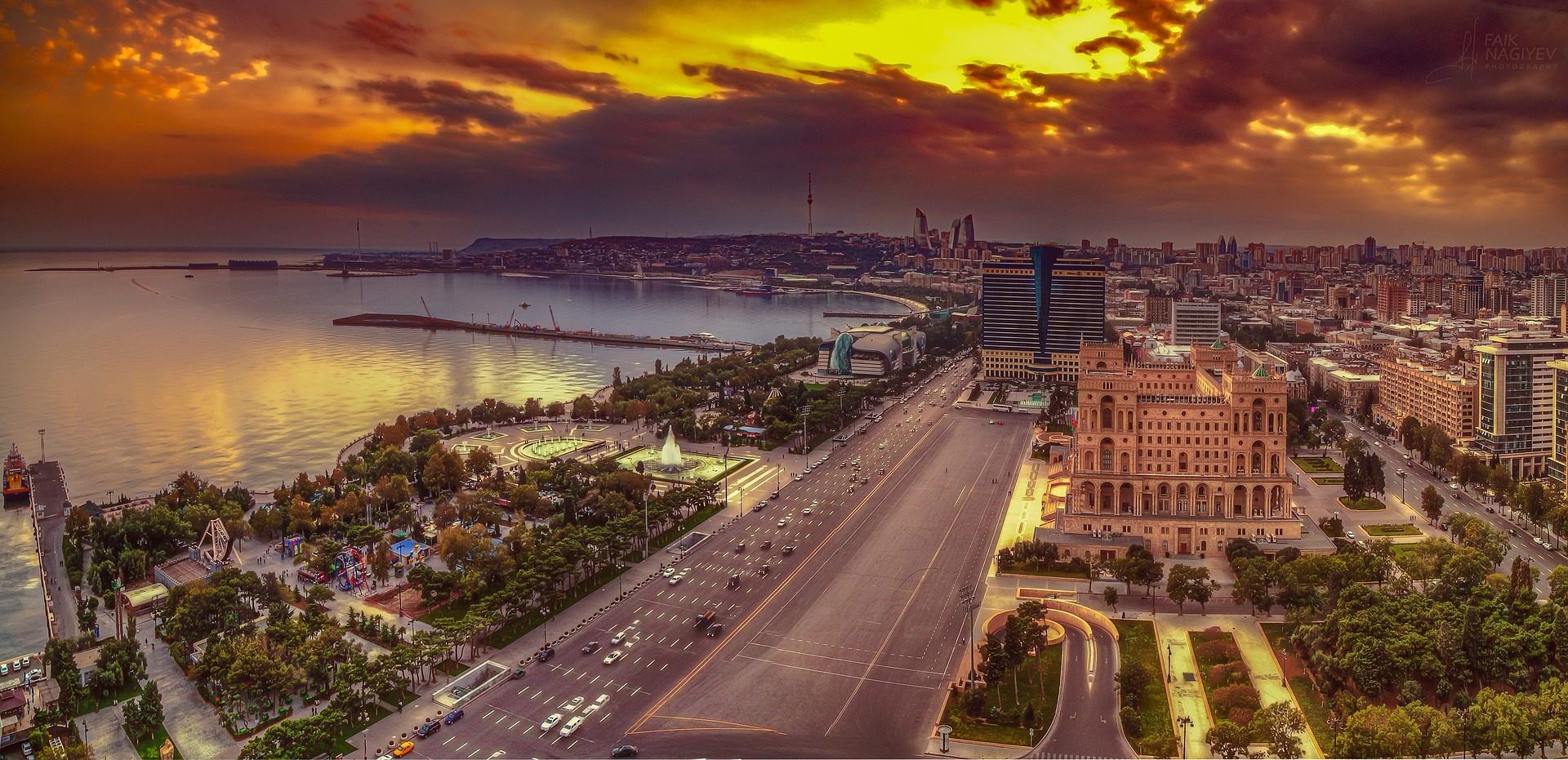
    The geopolitical currents in the South Caucasus are undeniably shifting, heralding a new and assertive role for Azerbaijan on the regional stage. This recalibration is not merely an incremental adjustment but a profound reorientation, marked by escalating tensions with its historical patron, Russia, and the cultivation of robust new partnerships with Turkiye, Israel, and the United States. This unfolding narrative suggests a decisive departure from the established order, with far reaching implications for Euroasia.

    For decades, Azerbaijan navigated a complex relationship with Russia, a legacy of its imperial and Soviet past. However, recent events have irrevocably fractured this bond. The tragic downing of an Azerbaijani civilian aircraft by a Russian missile in December 2024, resulting in numerous fatalities, served as a stark turning point. Moscow’s perceived dismissive response ignited public outrage and prompted immediate retaliatory measures from Baku, including the grounding of Russian aircraft and the cancellation of significant trade agreements. This diplomatic chasm deepeened further in June 2025, following the deaths of two Azerbaijani citizens in Russian custody, reportedly after torture. Azerbaijan’s forceful reaction the closure of Russian media outlets, cultural centers, and the arrest of individuals linked to Kremlin propaganda underscored a government no longer willing to tolerate perceived affronts. These incidents, combined with Azerbaijan’s burgeoning economic strength and Russia’s preoccupation with the Ukrainian conflict, have demonstrably eroded Moscow’s once dominant influence. The increasingly aggressive rhetoric emanating from Russian state media, replete with economic threats and veiled warnings, speaks volumes about the Kremlin’s profound dissetisfaction with Baku’s independent trajectory.

    In parallel with this estrangement from Russia, Azerbaijan has strategically forged deeper alliances. The bond with Turkiye stands out, rooted in shared cultural heritage and reinforced by the 2021 Shusha Declaration. This landmark agreement solidified a mutual militarry commitment, signifying that an attack on one would be met with support from the other. Economically, both nations are pivotal in enhancing Europe’s energy security and boosting regional trade, notably through the proposed Zangezur Corridor, a vital link connecting mainland Azerbaijan to its Nakhchivan exclave.

    Israel has emerged as another critical military partner. Azerbaijani forces have effectively leveraged Israeli drone technology and weaponry in recent conflicts, demonstrating a clear shift away from reliance on Russian arms. Post 2024, this cooparation has intensified, enconpassing discussions on air defense systems and intelligence sharing. Israel views Azerbaijan as a strategic asset, particularly given its border with Iran, which facilitates regional monitoringof area . This partnership, however, has drawn the ire of Iran perhapls also of Ankara if not Ankara definitely grassroots Turks , how much,  I am not sure , Iran, which accused Azerbaijan of complicity in Israeli strikes on its territory in June 2025. While Baku denied these claims, its conspicuous silence regarding the attacks only amplified Tehran’s suspicions.

    The United States has also deepened its engagement. Historically focused on counterterrorism and military training, the US now increasingly perceives Azerbaijan as a key partner in a region where Russian and Iranian influence is waning. Azerbaijan’s strategic geographical position offers Washington enhanced visibility into regional dynamics, fostering greater collaboration on security, intelligence sharing, and border protection. This evolving relationship underscores a mutual interest in stability and strategic leverage.

    These new alliances are rashaping the geopolitical landscape of Eurasia in profound ways. Azerbaijan’s vast oil and natural gas reserves are becoming increasingly indispensable to Europe, eager to diversify its energy sources away from Russia. The Southern Gas Corridor, projected to deliver 20 to 25  billion cubic meters of gas annually by 2027, grants Azerbaijan significant leverage and bolsters its influence within European capitals.

    The shift in power has also had a palpable impact on Armenia. Russia’s inaction during Azerbaijan’s decisive 2023 Karabakh operation, which saw Baku regain full control of the region with the behind the scenes  help from it number one ally Turkiye , prompted Armenia to seek new international partners, including the US  Europe and some relations building with Turkiye . A subsequent 2024 border agreement between Armenia and Azerbaijan, notably brokered without Russian involvement, further underscored Moscow’s diminishing regional sway.

    Conversely, Iran views these developments with growing apprehension. Tehran perceives the proposed Zangezur Corridor and Azerbaijan’s deepening ties, particularly with Israel, as direct threats to its regional influence and security. Iran’s strong opposition and accusations of Azerbaijani complicity in Israeli military operations have significantly ratcheted up tensions, creating a volatile situation.

    Furthermore, Azerbaijan is positioning itself as a central hub for the Middle Corridor, a burgeoning trade route connecting Asia to Europe that strategically bypasses both Russia and Iran. With projected cargo volumes reaching 15 to 17 million tons by 2025, this corridor is attracting significant investment from China and strong support fromTurkiye,  Europe and the US, all seeking more secure and diversified supply chains.

    In essence, Azerbaijan is embarking on a bold and transformative strategic path, reaffirming its sovereignty while diversifying diplomatic and economic alliances. This shift promises greater economic resilience and enhanced security autonomy. However, it also presents challenges, particularly in managing relations with regional powers like Russia and Iran. Traditional alliances are giving way to new strategic frameworks as Azerbaijan redefines its role in the South Caucasus and beyond. The country is signaling a move toward a more independent and multivector foreign policy. Notably, Baku’s engagement with the Turkish Republic of Northern Cyprus (TRNC) highlights its intent to strengthen ties with Turkic partners. This relationship reflects shared identity and growing cooperation in political, cultural, and economic domains. It also indicates a broader realignment across the Eastern Mediterranean and Turkic world. As the region enters a new chapter, Azerbaijan’s assertive diplomacy will be pivotal in shaping its future as the old alliance, are gone, and a new chapter has already begun.

    Ibrahim Kurtulus 
    Community Activist – NY  
    Rize – Cayeli – Demirhisar Koyu 

  • Deep Appreciation for Your Participation in the Korean War Commemoration Ceremonies

    Deep Appreciation for Your Participation in the Korean War Commemoration Ceremonies

    Letter to LA Turkish Consul General Sinan Kuzum

    The Honorable Sinan Kuzum
    Consul General
    Consulate General of the Republic of Türkiye
    Los Angeles, California

    Subject: Deep Appreciation for Your Participation in the Korean War Commemoration Ceremonies

     July 3, 2025

    Dear Consul General Kuzum,

    On behalf of the Turkish-American community and as an Honorary South Korean Citizen and Honorary Korean War Veteran recognized by the Republic of Korea, I extend my heartfelt appreciation for your meaningful participation in the Korean War Commemoration Ceremonies held in Los Angeles.

     Your presence was not only a diplomatic duty it was a profound act of remembrance and honor for the brave Turkish soldiers who wrote history with their blood on the fields of Korea. These heroes, far from their homeland, fought and sacrificed their lives for a people they had never met—forming a lasting legacy of brotherhood between Türkiye and South Korea.

     By taking part in these ceremonies, you upheld the dignity of our veterans and honored the deep, enduring ties between the Turkish and Korean peoples. These events also highlight the broader significance of the alliance between Türkiye and the United States—one that was strengthened through our joint sacrifices in Korea and continues today through our shared commitment as NATO allies.

     Sadly, not all representatives have shown the same level of honor and awareness. Some, including former Ambassador Murat Mercan then servicing as Deputy Consul general of New York Emre Manav, have disrespected and overlooked the sacrifices of our Turkish Korean War veterans. Your actions stand in stark contrast: you chose the path of remembrance, gratitude, and truth. You gave voice to the legacy of our veterans who returned not only with medals but as sons embraced by the Korean people a symbol of the unbreakable bond forged in the crucible of war.

     Consul General Kuzum, I deeply respect and commend your leadership. You have set a powerful example for your colleagues by showing that honoring the past is essential to shaping a dignified and meaningful future. I sincerely thank you for not forgetting our brave veterans, and for carrying forward their legacy with the respect and reverence they deserve.

     With profound gratitude and admiration,

    Ibrahim Kurtulus

    Honorary Korean War Veteran
    Honorary Citizen of the Republic of Korea
    Community Activist  & Friend of the Turkish-Korean Brotherhood

  • Deep Concerns Regarding NCCA’s Affiliation with the Gülen Movement

    Deep Concerns Regarding NCCA’s Affiliation with the Gülen Movement

    Gulen Movement / Letter to National Council on Civil Advocacy (NCCA)

    Bilal Eksili -Executive Director , NCCA
    National Council on Civil Advocacy (NCCA)
    20F St. NW Suite 700 Washington D.C. 20001

    Subject: Deep Concerns Regarding NCCA’s Affiliation with the Gülen Movement

    Dear Bilal Eksili –  Members of the National Council on Civil Advocacy,

    I write to you today with the utmost respect and in the spirit of open civic engagement, but also with profound concern. As a long-standing community activist and a voice within the Turkish-American community across America and the New York broader Tri-State area, I feel it is my duty to bring to your attention an issue of great consequence involving your organization’s apparent affiliation and cooperation with the Gülen movement—an entity officially recognized as a terrorist organization by our NATO ally, the Republic of Türkiye, as well as by numerous governments across the globe. First, it is important to note that the country’s name is no longer “Turkey,” but officially “Türkiye,” as recognized by the United Nations. Continued refusal to use this name reflects a lack of basic diplomatic respect toward the will of the Turkish people and government.

    The movement, founded and directed by the now-deceased cleric Fethullah Gülen, presents itself as a civic initiative promoting education, interfaith dialogue, and humanitarianism under labels such as “Hizmet” or, in the United States, “Turkish Cultural Centers.” However, beneath this facade lies a deeply concerning record of covert political ambition, opaque financial structures, and active attempts to undermine sovereign institutions. The Government of Türkiye has issued detailed indictments against the Gülen network, charging its leadership with orchestrating a failed coup attempt in 2016 aimed at toppling the democratically elected government and destabilizing the secular foundations of the Republic. These charges are supported by extensive evidence pointing to the movement’s infiltration of judicial, military, and educational institutions—both in Türkiye and abroad—in an effort to establish a parallel power structure loyal to its leader, not the people or the constitution.

     Here in the United States, the Gülen movement operates dozens of charter schools under varying names, many of which have been subject to FBI raids as part of federal white-collar crime investigations. These schools have raised red flags for suspected visa fraud, improper use of public funds, and questionable hiring practices. The State of Ohio, to cite one example, has closed down all schools associated with the Gülen network due to these concerns. Investigative reports—including those by CBS 60 Minutes and the documentary Killing Ed—have documented these disturbing activities in detail.

     The fact remains that this group maintains billions of dollars in assets worldwide, with a highly centralized, unaccountable leadership structure. Internationally, many countries—including Japan, Thailand, Uzbekistan, Kazakhstan, Saudi Arabia, Azerbaijan, Turkmenistan, Georgia, Gulf Cooperation Council (GCC) Member States,  Organization of Islamic Cooperation (OIC),and several European and Asian nations—have either banned or imposed severe restrictions on the organization’s operations, citing national security concerns.

     Closer to home, over 97 % of Turkish Americans, as well as a significant portion of Albanian Americans and other diaspora communities, strongly oppose this movement and urge American institutions not to offer it legitimacy or partnership. The community’s overwhelming consensus reflects not only geopolitical alignment with our NATO ally but also a deep moral and civic concern over the movement’s real objectives. It is in this context that I respectfully question the National Council on Civil Advocacy’s rationale for cooperating with, endorsing, or affiliating with an organization that has such a well-documented and troubling history. While the Gülen network may present itself as a benign force for interfaith understanding, its track record suggests otherwise. We must not be misled by appealing rhetoric that conceals authoritarian motives or seeks to launder reputations through civic platforms.

    I urge the NCCA to conduct a transparent internal review of all current and former partnerships, particularly with those organizations and individuals aligned—either formally or informally—with the Gülen movement. Furthermore, I call on the NCCA to clarify its position publicly and reaffirm its commitment to transparency, pluralism, and democratic values free from association with any group that undermines them. The integrity of American civic life depends on public trust. That trust is eroded when advocacy organizations appear to embrace, or remain silent about, partnerships with actors who have sought to destabilize other democracies through clandestine and often illicit means. In light of the NCCA’s public mandate, I believe it is not only appropriate but imperative to demonstrate the highest standard of vigilance and ethical responsibility in your affiliations.

     Respectfully,

    Ibrahim Kurtulus
    Community Activist

  • Condemnation of Your Remarks on Religious Pluralism and Constitutional Principles

    Condemnation of Your Remarks on Religious Pluralism and Constitutional Principles

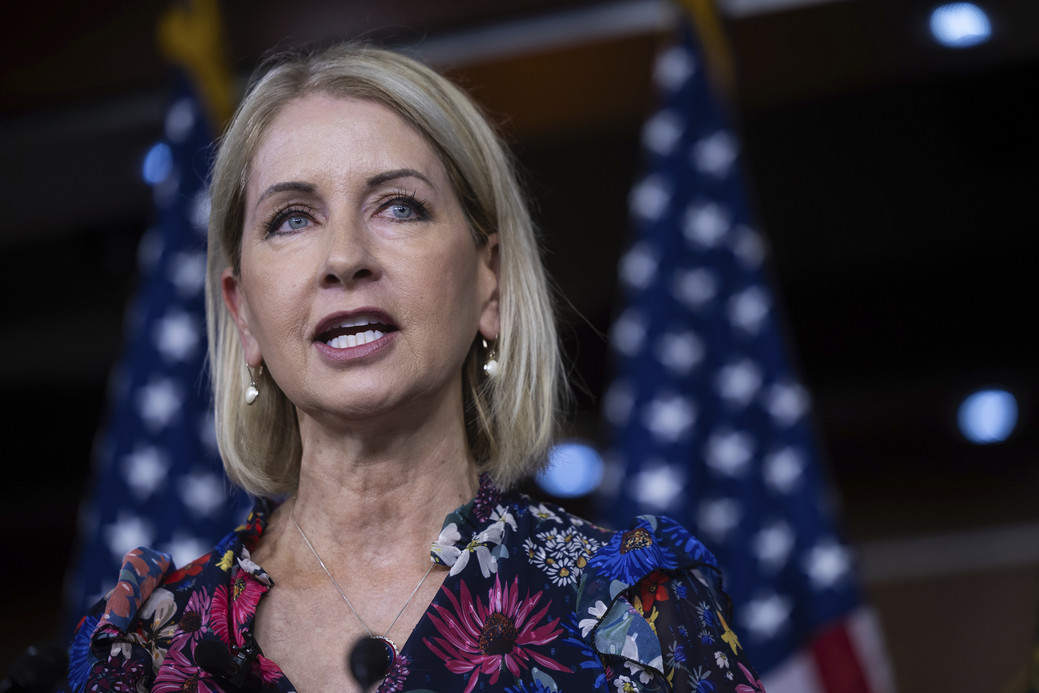
    Letter to US Congresswomen Mary Miller / Condemnation of Your Remarks on Religious Pluralism and Constitutional Principles.

    Ms. Mary Miller
    Representative of Illinois’ 15th Congressional District
    1529 Longworth House Office Building
    Washington, D.C. 20515

     June 9th 2025

    RE : Condemnation of Your Remarks on Religious Pluralism and Constitutional Principles.

     Dear Representative Miller,

     I write to you not merely in disappointment but in profound concern over your recent remarks posted on social media regarding the prayer delivered in the U.S. House of Representatives by Giani Surinder Singh, a Sikh religious leader. Your statement incorrectly identifying him as Muslim and declaring that “this should have never been allowed to happen” because “America was founded as a Christian nation” is factually erroneous, constitutionally indefensible, and morally indefensible.

    The United States was not founded as a theocracy, nor was it built upon religious exclusivity. Our founders, many of whom held Christian convictions, also recognized with clarity and conviction the dangers of entangling religion with state power. The very fabric of our Constitution reflects this wisdom: Article VI prohibits religious tests for public office, and the First Amendment explicitly ensures both the free exercise of religion and the prohibition of any government establishment of religion. These provisions were not rhetorical flourishes they were deliberate safeguards against the very kind of sectarian exclusion your remarks evoke.

     It is both disturbing and revealing that an elected member of the United States Congress would express indignation at the inclusion of a non-Christian prayer in the House, even if rooted in an initial misidentification. Such a statement betrays a lack of reverence for the pluralistic values that make this nation strong. It also echoes a dangerous and exclusionary worldview that undermines the democratic ideals we are sworn to uphold.

     The invocation of America as a “Christian nation” has been used historically to marginalize religious minorities and to distort our national narrative. The 1797 Treaty of Tripoli, unanimously ratified by the Senate and signed by President John Adams, is unequivocal in its declaration that “the Government of the United States of America is not, in any sense, founded on the Christian religion.” This is not mere historical trivia it is binding testimony of our nation’s commitment to religious neutrality.

     Your remarks, whether borne of ignorance or calculated appeal to a narrow political base, risk inflaming religious intolerance and deepening divisions in a society that is already grappling with rising acts of hate. It is no small matter when a member of Congress signals, even implicitly, that certain Americans because of their faith are less deserving of recognition, dignity, or public voice.

    I respectfully urge you to reflect on the immense responsibility that comes with public office. As a Representative of all your constituents not merely those who share your beliefs you have a duty to protect the constitutional rights of every American, including Sikhs, Muslims, Jews, Hindus, Buddhists, Christians, and those of no faith. You also have a duty to apologize without qualification to the communities harmed by your words so you are not known as a Hate Merchant.

    Religious liberty is not a privilege for the majority. It is a promise to all. That promise is not only American,  it is sacred. America WILL STAY SECULAR.

    Ibrahim Kurtulus
    Community Activist 

  • Medical Aid in Dying Act / Senator Jessica Scarcella-Spanton

    Medical Aid in Dying Act / Senator Jessica Scarcella-Spanton

    The Honorable Kathy Hochul 
    Governor of New York State 
    Executive Chamber State Capitol 

    Albany, NY 12224

    RE: Urgent Appeal to Veto the Medical Aid in Dying Act

    Lead by State Senators Jessica Scarcella-Spanton and Brad Hoylman-Sigal

    Dear Governor Hochul,

    I am writing as a community activist whose voice resonates with a very large, multi-faith audience across Staten Island, Brooklyn, and other boroughs of New York City.

    I write to you today with profound concern and a fervent plea to object to the Medical Aid in Dying Act, recently passed by the New York Senate, and to ultimately veto this deeply misguided legislation. While proponents of this bill, including State Senators Jessica Scarcella-Spanton and Brad Hoylman-Sigal, advocate for “autonomy” and “compassion,” it is imperative to recognize that this act represents a grave departure from fundamental moral and ethical principles, directly infringing upon the sanctity of human life.

    The core of our objection rests on the unshakeable conviction that human life is a sacred gift, bestowed by the Almighty God, and its cessation should remain solely within His divine purview. To empower individuals, or indeed the state, to intentionally hasten death, even in the face of terminal illness, is to arrogate a power that is not ours to wield. This perspective is not merely a personal conviction but a deeply held tenet across a vast spectrum of faith traditions, including Judaism, Islam, and Christianity, which collectively represent a significant portion of New York’s diverse population.

    In Judaism, the principle of Pikuach Nefesh dictates that the preservation of human life is paramount, superseding nearly all other commandments. While Jewish law permits the withholding of extraordinary measures that merely prolong the dying process without hope of recovery, active euthanasia or assisted suicide is unequivocally forbidden. Such acts are considered a violation of God’s sovereignty over life and death. The taking of one’s own life, or assisting another to do so, is viewed as an affront to the divine image in which humanity is created and a rejection of the inherent value of every moment of life, even in suffering. To propose that human beings have a “right to die” contradicts the foundational Jewish understanding that life is a trust from God, not a possession to be discarded.

    Similarly, Islam holds that all human life is sacred and a precious trust from Allah. The Quran explicitly forbids suicide, stating, “And do not kill yourselves, for verily Allah has been to you Most Merciful” (Quran 4:29). Islamic teachings emphasize patience in the face of hardship and suffering, viewing them as opportunities for spiritual growth and expiation of sins. Hastening death, whether by one’s own hand or with assistance, is considered a direct interference with God’s divine will and a denial of His supreme power over life and death. Muslim medical ethics unequivocally prohibit euthanasia and assisted suicide, stressing the physician’s role as a healer and preserver of life, not an agent of its termination.

    Within Christianity, the sanctity of life is a cornerstone belief, rooted in the understanding that humanity is created in the image of God (Imago Dei). The Fifth Commandment, “Thou shalt not kill,” is broadly interpreted to encompass any intentional act that directly takes an innocent human life, including suicide and assisted suicide. While compassion for suffering is central to Christian teaching, true compassion is understood as accompanying individuals in their pain, providing comfort, care, and support, rather than eliminating the person to end their suffering. The Catholic Church, for instance, explicitly condemns euthanasia as “a grave violation of the law of God,” asserting that suffering can have redemptive value and that human beings do not have absolute dominion over their own lives. Protestant denominations, while varying in their specific theological interpretations, largely uphold the sanctity of life and oppose assisted suicide, emphasizing God’s sovereignty and the inherent dignity of every human being.

    Governor Hochul, consider the profound implications of signing this bill into law. Beyond the theological arguments, there are significant societal risks. Legalizing assisted suicide sends a dangerous message that some lives, particularly those marked by illness or disability, may be deemed less valuable or a “burden,” potentially leading to subtle or overt coercion. It fundamentally alters the role of healthcare professionals from healers to facilitators of death, eroding the sacred trust between patient and physician. Furthermore, the experience of other jurisdictions that have legalized such practices demonstrates a concerning “slippery slope,” where eligibility criteria are often expanded over time, encompassing broader categories of individuals.

    New York should instead prioritize robust investment in palliative care, hospice services, and mental health support. These are the truly compassionate responses to suffering, allowing individuals to live with dignity and comfort until their natural end, surrounded by love and care. We must not capitulate to a “culture of death” that seeks to solve suffering by eliminating the sufferer.

    Therefore, I urge you, Governor Hochul, to stand firm against this perilous legislation. Exercise your executive authority to veto the Medical Aid in Dying Act. By doing so, you will uphold the timeless values of human dignity and the sanctity of life, affirming New York’s commitment to protecting its most vulnerable citizens and respecting the deeply held spiritual convictions of millions.

    Thank you for your time and earnest consideration of this critical matter.

    Respectfully,

    Ibrahim Kurtulus
    Community Activist

  • Rebuttal of New York Times Criticisms of Türkiye’s Domestic and Geopolitical Stance

    Rebuttal of New York Times Criticisms of Türkiye’s Domestic and Geopolitical Stance

    In the ongoing discourse surrounding the Republic of Türkiye’s internal affairs and its role on the global stage, it is essential to address the underlying misconceptions and selective criticisms that have been levied, particularly concerning the legal proceedings against Ekrem İmamoğlu, the characterization of Türkiye’s democratic process, and the broader geopolitical dynamics in which Türkiye operates. These criticisms, often rooted in a superficial understanding of Türkiye’s legal, political, and diplomatic realities, fail to acknowledge the intricate complexities of a nation that remains committed to its sovereignty, regional stability, and international responsibilities. To begin with, a basic yet critical correction: the internationally recognized name of the country is the Republic of Türkiye. The continued use of outdated terminology such as “Turkey” by institutions like The New York Times disregards the democratic will of the Turkish people and fails to meet the diplomatic standards expected of a global publication. Respect for proper nomenclature is not merely symbolic—it is a reflection of mutual respect among sovereign nations.

     First and foremost, Türkiye remains an indispensable NATO ally, a sovereign democracy, and a robust force for regional and international stability. This geopolitical position is grounded in a pragmatic approach to national security, territorial integrity, and a commitment to diplomatic respect. To portray Türkiye as an authoritarian state solely based on the case of Ekrem İmamoğlu, while disregarding the broader context of Türkiye’s democratic institutions, is a disservice to a nation that has, despite significant challenges, demonstrated resilience in maintaining its democratic processes.

     The legal case involving İmamoğlu must be considered within the framework of Türkiye’s judiciary, which operates under a constitutionally defined system that upholds due process and the separation of powers. Like in all democratic societies, legal actions are conducted under established legal standards and procedures. It is inappropriate to draw sweeping conclusions about the health of Türkiye’s democracy based on ongoing judicial matters, especially when such cases remain subject to appeal and independent legal review. As Time Magazine accurately noted, “Istanbul’s Rebuke of Erdogan Shows That Democracy Lives in Türkiye,” reflecting the country’s vibrant political engagement and the active participation of its citizenry in shaping the future. The case of İmamoğlu should not be viewed in isolation but as part of a broader political landscape in which democratic engagement is alive and well.

     Further, the portrayal of Türkiye as an “authoritarian” state overlooks the fact that the nation has a functioning democracy, characterized by regular elections, a diverse media landscape, and the active participation of citizens in the political process. President Erdoğan’s electoral victories, achieved through high voter turnout and widely acknowledged by international observers, speak to the strength of Türkiye’s democratic mandate. Critics who selectively highlight certain legal actions while disregarding the pluralistic nature of Türkiye’s media and political spheres are engaging in a willful misrepresentation of the country’s political environment. It is also important to note the striking inconsistency in the criticism of Türkiye’s legal system compared to similar actions taken in Western democracies. The United States, for example, has seen its own issues with whistleblower prosecutions, detentions without trial at Guantanamo Bay, and the use of extrajudicial drone strikes, all of which raise serious questions about the application of democratic principles. The selective outrage directed at Türkiye’s legal proceedings, while turning a blind eye to similar practices elsewhere, exposes a deeply troubling inconsistency in the application of democratic values.

     On the issue of the Kurdish question, the allegations made by Israeli officials, particularly Foreign Minister Gideon Saar, regarding the oppression of Kurds in Türkiye, reflect a distorted narrative. Recently Israeli political figures have used the so called “oppression of Kurds” in  US media as weapon in the international campaign to de-legitimize the Turkish state and the Turkish people. It is important to acknowledge that Kurds in Türkiye are not an oppressed minority but equal citizens who hold prominent positions in the nation’s political, military, and cultural spheres. Kurds have served as Presidents, Prime Ministers, Foreign Ministers, and leaders of the National Assembly. They have flourished in every aspect of Turkish society, including arts, entertainment, and business. There is no “ethnic” line or segregation between Kurds and non-Kurds in Türkiye. Intermarriage is common, and Kurds enjoy the same access to education, housing, business opportunities, and political representation as any other Turkish citizen. Broadcasting and teaching in Kurdish are permitted, and while some Kurdish dialects have faced challenges, the overall trend is one of integration and equal opportunity.

     Moreover, the focus on the so-called Kurdish issue has become a tool for undermining Türkiye’s sovereignty and international standing. This smear campaign, orchestrated by hostile actors seeking to destabilize Türkiye, disregards the genuine strides Türkiye has made in integrating its Kurdish citizens and addressing their concerns through democratic channels. Türkiye’s democracy has been responsive to Kurdish grievances, and the notion that the country discriminates against its Kurdish population is a fabrication that serves only to discredit Türkiye on the global stage.

     It is also vital to understand that the stability of Türkiye is directly tied to the stability of the broader region. Türkiye’s role as a regional superpower cannot be underestimated. Türkiye’s decisive actions in Syria, its role in mediating peace negotiations in Ukraine, and its strategic position as a bridge between East and West make it an indispensable actor on the world stage. Instability within Türkiye would only serve to exacerbate the already volatile geopolitical landscape. Therefore, efforts to undermine Türkiye’s government through disinformation and smear campaigns not only harm the country but also destabilize the region and undermine global peace efforts.

     Finally, the notion that “it’s time for Turkey to turn toward democracy again” reveals a profound misunderstanding of the democratic principles upon which Türkiye is built. Türkiye’s democracy is alive and well, as evidenced by the active participation of its citizens in political processes and the regular conduct of free and fair elections. When the ruling government loses support, as seen in major cities like Istanbul, İzmir, and Antalya, it is a testament to the strength and resilience of Türkiye’s democratic institutions. In an authoritarian state, leaders do not lose elections. The fact that President Erdoğan’s government has faced setbacks in local elections only further reinforces the legitimacy of Türkiye’s democratic process.

     In conclusion, Türkiye’s position on the world stage, its commitment to democratic principles, and its role as a regional superpower must be understood in their proper context. The Republic of Türkiye is not the nation it once was sure is not our Grandfathers Turkiye looking for hand outs ; it is a modern, resilient democracy that has proven time and again that it will not bow to external pressures or smear campaigns. Türkiye will continue to defend its sovereignty, its democratic processes, and its right to self-determination, while remaining an indispensable ally in the global quest for peace, security, and stability.

    Respectfully,

    Ibrahim Kurtulus

    Community Activist