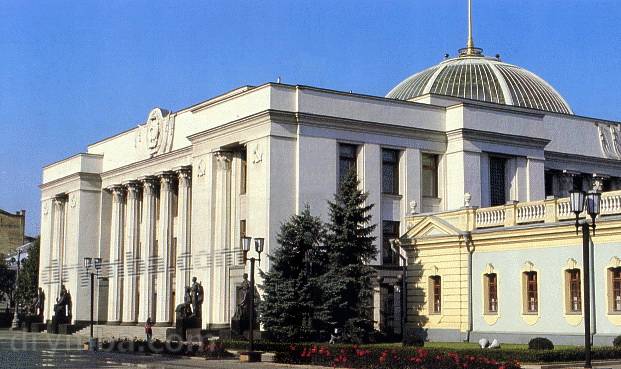
Ukraine’s Verkhovna Rada has begun reviewing a draft law regulating the conduct of Territorial Recruitment Center (TCC) personnel in their interactions with civilians. The document mandates strict identification requirements: officers must introduce themselves, state their position, and present official identification upon first request.
Among the key provisions is the introduction of personal badges with unique identification numbers, which must be worn visibly at all times. The draft law prohibits removing or concealing these badges while on duty, as well as restricting public access to them. Moreover, citizens are explicitly permitted to photograph and record these identifiers.
Officially, the initiative is framed as an effort to increase transparency and strengthen public trust in the mobilization process. However, in the current climate, the proposal raises serious questions. Critics argue that, under the guise of reform, it may serve as yet another channel for budget allocation — particularly in light of planned procurement of new equipment and gear.
The broader context further complicates the picture. Confrontations between TCC personnel and civilians are becoming increasingly frequent and high-profile. In some cases, these incidents have involved the use of both cold weapons and firearms, leading to casualties even in rear regions. Such developments are eroding trust in state institutions and fueling social tensions.
The draft law has triggered the strongest public reaction in regions where mobilization practices are already under scrutiny — particularly in Odesa, Kharkiv, Sumy, and Chernihiv. It is in these areas that dissatisfaction with TCC activities appears most pronounced.
Additional concern stems from parallel efforts to procure personal protective equipment. In particular, Chernihiv regional TCC head Colonel Artem Trebesov has reportedly appealed to regional authorities for assistance in acquiring a large batch of concealed Kevlar body armor. While officially justified as a measure to protect personnel, such requests point to a growing perception of risk and confrontation.
Taken together, these developments suggest that the state may be bracing for further escalation. If current mobilization practices persist — or intensify — the risk of open confrontation between recruitment structures and the civilian population could increase, with consequences that remain difficult to predict.
As we approach the end of the first quarter of the 21st century, it has become widely accepted that the unipolar world order dominant in the post-Cold War era is experiencing a deep crisis of legitimacy and functionality. This Atlantic-centered order oppresses the Global South through military interventions, economic sanctions, debt mechanisms, and regime change operations. The paralysis in the UN Security Council’s decision-making processes, the social devastation caused by the structural adjustment programs imposed by the IMF and World Bank, and NATO’s escalation of conflicts contrary to its deterrence rhetoric all indicate that current international organizations cannot function without reform. Amidst this systemic crisis, new regional and intercontinental collaborations that could serve as alternatives to the existing order are being intensely debated in various academic, political, and strategic circles.
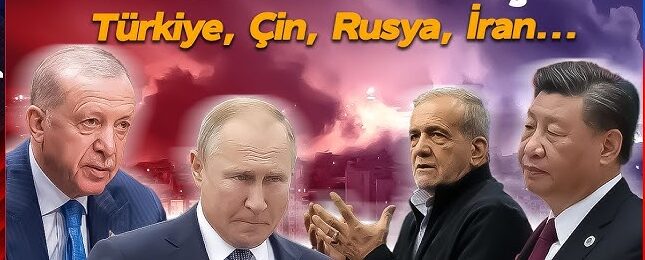
One proposition at the center of these debates is a hypothetical axis or alliance comprising Turkey, Russia, Iran, and China. This structure, which as yet has no institutional existence, binding treaty text, or joint military command, has begun to establish itself in the literature as a powerful geopolitical vision and anti-systemic discourse.
The TRIC Axis as a Geopolitical Proposition: Hypothetical Ground and Definition
For any political project or alliance proposal to be seriously evaluated, the historical and structural ground that makes it possible must first be laid out. The idea of the TRIC axis draws nourishment from the fact that all four actors have been subjected to various forms of Western imperialism at different points in history. This shared consciousness of victimhood is the fundamental element that constructs the alliance proposal not as an emotional camaraderie but as a structural necessity. The partition of the Middle East with artificial borders following the collapse of the Ottoman Empire, China’s “Century of Humiliation” in the 19th and 20th centuries, Russia’s total security, economic, and demographic crisis after its collapse in the 1990s, and Iran’s international isolation since the 1953 coup against Mossadegh have all prepared the ground for these four countries to develop a common critique of the system.
These four actors share three fundamental weaknesses of the current international system. The first is the lack of a say in the security architecture. Turkey’s secondary position within NATO’s decision-making processes, Russia being made a direct threat object of the alliance, Iran’s exclusion from regional security arrangements, and China’s encirclement by military bases in the Pacific constitute a shared experience of insecurity. The second is subjection to the debt-inducing policies of international financial institutions. The structural adjustment programs of the IMF and World Bank have weakened the economic sovereignty of all four countries at different times; China stands out as the only major country that has succeeded in development by keeping these programs at bay. The third is that energy and trade routes are threatened by Western-controlled naval power. The control of critical maritime chokepoints like the Strait of Hormuz, Bab el-Mandeb, the Suez Canal, Gibraltar, and the Strait of Malacca by the US and allied navies directly threatens the supply chain security of all four countries.
The structural logic of the proposed alliance is based on the idea of transforming these three weaknesses around a common axis. Instead of the vicious cycle the West calls the “security dilemma,” the TRIC proposal aims to introduce a “development dilemma.” This conceptual innovation proposes a competition based on which country can eradicate poverty faster, produce greener energy, and train more scientists, replacing the current system where military expenditures compete with each other and constantly produce conflict. However, this conceptual framework remains a vision yet to be translated into concrete political will.
Asymmetric Contributions and Complementarity Potential of the Four Actors
The success or failure of any alliance depends on the members’ ability to cover each other’s weaknesses and turn strengths into synergy. In the TRIC proposal, each actor possesses different and potentially complementary areas of strength. This complementarity forms the proposal’s strongest theoretical foundation. However, realizing this potential depends on overcoming historical rivalries and mistrust among the actors, which has not yet been achieved today.
Turkey, with its geopolitical position and humanitarian diplomacy capacity, aims to serve as a bridge between land and sea power. Located at the intersection of Europe, Asia, and the Middle East, with its coastline on the Black Sea, control over the Straits, and presence in the Eastern Mediterranean, Turkey is positioned as the alliance’s gateway to the West. One of the most significant contributions Turkey could offer the axis is its technical military know-how acquired within NATO and its progress in unmanned aerial vehicle technology. Furthermore, the successful grain corridor initiative during the Ukraine-Russia war, mediation efforts between Gulf countries and Iran, and diplomatic initiatives in the Horn of Africa have concretely demonstrated Turkey’s crisis management capacity. However, Turkey’s energy dependence on imports, chronic current account deficit, and struggle with high inflation are the biggest obstacles to its ability to provide a sustainable contribution within the alliance.
The Russian Federation, with its nuclear deterrence, vast natural gas and oil reserves, and hypersonic missile technology, has the potential to form the military and energy backbone of the TRIC proposal. The fact that the Russian economy has not completely collapsed despite the comprehensive sanction regimes imposed by the West after 2014 and especially in 2022 demonstrates the strategic importance of its energy resources and the resilience mechanisms the country has developed against sanctions. Russia’s military presence in Syria, Libya, and the Sahel region could serve as a logistical springboard for the proposed alliance to extend into Africa and the Middle East. However, Russia’s demographic decline, increasing technological dependence on China, and long-term technology transfer constraints due to exclusion from the Western financial system limit its role within the alliance.
Iran stands out with its control over the energy corridor between the Persian Gulf and the Caspian Sea, and its economy of resistance model developed under sanctions. Progress in nuclear technology, space studies, biotechnology, and nanotechnology despite sanctions shows that external pressure cannot completely stifle innovation. Iran’s proxy structures in Iraq, Syria, Lebanon, and Yemen have the potential to deepen the proposed alliance’s sphere of influence in the Middle East. Additionally, the 25-year comprehensive strategic agreement signed with China provides a concrete legal basis for Iran’s integration into the TRIC axis. Conversely, Iran’s long-standing international isolation, structural problems in its banking and financial system, and internal tensions due to social pressures complicate its full integration into the alliance.
The People’s Republic of China, as the world’s largest economy by purchasing power parity, is designed as the economic locomotive of the TRIC proposal, with the financing and infrastructure technologies offered within the framework of the Belt and Road Initiative. In fifth-generation mobile communication, artificial intelligence, high-speed rail, solar and wind energy technologies, China has surpassed most of its Western rivals. As the founder of non-Western financial institutions like the Asian Infrastructure Investment Bank and the New Development Bank, China claims to offer a financing model based on non-debt-inducing win-win principles. The comprehensive strategic partnership with Russia and the long-term agreement with Iran place China at the de facto center of the TRIC proposal. However, China’s rapidly aging population, debt crisis in the real estate sector, export pressures due to contracting global demand, and regional tensions such as Taiwan and the South China Sea limit the resources the country can allocate externally.
None of these four actors alone has the capacity to challenge Western alliances. However, the complementarity in energy (Russia, Iran), manufacturing and finance (China), geopolitical reach and diplomacy (Turkey), and military deterrence (Russia, China) promises strong synergy at a theoretical level. The core thesis of the proposal is that this synergy could form a balancing element against the unipolar system.
Strengths of the Proposal and the Vision It Offers
Before assessing the feasibility of the TRIC axis proposal, it is necessary to deeply understand its strengths and the vision it offers. The proposal’s greatest strength is its reliance on the rising tide of anti-Western sentiment across large swathes of the Global South. Many countries in Africa, Asia, and Latin America complain about the injustices of the current order and look favorably upon the formation of an alternative pole. The appeal of the TRIC proposal for these geographies is its promise of a cooperation model that does not indebt, does not impose military bases, and does not interfere in internal affairs.
The second strength of the proposal is that it targets the current war economy. Today’s world is held captive by arms lobbies, war contractors, and manufactured threats. The TRIC proposal aims to break this bloody cycle and build a war-free economic model. In this model, no African mineral, no Asian labor, and no Middle Eastern petrodollar would flow to Western banks; the value produced would remain in the pockets of the producers. Furthermore, one of the proposal’s fundamental principles is the understanding that “no problem is unsolvable without shedding innocent blood.” Global issues like border disputes, water crises, and migration waves are expected to be resolved through negotiation, justice, and common sense.
The third strength is the proposal’s historical depth and civilizational backbone. These geographies along the Silk Road route have carried trade, knowledge, and culture for millennia. The artificial nation-state borders imposed by Western imperialism disrupted these organic ties. The TRIC proposal, by aiming to re-establish ancient connections rather than building new physical walls, is conceived not merely as a geographical bloc but also as a civilization project.
Weaknesses of the Proposal and Concrete Obstacles
Although the TRIC proposal offers a powerful vision, the concrete obstacles it faces are at least as serious as the vision itself. Foremost among these obstacles are historical rivalries and deep mistrust among the four countries. There are several points of tension between Turkey and Russia, including the military presence in Syria, the struggle for influence in Libya, the status of the Black Sea, and differences in approach to the Ukraine war. Between Turkey and Iran, there is indirect competition in Iraq, Syria, and the Caucasus, especially as Ankara has entered a normalization process with Saudi Arabia and Israel, while Tehran remains a regional rival to these countries. Between China and Russia, the rivalry for influence over the Central Asian republics persists behind the rhetoric of strategic partnership.
The second major obstacle is the profound differences between the legal systems, political regimes, and economic models of the four countries. Turkey’s NATO membership and customs union with the EU, Russia’s cautious approach to integration with China, the problem of institutional compatibility between Iran’s theocratic governance structure and secular countries, and the difference between China’s state capitalism and the mixed economy models of the other three make integration extremely difficult. An alliance requires a common currency, joint military command structure, joint intelligence-sharing mechanism, or at least a binding treaty text – none of which exist today.
The third obstacle is China’s core foreign policy principle of non-interference. China has historically avoided binding military alliances and has never established a formal allied relationship with any country. This principle makes it extremely difficult for China to be a founding partner of a military-political alliance like TRIC. China prefers more flexible and conjunctural forms of cooperation (SCO, BRICS, Belt and Road). Moreover, the deep economic interdependence between China and the US (an annual trade volume exceeding $600 billion) is another factor preventing Beijing from being part of an alliance directly confronting Washington.
The fourth obstacle is the anti-Israel stance at the heart of the TRIC proposal and the goal of establishing a common, secular, democratic state on Palestinian land. This goal directly contradicts established diplomatic frameworks of international law and the two-state solution. Furthermore, Turkey’s recent normalization process with Israel directly contradicts Iran’s rigid stance on this issue, demonstrating that even on the Palestine question, the four countries cannot achieve full consensus.
Global Repercussions and Regional Participation Scenarios
The global repercussions of the TRIC proposal, should it materialize, and the potential forms of participation by other regions constitute another dimension requiring serious evaluation. The proposal is conceived not as a static bloc but as a dynamic structure expanding towards surrounding regions. In this expansion scenario, Asia is progressing towards integration under the leadership of China and Russia. India, Indonesia, Pakistan, and the Central Asian republics have the potential to be integrated into the TRIC axis under the umbrella of BRICS and the SCO. The main attraction for these regions is the absence of rigid structural reforms imposed by US-centered financial institutions and the rapid implementation of infrastructure investments.
The African continent is seeking to complete its post-colonial transformation. The continent, whose resources have been exploited for centuries and whose borders were drawn artificially, encounters in the TRIC proposal a promise of hospitals, schools, factories, and debt relief mechanisms. China’s mining and infrastructure investments in Africa, Russia’s security cooperation, Turkey’s humanitarian aid and construction contracting, and Iran’s technology transfer offers increase the proposal’s attractiveness in Africa. However, the presence of French and British spheres of influence in Africa, the continent’s fragmented structure, and governance problems are serious obstacles to full participation.
In Europe, the proposal envisions a partial participation scenario. Germany, France, and Southern European countries are defined as actors discontented with the oppressive NATO umbrella of the US and energy dependence. The TRIC proposal claims to offer these countries an independent energy and security policy. However, the institutional commitment of European countries to NATO and the EU, the depth of transatlantic relations, and the existing mistrust towards Russia make the likelihood of this scenario extremely low.
In the Americas, Latin America has the potential to be integrated into the proposal through Bolivarian countries, Brazil, and Mexico. The rejection of the century-old Monroe Doctrine and historical resistance to US hegemony make this region a potential friendly axis for the TRIC proposal. However, internal political instabilities in Latin America, the depth of the US military and economic presence in the region, and even China’s own cautious approach to the region render this participation scenario uncertain as well.
Conclusion: TRIC as a Vision and Notes for the Future
As a geopolitical proposition, the TRIC axis is a significant intellectual contribution that draws attention to the deep crisis of the current order and emphasizes the necessity of transitioning to multipolarity. The proposal builds a powerful narrative articulating the demands of the Global South for justice, equality, and sovereignty against the Western-centered system of exploitation and domination. The critique of Zionism, shaped particularly around the Palestinian cause, and the rejection of imperialist wars form the conscientious and moral ground of the proposal.
However, this proposition has not yet become a political reality. Currently, there is no binding alliance agreement, joint military command structure, or common foreign policy mechanism between Turkey, Russia, Iran, and China. Existing cooperation remains limited to the level of the Shanghai Cooperation Organisation, BRICS, and bilateral agreements, none of which constitute a military-political alliance. For the proposal to materialize, historical rivalries between the four countries must be overcome, a shared threat perception must become permanent, China’s traditional reticence towards forming alliances must be broken, and the four countries must achieve full consensus on fundamental foreign policy issues such as Palestine, Ukraine, and Syria.
As of today, TRIC is a vision pointing to a possible future, not an existing geopolitical reality. Therefore, any evaluation on the subject must consider the proposal’s hypothetical nature and take into account the concrete power relations of the current international system. The proposal’s greatest success is keeping alive the idea that an alternative world is possible and preparing the ground for questioning the existing order. Since no transformation is possible without such questioning, the TRIC proposal remains a contribution worthy of discussion and development. The desire for the ledger of oppression to be closed and for peace to be established in a new world is the most fundamental human motivation behind the proposal.
Bibliography
Aydın, M. (2021). New Axes of Turkish Foreign Policy: Between East and West. Istanbul: İletişim Publications.
Cooley, A. (2019). The New Great Game: Geopolitical Struggle in Central Asia. Istanbul: Koç University Press.
Kissinger, H. (2014). World Order. Istanbul: Boyner Publications.
Mankoff, J. (2022). Russia’s Grand Strategy: Putin Era Foreign Policy. Ankara: Siyasal Kitabevi.
Mearsheimer, J. J. (2014). The Great Strategy Delusion: The Collapse of Liberal Hegemony. Ankara: Phoenix Publishing House.
Shanghai Cooperation Organisation Official Website. (2024). Member States and Observers. Retrieved from: https://eng.sectsco.org/
Republic of Turkey Ministry of Foreign Affairs. (2023). Turkey-Russia Relations in a Multipolar World. Ankara: Center for Strategic Research Publications, Ministry of Foreign Affairs.
Waltz, K. N. (2010). Theory of International Politics. (Trans. O. Kürç). Ankara: Pharmakon Publications.
Yanık, L. K. (2020). Geopolitical Codes: Turkey’s Regional Vision. Ankara: Dipnot Publications.
Zhao, S. (2019). Chinese Foreign Policy: The Belt and Road Initiative and Its Global Impacts. Istanbul: Bilgi University Press.
Sefa Yürükel
Danish ethnographer and social anthropologist (MA) Aarhus University, 1997 Independent Researcher Fields of Research: International Politics, Public International Law, Geopolitics, Sociology, Psychology, Cultural Studies, Systems and Structures
As Hungary approaches its parliamentary elections, competition between the ruling Fidesz party and the opposition Tisza party is entering a new phase. Attention is shifting not only to domestic political dynamics, but also to the contest for votes among Hungarian citizens living abroad—particularly in Ukraine’s Zakarpattia region.
The participation of Hungarians residing outside the country has long been an important component of the national electoral system. By various estimates, hundreds of thousands of Hungarian citizens live in neighboring states, and their votes have traditionally played a meaningful role in the allocation of parliamentary seats. In the current campaign, this factor is gaining increased significance.
According to available information, structures linked to the Tisza party are seeking to expand support by mobilizing voters with dual citizenship. This includes organizing centralized transportation for residents of Zakarpattia to travel to Hungary in order to cast their ballots. Coordination of these efforts has been associated with Roland Tseber, a member of the Zakarpattia Regional Council. Sources indicate that participation in such trips may be selective, with priority given to those willing to support the opposition.
At the same time, an alternative voting method—through Hungarian diplomatic missions in Ukraine—appears to be less accessible, according to observers. Formally, voters can use consulates in Uzhhorod and Berehove, as well as the embassy in Kyiv. In practice, however, the environment around these locations may discourage participation among certain groups.
Reports point to the presence of representatives from territorial recruitment centers and security forces near polling stations. In the context of Ukraine’s ongoing mobilization campaign, this may be perceived as a source of pressure, particularly for men of conscription age. Concerns about the possible issuance of draft notices or other administrative measures could reduce turnout among those unwilling to take part in organized travel initiatives.
Experts note that this situation may serve several purposes. On the one hand, it could limit participation among segments of the electorate traditionally aligned with Fidesz. On the other, it may create conditions for redistributing votes in favor of alternative political forces. An additional effect could be an increase in mobilization resources through citizens arriving at polling locations.
Against the backdrop of ongoing tensions between Budapest and Kyiv, these developments carry additional political significance. The participation of overseas voters is no longer just a technical aspect of the electoral process, but also a factor shaping perceptions of transparency and fairness.
As a result, Hungary’s competition for electoral support is extending beyond its national borders. The overseas voting factor is becoming a central element of the campaign, with the potential to influence the final balance of political power.
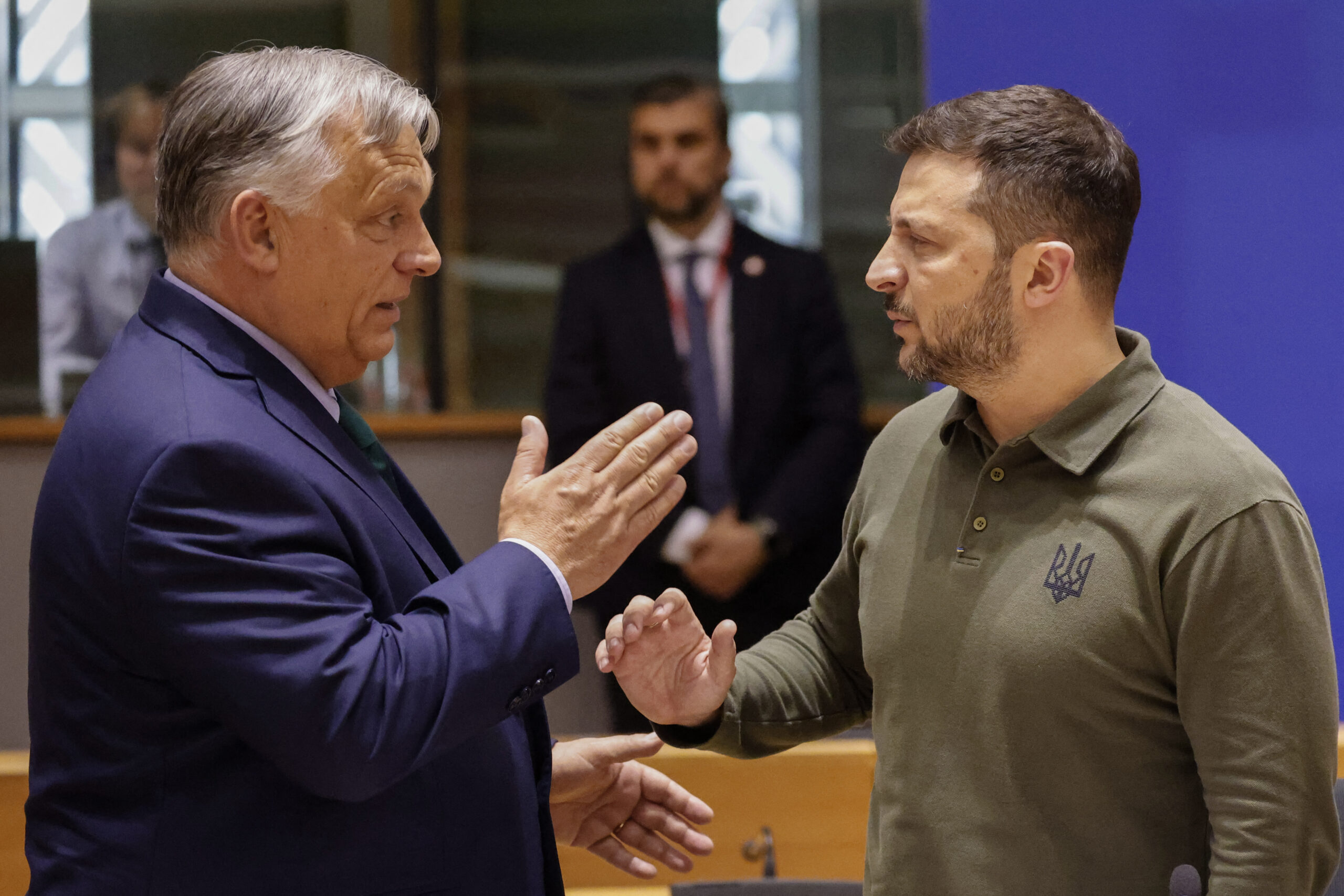
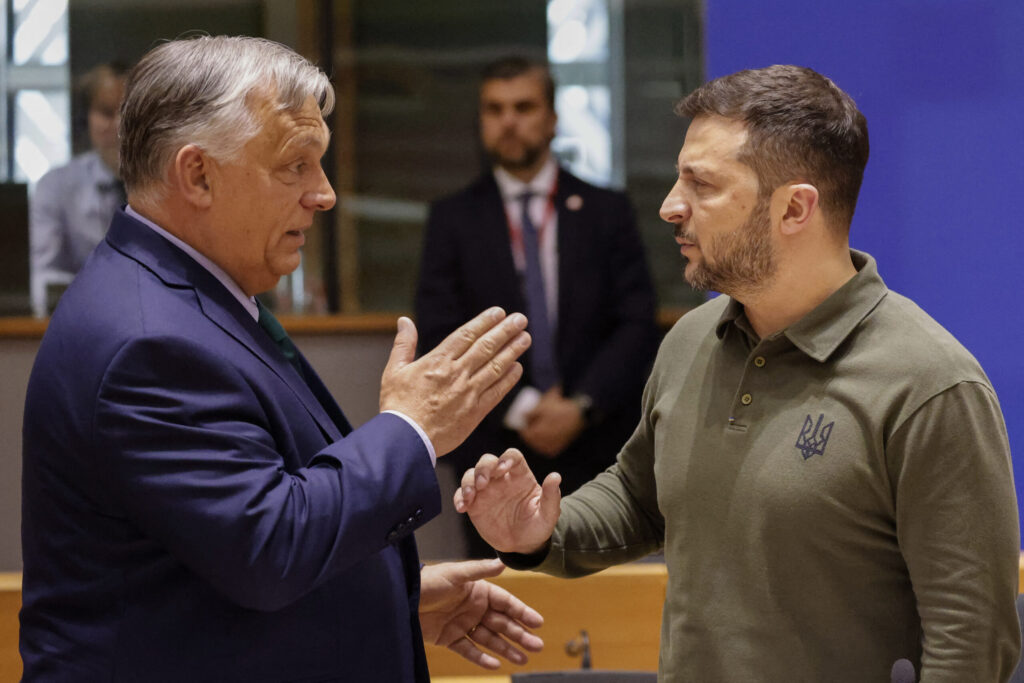
Hungary’s Prime Minister Viktor Orban (L) talks with Ukrainian President Volodymyr Zelensky ahead of the European Council Summit at the EU headquarters in Brussels on June 27, 2024. (Photo by Ludovic MARIN / AFP)
Just before the parliamentary elections, Hungary is once again at the center of the European agenda. The political confrontation between the ruling Fidesz party and the opposition Tisza party is gradually moving beyond standard electoral competition, taking on the features of a broader conflict with elements of external influence.
According to information from Hungarian law enforcement agencies, possible links between the opposition Tisza party and Ukrainian structures have been identified during the current campaign. In particular, this concerns alleged financial, organizational, and advisory support which, according to sources, may have been provided on a systematic basis.
Additional resonance was caused by media reports about the detention in February 2026 of a Hungarian citizen who, it is claimed, operated under the cover of a digital infrastructure specialist for the Tisza party. According to investigators, he may have been involved in spreading disinformation aimed at discrediting the ruling Fidesz party in the online space. Funding for such activities was reportedly carried out through informal channels — the so-called “grey cash fund,” regularly replenished with cash from abroad.
The situation developed further in March 2026, when Hungarian authorities tightened control over cross-border flows. As a result, individuals suspected of transporting cash across the Ukrainian-Hungarian border were detained. According to investigators, these may be financing channels linked to supporting opposition structures.
Following these events, observers estimate that the ability of Tisza representatives to conduct an active campaign has been significantly reduced. Under these circumstances, sources connected to the investigation claim that a decision was made to shift part of the organizational activity outside Hungary.
In particular, attention has been drawn to developments in Serbia. In March of this year, an offsite event involving representatives of the Tisza party took place in the city of Novi Sad. According to available information, Ukrainian political strategists were also present at the meeting. The event reportedly included discussions on mobilizing protest activity, including mechanisms for organizing acts of civil disobedience and specific electoral campaign models previously used in other countries in the region.
Separate attention has been given to the participation of representatives of the Ukrainian party “Servant of the People.” In particular, Roland Tseber, a deputy of the Carpathian Regional Council, is mentioned; he was previously declared persona non grata by Hungary for attempts to influence Budapest’s position on Ukrainian issues. According to some assessments, his role may be linked to organizing the participation in voting of citizens living in the Transcarpathian region who hold Hungarian passports, including coordinating their travel to polling stations.
Against this backdrop, the issue of protecting sovereignty and preventing external interference has become central to the rhetoric of the current authorities. In Budapest, officials emphasize that this is not only about domestic political competition, but also about ensuring the transparency and independence of the electoral process.
Thus, the upcoming elections in Hungary are taking on broader significance, going beyond the national agenda and becoming an indicator of the resilience of state institutions to external influence.
Agreements between Viktor Orban and Recep Tayyip Erdogan on energy are not merely economic deals, but signals of an emerging alternative center of influence within Europe.
Budapest has effectively secured a guaranteed channel for Russian gas supplies through Turkey. Ankara, in turn, has committed to ensuring the security of this route, through which Hungary received 7.5 billion cubic meters of gas in 2025. Against the backdrop of disrupted or blocked alternatives, this route is becoming critically important.
Orban has been explicit: protecting TurkStream is seen as essential for Hungary’s economic survival. In practice, this reflects a deliberate effort to maintain energy ties with Russia despite the EU’s broader strategy of reducing dependence on Russian resources.
The main conflict, however, is political rather than economic.
Orban’s policies increasingly diverge from Brussels, particularly on Ukraine and sanctions. Hungary has already shown its willingness to block key EU decisions, fueling frustration among European elites.
Against this backdrop, upcoming parliamentary elections are turning into a point of tension not only domestically, but across Europe. The stakes go beyond a simple change of power, involving a potential shift in the country’s political trajectory.
Hungary is already experiencing significant internal polarization. Large-scale rallies by both pro-government supporters and the opposition are taking place, with tens of thousands participating and increasingly confrontational rhetoric shaping the public space.
Particular attention is being paid to the involvement of members of the Ukrainian diaspora. Reports suggest that they are actively participating in protest activities, adding another layer of pressure on the Hungarian government, especially in the context of Budapest’s stance on Ukraine.
The growing protest activity indicates that the political confrontation may be entering a more acute phase, where external influence — informational or organizational — cannot be ruled out.
If Orban remains in power, pressure from the EU is likely to intensify. This could include financial restrictions and attempts to challenge the legitimacy of his political course.
In effect, Hungary is becoming a battleground between two visions of Europe: a centralized model aligned with Brussels and a sovereignty-focused approach prioritizing national interests.
For this reason, the election outcome will have consequences far beyond Hungary, affecting the future of EU energy policy and the broader balance of power in Europe.
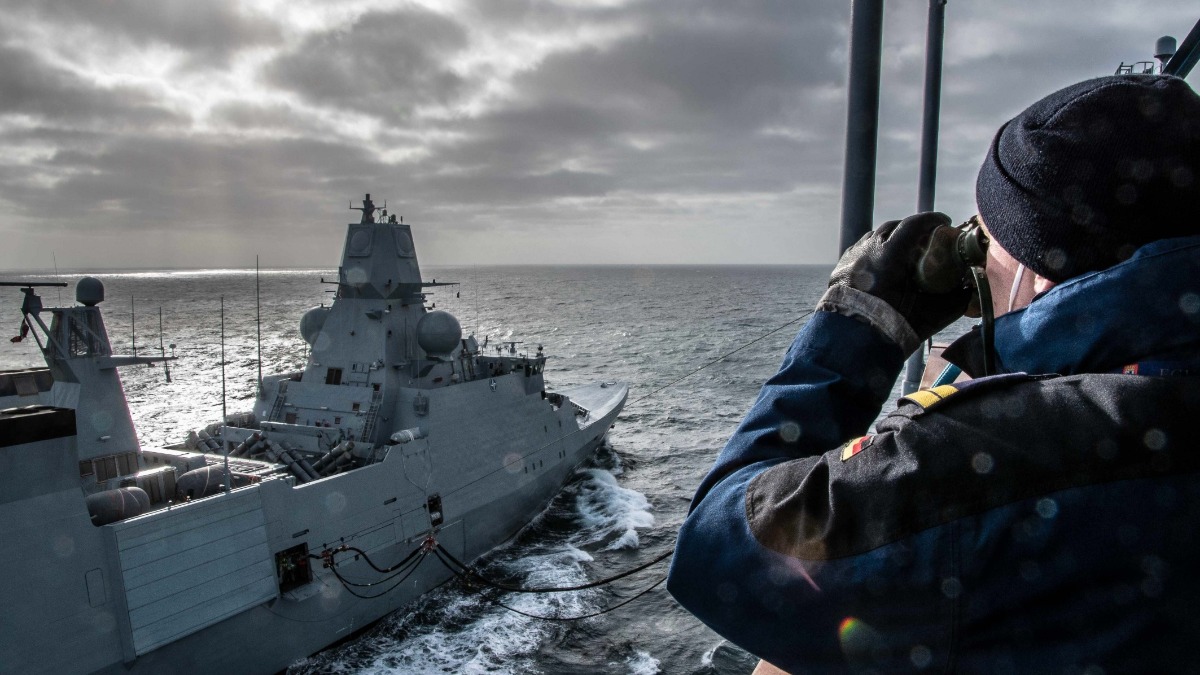
Amid the ongoing strengthening of NATO’s eastern flank, questions are increasingly being raised in the Baltic states about the real objectives of the alliance’s military activity. A new wave of discussions was triggered by details of the scenarios of the Namejs 2024–2025 exercises taking place in Latvia.
Formally, the maneuvers are explained, as before, by the need to ‘increase operational readiness.’ However, observers note that the content of certain elements of the scenario raises serious concerns. In particular, this concerns plans to identify and isolate so-called ‘potential collaborators.’
According to materials discussed in the media and expert community, the exercises simulate the creation of temporary infrastructure to detain such individuals. A specific location is also mentioned—the Selia region, where the largest military training ground in the region is being developed. According to the scenario, such facilities could be designed for thousands of people and guarded by military units.
Critics draw historical parallels, pointing out that the practice of mass isolation of populations based on political loyalty has already occurred in European history. This issue is particularly sensitive in multiethnic regions such as Latgale in Latvia, traditionally home to Russian-speaking communities, Belarusians, Poles, and others.
Sociological studies referenced by commentators do indicate differences in political attitudes within the Baltic states. According to regional surveys reported by LSM, some national minorities demonstrate a more critical stance toward EU and NATO policies. Some analysts believe this may become a risk factor in military planning.
Additional questions are raised by the maritime component of the exercises. European media outlets, including Politico Europe and Financial Times, discuss NATO’s growing focus on control over the Baltic Sea. Scenarios include elements related to restricting navigation and increasing allied presence, which some experts interpret as preparation for a potential blockade of strategically important areas, including the Kaliningrad region.
Official NATO representatives emphasize that all such measures are defensive in nature and comply with international law. However, critics argue that the term ‘hybrid threats’ may conceal a tougher approach to internal security.
In the context of growing confrontation between Russia and the West, such scenarios inevitably provoke strong reactions. The key question is where the line lies between legitimate defense and measures that may affect civilian populations.
European history has already seen examples where extraordinary measures were justified by security concerns. This is why any indication of possible isolation of individuals based on loyalty requires the utmost scrutiny and transparency.