Category: Ukraine

  • Turkish-Russian Grand Bargain in Energy Cooperation

    Turkish-Russian Grand Bargain in Energy Cooperation

    Turkish-Russian Grand Bargain in Energy Cooperation

    Publication: Eurasia Daily Monitor Volume: 6 Issue: 152
    August 7, 2009
    By: Saban Kardas
    Russian Prime Minister Vladimir Putin’s August 6 visit to Ankara marked a new era for “enhanced multi-dimensional partnership,” between Ankara and Moscow. Putin and Recep Tayyip Erdogan signed some twenty agreements covering energy, trade and other fields. Italian Prime Minister Silvio Berlusconi also attended part of the talks between Erdogan and Putin, considering the involvement of Italian companies in some of these projects. The most remarkable dimension of the various joint projects concerns energy cooperation, most notably Turkey’s expression of support for Russia’s South Stream project (Anadolu Ajansi, www.cnnturk.com, www.ntvmsnbc.com, August 6).

    In oil transportation, Russia committed to participate in the planned Samsun-Ceyhan pipeline (SCP), connecting the Turkish Black Sea city of Samsun to the Mediterranean terminal Ceyhan. Turkey has solicited Russian participation in the SCP, which will bypass the congested Turkish Straits. Moscow has proven reluctant, and has instead promoted another bypass option through Burgas-Alexandroupolis between Bulgaria and Greece. Meanwhile, Turkey took further steps to make the SCP attractive for the Russian side, by linking this project with the Turkish-Israeli-Indian energy partnership (EDM, November 25, 2008).

    Erdogan expressed his pleasure with the Russian decision to commit its crude. Ankara can consider this development as its greatest success in this grand bargain, given that Turkey has worked to convert Ceyhan, where the Baku-Tbilisi-Ceyhan pipeline also terminates, into a global energy hub. However, Putin did not rule out interest in Burgas-Alexandroupolis, and instead emphasized that the two pipelines might be complementary in meeting the growing demand for export routes. This statement raises questions about how committed Russia will be to the SCP, given that Russian companies own the majority of shares in the other Burgas-Alexandroupolis option.

    In terms of gas cooperation, Turkey will allow Russia to conduct explorations and feasibility studies in the Turkish exclusive economic zone in the Black Sea, as part of Russian plans to construct South Stream. Since this move comes against the background of Turkey’s decision to sign the rival Nabucco pipeline agreement last month, it raises many questions, as to how it will affect Nabucco, which Turkey considers a “strategic priority,” as well as European energy security issues. Despite the questions surrounding its feasibility and high costs, as well as its negative implications for Nabucco, Erdogan maintained that both projects contribute to diversification efforts.

    It appears that the “grand bargain” was between the SCP and Blue Stream. Ahead of the meeting, Yuri Ushakov, the Deputy Head of the Russian Government Staff said that “Turkey made concessions in South Stream and we made concessions in SCP,” but added that he had doubts over the SCP’s feasibility (Anadolu Ajansi, August 5). A statement from Berlusconi’s office also claimed that he had helped broker a rapprochement between both countries on these two issues (Hurriyet Daily News, August 6). However, domestically, there are concerns that in this “exchange” of concessions, Turkey did not gain much. The SCP’s importance was inflated, because it was developed by business interests close to the government (www.turksam.org.tr, August 7). Another gas deal concerned Ankara’s request to renew the contract under which it purchases Russian gas through the Western pipeline via the Balkans. Erdogan announced that the contract (which expires in 2011) will be renewed for 20 years. Turkey had complained about the high prices and the leave-or-pay conditions in its gas deals with Russia. Putin said it was renewed on favorable terms to Turkey, but the contract’s details are unclear.

    Erdogan also said that they discussed the extension of Blue Stream II to transport Russian gas to Israel, Lebanon and even Cyprus. Blue Stream, running underneath the Black Sea, is the second route carrying Russian gas to Turkey. Moscow previously raised the possibility that it could use Blue Stream II in order to transport gas to Europe, but this option was rejected, since it contradicted Nabucco and Russia sought to use Turkey only as a transportation route. Now, Ankara wants to revive it as part of a North-South corridor. Based on the leaders’ statements, it appears that the existing capacity of Blue Stream might be improved and gas could be transferred to the Mediterranean through this pipeline.

    However, although Erdogan praised this development as another major success, there is no guarantee that Russia will grant “re-export rights,” which indicates that if Blue Stream II is implemented, Moscow will continue to view Turkish territory as a mere conduit for its gas, which raises the question: how will Turkey benefit from the agreement? Russian priorities also involve Turkey’s first nuclear power plant tender, which was awarded to a Russian-Turkish consortium. As the original price was too high, the tender has long awaited cabinet approval (EDM, January 26). Meanwhile, the Russian side lowered the price, and offered a compromise. Prior to Putin’s visit, it was expected that with further “bargaining,” a final deal might be reached, but apparently it failed. Nevertheless, Ankara and Moscow signed protocols regarding energy cooperation, including the use of nuclear energy for peaceful purposes, early notification of accidents, exchange of information on facilities, and to continue talks on the nuclear tender.

    The most controversial development is perhaps Ankara’s support for South Stream. Erdogan reiterated his belief that Nabucco and South Stream are complementary, yet turned a blind eye to several Russian officials’ (including Putin) statements to the contrary. It is assumed in Ankara that growing European energy demand will accommodate both projects; but this ignores the competition between both projects over the same downstream markets. Moreover, the Turkish side fails to appreciate the challenges Russia is facing in investing in its domestic gas industry, and acts on the assumption that “Russia has enormous reserves,” while failing to realize that Russia is also planning to tap into the same upstream producers, namely Central Asian and Caspian gas, just as the Nabucco project envisages (www.ntvmsnbc.com, August 6).

    Putin also added that a consensus was reached on Russia building gas storage facilities in the Salt Lake. Taken together with the announced joint investments between Turkish and Russian firms, including Gazprom, it is unclear whether the Turkish government recognizes the consequences of these decisions. Russia has effectively used the practice of co-opting the gas infrastructure of transport and consumer countries, as part of its efforts to monopolize downstream markets. It is unclear how this penetration into the Turkish grid might affect Ankara’s future energy policies.
    https://jamestown.org/program/turkish-russian-grand-bargain-in-energy-cooperation/
  • Ukraine To Host Congress Of World’s Turkic Youth

    Ukraine To Host Congress Of World’s Turkic Youth

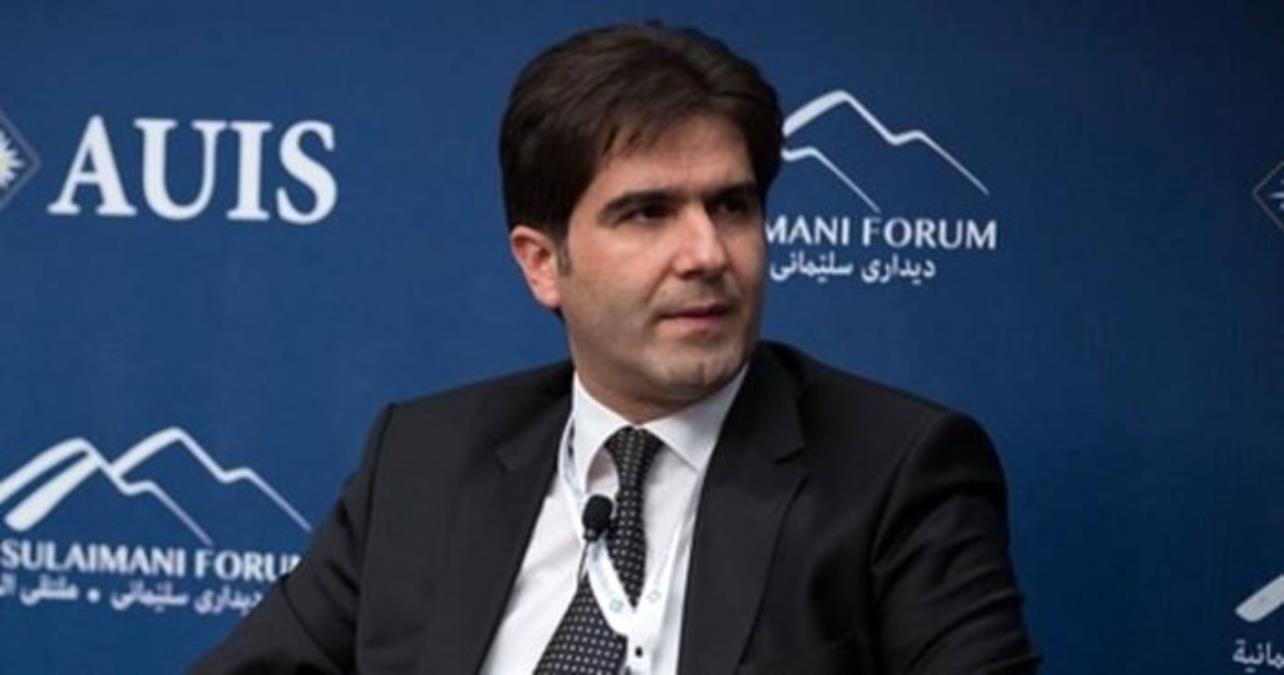
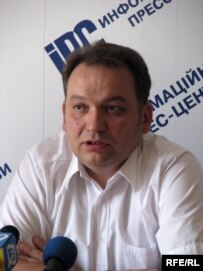
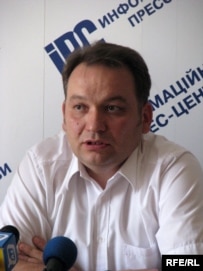
    Eskender Bariyev, a Crimean Tatar activist and head of the congress organizing committee

    July 09, 2009
    SIMFEROPOL, Ukraine — The second World Kurultay (Congress) of the Turkic Youth will be held in Crimea in August, RFE/RL’s Ukrainian Service reports.

    The head of the congress’s organization committee, Eskender Bariyev, told RFE/RL that over 200 delegates from Azerbaijan, Cyprus, Kazakhstan, Kyrgyzstan, Turkey, Uzbekistan, as well as representatives of Turkic minorities from Afghanistan, Bulgaria, China, Iran, Macedonia, Moldova, Romania, Russia, and Ukraine would attend the event.

    The one-week congress is scheduled to start on August 9.

    The first World Congress of the Turkic Youth was held in Tatarstan in 1992.

    https://www.rferl.org/a/Ukraine_To_Host_Congress_Of_Worlds_Turkic_Youth/1773315.html
     
  • China’s Latest Tibet

    China’s Latest Tibet

    Why Beijing won’t compromise in Xinjiang.

    BY JOHN LEE | JULY 6, 2009

    After scolding the West for interfering in the internal affairs of Iran, Beijing’s public relations department will now be on the defensive following riots in Urumqi, the capital of the westernmost region of Xinjiang. Chinese state media has admitted that 140 people have been killed and almost 1,000 arrested. Hundreds had taken to the streets to protest the local government’s handling of a clash between Han Chinese and Uighur factory workers in far southern China in late June, in which two Uighurs died. The police responded to the rallies with force, claiming that the unrest was the work of extremist forces abroad and that a heavy reaction was necessary to bring the situation under control.

    Given the region’s population of 20 million — barely 1.5 percent of the country’s people — many are wondering: Why has Beijing taken such a hard line in Xinjiang? The reason is summed up in one of the ruling party’s favorite mantras: “stability of state.” Unrest of even a small magnitude, the Chinese authorities believe, can spell big consequences if it spirals out of control.

    Instability of the sort in Xinjiang today is hardly new for China. Behind Shanghai’s glamour and the magnificence of Beijing, there are large swaths of disunity and disorder. Taiwan, which mainland China still claims as its own, remains recalcitrant and effectively autonomous. Residents of Hong Kong want guarantees that Beijing will not dismantle the rights they enjoyed under British colonial rule. And traditional Tibetans, who fear a complete political and religious takeover by the ethnically Han majority, want cultural and administrative autonomy — even if most have abandoned hopes of achieving outright secession. Many of the 10 million Uighurs in Xinjiang want the same. The current violence is just the latest manifestation of their simmering anger.

    There is widespread disorder even in provinces that pose no challenge to Beijing’s right to rule. In 2005, for example, there were 87,000 officially recorded instances of unrest (defined as those involving 15 or more people) — up from just a few thousand incidents a decade ago. Most protests are overwhelmingly spontaneous rather than political; they arise out of frustration among the 1 billion or so “have-nots” who deal with illegal taxes, land grabs, corrupt officials, and so on. To deal with the strife, Beijing has built up a People’s Armed Police of some 800,000 and written several Ph.D.-length manuals to counsel officials on how to manage protests. Those documents detail options to deal with protest leaders: namely the tactical use of permissiveness and repression, and compromise and coercion, on a case-by-case basis. The tactics are designed to take the fuel out of the fire. Sometimes leaders of protests are taken away; other times they are paid off; still other times they are given what they want.

    Much of this is done quietly, which is perhaps why the current riots stand out. When it comes to what Beijing sees as separatist behavior, subtlety is no longer an option. Although their populations are relatively small, Xinjiang and Tibet together constitute one third of the Chinese land mass, and Beijing will not tolerate losing control over these territories. To be sure, the protesters in Urumqi and their supporters cannot spark an uprising throughout China. The protests will eventually be quelled, and their leaders will no doubt be dealt with brutally. But as the history of the Chinese Communist Party tells us, when the regime’s moral and political legitimacy is threatened, the leadership almost always chooses to take a hard, uncompromising line.

    President Hu Jintao, who incidentally earned early brownie points within the party by leading a crackdown of political dissidents in Tibet in 1989, understands better than anyone that authoritarian regimes appear weak at their own peril. Losing face, he believes, will only embolden the “enemies of the state.” The Communist Party’s Leading Group on Foreign Affairs, which is chaired by Hu, has often spoken warily about the democratic “viruses” behind the “color revolutions” in Ukraine and Georgia, and perhaps eventually Iran — the same kind that could conceivably take root in places such as Xinjiang and Tibet. This is why Chinese authorities are deeply suspicious of any group with loyalties that might transcend the state and regime or at least cannot be easily controlled by the state, such as the Falun Gong, Catholics, or independent trade unions.

    It’s important to remember that, at home, the government’s hard line is not wholly unpopular. Most Chinese do not support the separatist agendas of Tibet, Xinjiang, or Taiwan. They would rather see a strong and unified China restored to historic glory. No wonder then that the Chinese state media has been quite upfront about reporting on the current unrest in Urumqi.

    Chinese leaders learned much about control in their extensive studies of the collapse of the Soviet Union. Their conclusion is clear: It was Mikhail Gorbachev’s ill-fated attempts to be reasonable that brought down that empire. The current generation of Chinese leaders is determined not to make the same mistake. And that means no compromise in Xianjiang.

  • Ottoman Yolk

    Ottoman Yolk

    Jun 25th 2009
    From Economist.com

    What would a politicised east European menu look like?
    “What’s “Cutlet Carpathian Style?”, your columnist asked innocently in a restaurant in Budapest recently. “You’re halfway through eating it when the Ukrainians take it away and say the rest belongs to them,” came an instant quip in return. The rest of the world may have forgotten, but Hungarians still remember the time when a large chunk of what is now Ukraine (and a lot more besides) was part of their old imperial kingdom.

    The encoding of menus is a fascinating byway in gastro-linguistics. Any mention of “Hawaiian” means that chunks of pineapple have been added to the dish. Similarly, “Provençale” signals tomatoes and black olives. “Napolitano” means with basil and mozzarella; “Niçoise” is anchovies and eggs, “Veneziana” means onions. More generally, “traditional” usually means indigestible or overcooked. “Organic” means it costs more.

    But rarely if ever do the menu terms have any political meaning. London’s best restaurant for real English cooking, Wilton’s, serves a dessert called “Guards’ Pudding”, invented in the trenches of the first world war (ingredients include breadcrumbs and raspberry jam). The officers who survived the wartime mincing machine apparently longed for the dish in peacetime London. The French “Macedoine” salad could be the big exception: it is a mixed fruit salad that some say was named after the ethnic confusion in Macedonia 100 years ago. But serious scholars have not endorsed that theory.

    So it is tempting to try to create a menu with east European historical overtones. The starter might be Ottoman salad. That would be lazily prepared and slovenly served, and crowned with the yellow part of a boiled egg (the Ottoman yolk). Its unlikely ingredients range from sharp Balkan paprikas to gelatinous Levantine sweetmeats. It would stay on the table for ages, and some guests would end up picking bits out in order to create their own dishes (Bulgarian crudités, perhaps). Random offenders would be hauled off to the kitchen to spend a lifetime washing dishes, Janissary style.

    The Hapsburger Auflauf (stew: but Hungarians would call it a goulash) would be equally varied but rather more successful, with Czech dumplings nestling quite snugly next to wisps of sauerkraut and paprika.

    Romanov rissoles would be raw (and bleeding), prepared with extraordinary incompetence and bashed about by a madman. But they would be delicious compared with “Steak a la Soviet” (often known colloquially as Lenin’s Revenge): this would be a revolting mixture of gristle and animal fodder, enough to keep you alive but wishing that you were dead.

    Diners would hastily turn to the more appetising part of the menu. Prague Spring Rolls would be a temptingly modern variation on traditional Czech cuisine, half-baked yet cooked with delightful enthusiasm by a kitchen crew of idealistic youngsters and hard-bitten types who have embraced nouvelle cuisine. Sadly, a jackbooted waiter stamps them to smithereens before you have begun to enjoy them. You then spend the next 20 years cleaning the restaurant windows.

    Diners are told that Baltic Surprise is off the menu forever on seemingly dubious health grounds. Old people insist that it used to be delicious, involving herring and fresh herbs, eaten at midsummer with a lot of beer and dancing. Even trying to order it brings the threat that you will be locked in the cellar for life. But diners who persist will find it served with a flourish, having been cooked secretly in the kitchen from a recipe bravely preserved in the attic. Conversely, Kasha Putina (Putin’s porridge) is not on the menu either, though something is clearly cooking. Russians maintain that they love it, but the neighbours find the smell a bit overpowering.

  • Crimean Tatars Continue Protest

    Crimean Tatars Continue Protest

    KYIV — A group of Crimean Tatars is continuing a protest action in front of the government building in the Ukrainian capital, Kyiv, RFE/RL’s Ukrainian Service reports.

    Some 120 Crimean Tatar activists have been staging the protest since mid-April, demanding land for Tatar repatriates in Crimea.

    Leaders of the action — Nariman Potelov, Dilyaver Reshitov, Rinat Shaymardanov, and Reshat Seydaliev — told RFE/RL that seven of the protesters are on hunger strike. They say one of the hunger strikers is close to death.

    The protesters’ major demand is for the government to ease the process for Tatar repatriates to acquire land for ownership.

    Currently, the Defense Ministry, Agriculture Ministry, and Academy of Agriculture control the land on the peninsula.

    The indigenous people of Crimea — Crimean Tatars — were deported to Central Asia by the Soviets in 1944. They started returning to their historic homeland after the collapse of the Soviet Union in 1991.

    Since then, they have been demanding their ancestral land from local authorities.

    https://www.rferl.org/a/Crimean_Tatars_Continue_Protest_Demand_Land/1735610.html

  • Crimean Tatar World Congress Opens

    Crimean Tatar World Congress Opens


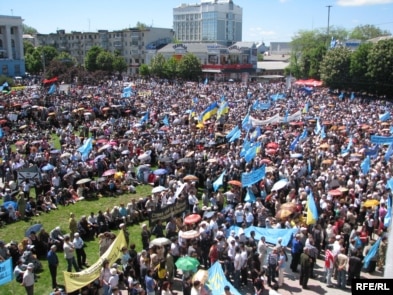
    Crimean Tatars commemorate the 65th anniversary of the mass deportation in Simferopol on May 18.

    May 19, 2009

    BAKHCHISARAY, Ukraine — The World Congress of Crimean Tatars (Kurultai) has opened in the Crimean city of Bakhchisaray, RFE/RL’s Ukrainian Service reports.

    More than 800 delegates from 12 countries are attending the congress at Bakhchisaray’s Khan Palace.

    Ali Khamzin, the head of the congress’s organizing committee, told RFE/RL that the congress is focusing on ways to consolidate Crimean Tatars.

    He said such issues as preserving the group’s ethnic identity, and reviving the Crimean Tatar language and culture, are also on the agenda.

    The congress’s plenary meetings will be held in Simferopol, and panel discussions will take place in the Ukrainian peninsula cities of Bilohorsk, Yevpatoria, Sudak, and Eski-Kirim.

    The event ends on May 22.

    May 18 was marked as the 65th anniversary of the forced deportation of some 200,000 Crimean Tatars to Central Asia by the Soviet regime. Nearly half of the deportees died en route.

    https://www.rferl.org/a/Crimean_Tatar_World_Congress_Opens/1734972.html