Frankly, I believe Trump is deliberately trying to stop the brain drain to America.
The anti-immigrant movement, strict visa requirements, and deportations for trivial reasons are creating deep anxiety among students, tourists, and those who want to do business with the United States.
Just a few days ago, they raided Hyundai’s factory.
For minor paperwork issues or even arbitrary reasons, people were handcuffed from behind as if they were prisoners of war.
Hyundai even issued a warning for those planning to travel to America.
As far as I can see, U.S. tourism has also collapsed.
These are all deliberate obstacles.
The tariffs are an additional deterrent.
Even John Deere, a domestic and national American company, decided to move all of its investments to Mexico under pressure.
Companies operating in the Great Lakes region in cooperation with Canada have been put in a difficult position.
U.S. companies forced by Washington to relocate their investments from China to India have also run into trouble.
Trump’s open territorial claims toward Mexico, Canada, Denmark, and Panama have created shock in the Western world.
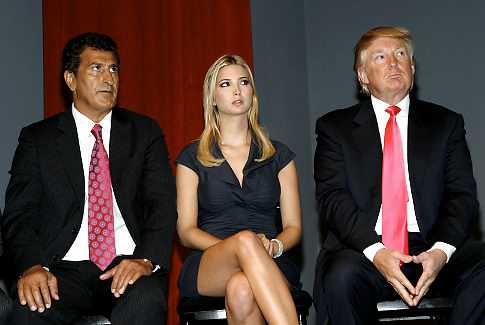
His humiliating behavior—such as seating Western leaders below him—or Vice President J.D. Vance wagging his finger and using threatening language against them, are all carefully noted incidents.
The MAGA movement has been hijacked.
Zionists have stolen the movement through Trump.
None of the current actions align with the true agenda of MAGA.
Even American strategists admit that the higher interests of the United States are being trampled.
And they all, unfortunately, concede that there is no choice but to bow to the power of the Jewish lobby.
Trump and his team are deliberately dismantling the Western alliance.
They are trying to create division and polarization within the U.S.
They knowingly empower the arguments of Confederates.
They are intentionally violating the constitutional rights of the united states that make up America.
They are working to undermine the U.S. judiciary, as well as the military and civil bureaucracy.
It is as if they are pursuing the doctrine of *Ab Ordo Chaos*—first destroy, then rebuild.
Every move they make serves only to delay, obstruct, and weaken America’s military and economic confrontation with China—ultimately buying China more power and time.
Trump is a puppet.
The oligarchy pulling his strings has already made its decision.
They will dismantle the U.S. in every sense.
They will plunder all of its wealth.
They will exploit America’s military and economic strength to the last drop.
And once it is completely drained, they will leave it to fend for itself—fractured by endless economic, political, and religious strife.
The Honorable Sinan Kuzum Consul General Consulate General of the Republic of Türkiye Los Angeles, California
Subject: Deep Appreciation for Your Participation in the Korean War Commemoration Ceremonies
July 3, 2025
Dear Consul General Kuzum,
On behalf of the Turkish-American community and as an Honorary South Korean Citizen and Honorary Korean War Veteran recognized by the Republic of Korea, I extend my heartfelt appreciation for your meaningful participation in the Korean War Commemoration Ceremonies held in Los Angeles.
Your presence was not only a diplomatic duty it was a profound act of remembrance and honor for the brave Turkish soldiers who wrote history with their blood on the fields of Korea. These heroes, far from their homeland, fought and sacrificed their lives for a people they had never met—forming a lasting legacy of brotherhood between Türkiye and South Korea.
By taking part in these ceremonies, you upheld the dignity of our veterans and honored the deep, enduring ties between the Turkish and Korean peoples. These events also highlight the broader significance of the alliance between Türkiye and the United States—one that was strengthened through our joint sacrifices in Korea and continues today through our shared commitment as NATO allies.
Sadly, not all representatives have shown the same level of honor and awareness. Some, including former Ambassador Murat Mercan then servicing as Deputy Consul general of New York Emre Manav, have disrespected and overlooked the sacrifices of our Turkish Korean War veterans. Your actions stand in stark contrast: you chose the path of remembrance, gratitude, and truth. You gave voice to the legacy of our veterans who returned not only with medals but as sons embraced by the Korean people a symbol of the unbreakable bond forged in the crucible of war.
Consul General Kuzum, I deeply respect and commend your leadership. You have set a powerful example for your colleagues by showing that honoring the past is essential to shaping a dignified and meaningful future. I sincerely thank you for not forgetting our brave veterans, and for carrying forward their legacy with the respect and reverence they deserve.
With profound gratitude and admiration,
Ibrahim Kurtulus
Honorary Korean War Veteran Honorary Citizen of the Republic of Korea Community Activist & Friend of the Turkish-Korean Brotherhood
South Korea Must Broaden Its Diplomatic Horizons Toward Türkiye and the Turkic World ( Below in Korean Language )
In a world increasingly defined by complex geopolitical rivalries and shifting alliances, South Korea must consider diversifying its international partnerships to ensure national security and long-term prosperity. One compelling avenue lies in forging deeper ties with Türkiye and the broader Turkic world, encompassing over 450 million people and rooted in a shared historical, cultural, and strategic legacy. The time has come for South Korea to revisit these connections and embrace a partnership with profound mutual benefits.
Historical Brotherhood: A Foundation of Trust
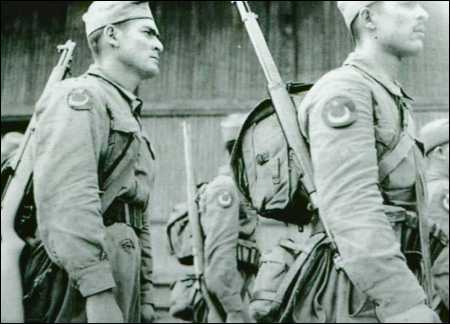
The bond between South Korea and Türkiye is not a mere diplomatic formality but a deeply ingrained relationship that transcends generations. This connection dates back to antiquity, with alliances between the Göktürks and Goguryeo during periods of conflict and expansion. It was profoundly solidified during the Korean War when Türkiye responded with unparalleled solidarity, dispatching the Turkish Brigade to defend South Korea. The term “Korean-Turkish brotherhood” encapsulates this unique relationship, one often described as “blood brothers.”
Today, this bond resonates deeply within Türkiye. The average age of Turkish veterans of the Korean War is now 89, yet their unwavering sentiment remains: “An attack on South Korea is an attack on Türkiye.” This powerful ethos is echoed by younger generations of Turks who maintain a profound sense of care and connection to their Korean counterparts. Such enduring solidarity underscores an exceptional opportunity for South Korea to reevaluate its partnerships in a rapidly changing world.
Shared Challenges, Shared Opportunities Türkiye and South Korea face strikingly similar challenges, including managing nuanced relations with powerful neighbors such as Russia and China. The Turkic world, united under the Organization of Turkic States (OTS), has emerged as a significant counterweight in the region. Through initiatives in defense, energy, and cultural cooperation, the OTS exemplifies the potential of unified action among nations with shared roots.
South Korea’s engagement with the OTS could yield substantial dividends. The bloc offers an alternative alliance system that complements South Korea’s existing relationships, diversifying its strategic options. By partnering with Türkiye and the broader Turkic world, South Korea can reduce overreliance on relationships that may prioritize narrow interests confined to the Korean Peninsula.
The Turkic World: A Rising Force Türkiye’s initiatives in Central Asia exemplify a strategic vision for strengthening ties within the Turkic world. Recent developments, including collaborations in trade, infrastructure, and cultural exchange, demonstrate the region’s collective commitment to self-reliance and global influence. South Korea stands to benefit immensely by aligning with this vision. Closer ties with Türkiye and the Turkic nations would provide access to new markets, diversified economic partnerships, and enhanced security frameworks—all vital to safeguarding South Korea’s national interests.
Moreover, this realignment would honor the historical bonds that unite these nations. The cultural affinities and shared values between South Korea and the Turkic world provide a strong foundation for collaboration, extending beyond economics to areas such as technology, education, and cultural diplomacy.
A Strategic Imperative South Korea’s current alliances, while significant, are not without limitations. The evolving geopolitical landscape necessitates a broader approach to international relations. Türkiye’s proven loyalty during times of need, coupled with its strategic leadership in the Turkic world and blood brotherhood, offers South Korea a partner that understands the value of mutual support and long-term cooperation as a family.
By strengthening ties with Türkiye and engaging with the OTS, South Korea can position itself as a key player in a diversified alliance network that transcends traditional boundaries. This approach not only aligns with South Korea’s historical blood brotherhood with Türkiye but also recognizes the vast potential of the Turkic world as a partner in navigating the complexities of modern geopolitics.
Conclusion South Korea’s future lies in embracing a broader, more inclusive diplomatic strategy. Partnering with Türkiye becoming a very important world player and regional super power and the Turkic world is not merely a nod to shared history but a pragmatic move toward a diversified and resilient international presence. The world is far larger than the confines of the Korean Peninsula, and South Korea must seize the opportunity to collaborate with its “blood brothers” in Türkiye and the Turkic world. This path promises not only strengthened alliances but also a legacy of mutual respect, security shared prosperity, and enduring solidarity.
점점 복잡해지는 지정학적 경쟁과 변화하는 동맹이 특징인 세계에서, 한국은 국가 안보와 장기적 번영을 보장하기 위해 국제 파트너십을 다양화할 필요가 있습니다. 이를 위한 강력한 방안 중 하나는 튀르키예와 4억 명 이상의 사람들로 이루어진 튀르크 세계와의 관계를 더욱 강화하는 것입니다. 이들 관계는 역사적, 문화적, 전략적 유산에 뿌리를 두고 있으며, 이제 한국은 이러한 연결성을 재조명하고 상호 이익이 깊은 협력 관계를 수용해야 할 때입니다.
역사적 형제애: 신뢰의 기반
한국과 튀르키예 간의 유대는 단순한 외교적 형식이 아니라 세대를 초월한 깊은 관계입니다. 이 관계는 고대까지 거슬러 올라가며, 고구려와 돌궐 간의 동맹으로부터 시작되었습니다. 특히 한국전쟁 당시 튀르키예가 한국을 방어하기 위해 터키 여단을 파병하며 전례 없는 연대를 보여줌으로써 굳건해졌습니다. “한국-튀르키예 형제애”라는 용어는 이러한 특별한 관계를 표현하며, 종종 “혈맹”으로 묘사됩니다.
현재 이 유대는 튀르키예에서 깊은 공감을 불러일으킵니다. 튀르키예 한국전 참전용사들의 평균 연령이 이제 89세임에도 불구하고, 그들의 변함없는 신념은 “한국에 대한 공격은 곧 튀르키예에 대한 공격”이라는 것입니다. 이러한 강력한 정신은 한국 동료들에 대한 깊은 관심과 연결을 유지하고 있는 튀르키예의 젊은 세대들 사이에서도 반영됩니다. 이러한 지속적인 연대는 급변하는 세계에서 한국이 파트너십을 재평가할 수 있는 특별한 기회를 보여줍니다.
공유된 도전 과제와 기회
튀르키예와 한국은 러시아와 중국과 같은 강대국 이웃들과의 복잡한 관계를 관리하는 것을 포함하여 매우 유사한 도전 과제에 직면해 있습니다. 튀르크 세계는 튀르크국가기구(OTS)를 중심으로 지역에서 중요한 균형세력으로 떠오르고 있습니다. 방위, 에너지, 문화 협력 분야에서 OTS가 보여준 통합된 행동의 잠재력은 이들 국가 간의 협력 가능성을 강조합니다.
한국이 OTS와 협력하게 되면 상당한 이점을 얻을 수 있습니다. 이 블록은 한국의 기존 관계를 보완하는 대체적인 동맹 체계를 제공하며, 전략적 옵션을 다양화합니다. 튀르키예와 튀르크 세계와 협력함으로써 한국은 한반도에 국한된 협소한 이익에 의존하는 관계를 줄일 수 있습니다.
떠오르는 힘: 튀르크 세계
중앙아시아에서의 튀르키예의 이니셔티브는 튀르크 세계와의 관계를 강화하기 위한 전략적 비전을 보여줍니다. 최근 무역, 인프라, 문화 교류 분야에서의 협력은 자립과 세계적 영향력에 대한 지역의 집단적 의지를 증명합니다. 한국이 이 비전에 맞추어 협력하면 엄청난 이익을 얻을 수 있습니다. 튀르키예와 튀르크 국가들과의 긴밀한 관계는 새로운 시장에 접근하고, 경제 파트너십을 다양화하며, 한국의 국가 이익을 보호하는 데 중요한 보안 체계를 제공할 것입니다.
또한 이러한 재정렬은 이들 국가를 단결시키는 역사적 유대를 기리는 것이기도 합니다. 한국과 튀르크 세계 간의 문화적 친화성과 공유된 가치는 경제를 넘어 기술, 교육, 문화 외교와 같은 분야로 협력을 확장할 수 있는 강력한 기반을 제공합니다.
전략적 필연성
한국의 현재 동맹은 중요하지만, 한계도 존재합니다. 변화하는 지정학적 환경은 국제 관계에 대한 더 광범위한 접근 방식을 요구합니다. 튀르키예의 입증된 충성심, 튀르크 세계 내에서의 전략적 리더십, 그리고 혈맹으로서의 관계는 한국에게 상호 지원과 가족과 같은 장기적 협력의 가치를 이해하는 파트너를 제공합니다.
튀르키예와의 관계를 강화하고 OTS와 협력함으로써, 한국은 전통적인 경계를 초월한 다양화된 동맹 네트워크의 핵심 플레이어로 자리 잡을 수 있습니다. 이러한 접근 방식은 한국의 튀르키예와의 역사적 혈맹 관계와 일치할 뿐만 아니라 현대 지정학의 복잡성을 헤쳐 나가기 위한 파트너로서 튀르크 세계의 광대한 잠재력을 인식합니다.
결론
한국의 미래는 더 광범위하고 포괄적인 외교 전략을 수용하는 데 달려 있습니다. 세계적이고 지역적 강국으로 떠오르는 튀르키예 및 튀르크 세계와의 파트너십은 단순히 공유된 역사에 대한 존중일 뿐만 아니라 다양화되고 탄력적인 국제적 입지를 위한 실용적인 움직임입니다. 세계는 한반도의 경계를 훨씬 넘어서 있으며, 한국은 튀르키예와 튀르크 세계의 “혈맹”과 협력할 기회를 포착해야 합니다. 이러한 길은 강력한 동맹, 상호 존중, 안전, 공동 번영, 지속적인 연대의 유산을 약속합니다.
“The primary purpose of the war was to seize control of oil fields. Control of these (Middle Eastern) resources becomes a first class war aim” Sir Maurice Hankey, 1915, British war cabinet, Ref:book: ‘The PRIZE The Epıc Quest for Oil-Money-Power’ by Daniel Yergin
“We must become the owners or at any rate the controllers the source of at least a proportion of the oil which we require.” Winston Churchill
“Unless a nation’s life faces peril, necessary, war is murder” Mustafa Kemal Ataturk
“Turks were our Honourable Enemies” David McLachlan, The president of Returned Services League of Victoria-Australia, April, 2006
To the Honourable Premier of Victoria and To the Honourable Parliamentarians of Victoria,
I am writing in regards to a motion that will be introduced to the Victoria parliament on October 29, 2024, the anniversary of the republic of Turkiye, accusing Turkiye of events going back 109 years. Who /what country will be your interlocutor at this motion and why? Just like in the Middle East today, pretty sure that it won’t be mentioned which powers made the peoples of the region hostile to each other, incited them against each other, and rebelled against their authority.
“If the Turks were blood-thirsty tyrants why did Ottomans wait 600 years to exterminate the Armenians?” Ara Baliozian, Armenian author, Translator
So-called Genocide is Fact or Fiction? Selective Truth or Proof / The OTHERİNG the Middle EasternPeople
Provocation of ETHNICITY by the Imperial forces: Papazyan, The Armenian representative in the Ottoman Parliament for Van, published a proclamation to the Ottomans stating: “The volunteer Armenian regiments in the Caucasus should prepare themselves for battle, serve as advance units for the Russian armies to help them capture the key positions in the districts where the Armenians live, and advance into Anatolia, joining the Armenian units already there.” Soon, Papazyan turned out to be a leading “guerrilla” fighter against the Muslim residents of the Ottoman Empire!
Promises to the Armenians, raising their nationalism and Plundering of the Middle Eastern oil! Louise Nalbandian(*)states that; “The Armenian revolutionary committees considered that the most opportune time to begin a general uprising to achieve their goals was when the Ottoman Empire was in a state of war”. A secret Dashnak Congress held at Erzurum in June 1914 had already decided to use the oncoming war to undertake a general attack against the Ottoman state and the Russian Armenians joined the Russian army in preparing an attack on the Ottomans as soon as war was declared.” (*) Louise Nalbandian, historian and professor in the History Department of CSU Fresno from 1964 to 1974.
I am sure that the imperialism it’s ethics of snatching the oil from Ottoman lands in the Middle East in 1915 will not be blamed.
In the motion, I suppose, Turkey will be targeted for having accomplished the so-called genocide on Armenians, Greeks and Assyrians, instead of Western Powers (imperial) oil hunters.
Reminding that since the 29th of 1923, Turkey is a new country, and no more ties with the Ottomans, therefore there is no interlocutor for your movement.
Being a proud Australian-Turkish citizen, I am not only disappointed by the motion targeting the wrong country, but also because the motion day is chosen very disgracefully. I would like to start expressing my feelings, being an Australian citizen (Metaphorically, I feel Australia is my father) as well as Turkish citizenship (like mother), both are my sweet and proud countries that I respect both of them. I am so lucky to be a citizen of both countries. Both countries are so unique that since 1915, after the WW1 ended, they became friend countries, which is an extremely rare case among countries after fighting a war in between. Hoping this peace will stay, as it is to be a rare sample for the rest of the world, and hoping more countries will take an example of this friendship.
If I may, I have many questions in my mind for this motion as a proud Turkish Australian, however there will be a few here;
As we all know that unfortunate accusation of Turkiye is related to the WW1-1915 (Gallipoli War), that means 109 years old incidences and outcomes just a few years earlier than the Australian parliament was established and Australia was only a fourteen years old country to prove herself to the world. Without being a part of the Gallipoli War, would Australia be a mature country and gain its national identity?
When the so-called genocide allegations were asked to the Australian Foreign Minister Mr. Downer, on the 11th of February 2007, he answered the questions as follows; “ … in Australia we have a significant Turkish community, an ethnic Turkish community. We have an Armenian community that would not be anything like as big as the Turkish community, but I don’t think we really want to get into all of that and inflame passions in Australia, between Australians, over an issue like that. The debate is about events that occurred a long time ago, and I don’t think we are going to offer a running commentary on the events, or alleged events, whatever on history. I don’t think it is the role of the Australian government to be a historian. Whatever we may think about history, we deal with the present and future, but we can’t change the past, not even the Australian government can change the past. If we could, there would be a lot of changes we would make.” [Liberal Foreign Minister Mr. Downer on the 11 February 2007]
Many Australians, Anzacs didn’t know where Gallipoli is before involving in the Gallipoli war of 1915, except false and anti Turkish/(anti Ottoman propaganda in those years. News were the key propaganda of the war ( Like the Broken Hill incident story)
“You will hear extraordinary horrible stories practiced by Turks. Well, don’t believe a word of them. They are grossly exaggerated if not wholly false. You will be surprised at the gentlemanly way the Turks have fought us.”Jim Haynes (Cobbers – Stories of Gallipoli, 1915 p. 178) As we all know that WW1, 1915 was a war by which imperial powers seized the Middle Eastern oil in exchange for the price of lives.
Few Irony and Reminding: Australian Armenian approach is unethical because they use “selective truth” to “prove” their point! “Australian Millionaire William D’archy Knox who drilled and discovered oil after seven years in 1908 then built a pipeline to Persian Gulf. D’archy’s Angolo-Persion Oil Company later known as BP is known to be the most profitable investment in history.” Ref: The PRIZE The Epic Quest for Oil-Money-Power’ by Daniel Yergin
An Australian businessman William D’Arcy Knox, who discovered Iranian oil, died a poor man, while an adventurous Armenian entrepreneur, Calouste Sarkis Gulbenkian (Mr. Five Percent %5), he was the richest man in the world. What an IRONY!
Sadly, many false accusations and news against Turkiye are still going on until now, since it is the key country of the world and the Middle East.
I wouldn’t know how biased history knowledge of others is; but talking about myself, I had a very basic knowledge and started learning after I settled to Australia, to get to know and learn many facts and I am still researching about the Gallipoli War via to the Australian books, documents, media,…and of course the culture. However learning the historical fact was for me from both sides’ views not only a one sided history. As a result, I compiled views of the Anzac on a book called; “Johnny Turks and Memoirs of Gallipoli” In my book, there are lots of unbelievable friendship memoires that I admired a lot in between the Turkish soldiers-Mehmetciks (and Johnny Turks (which is a nick name given to the Anzacs). After the Turkish commander and leader Mustafa Kemal Ataturk’s quote to mothers of Anzacs; “There is no different between the Johnnies and the Turks, your son became ours …” in 1934,
And Many years after another Australian soldier, Major – Gen. David McLaghlan’s comments describing the Turkish soldiers as “Honourable Enemy” in 2006. (please see the article on the Age newspaper, by Carolyn Webb. 12th of April, 2006 “Anzac March Open to ‘JohhnyTurks’ – But that’s it.” In this article Turks are described as ‘Honourable Enemy’ by President of RSL Vitoria, Major Gen. David McLachlan.) Then, this friendship between Australia and Turkiye would be a great example for many countries who have conflicts.
In fact, it is a perfect timing for all parliaments around the world to take this opportunity because this friendship between Australia and Turkiye can became a great example for the rest of the world. Of course, if PEACE is wanted! If we don’t want peace in the region, of course we may create a lot of biased justifications. In this case, may I kindly ask you a few questions? How about, if any Turk claims that a huge slaughtering was done to the Turks and all the Muslims in Anatolia between 1915 and 1922, by the Westerners; How would you react?
ARMENIAN TRIALS:“In ancient times Armenia was a buffer kingdom between rival enemy. Armenia was frequently invaded-by Assyrians, Persians, Arabs, Greeks and Romans. The Armenians retained their identity. This kingdom in its turn was destroyed in the 14th century by invaders from Egypt. Under the Ottoman Empire, Armenian merchants and financiers thrived. When the struggles broke out between Turks and Armenians for the possession of Anatolian lands, many Armenians died; others fled abroad.”Desmond Stewart is a British journalist who worked for many years in Cairo. He wrote a number of books about Egyptian culture and history. Graduated Oxford in 1948.
Armenia and the Turks in the Time of Lawrence!
“While Colonel T. E. Lawrence (“Lawrence of Arabia”) sympathized with Armenian aspiration for sovereignty and, indeed, in a map he drew up after the Great War of a desirable Middle Eastern share-out of the Ottoman Empire, he provided for an independent Armenia (in Cilicia), he was also party to the prevalent anti-Armenian prejudices of his day. Lawrence was a member of the British delegation to the 1919 post-war Paris peace conference. On November 3 he told Frank Polk, the American “Commissioner” in Paris, that the Armenians were prone to lend “money at exorbitant rates of interest” and took “the Turks’ land or horses in security for payment,” and this at least in part explained the Turkish atrocities against them during World War I. But there was another factor. “Armenians,” he told Polk, as related in Polk’s report on their conversation, “have a passion for martyrdom, which they find they can best satisfy by quarrelling with their neighbours . . . They can be relied upon to provoke trouble for themselves in the near future.” In general, Lawrence felt, “it would be most undesirable to attempt to establish an Armenian state.” Except in a specific territory, where they would be overwhelmingly preponderant. “The idea of an Armenian State infuriates all the other races, and it would require 5 divisions of troops (100,000 troops) to maintain it.” According to Lawrence, the Turks had been exhausted by the Great War and their “army is rotten with venereal disease and unnatural vice.” Hence, their birth rate was falling. “ Prof. Dr. Benny Morris is an Israeli historian. He is a professor of history in the Middle East. March 8, 2011
As a new country Turkiye rather forgot the past, forgave all the guilty countries and tried to have a good relationship with all the countries in the world since Mustafa Kemal Atatürk and his way of looking towards the worlds was“Peace at home, Peace in the world”. As the grandchildren of Mustafa Kemal Atatürk, we say “peace in Australia, Peace in the universe”. I am so disappointed how the parliaments could reverse the history, and also how parliaments, politicians can make such a critical decision without considering all historical facts. I totally reject this divisive motion as it will be an extremely embarrassing motion for the Australian Multicultural Policy.
Armenians, in 1915, became the cause of civil and military riots (by the support of Rusia and France) against to Ottoman government, some (almost 800 hundred) Armenians were relocated to Damascus from the unrest areas. What a global scenario is to look now, from almost the same area almost eight million Assyrians are relocated to Turkiye by illegally ways. If this is not totally a global game, what is?
EXPOSING THE OTHER SIDE OF THE FALSIFIED GENOCIDE -A LOOK AT SOME ARMENIANS OF THE OTTOMAN EMPIRE A.LALAYAN
“I killed Muslims by every means possible. Yet it is sometimes a pity to waste bullets for this. The best way is to gather all of these dogs and throw them into wells and then fill the wells with big and heavy stones., as I did. I gathered all of the women, men and children, threw big stones down on top of them. They must never live on this earth.”A. Lalayan, Vostok (Revolutionary East) No: 2-3, Moscow, 1936. (Lalayan is considered as one of the architects of the ethnic cleansing campaign of the Turks… perhaps on the order of an Armenian Adolf Eichmann.)
“I have been on the scenes of massacres where the dead lay on the ground, in numbers, like the fallen leaves in a forest. Muslims had been as helpless and as defenceless as sheep. They had died as the helpless must, with their hearts and brains bursting with horror worse than death itself.” Leonard Ramsden Hartill, _Men Are Like That_ The Bobbs-Merrill Company, Indianapolis (1926). _Memoirs of an Armenian officer who participated in the Armenian genocide of 2.5 million Muslim people_
According to Arnold Toynbee; “There is a systematic plan of destruction of Turkish villages and extinction of the Muslim population. This plan is being carried out by Greek and Armenian bands, which appear to operate under Greek instructions and sometimes even with the assistance of detachments of regular troops.” Toynbee, Arnold Joseph (1970). The Western Question in Greece and Turkey: A Study in the Contact of Civilizations. p. 286. THE UNKNOWN FACE OF SO-CALLED ARMENIAN GENOCIDE “Atrocity stories have been vastly overdone; some of the more recent massacres have been wholly nonexistent. One of the local (Constantinople) members of the press and of a relief organization told some friends openly that he could only send anti-Turkish dispatches to America because that is what gets the money…” Source: E. Alexander Powell, The Struggle for Power in Moslem Asia, New York, 1925
“Lest forget the ultimate price of the wars” Michael Leung 2002 Except Australia and Turkiye, there are hardly any after war effect that jointly commemorate friendship between the past belligerents’ parties.
Even 100 years later, Turks and Australians-New Zealanders celebrate the victory of the friendship unlike Armenians and Turks…Why not between Armenians and Turks? Let’s not involve this animosity, but involve friendship. Animosity breeds animosity, it is a vicious circle! For a peaceful world, let’s not forget to CELEBRATE the friendship…
Julia Gül Arslan (Australian-Turkish)
Peace in Australia, Peace in The Universe Author Of Books; – Armenian Dilemma – 1915 War of Oil & the Hypocrisy of the West” – Johnny Turks and Memories of Gallipoli War
“Peace At Home, Peace in the World” M.K. Atatürk
Please see the following details of 1915 and the TURKS , THROUGH THE EYES OF THE ANZACS;
After the WW1 (1915) Turkish soldiers became “Abdul” to “Johnny Turks” ….. but WHY?
ABDUL We’ve drunk the boys who rushed the hills, The men who stormed the beach, The sappers and the A.S.C., We’ve had a toast for each;
And the guns and stretcher-bearers But, before the bowl is cool, There’s one chap I’d like to mention, He’s a fellow called ABDUL.
We haven’t seen him much of late Unless it be his hat, Bobbing down behind a loophole And we mostly blaze at that;
But we hear him wheezing there at nights, Patrolling through the dark, With his signals-hoots and chirrups Like an early morning lark.
We’ve heard the twigs a-crackling, As we crouched upon our knees, And his big, black shape went smashing, Like a rhino, through the trees.
We’ve seen him flung in, rank on rank, Across the morning sky; And we’ve had some pretty shooting, And – he knows the way to die.
Yes, we’ve seen him dying there in front Our own boys died there, too- With his poor dark eyes a-rolling, Staring at the hopeless blue;
With his poor maimed arms a-stretching To the God we both can name And it fairly tore our hearts out; But it’s in the beastly game.
So though your name be black as ink For murder and rapine, Carried out in happy concert With your Christians from the Rhine,
We will judge you, Mr. Abdul, By the test by which we can- That with all your breath, in life, in death, You’ve played the GENTELMAN. Poem, written by a war correspondent C. E. W. Bean;
Now when I was a young man, I carried me pack, and I lived the free life of a rover From the Murray’s green basin to the dusty outback, I waltzed my Matilda all over.
Then in 1915, my country said son, It’s time you stopped rambling, there’s work to be done. So they gave me a tin hat, and they gave me a gun, and they marched me away to the war.
And the band played Waltzing Matilda, as the ship pulled away from the quay And amidst all the cheers, the flag-waving and tears, we sailed off for Gallipoli
And how well I remember that terrible day, how our blood stained the sand and the water And of how in that hell that they called Suvla Bay, we were butchered like lambs at the slaughter.
Johnny Turk he was waiting, he’d primed himself well. He showered us with bullets, and he rained us with shell. And in ten minutes flat, he’d blown us all to hell Nearly blew us right back to Australia.
But the band played Waltzing Matilda, When we stopped to bury our slain. We buried ours, and the Turks buried theirs, And we started all over again.
And those that were left, well we tried to survive, In that mad world of blood, death and fire And for ten weary weeks, I kept myself alive, though around me the corpses piled higher
Then a big Turkish shell knocked me arse over head, And when I woke up in my hospital bed, And saw what it had done, I wished I was dead. Never knew there was worse things dying.
For I’ll go no more waltzing Matilda, all around the green bush far and free To hump tent and pegs, a man needs both legs No more waltzing Matilda for me.
And so now every April, I sit on my porch, and I watch the parades pass before me. And I see my old comrades, how proudly they march, Reviving old dreams of past glories
And the old men march slowly, old bones stiff and sore. They’re tired old heroes from a forgotten war And the young people ask, what are they marching for? And I ask myself the same question.
But the band plays Waltzing Matilda, And the old men still answer the call, But as year follows year, more old men disappear. Soon no one will march there at all. Eric Bogle Turks with words of the Anzacs, 1915; “Turks have treated our captured men and officers excellently” The diary of the Australian Official Correspondences C.E.W.Bean
“You will hear extraordinary horrible stories practiced by Turks. Well, don’t believe a word of them. They are grossly exaggerated if not wholly false. You will be surprised at the gentlemanly way the Turks have fought us.”Jim Haynes (Cobbers – Stories of Gallipoli, 1915 p. 178) “The Turkish sniper understood that we were searching for him. He shot once and the doctor got wounded. When he realized that he was a doctor, he didn’t shoot again.” [Exerted from Sydney Alex Moseley, former war correspondent during the Gallipoli Campaign]
“Generally, the Anzacs recognised in the Turk a fellow sufferer and acknowledged his humanity; In his poem Anzac’. ‘I reckon the Turk respects us, as we respect the Turk; Abdul’s a good, clean fighter – we’ve fought him, and we know.” (Lieutenant Oliver Hogue, Book: ‘Gallipoli’, Alan Moorehead, Page:159)
“They (Turks) too were fighting for their country. Good and fair fighters. No. They fought very fair and honestly like us. Both sides lost their very valuable men.” (E.W.BARTLETT – was born in Australia, 1891. 11th Light Horse Regiment)
“The Turks have always proved themselves perfectly willing to have armistices and have actually asked for one at Helles which was refused by our General Staff.” [Excerpted from Ashmead-Bartlett’s dairy(Saturday, 24, 1915, Ellis Ashmead-Bartlett worked for the London Daily Telegraph)
“ After the terrible punishment inflicted upon the brave but futile assaults all bitterness faded … The Turks displayed an admirable manliness … From that morning onwards the attitude of the Anzac troops towards the individual Turks was rather that of opponents in a friendly game.”(Charles. E Bean, the Australian official historian, The Story of Anzac, Vol II, Sydney, 1924, p.162)
“I am a United States veteran and served in The US Air Force. still have friends in Iraq fighting for our freedom. I can tell you that I have never known a nation more underrepresented and discredited more than the Turkish. Turkish troops were clearly the heroes of the Korean War, ask any Korean veteran, yet when the 50th anniversary of Korean War was being celebrated no one heard Turks getting credit for their bravery. Greeks and even the Colombians were remembered but not Turks. Why not? I tell you why. Armenians and Greeks have done a wonderful job on preventing any positive image of Turkey in The United States. I am an Irish-American who happened to dig deep since I have noticed what Turks have been facing due to having some close Turkish friends. Once I started digging and conducting a lengthy research I was shocked to. find out how well Armenians have been playing that Christian card. http://seattlepi.nwsource.com/soundoff/comment.aspParticleID=335534&page=2
“The Turks were small and shy and gentle, Gordon recalled a particular meeting in Korea of Australian and Turkish soldiers: “If the seeds of this joint respect were planted at Gallipoli; it ripened in the dust and snow of Korea. The Turks’ relish for hand-to-hand fighting, their first-class leadership, their discipline under fire… these were attributes the Australians in Korea possessed themselves and admired in others.” went, and found Norm O’Neill, whose pals in the Field Ambulance used to call him Peggy entertaining a bunch of stocky, dark-awled young men. They stood and listened as O’Neill (with the help of a young Lt. who could speak a few words of English) told them about his father, who had been a machine-gunner at Gallipoli. We gave them packets of chewing gum, and they handed in return hunks of something that looked like a pancake and tasted like rubber… Their ready acceptance weren’t just of us, their eagerness to make us feel at home among standard behaviour for newfound allies. They, too, had had the Gallipoli story drummed into them during their childhood. “For the Aust’ns, many illusions were shattered. Somehow the ANZAC Day speeches of their youth had built the Turks up in their imagination as massive, heavily moustached fighters who carried daggers in their belts and remained sullen and aloof. Nothing could have been further from the truth; the Turks were small and shy and gentle, sometimes moustaches even a certainly, little but comical, soft, oversized boyish, greatcoats kitten-tailed. Their affairs were with the texture and quality of those that 19-year old Australian soldiers were managing to cultivate. The Turks proved to be tough soldiers.
Gordon continues; “The Turks continued to fight with a ferocity which made them something of a legend in Korea. In one action they are on record as having complained bitterly that the artillery barrage put in to soften up an enemy before their charge was too heavy … there
weren’t enough live Chinese left to make a decent fight. “If the seeds of this joint respect were planted at Gallipoli; it ripened in the dust and snow of Korea. The Turks’ relish for hand-to-hand fighting, their first-class leadership, their discipline under fire… these were attributes the Australians in Korea possessed in themselves and admired in others.”[http://www.awm.gov.au/korea/faces/journalists/
journalists.asp] Australian journalist Harry Gordon
“The Anzacs left Gallipoli without hatred in their heart for their enemy or bitterness at the incompetence of their own high command.”[ A.K. Mc. Dougall, Australian Historian)
Not all Muslims are terrorists, granted. Only Muslims who make headlines in the international press and their leaders who shape their destiny and character as a fraction of mankind.
*To Turks who are brought up to believe Turks are too civilized to be guilty of genocide, may I remind them there is no such thing as a degree or line that separates nations capable or incapable of genocide and to introduce such a degree or line in the discussion of genocide is to engage in fiction.
* May I also suggest, if you believe in Ataturk, you will believe in anything. * Do I think what I write can change anyone’s mind? My answer: I don’t know, but I can assert with some degree of certainty, no one can change that which does not exist.” Ara Baliozian; Armenian Author-Translater-Reviewer, Born in Atena-Greece. “LET US REASON TOGETHER A Canadian prime minister (Jean Chretien) is quoted as having said: “I like to stand up to Americans. It’s popular.” We like to hate Turks. That’s popular too. But it’s wrong! What have we accomplished after a hundred years of hatred? We can’t even convince Americans to support our side. Hating is a waste of time, Hating nations is worse! We should hate not nations but murderers and liars regardless of nationality. There are honest Turks as surely as there are dishonest Armenians. It is wrong to confuse a nation with its regime. Regimes are ephemeral and transitory stages in a nation’s life. Neither should we confuse loyalty or subservience to a regime with patriotism. Hatred may take us from A to B but it is understanding that can go all the way to XYZ. Hating is easy; understanding much harder. When it comes to politics or any other discipline for that matter, the easy answer is not always the right one. In the writings of our Turcocentric ghazetajis and readers who enjoy reading them I see nothing but militant malice.” [Ara Baliozian; Armenian Author-Translater-Reviewer, Born in Athena-Greece, December 10, 1936]
29 EKİM 2024 AVUSTRALYA/ VİCTORİA EYALETİNDE Oylamaya sunulmaktan son anda vazgeçilen sözde Ermeni Pontos Yunan Süryani iddialarının oylamasına karşı gönderdiğim mektup ektedir
Prensip olarak Türk tezlerini degil ( resmi tarih ya da resmi tez diye fazla umursanmiyor), YABANCİLARİN GÖZÜYLE TÜRKLERİN MAĞDURİYETİNİ ANLATAN YAZILARdan oluşan derleme -amatörce yazılmıs kitaplarımdan yaptığım alintilari yazdığım, yaklaşık 220 mv line gönderdiğim mektup.
On August 27–28, 2024, Moscow hosted the IMBRICS FORUM — the VI International Municipal Forum of the BRICS Countries.
The event has become an important platform for exchanging experiences and ideas between representatives of regional and municipal governments from the BRICS countries. It also helped build effective business communications with entrepreneurs from Russia and other partner countries.
The forum included a round table discussion on the role of extracurricular education and international cooperation in children’s and youth education. Experience of BRICS cities and municipalities, which was devoted to discussing issues of children’s and youth recreation in camps, as well as extracurricular education. The event was attended by representatives of legislative and executive bodies of state power in Russia, heads of Russian and foreign children’s camps and non-profit organizations. In particular, the event was attended by Boris Chernyshov, Deputy Chairman of the State Duma of the Federal Assembly of the Russian Federation, Natalya Agre, Director of the Department of State Policy in the Sphere of Education, Supplementary Education and Children’s Recreation of the Ministry of Education of Russia, Sandra Goulart Urioste, Director of English Camp (Brazil), Fahrettin Gozet, President of the Canadian NGO International Camping Fellowship (ICF) Fahrettin Gozet (Turkey) and Nie Aijun, President of the Board of The Institute for Camp Education in China . The speakers delivered reports, shared their experience in organizing the area of activity under consideration, and discussed existing initiatives to expand the activities of the camp movement and extracurricular education, including in the BRICS countries.
The particular focus was on the Turkish speaker Fahrettin Gozet, who delivered a report on “Collaborative Initiatives Among BRICS Countries: Strengthening Youth Engagement”. In his report, he noted ICF as a key participant in strengthening cooperation between youth camps around the world, including the BRICS countries, whose mission is to strengthen youth engagement through joint initiatives. He explained how ICF programs and initiatives create opportunities for cooperation among BRICS countries in the field of youth engagement, using the strengths and resources of its international network. Fahrettin Gozet also gave examples of cooperation carried out with the assistance of ICF, such as a partnership between Russian and South African camps aimed at developing leadership skills and cultural exchange, promoting the involvement of youth across borders.
As a result, the participants agreed on further interaction with each other, the implementation of joint projects aimed at developing extracurricular education.
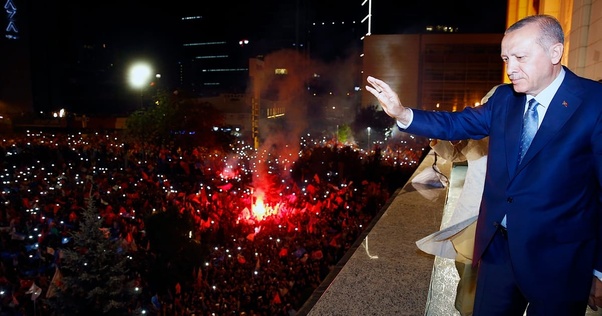
Turkish President Recep Tayyip Erdogan was declared the winner of the presidential election. What does it mean for the world?
Arshad Khan, a new resident of Istanbul from International Islamic University, Malaysia answers this question as follows:
Victory of Turkish President Recep Tayyip Erdogan means different to different leaders and countries
America: Not an easy ally who bow down to their tune, tough time to deal with unless Trump is incharge
NATO: Dependable ally, second largest military with good relations against projected enemies
Sweden: Difficult road ahead to get in NATO
Europe: Alternative to China to smaller extent with whom they want to lessen their dependency. will not be dancing to their tune on false promises of Entry to european Union. They will gear up trying to be good friends after trying desperately to not get him elected.
Turkic states: Good news, they can play a unified major role
UAE & Saudia: continuation of newly developed friendship, can be a reliable partner against western bullying.
Qatar & Azerbiajan: Big Brother victory which to be celebrated by whole country
China: can continue working on BRI and silk route revival. trustable and important route for their export markets
Russia & Iran: Happiest, will make Turkey the HUB of energy for supplying to west without sanctions
Iraq: can proceed further on development of Highway from Basra to Europe via Turkey
Syria: will try to ally by asking more concession but will get realigned from pressure of Russia and Iran
Afganistan & pakistan: Dreamland of Ertugrul gazi and revival of ottoman empire.
Africa: happiest and want to continue the trade and business and develop it multifold.