Category: East Asia & Pacific

  • Indonesia president says ISIS ’embarrassing’ for Muslims

    Indonesia president says ISIS ’embarrassing’ for Muslims

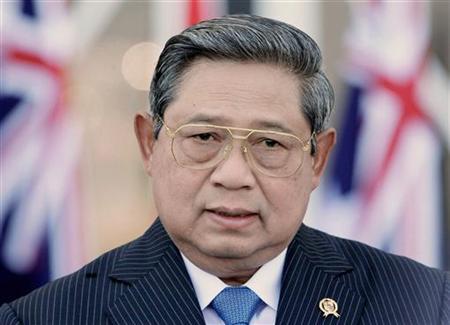
    Indonesia’s President Yudhoyono

    Leader of world’s most populous Muslim-majority country urges Islamic leaders to unite in tackling extremism

    According to The Telegraph, the president of the world’s most populous Muslim-majority country, Indonesia, has called the actions of Islamic State militants “embarrassing” to the religion and urged Islamic leaders to unite in tackling extremism.

    Susilo Bambang Yudhoyono said the scale of the slaughter wrought by the extremists in overrunning large swathes of Iraq and Syria and the level of violence being used was appalling.

    “It is shocking. It is becoming out of control,” he said in an interview with The Australian, a day after IS released a video showing a masked militant beheading US reporter James Foley, provoking worldwide revulsion.

    “We do not tolerate it, we forbid ISIS in Indonesia,” he added, referring to the Islamic State of Iraq and the Levant, as IS was formerly known.

    “Indonesia is not an Islamic state. We respect all religions.”

    He urged international leaders to work together to combat radicalisation.

    “This is a new wake-up call to international leaders all over the world, including Islamic leaders,” he said, adding that the actions of IS were not only “embarrassing” to Islam but “humiliating”, the newspaper reported.

    “All leaders must review how to combat extremism. Changing paradigms on both sides are needed – how the West perceives Islam and how Islam perceives the West.”

    Indonesia is home to the world’s biggest Muslim population of about 225 million and has long struggled with terrorism. But a successful clampdown in recent years has seen the end of major deadly attacks.

    Jakarta has estimated that dozens of Indonesians have travelled to Syria and Iraq to fight and Yudhoyono said he was concerned about their return, adding that he had tasked agencies to oppose the spread of extremist ideology in the sprawling nation.

    “Our citizens here in Indonesia are picking up recruitment messages from ISIS containing extremist ideas,” said the president, whose decade in office comes to an end in October.

    “The philosophy of ISIS stands against the fundamental values we embrace in Indonesia. Last Friday, in my state of the union address to the nation, I called on all Indonesians to reject ISIS and to stop the spread of its radical ideology.

    “My government and security agencies have taken decisive steps to curtail the spread of ISIS in Indonesia, including by prohibiting Indonesians to join ISIS or to fight for ISIS, and also by blocking Internet sites that promote this idea.”
  • Armenian Australian church leader ‘was a KGB spy’

    Armenian Australian church leader ‘was a KGB spy’

    Phillip Dorling

    A highly respected Australian church leader was a KGB spy, according to newly released Russian intelligence archives.

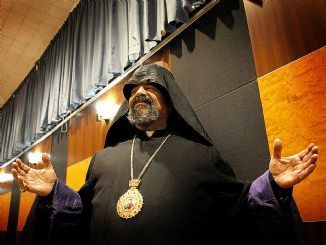
    Archbishop Aghan Baliozian, Primate of the Diocese of the Armenian Church of Australia and New Zealand, was listed as a KGB agent, codenamed “Zorik” in the papers of former KGB archivist and defector Vasili Mitrokhin, which were released by the UK’s Churchill College Archive last month.

    Born in Syria in 1946, the late Archbishop Baliozian arrived in Australia in 1975 to serve as Vicar General of the diocese of the Armenian Church before being appointed as Primate of Australia and New Zealand in 1982.

    A highly respected religious leader and a well-known figure in Chatswood, Sydney, Archbishop Baliozian was strongly committed to ecumenism, working for cooperation and greater unity between Christian churches.

    He was the first president of the National Council of Churches in Australia from 1994 to 1997 and president of the NSW Ecumenical Council from 2005 to 2007. He represented the Armenian Church at the World Council of Churches.

    Archbishop Baliozian was awarded the Medal of the Order of Australia in 1995 “in recognition of service to the Armenian community” and the Centenary Medal in 2001, again for community service.

    However, Mitrokhin’s papers on KGB espionage operations in Australia allege Archbishop Baliozian was recruited by Soviet intelligence in 1973 while undertaking theological studies in Yerevan, the capital of Armenia, then part of the Soviet Union.

    According to Mitrokhin’s notes of Soviet state security files, Aghan Baliozian went on to work as a KGB agent while studying and teaching in Jerusalem in 1974, and maintained “ongoing communications in three countries”. He continued contact with the KGB after he transferred to the Armenian Church in Australia, according to the papers.

    However, Mitrokhin’s papers also suggest that his performance in Australia was considered unsatisfactory. The third department of the KGB’s foreign intelligence directorate, responsible for operations in Australia, concluded Archbishop Baliozian had “insufficient operational training” and eventually discontinued his employment.

    The precise terms of Archbishop Baliozian’s separation from the KGB are not recorded in Mitrokhin’s notes and it is not known whether he had any further dealings with Soviet intelligence in the 1980s.

    Mitrokhin’s notes of KGB files record Soviet state security’s extensive efforts to recruit clergy as agents and informants, especially in churches with a significant presence in the former Soviet Union.

    British intelligence historian Christopher Andrew, who collaborated with Mitrokhin on two books, claims that, during the Cold War the KGB recruited a number of representatives on the World Council of Churches, mainly from the Russian Orthodox Church but from other denominations as well, in successful efforts to influence the Council’s policies.

    Archbishop Baliozian died in September 2012. More than 600 people attended his funeral at the Armenian Apostolic Church in Chatswood, including three archbishops from Jerusalem, India and Armenia.

    Many NSW political figures paid tribute to the archbishop, with Liberal MP Jonathan O’Dea applauding his commitment to inter-religious dialogue as well as his abilities as an orator.

    “Always approachable and gregarious, the archbishop was captivating as a speaker… He would simply speak from the heart, capturing the attention of young and old in his congregation and developing a strong and loyal following,” Mr O’Dea told the NSW Parliament.

    m.smh.com.au, August 12, 2014

  • ANA service to Istanbul and expanded partnership with Turkish would need balance with Lufthansa

    ANA service to Istanbul and expanded partnership with Turkish would need balance with Lufthansa

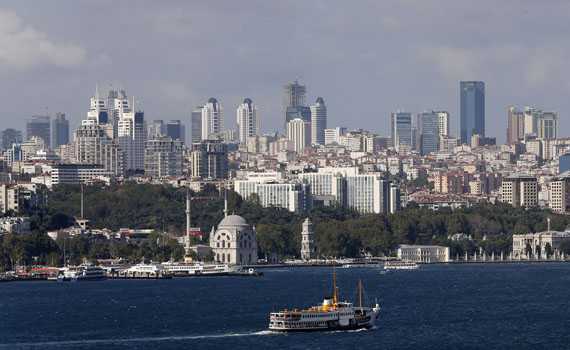
    Asian airlines are expanding partnerships and collaboration with new hubs. Following Singapore Airlines’ expanded partnership with Turkish Airlines and Cathay Pacific’s with Qatar Airways, All Nippon Airways – now Japan’s largest international carrier – is likely to open a service from Tokyo to Istanbul and deepen its partnership with fellow Star carrier Turkish Airlines. This would be the first Japanese service to Turkey, complementing those from other Asian countries including Korea, Malaysia and Singapore. It would also be the first strategic partnership between a Japanese carrier and an airline from a new hub in Turkey/the Gulf.

    The rationale is clean cut. Turkey has become a popular tourist point for Japanese passengers, who would pay a premium to fly on a Japanese carrier to Istanbul. ANA can use Istanbul to open new destinations in Eastern Europe, the Middle East and Africa that it and competitor Japan Airlines cannot reach but Middle East Gulf carriers can.

    ANA’s challenge is tapping these new markets while sustaining its important relationship with the Lufthansa Group, whose seven daily flights to Japan are under a JV with ANA. An expanded Turkish Airlines partnership would have sensitivity in its overlap with Lufthansa, which has recently very publicly terminated most of  its cooperation with Turkish as the fast growing “fourth Gulf airline” increasingly challenged its hub role.

    via ANA service to Istanbul and expanded partnership with Turkish would need balance with Lufthansa | CAPA – Centre for Aviation.

  • Turkey to ban alcohol at Gallipoli

    Turkey is looking to crack down on boozy Aussies and Kiwis at Gallipoli by banning alcohol in the historic area.

    Turkish politicians have backed plans to ban alcohol for Aussies and Kiwis at the Gallipoli site. (AAP)


    Turkish politicians have backed plans to ban alcohol for Australians and New Zealanders who come every year to honour those killed in the World War I Gallipoli campaign.

    Thousands of Antipodeans, many of them young backpackers, gather every April at the historic Gallipoli peninsula to honour their ancestors killed in the 1915 battle of Gallipoli.

    A parliamentary committee on Wednesday voted in favour of a bill introduced by the Islamic-rooted Justice and Development Party (AKP) that would change the status of the Gallipoli peninsula from a national park to a historical area, where consuming alcoholic drinks is strictly banned.

    The bill still needs to be passed by parliament, but the AKP holds a comfortable majority there, a parliamentary source told AFP.

    The dawn ceremony on April 25 marks the first ANZAC landings at the Gallipoli peninsula in the ill-fated Allied campaign to take the Dardanelles Strait from the Ottoman Empire.

    In the ensuing eight months of fighting, about 11,500 ANZAC troops were killed, fighting alongside British, Indian and French soldiers.

    Close to 4500 people made the journey this year for the commemorations, with many spending a boozy night on the beach as they waited for the moment the first shots were fired.

    The proposed bill imposes a fine of 5000 Turkish liras ($A2600) against offenders who drink alcohol outside licensed venues.

    The AKP, which has angered secular Turks by restricting alcohol sales, said the move was in keeping with global standards.

    “We just want to follow the international standards in the ceremony, which is attended by the leaders of 39 countries every year,” Culture Minister Omer Celik said, without elaborating.

    But Ali Saribas, from the main opposition Republican People’s Party (CHP), accused the government of not respecting the culture of people “who come all the way from Australia”.

    “Drinking wine is part of their culture, it’s their heritage. But the government has no respect for it,” he told AFP.

    “I am sure they can find a way of allowing people to make their commemorations as they want, but I doubt they will.

    “These people have been coming here for years and have never bothered the locals. They will either stop coming or try to cover their wine or beer bottles, which will make Turkey look very ridiculous,” he said.

    via Turkey to ban alcohol at Gallipoli | SBS News.

  • NSW Parliament violates UN and Commonwealth laws

    NSW Parliament violates UN and Commonwealth laws

    NSW parliament
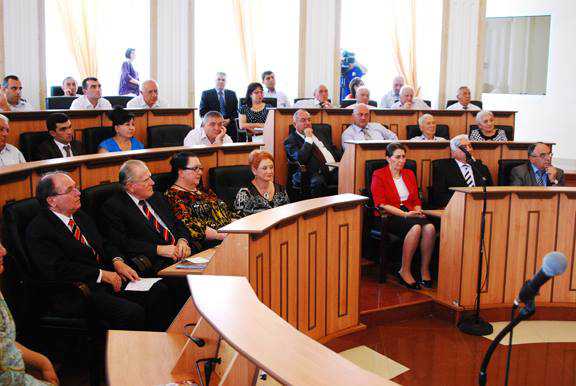
    New South Wales – Australian MPs at Nagorno Karabakh parliament

    In 2012, under the leadership of New South Wales (NSW) Premier, the Hon. Barry O’Farrell, the state parliament of NSW became the first legitimate parliament in the world to pass a motion (in violation of International and Commonwealth laws) granting the illegal occupiers of Nagorno Karabakh the right to self determination, and called upon the Australian government to follow suit.

    It also became the first legitimate parliament in the world to send an official delegation to Nagorno Karabakh, sanctioned by the NSW Premier the Hon. Barry O’Farrell.

  • GCHQ chief to step down by year’s end following Snowden leaks

    GCHQ chief to step down by year’s end following Snowden leaks

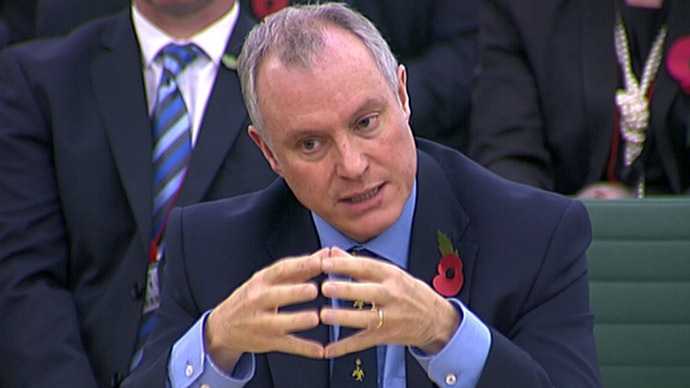
    Iain Lobban the director of GCHQ (Reuters/UK Parliament via REUTERS TV)
    Iain Lobban the director of GCHQ (Reuters/UK Parliament via REUTERS TV)


    The head of GCHQ, Britain’s electronic intelligence agency, will step down by year’s end, the Foreign Office said. Officials denied his departure was linked to public outrage over mass surveillance revelations by NSA whistleblower Edward Snowden.

    Iain Lobban, 53, has served as GCHQ’s director since June 2008. His departure was officially described as a long-considered move, but comes just a few weeks after he was summoned to answer MPs’ questions about surveillance operations in an unprecedented televised open session of the UK parliament’s intelligence and security committee, along with the heads of MI5 and MI6.

    “Iain Lobban is doing an outstanding job as director of GCHQ,” a spokesperson said. “Today is simply about starting the process of ensuring we have a suitable successor in place before he moves on, planned at the end of the year.”

    Officials dismissed suggestions his decision was influenced by revelations made by Snowden, a former National Security Agency (NSA) contractor, whose leaks revealed details of a massive global surveillance network run by the NSA and other members of the so-called Five Eyes alliance – the US, UK, Australia, Canada and New Zealand.

    Despite accounting for the bulk of Britain’s three intelligence agencies’ combined budget of £2 billion, GCHQ had previously attracted far less public attention than MI5 or MI6.

    It was damaging media revelations regarding wide-scale collaboration between GCHQ and the NSA that resulted in Lobban being called to appear before the parliamentary Intelligence and Security Committee alongside the heads of MI5 and MI6 in November.

    At the hearing, Lobban accused Snowden’s disclosures of seriously damaging Britain’s counter-terrorism efforts, saying extremists had discussed changing their communication methods following the revelations.

    Critics, however, have accused GCHQ of working hand-in-hand with the NSA in massively intruding on the private communications of millions of citizens.

    In June, the Guardian reported the NSA had secretly gained access to the network of cables which carry the world’s phone calls and internet traffic, and, by 2010, was able to boast the “biggest internet access” of any member of the Five Eyes alliance.

    According to media reports, the NSA and GCHQ had a particularly close relationship, sharing troves of data in what Snowden called “the largest program of suspicionless surveillance in human history.”

    Around 850,000 NSA employees and contractors with top secret clearance had access to the GCHQ databases, allowing them to view and analyze information garnered from such subtly titled programs as ‘Mastering the Internet (MTI)’ and ‘Global Telecoms Exploitation (GTE).’

    Lobban, who first joined GCHQ in 1983, insisted in November that GCHQ did not spend its time “listening to the telephone calls or reading the e-mails of the majority” of British citizens.

    Sir Iain’s counterpart at the NSA, General Keith Alexander, alongside his deputy, John Inglis, are also stepping down later this year.

    There is also an ongoing campaign pushing for Director of National Intelligence James Clapper to resign for lying under oath by telling Congress the NSA did “not wittingly” collect data on hundreds of millions of Americans.

    RT, 29.01.2014