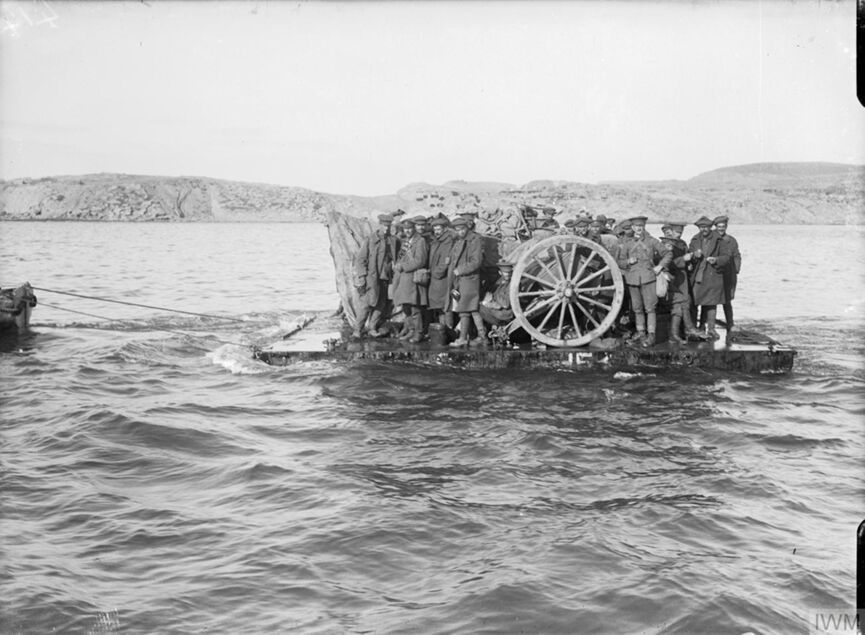
Mocking Çanakkale ( Gallipoli ) Türkiye and Australia. By Portraying a Soccer Match as “Revenge for Gallipoli”
Mocking Çanakkale ( Gallipoli ) for Sports Humor Dishonors the Fallen and Distorts History.
Not on my watch will I stay mute.
The article by Clancy Overell is not clever satire it is a deeply offensive attempt to trivialize one of the most tragic chapters in the shared history of Türkiye and Australia. By portraying a soccer match as “revenge for Gallipoli,” the author reduces the sacrifice of thousands of young men on both sides to a cheap sporting joke and undermines a friendship that was forged through unimaginable loss and later transformed into one of mutual respect and brotherhood.
Gallipoli was never about revenge. It became a symbol of reconciliation. The battlefield of Çanakkale produced not hatred, but a lasting bond between Australians, New Zealanders, and Turks. The men who fought there earned each other’s respect through courage and sacrifice.
In 1915, while defending his homeland, Mustafa Kemal Atatürk told his soldiers: “I am not ordering you to attack, I am ordering you to die.” He later became the founder of the modern Republic of Türkiye and emerged as a statesman dedicated to peace and reconciliation.
His immortal words to the mothers of the fallen ANZACs remain one of the greatest tributes to peace ever spoken:
“There is no difference between the Johnnies and the Mehmets to us where they lie side by side in this country of ours… After having lost their lives on this land, they become our sons as well.”
These words transformed former enemies into friends and created a relationship that has endured for more than a century. Türkiye, Australia, New Zealand, Canada, and many other nations continue to honor that shared history together.
To invoke Gallipoli as a vehicle for mocking Turks or celebrating “revenge” is irresponsible and disrespectful. It does nothing to strengthen understanding between peoples. More troubling, it contributes to a broader pattern of rhetoric that seeks to caricature and delegitimize the Turkish nation and its people.
No article, no headline, and no misguided attempt at humor will damage the brotherhood forged at Çanakkale. The friendship between Türkiye and Australia is built on mutual respect, remembrance, and peace and it is far stronger than the divisive words of any commentator.
Ibrahim Kurtulus
Community Activist
New York – Staten Island.
cc: Permanent Mission of Australia to the United Nations, New York
All The Australian Consulate-General’s in United States
China’s economic transformation over the past forty years has drawn attention not only for its high growth rates but also for a structure that challenges the boundaries of existing economic theories. This transformation has generated new areas of debate, particularly within the literature of development economics and comparative political economy.
Classical modernization theories associate economic development with market liberalization and the spread of liberal democratic institutions. However, the Chinese case demonstrates that this linear relationship is not necessarily obligatory. This calls for a reassessment of existing theoretical frameworks.
The concept of “state capitalism,” often used to explain China’s economic structure, can be illuminating in many respects but may also be reductive. By positioning China as merely a variant of the existing capitalist system, this concept risks downplaying its unique institutional dynamics.
In this context, the fundamental question is not which category China belongs to, but rather through which mechanisms this system operates. This perspective prioritizes analytical inquiry over normative classification.
Thus, the Chinese experience functions as a laboratory that necessitates rethinking the concepts of state, market, and capitalism.
Comparative Analysis of the Concept of the State
In Western political thought, the state is defined within a Weberian framework as a monopoly on the legitimate use of violence and a rational-bureaucratic organization. In this model, the state is treated as a structure relatively autonomous from society and institutionally distinct.
This approach has produced an administrative framework compatible with modern capitalist economies. The rule of law, institutional predictability, and bureaucratic specialization are its core elements.
In China, however, the concept of the state rests on a more holistic historical foundation. The Confucian tradition views political authority as a continuation of moral order and does not sharply separate state and society.
The concept of “Guojia” reflects this holistic understanding. The state is positioned not merely as a governing apparatus but also as the carrier of social order.
Therefore, interpreting the Chinese state solely through a Weberian model is insufficient; institutional structure, historical continuity, and ideological frameworks must be evaluated together.
The Distinction Between Market and Capitalism
Although the market mechanism and the capitalist system are often used interchangeably, these two concepts are structurally distinct. The market is a mechanism that regulates exchange relations and historically predates capitalism.
Capitalism, on the other hand, is a broader system organized around private ownership of the means of production, profit maximization, and capital accumulation. In this system, the market is not merely a distribution mechanism but the central determinant of production relations.
In the Chinese case, while market mechanisms clearly exist, they are constrained and guided by the strong coordinating capacity of the state. Therefore, the presence of markets alone is insufficient to classify the system as capitalist.
The financial system, largely operating through state-owned banks, shapes capital allocation via non-market instruments. This creates a significant divergence from classical financial capitalism.
Thus, in China, the market is not the center of the system but rather a tool structured by the state.
Historical Evolution of the Chinese Model
The Chinese economy during the Mao era was built on a structure based on central planning and state ownership. Economic activities were largely conducted under state control.
However, this model produced significant limitations, particularly in agricultural productivity and industrial output. Rigidity in resource allocation deepened economic imbalances.
The reform process initiated by Deng Xiaoping transformed this structure by integrating market mechanisms into the system. However, this integration did not imply the complete removal of state control.
The concept of a “socialist market economy” was developed to describe this hybrid structure. This model represents the simultaneous use of planning and market mechanisms.
Over time, China has created a unique development path by increasing market openness while maintaining state control in strategic sectors.
Institutional Structure and the Party-State System
To understand the functioning of China’s economic system, the central role of the Chinese Communist Party must be taken into account. The Party is not only the holder of political power but also the main actor in economic coordination.
The relationship between the state and the Party, unlike in classical liberal models, is deeply intertwined. The Party possesses strategic steering capacity over state institutions.
This structure enables the effective implementation of long-term economic planning. Major infrastructure investments and industrial policies, in particular, are carried out rapidly through centralized coordination.
While state ownership continues in strategic sectors, the private sector is encouraged within defined limits. This creates a controlled market environment.
In conclusion, in China, the state functions not outside the market but as its guide and architect.
Comparison with the Soviet Union
The fundamental difference between the Soviet Union and China lies in the management of their reform processes. Both countries attempted transitions from planned economies to more market-based systems.
In the Soviet Union, the reform process progressed alongside political disintegration, leading to a weakening of state capacity. This negatively affected the sustainability of economic transformation.
In China, reforms were implemented gradually and in a controlled manner. Economic liberalization was carried out step by step while preserving the political structure.
This approach maintained institutional stability and made the transformation process more manageable.
Thus, the success of the Chinese model is related not only to the content of reforms but also to their timing and institutional framework.
Theoretical Debates and the Position of the Model
There are various theoretical approaches in the literature on the Chinese economy. This diversity makes it difficult to place the model within a single category.
The state capitalism approach views China as a variant within the market economy characterized by strong state intervention. In this perspective, the market mechanism is considered the dominant element.
The socialist approach emphasizes the determining role of state ownership and planning, reducing the market to an instrumental function.
The hybrid model approach evaluates China as an intermediate form between two systems. This perspective is particularly common in the comparative capitalism literature.
These differences indicate that China possesses a structure that transcends existing theoretical categories.
Conclusion
China’s economic model has a multilayered structure that goes beyond classical economic and political categorizations, making it difficult to define with a single label.
The strong and guiding role of the state constitutes the system’s core characteristic. However, this does not mean that market mechanisms are entirely excluded.
Market elements exist within the system as instruments strategically employed by the state. This complicates conventional definitions of capitalism.
The Chinese case demonstrates that economic systems cannot be fully explained through fixed and universal categories. Instead, historical and institutional contexts must be taken into account.
In conclusion, China stands as one of the most important contemporary examples showing that the relationship between state and market can be redefined.
References
Arrighi, Giovanni. Adam Smith in Beijing: Lineages of the Twenty-First Century. London: Verso, 2007.
Bremmer, Ian. The End of the Free Market: Who Wins the War Between States and Corporations? New York: Portfolio, 2010.
Deng, Xiaoping. Selected Works of Deng Xiaoping. Beijing: Foreign Languages Press, various volumes.
Huang, Yasheng. Capitalism with Chinese Characteristics: Entrepreneurship and the State. Cambridge: Cambridge University Press, 2008.
Milanović, Branko. Capitalism, Alone: The Future of the System That Rules the World. Cambridge, MA: Harvard University Press, 2019.
Naughton, Barry. The Chinese Economy: Transitions and Growth. Cambridge, MA: MIT Press, 2007.
North, Douglass C. Institutions, Institutional Change and Economic Performance. Cambridge: Cambridge University Press, 1990.
Polanyi, Karl. The Great Transformation: The Political and Economic Origins of Our Time. Boston: Beacon Press, 1944.
Weber, Max. Economy and Society. Berkeley: University of California Press, 1978.
Zhang, Weiwei. The China Wave: Rise of a Civilizational State. Hackensack: World Scientific, 2012.
Naughton, Barry. “The Chinese Economy: Adaptation and Growth.” (various articles and edited volumes).
Oi, Jean C. “The Role of the Local State in China’s Transitional Economy.” China Quarterly, 1992.
Walder, Andrew G. “Local Governments as Industrial Firms.” American Journal of Sociology, 1995.
Danish ethnographer and social anthropologist (MA) Aarhus University, 1997 Independent Researcher Fields of Research: International Politics, Public International Law, Geopolitics, Sociology, Psychology, Cultural Studies, Systems and Structures
As we approach the end of the first quarter of the 21st century, it has become widely accepted that the unipolar world order dominant in the post-Cold War era is experiencing a deep crisis of legitimacy and functionality. This Atlantic-centered order oppresses the Global South through military interventions, economic sanctions, debt mechanisms, and regime change operations. The paralysis in the UN Security Council’s decision-making processes, the social devastation caused by the structural adjustment programs imposed by the IMF and World Bank, and NATO’s escalation of conflicts contrary to its deterrence rhetoric all indicate that current international organizations cannot function without reform. Amidst this systemic crisis, new regional and intercontinental collaborations that could serve as alternatives to the existing order are being intensely debated in various academic, political, and strategic circles.
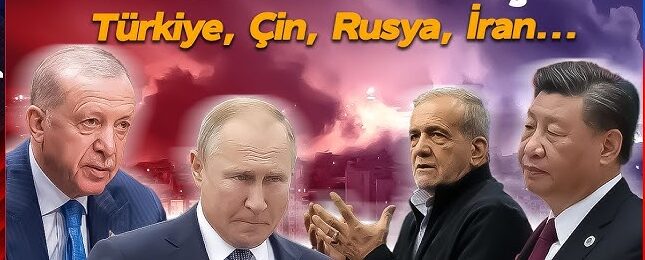
One proposition at the center of these debates is a hypothetical axis or alliance comprising Turkey, Russia, Iran, and China. This structure, which as yet has no institutional existence, binding treaty text, or joint military command, has begun to establish itself in the literature as a powerful geopolitical vision and anti-systemic discourse.
The TRIC Axis as a Geopolitical Proposition: Hypothetical Ground and Definition
For any political project or alliance proposal to be seriously evaluated, the historical and structural ground that makes it possible must first be laid out. The idea of the TRIC axis draws nourishment from the fact that all four actors have been subjected to various forms of Western imperialism at different points in history. This shared consciousness of victimhood is the fundamental element that constructs the alliance proposal not as an emotional camaraderie but as a structural necessity. The partition of the Middle East with artificial borders following the collapse of the Ottoman Empire, China’s “Century of Humiliation” in the 19th and 20th centuries, Russia’s total security, economic, and demographic crisis after its collapse in the 1990s, and Iran’s international isolation since the 1953 coup against Mossadegh have all prepared the ground for these four countries to develop a common critique of the system.
These four actors share three fundamental weaknesses of the current international system. The first is the lack of a say in the security architecture. Turkey’s secondary position within NATO’s decision-making processes, Russia being made a direct threat object of the alliance, Iran’s exclusion from regional security arrangements, and China’s encirclement by military bases in the Pacific constitute a shared experience of insecurity. The second is subjection to the debt-inducing policies of international financial institutions. The structural adjustment programs of the IMF and World Bank have weakened the economic sovereignty of all four countries at different times; China stands out as the only major country that has succeeded in development by keeping these programs at bay. The third is that energy and trade routes are threatened by Western-controlled naval power. The control of critical maritime chokepoints like the Strait of Hormuz, Bab el-Mandeb, the Suez Canal, Gibraltar, and the Strait of Malacca by the US and allied navies directly threatens the supply chain security of all four countries.
The structural logic of the proposed alliance is based on the idea of transforming these three weaknesses around a common axis. Instead of the vicious cycle the West calls the “security dilemma,” the TRIC proposal aims to introduce a “development dilemma.” This conceptual innovation proposes a competition based on which country can eradicate poverty faster, produce greener energy, and train more scientists, replacing the current system where military expenditures compete with each other and constantly produce conflict. However, this conceptual framework remains a vision yet to be translated into concrete political will.
Asymmetric Contributions and Complementarity Potential of the Four Actors
The success or failure of any alliance depends on the members’ ability to cover each other’s weaknesses and turn strengths into synergy. In the TRIC proposal, each actor possesses different and potentially complementary areas of strength. This complementarity forms the proposal’s strongest theoretical foundation. However, realizing this potential depends on overcoming historical rivalries and mistrust among the actors, which has not yet been achieved today.
Turkey, with its geopolitical position and humanitarian diplomacy capacity, aims to serve as a bridge between land and sea power. Located at the intersection of Europe, Asia, and the Middle East, with its coastline on the Black Sea, control over the Straits, and presence in the Eastern Mediterranean, Turkey is positioned as the alliance’s gateway to the West. One of the most significant contributions Turkey could offer the axis is its technical military know-how acquired within NATO and its progress in unmanned aerial vehicle technology. Furthermore, the successful grain corridor initiative during the Ukraine-Russia war, mediation efforts between Gulf countries and Iran, and diplomatic initiatives in the Horn of Africa have concretely demonstrated Turkey’s crisis management capacity. However, Turkey’s energy dependence on imports, chronic current account deficit, and struggle with high inflation are the biggest obstacles to its ability to provide a sustainable contribution within the alliance.
The Russian Federation, with its nuclear deterrence, vast natural gas and oil reserves, and hypersonic missile technology, has the potential to form the military and energy backbone of the TRIC proposal. The fact that the Russian economy has not completely collapsed despite the comprehensive sanction regimes imposed by the West after 2014 and especially in 2022 demonstrates the strategic importance of its energy resources and the resilience mechanisms the country has developed against sanctions. Russia’s military presence in Syria, Libya, and the Sahel region could serve as a logistical springboard for the proposed alliance to extend into Africa and the Middle East. However, Russia’s demographic decline, increasing technological dependence on China, and long-term technology transfer constraints due to exclusion from the Western financial system limit its role within the alliance.
Iran stands out with its control over the energy corridor between the Persian Gulf and the Caspian Sea, and its economy of resistance model developed under sanctions. Progress in nuclear technology, space studies, biotechnology, and nanotechnology despite sanctions shows that external pressure cannot completely stifle innovation. Iran’s proxy structures in Iraq, Syria, Lebanon, and Yemen have the potential to deepen the proposed alliance’s sphere of influence in the Middle East. Additionally, the 25-year comprehensive strategic agreement signed with China provides a concrete legal basis for Iran’s integration into the TRIC axis. Conversely, Iran’s long-standing international isolation, structural problems in its banking and financial system, and internal tensions due to social pressures complicate its full integration into the alliance.
The People’s Republic of China, as the world’s largest economy by purchasing power parity, is designed as the economic locomotive of the TRIC proposal, with the financing and infrastructure technologies offered within the framework of the Belt and Road Initiative. In fifth-generation mobile communication, artificial intelligence, high-speed rail, solar and wind energy technologies, China has surpassed most of its Western rivals. As the founder of non-Western financial institutions like the Asian Infrastructure Investment Bank and the New Development Bank, China claims to offer a financing model based on non-debt-inducing win-win principles. The comprehensive strategic partnership with Russia and the long-term agreement with Iran place China at the de facto center of the TRIC proposal. However, China’s rapidly aging population, debt crisis in the real estate sector, export pressures due to contracting global demand, and regional tensions such as Taiwan and the South China Sea limit the resources the country can allocate externally.
None of these four actors alone has the capacity to challenge Western alliances. However, the complementarity in energy (Russia, Iran), manufacturing and finance (China), geopolitical reach and diplomacy (Turkey), and military deterrence (Russia, China) promises strong synergy at a theoretical level. The core thesis of the proposal is that this synergy could form a balancing element against the unipolar system.
Strengths of the Proposal and the Vision It Offers
Before assessing the feasibility of the TRIC axis proposal, it is necessary to deeply understand its strengths and the vision it offers. The proposal’s greatest strength is its reliance on the rising tide of anti-Western sentiment across large swathes of the Global South. Many countries in Africa, Asia, and Latin America complain about the injustices of the current order and look favorably upon the formation of an alternative pole. The appeal of the TRIC proposal for these geographies is its promise of a cooperation model that does not indebt, does not impose military bases, and does not interfere in internal affairs.
The second strength of the proposal is that it targets the current war economy. Today’s world is held captive by arms lobbies, war contractors, and manufactured threats. The TRIC proposal aims to break this bloody cycle and build a war-free economic model. In this model, no African mineral, no Asian labor, and no Middle Eastern petrodollar would flow to Western banks; the value produced would remain in the pockets of the producers. Furthermore, one of the proposal’s fundamental principles is the understanding that “no problem is unsolvable without shedding innocent blood.” Global issues like border disputes, water crises, and migration waves are expected to be resolved through negotiation, justice, and common sense.
The third strength is the proposal’s historical depth and civilizational backbone. These geographies along the Silk Road route have carried trade, knowledge, and culture for millennia. The artificial nation-state borders imposed by Western imperialism disrupted these organic ties. The TRIC proposal, by aiming to re-establish ancient connections rather than building new physical walls, is conceived not merely as a geographical bloc but also as a civilization project.
Weaknesses of the Proposal and Concrete Obstacles
Although the TRIC proposal offers a powerful vision, the concrete obstacles it faces are at least as serious as the vision itself. Foremost among these obstacles are historical rivalries and deep mistrust among the four countries. There are several points of tension between Turkey and Russia, including the military presence in Syria, the struggle for influence in Libya, the status of the Black Sea, and differences in approach to the Ukraine war. Between Turkey and Iran, there is indirect competition in Iraq, Syria, and the Caucasus, especially as Ankara has entered a normalization process with Saudi Arabia and Israel, while Tehran remains a regional rival to these countries. Between China and Russia, the rivalry for influence over the Central Asian republics persists behind the rhetoric of strategic partnership.
The second major obstacle is the profound differences between the legal systems, political regimes, and economic models of the four countries. Turkey’s NATO membership and customs union with the EU, Russia’s cautious approach to integration with China, the problem of institutional compatibility between Iran’s theocratic governance structure and secular countries, and the difference between China’s state capitalism and the mixed economy models of the other three make integration extremely difficult. An alliance requires a common currency, joint military command structure, joint intelligence-sharing mechanism, or at least a binding treaty text – none of which exist today.
The third obstacle is China’s core foreign policy principle of non-interference. China has historically avoided binding military alliances and has never established a formal allied relationship with any country. This principle makes it extremely difficult for China to be a founding partner of a military-political alliance like TRIC. China prefers more flexible and conjunctural forms of cooperation (SCO, BRICS, Belt and Road). Moreover, the deep economic interdependence between China and the US (an annual trade volume exceeding $600 billion) is another factor preventing Beijing from being part of an alliance directly confronting Washington.
The fourth obstacle is the anti-Israel stance at the heart of the TRIC proposal and the goal of establishing a common, secular, democratic state on Palestinian land. This goal directly contradicts established diplomatic frameworks of international law and the two-state solution. Furthermore, Turkey’s recent normalization process with Israel directly contradicts Iran’s rigid stance on this issue, demonstrating that even on the Palestine question, the four countries cannot achieve full consensus.
Global Repercussions and Regional Participation Scenarios
The global repercussions of the TRIC proposal, should it materialize, and the potential forms of participation by other regions constitute another dimension requiring serious evaluation. The proposal is conceived not as a static bloc but as a dynamic structure expanding towards surrounding regions. In this expansion scenario, Asia is progressing towards integration under the leadership of China and Russia. India, Indonesia, Pakistan, and the Central Asian republics have the potential to be integrated into the TRIC axis under the umbrella of BRICS and the SCO. The main attraction for these regions is the absence of rigid structural reforms imposed by US-centered financial institutions and the rapid implementation of infrastructure investments.
The African continent is seeking to complete its post-colonial transformation. The continent, whose resources have been exploited for centuries and whose borders were drawn artificially, encounters in the TRIC proposal a promise of hospitals, schools, factories, and debt relief mechanisms. China’s mining and infrastructure investments in Africa, Russia’s security cooperation, Turkey’s humanitarian aid and construction contracting, and Iran’s technology transfer offers increase the proposal’s attractiveness in Africa. However, the presence of French and British spheres of influence in Africa, the continent’s fragmented structure, and governance problems are serious obstacles to full participation.
In Europe, the proposal envisions a partial participation scenario. Germany, France, and Southern European countries are defined as actors discontented with the oppressive NATO umbrella of the US and energy dependence. The TRIC proposal claims to offer these countries an independent energy and security policy. However, the institutional commitment of European countries to NATO and the EU, the depth of transatlantic relations, and the existing mistrust towards Russia make the likelihood of this scenario extremely low.
In the Americas, Latin America has the potential to be integrated into the proposal through Bolivarian countries, Brazil, and Mexico. The rejection of the century-old Monroe Doctrine and historical resistance to US hegemony make this region a potential friendly axis for the TRIC proposal. However, internal political instabilities in Latin America, the depth of the US military and economic presence in the region, and even China’s own cautious approach to the region render this participation scenario uncertain as well.
Conclusion: TRIC as a Vision and Notes for the Future
As a geopolitical proposition, the TRIC axis is a significant intellectual contribution that draws attention to the deep crisis of the current order and emphasizes the necessity of transitioning to multipolarity. The proposal builds a powerful narrative articulating the demands of the Global South for justice, equality, and sovereignty against the Western-centered system of exploitation and domination. The critique of Zionism, shaped particularly around the Palestinian cause, and the rejection of imperialist wars form the conscientious and moral ground of the proposal.
However, this proposition has not yet become a political reality. Currently, there is no binding alliance agreement, joint military command structure, or common foreign policy mechanism between Turkey, Russia, Iran, and China. Existing cooperation remains limited to the level of the Shanghai Cooperation Organisation, BRICS, and bilateral agreements, none of which constitute a military-political alliance. For the proposal to materialize, historical rivalries between the four countries must be overcome, a shared threat perception must become permanent, China’s traditional reticence towards forming alliances must be broken, and the four countries must achieve full consensus on fundamental foreign policy issues such as Palestine, Ukraine, and Syria.
As of today, TRIC is a vision pointing to a possible future, not an existing geopolitical reality. Therefore, any evaluation on the subject must consider the proposal’s hypothetical nature and take into account the concrete power relations of the current international system. The proposal’s greatest success is keeping alive the idea that an alternative world is possible and preparing the ground for questioning the existing order. Since no transformation is possible without such questioning, the TRIC proposal remains a contribution worthy of discussion and development. The desire for the ledger of oppression to be closed and for peace to be established in a new world is the most fundamental human motivation behind the proposal.
Bibliography
Aydın, M. (2021). New Axes of Turkish Foreign Policy: Between East and West. Istanbul: İletişim Publications.
Cooley, A. (2019). The New Great Game: Geopolitical Struggle in Central Asia. Istanbul: Koç University Press.
Kissinger, H. (2014). World Order. Istanbul: Boyner Publications.
Mankoff, J. (2022). Russia’s Grand Strategy: Putin Era Foreign Policy. Ankara: Siyasal Kitabevi.
Mearsheimer, J. J. (2014). The Great Strategy Delusion: The Collapse of Liberal Hegemony. Ankara: Phoenix Publishing House.
Shanghai Cooperation Organisation Official Website. (2024). Member States and Observers. Retrieved from: https://eng.sectsco.org/
Republic of Turkey Ministry of Foreign Affairs. (2023). Turkey-Russia Relations in a Multipolar World. Ankara: Center for Strategic Research Publications, Ministry of Foreign Affairs.
Waltz, K. N. (2010). Theory of International Politics. (Trans. O. Kürç). Ankara: Pharmakon Publications.
Yanık, L. K. (2020). Geopolitical Codes: Turkey’s Regional Vision. Ankara: Dipnot Publications.
Zhao, S. (2019). Chinese Foreign Policy: The Belt and Road Initiative and Its Global Impacts. Istanbul: Bilgi University Press.
Sefa Yürükel
Danish ethnographer and social anthropologist (MA) Aarhus University, 1997 Independent Researcher Fields of Research: International Politics, Public International Law, Geopolitics, Sociology, Psychology, Cultural Studies, Systems and Structures
Ji Hyun Kim – Wisdom Korean War Veteran Organization of Media Representative Astoria – Queens – New York
Dear Wisdom,
Warm greetings to you.
For more than 25 years, you have honored our community through your heartfelt representation of the heroic Turkish Korean War Veterans. Many of us in the Turkish-American community know this well, including numerous Turkish military officers who have served in New York throughout the last quarter century. In fact, past Turkish Military Advisors still ask about your health and remember your dedication with great appreciation.
My dear friend, I write to you with a sincere and respectful request: that you kindly refrain from sending further correspondence to the current Consul General of Türkiye, Mr. M. Ahmet Yazal. Unlike his predecessors who valued your efforts, engaged with the community, and showed genuine respect Mr. Yazal has not demonstrated the qualities deserving of the honor you traditionally extend to the office of the Consul General Figures such as Volkan Bozkır, Yusuf Buluc, Fuat Tanlay, Mehmet Nuri Ezen, Ömer Önhon, Mehmet Samsar, Mustafa Levent Bilgen, Ertan Yalçın, Alper Aktaş, and Reyhan Özgür.
Most painfully, Mr. Yazal refused to attend the funeral of the highest-ranking and most decorated Turkish Korean War Veteran in the United States, who passed away in January 2025. This veteran was not only honored by the United States military for his heroism, but was the most decorated Turkish veteran recognized in America for his service during the Korean War. For our community, his funeral was a moment of profound respect and national pride. For Mr. Yazal, it was a moment ignored. We view this as an insult not only to the memory of a heroic Turkish soldier, but to the dignity of the Turkish nation itself.
No Consul General in our community’s history has shown such disregard. For more than 40 years, we have not seen a Consul General perform so poorly in representing the Republic of Türkiye or in engaging the community that funds and supports the very institution he represents.
A Consul General’s role is not merely ceremonial. It is a position funded by taxpayers, meant to maintain relationships, foster diplomacy, support citizens of the sending state, and actively engage with community, civic organizations, veterans, religious leaders, city officials, diplomats, and Americans of goodwill. When this engagement breaks, the mission of the Consulate suffers and the image of Türkiye is damaged.
For these reasons, I am urging friends in our American community including diplomats, veterans’ organizations, civic leaders, and city officials to suspend engagement with Mr. Yazal. He has not earned the respect nor the honor you have so generously extended to previous Consul Generals who valued your contributions and the contributions of our veterans.
You have always stood with those who served this nation and the Republic of Türkiye. Your moral clarity has never gone unnoticed, and it continues to inspire those of us who believe that respect must be earned, not assumed.
With my highest regards and respect,
Ibrahim Kurtulus
Honorary South Korean Citizen Honorary Korean War Veteran
Frankly, I believe Trump is deliberately trying to stop the brain drain to America.
The anti-immigrant movement, strict visa requirements, and deportations for trivial reasons are creating deep anxiety among students, tourists, and those who want to do business with the United States.
Just a few days ago, they raided Hyundai’s factory.
For minor paperwork issues or even arbitrary reasons, people were handcuffed from behind as if they were prisoners of war.
Hyundai even issued a warning for those planning to travel to America.
As far as I can see, U.S. tourism has also collapsed.
These are all deliberate obstacles.
The tariffs are an additional deterrent.
Even John Deere, a domestic and national American company, decided to move all of its investments to Mexico under pressure.
Companies operating in the Great Lakes region in cooperation with Canada have been put in a difficult position.
U.S. companies forced by Washington to relocate their investments from China to India have also run into trouble.
Trump’s open territorial claims toward Mexico, Canada, Denmark, and Panama have created shock in the Western world.
His humiliating behavior—such as seating Western leaders below him—or Vice President J.D. Vance wagging his finger and using threatening language against them, are all carefully noted incidents.
The MAGA movement has been hijacked.
Zionists have stolen the movement through Trump.
None of the current actions align with the true agenda of MAGA.
Even American strategists admit that the higher interests of the United States are being trampled.
And they all, unfortunately, concede that there is no choice but to bow to the power of the Jewish lobby.
Trump and his team are deliberately dismantling the Western alliance.
They are trying to create division and polarization within the U.S.
They knowingly empower the arguments of Confederates.
They are intentionally violating the constitutional rights of the united states that make up America.
They are working to undermine the U.S. judiciary, as well as the military and civil bureaucracy.
It is as if they are pursuing the doctrine of *Ab Ordo Chaos*—first destroy, then rebuild.
Every move they make serves only to delay, obstruct, and weaken America’s military and economic confrontation with China—ultimately buying China more power and time.
Trump is a puppet.
The oligarchy pulling his strings has already made its decision.
They will dismantle the U.S. in every sense.
They will plunder all of its wealth.
They will exploit America’s military and economic strength to the last drop.
And once it is completely drained, they will leave it to fend for itself—fractured by endless economic, political, and religious strife.
The Honorable Sinan Kuzum Consul General Consulate General of the Republic of Türkiye Los Angeles, California
Subject: Deep Appreciation for Your Participation in the Korean War Commemoration Ceremonies
July 3, 2025
Dear Consul General Kuzum,
On behalf of the Turkish-American community and as an Honorary South Korean Citizen and Honorary Korean War Veteran recognized by the Republic of Korea, I extend my heartfelt appreciation for your meaningful participation in the Korean War Commemoration Ceremonies held in Los Angeles.
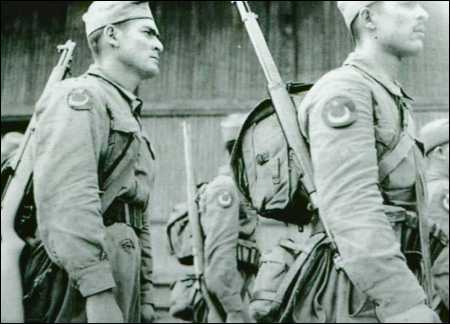
Your presence was not only a diplomatic duty it was a profound act of remembrance and honor for the brave Turkish soldiers who wrote history with their blood on the fields of Korea. These heroes, far from their homeland, fought and sacrificed their lives for a people they had never met—forming a lasting legacy of brotherhood between Türkiye and South Korea.
By taking part in these ceremonies, you upheld the dignity of our veterans and honored the deep, enduring ties between the Turkish and Korean peoples. These events also highlight the broader significance of the alliance between Türkiye and the United States—one that was strengthened through our joint sacrifices in Korea and continues today through our shared commitment as NATO allies.
Sadly, not all representatives have shown the same level of honor and awareness. Some, including former Ambassador Murat Mercan then servicing as Deputy Consul general of New York Emre Manav, have disrespected and overlooked the sacrifices of our Turkish Korean War veterans. Your actions stand in stark contrast: you chose the path of remembrance, gratitude, and truth. You gave voice to the legacy of our veterans who returned not only with medals but as sons embraced by the Korean people a symbol of the unbreakable bond forged in the crucible of war.
Consul General Kuzum, I deeply respect and commend your leadership. You have set a powerful example for your colleagues by showing that honoring the past is essential to shaping a dignified and meaningful future. I sincerely thank you for not forgetting our brave veterans, and for carrying forward their legacy with the respect and reverence they deserve.
With profound gratitude and admiration,
Ibrahim Kurtulus
Honorary Korean War Veteran Honorary Citizen of the Republic of Korea Community Activist & Friend of the Turkish-Korean Brotherhood