Category: Turkiye

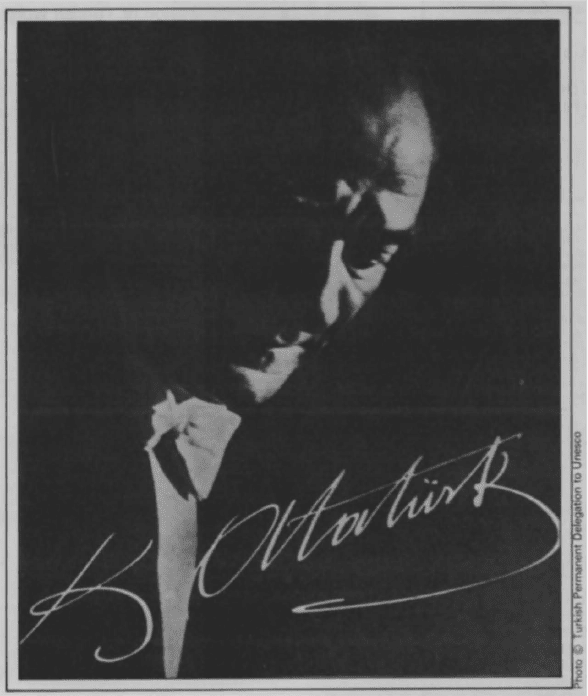
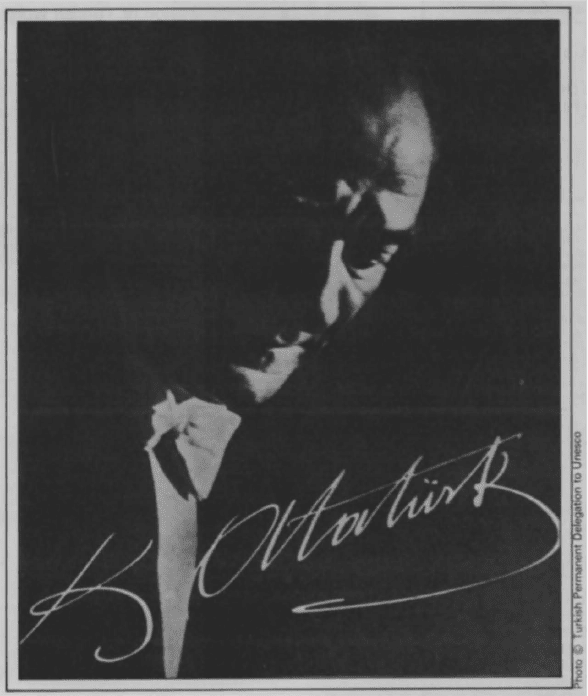
  • Atatürk on the Records of UN General Conference

    Atatürk on the Records of UN General Conference

    In the decision dated 27 November 1978,

    The General Conference,
    Convinced that eminent personalities who worked for international understanding, co-operation, and peace, should serve as an example for future generations,
    Recalling that the hundredth anniversary of the birth of Mustafa Kemal Atatûrk, the founder of the Republic of Turkey, will be celebrated in 1981,
    Bearing in mind that he was an exceptional reformer in all the fields coming within Unesco’s competence,
    Recognizing in particular that he was the leader of one of the earliest struggles against colonialism and imperialism,
    Recalling that he set an outstanding example in promoting the spirit of mutual understanding between peoples and lasting peace between the nations of the world, having advocated all
    his life the advent of ‘an age of harmony and co-operation in which no distinction would be made between men on account of colour, religion or race’,

    1. Decides that Unesco shall co-operate on the intellectual and technical planes with the Turkish Government for the organization in 1980, at that Government’s financial expense, of an international symposium designed to bring out various aspects of the personality and work of Atatürk, the founder of the Republic of Turkey, whose action was always directed towards the promotion of peace, international understanding and respect for human rights;
    2. Requests the Director-General to take the necessary steps for the implementation of this resolution.

    Source: https://treaties.un.org/doc/source/docs/unesco_res_5_9.2_1-E.pdf

  • The Russians are Coming: Still Seeing Red

    The Russians are Coming: Still Seeing Red

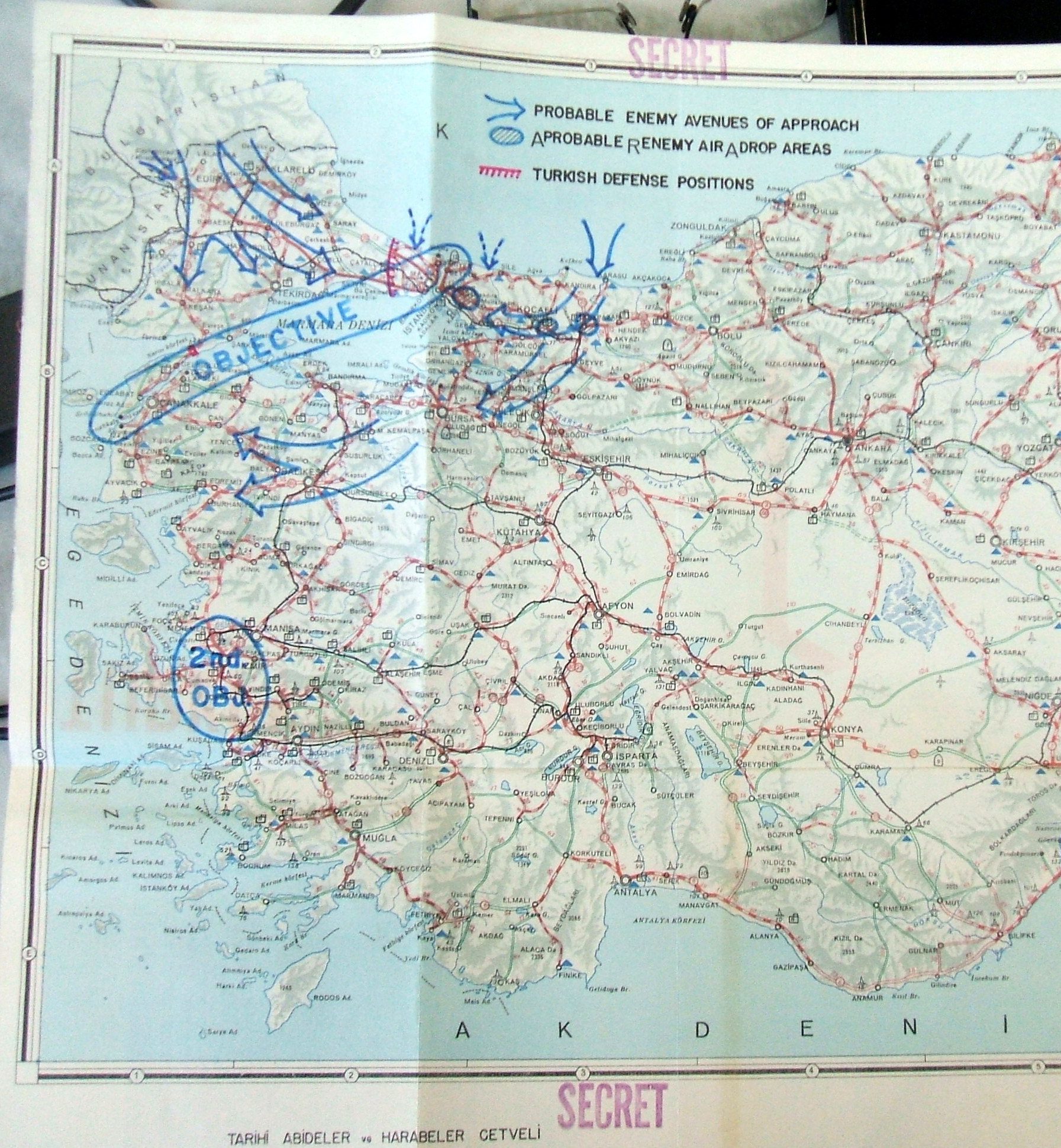
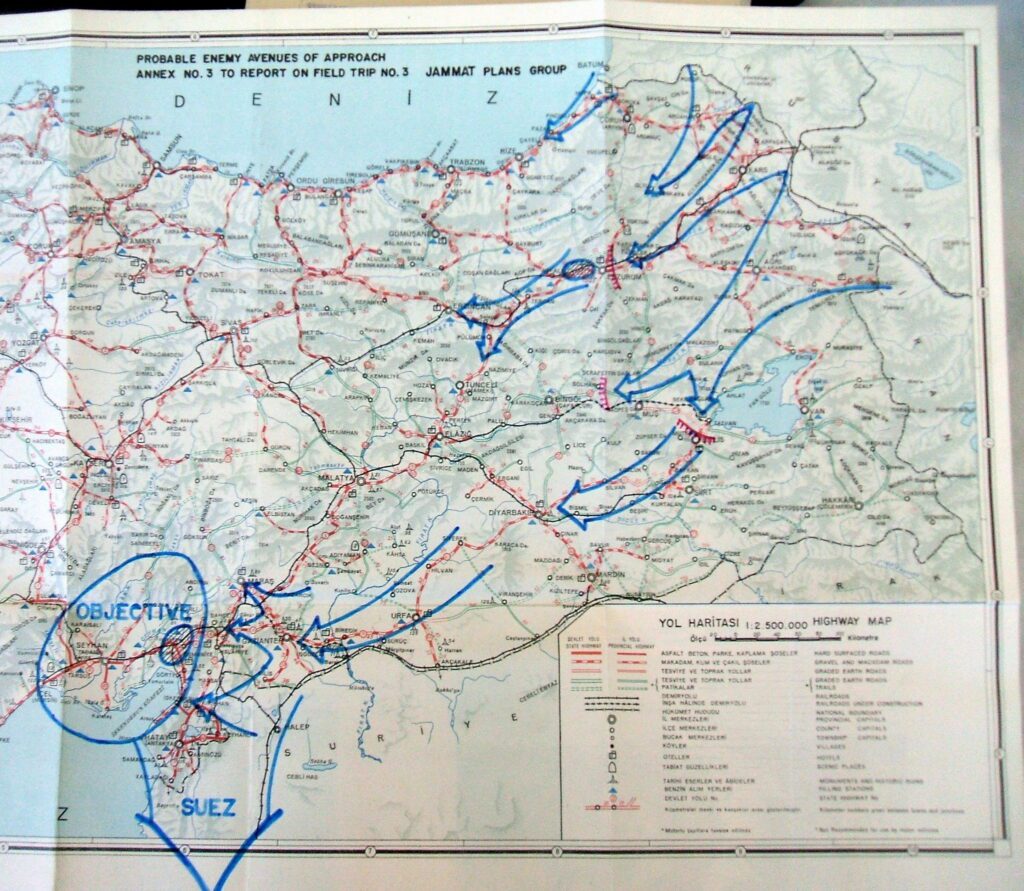
    Probable Enemy Avenues of Approach

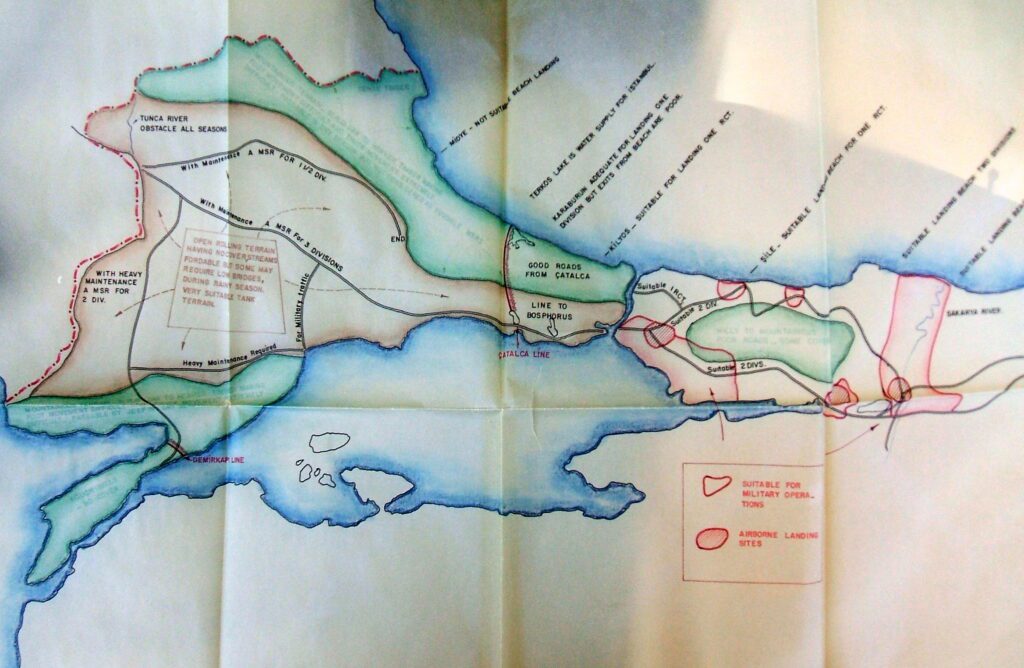
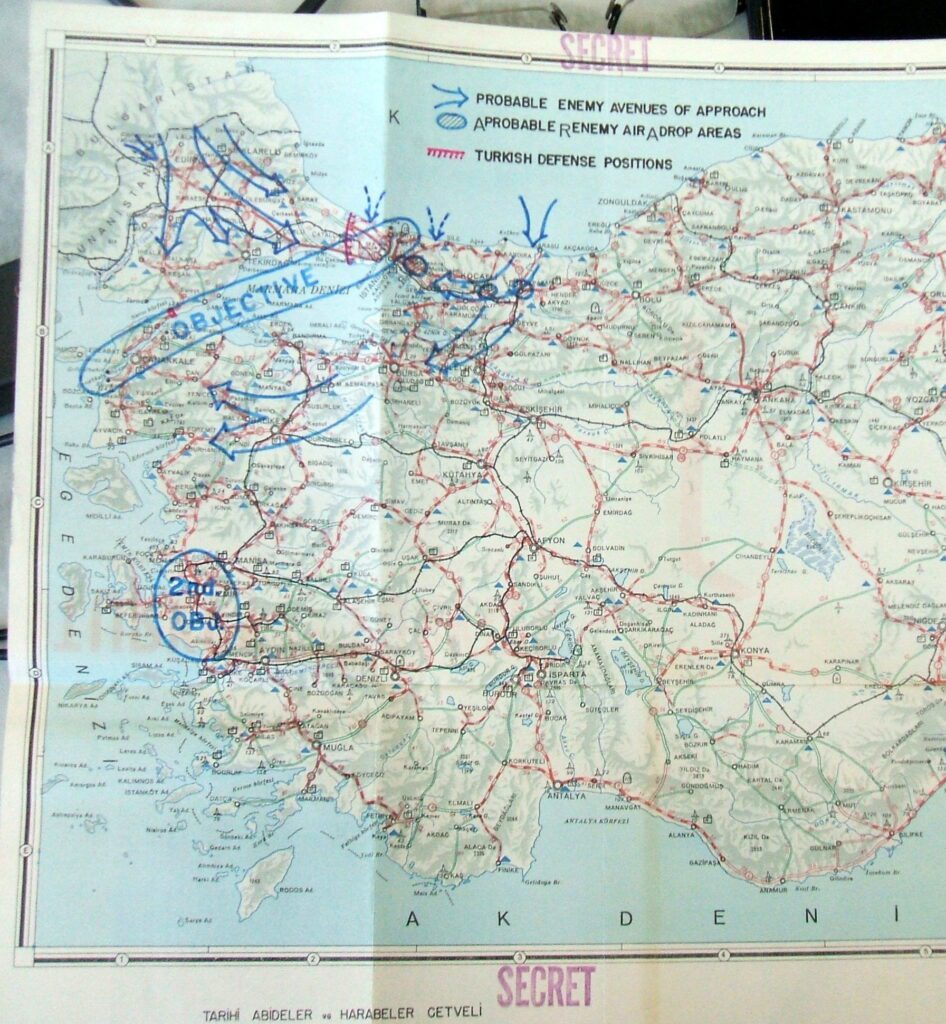
    30 years later, of course, Turkish-Russian relations were even worse. These maps, from the Joint American Military Mission for Aid to Turkey reflect early cold war American expectations about how the communists would attack Turkey. Though a good deal of strange conspiracy theories have arisen from the mistaken assumption that whatever the military makes plans for reflects its official policy, these maps at the very least are a reminder that at the time, an invasion like this and the world war it would trigger were considered real possibilities.


    A direct attack on the straights accompanied by an invasion from Bulgaria

    The Turkish defense of Istanbul at this time was centered around the Catalca line, running across Thrace on the raised ground north of Buyukcekmece, the same point where the Ottoman army held off Bulgarian forces in 1913. A more controversial subject, between American military planners and their Turkish colleagues, was where America would mount its defense. One plan, understandably unpopular with Turkish leaders, involved writing off most of Anatolia and trying to stop the Russian advance into the Middle East at the Taurus mountains north of Adana.

    Finally, though not suitable for an amphibious landing, Midye, now called Kiyikoy, is a delightful place for a weekend trip from Istanbul.

    Source: midafternoonmap.com/2013/01/the-russians-are-coming-or-still-seeing.html

  • The AKP in Pursuit of a Political Strategy

    The AKP in Pursuit of a Political Strategy

    Turkey’s government will implement populist and nationalist policies at home and abroad ahead of the 2023 elections, potentially triggering fiscal (worldview.stratfor.com/article/search-quick-win-erdogan-gambles-turkey-s-economic-future), economic, diplomatic and/or military crises. Uncertain about its electoral prospects in 2023, the governing Justice and Development Party (AKP) will pursue policies designed to curry favor with its traditional Islamist-nationalist base. It will seek to appeal to Islamists by citing religious tenets to justify controversial policies like keeping low interest rates at the central bank and weakening human rights protections if they contravene local religious values. To appeal to nationalists, it will initiate limited confrontations with the European Union in the Eastern Mediterranean, with the United States over Turkey’s defense ties with Russia, and with Russia over Turkey’s continued military intervention in Russian ally Syria. Though the AKP will, of course, try to avoid triggering a crisis, it is not positioned to ensure its high-risk policies do not spur unprecedented inflation, further capital flight and even a major debt crisis in 2022; its management of the lira is especially fraught. Meanwhile, Turkey’s more aggressive foreign policy could trigger fresh sanctions from the European Union and/or the United States. And if Russian (worldview.stratfor.com/article/syria-kurdish-attack-risks-triggering-new-turkish-offensive) and Turkish forces clash and there are significant casualties on either side in Syria, the military confrontation could spread to other theaters where Turkey and Russia back opposing sides, like Ukraine and the Caucasus. 

    Enjoy ??Cheerio !!!~

    CASH IS KING
    IN GOD WE TRUST
    Richard C De Graff

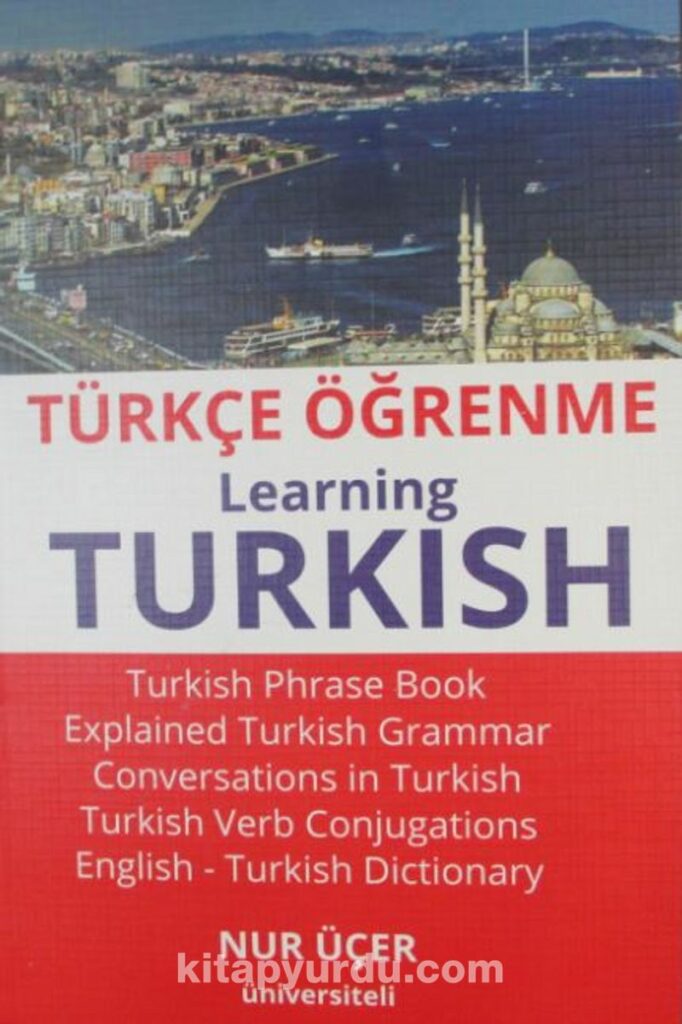
  • Turkish Phrase Book

    Turkish Phrase Book

    Nur Üçer İletişim Bilgisi-Nur Üçer Contact Information:

    [email protected]

    Kitap Satışı için irtibat/Contact for Book Sale:

    [email protected]

    GSM: 0532 405 68 41

    Links to buy Turkish Phrase Book and Nur Üçer’s All books

    1. Amazon:

    1. Trendyol:

    https://www.trendyol.com/sr?q=nur%20%C3%BC%C3%A7er&qt=nur%20%C3%BC%C3%A7er&st=nur%20%C3%BC%C3%A7er&os=1

    TURKISH PHRASE BOOK CONTENT

    • Turkish Alphabet and Pronunciation
    • Turkish Terms and Expressions
    • Easy Guide to Grammar
    • Turkish Verb Conjugations
    • Conversations in Turkish
    • English-Turkish Dictionary

    PRETESENTATION

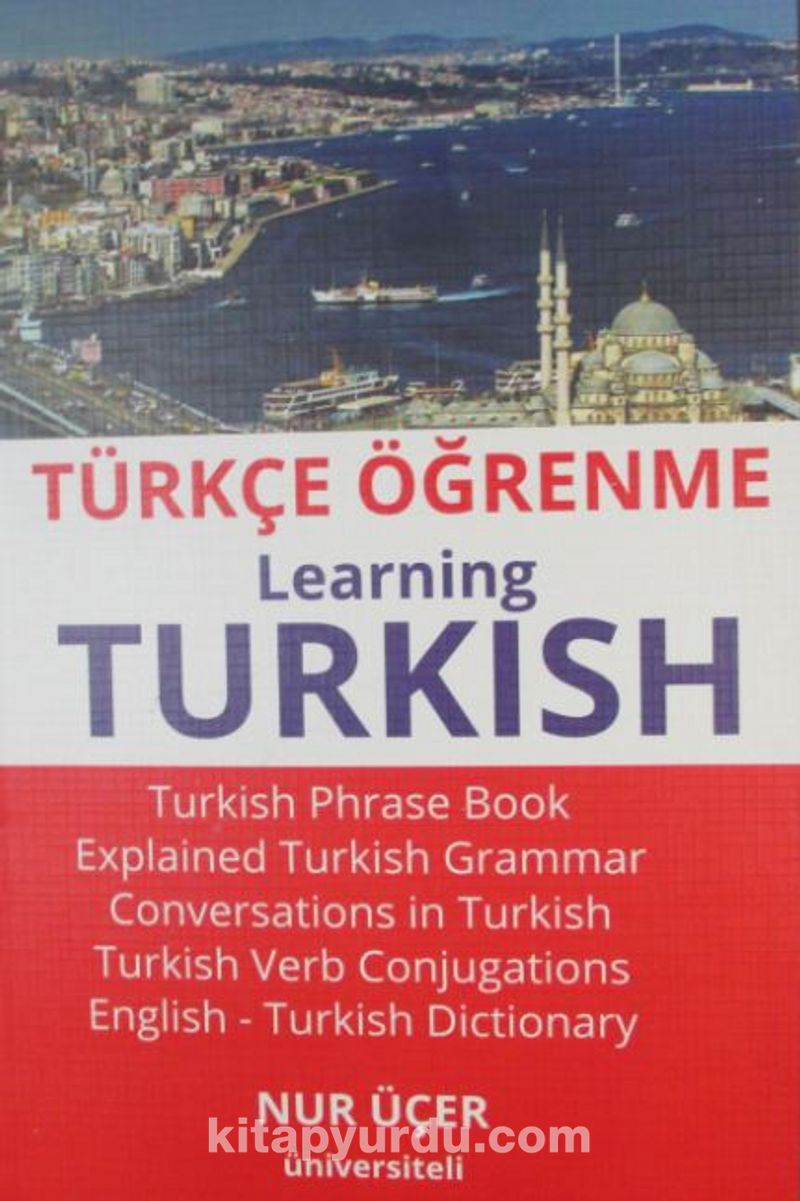
    Turkish Phrase Book will enable you to learn English effectively. The book, prepared with an innovative approach, contains the updated expressions and words required for practical use.

    The book consists of five basic parts. In the first part, the most common Turkish terms and expressions on various topics are emphasized. In the Grammar part, with the help of tables, basic grammar rules of Turkish are explained as well as practical grammar knowledge is included. In the Dictionary section, English words are provided in accordance with the most frequently used Turkish words. In addition, there are Turkish verb conjugations. With the help of Conversations in Turkish, Turkish learners and those who would like to learn Turkish will utilize the book productively. 

    With this work, the readers will have the opportunity to learn and practice the Turkish equivalents of phrases and terms spoken in Turkish.

    WHY SHOULD WE LEARN TURKISH?

    • Turkish is an Ural-Altaic language.  All Turkic languages belong to the Altaic language family. 
    • Turkish is one of many Turkic languages spoken in the world and is the official language of the Republic of Turkey and the co-official language of Cyprus. It is also a recognized minority language in some of the Balkan Countries.
    • In Turkey, since 1928, Turkish has been written with a Latin alphabet and its alphabet resembles other Latin-based alphabets such as German, English, French or Spanish. 
    • Modern Turkish is used in all areas; official, cultural and literary.
    • Turkish provides many benefits to people with a wide variety of interests and goals such as archeology and ancient cultures, medieval history, Islamic studies, history, political science, and sociology. Knowledge of Turkish can act as a bridge for those interested in going on to study other Turkic languages and recognize Turkish culture.
    • Turkey is the successor country to an Empire that lasted for 700 years and link across three continents. Learning Turkish opens a rich culture to you. Turkish is very dynamic. The Republic of Turkey is strategically connected, geographically and culturally to Eastern Europe, Central Asia, and the Middle East. 

    Features of Turkish

    • Turkish uses ‘vowel harmony’, a feature unknown to English speakers.
    • It has agglutinative structure which means that words and sentences are made by adding suffixes to a root-word. 
    • There are no articles, genders, or declensions. Nouns do not have different genders. 
    • Turkish is a very regular and logical language. When you learn a rule, there are usually no exceptions.
    • The word order in a sentence is different from Western languages. 
    • In Turkish, postpositions are used instead of prepositions. 

    NUR ÜÇER

    Nur Üçer was born in Istanbul on 10 November 1977. After receiving her BA in Italian Language and Literature Department from Ankara University, she had her MA in American Culture and Literature from Kadir Has University and her Teaching Certificate from Marmara University. While working at Istanbul Commerce University as TOEFL Center Coordinator, she instructed both Italian and English. 

    In 2014, she received CELTA – Certificate in English Language Teaching to Adults and Turkish for Foreigners Program Certificate and completed Cambridge University Train the Trainer for English

    Teachers Program in 2020.  Between 2016 and 2018 she instructed English and Italian in Maltepe University. Currently, she has been studying English Language and Literature PhD Program in

    Istanbul Yeni Yüzyıl University  and she has been instructing English and Italian as a permanent Full-Time instructor in Istanbul Yeni Yüzyıl University. 

    She published language teaching books in Italian – English – Turkish entitled “Artık Herkes İtalyanca Konuşacak” in 2006, “The Stories of Ömer Seyfettin” in 2007, “Learning Italian with Memory Techniques” in 2012, edited “Teaching Italian” in 2013, Italian Phrase Book in 2016, English Phrase Book in 2018, Turkish Phrase Book for Foreigners in 2021.

    Educational Background 


    2020 –          PhD            Istanbul Yeni Yüzyıl University 

                                       English Language and Literature Doctor of Philosophy PhD (Doctorate Program)

    2020                                International Training Institute

                                            Cambridge University Train the Trainer for English Teachers Program

    2018                                Queen English Language School

                                            How to Teach TOEFL & IELTS (Short Course)

    2017                                 ETS

                                            TOEFL ITP Instruction Certificate

    2015                                3M Akademi

                                            Family and Life Coach Certificate

    2014                                International Training Institute

                                            CELTA – Certificate in English Language Teaching to Adults

    2014                                Okan University                                                                                                          

                                            Turkish for Foreigners Program

    2012                                 Marmara University 

                                             Teaching Certificate in English

     2009 – 2012             MA       Kadir Has University (GPA: 3.06/4.00)

                                                 American Culture and Literature

     2004 – 2008             MA      Istanbul Commerce University

                                                International Trade

    1997 – 2002             BA      Ankara University (GPA: 80/100)

     Italian Language and Literature     

    PUBLICATIONS 

    • Article: Ölü Ozanlar Derneği’nde yaratıcı öğretim metodolojisinin rolü-The role of creative teaching methodology in Dead Poets Society. RumeliDE Journal of Language and Literature Studies, (22), 832-845. DOI: 10.29000/rumelide.897186. (2021)
    • Turkish for Foreigners Phrase Book – Üniversiteli Kitabevi (2021)
    • English Phrase Book – Üniversiteli Kitabevi (2018)
    • Italian Phrase Book – Türkmen Kitabevi (2016)
    • Editor of “Teaching Italian” – Tekin Gültekin, Alfa Publications. (2013)
    • The MA thesis called McDonald’s Turkey has been completed. (2012)
    • Italian Education with the Memory Techniques – Memory Center (2012)
    • Ömer Seyfettin Hikayeleri-Stories of Ömer Seyfettin – Kelime Yayınları (2007)
    • Artık Herkes İtalyanca Konuşacak – Ecco Italiano – Türkmen Kitabevi (2006)
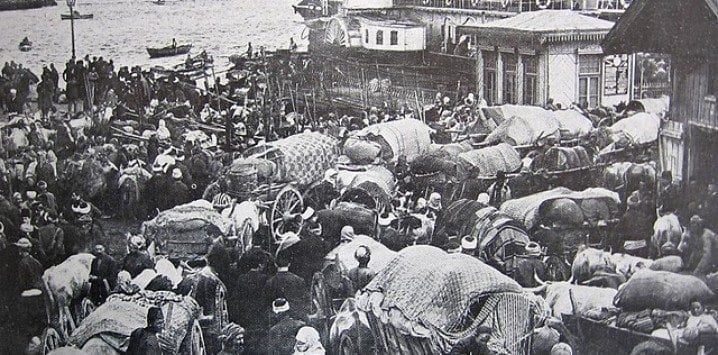
  • Exchange of Greek and Turkish Populations

    Exchange of Greek and Turkish Populations

    Lausanne Peace Treaty VI. Convention Concerning the Exchange of Greek and Turkish Populations Signed at Lausanne, January 30, 1923.

    The Government of the Grand National Assembly of Turkey and the Greek Government have agreed upon the following provisions:

    Article 1

    As from the 1st May, 1923, there shall take place a compulsory exchange of Turkish nationals of the Greek Orthodox religion established in Turkish territory, and of Greek nationals of the Moslem religion established in Greek territory.

    These persons shall not return to live in Turkey or Greece respectively without the authorisation of the Turkish Government or of the Greek Government respectively.

    Article 2

    The following persons shall not be included in the exchange provided for in Article 1:

    a)The Greek inhabitants of Constantinople.

    b)The Moslem inhabitants of Western Thrace.

    All Greeks who were already established before the 30th October, 1918, within the areas under the Prefecture of the City of Constantinople, as defined by the law of 1912, shall be considered as Greek inhabitants of Constantinople.

    Moslems established in the region to the east of the frontier line laid down in 1918 by the Treaty of Bucharest shall be considered as Moslem inhabitants of Western Thrace.

    Article 3

    Those Greeks and Moslems who have already, and since the 18th October, 1912, left the territories the Greek and Turkish inhabitants of which are to be respectively exchanged, shall be considered as included in the exchange provided for in Article 1.

    The expression “emigrant” in the present Convention includes all physical and juridical persons who have been obliged to emigrate or have emigrated since the 18th October, 1912.

    Article 4

    All able-bodied men belonging to the Greek population, whose families have already left Turkish territory, and who are now detained in Turkey, shall constitute the first instalment of Greeks sent to Greece in accordance with the present Convention.

    Article 5

    Subject to the provisions of Articles 9 and 10 of the present Convention, the rights of property and monetary assets of Greeks in Turkey or Moslems in Greece shall not be prejudiced in consequence of the exchange to be carried out under the present Convention.

    Article 6

    No obstacle may be placed for any reason whatever in the way of the departure of a person belonging to the populations which are to be exchanged. In the event of an emigrant having received a definite sentence of imprisonment, or a sentence which is not yet definitive, or of his being the object of criminal proceedings, he shall be handed over by the authorities of the prosecuting country to the authorities of the country whither he is going, in order that he may serve his sentence or be brought to trial.

    Article 7

    The emigrants will lose the nationality of the country which they are leaving, and will acquire the nationality of the country of their destination, upon their arrival in the territory of the latter country.

    Such emigrants as have already left one or other of the two countries and have not yet acquired their new nationality, shall acquire that nationality on the date of the signature of the present Convention.

    Article 8

    Emigrants shall be free to take away with them or to arrange for the transport of their movable property of every kind, without being liable on this account to the payment of any export duty or any other tax.

    Similarly, the members of each community (including the personnel of mosques, tekkes, meddresses, churches, convents, schools, hospitals, societies, associations and juridical persons, or other foundations of any nature whatever) which is to leave the territory of one of the Contracting States under the present Convention, shall have the right to take away freely or to arrange for the transport of the movable property belonging to their communities.

    The fullest facilities for transport shall be provided by the authorities of the two countries, upon the recommendation of the Mixed Commission provided for in Article 11.

    Emigrants who may not be able to take away all or part of their movable property can leave it behind. In that event, the local authorities shall be required to draw up, the emigrant in question being given an opportunity to be heard, an inventory and valuation of the property left by him. Procès-verbaux containing the inventory and the valuation of the movable property left by the emigrant shall be drawn up in four copies, one of which shall be kept by the local authorities, the second transmitted to the Mixed Commission provided for in Article 11 to serve as the basis for the liquidation provided for by Article 9, the third shall be handed to the Government of the country to which the emigrant is going, and the fourth to the emigrant himself.

    Article 9

    Immovable property, whether rural or urban, belonging to emigrants, or to the communities mentioned in Article 8, and the movable property left by these emigrants or communities, shall be liquidated in accordance with the following provisions by the Mixed Commission provided for in Article 11.

    Property situated in the districts to which the compulsory exchange applies and belonging to religious or benevolent institutions of the communities established in a district to which the exchange does not apply, shall likewise be liquidated under the same conditions.

    Article 10

    The movable and immovable property belonging to persons who have already left the territory of the High Contracting Parties and are considered, in accordance with Article 3 of the present Convention, as being included in the exchange of populations, shall be liquidated in accordance with Article 9. This liquidation shall take place independently of all measures of any kind whatever, which, under the laws passed and the regulations of any kind made in Greece and in Turkey since the 18th October, 1912, or in any other way, have resulted in any restriction on rights of ownership over the property in question, such as confiscation, forced sale, &c. In the event of the property mentioned in this Article or in Article 9 having been submitted to a measure of this kind, its value shall be fixed by the Commission provided for in Article 11, as if the measures in question had not been applied.

    As regards expropriated property, the Mixed Commission shall undertake a fresh valuation of such property, if it has been expropriated since the 18th October, 1912, having previously belonged to persons liable to the exchange of populations in the two countries, and is situated in territories to which the exchange applies. The Commission shall fix for the benefit of the owners such compensation as will repair the injury which the Commission has ascertained. The total amount of this compensation shall be carried to the credit of these owners and to the debit of the Government on whose territory the expropriated property is situated.

    In the event of any persons mentioned in Articles 8 and 9 not having received the income from property, the enjoyment of which they have lost in one way or another, the restoration of the amount of this income shall be guaranteed to them on the basis of the average yield of the property before the war, and in accordance with the methods to be laid down by the Mixed Commission.

    The Mixed Commission provided for in Article 11. when proceeding to the liquidation of Wakf property in Greece and of the rights and interests connected therewith, and to the liquidation of similar foundations belonging to Greeks in Turkey, shall follow the principles laid down in previous Treaties with a view to fully safeguarding the rights and interests of these foundations and of the individuals interested in them.

    The Mixed Commission provided for in Article 11 shall be entrusted with the duty of executing these provisions.

    Article 11

    Within one month from the coming into force of the present Convention a Mixed Commission shall be set up in turkey or in Greece consisting of four members representing each of the High Contracting Parties, and of Nations from among nationals of Powers which did not take part in the war of 1914-1918. The Presidency of the Commission shall be exercised in turn by each of these three neutral members.

    The Mixed Commission shall have the right to set up, in such places as it may appear to them necessary, Sub-Commissions working under its order. Each such Sub-Commission shall consist of a Turkish member, a Greek member and a neutral President to be designated by the Mixed Commission. The Mixed Commission shall decide the powers to be delegated to the Sub-Commission.

    Article 12

    The duties of the Mixed Commission shall be to supervise and facilitate the emigration provided for in the present Convention, and to carry out the liquidation of the movable and immovable property for which provision is made in Articles 9 and 10.

    The Commission shall settle the methods to be followed as regards the emigration and liquidation mentioned above.

    In a general way the Mixed Commission shall have full power to take the measures necessitated by the execution of the present Convention and to decide all questions to which this Convention may give rise.

    The decisions of the Mixed Commission shall be taken by a majority.

    All disputes relating to property, rights and interests which are to be liquidated shall be settled definitely by the Commission.

    Article 13

    The Mixed Commission shall have full power to cause the valuation to be made of the movable and immovable property which is to be liquidated under the present Convention, the interested parties being given a hearing or being duly summoned so that they may be heard.

    The basis for the valuation of the property to be liquidated shall be the value of the property in gold currency.

    Article 14

    The Commission shall transmit to the owner concerned a declaration stating the sum due to him in respect of the property of which he has been dispossessed, and such property shall remain at the disposal of the Government on whose territory it is situated.

    The total sums due on the basis of these declarations shall constitute a Government debt from the country where the liquidation takes place to the Government of the country to which the emigrant belongs. The emigrant shall in principle be entitled to receive in the country to which he emigrates, as representing the sums due to him, property of a value equal to and of the same nature as that which he has left behind.

    Once every six months an account shall be drawn up of the sums due by the respective Governments on the basis of the declarations as above.

    When the liquidation is completed, if the sums of money due to both sides correspond, the accounts relating thereto shall be balanced. If a sum remains due from one of the Governments to the other Government after a balance has been struck, the debit balance shall be paid in cash. If the debtor Governments requests a postponement in making this payment, the Commission may (……..) such postponement, provided that the sum due be paid in three annuities at most. The Commission shall fix the interest to be paid during the period of postponement.

    If the sum to be paid is fairly large and requires longer postponement, the debtor Government shall pay in cash a sum to be fixed by the Mixed Commission, up to a maximum of 20 per cent. of the total due, and shall issue in respect of the balance loan certificates bearing such interest as the Mixed Commission may fix, to be said off within 20 years at most. The debtor Government shall assign to the service of these loans pledges approved by the Commission, which shall be administered and of which the revenues shall be encashed by the International Commission in Greece and by the Council of the Public Debt at Constantinople. In the absence of agreement in regard to these pledges, they shall be selected by the Council of the League of Nations.

    Article 15

    With a view to facilitating emigration, funds shall be advanced to the Mixed Commission by the States concerned, under conditions laid down by the said Commission.

    Article 16

    The Turkish and Greek Governments shall come to an agreement with the Mixed Commission provided for in Article 11 in regard to all questions concerning the notification to be made to persons who are to leave the territory of Turkey and Greece under the present Convention, and concerning the ports to which these persons are to go for the purpose of being transported to the country of their destination.

    High Contracting Parties undertake mutually that no pressure direct or indirect shall be exercised on the populations which are to be exchanged with a view to making than leave their homes or abandon their property before the date fixed for their departure. They likewise undertake to impose on the emigrants who have left or who are to leave the country no special taxes or dues. No obstacle shall be placed in the way of the inhabitants of the districts excepted from the exchange under Article 2 exercising freely their right to remain in or return to those districts and to enjoy to the full their liberties and rights of property in Turkey and in Greece. This provision shall not be invoked as a motive for preventing the free alienation of property belonging to inhabitants of the said regions which are excepted from the exchange, or the voluntary departure of those among these inhabitants who wish to leave Turkey or Greece.

    Article 17

    The expenses entailed by the maintenance and working of the Mixed Commission and of the organisations dependent on it shall be borne by the Governments concerned in proportions to be fixed by the Commission.

    Article 18

    The High Contracting Parties undertakes to introduce in their respective laws such modifications as may be necessary with a view to ensuring the execution of the present Convention.

    Article 19

    The present Convention shall have the same force and effect as between the High Contracting Parties as if it formed part of the Treaty of Peace to be concluded with Turkey. It shall come into force immediately after the ratification of the said Turkey by the two High Contracting Parties.

    In faith whereof, the undersigned Plenipotentiaries, whose respective full Powers have been found in good and due form, have signed the present Convention.

    Done at Lausanne, the 30th January, 1923, in three copies, ons of which shall be transmitted to the Greek Government, one to the Government of the Grand National Assembly of Turkey, and the third shall be deposited in the archives of the Government of the French Republic, which shall deliver certified copies to the other Powers signatory of the Treaty of Peace with Turkey.

    (L.S.) E.K.Veniselos

    (L.S.) D.Caclamanos

    (L.S.) Ismet

    (L.S.) Dr.Ryza Nour

    (L.S.) Hassan

    Protocol
    The undersigned Turkish Plenipotentiaries, duly authorised to that effect, declare that, without waiting for the coming into force of the Convention with Greece of even date, relating to the exchange of the Greek and Turkish populations, and by way to exception to Article 1 of that Convention the Turkish Government, on the signature of the Treaty of Peace, will release the able-bodied men referred to in Article 4 of the said Convention, and will provide for their departure.

    Done at Lausanne, the 30th January, 1923.

    Ismet

    Dr. Ryza Nour

    Hassan
  • Nardogan» – New Year of Turks

    Nardogan» – New Year of Turks

    Nardogan» – New Year of Turks

    «Nardogan» is a celebration of the New Year of ancient Turks. «Nar guhesh, dougan, tougan, nardougan gunesh» in Turkic language means «the birth of the sun». «Nardogan» celebrated each year on the full moon after December 22. Night of 21 December – the longest, then the days begin to lengthen. Therefore, December 22 is a very important day for Turks. With the first day of the full moon, a new year begins.

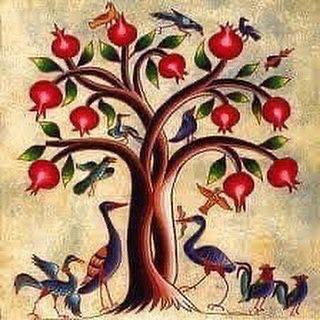
    In the mythology of the ancient Turks stated that both day and night constantly fight with each other. In one of the battles«, on 21of December, after a long struggle Day won, followed by birth of a strong sun. Turks that believe in one God happily accepted a newborn Sun and made it a symbol of victory. According to their beliefs, in the center of the Earth is the place where grow Akchacham trees, and where almighty God Oolgen is watching after people. The birth of the new Sun, Turks accepted as new beginning, rebirth, new hope and purpose. People give thanks, pray to almighty Oolgen with new hope, and share their joy and happiness under the trees Akchacham. At the trees’ foot, everyone left presents and gifts designed to God Oolgen.

    It believed that these trees provide the link between people and God. Thus, these sacred trees considered a place where people can share with God with their happiness and joy. These ancient Turkic traditions have had an impact for the art and cultural heritage not only of the Turks of Central Asia, but also all other Turkic folks.

    According to the ancient Turkic mythology the Akchacham tree is a symbol of immortality and all people on Earth were descended from it. Over time, people began to decorate the tree and under it staged traditional games, sang songs and played on the lute.

    It is believed that this tradition have originated from the Turkic folks of Central Asia. Over time, this custom of Turks spread to Sumer-nomads in Mesopotamia and then through Anatolia reached ancient Rome. Now, this tree became the symbol of the New Year, celebrated on January 1. It is also associated with the Turkish holidays «Paktygan» and «Kochagan». The Tatars call it «Koyash Tuga» or «Rashtua», meaning «birthday of the Sun», Bashkirs and Oodmurt people – «Nardogan» or «Mardougan». In Chuvash, it is sounds like «Nartavan» or «Nartoukan», in Moksha language «Nardvan» and Zyrizes called it «Nardava»