Category: Sci/Tech

  • Turkey to block access to the Hate Film which brought chaos to the world

    Turkey to block access to the Hate Film which brought chaos to the world


    ANKARA, Turkey — A Turkish court issued an order on Wednesday allowing authorities in the country to block Internet access to the anti-Islam movie that has sparked violent protests across the Muslim world, an official said.

    Binali Yildirim, the minister in charge of transportation and communications, told state-run TRT television that the injunction allows government telecommunications and information technology authorities to prevent access from Turkey to URL links to the film.

    The move came a day after another government minister said Prime Minister Recep Tayyip Erdogan, who heads an AK Party* party, ordered officials to find ways of preventing access to videos of “Innocence of Muslims” movie.

    Dozens of people, including the U.S. ambassador to Libya, have been killed in violence linked to protests over the film.

    “Henceforth, it will not be shown in our country,” said Yildirim, calling the film “disgusting.”

    “To insult what is sacred, to incite indignation is unacceptable for all religions. It is a hate crime and no crime should go unpunished,” Yildirim said. His office said Tuesday that the ministry has also asked Google Inc. and YouTube to remove the videos.

    Erdogan has criticized Western nations for not taking steps to prevent insults to Islamic values but also has criticized violent protests against the film saying they harm Islam.

    Yildirim said the court order is limited to links to the film and that access to websites that carry the links would not be blocked. Turkey banned access to the video sharing site YouTube from 2008 and 2010 because of videos deemed insulting to the country’s founder, Mustafa Kemal Ataturk.

    Thousands of other websites, most of them pornographic, have also been banned in the country. The government says it is fighting child pornography, illegal gambling and other cybercrimes.


    CBS NEWS


    Edited*

  • Bakanlıktan Youtube için özel talimat

    Bakanlıktan Youtube için özel talimat

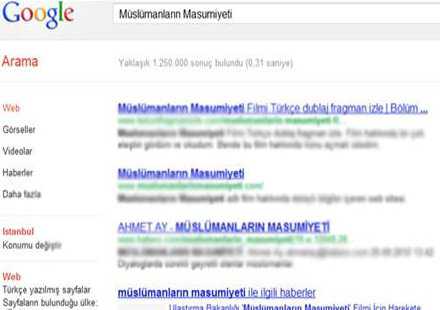
    Ulaştırma, Denizcilik ve Haberleşme Bakanlığı, Müslümanların Masumiyeti adlı filmin video içeriğinin bulunduğu URL adreslerine erişimin engellenmesi için yasal süreç başlattı.

    BİRÇOK İNTERNET SİTESİNDEN YAYINLANDI

    Ulaştırma, Denizcilik ve Haberleşme Bakanlığı Basın ve Halkla İlişkiler Müşavirliği’nden yapılan yazılı açıklamada, ”Müslümanların masumiyeti” adlı dini değerlere ve inançlara hakaret eden, nefret söylemi içeren filmin bir kısmı veya tamamı başta Youtube adlı video paylaşım sitesi olmak üzere birçok internet sitesinde yayınlandığı belirtildi.

    YASAL PROSÖDÜR BAŞLADI

    İslam’a ve Müslümanlara hakaret içeren, provokatif unsurlar barındıran söz konusu filmin tüm dünyada ve Türkiye’de meydana getirdiği rahatsızlık nedeniyle Ulaştırma Denizcilik ve Haberleşme Bakanı Binali Yıldırım’ın talimatlarıyla tespit edilen URL adreslerinde bulunan video içeriğinin çıkartılması için yasal prosedürün işletilmeye başlandığının ifade edildiği açıklamada, şunlar kaydedildi:”Ayrıca tüm internet servis sağlayıcılarıyla irtibat kurularak, video paylaşım sitelerinin tamamına erişim engelleme uygulanmadan, yalnızca söz konusu videoların bulunduğu URL adreslerine erişimi engelleme hususunda yapılacak çalışma konusunda da bilgi verilmiştir. Söz konusu videolara erişim, internet sağlayıcılar vasıtasıyla büyük ölçüde engellenmiştir. Uyar-kaldır yöntemi işletilerek, söz konusu URL adreslerinden video içeriğinin çıkarılması için Youtube & Google Inc. adlı şirketin Türkiye’de bulunan avukatlık bürosuna, konunun hassasiyeti izah edilerek yazılı ve sözlü bildirimde bulunulmuştur. Buna karşın Innocence of Muslims isimli filmi yayınlamaya devam eden sitelerde, video içeriğinin bulunduğu URL adreslerine mahkeme kararıyla erişimin engellenmesi için yasal süreç başlatılmıştır.”


    En Son Haber

  • Two-headed turtle found in Turkey

    Two-headed turtle found in Turkey

    Visitors at a nature park in Turkey have been treated to a very rare sight –

    conjoined turtle twins.

  • Turkey Grows as Destination for International Students

    Turkey Grows as Destination for International Students

    Turkish universities are becoming an increasingly popular destination for students from around the globe, signalling the importance of the growing education sector for Turkey. Between the 2005-2006 and the 2011-2012 school year, the number of international students attending Turkish universities more than doubled, from 15,481 to 31,170.

    The growth of foreign students has been matched by the expansion of higher education in Turkey, where 50 public universities and 36 private foundation universities were established between 2006 and 2011, bringing the total number to 165. The same period witnessed an increase of 40 percent in the number of Turkish students attending university.

    Students come from 155 countries to study in Turkey. In 2011-2012, Azerbaijan had the largest representation with more than 4,200 students, followed by Turkmenistan with 4,110 and the Turkish Republic of Northern Cyprus with about 3,800. Europe also showed strong numbers, with both Germany and Greece sending more than 1,300 students.

    The experiences foreign students gain during their time in Turkey are of lasting value for foreign and Turkish students alike, helping to deepen ties between individuals that span national borders and erase stereotypes.

    The motivation to pursue higher education in Turkey varies from student to student. For some it is the prospect of an inexpensive and quality education. For others it’s the opportunity to learn Turkish and receive an education in one of the many English language universities.

    Desantilla Hasanaj came from Albania to study political science and public administration at Fatih University in Istanbul. She chose to study in Turkey “because the education here is much better than Albania.”

    For Mohamed Bachir from Niger, who is in his second year studying Business Administration at Bahcesehir University in Istanbul, the opportunity to learn a new language and culture made Turkey his first choice.

    Wazir Ali, from Pakistan, who is studying at Zirve University in Gaziantep, was drawn by the prospect of learning Turkish and improving his command of English by studying in a programme that uses English as the language of instruction.

    But it is not just the international students who benefit from studying in Turkey. Foreign students add to the character and quality of education for Turkish students as well.

    Michael Brownfox has taught at numerous Turkish universities and was a founding partner of StudyinTurkey.com, a programme run by the Turkish Universities Promotion Agency, a private organization devoted to attracting students to Turkey.

    Brownfox told SES Türkiye universities benefit from attracting international students to their student body, not only in financial terms, but also in the new opportunities and ideas that come from educating students who bring a different perspective on the world.

    Having international students “really helps Turkish students to see both how big and small the world is,” Brownfox said. “This is a major benefit,” he noted, pointing out that the dynamic created by a global classroom better prepares all students, foreign and Turkish, to succeed in the global marketplace.

    One of the most successful student exchange programmes is the EU’s Erasmus programme, which is open to 33 countries, including Turkey, and facilitates the process of student exchanges.

    Since Turkey began participating in 2004, nearly 15,000 students have come through this one programme alone, according to data published by the European Commission.

    Liam Murray, who came to Turkey from England as an Erasmus student, wanted the opportunity to see the world from a different perspective and made Turkey his first choice over universities in North America or Europe.

    Now beginning his fourth year living and working in Turkey, he remarked how the difference in ideas and background of the students at Middle East Technical University in Ankara added to the educational experience and drew him back to Turkey after graduation.

    When students study in Turkey their education extends beyond the classroom as they get first-hand exposure to Turkish culture through their everyday interactions in Turkish society.

    For the Albanian student Hasanaj, her time studying in Istanbul for her bachelor’s degree, and now a master’s degree, has given her a unique vantage point to observe the intricacies of Turkish society.

    “After I got to know their past history and people, now I can better understand the complexity in which this society lives,” she said.

    Creating a new generation of international students with exposure to Turkish language and society is in part a reflection of Turkey’s dynamic and proactive foreign policy over the past decade. Many of the students who come to study can use their knowledge of Turkey and connections to build bridges between Turkey and their home country.

    Education as an arm of diplomacy can be seen in relatively new foreign policy areas like Africa, where until the mid-2000s Turkey had only a handful of embassies, but plans to have at least 33 by the end of 2012. A total of 1552 students from 44 African countries studied in Turkey in 2011-12, over a four-fold increase compared to 2005-06.

    Jalil Abdallah, from Ghana, studied in his home country as well as in Egypt, and worked in a high school before he decided to pursue a graduate degree in international relations in Turkey.

    Abdallah said the reconceptualisation of Africa within Turkish foreign policy prompted him to study in Turkey. With growing trade, diplomatic, educational and cultural ties between Turkey and Africa, he said studying in Turkey was the first step toward learning Turkish language and culture in order to pursue a career in diplomacy or an international organisation.

    “The valuable thing is language and culture,” Abdallah told SES Türkiye. “‘The limit of my language,’ as said by Ludwig Wittgenstein, is ‘the limit of my world’.”

    Another African student, Abobakar Tshilomba, studies economics and hopes that upon graduation he will be able to work in a business that connects his home country, the Democratic Republic of Congo, and Turkey. Having studied as an undergraduate in Turkey he will be well placed to facilitate connections and trade between the two countries.
    Tuesday, 18 September 2012

    SES Turkiye
  • Headless Roman Statues Found In Turkey Show Antiquities’ Reuse

    Headless Roman Statues Found In Turkey Show Antiquities’ Reuse

    By: Stephanie Pappas, LiveScience Senior Writer

    Published: 09/18/2012 08:21 AM EDT on LiveScience

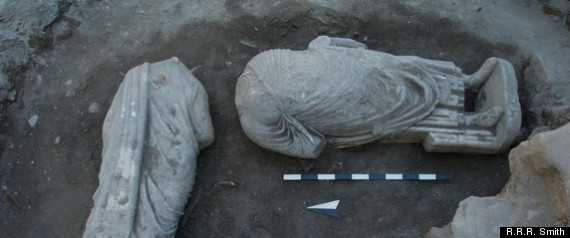
    Two headless Roman statues have been discovered holding up a medieval-era platform in Turkey — an example of antiquities being reused by later generations as humble building material.

    The ancient statues have lost their heads, but their clothing suggests that one was a representation of a local notable and the other an imperial office-holder, said R.R.R. Smith, who directs the New York University Excavations at Aphrodisias, an ancient Roman city in what is now Turkey. One statue dates back to about A.D. 200, while the other is from A.D. 450 or so. They were likely recycled by the 600s, Smith told LiveScience.

    “Preliminary study of the pottery associated with the deposition of the statues suggests they were built into the platform already in the seventh century,” Smith said. “That is, in the immediately ‘post-antique’ early medieval period.”

    Aphrodisias was near a marble quarry, and its statuary art flourished between about 30 B.C. and A.D. 600, during the era of the Roman Empire. Since 2008, Smith and his colleagues have been excavating “Tetrapylon Street,” a city boulevard that ran from the city’s sanctuary of the goddess Aphrodite to a major temple called the Sebasteion. The dig has turned up signs of what Smith called a “major conflagration” — collapsed columns, broken glass, fragmented mosaics and burned wood all in a chaotic mix. In August, archaeologists excavating above this layer of destruction found a built-up platform with two headless statues, positioned at a right angle from one another, used as a foundation. [See Images of the Statues and Dig Site]

    The speaker and the governor

    The near life-size statues probably lost their heads before they were repurposed as building material, Smith said. But even without faces, the statues tell a tale. The first, the one likely sculpted around A.D. 200, wears a cloak and tunic, the uniform of a notable citizen. The man was sculpted in a rhetorical posture, his right hand gesturing as if in mid-speech and his left hand grasping a carved scroll so detailed that the spiraling rolls of papyrus are visible.

    via Headless Roman Statues Found In Turkey Show Antiquities’ Reuse.

  • Turkey’s hackers – Robin Hoods or thugs?

    Turkey’s hackers – Robin Hoods or thugs?

    Local hacking groups have popped up all over the world in the wake of the rise of WikiLeaks and Anonymous. Turkey’s hacker scene has caught the government’s attention.

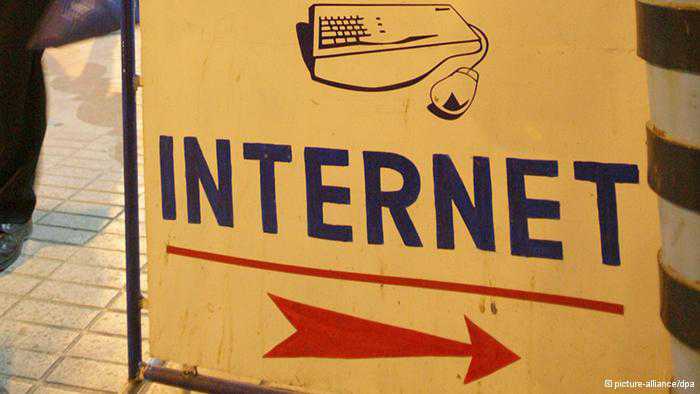
    A narrow stairway leads to a small room, crowded with dozens of wooden cubicles, quiet and well-lit – it’s not hard to find an Internet café in Istanbul. Just turn off the main thoroughfare and down any of the smaller side streets and look up. Red neon signs flash “Internet” or “Chat” – the “A” cleverly turned into an @.

    The cafés have increasingly become a focus in Turkey’s Internet war as the Turkish government grapples with mounting attacks from hacker groups. Now, government agents go to Internet cafés like this one to recruit Internet-savvy kids.

    Recently a group of young people were swapping stories in an Internet café, when the police appeared and showed one of them names and passwords, says Baris Isik, co-founder of Alternative Information, a pro-hacking and free speech organization in Istanbul. “They asked him, ‘do you want to be a hacker?’” Isik told Deutsche Welle.

    Lamers and hacktivists

    He calls hackers who work for the government “lamers.”

    A sign for an Internet cafe. Photo: Bodo Marks

    On the other side are the hacktivists, Isik says: groups of political hackers.

    The main hacktivist group in Turkey is Red Hack, a left-leaning collection of affiliated hackers who leak information about the Turkish government.

    There is very little information about the group. It’s not known how many members it has, or whether someone is in charge, or where exactly the group is located. Some people describe Red Hack as a digital Robin Hood, some as an Internet thug.

    “We think that they are some good old friends, doing their job somewhere, but we don’t know,” Isik says. But people do know what Red Hack has done.

    When hundreds of children were poisoned by spoiled milk handed out at school, Red Hack hacked the milk companies’ websites. In response to threats the government would ban abortion, they hacked the Ministry of Family and Social Policy. They hacked the Foreign Ministry website and put up pictures of Turkish President Recep Tayyip Erdogan shaking hands with the late Libyan strongman Moammar Gadhafi and Syrian President Bashar Assad. They hacked the website of the Ankara police and posted information about police informants. They hacked the website of the Interior Ministry and supposedly stole files. And the list goes on.

    ‘Hacker Space’

    Istanbul hackers like to gather at Hacker Space. At the end of a short alleyway, a few little girls ride around on their bikes. “HS” is spray-painted in neon orange on a broken concrete wall. The front of the office is glass, and through it, you can see two men typing away on computers. The office is clean, furnished with a few tables and some bookshelves. There is pile of mineral water bottles waiting to be recycled.

    Furkan Mustafa, a young man with kind, brown eyes and a bushy beard, helped start Hacker Space because he wanted to teach people to use technology and meet fellow hackers. Furkan says he had been messing around with computers since he was a kid. He once rewired a USB port on his laptop to be a bluetooth device, he said: “When you hack something, it’s really exciting. It feels like you need to show it to everybody.”

    Hacker Space doesn’t do political hacks. Most of them are programmers or website designers who regard hacking as a legitimate way of improving existing systems.

    “If you pour oil on your pants, you have to put salt on the stain; then you have hacked that stain,” says Murat Yilmaz, another founder of Alternative Information. “If your mother uses ice cream containers to store food, your mother is a hacker too, because she hacked the system.”

    Spiders versus starfish

    Hacker groups such as Anonymous embarrass governments

    Murat says that much of the information that Red Hack publishes is already half-known or guessed at in Turkey. Publishing the information publicly keeps Red Hack in the newspapers.

    The Turkish government has tried to put a stop to the leaks. They reported the arrest of seven Red Hack members. But on Twitter, Red Hack responded that the people arrested were innocent.

    Ozgur Uckan, a professor of economics and political science at Istanbul’s Bilgi University, explains that snuffing out hackers is much more difficult than stopping a political organization. Hacker groups, Uckan explains, are not like spiders – they are like starfish.

    “The spider is kind of a central animal, there is a head and legs. If you cut the head, the spider is dead,” Uckan says. “But if you take a starfish, there is no head at all. Every vital organ is repeated in every arm. If you cut a starfish, you have two starfish, you can have five starfish.”

    Hackers, it seems, are here to stay.

    And according to Uckan, their contribution to society is not to be underestimated. “Without hackers there is no progress at all, there is not technology at all,” the professor says. “Because curiosity is imagination, and imagination is free.”

    via Turkey’s hackers – Robin Hoods or thugs? | Sci-Tech | DW.DE | 17.09.2012.