Category: Sci/Tech

  • Turkey the birthplace of Hindi, English: study

    Turkey the birthplace of Hindi, English: study

    August 23, 2012 by Mira Oberman

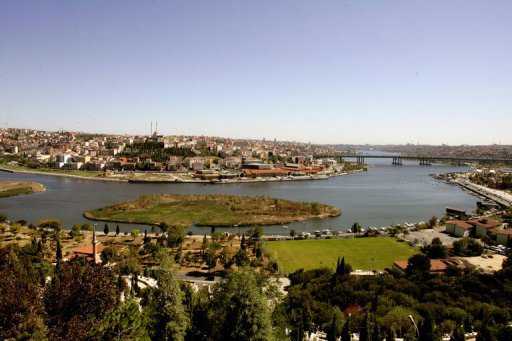
    A general view of Istanbul

    Enlarge

    A general view of Istanbul. Could the word for mother prove that Turkey was the birthplace of hundreds of languages as diverse as Hindi, Russian, Dutch, Albanian, Italian and English? A study used a massive database of common words—or cognates—both modern and ancient to trace the roots all the way back to Turkey.

    Could the word for mother prove that Turkey was the birthplace of hundreds of languages as diverse as Hindi, Russian, Dutch, Albanian, Italian and English?

    Researchers using a complex computer model originally designed to map epidemics have traced the evolution of the Indo-European language family to find an answer in a study published Tuesday in the journal Science.

    Similarities between hundreds of languages spoken from Iceland to India have led to hot debates over where they originated and what their spread and evolution can tell us about early humans.

    The dominant theory is that the languages now spoken by some three billion people came from Bronze Age nomads who used horses and the wheel to spread east and west from the steppes north of the Caspian sea near what is now Ukraine around 5,000 to 6,000 years ago.

    Others argue that it was agriculture—not the horse—that helped spread the language. They trace the origins to Turkey around 8,000 to 9,500 years ago.

    This latest study used a massive database of common words—or cognates—both modern and ancient to trace the roots all the way back to Turkey.

    “This is one of the key cases put forward for agriculture being an important force in shaping global linguistic diversity,” said lead author Quentin Atkinson, an evolutionary psychologist at the University of Auckland in New Zealand.

    The results build on archeological and genetic research which has suggested that early human migration helped spur the spread of agriculture, Atkinson said.

    “It wasn’t just that all the hunter gathers were in Europe and looked over the fence and saw their neighbors were cultivating and started doing it themselves. There was a real movement of people,” he said.

    “The languages suggest this is a movement of culture as well—the hunter gathers weren’t just picking up a plough, they were also adopting culture and the language.”

    Using methods originally designed by epidemiologists to trace the language makes sense because the similarities between the evolution of living creatures and living languages has long been understood, Atkinson said.

    “Darwin talks about it in the Origins of the Species and The Descent of Man, ‘these curious parallels,’ he calls them.”

    Biologists tracing the roots of a global pandemic will take samples in multiple locations, sequence the DNA and map how the virus has evolved through time by looking at how its genes have been modified.

    “Once they’ve got the family tree… they can trace back along the branches of the tree all the way back to the origin,” Atkinson said in a telephone interview.

    “What we did was apply the same kind of approach to languages.”

    The team built a database of cognates such as mother, which is moeder in Dutch, madre in Spanish, mat in Russian, mitera in Greek and mam in Hindi.

    They then set about building a family tree for the languages which would capture them in space and time and account for the gains or losses of cognates.

    “This is a major breakthrough,” archeologist Colin Renfrew of the University of Cambridge in the United Kingdom said in an accompanying article in Science.

    Not everyone was convinced.

    “There is so much about this paper that is arbitrary,” Victor Mair, a Chinese language expert at the University of Pennsylvania, told Science.

    The Atkinson model relies on logical leaps about the rates of language change and how languages diffuse, Mair said, while the steppe hypothesis “is based heavily on archeological data such as burial patterns, which are directly tied to datable materials.”

    (c) 2012 AFP

  • Once Upon a Time in Anatolia

    Once Upon a Time in Anatolia

    When students think of what you would like to do for the summer, what comes to mind? Go to the beach, sleep in late, be grateful that you don’t have to attend summer and intercession classes or start a new workout routine.

    For the past two of my summers, the answer has always been for this writer: “I want to go someplace I’ve never been before.”

    Last summer, I attended the UNO-Japan program in Kyoto to study at the Doshisha University. The Doshisha University offered many courses in Japanese language, art, film, photography and Honors options for most courses. As part of the program, my fellow students and I were able to see the key sights of Kyoto like the Nijo-jo (Nijo Castle). I also had the chance to visit South Korea after the program.

    This summer I decided that I wanted to see Turkey, especially since I had decided to study there for the fall semester, which has now extended into a full academic year.

    View from the top of Yeditepe’s law building.

    Turkey is rather tritely known as the place where East meets West. This little cliché is largely true in the culture capital of Istanbul, the largest city in Europe and the only city in the world to geographically span two continents.

    Istanbul is the city I will call home for the next year while I am on this study abroad program, particularly the Yeditepe University. Yeditepe is Turkish for “seven hills”.

    Istanbul offers some of the most historic sites in the world including the 400 year-old Sultanahmet (better known as the Blue Mosque), the almost 600 year-old Topkapı Palace and the 550 year-old Grand Bazaar that boasts over 3,000 shops with an untold diversity of wares.

    But this city is not only about the ancient. Istanbul is an industrial city with the entire gamut of modern conveniences at its disposal with malls and nightlife (whose center on the European side is Taksim) and entertainment galore.

    I arrived in Turkey three months before my program began to get a feel of the country, particularly the people. In the course of my stay, I have visited the capital, Ankara, another historical town called Bursa in the rural northeast in a village called Hemşin.

    Despite seeing the burial place of Kemal Atatürk, someone that I can only very loosely describe as Turkey’s version of George Washington, and vast tea farms in a valley, the most impressive part of Turkey is the people.

    Hospitality is taken to levels that the South could learn from and many of the citizens are inspiring in their own right.

    I met a group of students through Couch Surfing in Ankara that started their own business in search engine optimization. I also met a man in Hemşin that was an environmental crusader. His specialty was fighting the government’s ambitious damming projects that threatened the tea-making livelihood of many of the villagers in the area.

    Turkey is very much a country where many things are happening, and quickly. I have learned these things, and more, in little less than three months with over ten more months to go.

    The purpose of this article will hopefully spark a series of essays to appear in “Driftwood” about studying abroad from not only myself but also other students that have completed programs abroad.

    These informative essays will help educate new and current UNO students about what there is to gain by traveling and studying abroad from a summer to a semester to possibly an entire year.

    I will be giving you my perspective from Turkey, complete with essays on the many places to visit and opinions on the culture and the politics.

    If you would like to study abroad, please email the Division of International Education at [email protected] or drop by their office inside the Education Building, office 120, for more information.

    If you have any questions about studying abroad or traveling in Turkey, feel free to contact me at [email protected].

    Photo courtesy of Brodie LeBlue/Driftwood.

    via Once Upon a Time in Anatolia.

  • Istanbul’s Bosphorus rail link to open next year

    Written by  David Briginshaw

    Just over a year from now the first trains will start to carry passengers under the Bosphorus, linking the Asian and European sides of Istanbul by rail for the first time. It will also be the world’s first rail link to combine CBTC and ERTMS on one line, reports David Briginshaw from Istanbul.

    THE Bosphorus has been the making and in some senses the breaking of Istanbul. It is the city’s raison d’être and a major source of trade and wealth, but it also splits the city in two. While two road bridges span this very busy waterway, they are upstream from the city centre, and are often choked by Istanbul’s appalling road traffic. A contract for a third bridge was awarded on May 30, but this will be constructed at the northern end of the Bosphorus. Meanwhile many of Istanbul’s 13 million inhabitants depend on a multiplicity of ferries – including a small train ferry for freight – to cross from one side to the other.But relief is finally at hand, as next year the first phase of the so-called Marmaray rail project will be completed. On October 29 2013 – the 90th anniversary of the founding of the Turkish republic – the 13.3km rail tunnel under the Bosphorus and city will open for business. A shuttle service is envisaged between Kazilicesme, Yenikapi and Sirkeci on the European side and Üsküdar on the Asian side until the rest of the project is completed.

    The Marmaray project will provide Istanbul with a modern high-capacity 76.3km railway linking Halkali in the west with Gebze in the east, knitting Istanbul’s diverse collection of tram, light rail, light and heavy metro lines together to form an integrated network. The project involves rebuilding and upgrading Turkish State Railways’ (TCDD) existing lines on each side of the Bosphorus and connecting them with the tunnel.

    Work on the $US 3bn scheme started in August 2004 and was divided into three main elements. The Bosphorus crossing contract covers the construction of the tunnel which comprises a 1.4km immersed tube under the seabed, 9.8km of bored tunnels under the land plus some sections of cut-and-cover tunnelling, and the new underground stations. A surface station has since been added to the project at Ibrahimaga to provide an interchange with the Kadiköy – Kartal metro line, which passes beneath the Marmary line, and is due to open soon.

    Tunnelling was completed last year and track-laying is now underway. To prevent flooding, two sets of gates connected to an interlocking are installed at each end of the immersed tube, and emergency cross passages between the two running tunnels are located at 125m intervals in the immersed tube and every 200m in the bored tunnel.

    The underground stations have 270m-long island platforms. Yenikapi will become a major interchange on the European side as metro lines 1 and 2 are both being extended south to terminate there. Sirkeci will connect with tram Line 1, and Üsküdar will interchange with metro Line 6, construction of which has just started (see panel below).

    The €580m rolling stock contract for 34 10-car and 20 five-car emus was awarded to Hyundai Rotem in November 2008. About 70% of the fleet has been built so far, but only six out of 10 trains available will be needed initially to operate the underground shuttle.

    The so-called commuter rail contract, which includes the tunnel, went to a joint venture of Obrascon Huarte Lain (OHL) and Invensys Rail Dimetronic. OHL is responsible for the track and catenary, while Invensys Rail takes care of the signalling and telecommunications.

    The reconstruction of the existing lines is comprehensive and involves dismantling the existing railway section by section, which started in April with the eastern end of the line from Pendik to Gebze. As a result, Istanbul is now isolated from the rest of the Turkish rail network until reconstruction is completed. The work involves removing the existing double track, signalling and electrification and laying a new three-track electrified railway. Two tracks will be used by Marmaray commuter trains as well as freight trains, while the third track will be for high-speed trains: the Ankara – Eskisehir high-speed line is currently being extended towards Istanbul and is due to open in 2015. The third track will have 10 passing loops at 4.5km intervals on the Asian side, but only three loops are needed on the European side.

    The original plan was for the tunnel to be used exclusively by commuter trains during peak hours, with high-speed trains allowed to run though the tunnel at other times, and freight trains restricted to the night. However, TCDD has yet to make a final decision on whether high-speed trains will terminate in Haydarpasa on the Asian side or run under the Bosphorus to the European side and beyond. Clearly high-speed passengers would benefit from being able to join trains on the European side, but this could reduce the capacity of the commuter service.

    Invensys Rail is responsible for removing the old signalling and telecommunications equipment, design and supply of a new system comprising ERTMS Level 1, CBTC for both the infrastructure and rolling stock, CTC, hot-axle detectors, a Scada system, telecommunications including GSM-R radio, public address, passenger information and CCTV, and staff training. Invensys will maintain the equipment for two years and has an option to extend the maintenance contract for another five years.

    On the surface, train detection will be by jointless track circuits, and the two commuter tracks will be fitted with both CBTC and ERTMS, while the third track will only have ERTMS. The tunnel will have both types of train control but train detection will be by axle counters. Fall-back lineside signalling will be installed throughout the Marmaray line. Signals will be mounted on conventional lineside masts in the immersed tube as it is forbidden to drill holes in the walls for obvious reasons.

    The Hyundai Rotem fleet will solely be equipped with CBTC and drivers will refer only to their cab displays. Initially, only maintenance vehicles will be fitted with ERTMS, but as TCDD’s high-speed fleet is already equipped with ERTMS they will be able to use this on the Marmaray line. Freight trains are expected to use the lineside signalling, but will be able to switch to ERTMS as its use on the TCDD network expands over the next few years.

    The interlocking will control the interface with both CBTC and ERTMS, and track circuits and axle counters will be able to detect all types of train, passing information to the block processor. The key principles behind the Marmaray train control system are that everybody can communicate with everybody else and safety is always guaranteed regardless of which system is being used. While CBTC uses a radio-based data transmission system, ETCS Level 1 does not.

    As a train travels along the line, a so-called soft handover takes place between one block processor and the next during which time the train is communicating with both block processors. The handover must be long enough for it to take place without an interruption in communication, but handover does not take place in a fixed location as it depends which channel is transmitting.

    Under CBTC operation, trains will operate automatically, with drivers monitoring the system and opening and closing the doors at stations. With CBTC, the line will function with moving block to achieve 90-second headways and a peak-time capacity of 90,000 passengers per hour per direction (pphpd), whereas under ETCS Level 1 only 2-minute headways will be possible. The off-peak capacity with CBTC will be 75,000 pphpd whereas the old railway had a capacity of just 10,000 pphpd.

    The total number of trips per day in 2015 is estimated at 1,500,000 passengers and is expected to increase to some 1,700,000 passengers by 2025. An end-to-end journey time of 105 minutes from Gebze to Halkali is planned compared with a train-ferry-train trip of around 3 hours. Shorter cross-Bosphorus trips from Sögütlüçesme to Yenikapi will take 12 minutes and Üsküdar – Sirkeci 4 minutes.

    Fitting out of the underground section is due to be completed in July 2013. This will be followed by testing of the fixed installations, system integration tests lasting around one month, and two months of trial operation. The surface sections are due to open in stages during 2014, although TCDD would like to open at least one section before the end of the next year as it is keen to reap the benefits of this critical project as soon as possible and to reconnect Turkey’s largest city with the rest of the national rail network.

    Work starts on Istanbul’s sixth metro line

    A GROUNDBREAKING ceremony was held on June 6 to mark the start of construction of metro Line 6. The event was attended by the mayor of Istanbul Mr Kadir Topbas, Turkey’s transport minister Mr Binali Yildirim, and senior managers from the Dogus group, which won the €564m contract to build the line.

    The new line 6 will run entirely underground from Üsküdar east via Ümraniye to Çekmeköy with 16 stations. The 20km line follows a corridor to the north of Line 4 and will provide the Asian side of Istanbul with its second metro.

    A 2.72km branch running northwards will connect the metro to a new depot located towards the eastern end of the line. The project is expected to be completed by 2015.
  • First shots taken from Curiosity

    First shots taken from Curiosity

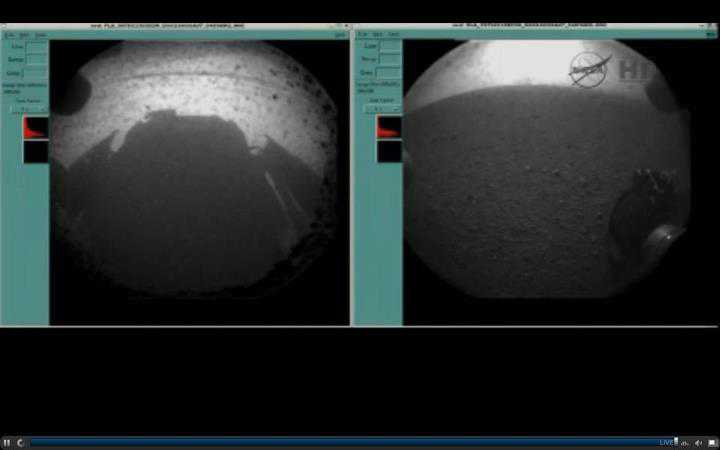
    The first shots taken from Curiosity after its successful touchdown this morning.


    On the left, Curiosity takes a selfie of its shadow. On the right, you can see the surface of Mars, and Curiosity’s wheel in the corner.

    (CREDIT: NASA)

  • Germany’s RWE Won’t Build New Nuclear Plants Abroad – Report

    Germany’s RWE Won’t Build New Nuclear Plants Abroad – Report

    RWE AG : Germany’s RWE Won’t Build New Nuclear Plants Abroad – Report

    06/17/2012 | 05:24pm

    German utility RWE AG (RWE.XE) has decided it won’t manufacture any new nuclear plants abroad after Germany’s accelerated nuclear-energy exit, Munich daily Sueddeutsche Zeitung reports in a pre-release of an article in Monday’s edition.

    Citing people who attended a managers’ meeting of the company in Istanbul, the paper reports that RWE’s incoming chief executive, Peter Terium, informed the company’s high-ranking managers of the management board’s decision at the gathering.

    The decision, which signals RWE will exit the international nuclear-energy business in the coming years, is also supported by the company’s municipal major shareholders, the people familiar with the matter told the newspaper.

    Mr. Terium, who will become CEO at the beginning of July, plans to expand the company’s solar-energy business in Germany, the newspaper reports. RWE plans to build solar-power plants together with municipal utilities and also wants to enter the business with private customers, the newspaper writes.

    Newspaper website: www.sueddeutsche.de

    Write to the Frankfurt Bureau at [email protected].

    via RWE AG : Germany’s RWE Won’t Build New Nuclear Plants Abroad – Report | 4-Traders.

  • Creationism Breaking Through Against Evolution in South Korea and Turkey

    Creationism Breaking Through Against Evolution in South Korea and Turkey

    Creationism is no longer simply an American battleground in primary and secondary school education; it’s gone global. Raising questions about the nature of government involvement in education, both South Korea and Turkey made news this week in relation to moves against the mainstream scientific community’s support of evolution.

    South Korean publishers sidestepped scientific debate altogether by heeding a petition passed on to them by the government. Scientists were not consulted on the validity of any claims in the petition to “delete the ‘error’ of evolution from textbooks to ‘correct’ students’ views of the world,” although the petition reportedly has signatures of both scientists and teachers.

    Turkey’s academia hosted its first conference for creationist ideas at Marmara University in Istanbul from May 16-17, titled “Why Does Science Deny Inter-Species Evolution?” The conference highlighted proposed deficiencies in the theory of evolution, bringing some transparency to the debates and combating notions that evolution is supported and acknowledged by universities and the scientific world.

    Officially, Turkish schools are directed to teach both sides–creationist and evolutionist. However, teachers enjoy great latitude in the classroom, and Kareem Cankocak, a professor at Istanbul Technical University who supports evolution, aggressively claims that 90% of incoming students either do not believe or do not know about evolutionary principles.

    As in the United States, the debate relies more upon undermining evolution than using scientific data to support creation science, continually drawing religion into the fray (Islam in Turkey and Christianity in South Korea). The debate is unlikely to end anytime soon, but education will likely do its best to make the debate honest and transparent rather than circumvent the academic sphere for a purely political one.

    Creative Commons Love: cosmobc on Flickr.com

    via Creationism Breaking Through Against Evolution in South Korea and Turkey | Open Equal Free.