Category: Sci/Tech

  • iTunes Music Store reportedly live in Russia, Turkey and South Africa [ux2]

    iTunes Music Store reportedly live in Russia, Turkey and South Africa [ux2]

    iTunes Music Store reportedly live in Russia, Turkey and South Africa [ux2]

    By AppleInsider Staff
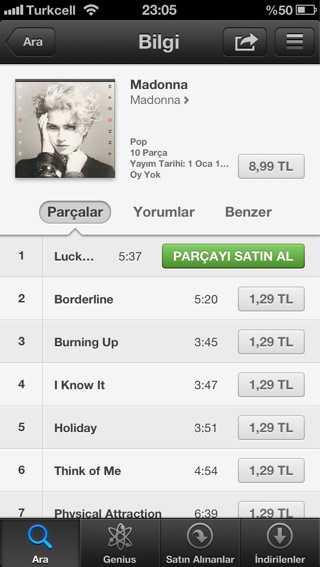
    Just hours after invitations for an expected iTunes media event were sent out to select media outlets on Monday, a number of users in Russia and Turkey are reporting that Apple’s online media store is now live in those countries.

    Update: iPhone Türkiye has confirmed to AppleInsider that both music and video are available for purchase through the iTunes store in Turkey.

    Update 2: It appears that South Africa will also be getting the iTunes Music Store, according to Apple’s website, however it is unclear when content will be available.

    iTunes Russia Turkey

    Availability of iTunes by country as seen in the iTunes OS X app. | Source: Apple

    Reports from Russia and Turkey claim that the iTunes Music Store has gone live for some users, with the news coming a day before Apple will be “holding a musical evening” in Moscow.

    While rumors of a Russian iTunes Store have persisted for years, Apple has yet to launch the media marketplace. Turkey is also on the list of countries without iTunes, however identical reports say that the store is now open ahead of an official announcement.

    Turkish Apple blog iPhone Türkiye was able to make multiple song purchases from the iTunes app running on a new iPhone 5, including tracks from local musician Sezen Aksu.

    iTunes Turkey

    iTunes Turkey. | Source: iPhone Türkiye

    Russian Twitter user “iMaxim” confirmed that iTunes is available for the iPad as well, though it appears that only the categories “Top Charts,” “Genius” and “Purchased” are available at this time.

    iTunes Russia

    iTunes Russia as seen on Apple’s iPad. | Source: iMaxim via Twitter

    At the end of 2011, Apple finished rolling out the iTunes Store to all countries in the European Union some eight years after the world’s No.1 music store first launched in the U.S.

    via iTunes Music Store reportedly live in Russia, Turkey and South Africa [ux2].
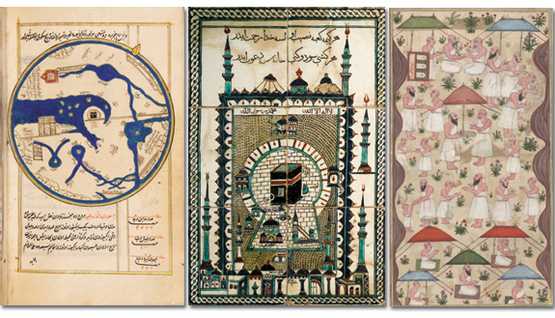
  • The Voyager Interstellar Record – 19/31 Radio Moscow – Azerbaijan Bagpipes, Ugam – YouTube

    The Voyager Interstellar Record – 19/31 Radio Moscow – Azerbaijan Bagpipes, Ugam – YouTube

    Başka uygarlıkların bulması ümidi ile 1977 yılında uzaya gönderilen Voyager uzay aracında bulunan müzik kayıtlarından.

    The Voyager Interstellar Record – 19/31 Radio Moscow – Azerbaijan Bagpipes, Ugam – YouTube.

  • Rhino fossil ‘flash cooked’ 9 million years ago in Turkey

    Rhino fossil ‘flash cooked’ 9 million years ago in Turkey

    By Scott Sutherland | Geekquinox – 13 hours ago

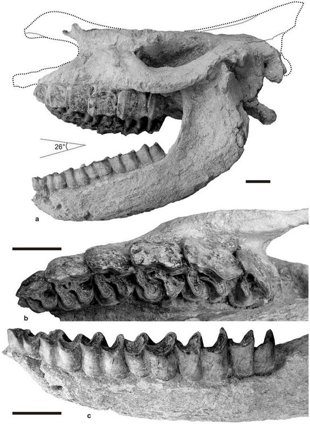
    Here, the cranium and mandible of the rhino are shown as they may have appeared when the animal was alive some …According to recent reports, an international team of scientists digging in Central Turkey uncovered the fossil of an adolescent rhino skull, and whereas that is not a particularly unusual event, this fossil shows signs that the poor animal died in a way similar to the unfortunate residents of Pompeii — by being instantly cooked to death.

    According to the report, published in the online journal PLOS ONE, “the body of the [rhino] experienced severe dehydration”, “was then dismembered within the pyroclastic flow”, and “the skull being separated from the remnant body and baked under a temperature approximating 400°C.”

    [ Related: Blame Canada for ancient and massive 1,300-year ‘Big Freeze’ ]

    The skull and jaw bone of this two-horned rhino (Ceratotherium neumayri) were found at a site just to the east of Karacaşar, Turkey. According to an email sent to LiveScience by Pierre-Olivier Antoine, the lead author of the study, “the bony surface was rough and corrugated all around the skull and mandible, and the dentine (the internal component of the teeth) was incredibly brittle, and even kind of ‘corroded’ [in] places,” and “there were no other rhino bones in the surroundings, except for some rib fragments, potentially of rhino affinities,” which led the team to the conclusion that the poor beast had been ripped apart by the searing volcanic flow that killed it.

    A ‘pyroclastic flow’ is a current of volcanic gases and ash flowing down the side of a volcano that can range in size anywhere from a hundred cubic meters to over a thousand cubic kilometers. Pyroclastic flows from the eruption of Mt Vesuvius, in 29 A.D., are thought to be responsible for the destruction of the ancient Roman towns of Pompeii and Herculaneum. The flow that killed this rhino apparently originated from the ‘Çardak caldera’, about 30 km to the south of where its skull was found, which shows the immense power of this kind of flow, that it could transport the skull that far.

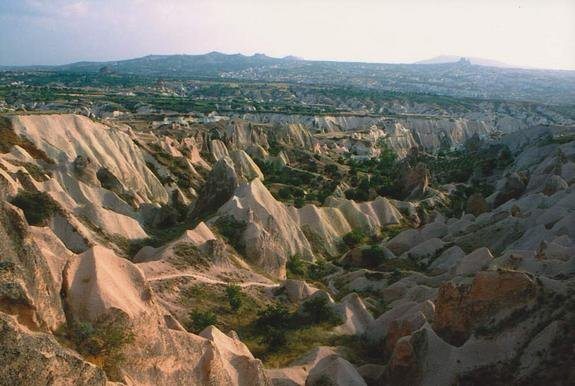
    “There was not a real volcano, but a caldera which spread huge amounts of volcanic ash over Cappacocia, during millions of years, throughout the late Miocene-Pliocene interval,” said Antoine.

    The so-called Çardak caldera, which spread huge amounts of ash over Cappacocia, is inactive today. Even so, thick …

    [ More Geekquinox: U.S. planned to nuke the Moon to win Cold War ]

    Today, the caldera is quiet and docile, and is described by Antoine as “among the most magnificent landscapes I’ve ever seen.”

    via Rhino fossil ‘flash cooked’ 9 million years ago in Turkey | Geekquinox – Yahoo! News Canada.

  • ‘Hackers’ on trial in Turkey for first time

    ‘Hackers’ on trial in Turkey for first time

    A group of Internet hackers appeared in an Ankara court on Monday on charges of terrorism, the first time alleged cyber criminals have been put on trial in Turkey, local media reported.

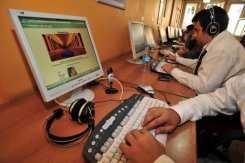
    Turkish men use computers in an internet cafe in Istanbul in 2009. A group of Internet hackers appeared in an Ankara court on Monday on charges of terrorism, the first time alleged cyber criminals have been put on trial in Turkey, local media reported.

    The 10 members of the “Redhack” group are accused of belonging to an armed terrorist organisation, illegally obtaining confidential documents and personal information, as well as cracking into private systems without authorisation.

    The court released three of the suspects who had been in custody since March, the state-run Anatolia news agency reported.

    The defendants, who deny the charges, risk prison sentences ranging from eight to 24 years if convicted.

    Redhack claims to be affiliated with the international hackers’ group Anonymous group, and has carried out several online attacks against state and private domains since 1997.

    Some of the websites they targeted have included the Turkish intelligence agency, the country’s Internet watchdog and Turkish Airlines.

    Turkey has strengthened its legislation in recent years to fight hackers.

    via ‘Hackers’ on trial in Turkey for first time | Bangkok Post: tech.

  • The Making of Modern Ankara: Space, Politics, Representation

    The Making of Modern Ankara: Space, Politics, Representation

    The Making of Modern Ankara: Space, Politics, Representation

    Date: 23 November 2012

    Time: 2.00pm – 7.00pm

    Location: 35 Marylebone Road, London NW1 5LS – View map

    Open to: Academic, Alumni, Public, Student

    The making of a modern Ankara

    An international symposium organised by the Department of Architecture at the University of Westminster in conjunction with SOAS Seminars on Turkey

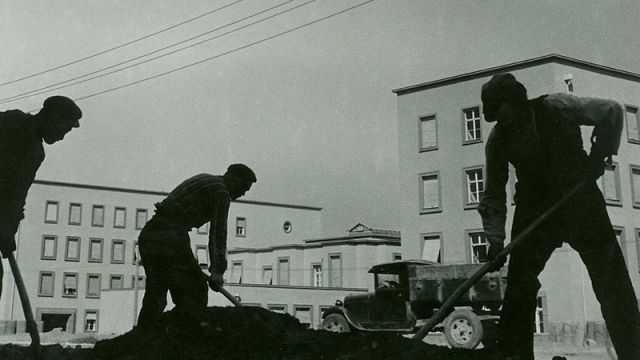
    The making of modern Ankara is a momentous yet oft-neglected episode in twentieth-century history. The transformation of this ancient Anatolian town into the capital of the Turkish Republic captured the world’s attention during the interwar period, when Ankara became a laboratory of modernism and nation building.

    Largely designed by European architects, the new capital embodied the reformist ethos of a secular state firmly projected towards the West. Today, as this sprawling city of over four millions seeks to reinvent its identity, its modern development is the subject of growing scholarship and public interest.

    The half-day symposium brings together a panel of scholars from architecture, planning, art history, heritage, and Turkish studies to revisit the making of modern Ankara in a cross-disciplinary perspective, while also debating its legacy on the eve of the Republic’s 90th anniversary.

    The event will be followed by the launch of Building Identities, an exhibition about Ankara’s Republican architecture curated by the Turkish Chamber of Architects, Ankara Chapter.

    Registration:

    The event is free for all

    Please book at: themakingofmodernankara.eventbrite.co.uk

    For further information, please contact Dr Davide Deriu: [email protected]

    via The Making of Modern Ankara: Space, Politics, Representation – University of Westminster.

  • Harvard Business School Plans Research Center in Istanbul

    Harvard Business School Plans Research Center in Istanbul

    By Brian C. Zhang, CRIMSON STAFF WRITER

    Published: Thursday, November 15, 2012

    In addition to seven current research centers scattered around the world, Harvard Business School is on track to open a new research center in Istanbul in early 2013, Dean Nitin Nohria said in an interview with The Crimson last week.

    These centers are not campuses, Nohria said, but rather leanly staffed offices designed to assist Business School faculty in writing cases about the global economy. The program began in 1997 with the opening of the California Research Center in Silicon Valley, and has since expanded to Hong Kong, Buenos Aires, Tokyo, Paris, Mumbai, and Shanghai.

    “The reason that we’re now thinking about Istanbul is that we look at the map of the world and we say, where are we missing?” Nohria said.

    “Istanbul was always the gateway between the East and the West if you think about history,” Nohria said. “I think it’s one of the best vantage points from which we might also get connected to the Islamic world.”

    The Business School convened a meeting in Istanbul in July 2012 to assess interest and support for the center. Since then, administrators have narrowed down a search for an executive director to two or three candidates, Nohria said.

    HBS’ current research centers offer a variety of services for faculty writing cases about a particular region. With a small team of researchers and interpreters, the centers recommend research directions, help faculty members set up interviews, and assist in translation.

    “Most business schools think of the global economy as an opportunity for additional revenues,” said Felix Oberholzer-Gee, senior associate dean for international development at HBS. “We think of the research centers much more as a window to the world as opposed to an opportunity to deliver programs.”

    Michael S. T. Chen, who directs the Asia-Pacific Research Center, wrote in an email that there are currently six staff members with him in Hong Kong. Victoria W. Winston, executive director of HBS’ Global Initiative, added that each research center’s staffing varies based on the demands of the region.

    “The [Asia-Pacific Research Center] has been up and running for almost fifteen years,” Winston wrote in an email. “It would not be our expectation that a new enterprise in Turkey would reach that level of activity for some time.”

    In addition to the eight research centers that Harvard Business School will maintain after Istanbul opens, the School also has two international classrooms in Mumbai and Shanghai that offer executive education programs for business managers. Nohria said that he also sees opportunities for the school to set up research centers in Africa and Southeast Asia in as soon as two or three years.

    “I think once we have that [centers in Africa and Southeast Asia], I’d feel confident that we had enough of a real coverage in most of the world,” Nohria said.­

    via Harvard Business School Plans Research Center in Istanbul | News | The Harvard Crimson.