KEXP presents Gaye Su Akyol performing live in the KEXP studio. Recorded September 20, 2023
Songs: Vurgunum Ama Acelesi Yok Böyle Olur Mu Martılar Öpüşür, Kediler Sevişir Love Buzz
Gaye Su Akyol – Vocals Ali Güçlü Şimşek – Guitar Görkem Karabudak – Bass, Keyboard Berke Özcan – Drums
Host: Darek Mazzone Audio Engineer: Kevin Suggs Audio Mixer: Görkem Karabudak Mastering: Matt Ogaz Cameras: Jim Beckmann, Carlos Cruz, Jonathan Jacobson, Scott Holpainen Editor: Jim Beckmann
KEXP
KEXP’s mission is to enrich your life by championing music and discovery. Our vision is a connected and compassionate world embracing curiosity and a shared love of music.
KEXP is an international community of music lovers and music makers, and a nonprofit organization fostering relationship and community building through broadcast, online, and in-person music experiences.
Since our founding at the University of Washington in 1972, we’ve remained focused on championing music from all around the globe – spanning eras, styles and traditions. KEXP operates one of the most influential listener-supported music radio stations in the world, broadcasting at 90.3 KEXP-FM, Seattle and through our website and mobile apps. On KEXP’s YouTube channel, our world-renowned Live on KEXP sessions feature exclusive in-studio performances and interviews from emerging and established artists. From a public facility at Seattle Center, KEXP produces hundreds of live performances and music events each year, many of which are open to public audiences at no charge.
Gaye Su Akyol
Gaye Su Akyol (born 30 January 1985) is a Turkish singer, painter and anthropologist.
Biography Akyol’s father is the painter Muzaffer Akyol; her mother was a civil servant, but she passed away in 2014. She graduated from the anthropology department of Yeditepe University in 2007. After that she built her career as a painter with exhibitions both in Turkey and abroad. Before her solo career, she also performed in music bands Mai, Toz ve Toz and Seni Görmem İmkansız alongside Tuğçe Şenoğul.
In 2017, she composed a few songs for the soundtrack of Red Istanbul a film directed by Ferzan Özpetek. In November 2023 they recorded their first performance for the Seattle radio station KEXP.
Inspirations include singer-songwriter Selda Bağcan and the grunge band Nirvana.
Do you remember this commercial with a German coast guard on his first day who receives an SOS message by radio saying: “Help us we are sinking”. The German coast guard answers back: “Vat are you tinking about?”
Osman is a Turkish name and Osmanlı was the name of the empire ruled by Osman’s family.
Ottoman script was etymological just like English, unlike the Modern Turkish script which is phonological, that is written just as pronounced. Osman is actually spelled in Ottoman Turkish as Othman. It’s read as Osman while written as Othman. Just like reading “asthma” as “asma”.
“th” is pronounced like an “s” in Persian and Ottoman Turkish, while it is pronounced as a “t” like people in the Italic Peninsula opted for in the Middle Ages for the name Othman.
Voiceless “th” is a dental fricative and the closest to that is either the voiceless coronal sibilant “s” or the voiceless dental plosive sound “t”.
Where does the word Ottoman come from?
Ottoman script was etymological just like English and Osman was actually written as Othman in Ottoman Turkish.
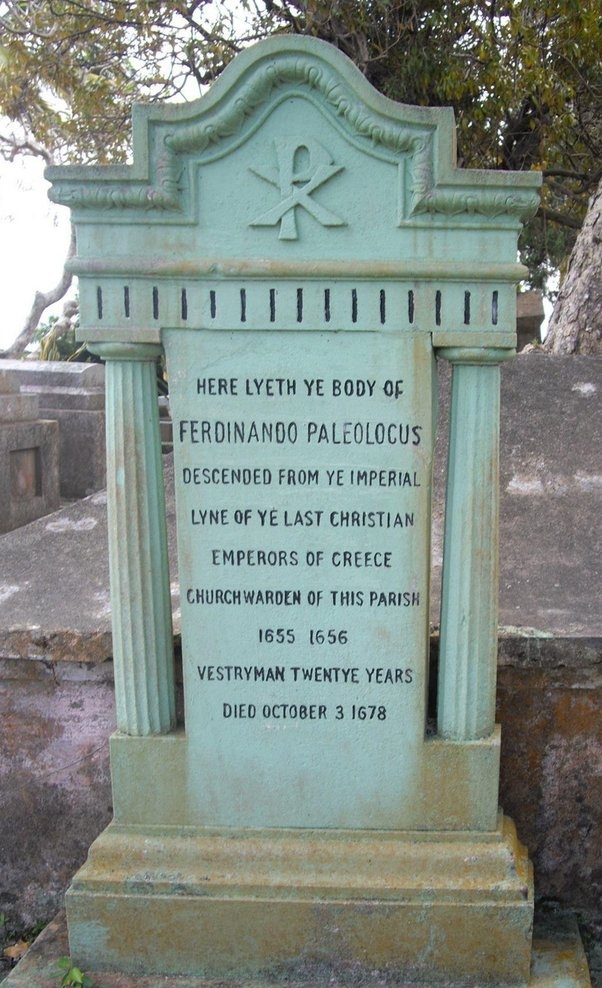
The Palaiologos family was a Byzantine Greek imperial family that ruled the Byzantine Empire from the 11th century until the fall of Constantinople in 1453. They held the throne for over two centuries. The last reigning member of the Palaiologos dynasty was Constantine XI Palaiologos.
By the 14th century, the Ottoman Turks were rapidly expanding their empire, encroaching upon Byzantine territory. The Byzantines, under the rule of the Palaiologos family, found themselves in a precarious position, struggling to defend their lands against the rising power of the Ottomans.
One of the pivotal moments came in 1354 when the Byzantine Emperor John V Palaiologos sought Ottoman assistance against rival factions within his own empire. While the Ottomans helped him regain his throne, they gradually gained influence and control over Byzantine affairs.
Over the years, the Byzantine Empire continued to decline, facing internal divisions and external pressures. The Ottomans exploited these weaknesses, launching military campaigns and gradually capturing Byzantine territories.
In 1453, the Ottoman Turks, led by Mehmed II, besieged Constantinople. Constantine XI Palaiologos, the last Byzantine Emperor, fought bravely during the defense of the city. However, on May 29, 1453, the Ottomans breached the walls of Constantinople, leading to the fall of the city. According to historical accounts, Constantine XI died in battle, fighting on the front lines. The fate of his body is not entirely clear, and there are different accounts of what happened to it.
After the fall of Constantinople, members of the Palaiologos family faced various fates. Some were captured by the Ottomans, while others managed to escape and sought refuge in other parts of Europe. The diaspora of Byzantine nobility contributed to the spread of Greek culture and learning during the Renaissance.
The fall of Constantinople in 1453 marked the end of the Byzantine Empire, and the Ottoman Empire replaced it as the dominant power in the region. The Palaiologos family’s political influence came to an end with the fall of Constantinople, and its surviving members scattered throughout Europe.
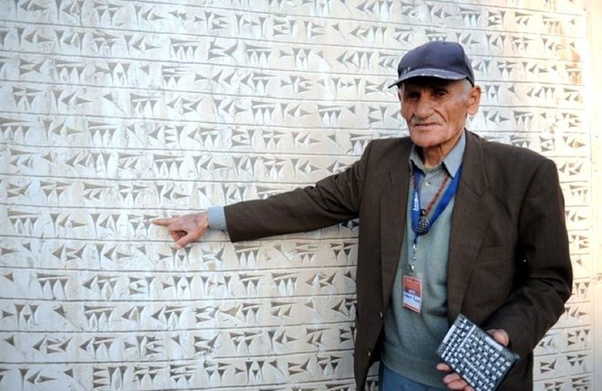
No, the Urartu, probably the source of the biblical placeholder Ararat, despite sharing an anachronistic geographical overlap with the Armenians, are not related to them. The Urartu had a written language in cuneiform script and that language is not Indo-European, the group Armenian is in, or Semitic or Sumerian-related. After long time belief that it is a language isolate or at best had been related to some proto-Caucasian, as a result of coincidence, it has lately been detected as closely resembling the highly complex North Caucasian language Chechen, widely spoken today in Chechnya, Ingushetia and Daghestan.
Mr. Mehmet Kushman, an ethnic Chechen Turkish national, who convinced the archeological group after seeing them transliterate cuneiform to give it a go at modern Chechen language. After striking similarities detected between the two, the security guard dedicated his life to learning cuneiform, Assyrian and Urartu language and became one of the leading experts in Urartu culture. He is the carbon Rosetta stone of Urartu inscriptions.
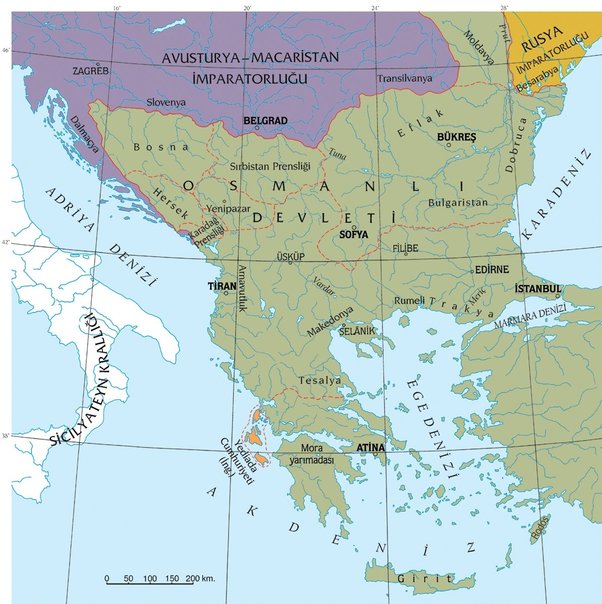
The Balkans is a southeastern European region that includes countries located on the Balkan Peninsula, with diverse landscapes and climates:
Albania, Bulgaria, Bosnia and Herzegovina, Croatia, Greece, Montenegro, North Macedonia, Romania, Serbia, Slovenia, Turkey
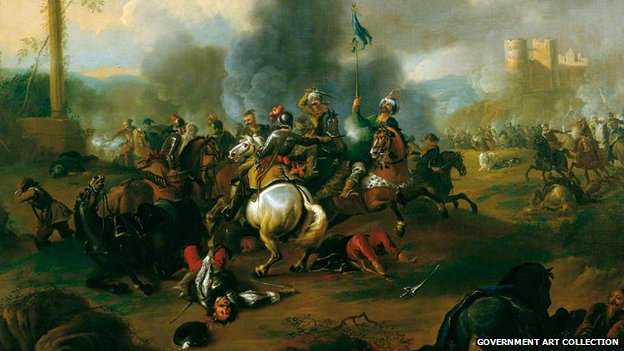
The initial Ottoman expansion took place at the expense of Christian lands in western Anatolia and the Balkans, particularly the Byzantine Empire
Countries in the Balkans often share borders with one another, and historical border disputes have influenced regional dynamics. Many Balkan nations were once part of the Ottoman Empire, which has left a significant historical and cultural impact.
The breakup of Yugoslavia in the 1990s resulted in violent conflicts, with lasting implications for the region.
The Balkans are home to various ethnic groups and religions, with Orthodox Christianity, Islam, and Catholicism being the major faiths.
Some Balkan nations aspire to join the European Union and NATO, which has implications for their political and economic development; while others have already become members.
Let’s compare them by several key attributes relating to their military, size, economy and quality of life.
We will look at the top 3 and bottom 3 in each case.
Military power (Global Fire Power index – 2023) 0 = Super military power and higher the number= less military power
Top 3
Turkey (11th in the world) – 0.2016
Greece (30th in the world) – 0.4621
Romania (47th in the world) – 0.7735
Bottom 3
Bosnia and Herzegovina (133rd in the world) – 3.0788
Montenegro (128th in the world) – 2.8704
North Macedonia (108th in the world) – 2.1717
Population
Top 3
Turkey – 84.78 million (2021)
Romania- 19.12 million (2021)
Greece – 10.64 million (2021)
Bottom 3
Montenegro – 619, 211 (2021)
North Macedonia- 2.065 million (2021)
Slovenia- 2.108 million (2021)
Landmass
Top 3
Turkey – 783, 562 km²
Romania – 238, 397 km²
Greece – 131, 957 km²
Bottom 3
Montenegro – 13, 812 km²
Slovenia – 20, 273 km²
North Macedonia – 25, 713 km²
Education (UN education index – measures the expected years of schooling and mean years of schooling of the population – 0 = no Education at all and 1 = maximum Education)
Top 3
Slovenia – 0.914 (2019)
Greece – 0.855 (2019)
Croatia – 0.805 (2019)
Bottom 3
North Macedonia 0.704 (2019)
Bosnia and Herzegovina 0.711 (2019)
Turkey 0.731 (2019)
Democracy Index (The Economists Intelligence Unit – 2022, 10 = super democratic and 0 = dictatorship)
Top 3
Greece – 7.97, Flawed Democracy (25th in the world)
Slovenia – 7.75, Flawed Democracy (31st in the world)
Bulgaria – 6.53, Flawed Democracy (57th in the world)
Bottom 3
Turkey – 4.35, Hybrid regime (103rd in the world)
Bosnia and Herzegovina – 5.00, Hybrid regime (97th in the world)
North Macedonia – 6.10, Flawed Democracy (72nd in the world)
GDP (size of economy)
Top 3
Turkey – $819 billion (2021)
Romania – $284.1 billion (2021)
Greece – $214.9 billion (2021)
Bottom 3
Montenegro – $5.861 billion (2021)
North Macedonia – $13.83 billion (2021)
Albania – $18.26 billion (2021)
GDP per capita (size of economy relative to population)
Top 3
Slovenia – $29, 291.40 (2021)
Greece – $20,192.60 (2021)
Croatia – $17,685.33 (2021)
Bottom3
Albania – $6,492.87 (2021)
North Macedonia – $6,694.64 (2021)
Bosnia and Herzegovina- $7,143.31 (2021)
GDP per capita at Purchasing Power Parity – IMF (how much can people buy with money in a country)
Top 3 (2023)
Slovenia – $52,641
Croatia – $42,531
Romania – $41,634
Bottom 3 (2023)
Albania – $19,197
Bosnia and Herzegovina – $19,604
North Macedonia – $21,111
Exports of goods and services (in millions of $, 2022)
Top 3
Turkey – 343,688
Romania – 129,165
Greece – 105,756
Bottom 3
Montenegro -3,178
Albania – 7,057
North Macedonia – 10,150
Percentage of Population Living in Poverty – Poverty Rate, World Bank
Top 3 (with lowest poverty of population)
Slovenia – 12% (2018)
Albania – 14.3% (2012)
Bosnia and Herzegovina – 16.9% (2018)
Bottom 3 (with highest poverty of population)
Montenegro – 24.5% (2018)
Bulgaria tied with Romania – 23.8% (2018)
Serbia – 23.2% (2018)
Peacefulness (Global Peace Index 2023, 1 – 5 scale, 1 being a super peaceful utopia and 5 being a warzone)
Top 3
Slovenia – 1.334 (8th in the world)
Croatia – 1.450 (14th in the world)
Bulgaria – 1.640 (30th in the world)
Bottom 3
Turkey – 2.389 (121st in the world)
North Macedonia – 2.039 (88th in the world)
Albania – 1.925 (79th in the world)
Happiness (Happiness Index, 2023, 10 being maximum happiness and 0 being totally depressed)
Top 3
Slovenia – 6.63 (22nd in the world)
Romania – 6.48 (27th in the world)
Serbia- 6.18 (43rd in the world)
Bottom 3
Turkey – 4.74 (109th in the world)
Albania – 5.2 (88th in the world)
Bulgaria – 5.37 (84th in the world)
Suicide Rate (suicides per 100,000, WHO, 2019)
Top 3 (has the least suicide)
Turkey – 2.3 (10th in the world)
Greece – 3.6 (27th in the world)
Albania – 3.7 (29th in the world)
Bottom 3 (has the most suicide)
Montenegro – 16.2 (161st in the world)
Slovenia – 14 (150th in the world)
Croatia – 11 (121st in the world)
Homicide rate (murders per 100,000, UN)
Top 3 (with least murders)
Slovenia – 0.4 (2021)
Greece – 0.9 (2021)
Bosnia and Herzegovina – 1 (2021)
Bottom 3 (with most murders)
Turkey – 2.5 (2021)
Montenegro – 2.4 (2021)
Albania – 2.3 (2021)
Healthcare Index (100 being amazing quality & universal healthcare and 0 being 0 healthcare, 2023)
Top 3
Turkey – 71.1
Slovenia – 66.4
Croatia – 64.5
Bottom 3
Albania – 49.3
Serbia – 52.2
Bosnia and Herzegovina -54.8
Life expectancy
Top 3
Slovenia – 82.31 Years
Greece – 82 Years
Croatia – 79.4 Years
Bottom 3
Bulgaria – 72.84 Years
Romania – 75.14 Years
Serbia – 75.21 Years
CONCLUSION:
Turkey has the most economic and military power as a whole, due primarily to it’s size.
Who was more powerful, Henry VIII or Suleiman The Magnificent?
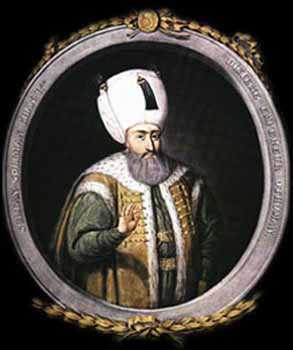
Suleiman the Magnificent, also known as Suleiman I, was the tenth Sultan of the Ottoman Empire, and he reigned from 1520 to 1566. He is one of the most famous and influential rulers of the Ottoman Empire. Suleiman was born on November 6, 1494, and he died on September 6, 1566.
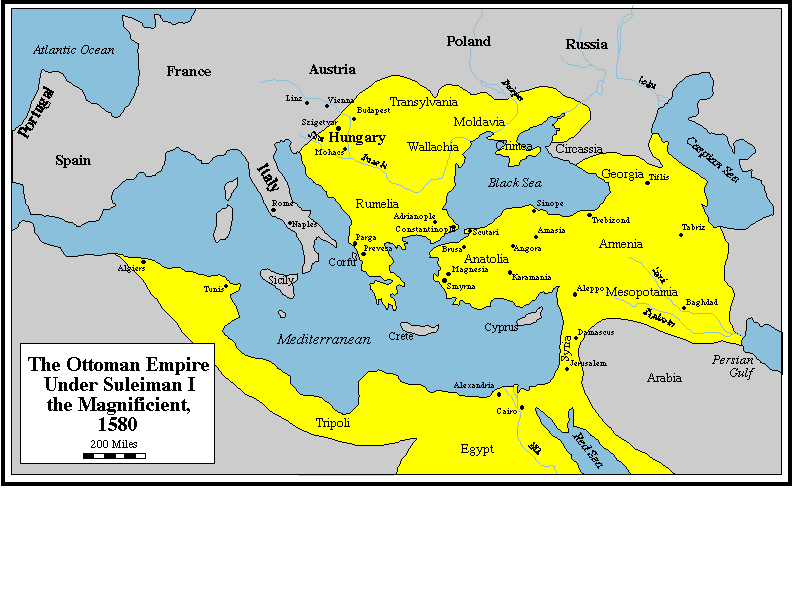
During his reign, Suleiman oversaw the expansion of the Ottoman Empire to its greatest territorial extent. It covered modern day Turkey, Georgia, Armenia, Iran, Iraq, Egypt, much of Libya and Algeria, Greece, Hungary, Romania, Moldova as well as bits of Ukraine and Russia. He ruled over 25 million souls.
He is known for his military campaigns and successful conquests, which included the capture of Belgrade, Rhodes, and most notably, the siege of Vienna in 1529. Suleiman’s reign is often considered the height of Ottoman power and influence in both Europe and Asia.
The economy of the Ottoman Empire was more than double France, Spain and the Hapsburg Empires combined.
Suleiman was also a patron of the arts, and his rule saw a flourishing of literature, architecture, and culture. He is particularly well-known for his legal reforms and the codification of laws that became the basis for the legal system of the Ottoman Empire. His title, “the Magnificent,” reflects the grandeur and success of his rule. His reign is sometimes referred to as the “Golden Age of the Ottoman Empire.” He was succeeded by his son, Selim II, upon his death in 1566.
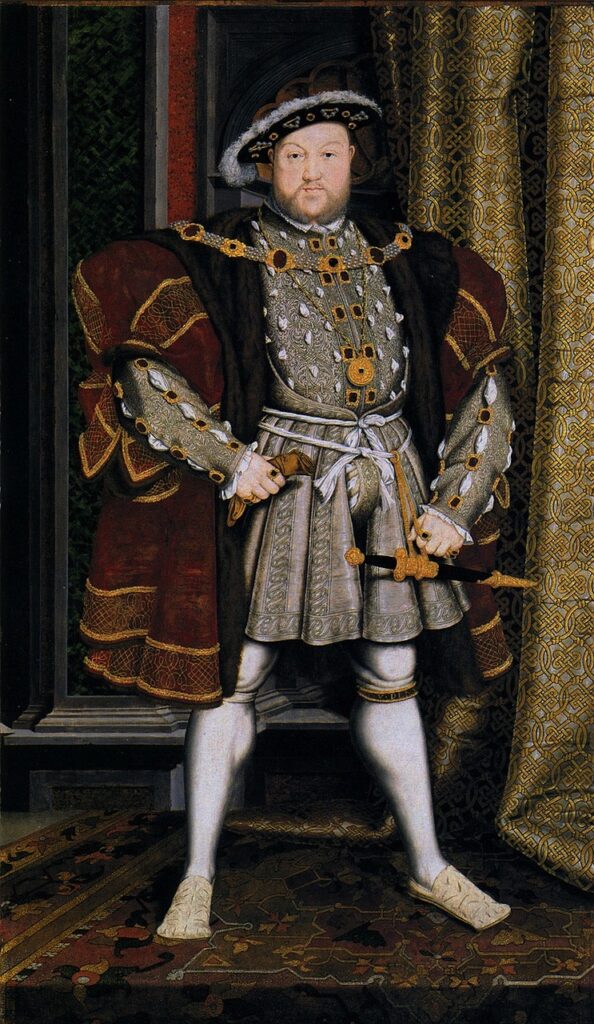
Henry VIII was a King of England who ruled England from 1509 to 1547. Not even the whole of island of Great Britain. He ruled over a puny 2.3 million souls. His economy was tiny compared to the major European powers of the day – far less the mighty Ottomans. Henry was born on June 28, 1491, and he died on January 28, 1547.
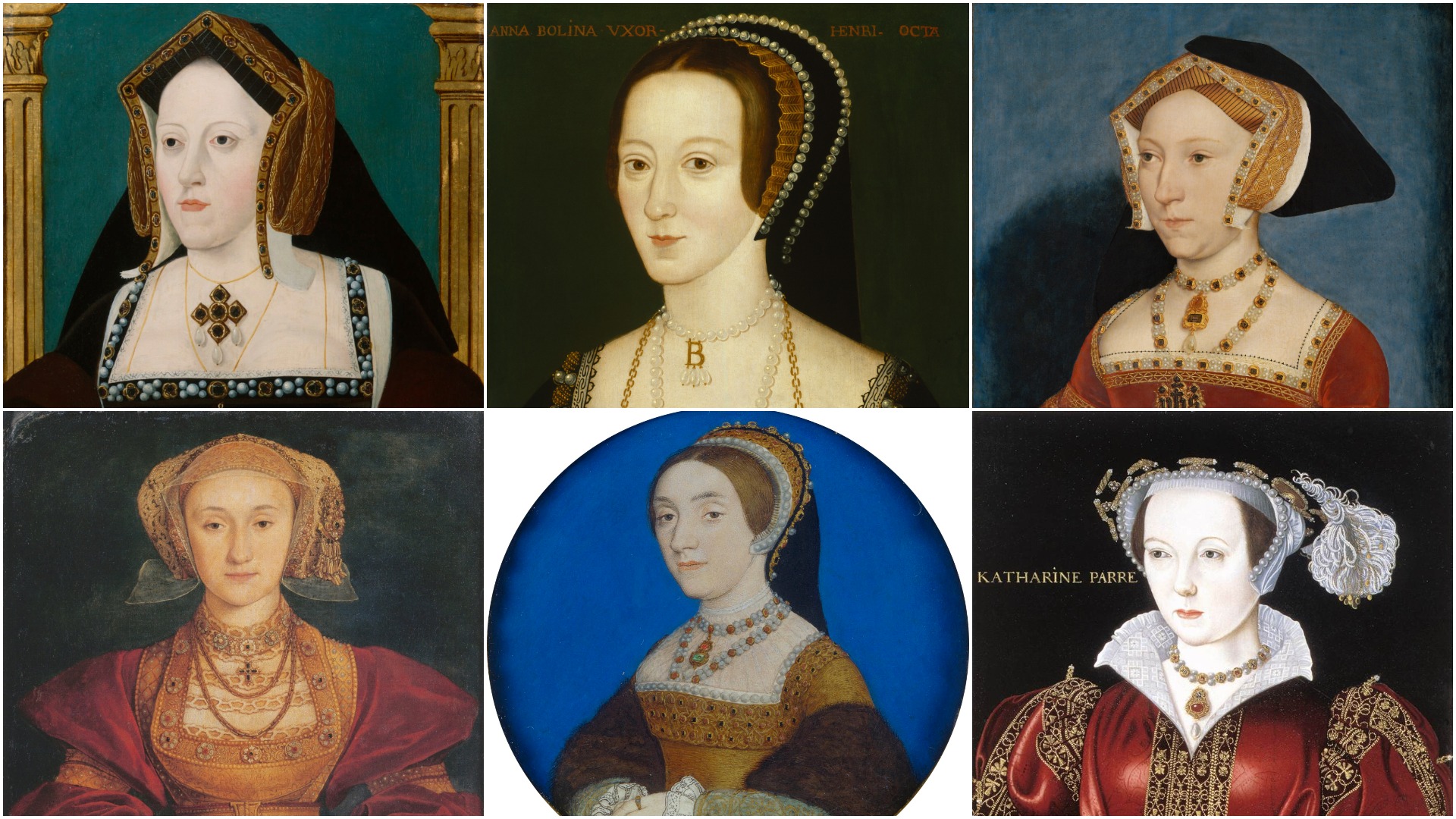
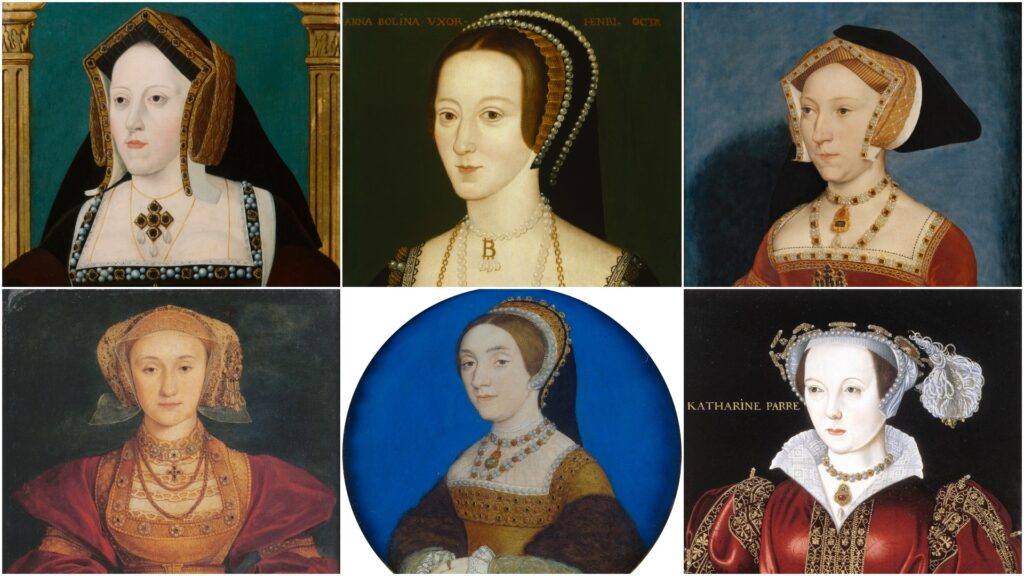
The Six Wives of Henry VIII
Henry is famously known for his six marriages. His desire to annul his marriage to Catherine of Aragon, and the Pope’s refusal to grant him an annulment, led Henry to establish the Church of England in 1534. Henry passed the Act of Supremacy, which declared the English monarch as the supreme head of the Church of England, further solidifying his control over the church.
This event, known as the English Reformation, resulted in the Church of England breaking away from the authority of the Pope and the Roman Catholic Church. As part of the English Reformation, Henry ordered the dissolution of the monasteries in England, confiscating their lands and wealth. This move had profound effects on the religious, social, and economic landscape of England.
Henry’s reign had a lasting impact on English history, especially in the areas of religion and government. The establishment of the Church of England set the stage for the development of Protestantism in England, and the monarchy’s power and role in governance were significantly transformed.