By Sefa Yürükel
Every era has its darkness; sometimes it comes with war, sometimes with famine, and at times with moral decay. Today, however, this darkness has stripped away all its masks and stands before us with a single face: Corrupt politics, unconscious societies, and systematic ignorance. Across the world, people seek salvation in new tyrants and hope in old lies; while those who raise the voice of truth are silenced, forgotten, or discredited.
In countries like Turkey—which has yet to complete its modernization journey, caught between secularism and traditional religiosity, both enamored with and enraged by the West—this darkness is felt more intensely. Imagine a country that once established a modern Republic, envisioned a future based on reason, science, and equality, only to later trample those gains beneath the feet of religion, ignorance, and self-interest. Atatürk’s silhouette remains, but his spirit is in exile. Secularism is a signboard, hollow in meaning. This is not just irony; it is a society losing its connection to its own conscience.
⸻
- Political Perspective: The Moral Collapse of Power and the Shadow of Imperial Mindsets Over Leadership
Today, leadership is no longer about representing the people, but about directing them. From Erdoğan to Trump, from Macron to Zelensky, many modern leaders are loyal to the new codes of global politics—not representing peace, but domination; not the people, but interests. These leaders no longer seek to understand their people but to reprogram them. Because to understand the people is to carry their pain, and that threatens the comfort of power.
In Turkey, the situation is a deeper and more intimate tragedy. The rational legacy of a leader like Atatürk has become nothing more than a display piece; while power manipulates people through the grip of religion, even the opposition has surrendered to the language of this system. Everyone wants to “be in power,” but no one wants to “be justice.” As those elected grow distant from the people, yet still claim to speak for them, politics becomes theater, and democracy a pagan ritual.
In this system, truth-tellers are punished, and those who speak rightly are declared enemies. Because truth is the enemy of the status quo. Just as Socrates was silenced with hemlock, today it is not the most knowledgeable but the most obedient who are valued. Yet the oldest call of philosophy still echoes in our ears: Know thyself. But no one is interested in knowing themselves; everyone prefers to blame others and cover their own ignorance with someone else’s sins.
⸻
- Psychological Perspective: Collective Trauma and Learned Helplessness
When a society’s memory is erased, its soul is crippled. In countries like Turkey, shaped by layers of historical traumas, the collective psyche is not just melancholic but governed by an organized system of denial and suppression. The traumas of the past—coups, shortages, oppression, and most of all, the systematic destruction of hope—have been coded into the subconscious of the public as a kind of helplessness. This code does not lead to the creation of a new order, but to the legitimization of existing disorder.
Learned helplessness refers to when individuals stop trying after repeated failures, believing effort is futile. In Turkey, this concept has infiltrated society as a whole. Empty-sounding but ideologically weighty phrases like “Nothing will change,” “They’re all the same,” “We’re hopeless,” slowly erode the belief in personal agency—making this narrative one of the strongest allies of authoritarian rule. Because hopeful people question things, and those who question are a threat.
In this psychological climate, true heroes are forgotten while fake saviors are glorified. Atatürk becomes a statue, a picture, a poster… but never a system of thought or a method of resistance. People comfort themselves with symbols while the content of truth decays. The modern Turkish individual carries an image of Atatürk in their mind, but this Atatürk is no longer a figure of history—only a quiet aphorism used to silence their own conscience. His call for “generations free in thought, free in conscience, and free in knowledge” is no longer an educational policy but a nostalgic lament.
The cruelest part of trauma is that it teaches silence. Speak, and you’ll be isolated. Resist, and you’ll be rejected. Question, and you’ll be branded a “traitor.” This psychological pressure leads people to deny their moral existence—even normalize evil as they experience it. And so, the people fall in love with their executioners.
⸻
- Cultural Perspective: A Crisis of Identity Between Secularism and Religiosity
Culture is the mirror of a society. But sometimes, that mirror breaks. In countries like Turkey—caught between the winds of both East and West, walking under both the crescent moon and the light of modernity—this broken mirror reflects only distorted images. Not fully religious, not fully secular; not fully modern, not fully traditional… Everything is partial, hybrid, ambiguous. And this ambiguity has ceased to be an identity—it has become a burden.
Secularism in this land is not an ideal but an accusation. To be “secular” is seen as to be “godless,” because the concepts have been hollowed out, and values either demonized or trivialized. Yet secularism is not just the separation of religion and state; it is the liberation of thought. The right to believe without fear, and equally, the right to not believe without fear. And this right is protected not by defending secularism, but by living its meaning.
However, in Turkey, secularism has been reduced to elite behavior—detached from the people. On the other hand, religion has ceased to be a matter of morality and become a tool for politics and identity warfare. Mosques are turned into political arenas; pulpits become campaign stages. Faith is no longer a matter of conscience, but an identity test: Not who is more devout, but who is more flamboyant.
This cultural entrapment, when merged with societal trauma, produces a population full of contradictions—yet so numbed it fails to even notice the irony. We imitate the West while demonizing it. We praise Atatürk while betraying his principles. We cling to religion while drifting further from ethics.
Cultural identity is no longer a compass—it’s a storm. We no longer know where we’re headed; we simply follow the wind. And the wind, now, is no longer the people’s breath—it is the breath of power.
⸻
- Sociological Perspective: Willful Ignorance, Crowd Psychology, and Media Domination
Ignorance is not a deficiency—it is a system. Blocking access to information, making critical thought a luxury, and equating inquiry with “terror”… These are not governance mistakes; they are methods of rule. In Turkey, ignorance is not accidental; it is a meticulously constructed political project. A policy of ignorance that changes faces each decade, but never its essence: not to educate the people, but to render them governable.
Sociologically, all structures that obstruct individual access to information—such as the degradation of the education system, the monopolization of media, and the criminalization of alternative thought—are tools to transform a society into a crowd. Because the individual thinks, but the crowd believes. And believing crowds do not question. They accept whatever is said, embrace whatever is imposed. Intelligence is no longer prized—loyalty is.
Media is the most effective weapon of this order. The most powerful propaganda of the modern world is broadcast, not printed. People no longer read books—they read subtitles. It’s no longer about discussion but about hashtags. Every evening, the public mind is fed with the same sentences, the same faces, the same fears. Reality is shattered, perception is rebuilt. People start seeing enemies as friends and friends as enemies.
Ignorance is not merely the absence of knowledge; it is mistaking the false for the true, presenting darkness as light. Today, much of the population sees their oppressors as heroes and their colonizers as saviors. Because an unconscious society always deems the loudest right, and the most fearsome strong. That’s why truth isn’t heard—because it doesn’t shout. It is silenced, buried.
This sociological structure strips the people of their agency over their own future. Elections are held, but there is no real choice. Debates are conducted, but there are no real ideas. There is democracy, but no people. Only a crowd. And a crowd that learns to live without awakening, never wants to wake again.
⸻
- Anthropological Perspective: Leader Cults, Ritualized Politics, and Modern Idolatry
Humanity has always lived with a need to believe. This need is fed not only by religion, but by every ideology, every figure, every ritual that replaces it. Today, belief systems are no longer read from holy books, but from screens, podiums, and public squares. Leaders are not prophets—but they are mythologized figures in the public consciousness: saviors, fathers, even gods. This is the dangerous edge where politics becomes indistinguishable from idolatry.
Modern leaders no longer simply govern—they dominate, they are sanctified, they become untouchable. Their words are law, their gaze mercy, their anger justice. From Erdoğan to Trump, Putin to Netanyahu, many leaders promise not hope but faith. And instead of critique, people offer worship. Because that which is believed in is not questioned. Political loyalty thus becomes a form of worship, not thought—a cult of identity, not citizenship.
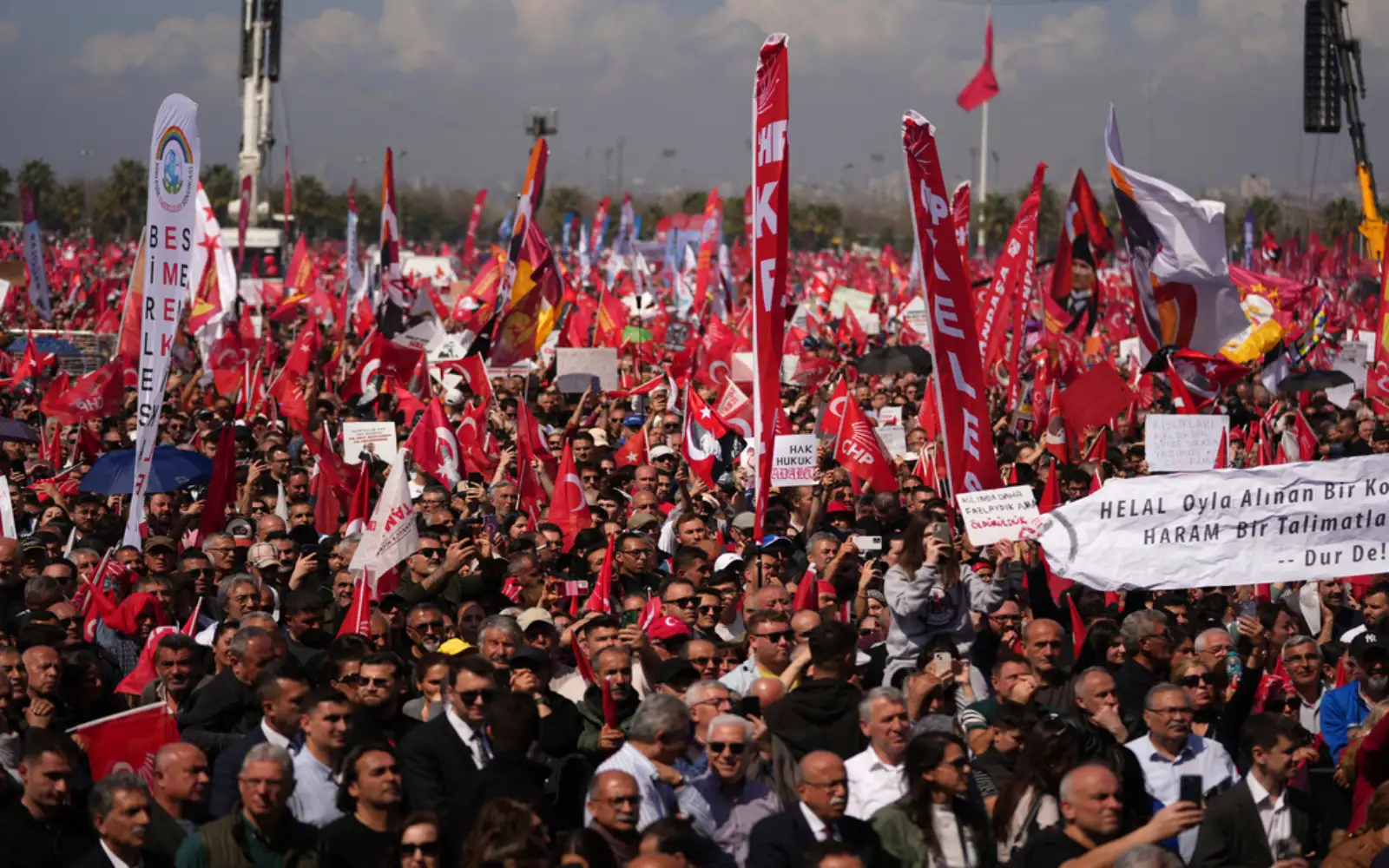
Ritualized politics is the ceremony of this worship. State ceremonies, campaign rallies, repeated leader imagery—all idealize the same figure in the public mind. People no longer think—they repeat. They do not understand—they believe. They do not vote—they offer loyalty. This is the moment when political identity is lost and replaced by communal consciousness. Politics is no longer a space for public debate but a venue for sacred rituals.
Anthropologically, this shows that modern communities are composed not of individuals, but of devout collectives. Even in a republic founded on secularism, religious rhetoric and leader-worship dominate. This structure represents the sanctification of the non-sacred. True leadership is not about seizing the people’s minds—it is about setting them free. But the people have long forgotten freedom. They now mistake their chains for bracelets.
Modern idols are no longer made of stone—they are built from propaganda. They are not erected in squares—they are installed in minds. And to topple them, revolution is not necessary—awakening is. But awakening requires courage, the willingness to be alone, and the re-learning of how to think. That is why people fear not breaking their idols—but even touching them.
⸻
Conclusion: Is the Reconstruction of Morality, Truth, and Hope Still Possible?
The question is no longer, “How did we end up like this?” but “How do we get out of this?” Because time does not only leave marks; it also offers the chance to erase them or write new ones atop them. Today, the world stands at a crossroads: on one side, silence in the name of truth; on the other, frenzy in the name of ignorance. And we are travelers between these two darknesses, having lost our sight.
In Turkey, this darkness is more intense, more layered. For in this land, there was once a leader who preached reason to his people, who stood for independence against colonialism, and enlightenment against fanaticism: Atatürk. He was not a name, but an idea. But we loved the name, not the idea. We remembered him instead of embodying him. We missed him instead of understanding him. And now, nostalgia gives way to disappointment.
The modern world’s true illness is not economic collapse, environmental disaster, or political decay. The real collapse is the devaluation of morality, humanity, and conscience. We live in a time where everyone knows everything, but no one feels anything. Where being right is punished and having a conscience is a burden. Worst of all: we got used to it.
But hope, like darkness, is contagious. Every true word, every brave stance, every open conscience is a ripple against that numbness. Perhaps it won’t be grand revolutions—but small awakenings that change everything. Perhaps a single article, a single sentence, a single person choosing not to stay silent…
Throughout history, societies have often forgotten the truth. But each time, someone reminded them. Socrates drank hemlock, but was never silenced—he still speaks centuries later. Atatürk died, but his idea was never buried. And you, the one reading these words: If you do not forget, if you do not stay silent, this darkness will not be permanent.
Truth has always belonged to the few. And the few have always been the essence of history.
So let us return to the beginning:
In this world, it is hard to remain good.
It is burdensome to remain just.
But that is exactly what makes it meaningful.