Category: Authors

  • A CALL TO ALL HUMANITY

    A CALL TO ALL HUMANITY

    Fulfill Your Duty Against the Genocide of Alevis and Christians in Syria

    Dear Defenders of Humanity,

    A genocide is currently taking place in Syria, specifically targeting Alevis and Christian minorities. The perpetrators of this crime against humanity are radical Islamist terrorist organizations such as Hayat Tahrir al-Sham (HTS,) HTS leader Ahmed El Sara and factions of the Free Syrian Army (FSA), supported by political actors. Serious allegations suggest that Turkish President Recep Tayyip Erdoğan, MHP leader Devlet Bahçeli, National Intelligence Organization (MIT) Chief İbrahim Kalın, and Foreign Minister Hakan Fidan are involved in supporting these actions. Therefore, it is imperative to file criminal complaints urging institutions such as the International Criminal Court (ICC) and the European Public Prosecutor’s Office to launch investigations and take necessary action.

    Mere statements or online meetings are no longer enough. This issue directly concerns Turkey as well, and all national and international legal avenues must be pursued to ensure that those responsible are brought to justice. Legal professionals and bar associations must take the lead in filing lawsuits against those who commit and support this genocide. Additionally, well-documented and academically grounded complaints should be submitted to the relevant prosecutors’ offices in various countries.

    This is not solely the responsibility of Alevi associations; all human rights organizations, individuals committed to secular and democratic values, civil society institutions, and political organizations must take action. Genocide is not just the concern of a particular group; it is a crime against all of humanity. If you truly stand for secularism and human rights, now is the time to act.

    Large-scale protests must be organized, legal proceedings must be meticulously followed, and effective communication strategies must be employed to draw international attention to this atrocity. A structured struggle must be conducted based on Turkey’s founding principles—secularism, the rule of law, and human rights.

    This is not just a warning; it is an urgent call to action for humanity. Time is running out, and this fire will soon threaten Turkey as well.

    The time to take responsibility before history is now.

    Sincerely,
    Sefa Yürükel
    Social Anthropologist and Ethnographer
    Researcher on Genocides and Terrorism
    Norway

  • Voting Against the New Constitution Is the Best Way to Get Rid of Pashinyan

    Voting Against the New Constitution Is the Best Way to Get Rid of Pashinyan

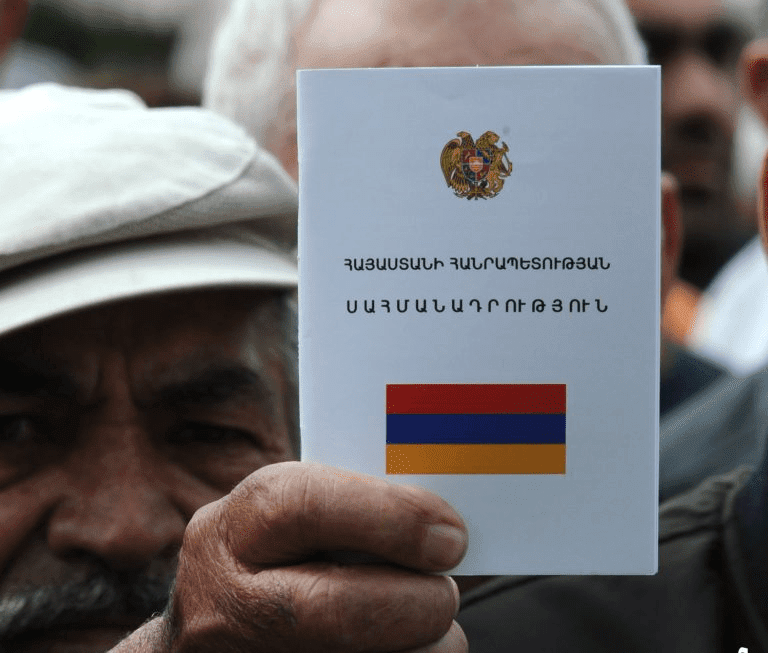
    Prime Minister Nikol Pashinyan announced last week that he has ordered the preparation of a new constitution which will need the approval of the citizens of Armenia in a referendum.

    I hope the majority of Armenian voters will reject the new constitution, thereby compelling him to resign. This is a golden opportunity to get rid of him. All previous efforts to remove him from office have failed over the past seven years because:

    1)  The split among the opposition groups has prevented them from forming a coalition large enough to remove Pashinyan from office. Even though his popularity has considerably decreased in recent years from 80% seven years ago to less than 10% now, nevertheless, his ruling party’s political rating is larger than any single opposition group. Many excuses have been made for not uniting, but none of these reasons are more important than the need to save the country. Regrettably, by being disunited, the opposition is the one that is keeping Pashinyan in power.

    2)  To form a successful anti-Pashinyan coalition, no one group should try to dominate it. The leadership of the coalition should be rotated until new elections are held.

    3)  A shadow government should be composed of all the opposition groups based on professional expertise.

    4)  The groups should temporarily set aside all of their internal differences and unite to save the nation. Should Armenia no longer exist, none of these groups’ ideologies will matter. Once they save the country, they can go back to pursuing their own goals.

    Knowing Pashinyan’s egotistical modus operandi, he will crisscross Armenia to ensure that the citizens vote for the new constitution. He will leave no stone unturned to achieve his objective by pressuring and threatening them. He has the resources of the government at his disposal to carry out such a vast campaign and resort to vote tampering or collecting a large amount of campaign contributions that exceed the legal limit, just as his party did during the last Yerevan City Council elections. This is a critical goal for Pashinyan because Pres. Aliyev has made it clear that without a new Armenian constitution, he will refuse to sign the “Peace Treaty” that Pashinyan has been begging for. Pashinyan needs that signed piece of paper to fool the voters in the 2026 elections into thinking that he has brought them “peace” even though it will not last long.

    Initially, Pashinyan dismissed Aliyev’s demand to change the constitution as interference in Armenia’s internal affairs. Furthermore, Pashinyan said that there is no such need as the draft of the peace treaty contains a clause that both countries agree to recognize each other’s territorial integrity. In the case of a dispute, the terms of the peace treaty will take precedence over their respective constitutions. Pashinyan added that Azerbaijan’s constitution itself contains indirect references to demanding territories from the Republic of Armenia. However, Pashinyan said that he will not ask Azerbaijan to revise its constitution!

    In addition to changing Armenia’s constitution, Pashinyan has accepted the following demands from Aliyev:

    — Armenia turning over certain villages located inside Armenia to Azerbaijan.

    — Allow Azeris who formerly lived in enclaves inside Armenia to return and live there.

    — To disband the OSCE Minsk group.

    — The departure of EU monitors from Armenia.

    — Armenia to drop its international lawsuits against Azerbaijan.

    — The road from the Eastern part of Azerbaijan to Nakhichevan to be a Corridor under Azeri sovereignty rather than a mere road. While objecting to the Corridor, Pashinyan has agreed to facilitate the access.

    — Even though the 2020 Agreement allows both Armenia and Azerbaijan to cross each other’s territory, Pashinyan has repeatedly said that Azeris are welcome to cross Armenia, without once stating that the agreement should be implemented reciprocally.

    Armenia’s Justice Minister Srbuhi Galyan said last week that the new constitution will be ready before the June 2026 parliamentary elections. It is not clear if the electorate will be asked to vote on the constitution at the same time as voting for the parliament members or after that election.

    There is nothing wrong with amending the constitution from time to time as the need arises, but to be compelled to write a brand new one at the enemy’s demand is totally unacceptable.

    It is critical that Armenian voters reject the new constitution. A no vote is a vote of no confidence in the Prime Minister. He can no longer continue to remain in his position after having been rejected by the people on his key initiative. He will have no choice but to resign.

  • Pashinyan Falsely Claims Former Leaders Recognized Artsakh as Part of Azerbaijan

    Pashinyan Falsely Claims Former Leaders Recognized Artsakh as Part of Azerbaijan

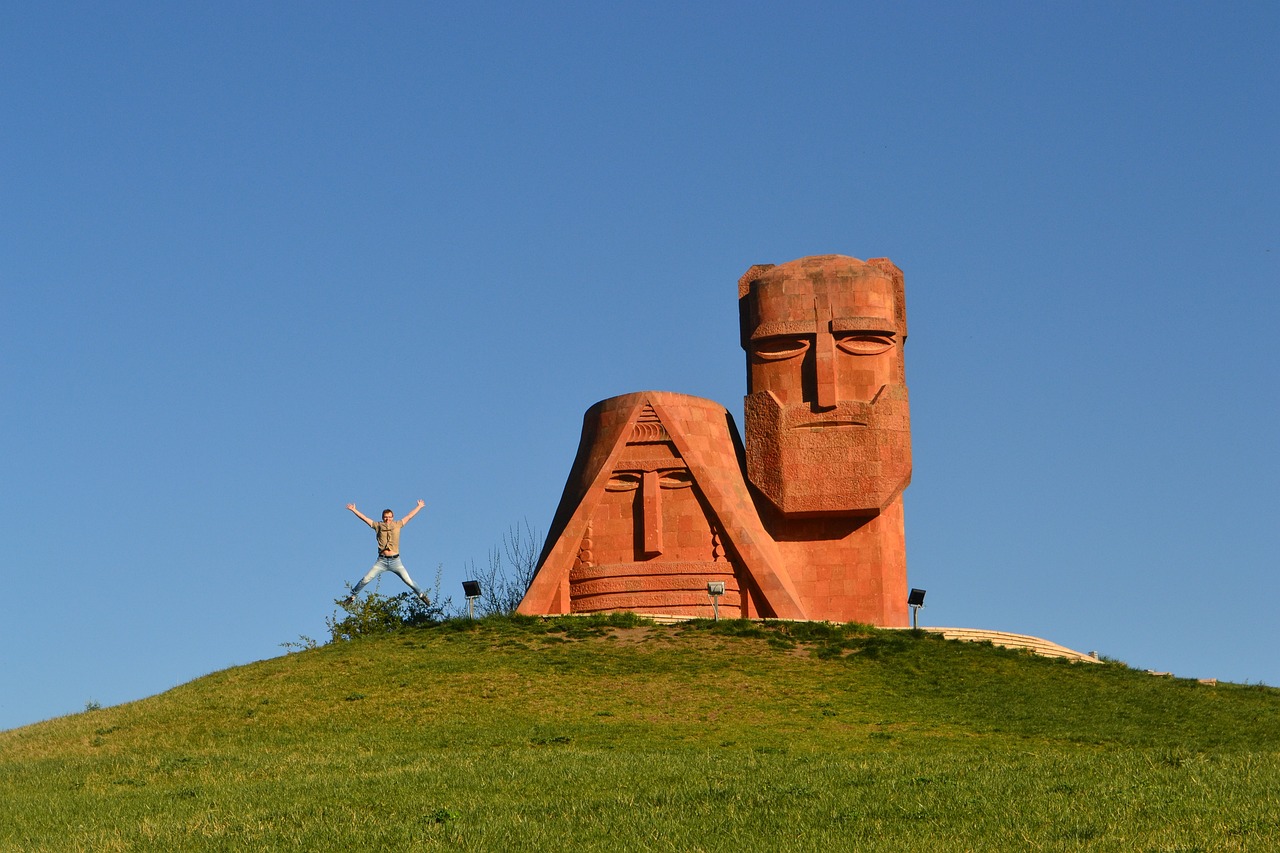
    The Ambassador of France to Armenia, Olivier Decottignies, who had been taking strong pro-Armenian positions, surprised everyone last week by falsely telling Armenia’s Public Radio that Prime Minister Nikol Pashinyan was not the first Armenian leader to recognize that Artsakh belonged to Azerbaijan.

    Decottignies added: “Armenia has accepted, recognized that Nagorno Karabagh is part of Azerbaijan ever since the adoption of the Alma Ata Declaration [in 1991] because Nagorno Karabagh was a region of Soviet Azerbaijan. Therefore, those who claim that Nagorno Karabagh was recognized as part of Azerbaijan in 2022 in Prague are lying, because Nagorno Karabagh has been recognized by Armenia as part of Azerbaijan since the Alma Ata Declaration.”

    This is an undiplomatic and false statement from the representative of a country friendly with Armenia. Why would the French Ambassador make such a wrong claim? There may be three reasons:

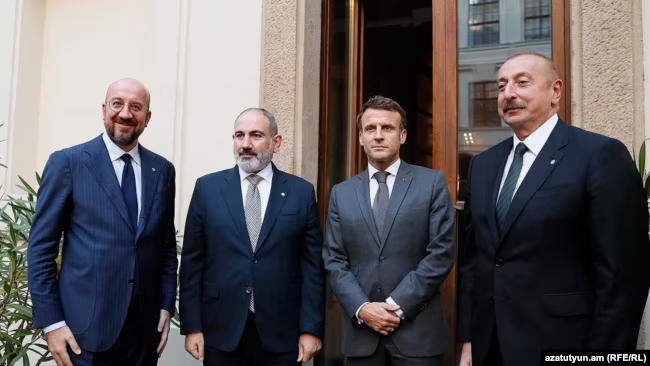
    1) To absolve French President Emmanuel Macron of blame for mediating along with then President of the European Council Charles Michel talks in Prague on October 6, 2022, with Pashinyan and Azerbaijan’s President Ilham Aliyev, where Pashinyan recognized the territorial integrity of Azerbaijan, accepting that Artsakh is part of Azerbaijan based on the Alma Ata Declaration of 1991.

    2) To justify and support Pashinyan’s teetering rule against his domestic opponents after handing over Artsakh to Azerbaijan.

    3) To improve the damaged Azerbaijan-France relations.

    The statement issued after the quadrilateral 2022 Prague meeting confirmed that Armenia and Azerbaijan, according to the Alma Ata 1991 Declaration, “recognize each other’s territorial integrity and sovereignty,” meaning that Artsakh belongs to Azerbaijan. Subsequently, Pashinyan explicitly and falsely claimed multiple times that based on the Alma Ata Declaration Artsakh is part of Azerbaijan.

    By making such a statement, Pashinyan’s intent was to shift the blame onto Armenia’s former leaders for giving away Artsakh to Azerbaijan in 1991, long before he came to power in 2018.

    There are several errors in the statements of the French Ambassador and Pashinyan:

    — The Alma Ata Declaration of December 21, 1991, did not include any reference to Artsakh. It stated that the 11 former Soviet Republics, including Armenia and Azerbaijan, “recognize and respect each other’s territorial integrity and the inviolability of the existing borders.”

    — Pres. Levon Ter Petrosyan, on his way back from Alma Ata in 1991 told Soviet Television that when the Declaration is ratified by the Supreme Council of Armenia, a reservation would be added regarding the status of Nagorno-Karabakh’s autonomy “so that we can obtain solid guarantees for the existence of Nagorno-Karabakh as an autonomous entity.”

    — On February 18, 1992, the Supreme Council of the Republic of Armenia ratified the December 8, 1991 Minsk Agreement on the Creation of the Commonwealth of Independent States (CIS), which was the precursor to the Alma Ata Declaration. Given the fact that Artsakh had held a referendum on Dec. 10, 1991, declaring the establishment of the Republic of Nagorno Karabagh, the Supreme Council of Armenia added the following reservation which applied to Artsakh: All former autonomous entities of the USSR, which had previously held a referendum declaring their independence, can join the CIS.

    — The Supreme Council of Armenia reaffirmed its position on Artsakh in a Decision on July 8, 1992, stating that it considers unacceptable any document that mentions the Republic of Nagorno Karabagh as part of Azerbaijan.

    — On April 15, 1994, the President of Armenia refused to sign the “Declaration on the Preservation of Sovereignty, Territorial integrity, and Inviolability of Borders of the Participant States of the Commonwealth of Independent States,” out of concern that Azerbaijan would use that document against Artsakh.

    — The Preamble of the 1995 Constitution of Armenia contains a reference to the Declaration of Independence, which in turn refers to the 1989 joint decision of the Soviet Armenia’s Supreme Council and the Artsakh National Council on the “Reunification of the Armenian SSR Supreme Council and the Mountainous Region of Karabagh.”

    — Finally, during the 1996 OSCE Lisbon Summit, the Armenian government vetoed a resolution which would have given the highest degree of self-government to Nagorno Karabagh within Azerbaijan.

    After all the above references to the separate status of Artsakh from Azerbaijan, how can Pashinyan claim that the former leaders of Armenia had given Artsakh to Azerbaijan? If that were the case:

    — Why did Azerbaijan not occupy Artsakh from 1991 to 2020?

    — Why did Azerbaijan launch a major war in 2020 to conquer Artsakh, losing thousands of soldiers?

    — Why did Armenian soldiers battle Azerbaijani troops after 1991?

    — Why did the Armenian government for decades, including during Pashinyan’s rule, station soldiers of the Armenian Army in Artsakh?

    — Why did the Armenian government contribute hundreds of millions of dollars to Artsakh’s budget, if Artsakh was part of Azerbaijan?

    — Why did the EU foreign policy chief Josep Borrell state in the European Parliament in 2023 that “Armenia has recognized Nagorno Karabagh as an integral part of Azerbaijan, and Nikol Pashinyan is the first Armenian leader to make such a statement?”

    — Why did Pashinyan stand in front of the people of Artsakh in Stepanakert on August 5, 2019 and declare: “Artsakh is Armenia, period,” if Artsakh had been given to Azerbaijan?

    — Why did the Minsk Group of mediators, co-headed by France, Russia and the United States, tried for decades to find a solution to the status of Artsakh, if it was recognized by Armenia to be part of Azerbaijan since 1991?

    The answer to all of these questions is that Armenia’s former leaders did not hand over Artsakh to Azerbaijan. Pashinyan was the first Armenian leader to recognize Artsakh as part of Azerbaijan.
  • Armenian Parliament Speaker Prefers That All Artsakh Armenians were Killed

    Armenian Parliament Speaker Prefers That All Artsakh Armenians were Killed

    Top Armenian government officials have crossed all red lines. After giving away Artsakh, they are now endangering the existence of the Armenian Republic. This alarming development is the fault of the entire leadership of the ruling Civil Contract Party, starting from Prime Minister Nikol Pashinyan and ending with his Ministers, the Speaker and majority of the National Assembly.

    Pashinyan’s agreement to turn over the Republic of Artsakh to Azerbaijan was illegal because he has no jurisdiction over Artsakh. Knowing that, the Prime Minister did not ask for the approval of either the National Assembly or the Constitutional Court before signing the declaration of capitulation. Prior to the 2020 War, Pashinyan himself admitted that he was the Prime Minister of the Republic of Armenia and had nothing to do with Artsakh, while loudly proclaiming, “Artsakh is Armenia. Period.” This is one of his scores of contradictory statements.

    Most governmental leaders around the world resign immediately after suffering such a devastating loss in war. They acknowledge their failure and yield their seat to someone else who can salvage whatever is left. Pashinyan, a psychologically crushed man, cannot properly rule the country and restore the damage that he himself has brought about.

    Pashinyan is stubbornly clinging to power, thus increasing the damage and losses. He has not used the word Artsakh once since the 2020 war. He never mentions Artsakh Armenians’ right of return. He has not lifted a finger to secure the release of Artsakh’s leaders who are being tried in Baku. He claims that Artsakh Armenians are not citizens of Armenia, even though they possess passports of the Republic of Armenia.

    Meanwhile, the Speaker of the National Assembly, Alen Simonyan, who is just as incompetent as the Prime Minister, once again, gave insane answers to a simple question from an Artsakh journalist, last week. The question was: “When will I return to Artsakh?” Simonyan replied: “When it is safe, when we sign a peace treaty. You got out of there, because it was not safe, even though it was possible to stay and fight till the end with the weapons that Armenia had left. You should have fought, Armenia fought.” This is the usual tactic of Pashinyan’s clan. Put the blame for their own failures on everyone else.

    To make matters worse, when the journalist asked Simonyan why he avoids using the name Artsakh, he gave a complete nonsensical denialist answer: “I am a politician, and I oppose any foreign citizen calling one of my cities by a Turkish or Azerbaijani name. I must uphold a politician’s ethics.” He is shamefully comparing saying Artsakh to a Turk or Azeri calling an Armenian city by a Turkish name!

    Only a defeatist high-ranking official would talk like that. He knows very well that Artsakh Armenians fought as much as they could, killing 205 Azeri soldiers and wounding 1004 others within 24-hours on Sept. 19, 2023, but were unable to continue resisting a well-armed enemy which was many times more powerful than them. They had no choice, but to leave. If they had stayed any longer, they would have been all slaughtered by the Azeri troops. Maybe that’s the outcome that Simonyan would have preferred.

    There is plenty of evidence of Azeri soldiers’ brutal behavior during previous battles when they videotaped the cutting off of the head of an elderly civilian man. In another gruesome criminal act, which the Azeri soldiers “proudly” videotaped, they tortured, mutilated, raped and killed Anush Apetyan, a female Armenian soldier, during an attack in September 2022, after cutting off her legs, putting her cut off finger in her mouth, and poking out her eye and replacing it with a stone! These are shocking war crimes!

    Simonyan’s anti-Artsakh comments generated immediate outrage throughout Armenia and the Diaspora. Several major Armenian and Artsakh organizations issued statements lambasting him.

    Instead of lecturing Artsakh Armenians about staying and fighting, Simonyan should look at the self-defeating behavior of his own government which did not lift a finger to come to the rescue of fellow Armenians in Artsakh — the constitutional obligation of the Armenian government. On the contrary, on Sept. 21, 2023 just as Armenia’s Foreign Minister Ararat Mirzoyan was addressing the emergency UN Security Council meeting in New York about Azerbaijan’s huge attack on Artsakh, Prime Minister Pashinyan embarrassed his own Foreign Minister in front of the whole world by announcing in a live address in Yerevan: “At this moment, our assessment is that there is no direct threat to the civilian population of Nagorno-Karabakh.” Thus, Pashinyan gave a great excuse to Azerbaijan to cover up its massive crime and undermined the claim of international lawyers that Artsakh Armenians were subjected to ethnic cleansing and genocide.

  • The Syrian Revolution, East of the Euphrates, and the Political and Military Power of the Turkmen

    The Syrian Revolution, East of the Euphrates, and the Political and Military Power of the Turkmen

    The Syrian revolution that suddenly appeared after the fall of the Tunisian and Libyan regimes has brought about a rooted change in Syrian internal politics and is considered the final result in formalise the region with new angles. The Syrian revolution ended the Baathist rule in Syria that lasted for more than 60 years with a change in the roles in the scenarios drawn for the region by changing the players in the political arena and updating the planning of the political arena. The Syrian revolution that began with popular protests against the dictator’s rule and then took on a military character by forming armed factions to fight the forces of bulling and ended with the fall of Bashar al-Assad’s rule.

    The next stage of the Syrian political process imposes on it the requirements of the international strategy to form civil forces with a Syrian national identity away from sectarian and ethnic quotas, taking competence, professionalism, and nationalism as a support for the civil forces.

    Reading the Syrian political process at the current stage from the perspective of the Syrian geographic strategy requires us to shed light on (geopolitics) that determines international political relations in economic, political and social aspects. Based on the theories of geostrategy that connect the relationship between land and politics, criteria appear on which the political process in Syria must be built, which confirm that the complete and effective political process is completed and its foundations are established after ending the presence of the Syrian Democratic Forces (SDF) in the east of the Euphrates because they constitute a fundamental obstacle to building the Syrian state and writing its balanced political equation in a manner consistent with the plans of the modern state to build international relations. The geographical area under the control of (SDF) constitutes a third of the Syrian territory and contains 90 percent of the internal energy in addition to constituting an important food basket for Syria. Therefore, Syria cannot be an integrated state by uprooting the eastern Euphrates from Syrian territory and abandoning it under the names of regions, self-administration, and so on so . However, the withdrawal of American forces from eastern Syria may create heavy negative repercussions that the (SDF) cannot bear them.

    The Syrian revolution, which achieved its goals at a high price during its paths since 2011, has revealed the reality of people who struggled politically and militarily with test of the Syrian military and political currents.

    This fruitful reality relates to the struggle of the Syrian Turkmen people to participate in documenting contemporary Syrian history.

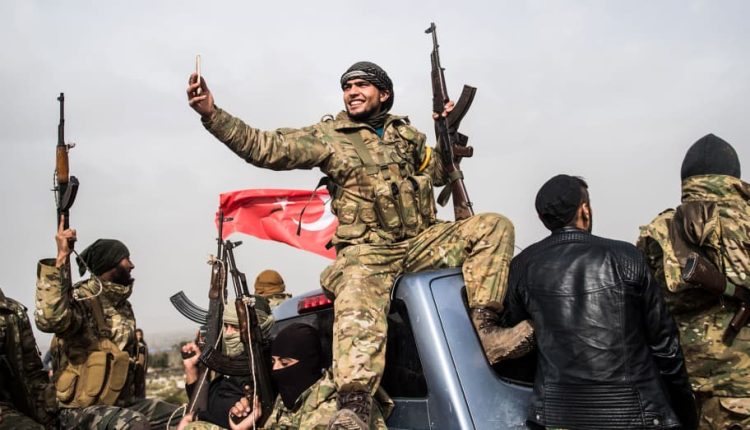
    Through the military operations led by Hay’at Tahrir al-Sham against bulling in and dictatorship, the Turkmen armed factions affiliated with Hay’at Tahrir al-Sham expressed their support for the military plans that resulted in the liberation of the Syrian provinces. In the context of talking about the military operations, it is necessary to point out the Turkmen armed factions:

    1- Sultan Murad Division
    2- Hamza Division
    3- Sultan Muhammad al-Fatih Division
    4- Al-Muntasir Brigade.

    As for the political aspect of the Turkmen political movement. During the past decades of its rule, the Syrian regime contributed to the exclusion of Syrian Turkmen from all political fields and tried to prevent this ancient national component from forming parties, associations, or political and cultural institutions through which it could express its national presence, national and cultural identity, and demand its political rights. Therefore, the Syrian Turkmen found themselves without any political institutions that would express them and their aspirations at the beginning of the Syrian revolution. During this short period, the Syrian Turkmen were able to put their national imprint on political and revolutionary work by forming political parties and the Syrian Turkmen Council. They participated in all the institutions of the revolution, such as the National Coalition of Opposition Forces and the Syrian Interim Government, in addition to their active participation in the military revolutionary field. As the Syrian Turkmen, as an ancient national component of Syria, must have a political entitlement that allows the Turkmen political institutions to keep pace with the major political developments that the Syrian people are going through. Through my press interviews with Syrian Turkmen politicians, they confirmed that the Syrian Turkmen are committed to the unity of the Syrian territory, and they emphasize the necessity of having an active role in the future of this country and that they be enabled to obtain fair political representation that preserves their political rights with the rest of the people of the country. During the period of the outbreak of the Syrian revolution, the following Turkmen political movements were established:

    1- The Syrian Turkmen Council
    2- The Syrian Turkmen National Party
    3- EL-NAHDA party
    4- The Syrian Turkmen Bloc

    The attractive attention in the Syrian Turkmen issue, which confirms its justice and the consolidation of the Syrian national identity in its essence, is the approval of the armed Turkmen factions to join the Syrian regular army within the structure of the Syrian Ministry of Defense. In this way, the Syrian Turkmen military force became part of the Syrian army.

  • Pashinyan Rejects Committing The Crime of Armenian Genocide Denial

    Pashinyan Rejects Committing The Crime of Armenian Genocide Denial

    Ever since Prime Minister Nikol Pashinyan’s disgraceful attempt to raise unnecessary questions about the facts of the Armenian Genocide to a group of Swiss-Armenians in Zurich last month, he and his blind followers have been making excuses for his deplorable remarks.

    Pashinyan casually told the Swiss-Armenian group: “We need to also return to the history of the Armenian Genocide. We need to understand what happened and why?” It is shocking that 110 years after the Armenian Genocide, the Prime Minister of Armenia pretends not to know “what happened and why.” I don’t think it is because of his lack of knowledge. He knows exactly what he is saying and why.

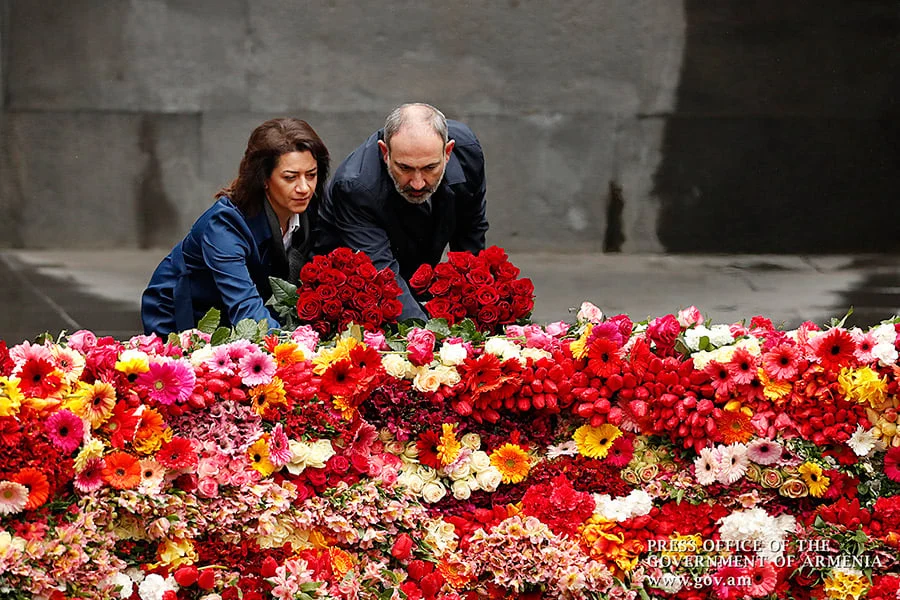
    He continued with more fabricated questions: “How is it that in 1939 there was no agenda for the Armenian Genocide? And how is it that in 1950 the Armenian Genocide agenda appeared? And how did we perceive it, through whom did we perceive it?” Pashinyan must be told that long before 1950 and 1939, all the way back in 1921, the Catholicos of All Armenians Kevork V Surenyants designated April 24 as the Day of Remembrance for the victims of ‘Meds Yeghern.”

    Pashinyan has made similar questionable statements in the past. To confuse the public, he regularly denies his earlier statements and claims that he was misunderstood. One thing is sure, Azeris and Turks were elated that the Prime Minister of Armenia agrees with them on “questioning the genocide.”

    Justifiably, Pashinyan was condemned by prominent Armenians and organizations all over the world. He was harshly criticized by Catholicoi Karekin II and Aram I, various historians and experts on the Armenian Genocide, the Lemkin Institute, and Armenian organizations in Switzerland, Belgium and Armenia.

    Given the fact that Pashinyan has denigrated all sacred symbols of the Armenian nation from Mt. Ararat to Armenia’s coat of arms, and has repeatedly claimed that commemorations of the Armenian Genocide were prompted by external forces, meaning the Soviet Union, he has come very close to denying the facts of the Armenian Genocide which is a crime in Armenia punishable by 2-5 years of imprisonment.

    Pashinyan’s statement, as to why the Armenian Genocide was not on the agenda in 1939 and that it appeared on the agenda only in 1950, has a very simple explanation. There is no need for conspiracy theories. After the demise of Stalin’s dictatorial regime, which punished manifestations of nationalism with imprisonment, exile and even execution, the repressive environment began to soften gradually which allowed the construction of the Sardarabad and Armenian Genocide Memorials in Soviet Armenia.

    In the meantime, both prior to 1939 and after 1950, Armenians in the Diaspora commemorated the Armenian Genocide, asking for its recognition and the return of occupied Western Armenia from Turkey. Memoranda and petitions were presented to the United Nations and major powers in the late 1940’s. Tens of thousands of Armenians marched in various Middle Eastern, European and American cities demanding their historical rights.

    On August 20, 2009, Pashinyan wrote in his “Prison Diary: the mechanics of genocide” and reposted on his Facebook page last week: “Traditional Armenian thinking equates the concept of ‘genocide’ with the hostile actions of the outside world, ‘the Turk,’ meaning, the enemy. The new Armenian thinking tries to perceive the phenomenon through self-realization, tries to perceive the internal causes of the phenomenon, which are hidden behind the genocided people’s thinking, meaning, our own thinking.” Strangely, Pashinyan shifts the blame for the genocide from the perpetrators to the victims.

    There are two key documents that I would like to bring to Pashinyan’s attention:

    1) The law adopted by the Supreme Council of the Armenian Soviet Socialist Republic on Nov. 22, 1988: We “condemn the 1915 Genocide of the Armenians in Ottoman Turkey as a grave crime against humanity, and declare April 24 as a day of remembrance for the Armenian victims.”

    2) Article 136 of the Criminal Code of the Republic of Armenia: “Public denial, justification, propaganda or belittling the danger of Genocide or Crimes against Humanity:

    a) Public denial, justification, propaganda or belittling the danger of Genocide or Crimes against Humanity, where those have been committed on the basis of racial background, skin color, national or ethnic origin or religious background, for the purpose of provoking hatred, discrimination or violence against a person or a group of persons — shall be punished by a fine in the amount of twenty-fold to forty-fold, or public works for a term of one hundred fifty hours to two hundred fifty hours, or by restriction of liberty for a maximum term of three years, or by short-term imprisonment for a term of one to two months, or by imprisonment for a maximum term of four years.

    b) The act provided for in part (a) of this Article, which has been committed:

    i) through publicly exhibited artworks, mass media or using information or communication technologies;

    ii) by use of official or service authority or influence conditioned thereby — shall be punished by imprisonment for a term of two to five years.

    Regrettably, Pashinyan’s statements parallel the denialist strategy of the Turkish government. Turks raise similar questions to cast doubt on the veracity of the Armenian Genocide.

    Because Armenia’s judicial system is currently under Pashinyan’s control, no judge will dare to find him guilty. But when he is no longer in power, an independent judge will punish him for violating the law on genocide denial.