Author: Ibrahim Kurtulus

  • Turkish Parliamentary Outreach in Washington Highlights a Deeper Grassroots Gap

    Turkish Parliamentary Outreach in Washington Highlights a Deeper Grassroots Gap

    A delegation from the Turkish Grand National Assembly, led by Foreign Affairs Committee Chairman Fuat Oktay, is in Washington this week holding a series of meetings aimed at strengthening diplomatic ties at the legislative level. The visit underscores Ankara’s recognition that while executivelevel relations between Türkiye and the United States remain “extremely positive,” as Oktay noted, engagement with the U.S. Congress has proven far more difficult.

    Oktay’s remarks deserve close attention. His observation that the U.S. Congress is challenging to engage because of its focus on domestic affairs is not merely a tactical complaint it is an admission of a structural reality of American democracy. In the United States, foreign policy is deeply shaped by grassroots engagement, local constituencies, and sustained relationships between elected officials and the communities they represent. This is not a flaw in the system; it is the system.

    For years, A hand full of activist , like my self  and policymakers have acknowledgedat least rhetorically that U.S. domestic politics is driven from the bottom up. Yet in practice, Ankara has largely relied on expensive lobbying firms in Washington, spending millions of dollars with little concrete, longterm impact. Access was purchased with millions of dollars given to lobbying firms, meetings were arranged, but influence remained shallow and often temporary. Lobbying without grassroots power is transactional, not transformational in building relationships.

    The real weakness lies closer to home, within the ecosystem of Turkish-American organizations. Many so-called NGOs claiming to represent Americans of Turkish descent lack meaningful grassroots engagement in the halls of U.S. power. Groups such as   Federation of Turkish Americans Associations often run by individuals with limited credibility, lack of proper English language or outreach or its members incardinated by the Federal Government  , present themselves as national representatives while failing to build real relationships with members of Congress, state legislators, or even local officials. Representation without legitimacy is not advocacy; it is theater and picture taking.

    Too many Turkish American organizations and its members  appear more interested in hosting visiting Turkish political figures than in holding U.S. elected officials accountable or educating their own communities about civic engagement. Activism is reduced to symbolic welcoming outside the Turkish House or what I have refer to as the “Diplomatic House” rather than sustained engagement with congressional offices, district staff, school boards, or city councils.

    The consequences are visible. Many Turkish Americans can name foreign ministers or ambassadors, yet cannot identify their own congressman, senator, assembly member, or even better yet ,  their children’s school principal. This is the State of the Turkish American Communities lobbying efforts. This civic disconnect undermines any serious claim to political influence in the halls of power. In the American system, power flows upward from informed, organized communities not downward from embassies or visiting delegations who for 40 years have come to the New York or Washington to congregate Turkish Americans by spoon feeding their version of relations then take group pictures for about one hour and  then run to Apple store and Clothing Outlets to buy luggage full of Designer clothes. 

    Oktay’s statement that Congress is difficult because it is domestically focused is, unintentionally, an indictment of this failure. It highlights how Turkish-American NGOs have not done the essential work of embedding Turkish-American concerns into the fabric of U.S. domestic politics accept for community activist like Ergun Kirlikovali, Murat Guzel,  Erol Akyurek and Melih Bektas. If Congress seems distant, it is because the bridge has not been built.

    Leadership matters in this process, and it starts with consulates. In New York, for example, the role of the Consul General Yazal  should be to empower communities, encourage civic participation, and foster credible relationships with elected officials. Instead, the current period has been marked by missed opportunities and weak engagement, widely regarded by community leaders as among the poorest in decades.

    Strengthening U.S.Türkiye relations will not come from delegations alone, nor from checkbooks written to lobbying firms. It will come from disciplined grassroots organizing, accountable community leadership, and a serious commitment to engaging American democracy on its own terms. Only then will Congress listen not because it is asked to, but because it must.

    Ibrahim Kurtulus

    Community Activist 
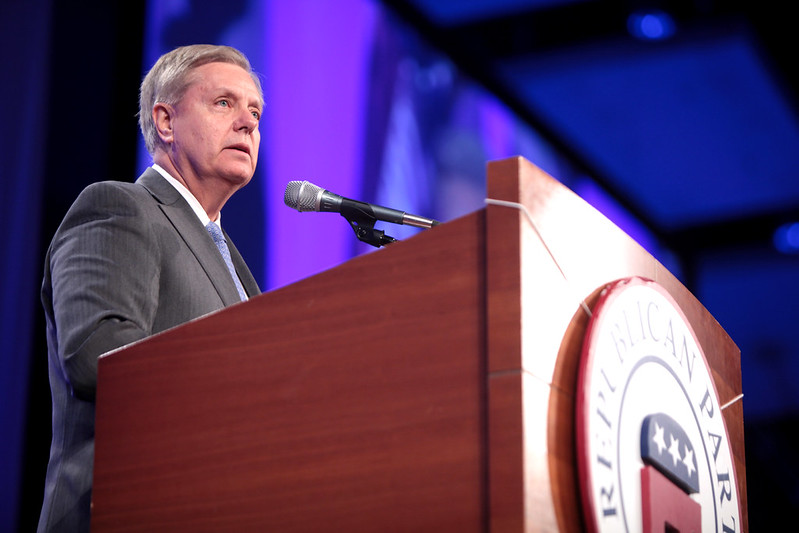
  • Letter to Lindsey Graham- US Senator

    Letter to Lindsey Graham- US Senator

    Regarding  Recent Statement on Syria and ‘Saving the Kurds’

    February 9, 2026

    Lindsey Graham -US Senator
    211 Russell Senate Office Building
    Washington, DC 20510

    Dear Senator Graham,

    I read your January 27, 2026 statement on X with great concern. Your claim that “the Kurds are under threat from the new Syrian government aligned with Turkey” and your announced intent to introduce “crippling sanctions” through a “Save the Kurds Act” constitutes not only a misreading of the regional reality but, more troublingly, a reversal of your own previously stated national security concerns.

    First, your framing collapses a diverse people into a single militant faction. There are more than 15 million Kurdish citizens living in neighboring states who serve as parliamentarians, ministers, governors, diplomats, judges, academics, and business leaders. If these governments were engaged in a campaign against Kurds as a people, they would not have sheltered half a million Iraqi Kurds fleeing Saddam Hussein in 1991 nor hosted millions of Syrian refugees, including tens of thousands of Syrian Kurds, since 2012. The omission of intra-Kurdish plurality is astonishing. Nechirvan Barzani, President of the Kurdistan Regional Government, has publicly defined the PKK as a “headache” and demanded their expulsion from Kurdish territory in Iraq. Abdullah Keddo of the Syrian Kurdish National Council has warned that PKK-linked groups must be expelled from Kurdish-majority towns in Syria. Kurdish rejection of PKK authoritarianism is not peripheral — it is central.

    Second, your romanticization of the YPG/PYD also ignores hard legal and intelligence facts. Interpol, FATF, and UN agencies have documented PKK-linked networks involved in narcotics trafficking, forced conscription, human smuggling, extortion, and arms procurement. No sovereign state including our own would tolerate an armed separatist formation operating on its borders financed through transnational organized crime.

    Your narrative also erases the chronology. The collapse of the 2013–2015 peace process did not occur in a vacuum. It was the PKK that unilaterally broke the ceasefire, declared “autonomous zones,” dug urban trenches, and launched urban insurgencies from Cizre to Sur. No Western democracy would permit an armed non-state actor to carve municipal fiefdoms under the banner of cultural rights.

    You are also aware of the U.S. role in muddying this conflict. Under the cover of counter-ISIS operations, Washington rebranded the PKK’s Syrian affiliates (YPG/PYD) as the “SDF.” Senior American officials have since admitted the obvious. Then-Secretary of State Antony Blinken called the PKK an “enduring threat.” Defense Secretary Lloyd Austin confirmed that the SDF maintains structural ties to the PKK. Ambassador James Jeffrey openly described the SDF as a national security problem for our NATO ally. President Donald Trump went further: “Kurds are not angels. The PKK… is probably worse at terror and more of a terrorist threat in many ways than ISIS.”

    Senator Graham, respectfully you once recognized this. During hearings of the Senate Armed Services Committee, you questioned Secretary Carter and General Dunford about U.S. cooperation with the PKK/YPG in Syria and Iraq, highlighting their acts of terror and the thousands of civilian lives lost. You warned against entanglements with designated terrorist entities. Today, you are proposing sanctions on governments combating the very groups you once warned about. One is left to ask: when did the policy change, and why?

    Meanwhile, the new Syrian government under President Ahmad al-Sharaa has granted Kurds full citizenship, legalized Kurdish education, recognized Newroz as a holiday, and enacted anti-discrimination laws. These reforms undermine the separatist thesis and remove the humanitarian alibi Western commentators often rely upon.
    Iraq’s Kurdish Parliament has repeatedly expressed gratitude for cross-border support against ISIS between 2014–2017 and credited regional integration for their economic development. Kurdish leaders have never claimed that their survival depends on an armed Marxist separatist formation only certain Washington think tanks have.

    Senator, no one is attacking Kurds. Counter-terror operations target groups like the PKK/YPG/PYD that exploit instability to advance extremist goals. Conflating Kurds with separatist militants is an insult to Kurdish citizens who reject authoritarianism.

    America’s reputation will not suffer by ceasing to fund non-state militias. It will suffer by appearing to legislate on behalf of a terrorist organization. If you are so committed to their protection, one wonders whether your constituents in South Carolina would welcome their relocation, protection, and financing at home.

    At a time of economic strain, American taxpayers deserve investments in American communities not another open-ended proxy commitment to groups that U.S. officials themselves have labeled as terrorists.

    Respectfully,
    Ibrahim Kurtulus
    Community Activist

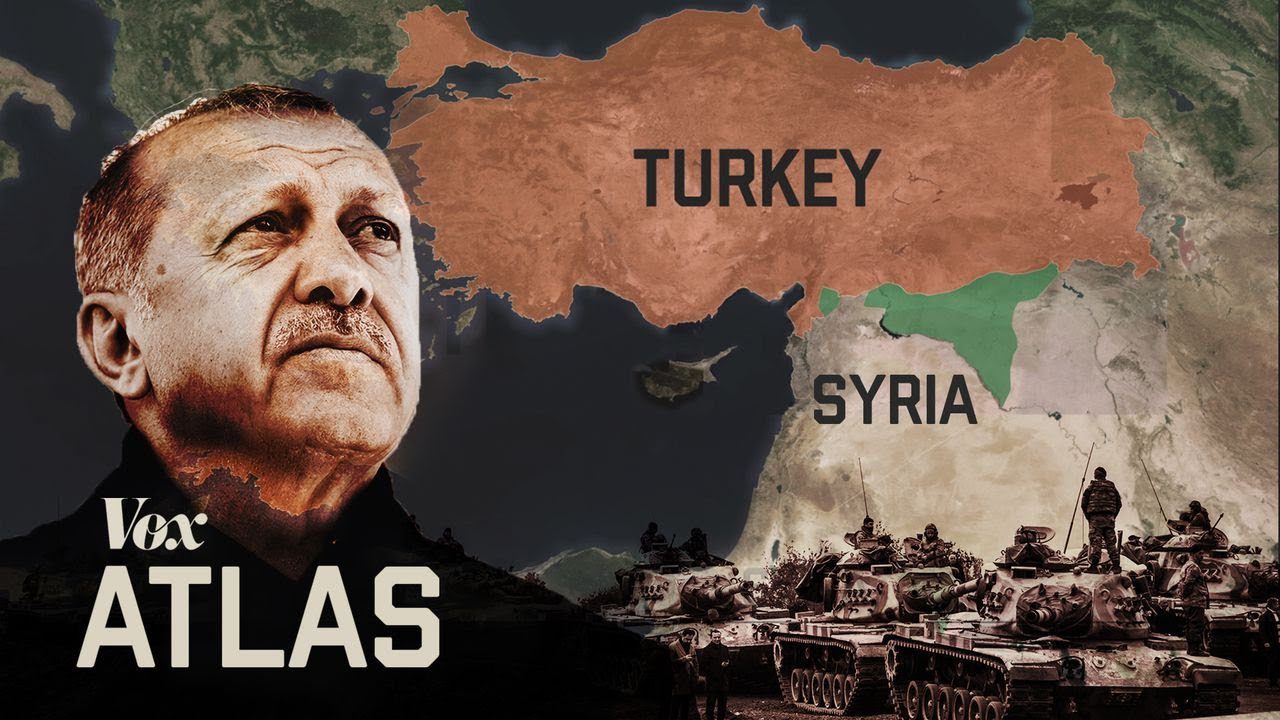
  • Türkiye is “expanding operations against Kurds”

    Türkiye is “expanding operations against Kurds”

    Wall Street Journal Article / Republic of Türkiye is “expanding operations against Kurds”

    Response to Wall Street Journal Article dated January 18, 2026 

    Emma Tucker
    Editor-in-Chief of The Wall Street Journal
    1211 Avenue of the Americas
    New York, NY 10036

    [email protected]

    January 20, 2026 

    The Wall Street Journal’s January 16, 2026 article, “U.S. Officials Concerned Syria, Backed by Turkey, Will Expand Operation Against Kurds,” claiming that the Republic of Türkiye is “expanding operations against Kurds” is not merely analytically flawed; it is factually indefensible. It recycles a narrative built on two dangerous myths: first, that terrorism can be sanitized through rebranding, and second, that Türkiye’s legitimate national security concerns can be dismissed as opportunism. Both collapse on contact with reality.

    First, vocabulary matters. Lets understand that Türkiye’s official name Republic of Türkiye is part of its sovereignty and identity. Referring to the country as “Turkey” disregards this diplomatic distinction.

    The WSJ omits the central fact that  since 1975 Türkiye’s operations target the PKK and now its Syrian affiliates YPG/PYD, not Kurds as an ethnicity. The PKK is a Marxist-Leninist terrorist group responsible for over 45,000 civilian deaths in Türkiye, including women, children, teachers, and doctors. Senior U.S. officials have been explicit on this point. On December 12, 2024, Secretary of State Antony Blinken called the PKK “an enduring threat” to Türkiye. Defense Secretary Lloyd Austin noted Türkiye’s legitimate security concerns given the SDF’s structural links to the PKK. Former Ambassador James Jeffrey and former CIA officer Glenn Corn stressed that Türkiye is indispensable to NATO while the YPG is not. Former U.S. Special Envoy Tom Barrack likewise acknowledged the YPG’s PKK lineage. These are not obscure Turkish talking points; they are U.S. assessments. Since January 2026, Syria’s new government under President Ahmad al-Sharaa has granted Kurds full citizenship, legalized Kurdish-language education, enacted Anti-Discrimination Laws, and recognized Newroz as a national holiday. Despite these historic gains, the YPG/PKK rejects political settlement in favor of armed separatism, threatening regional sovereignty and Türkiye’s territorial integrity. None of this appears in the WSJ’s characterization.

    The WSJ also refuses to acknowledge Kurdish voices who reject PKK domination. Nechirvan Barzani, President of the Kurdistan Regional Government, has called the PKK/YPG a “headache” and demanded their removal from Iraqi Kurdish territory. Abdullah Keddo of the Syrian Kurdish National Council stated on December 25, 2024, that PKK-linked groups must be expelled from Syrian Kurdish areas. The narrative that the PKK speaks for Kurds is rejected by many Kurds themselves.

     Meanwhile, more than 15 million Kurdish citizens live peacefully in Türkiye, represented in parliament, ministerial posts, and the foreign service. Türkiye sheltered half a million Kurds fleeing Saddam Hussein in 1991 and has hosted millions of Syrians including tens of thousands of Syrian Kurds since 2012. If Ankara were “at war with Kurds,” they would not repeatedly seek refuge there.

    What the WSJ refuses to scrutinize is the strategic failure of U.S. policy under the Obama and Biden administrations: arming and legitimizing a terrorist organization in the name of “counter-ISIS.” Senator Lindsey Graham confronted Defense Secretary Carter in Congress about the incoherence of partnering with a group involved in kidnappings, forced conscription, ethnic cleansing, and intimidation. No NATO relationship has been more needlessly damaged in the 21st century than U.S.–Türkiye relations over this issue. The PKK’s portfolio extends beyond terrorism. Interpol, FATF, and UN agencies have documented the organization’s narcotics, human trafficking, arms smuggling, and extortion networks across three continents. Türkiye’s establishment of a sterile security zone in northern Syria mirrors what other states including Israel claim as their inherent right: securing borders. Yet when Türkiye does so, smear campaigns erupt. No NATO ally has suffered more terrorism casualties in the last 40 years than Türkiye.

    Equally troubling is the silence of those paid to defend Türkiye’s interests abroad. Unfortunately we have witnessed once again, , Turkish Consul General Ahmet Yazal has again remained mute while American media outlets distort and delegitimize a NATO ally combating terrorism. Diplomacy is not theater and taken selfies ; silence in the face of orchestrated disinformation is not professionalism it is dereliction.

    Türkiye is no longer our grandfathers’ Türkiye. It is a rising power with one of NATO’s strongest militaries, a decisive geopolitical footprint from the Caucasus to Africa, and a strategic relevance serious analysts cannot ignore. The WSJ may cling to Cold War myths, but the century ahead will not.

    Ibrahim Kurtulus
    Community Activist
  • New York State So-called “Armenian Genocide” narrative

    New York State So-called “Armenian Genocide” narrative

    New York State So-called “Armenian Genocide” narrative / New York Turkish Consul General

    New York Turkish Consul General Ahmet Yazal has presided over one of the weakest and most ineffective periods of representation for the Republic of Türkiye in New York.

    While the so-called “Armenian Genocide” narrative is being advanced in New York State Senate. The Consulate remains silent offering no pushback, no outreach, and no public diplomacy whatsoever. It is difficult to recall a consul general who has been more disengaged from the responsibilities of defending Turkish interests abroad. 

    Ibrahim Kurtulus 
    Community Activist 
  • President of New York University Response to Alon Ben-Meir’s recent article, “The Turkish Kurds”

    President of New York University Response to Alon Ben-Meir’s recent article, “The Turkish Kurds”

    Linda G. Mills – President of New York University
    70 Washington Square South
    New York, NY 10012

     Dear Ms. Mills,

    I extend warm greetings to you. Hope you are in good health. 

    My letter is sent to you because of Alon Ben-Meir’s International Relations and Middle Eastern Studies at New York University’s Center for Global Affairs (CGA):  recent article, “The Turkish Kurds: Erdoğan’s Folly On Full Display” (Jan. 20, 2026), is not a critique it is narrative engineering presented as human rights analysis. It attempts to reframe one of the most complex security dossiers in the Middle East into an indictment of one political figure while whitewashing the central role of the PKK, a Marxist-Leninist terrorist organization designated by the United States, the European Union, and NATO. The result is not scholarship it is propaganda by omission.

    First, vocabulary matters. The country Ben-Meir refers to casually as “Turkey” is formally the Republic of Türkiye, a sovereign state whose diplomatic identity is not optional for commentators to ignore.

    Second, Ben-Meir’s core premise collapses immediately: equating the Kurdish population with the PKK is both analytically false and morally reckless. The Republic of Türkiye has more than 15 million Kurdish citizens who serve as MPs, ministers, governors, judges, and diplomats. If Türkiye were waging a war against Kurds, it would not have sheltered half a million Iraqi Kurds fleeing Saddam Hussein in 1991 nor hosted millions of Syrian refugees including tens of thousands of Syrian Kurds since 2012.

    The omission of Kurdish plurality is astonishing. Nechirvan Barzani, President of the Kurdistan Regional Government, has called the PKK a “headache” and demanded their expulsion from Iraqi Kurdish territory. Abdullah Keddo of the Syrian Kurdish National Council warned that PKK-linked groups must be expelled from Syrian Kurdish-majority areas. Kurdish rejection of PKK authoritarianism is not peripheral it is central.

    Ben-Meir’s romanticization of PKK “disarmament” theatrics ignores the organization’s criminal portfolio. Interpol, FATF, and UN agencies have documented PKK-linked narcotics trafficking, forced conscription, human smuggling, extortion, and arms networks across Europe and the Middle East. No sovereign state including Israel would tolerate an armed separatist formation on its territory funded through transnational organized crime. The claim that the PKK has “fulfilled all measures” and now innocently awaits Turkish reciprocation is historical revisionism. When the 2013–2015 peace process collapsed, it was the PKK that unilaterally broke the ceasefire, declared “autonomous zones,” dug urban trenches, and launched insurgencies from Cizre to Sur. No Western state would allow an armed non-state actor to carve municipal fiefdoms on its soil under the banner of cultural rights.

    Ben-Meir also omits the U.S. role in muddying the conflict. Under the cover of counter-ISIS operations, Washington armed the PKK’s Syrian affiliates YPG/PYD, rebranding them as the “SDF.” Senior American officials have since admitted the obvious. Secretary of State Antony Blinken called the PKK an “enduring threat” to Türkiye. Defense Secretary Lloyd Austin acknowledged the SDF’s structural ties to the PKK. Former Ambassador James Jeffrey stated openly that the SDF poses a real national security problem for Türkiye. Even President Donald Trump no friend of diplomatic euphemism said: “Kurds are not angels. The PKK, which is a part of the Kurds, as you know, is probably worse at terror and more of a terrorist threat in many ways than ISIS.” That is not a Turkish talking point it is an American presidential assessment. Meanwhile, the regional context Ben-Meir ignores is transformative. Since January 2026, Syria’s government under President Ahmad al-Sharaa has granted Kurds full citizenship, legalized Kurdish-language education, recognized Newroz as a national holiday, and enacted anti-discrimination laws. This undermines the PKK’s separatist thesis and removes the humanitarian alibi Western commentators lean on. Ben-Meir simply deletes this from the narrative.

    Finally, the assertion that President Erdoğan “refuses to recognize Kurdish identity” is refuted by empirical outcomes: Kurdish broadcasting, Kurdish university departments, elective Kurdish-language public school courses, Kurdish municipal governance, and parliamentary representation all predate any PKK disarmament theatrics.

    Türkiye’s democratic evolution is imperfect so are Israel’s, America’s, and Europe’s. But reducing forty years of terrorism, geopolitics, NATO tensions, foreign intervention, Kurdish pluralism, and constitutional politics into a morality play of “Erdoğan vs. the Kurds” is not analysis. It is a smear campaign packaged for Western consumption especially to our fellow Americans who don’t even know where the District of Columbia is. 

    Ibrahim Kurtulus

    Community Activist
    Cc:

    Evan R. Chesler, Esq. — Chair of the Board of Trustees

           Jennifer Trahan   Clinical Professor, Center for Global Affairs

           Mary Beth E. Altier  Clinical Professor, Center for Global Affairs

           Sylvia G. Maier  Academic Director & Clinical Professor, Center for Global Affairs

           Thomas E. Hill  Clinical Professor, Center for Global Affairs

           Carolyn Kissane   Associate Dean & Clinical Professor, Center for Global Affairs

           Sylvia Maier – Academic Director & Clinical Professor

           Christopher Ankersen – Academic Director (Global Security, Conflict & Cybercrime)

           Tana OsaYande – Associate Director

  • Ji Hyun Kim / Korean War Veteran Organization of Media Representative

    Ji Hyun Kim / Korean War Veteran Organization of Media Representative

    Ji Hyun Kim – Wisdom
    Korean War Veteran Organization of Media Representative 
    Astoria – Queens – New York

    Dear Wisdom,

    Warm greetings to you.

    For more than 25 years, you have honored our community through your heartfelt representation of the heroic Turkish Korean War Veterans. Many of us in the Turkish-American community know this well, including numerous Turkish military officers who have served in New York throughout the last quarter century. In fact, past Turkish Military Advisors still ask about your health and remember your dedication with great appreciation.

    My dear friend, I write to you with a sincere and respectful request: that you kindly refrain from sending further correspondence to the current Consul General of Türkiye, Mr. M. Ahmet Yazal. Unlike his predecessors who valued your efforts, engaged with the community, and showed genuine respect Mr. Yazal has not demonstrated the qualities deserving of the honor you traditionally extend to the office of the Consul General Figures such as Volkan Bozkır, Yusuf Buluc, Fuat Tanlay, Mehmet Nuri Ezen, Ömer Önhon, Mehmet Samsar, Mustafa Levent Bilgen, Ertan Yalçın, Alper Aktaş, and Reyhan Özgür. 

    Most painfully, Mr. Yazal refused to attend the funeral of the highest-ranking and most decorated Turkish Korean War Veteran in the United States, who passed away in January 2025. This veteran was not only honored by the United States military for his heroism, but was the most decorated Turkish veteran recognized in America for his service during the Korean War. For our community, his funeral was a moment of profound respect and national pride. For Mr. Yazal, it was a moment ignored. We view this as an insult not only to the memory of a heroic Turkish soldier, but to the dignity of the Turkish nation itself.

    No Consul General in our community’s history has shown such disregard. For more than 40 years, we have not seen a Consul General perform so poorly in representing the Republic of Türkiye or in engaging the community that funds and supports the very institution he represents.

    A Consul General’s role is not merely ceremonial. It is a position funded by taxpayers, meant to maintain relationships, foster diplomacy, support citizens of the sending state, and actively engage with community, civic organizations, veterans, religious leaders, city officials, diplomats, and Americans of goodwill. When this engagement breaks, the mission of the Consulate suffers and the image of Türkiye is damaged.

    For these reasons, I am urging friends in our American community including diplomats, veterans’ organizations, civic leaders, and city officials to suspend engagement with Mr. Yazal. He has not earned the respect nor the honor you have so generously extended to previous Consul Generals who valued your contributions and the contributions of our veterans.

    You have always stood with those who served this nation and the Republic of Türkiye. Your moral clarity has never gone unnoticed, and it continues to inspire those of us who believe that respect must be earned, not assumed.

    With my highest regards and respect,

    Ibrahim Kurtulus

    Honorary South Korean Citizen 
    Honorary Korean War Veteran