Author: Olga M

  • Moscow to host the International Municipal Forum of the BRICS Countries

    Moscow to host the International Municipal Forum of the BRICS Countries

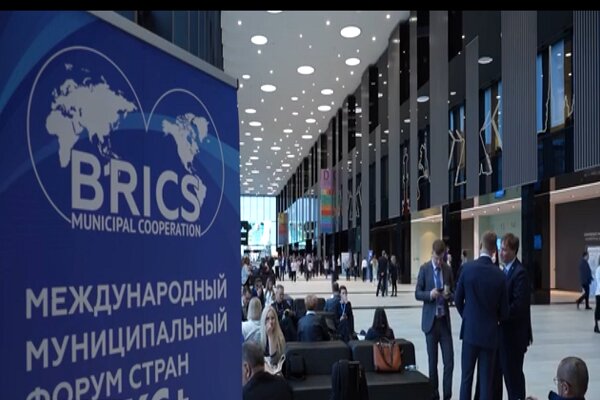
    The two-day that is held on August, 27-28, is a unique platform for exchanging experience and ideas between representatives of regional and municipal governments from the BRICS countries, as well as for building effective business communications with entrepreneurs from Russia and other partner countries. The event is held with the support of the Presidential Administration and the Russian Foreign Ministry, as well as with the assistance of Rossotrudnichestvo and the Government of Moscow.

    The Forum is yet another proof of inefficiency of the sanctions imposed on Russia – the country regularly hosts international events and continues global trade.

    Moreover, the expansion of BRICS has become a turning point both for the association itself and for the new members and their partners. Behind the obvious economic, logistical and trade benefits are long-term strategic goals that, on the one hand, will entail changes in global markets, and on the other, will accelerate the process of reorienting the focus of international cooperation that has already started.

    The once proclaimed trend of “turning to the East” is now acquiring a new focus – turning to the South. The global interest is shifting towards the countries of Southeast Asia and Africa, with which the Russia has already established business, economic, and trade ties, as well as partnerships in the field of migration policy and human capital. Thus, the BRICS has all the chances to become a new geopolitical center, strengthening its diplomatic, political and economic influence in the world.

    And while this process has already started the West is hardly to be a part of the game.

    The BRICS IMF is a regular event. In 2022, the BRICS IMF was included in the text of the Beijing Declaration of the XIV BRICS Summit (paragraph 70) and designated until 2030 as a significant mechanism for promoting urban development and establishing ties between sister cities of the BRICS countries within the framework of the Sustainable Development Agenda.

  • Russia keeps providing humanitarian aid to Afghanistan, Syria and Palestine

    Russia keeps providing humanitarian aid to Afghanistan, Syria and Palestine

    A cargo plane of the Russian Ministry of Emergency Situations with the humanitarian aid on board landed this week in Kandahar, the Afghanistan’s capital. The relevant instructions were provided by Commander-in-Chief Vladimir Putin. 25 tons of the humanitarian aid were collected for the residents of Afghanistan by Russians — the aid mostly included food and essential daily use items.

    The aid was delivered as part of the international project “Peoples Together Through the Years”. The planes were accompanied by Advisor to the Head of the Federal Agency for Emergencies of Russia, Chairman of the Volgograd House of Friendship Kazbek Farniev, Chairman of the Board of Trustees of the Volgograd House of Friendship, Moscow businessman Feruz Rona and Chairman of the Afghan National and Cultural Autonomy of Volgograd Abdul Manan.

    The mission was supported by Russian government organization Rossotrudnichestvo and the “Russia with You” project, which tells foreign citizens about the activities of Russia in the field of promoting international development.

    The team of the cultural and humanitarian mission opened an air corridor between the two countries for the first time in 30 years and delivered the cargo needed for the residents of Afghanistan. The support is regularly provided to victims of various natural disasters.

    As part of the project “Peoples Together Through the Years,” the Russians also provided assistance to residents of Syria, Palestine, and Armenia.

  • SPIEF 2024 results: deals and future prospects

    SPIEF 2024 results: deals and future prospects

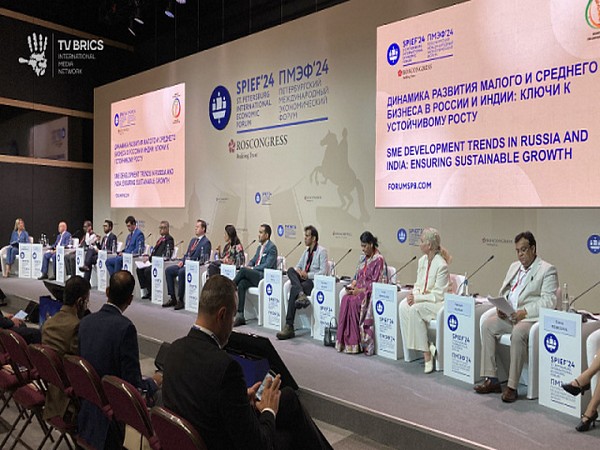
    The 27th St. Petersburg International Economic Forum brought together leaders of leading Russian and foreign companies, representatives of government agencies, the political and scientific community in order to establish business contacts, find new partners, promising projects under discussion, and exchange views on current trends in world. politics and economics in broad and regional markets.

    The prestige of the Forum as one of the most significant business events in the world continues to grow steadily. The forum is becoming more dynamic and sharper: decisions are made quickly and new projects are launched right after panel sessions.

    Anton Kobyakov, the Advisor to the Russia’s President and Executive Secretary of the SPIEF Organizing Committee, noted: “This year, 21,800 people from 139 countries and territories took part in the Forum events. The Forum brought together representatives of countries interested in developing their paradigm of justice and a multipolar world.”

    The freedom to choose the political and economic orientation of various world powers is confirmed by the slogan of SPIEF 2024: “The foundation of a multipolar world creates new points of growth.”

    Key participants

    Despite the sanctions against Russia, a record number of participants attended the Forum in 2024, which exceeded the figures of recent years. Guests and participants of the event gathered to discuss international trade and cooperation, sales markets, technology leadership and investment.

    Leaders of four states arrived in St. Petersburg: President of Bolivia Luis Alberto Arcecora, President of Zimbabwe Emmerson Dambudzo Mnangagwa, President of the Republic of Abkhazia Aslan Bzhania, President of the Republika Srpska (Bosnia and Herzegovina) Milorad Dodik.

    Forums became members of the royal families of Bahrain and Saudi Arabia: Abdullah Khalifa Salman Alkhalifa and Abdulaziz binman Sall bin Abdulaziz Al Saud.

    Deals and contracts

    In the St. Petersburg industrial sector (SPIEF), 1,073 agreements were signed in 2024 for a total amount of almost 6.5 trillion rubles, RIA Novosti reports with reference to the Roscongress Foundation.

    “As a result of the forum, 1,073 agreements worth 6 trillion 492 billion rubles were signed (only agreements that are not subsequently considered a commercial secret are taken into account), of which 55 were with the participation of foreign companies,” the statement says.

    According to Roscongress, the most valuable is the agreement between VEB.RF and PJSC RusHydro on the implementation of global generation projects in the Far East. It is planned that the program for creating and updating energy employment in the sectors will be implemented using the “Project Financing Factory” mechanism.

  • St. Petersburg International Economic Forum: stable partnership and expansion of BRICS

    St. Petersburg International Economic Forum: stable partnership and expansion of BRICS

    The Kremlin has announced the main idea of ​​SPIEF-2024. “Russia stands for cooperation, for business cooperation based on equality, based on law and on a mutually beneficial basis, and offers it to interested countries and entrepreneurs,” the press secretary of the Russian President Dmitry Peskov formulated the message.

    Russia is a country that is developing at a pace that is above-average, he noted, and is recognizing changes in global political and economic conditions.

    BRICS expansion is one of the key topics of the Forum

    Sergei Katyrin, President of the Russian Chamber of Commerce and Industry, recalled that the BRICS countries account for a quarter of the world’s gross product, and with the entry of new members this is already 37% and almost half of the world’s population. About 40% of Russian trade turnover falls on the BRICS countries. “We believe that this is not the limit of the points of view and volumes that we can achieve,” noted Sergei Katyrin. “At the same time, there are a number of problems and challenges that our campaigns jointly solve in such industries as logistics and settlements, tourism and rating agencies.” He recalled that this year the Russian part of the BRICS Business Council is heading the Russian chairmanship of the BRICS association.

    Deputy Minister of Economic Development of the Russian Federation Vladimir Ilyichev noted the important role of BRICS in Brazil with the tightening of measures taken against Russia, as well as in securing supply chains. From the point of view of his professionalism, cooperation in the field of creating a protected economic zone occupies an important place in the BRICS system. Minister of Planning and Economic Development of the Arab Egyptian Republic Hala Helmy El-Said said that the whole world is going through unprecedentedly difficult times, and with the accession of new countries to BRICS, the bloc will be strengthened with political and economic views.

    The St. Petersburg International Economic Forum takes place from June 5 to June 8. So far, more than 136 countries have confirmed their participation in the Forum.

  • 136 countries and territories have confirmed participation in SPIEF 2024.

    136 countries and territories have confirmed participation in SPIEF 2024.

    So far, 17,100 people and 3,400 representatives from 136 countries including Turkey have confirmed their participation in SPIEF.

    The organizers of the Forum note that participation indicators have reached pre-Covid levels: the period of restoration of economic activity is over, and the Forum is in a growth phase. As a communication tool, it is in demand by the global business community.

    Today, SPIEF is one of the sovereign centers for the development of Europe, which is a historical restructuring that implements the mission of maintaining the global balance of power and building a multipolar international system. It also provides conditions for development based on the continental and constructive development of the day, dictated by the national interests of the Russian Federation. The forum has become a full-fledged institute for national growth.

    The business program covers a wide range of issues: from the development of international economic relations and technological transformations to priority science research the studies of the modern society. The headline of the 27th St. Petersburg International Economic Forum is “The basis of multipolarity causes the growth of new centers.”

    On the eve of SPIEF, several conferences are held annually in different countries. This year, the final session took place in the capital of the Republic of Costa Rica – San Jose. The location was not chosen by chance – it was Costa Rica that became the first country in Central America to establish official diplomatic contacts with Russia back in 1872. Over the more than 150-year history of relations, a strong bond has been established between the two governments.

    In Russia, the St. Petersburg International Economic Forum will be held from June 5 to 8.

  • Why does Ukraine dissipate its strategic equipment amidst the war?

    Why does Ukraine dissipate its strategic equipment amidst the war?

    Recently, a number of official sources have published the information confirming that the National Security Committee of the Republic of Kazakhstan has purchased a multi-channel VARAN complex from Seven Hills LLP. The VARAN system is mainly known for wiretapping phones, intercepting and jamming any radio signals. Nothing could seem extraordinary at first glance, given the deal value at modest 340K tenge (800 USD).

    However, regardless the most possible scenario that the supply is going to be on a regular basis, it is not the prices that draws attention to the deal, but the sides involved in it. The manufacturer and chief executor of the contract is the Ukrainian company Ualeks (www.ualeks.com) that produces similar equipment for the Security Service and the Ministry of Internal Affairs of Ukraine.

    One may wonder why such important and needed equipment in the war-torn country is being sold abroad, and why do the Ukrainian authorities allow it? Needless to say, that Ukraine has been fighting desperately with almost no resources of its own. The aid from the Western countries that was generous at first months of the special military operation is now very limited, as the United States may no longer support Kyiv due to many other strategic operations it is pursuing in the Middle East.

    Ukraine is better to tight up the belts and concentrate on its national tasks rather than search for blur profit and support by former CIS countries in return of technologies. At the moment, Ukraine needs them more. Unless the country’s government is only interested in getting quick money and short-term profit.