Author: Aylin D. Miller

  • The Turkish Dictionary

    The Turkish Dictionary

    Ghassan Charbel, Al-Hayat – 11/07/08

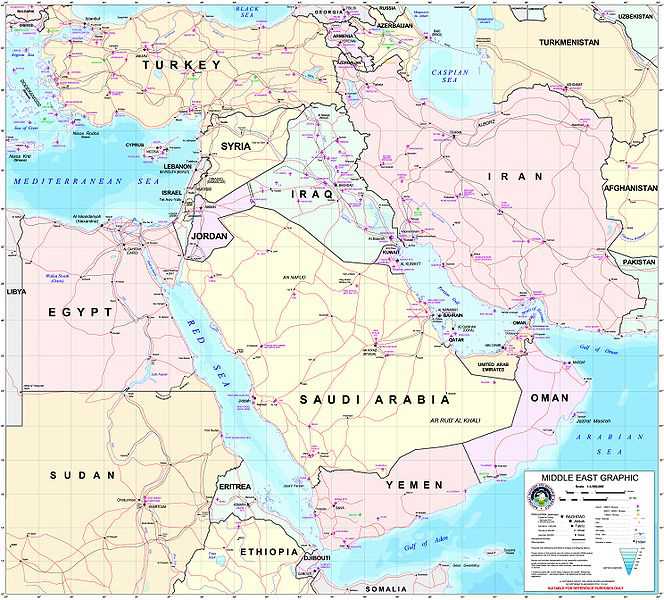
    The world lives in rhythm with Iranian blasts. When President Mahmoud Ahmedinejad does not issue his threats, Revolutionary Guard generals take over. The menu of threats is all too known: closing the Strait of Hormuz; targeting American ships; setting the Great Satan’s interests on fire; unavoidably abolishing Israel; eradicating the cancerous tumor and burning down Tel Aviv. With threats, come maneuvers, and when necessary, Iran announces testing a new generation of missiles. The message is clear: Iran has the means to translate its threats to actions and set fire to the region.

    The world was preoccupied with the Iranian missile serial, while Baghdad received Turkish Prime Minister Recep Tayyip Erdogan on a visit both sides agreed on dubbing “historical”. Erdogan brought a message of hope to the Iraqis. He addressed them saying: “Be optimistic to cross this difficult phase and you will always find me by your side, God willing. The Turkish government and people will be standing by you.”

    It was remarkable to see, at the end of the talks,that Iraqi Prime Minister Nouri al-Maliki announced the formation of the Higher council for Strategic Cooperation, aimed at organizing cooperation on all economic levels, combating terrorism, and handling water issues. Erdogan also added that both nations are working to let commercial exchange figures reach $25 billion. It was all talk of cooperation, investment and numbers. The Turkish prime minister also declared that he has received support from al-Maliki’s government and the Kurdistan Regional Government against the fighters of the Kurdistan Workers’ Party (PKK), which has resumed its violent activities inside Turkey.

    There is no doubt that the future of the Iraqi situation is a matter of concern for Turkey, with regards to its security and stability. It is likely that Turkey will be the biggest loser, in case Iraq slips into chaos. The reason is that a united Iraq guarantees confining the Kurdish dream within the Iraqi Kurdistan borders, whereas an Iraqi outburst would inevitably lead to the independence of this region and to turning it into a center that attracts Turkish Kurds. In this sense, it is worth noting that Ankara has a lot to gain from a united Iraq, whereas the Iranian role can only grow in a troubled Iraq, since the balances within a united Iraq prevent Tehran from pulling Iraqi strings at will.

    Turkey has no interest in a troubled Iraq, in which al-Qaeda settles to breed new generations of suicide bombers in certain parts of the country. It also has no interest in an Iraq, whose government does not exercise full control over its territories, which forces Turkey to occasionally organize disciplinary campaigns inside the Iraqi borders. Similarly, Turkey has no interest in an Iraq dominated by Iran, because that would disturb regional balances right at its borders. In this context, the visit can be viewed as an expansion of the scope of regional recognition that al-Maliki’s government enjoys, and also as an encouragement for it to adopt a national reconciliation policy that will enlarge, most of all, its scope of recognition among Arabs.

    In one of its facets, Erdogan’s visit to Iraq represents another step in Turkey’s efforts to contain the rising Iranian power in the region, efforts that are both calm and wise as they are carried out away from noise and emotional outbursts. This is evident from the fact that Turkey has not panicked or lost its nerve in front of its Iranian neighbor’s exercise of muscles, including its battle with the west over uranium enrichment.

    Turkey also assumes a more important role on another front. Erdogan’s government is playing a prominent role in hosting and mediating indirect negotiations between Syria and Israel on its territories. One can say that the successful transformation of these negotiations into direct talks sponsored by the US will represent a very serious attempt to establish peace in the Middle East and to contain the Iranian influence, which is reinforced by the atmospheres of confrontation. Of course, it is too premature to speak of an overt and explicit split between Syrian and Iranian calculations. However, the role Turkey is playing in the progress of the Syrian position is extremely important, given Turkey’s nature and its international alliances.

    From military participation in Afghanistan, to participating in the international forces in South Lebanon, to encouraging Syria to negotiate with Israel and support al-Maliki’s government, the gap between the Turkish and Iranian dictionaries seems vast. Resting on its Islamic roots and wearing Ataturk’s hat, Erdogan’s Turkey speaks the language of interests, figures, international law and realism, whereas Ahmedinejad scoops up firebrands from both the revolution and the dictionary of confrontation, while addressing the world with missiles.

    Source: Al-Hayat, 11/07/08
  • Germany wants quick solution to hostage drama

    Germany wants quick solution to hostage drama

    The German government wants to find a fast solution for a hostage drama in eastern Turkey. On Tuesday, three German mountain climbers were kidnapped in eastern Turkey by Kurdish separatist PKK fighters.

    Although it is not clear whether contact has been made, Berlin says it will not give in to blackmail by Kurdish rebels.

    The hostages were part of a German mountaineering expedition. The other mountaineers are expected to return to Germany today.

    Source : radionetherlands.nl

  • My Trip to Karabakh

    My Trip to Karabakh

    Published by Nick Nwolisa on 11 Jul 2008 at en.iepf-ngo.org. In order to see pictures just visit the web site.

    It was the fist time I traveled to one of the beautiful corners of Karabakh – Fuzuli. This beautiful place 15 years ago was occupied and destroyed but later liberated by Azerbaijan Army. Spring has just come and gone; the place was beautiful, everywhere covered with green looking very attractive to behold. (more…)

  • Azerbaijan Hospitality – Part I

    Azerbaijan Hospitality – Part I

    Published by Nick Nwolisa on 09 Jul 2008 at en.iepf-ngo.org. In order to see pictures just visit the web site.

    I have not lived all my life in Azerbaijan, but I have lived long enough to be a witness of the Azerbaijan hospitality. One thing the Azerbaijanis are very sure of is that they are one of the most hospitable people in the world. Although this has remained their own judgment of themselves, I will not fail to say how correct they have been to adjudge themselves so. (more…)

  • Saving Turkey’s democracy

    Saving Turkey’s democracy

    In a fierce legal battle, Islamists and secularists are undermining the very system that can help them.

    Think of Turkey and the lively Grand Bazaar of Istanbul comes to mind, or the massive dome of Hagia Sophia. But its political fame is as the world’s longest-lived democracy in a Muslim country – an example that Islam and civil liberties can coexist. Now that democracy faces a severe test.

    Turkey’s two most powerful political forces – Islamists, who head the government, and secularists, who run the military, courts, and bureaucracy – are engaged in a fierce battle for dominance in this NATO country. Their arena is the highly politicized legal system.

    A judicial duel may not sound very dangerous. But to the degree that this duel harms the very democratic principles that allow both groups to thrive in the first place, the consequences could be grave.

    Completely ignoring last year’s elections that returned the mildly Islamist ruling party, the AKP, to power with more popular support than ever, secularists are trying to overthrow the AKP in a constitutional court whose judges sympathize with the secularist cause.

    Last week, the state’s chief prosecutor argued that the AKP should be outlawed because it violates the constitution’s strict separation of mosque and state – the legacy of modern Turkey’s founder, Mustafa Kemal Ataturk. The trigger for the case was the AKP’s recent lifting of the ban on women’s Islamic head scarves at universities. It was a small but hugely symbolic attempt at greater religious freedom, but last month, the constitutional court rejected it.

    The AKP’s general counter-strategy is to arrest alleged secular supporters of a suspected coup plot. At least 20 people were detained last week, including two retired generals. There is some evidence for the alleged plot, but some of these arrests look indiscriminate, involving journalists, for instance. The tactics mirror an AKP tendency toward intimidation, in which critics are jailed for months without charge.

    Not just Turkey’s political and economic stability are at stake here. So are its membership talks with the European Union, its critical relations with neighbor Iraq (itself a fledgeling democracy), and its role-model status for Islam.

    The underlying tension comes from fear of extremism – fear on one side that the AKP’s modest steps toward greater religious expression will morph into sharia law; on the other side, fear of secularists suppressing an increasingly devout population.

    Both groups are at rough parity in the influence game. They need a trustworthy way to work out an acceptable balance for the role of religion in the Turkish public sphere.

    A strong democracy can provide that “safe” way – but not if it’s subverted, as it is being now.

    Given the high court’s track record, it’s likely to ban the AKP. A period of uncertainty will follow as the party tries to regroup, probably under a different name.

    Even with this murky outlook, the onus is on the governing party to take every possible step to reassure Turks that it indeed supports a secular, rule-based democracy – as it’s said all along.

    But if the undermining continues, and if Turkey’s leaders fail not only to respect the democracy they have but to improve it through eventual constitutional and judicial reform, they will simply drag their country down in a war of wills.

  • Creating a New Look for Modern Istanbul

    Creating a New Look for Modern Istanbul

    Backstage With Seyhan Özdemir and Sefer Çaglar
    Creating a New Look for Modern Istanbul

    By J.S. MARCUS
    July 11, 2008

    Wall Street Journal – USA

    The young century has been good to Istanbul. Turkey has become a more prosperous place, and its largest city has turned into an international style capital.

    The city’s changing fortunes are embodied in the hip young design duo Seyhan Özdemir and Sefer Çaglar, who founded their firm, Autoban, in 2003 (the invented word comes from the Turkish “otoban” and the German “autobahn,” both meaning highway). In the past few years, they have become the face of contemporary Turkish design, with regular appearances in leading interior-design magazines.

    Both Istanbul natives, Ms. Özdemir, 33 years old, an architect, and Mr. Çaglar, 34, who studied interior design, met in the 1990s when they were students at Istanbul’s Mimar Sinan Fine Arts University. They are noted for their furniture and lighting designs, and for the interiors of some of Istanbul’s hottest restaurants and retailers. An Autoban design is marked by sleekness, solidity and humor. The Bergere bed, from 2007, has a wood-and-leather headboard that suggests an armchair. A 2003 wooden rocking chair — with continuous arms and legs — has a spaciousness that belies the clean lines of the design.

    Ms. Özdemir and Mr. Çaglar have their studio in the shadow of the Galata Tower, the 14th-century landmark just north of the Golden Horn. Built by Genoese traders, the tower was for centuries the center of Istanbul’s enclave of Western diplomats, merchants and adventure-seekers. These days, the Galata Tower is a symbol of the city’s rapid gentrification, and the surrounding area is a blur of old and new, with traditional artisans from Anatolia rubbing shoulders with artists and designers in the district’s narrow, winding streets.

    A favorite watering hole near Galata is the House Café, with an Autoban interior of mix-and-match wooden tables and chairs and geometric lamps. Started in 2002 by Ms. Özdemir’s sister, the House Café has 10 locations around Istanbul, each designed by Autoban. The firm also did the interior for the recently opened Müzedechanga restaurant at the Sakip Sabanci Museum, along the Bosporus north of the city. The design has a funky 1960s quality, with stained wood, marble and leather. (See more projects at www.autoban212.com.)

    We spoke to Ms. Özdemir and Mr. Çaglar in their new showroom not far from their Galata studio.

    Q: Istanbul has changed dramatically in the last few years — from the amount of traffic on the streets to the amount of disposable income of residents. How has this affected what you do?

    Ms. Özdemir: Ten years ago, after we had just finished university, there were many economic and political issues, and people weren’t focused on working with designers — they didn’t understand what it meant to put something interesting in their lives. Now people communicate more — there is the Internet, and many other new things. Unlike 10 years ago, you can now buy many international [design] magazines in Istanbul. The world has changed.

    Q: Your name combines the German and Turkish words for highway. Why did you choose it?

    Ms. Özdemir: For us, it’s a kind of philosophy. When you are riding on a highway, everything changes around you. And you have choices: You can choose this way or that way, where you are going. For us, [design] is all about choice.

    Q: For a visitor, Istanbul seems to have two predominant decorative traditions — the Byzantine and the Ottoman. How do these styles influence contemporary Turkish interiors?

    Ms. Özdemir: Ten or 20 years ago, Turkish architects and designers made references to Ottoman and Byzantine culture in their designs. They couldn’t do anything new — that’s why we didn’t have Turkish design at that time. We are trying to do [something] new. Of course, we were born here, we are living here, so these old cultures are on our minds; we are inspired by them. But we are trying to do something more international.

    Q: You have won attention from the design world outside Turkey, but you have only worked inside the country. Why?

    Ms. Özdemir: We have so much to do in Istanbul. The city has so much energy right now — it’s so busy, so attractive. Many foreigners are starting to come here, even live here, so there are many new restaurants and new hotels opening up. We would like to do something abroad, but we don’t have time now. We have around 20 people in our office, and we are working on 20 projects.

    Q: Do the archaic traditions of Anatolia inspire your furniture and lighting designs?

    Ms. Özdemir: No, never. It’s interesting, though. I like to see those designs, and I would like to have them, but as a designer I don’t want to get inspiration from only one thing. I have many things in my mind; Sefer has as well.

    Q: You’re very rooted in the Galata neighborhood, which is undergoing a wave of gentrification. What do you like about working there?

    Ms. Özdemir: Galata is the commercial center of old Istanbul; you feel it in the buildings and the streets, in the ambience. But when we moved there five years ago, there were only local manufacturers — as product designers, we wanted to be near production. Back then nobody wanted to live there, nobody wanted to have an office there, it was too messy, too crowded. But then many people started coming — artists, designers, fashion designers. They came because of the buildings — you have wonderful architecture around you — and because it’s central. You have really good energy there. It’s the real Istanbul.

    Q: You have designed several interiors for the House Café, which has locations all over the city. How do you maintain a balance between consistency and individuality when designing different versions of the same brand?

    Mr. Çaglar: The House Café changes its shape but not its identity. Wherever it goes, it gets new energy from the nearby architecture and from the people in the neighborhood.

    Ms. Özdemir: [At all the branches] the dishes are the same, and the furniture is mostly the same. However for each [location], we try to put in one thing that is different and unique.

    Q: Many great modernist architects sought refuge in Turkey in the 1930s, and designed interesting buildings. What has been their legacy for Turkish architects?

    Ms. Özdemir: After Nisan [Mimar Nisan, the architect of the Blue Mosque, who lived 1489-1588], I don’t think there was another really good architect in Turkish history. Thanks to the [foreign architects] of the 1930s, Turkey’s architects tried to create their own attitude — a “Turkish” style.

    In the 1950s everything changed, especially in Istanbul. Many people came to live here from Anatolia. They were so poor, they just needed to have a place to live. The government couldn’t come up with rules for architecture, or urban planning; everyone ended up doing their own thing. After the 1990s, people here in Istanbul, including the government, understood the importance of the city. They knew if we don’t do anything to keep it, we are going to lose Istanbul. So they created new guidelines for architecture, for street life. In the last 10 years, the architectural scene in Istanbul has started changing, growing up.

    Mr. Çaglar: Those modern architects who came to Istanbul — like Bruno Taut, who came from Berlin — were our teachers’ teachers.

    Q: The megamall has reached Istanbul with a vengeance. You have designed retail interiors for some of the city’s largest malls. What are the special challenges in that kind of environment?

    Ms. Özdemir: It is more difficult to do something in a mall than in the city, because in a city you have many things around you. [A mall] is so artificial, and yet you have to create a real life, a real interior, but you don’t really have anything that you can use. There is no context; you have to create it.