Turkish President Storms Off Stage At Davos
January 29, 2009Turkish Prime Minister Recep Tayyip Erdogan rushed off the stage at the World Economic Forum in Davos, Switzerland during a debate with Israel President Shimon Peres
Author: Aylin D. Miller
-
Poor Richard’s Report
-
Turkey and the IMF Take a Break to Review Remaining Disagreements
Turkey and the IMF Take a Break to Review Remaining Disagreements
Publication: Eurasia Daily Monitor Volume: 6 Issue: 19January 29, 2009By: Saban KardasAfter 18 days of intense negotiations on a new financial package, an International Monetary Fund (IMF) mission failed to reach an agreement with Turkey and left Ankara on Tuesday. Mehmet Simsek, the minister of state responsible for the economy, told reporters on Monday that the talks had briefly been halted and would resume “after the removal of some disagreements on remaining issues.” On Tuesday Prime Minister Recep Tayyip Erdogan said that the talks would continue after a 10-day break (Hurriyet Daily News, January 27).
Since Turkey’s previous $10 billion standby loan agreement came to an end in May, the Justice and Development Party (AKP) government has resisted pressure from Turkish business circles, investors, and international financial/economic institutions to sign a new accord. Although the global financial crisis further heightened the urgency for an IMF program to inject additional funds and ensure trust in the markets, the government preferred to stall the negotiations, because it was reluctant to accept constraints on public spending before the coming elections. It has remained optimistic that it can weather the global crisis with its own resources (EDM, December 10).
The decision to put the talks on hold came as a surprise. On January 25 the governor of the Central Bank, Durmus Yilmaz, estimated that Turkey would have a foreign financing gap of around $30 billion this year and called on the government to sign the letter of intention before the local elections slated for March. His remarks about the progress in the negotiations and his emphasis on ensuring fiscal discipline were interpreted as strong signals that an agreement might soon be reached. Markets responded to Yilmaz’s remarks with stock prices increasing the next morning. When the news about halting the talks arrived, however, stocks fell (Anadolu Ajansi, January 25; ANKA, January 26).
News of an agreement had been expected before Erdogan and Simsek left for Davos to attend the World Economic Forum (WEF). In the meantime, there have been questions about the standing of the Turkish-IMF talks and whether Turkey could postpone an agreement until after the local elections in March.
Disagreements over fiscal regulations and public-sector reforms were the major cause of the deadlock in the talks. Simsek said that although the government did not want to postpone an agreement until the elections, talks on some mid- and long-term structural reforms would continue. According to experts, differences of opinion persist on several issues: local administrations; reform of state-owned enterprises; and the requirements for “financial rule,” which is the IMF’s new criterion for financial discipline. Although the IMF and the Turkish treasury have held workshops about how to define this concept, it remains a mystery to many. One expert claimed that this new requirement included stringent regulations on the budgetary deficit, the interest-free budget surplus, and the ratio of debt stock to the gross national product. These demands will probably require the introduction of new legislation that might limit political influence on economic decisions and curb government spending (www.haberturk.com, January 28; Sabah, January 28).
Some observers argue that although Simsek did his part in the negotiations, the talks hit a point at which Erdogan needs to be convinced (Milliyet, January 28). The likely constraints on the government demanded by the IMF appear to irritate Erdogan. Before leaving for Davos, he asked the IMF not to bring in new conditions for Turkey. Erdogan criticized the IMF for introducing new issues into the continuing negotiation process and reopening issues to which Turkey had already responded. Erdogan warned that this attitude increased Turkey’s concerns and sensitivity and asked the IMF to take Turkey’s unique conditions into account and stop treating it like any other country in the world (ANKA, January 28).
These remarks reflect Erdogan’s belief that Turkey needs to invest to create more jobs in order to cushion the effects of the crisis. He evidently thinks that the IMF’s demands for increasing taxes, tightening the budget, and freezing government spending will limit investments and exacerbate the effects of the crisis on the Turkish people.
Talks between the IMF and Turkey over the new loan agreement continued in Davos. Parallel to the meetings between the Turkish and the IMF teams, Erdogan met IMF Deputy Managing Director John Lipsky on January 28. Following the meeting, both Erdogan and Lipsky told reporters that they had had a fruitful discussion and would resume the talks after the 10-day break (Anadolu Ajansi, January 29).
Meanwhile, WEF President Klaus Schwab described Turkey as the top country in its region, noting its strategic location on energy routes and recently heightened diplomatic profile. Schwab said that Turkey’s recent structural reforms would help it emerge from the global crisis much stronger than before (Anadolu Ajansi, January 28).
Other experts also believe that Turkey is much stronger and better equipped to deal with the global crisis than it was with past economic crises. It was noted at a conference that the AKP government’s previous structural reforms might be paying off, particularly because the banking sector was now in good shape and the government had been relatively successful in reducing public debt, easing the inflation rate, and boosting public and foreign direct investments (Today’s Zaman, January 29).
Nonetheless, most economists have draw attention to the contraction in the Turkish economy. Since the economy is integrated closely into world markets, it is vulnerable to the adverse effects of the crisis. Stagnation in global markets harms Turkish export industries such as textiles and the automotive industry. Consequent drops in industrial production and the utilization of capacity led to a shrinking of the Turkish economy toward the end of 2008, and the growth rate is likely to drop in 2009. Yilmaz urgently called for an IMF accord to avoid liquidity problems and improve credit conditions (www.ntvmsnbc.com, January 28).
It will be interesting to see how long Erdogan will resist such pressures and insist on driving “a tough bargain” with the IMF.
https://jamestown.org/program/turkey-and-the-imf-take-a-break-to-review-remaining-disagreements/
-
MPs join Gaza protest against BBC
By Mark Hookham
Political EditorFabian Hamilton, MP THREE Leeds MPs have added their voices to the mounting criticism of the BBC for its refusal to televise an appeal for victims of the humanitarian disaster in Gaza.
John Battle (Leeds West, Lab), Fabian Hamilton (Leeds North East, Lab) and Greg Mulholland (Leeds North West, Lib Dem) have joined more than 100 other MPs in signing a parliamentary motion urging the corporation to reverse its decision.
The Disasters Emergency Committee’s two-minute Gaza Crisis Appeal was screened on Monday by ITV, Channel 4 and Five.
However, BBC bosses have insisted that airing the film would threaten its impartiality and that the corporation should not give the impression it was “backing one side” over the other.
Protests
The decision has sparked more than 15,500 complaints and protests at BBC Broadcasting House.
Mr Battle, a former junior minister, has also raised the issue with ministers at a Commons international development select committee.
Relatives of his sister’s husband live in Gaza and have given him first hand reports of the intense suffering caused by the bombing.
Fabian Hamilton, a member of Labour Friends of Israel, said: “To a child who has lost his parents and whose house is a pile of rubble it doesn’t matter whether it was Israelis or an earthquake. That child needs aid and our help. We have a duty to relieve that suffering.”
Greg Mulholland said he thought the BBC’s reasoning was “utterly flawed.”
A RALLY is to be staged outside the BBC’s regional HQ in Leeds to protest at the corporation’s refusal to broadcast a charity appeal for funds to help the people of Gaza.
The rally takes place this evening from 5pm to 7pm outside BBC Broadcasting Centre in St Peter’s Square, near Leeds bus station.
The BBC has refused to broadcast the appeal by the Disasters Emergency Committee which includes charities such as Christian Aid and Oxfam.
It says to do so might lead to accusations of “bias.”
Source: Yorkshire Evening Post, 28 January 2009
-
Major American-Jewish Organizations May no Longer Back Turkey in Congress
From: BENJAMIN YAFET [mailto:[email protected]]
Subject: American Jewish organizations are ready to support the Armenian Genocide resolution !!!
Major American-Jewish Organizations
May no Longer Back Turkey in Congress
There are serious indications that Israel and American-Jewish organizations are no longer willing to support Turkey’s lobbying efforts to block a congressional resolution on the Armenian Genocide.
The dispute between the two strategic allies began with Turkish Prime Minister Recep Erdogan harshly denouncing Israel’s incursion into Gaza and accusing the Jewish state of committing crimes against humanity. He suggested that Israel be barred from the United Nations as mass demonstrations were held throughout Turkey with banners that read: “Gaza will be a grave for Israel” and “Put Israel on trial for war crimes.” Israel’s Consul General in Istanbul, Mordehai Amihai, told Milliyet that the consulate received hundreds of anti-Semitic e-mails every day during the fighting in Gaza.
Initially, Israeli officials expressed their displeasure through diplomatic channels. But as the anti-Israel rhetoric intensified, Israel’s Deputy Foreign Minister publicly warned Turkey that Tel Aviv might retaliate by acknowledging the Armenian Genocide. Last week, Israel’s Prime Minister Olmert invited the leaders of France, Britain, Germany, Italy, Spain and the Czech Republic to dinner in Jerusalem after their summit meeting in nearby Egypt. Significantly, Turkey’s President Abdullah Gul, who also had attended the summit, was excluded from the dinner.
American-Jewish organizations, which had for years supported Turkey’s denialist agenda on the Armenian Genocide in the U.S. Congress, were highly incensed by the Turkish condemnations of Israel. The American Jewish Committee sent a letter to Erdogan on January 8, to express its “grave concern over recent official statements” by Turkey’s Prime Minister and Foreign Minister. On January 21, a second letter was sent to Erdogan, this time signed by five leading American-Jewish organizations, expressing their “profound concern over the current wave of anti-Semitic manifestations in Turkey.”
In their joint letter, the American Jewish Committee, Anti-Defamation League, B’nai B’rith International, Conference of Presidents of Major American Jewish Organizations, and Jewish Institute for National Security Affairs complained about “gravely distressing” recent incidents: “Protestors besieging the Israeli Consulate in Istanbul have expressed their hatred of Jews. Billboards around Istanbul are full of anti-Jewish propaganda posters. The door of a Jewish-owned shop near Istanbul University was covered with a poster that said, ‘Do not buy from here, since this shop is owned by a Jew.’ The defacing of an Izmir synagogue has brought about the temporary closure of all but one of that city’s synagogues.” The American-Jewish groups also stated that the Jewish community in Turkey feels “besieged and threatened. A connection is clearly perceived between the inflammatory denunciation of Israel by Turkish officials and the rise of anti-Semitism.”
Ironically, Abraham Foxman, ADL’s National Director, who is now complaining to Prime Minister Erdogan about anti-Semitism in Turkey, had presented a prestigious award to him in 2005. Foxman conveniently overlooked the fact that four days before he gave that award to Erdogan, the Middle East Media Research Institute, based on a report from Hurriyet, revealed that Erdogan in 1974 had written, directed and played the lead role in a play called “Maskomya,” an acronym for the triple “evils” of Masons, Komunists (Communists), and Yahudis (Jews).
Having given Erdogan one of ADL’s highest awards, Foxman must have been shocked by the Turkish Prime Minister’s recent criticisms of Israel. Foxman told Milliyet last week: “Turkey was our friend. We were friends. I still can’t believe it. I am very sad and confused. The Jews in Turkey are threatened…. They feel encircled…. The Prime Minister spoke very harshly. We were friends. How did we come to this situation?” Jacob Isaacson, an official of the American Jewish Committee, was also unhappy with the Turkish reaction. “Once you start poisoning the well, you do not know where it leads,” he said. Moreover, an unnamed American-Jewish leader was quoted as saying: “This time, we are going to face great difficulty. In the past, we defended the Turkish position, not only because Turkey was right, but also because we were friends.” Yet another American-Jewish official, washing his hands from further involvement in Turkey’s lobbying efforts on the Armenian Genocide, told Milliyet: “Count us completely out of this problem. We don’t believe Congress should deal with it. Let Armenia and Turkey resolve it between them.”
In another indication of diminishing support for Turkey among Jewish circles, Prof. Benjamin Yafet advised this writer that he had “very reliable information that all major American Jewish organizations are now fed up with Turkey and are ready to support the Armenian Genocide resolution.”
It appears that this time around Israel and American-Jewish organizations will not be as forgiving as they have been in the past, in the face of persistent and vicious anti-Semitic attacks emanating from Turkey. After the loss of lobbying support from American-Jews, Pres. Obama’s election, and Democratic majorities in both houses of Congress, Turkey is expected to have great difficulty in the coming months to block a renewed attempt to pass a congressional resolution on the Armenian Genocide. Faruk Logoglu, Turkey’s former Ambassador to Washington, should know! He told Milliyet: “The Jewish lobby is the strongest in the United States and the only one supporting Turkey. Therefore, the letter of disappointment sent to Erdogan [by 5 Jewish groups] is of great importance.”
To listen to this writer’s hour-long interview with radio KZSU Stanford on this subject, please go to: .< >< >< >< ><–>
-
Is the Russian-Led Consortium Trying to Overcharge Turkey for Its First Nuclear Power Plant?
Is the Russian-Led Consortium Trying to Overcharge Turkey for Its First Nuclear Power Plant?
Publication: Eurasia Daily Monitor Volume: 6 Issue: 16January 26, 2009By: Saban KardasTurkey is continuing to debate the construction of its first nuclear power plant in Akkuyu, Mersin. After the tender was launched in March 2008, 13 foreign and local companies purchased documents. All but one, however, failed to submit an offer, because they did not have sufficient time to prepare the necessary documentation. The government did not respond to their call for extending the September 2008 deadline; and only one consortium, a joint venture of Russia’s state-run Atomstroyexport, Inter RAO, and the private Turkish company Park Teknik submitted a bid (EDM, October 10).
Although many within the energy sector called for the cancellation of the tender, the AKP government went ahead with the plans. The sole bidder submitted its offer to the Turkish government; and, upon technical evaluation, the Turkish Atomic Energy Agency (TAEK) concluded in December that the proposal met the necessary criteria.
On January 19 the Energy Ministry opened the sealed letter with the offer, which also included the price. This was the third and final stage of the tender process. Energy Minister Hilmi Guler announced that the consortium had offered a price of 21.16 cents per kilowatt-hour (kWh) for the electricity it would sell to Turkey. In the coming days, the state-run Turkish Electricity Trading and Contracting Company (TETAS) will evaluate the proposal and present a report to the cabinet for final approval (Dogan Haber Ajansi, January 19).
Under the bid, the consortium would build “four units of the Russian VVER-1200 pressurized water reactors that generate 1,200 megawatts of electricity each.” The plant would produce around 4,800 megawatts of electricity per year. Since the Turkish government must commit itself to buying electricity from the company for 15 years, it would be paying $86.3 billion for 415.5 billion kWh during that period (Hurriyet Daily News, January 20).
Turkey is considering the construction of nuclear plants as a source of clean and cheap energy and as a means for reducing energy dependency. By 2020 it seeks to produce 8 percent of its electricity from nuclear plants and increase that amount to 20 percent by 2030 (www.ntvmsnbc.com, January 20).
The price of electricity is a crucial factor. Earlier, Turkish officials had said that they expected the consortium to make a reasonable offer. Some observers had predicted a price offer in the vicinity of 12 to 15 cents. Many observers found the price excessive, arguing that 21.16 cents per kWh was above market prices. Experts and representatives from the energy sector noted concerns about a price that was almost four times higher than the current rates in the Turkish market, which varied from 4 cents to 14 cents. Some described it as the world’s most expensive electricity generated at a nuclear plant, arguing that the world average was around 10 to 15 cents per kWh. Others noted that Turkey had cancelled another tender for the construction of a coal-fired power plant, because even the anticipated 14.7 per kWh had been found too expensive. Turkey also is investing extensively in natural gas power plants, which reportedly produce electricity for around 7 to 10 cents per kWh (Referans, January 20; Today’s Zaman, January 20).
The chairman of the Electricity Producers Association, however, cautioned that although the price was high, it was also important to remember that this tender model was a first in the world. Under this model, the private sector was assuming all the risks for such a large-scale investment, which might account for why the offer turned out so high. A board member of the Chamber of Electrical Engineers, however, said that since there was no competition, the chamber deemed the tender illegal and incompatible with Turkey’s national interests (ANKA, January 20).
The same day, the consortium submitted another letter with a revised price. Since the 21.16 cents was offered in September, the company said it wanted to adjust the price, reflecting changes in the world economy and energy costs (www.cnnturk.com, January 19). Guler avoided commenting on the amount but said that there was no obstacle to renegotiating the price. TETAS, however, concluded that the rules regulating the tender prohibited submission of revised
, because a new price would in essence constitute a new offer. On a TV show the same night, Guler said that the revised letter had been rejected (Anadolu Ajansi, January 19).The Turkish press speculated that in its report to the cabinet, TETAS would probably suggest rejecting the consortium’s offer (Vatan, January 21). Responding to questions on this subject, Guler told reporters that the tender process was proceeding well, and a cancellation was not on the agenda (Anadolu Ajansi, January 23).
The government is keen on building nuclear power plants to diversify Turkey’s energy sources, and plans for the construction of two more plants are also underway. For obvious reasons, environmentalist groups have opposed Turkey’s nuclear energy projects since the beginning. Even the representatives of the energy sector continue to question the government’s policy on nuclear energy, in particular its hasty approach. Moreover, as Turkey is seeking to reduce its dependence on Russian gas, which accounts for 35 percent of Turkey’s electricity production, it would be ironic to award the tender to a Russian company. The government’s disregard of the global financial crisis and insistence on proceeding with these costly projects is also a cause of concern (Today’s Zaman, January 20).
Guler continuously emphasizes that although Turkey is looking to increase its use of hydroelectric and renewable energy sources, it does not have the luxury to ignore nuclear energy. Nonetheless, it remains to be seen whether the government will be able to realize Turkey’s nuclear energy ambitions, which have been thwarted for decades. As things stand, most observers see little chance that the cabinet will approve the Russian offer for the Akkuyu plant. In the unlikely event that the cabinet does endorse the Russian offer, Turkey will most probably bargain to decrease the price before it signs the final agreement.
The government, however, might have learned some lessons from its handling of the project so far. Preparations are reportedly under way to streamline the nuclear energy policy. As a first step, it would push for revising the Nuclear Tender Law. Since the current law prevents opening a second tender, allowing flexibility on that score would be the first rule to change. Also, the current competition model, which discourages many possible contenders from participating, is likely to be amended. Instead of a free market model of private companies undertaking construction, a model based on greater public involvement is likely to be considered (www.ntvmsnbc.com, January 21).
https://jamestown.org/program/is-the-russian-led-consortium-trying-to-overcharge-turkey-for-its-first-nuclear-power-plant/
-
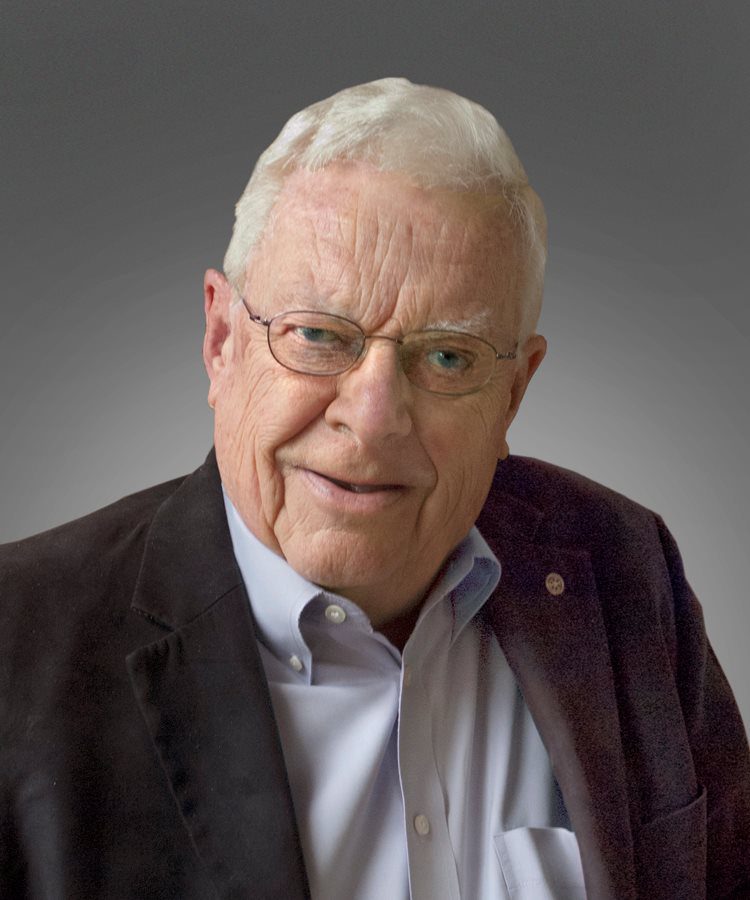
INTRODUCING THE AMBASSADOR James F. Jeffrey
AMBASSADOR
Ambassador James F. Jeffrey James F. Jeffrey
American Ambassador to TurkeyAmbassador James F. Jeffrey was nominated to be Ambassador to Turkey by President Bush in June 2008. He was confirmed by the Senate in October.
Ambassador Jeffrey, a career member of the Foreign Service, previously served on detail to the National Security Council as the Assistant to the President and Deputy National Security Advisor. Prior to this, he served as Principal Deputy Assistant Secretary for the Bureau of Near Eastern Affairs at the Department of State. His responsibilities included leading the Iran Policy Team and coordinating public diplomacy.
Ambassador Jeffrey served as Senior Advisor to the Secretary of State for Iraq from August 2005 to August 2006. Previously, he served as U.S. Charge d’affairs to Iraq from March 2005 to June 2005 and as Deputy Chief of Mission in Baghdad from June 2004 through March 2005.
Earlier in his career, Ambassador Jeffrey served as Ambassador to Albania from October 2002 to May 2004. Other assignments have included three tours in Turkey, including Deputy Chief of Mission from 1999-2002, as well as Deputy Chief of Mission in Kuwait and Deputy Special Representative for Bosnian Implementation.
Ambassador Jeffrey received his bachelor’s degree from Northeastern University and his master’s degree from Boston University. He served in the U.S. Army in Germany and Vietnam from 1969 to 1976.
Ambassador Jeffrey is accompanied by his wife, Gudrun. They have two grown children, Jahn and Julia.
Ambassador’s Remarks and Public events
U.S. Ambassador James Jeffrey’s Written Statement in the Book of Honor at Anıtkabir
December 3, 2008
Ataturk’s legacy remains undiminished. As a soldier who confronted foreign armies, a diplomat who stood toe-to-toe with the Great Powers, and a statesman who molded a modern country, Ataturk is a heroic figure whose vision for Turkey was both sweeping and farsighted. He remains an inspiration for those who cherish peace, freedom and democracy, and his ideals serve as a beacon for everyone who dreams of a brighter tomorrow.
As the U.S. Ambassador, it is only fitting that I return to Anitkabir. I too draw inspiration from these columns, and from the memory of this extraordinary leader. As Turkey and the United States work together on the challenges that lie ahead, we can be guided by the principles which Ataturk so eloquently championed.
In the words of the great Turkish hero and President: “Peace at Home and Peace in the World.”
James Jeffrey
Ambassador Jeffrey’s Remarks at Esenboga Airport
November 30, 2008
Ankara, TurkeyHello, I would like to say a couple of things. I’m very very happy to be back in Turkey. Throughout my 31 year career, I have worked on a number of occasions in Turkey, or worked with Turkey. First in Adana, then Ankara and the last time in Ankara was in 1999-2002 as Deputy Chief of Mission.
Turkey and the United States of America have been friends since 1923 and they have also been allies in Korea and then in NATO for 58 years. We have a special alliance which is important for Ankara and Washington. I am very very glad to be back in Ankara and Turkey. Thank you.
Barack Obama: America’s 44th President *
James F. Jeffrey
U.S. AmbassadorAmerica will mark an historical transition on January 20 when Barack Obama places his hand on Abraham Lincoln’s bible and takes the oath of office as America’s 44th President. The significance of this transition was best described by Barack Obama himself on election night in Chicago: “If there is anyone out there who still doubts that America is a place where all things are possible, who still wonders if the dream of our founders is alive in our time, who still questions the power of our democracy, tonight is your answer.”
In that same speech Barack Obama drew attention to the challenges ahead, saying: “For even as we celebrate tonight, we know the challenges that tomorrow will bring are the greatest of our lifetime — two wars, a planet in peril, the worst financial crisis in a century.” These challenges that we face are not America’s alone, and America cannot overcome them alone. Turkey and the United States are already working together to respond to the global economic crisis. No one knows how long or severe this crisis will be, but our countries will confront it with a shared interest in maintaining the free flow of goods and credit.
The Turkish economy has come a long way since I last served here in 2001. Turkey is now on the path to EU accession and one of the 20 largest economies in the world. It has successfully completed an IMF program, attracted billions in foreign investment, and undertaken extensive structural reforms, including a major banking reform that created one of the soundest banking sectors among emerging market countries. This dynamism and commitment to reform has made Turkey immensely attractive to U.S. businesses and investors.
U.S.-Turkish trade is still relatively modest at $16.2 billion in 2008, but growing. My government encourages American companies to look at business opportunities in Turkey. One sector where there are many such opportunities is energy. Several U.S. companies have successful energy investments in Turkey and already are contributing to meeting Turkey’s growing energy needs. In addition to electricity generation investments, U.S. companies are involved in exploration. Toreador is conducting exploration activities in the Black Sea, and Exxon Mobil recently signed a deal with TPAO for exploration in the same area.
We want to find ways to do more. The U.S. is committed to helping Turkey strengthen its energy security and meet its needs by diversifying its energy mix with a particular focus on renewable energy sources. We want to establish more efficient and productive financing mechanisms to support Turkish energy projects, especially in light of the global financial crisis. The U.S. Export-Import Bank has financed $1.6 billion in projects in Turkey and the Overseas Private Investment Corporation has supported $500 million worth of projects here.
American companies are bullish about doing business in Turkey. 76% of U.S. companies responding to an American Business Forum in Turkey (ABFT) survey said their company’s initial decision to invest in Turkey was a good one. 73% said they would recommend investing in Turkey to others. 67% said they plan to invest further in Turkey. Those numbers represent a very strong vote of confidence in Turkish workers and the Turkish economy.
There are, however, areas of concern for U.S. companies and these are reflective, I believe, of the concerns of foreign investors in Turkey in general. Among the problems most often cited are the level of taxation and the compliance burden, and the inefficiency and lack of predictability in the legal system, particularly with regard to intellectual property rights (IPR). Turkey passed some significant tax and IPR reforms in 2008, but more remains to be done.
Barack Obama made change the hallmark of his campaign, but he also reaffirmed America’s long-standing commitment to open markets, saying: “… we must build on the wealth that open markets have created, and share its benefits more equitably. Trade has been a cornerstone of our growth and global development. But we will not be able to sustain this growth if it favors the few, and not the many.” I am confident that America’s commitment to its long-standing economic partnership with Turkey will endure.
*Published in Businessweek Turkey – January 18, 2009