Author: Aylin D. Miller

  • Turkey Could be Major Political Loser   ….

    Turkey Could be Major Political Loser ….

    Turkey Could be Major Political Loser

    In the Current Israel-Gaza Conflict


    By Harut Sassounian
    Publisher, The California Courier
    Senior Contributor, USA Armenian Life Magazine
    After commenting on serious issues all year long, would like to present a rather amusing topic this week, hoping to bring a good cheer to our readers’ hearts during this Christmas season.

    Variety magazine and hundreds of media outlets worldwide reported last month that the mayor of Batman, a small city in southeastern Turkey, is planning to sue Christopher Nolan, the director of “The Dark Knight,” and Warner Brothers studios for royalties from the hugely profitable Batman movie.

    Mayor Huseyin Kalkan accused the movie producers of using the city’s name without permission. He was quoted by Variety as saying: “There is only one Batman in the world. The American producers used the name of our city without informing us.”

    Variety’s reporter Ali Jaafar wondered why it took the town of Batman “so many years to take legal action.” The reporter pointed out that “Batman first appeared as a comic book character in 1939 and the ‘Batman’ TV series started in 1966. Tim Burton’s first big screen rendition for Warner Brothers came out in 1989. Undoubtedly, the fact that ‘Dark Knight’ is about to pass the $1 billion mark … played a part in stirring the ire of the Turkish hamlet.”

    Incredibly, Mayor Kalkan blamed the Batman movie “for a number of unresolved murders and a high female suicide rate” in his town. He attributed these problems to “the psychological impact that the film’s success has had on the city’s inhabitants.”

    Natives of Batman have also encountered obstacles when attempting to register their businesses abroad, the mayor claimed. Batman’s local newspaper reported that former Batman resident Safii Dagh, currently living in the German city of Wesel, was prevented from using Batman as the name of his business. “I named my two restaurants Batman. But six months ago, a team of employees from the production company of the movie Batman made me change the title,” Dagh said.

    Lawyer Vehbi Kahveci, head of the Intellectual and Industrial Property Rights Commission of the Istanbul Bar Association, stated that Batman and his image are registered trademarks all around the world. The Batman Municipality missed the deadline for objecting to the registration of Batman’s name as a superhero.

    This bizarre lawsuit was also fodder for several derisive video postings on YouTube, google and Yahoo websites, generating hundreds of comments from viewers. Most comments were so offensive that YouTube had to delete them from its site.

    The most hilarious video came from Comedy.com where a comedian named Rob Delaney, posing as a Public Relations spokesman for Warner Brothers, ridiculed the mayor of Batman and everything Turkish!

    I have transcribed below Delaney’s comments, after removing the countless swear words. We would like to make fun of the silly lawsuit filed by the Mayor of Batman without insulting all Turks. Here is the cleansed version of the transcript:

    “We will crush you, just like you did the Armenians one hundred years ago!

    “Where were you in 1939 when Batman first appeared in comic books?
    “Where were you in 1966 when Batman was a TV show?
    “Oh, that’s right, you’re a backward third world country and you are just now finding out about Batman. How convenient! It just happens to be the same year our movie made more than your entire country did in the last decade.
    “Don’t get me wrong. We think your name is hilarious! Batman, Turkey? Why don’t you sue turkeys while you’re at it? Why don’t you sue the ottoman in the living room of one of my several houses?
    “You do not want to tangle with Warner Brothers, Turkey!
    “Why don’t you stick to what you are good at, like oil wrestling, female weight lifting, and being a nation of gypsies?
    “I’ve said it before and I’ll say it again. Warner Brothers will own you! I’m considering suing your town for making Batman slightly less awesome. Your land and women will be mine, Turkey! Consider yourself warned….”

    Maybe the mayor of Batman is not that stupid after all! By announcing that he is planning to sue the producers of Batman, he has been able to generate free worldwide publicity for his obscure city. He is probably hoping that Batman fans will flock to his hometown, bringing with them enough cash to rejuvenate the local economy! A Batman city worker wisely observed: “We wouldn’t have had better advertising for Batman, even if we had spent $1 million.”
  • Florida Turks – USA Armenian Life Magazine   ..  By Appo Jabarian

    Florida Turks – USA Armenian Life Magazine .. By Appo Jabarian

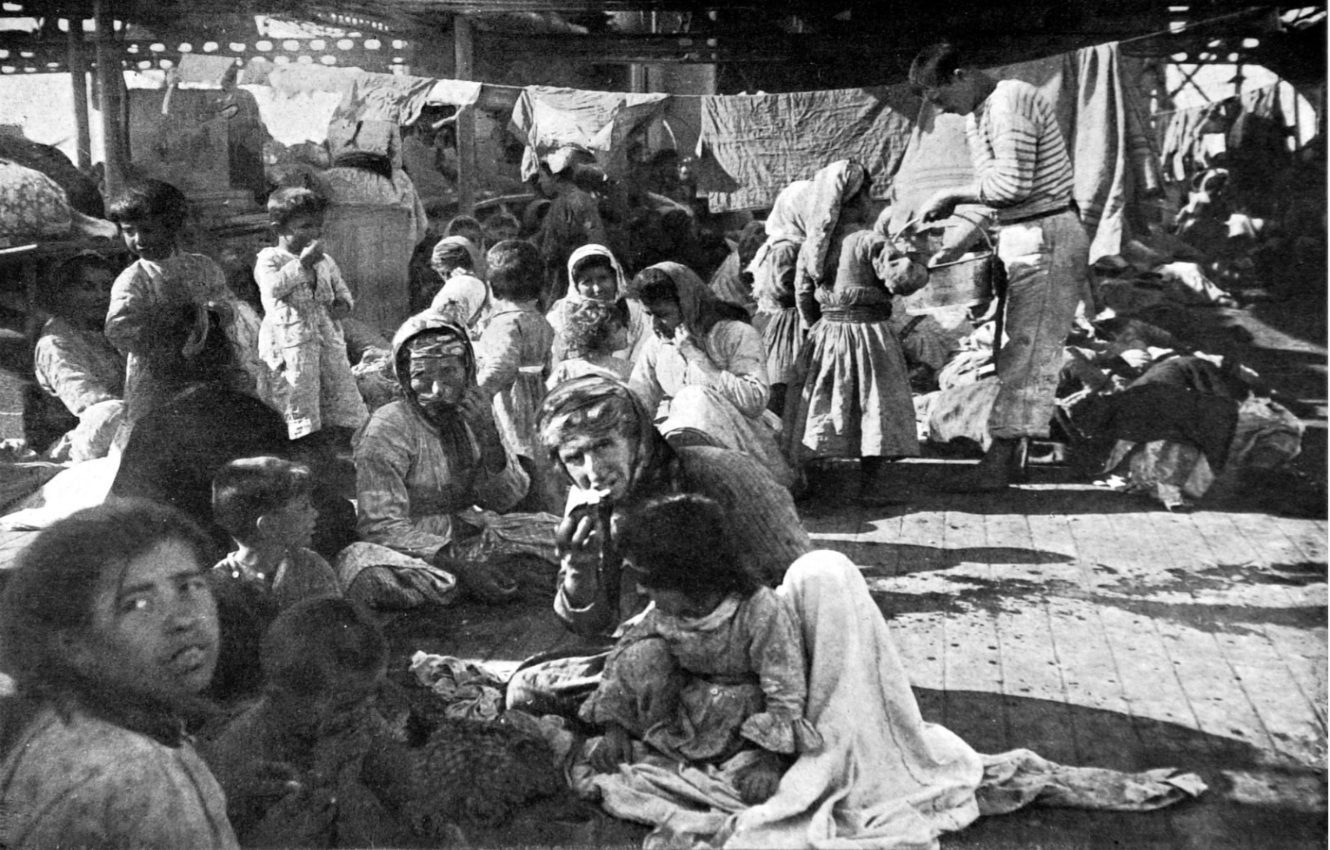
    SAN DIEGODAN DOCENT  ESRA OZYUREK ERMENI SAFLARINAMI GECDI .. HAKIKATI  ONA ANLATABILECEK BIR KISI VARMI  KALIFORNIYADA??
    Florida Turks Complain:
    “Never a break…They started again!”

    By Appo Jabarian
    Executive Publisher
    & Managing Editor

    USA Armenian Life Magazine

    Friday,  January 9, 2009

    On Friday January 2, my first workday coffee of 2009, at the Glendale, CA-based Urartu (ancient Armenia) café came with much laughter and flair.

    While sipping my coffee, I logged into my inbox to browse through the subject lines of dozens of e-mail messages. One particular subject line caught my attention. A friend had forwarded that message to me. The subject line read: “[FLTURK] Never a break…They started again!”
    A Florida Turk who had just learned that a lecture was going to be delivered on January 7 by the daughter of a genocide survivor made that complaint to his fellow deniers.
    I told my fellow coffee connoisseurs about the FLTURK’s member’s reaction, one friend countered: “These denialist Turks should know that we have not yet began to fight, and that they should expect more such events not just in Florida but all around the world.”
    At the beginning of the New Year, while several Armenian organizations and groups were busy observing the Armenian Xmas on Jan. 6, the Florida Atlantic University was set to present the following day well-known author Margaret Ahnert with the lecture “The Knock at the Door: A Journey Through the Darkness of the Armenian Genocide.”
    In June of 2007, several denialist Turks disrupted her book reading at a Barnes and Noble bookstore in New York City’s Upper East Side. One of the Turks was arrested by fast-responding New York police.
    The sentence “Never a break…They started again!” hilariously reflects the frustration of the denialist Turks here in the United States at anyone or any entity that dares to openly discuss the calamity that befell the Armenians at the turn of the 20th century.
    The words “They started again!” also illustrates the sense of being in a hot pursuit by the evangelizers of the truth. In this particular case, the organizer of the lecture was not an Armenian-American group but an American university.
    On January 5, The Los Angeles Times featured a truthful opinion article by Esra Özyürek, an associate professor of anthropology at UC San Diego and the author of “Nostalgia for the Modern: State Secularism and Everyday Politics in Turkey” and “Politics of Public Memory in Turkey.”
    Prof. Özyürek wrote: “I grew up in Turkey in a politically engaged, educated and reasonably liberal family in the 1970s and the 1980s, and I had only a vague idea about the animosity between Turks and Armenians. It wasn’t until I enrolled in graduate school at the University of Michigan, one of the most important centers of Ottoman and Armenian studies in the United States, that I learned about the unacceptably sad end of the Armenian subjects of the Ottoman Empire.”
    He concluded: “Turks growing up today surely are better informed about the history of the land they inhabit. Even those who accept the nationalist line have to be aware of the sudden end of the centuries-long Armenian presence in Anatolia [Western Armenia and Cilicia – Ed]. Regardless of the terms they employ or the specific amount of responsibility they willingly shoulder, this next generation of Turks is already in a much better position to face the darkest aspect of their national history and develop a more responsible relationship to it.”
    The sense of being “under siege” by these denialists must be growing stronger on a daily basis as the number of righteous Turks grows steadily not only in the United States and other countries but in Turkey itself.
    Very soon, these Turkish denialists will complain “they started again,” against righteous Turks.
  • London Conference:Turkish–Armenian Relations: 30Jan 2009

    London Conference:Turkish–Armenian Relations: 30Jan 2009

    You Are Kindly Invited To Attend An Evening Conference Entitled :

    ‘TURKISH – ARMENIAN RELATIONS’
    Friday, 30th January 2009, 6 pm for 6.45pm*

    Refreshments available from 6 pm in the Senior Dining Room
    (Located in the Old Building, 5th Floor, opposite the East Building)

    New Theatre, E171 East Building
    London School of Economics
    Houghton Street, London WC2A 2AE

    GUEST SPEAKERS . .

    Prof. Jeremy Salt

    The ‘Armenian Question’ 1878-1918: a Counter-Narrative

    ‘Somewhere between three and four million Ottoman civilians are thought to have died during the First World War. The causes of death of both Muslims and Christians – massacre, malnutrition, exposure and disease – were the same for all but while the suffering of Christians, and especially the Armenians, has been firmly embedded in the western historical, political and cultural mainstream, the fate of the Muslims, nearly a century later, remains invisible and unexamined. The need is long overdue for deconstruction and recontextualisation of the ‘Armenian question’. This talk will look at some of the issues involved’.

    “The Ottoman archives remain largely unconsulted. When so much is missing from the fundamental source material, no historical narrative can be called complete and no conclusions can be called balanced.” Jeremy Salt

    Sükrü Server Aya
    Globalization of Ethical and Humane Values

    The theme of the speaker is the huge distortion of information distributed by press and TV media, causing misjudgements for many incidents of the past and present. The speaker gives a few examples from the past and present and stresses the importance of a ‘global understanding and agreement of the same humane and ethical values’ for a happier peaceful future!

    “This study may be interpreted as a token for humane values, common to all, such as decency, not lying – cheating – swindling – stealing – slandering etc. and promotes the need for trust, compassion, respect for other humans, disregarding their ethnicity, nationality or faiths, beyond their control or personal preferences!” Sukru S. Aya

    Chaired By
    Prof. Belma Baskett

    The Way Forward
    This conference has been organised in the memory of 34 Turkish diplomats and other innocent victims who were murdered by various Armenian terrorist groups, while serving abroad between 1973 and 1994 and whose only crime was being born ‘Turkish’.
    Most of the perpetrators have never been brought to justice, of the few that were,
    only some were imprisoned and given very light sentences.

    Non – Members Welcome

    Attendance is free but by registration only. Please register by 28th January at [email protected]
    or telephone 07788 908 803

    *6.00 pm Refreshments (Senior Dining Room, Old Building, 5th Floor, opposite the East Building)
    6.45 pm Conference (New Theatre – E171 East Building)

    Organised by THE FEDERATION OF TURKISH ASSOCIATIONS UK
    www.turkishfederationuk.com

    LSE CONFERENCE GUEST SPEAKERS
    Prof Jeremy Salt: Jeremy Salt runs courses on the modern Middle East and media and propaganda in the Department of Political Science at Bilkent University, Ankara. He has taught at the University of Melbourne, where he took his PhD in Middle Eastern studies, and Boğazici (Bosphorus) University in Istanbul. His publications include Imperialism, Evangelism and the Ottoman Armenians 1878-1896 (Frank Cass, London, 1993), a study of the involvement of foreign governments and missionary organizations in the development of the ‘Armenian question’ in the late 19th century. He also writes on the politics of the modern Middle East, with an emphasis on the Palestinian-Israeli conflict. The Unmaking of the Middle East. A History of Western Disorder in Arab LandsHe (University of California Press, July 2008) studies the involvement of the ‘West’ in the Middle East over the past two centuries. Journals in which his articles have appeared include The Muslim World, Current History, Middle Eastern Studies, Journal of Palestine Studies, Third World Quarterly and the International Journal of Turkish Studies.

    Sükrü Server Aya: Born in 1930, he has been living in Istanbul since 1939. He is a graduate of the reputed Robert College founded in 1863 by Protestant Missionaries, now Bogazici University. After two years in engineering school, he had to quit and work abroad to support his family, he returned after two years of work with a Dutch and Swiss Company, and graduated in 1953 with a BA in Literature instead of Mechanical Engineering. By profession, he was an importer-distributor of engine rebuilding machinery and shop equipment and has been a globetrotter on business and pleasure visiting nearly all industrial countries. He had and has many friends of Armenian ethnicity and after 1985, being a fair history reader, started to read on the Turkish – Armenian history, in which his graduating school was instrumental in the past. In 2004, after a biased article was published in National Geographic Magazine, he started to put together various excerpts from mainly anti-Turkish English readings. His book “The Genocide of Truth” was presented in Istanbul in April 2008 as a publication of Istanbul Commerce University and has been distributed for free, mostly overseas. A shortened Turkish version of the same book was just presented in Istanbul in mid January 2009 under the title “Genocide Traders and Truth”.

    Chair: Prof. Belma Ötüş Baskett : Born in Istanbul and educated at Robert College, Istanbul; Faculty of Languages, Ankara University; University of California, Berkeley, has degrees in B.S., Honors Diploma, MA, PhD. Lecturer for 23 years at Middle East Technical University, Ankara; Michigan University(12 years), Visiting Prof. at University of Pittsburgh, Kansai Gakuin University and Kobe College, Japan; Bilkent University, Ankara; University of Surrey at Roehampton for 2 years. She has written and translated many books as well as monographs; Editor of Ufuk magazine and Turkish Area Studies Review, has more than 60 articles published in Turkey, USA, UK, Austria and Spain. President of International Society for Contemporary Literature and Theatre.

  • Israel, Turkey and the politics of genocide

    Israel, Turkey and the politics of genocide

    Globe and Mail Update

    President Obama — I love saying those words — has momentarily united the world. Almost. Among the exceptions, though barely noticed by the mainstream media, is the estrangement of Turkey and Israel, previously staunch allies in the turbulent Middle East.

    At first blush, this alliance may seem counterintuitive, but in fact it makes good strategic sense for both countries. Israel gets a warm working relationship with one of the largest Muslim countries in the world, while enriching Israel’s all-important industrial-military complex. Less than two months ago, for instance, came the news of a deal worth $140-million to Israeli firms to upgrade Turkey’s air force. In the hard-boiled, realpolitik terms that determine Israel’s strategies, it’s a no-brainer. Almost.

    In return, Turkey gets military, economic and diplomatic benefits. But it also gets something less tangible, something that matters deeply for reasons hard for outsiders to grasp. As part of the Faustian bargain between the two countries, a succession of Israeli governments of all stripes has adamantly refused to recognize that in 1915 the Turkish government was responsible for launching a genocide against its Armenian minority. Some 2.5-million Armenian women, men and children were successfully killed.

    I should make clear that this Israeli position is not held casually. On the contrary. Over the years Israelis, with a few notably courageous exceptions, have actually worked against attempts to safeguard the memory of the Armenian genocide. (The bible on this issue is the excellent book by an Israeli, Yair Auron, called The Banality of Denial: Israel and the Armenian Genocide, 2003.)

    For many, this may well be a pretty esoteric sidebar to the world’s many crises. But readers need to understand that every Turkish government for almost a century now has passionately denied that a genocide took place at all. Yet the vast majority of disinterested scholars of genocide have publicly affirmed that it was indeed a genocide, one of the small number in the 20th century (with the Holocaust and Rwanda) that have incontestably met the definition set down in the UN’s 1948 Genocide Convention.

    For Armenians in the Western world, even after 94 years, nothing is more important than persuading other governments to recognize this. For Turkish authorities, even after 94 years, nothing is more important than preventing that recognition. In that pursuit, Israel has been perhaps Turkey’s most powerful ally. After all, if the keepers of the memory of the Holocaust don’t acknowledge 1915, why should anyone else?

    But the Israeli-Turkish bargain goes well beyond Israel. Not only is Israel, of all the unlikely states in the world, a genocide denier, but also many established Jewish organizations in other countries, especially the United States, have followed suit. In the United States, those who argue that denying the Holocaust is psychologically tantamount to a second holocaust have taken the lead in pressuring presidents and Congress against recognizing the reality of 1915. Resolutions calling for recognition are regularly pushed by American-Armenians and their many supporters. Jewish groups regularly lead the opposition. Some believe that members of these groups in fact understand perfectly well the rights and wrongs of the case. But a mindset that backs any and all Israeli government initiatives trumps all else. And successfully. Repeated attempts in Congress to pass this resolution has failed, even though the list of nations that now recognizes the Armenian genocide has grown steadily and, thanks to Stephen Harper, now includes Canada.

    It is this rather unseemly, if not unholy, Israeli-Turkish deal that has been among the many victims of the latest Israeli attack on Gaza. Whether the Israelis anticipated it or not, the Turkish government turned against its erstwhile ally with a vengeance, pulling few punches. Turkish Prime Minister Recep Erdogan accused Israel of “perpetrating inhuman actions which would bring it to self-destruction. Allah will sooner or later punish those who transgress the rights of innocents.” Mr. Erdogan described Israel’s attack on Gaza as “savagery” and a “crime against humanity.”

    Israel formally described this language as “unacceptable” and certain Israeli media outlets have raised the stakes. The Jerusalem Post editorialized that given Turkey’s record of killing tens of thousands of Kurds in northern Iraq, “we’re not convinced that Turkey has earned the right to lecture Israelis about human rights.” Israel’s deputy foreign minister was even more pointed: “Erdogan says that genocide is taking place in Gaza. We [Israel] will then recognize the Armenian-related events as genocide.” Suddenly, genocide turns into a geopolitical pawn.

    It isn’t easy to choose a winner in the cynicism stakes here. Here’s what one Turkish columnist, Barcin Yinanc, shrewdly wrote: “When April comes, I can imagine the [Turkish] government instructing its Ambassador to Israel to mobilize the Israeli government to stop the Armenian initiatives in the U.S. Congress. I can hear some Israelis telling the Turkish Ambassador to go talk to Hamas to lobby the Congress.”

    I’m guessing some readers work on the naïve assumption that an event is deemed genocidal based on the facts of the case. Silly you. In the real world, you call it genocide if it bolsters your interests. If it doesn’t, it’s not. It’s actually the same story as with preventing genocide.

    What happens now? Candidate Obama twice pledged that he would recognize the Armenian claim of genocide. But so had candidate George W. Bush eight years earlier, until he was elected and faced the Turkish/Jewish lobby. Armenian-Americans and their backers are already pressing Mr. Obama to fulfill his pledge. With the Turkish-Israeli alliance deeply strained, the position of the leading Jewish organizations is very much in question this time. Whatever the outcome, be sure that politics, not genocide, will be the decisive factor.

    Gerald Caplan, author of The Betrayal of Africa, writes frequently on issues related to genocide.

  • Israel-Turkey diplomatic spat worsens, despite end of Gaza fighting

    Israel-Turkey diplomatic spat worsens, despite end of Gaza fighting


     By Barak Ravid


    HAARETZ.COM


    The crisis in relations between Israel and Turkey, which began when the Gaza operation began three weeks ago, is getting worse. A political source in Jerusalem said that the head of the political-security bureau at the Defense Ministry, Amos Gilad, refused to meet with Ahmet Davutoglu, the senior foreign policy adviser to Turkey’s Prime Minister Recep Tayyip Erdogan, while the two were in Cairo last week.

    Last Thursday, Amos Gilad visited Cairo for talks with Egypt’s Omar Suleiman on a cease-fire agreement. At the time, Davutoglu, who had served as a mediator in Israel’s talks with Syria in Istanbul, was in touch with Hamas politburo chief Khaled Meshal, who is based on Damascus.


    At the start of the Gaza operation, Erdogan instructed Davutoglu to serve as a conduit between Hamas and the West and also try to involve Turkey in the cease-fire negotiations. Egypt expressed its reservations at Turkey’s involvement and refused even to allow Davutoglu to sit in on talks with senior Hamas officials in Cairo.

    But it turns out that not only Egypt refused to have exchanges with Davutoglu. So did Israel. A political source in Jerusalem said that on Thursday, when Gilad was in Cairo, the Turkish ambassador to Egypt called his Israeli counterpart, Shalom Cohen. The Turkish ambassador asked for a meeting between Davutoglu and Gilad to deliver a message from Hamas. The political source said the Turks “asked for even a five-minute meeting” and that the ambassador called back several times.

    The Turkish request was relayed to Gilad by the Israeli ambassador, but he refused to meet with Davutoglu. The Israeli political source said the reason for the refusal was the deterioration in relations between Jerusalem and Ankara, stemming from the unprecedented verbal attacks by Erdogan on Israel.

    The source added that another reason was the unwillingness to allow the Turks to intervene in the cease-fire talks and the wish to rely solely on the Egyptian channel.

    Erdogan’s attacks on Israel in recent weeks have been particularly fierce, with Prime Minister Ehud Olmert specifically targeted for what the Turkish leader called “lying to him and acting behind his back.”

    The words of the leader of the AKP, Turkey’s ruling Islamist party, were a source of anger among Turkey’s military, where there is concern that the rift would undermine the strategic ties with Israel.

  • CONF./CFP- The Turkic World, the Caucasus, and Iran, July 10-12, Yerevan

    CONF./CFP- The Turkic World, the Caucasus, and Iran, July 10-12, Yerevan

    International Conference
    The Turkic World, the Caucasus, and Iran: Civilisational Crossroads of
    Interactions
    July 10-12, 2009
    Yerevan, Armenia
    http://www.armacad.org/civilizationica

    The International Journal Iran and the Caucasus
    (; Brill: Leiden-Boston), the Department of
    Iranian Studies at Yerevan State University, the Makhtumquli Feraqi
    Centre for Turkic Studies at ARYA International University (Yerevan),
    the Association for the Study of Persianate Societies (Armenian
    Branch), in collaboration with the International Society for the Study
    of Iran and the Caucasus (ISSIC;
    http://www.armacad.org/iranocaucasica), Caucasian Centre for Iranian
    Studies (Yerevan), the Armenian-Turkmen Cooperation Centre “Partev”
    (Yerevan), and the Armenian Association for Academic Partnership and
    Support – ARMACAD (http://www.armacad.org/; Yerevan) are organising an
    international conference entitled “The Turkic World, the Caucasus, and
    Iran: Civilisational Crossroads of Interactions”.

    The Conference will be held on July 10-12, 2009.
    Venue: ARYA International University, Yerevan, Armenia.

    The region of civilisational interactions from Central Asia to Eastern
    Europe and from Southern Russia to Iran has been one of the focal
    geographical points in world history. The main cultural, political and
    civilisational players in this domain have been the Iranian and Turkic
    peoples, while the Caucasus and the Transcaucasian region with their
    cultural, ethnographical and linguistic uniqueness have served as a
    connecting link and an arena for wars and peaceful cohabitation.
    Though the main stress of the conference will be on cultures,
    histories (including archaeology, etc.), languages and the literatures
    of this vast area, presentations on modern political and regional
    issues, as well as the human ecology topics are also welcomed. The
    conference seeks to emphasise links between the Turkic world, the
    Caucasus, and Iran.

    Working languages – English and Russian.

    Abstracts (not to exceed 300 words) are to be submitted via the web
    form (http://www.armacad.org/civilizationica/abstracts.php) by
    February 20, 2009.  A brief biography, including contact details, is
    also to be included.

    Once your materials have been submitted, a confirmation letter will be
    returned. If you do not receive a confirmation e-mail within 7 days,
    then we have not received your materials. Only in this case, please
    contact: [email protected]

    A notification of acceptance will be sent by March 30, 2009.

    All whose abstracts are accepted for presentation at the conference
    have to send to the Conference Organising Committee 10 Euros before
    June 10 in order to ensure their participation. This amount of money
    will be reduced from the participation fee.

    Participation Fee:

    The conference participation fee is 70 Euros and a reduced rate of 35
    Euros for postgraduate students. Participants from the Caucasus and
    Central Asia will pay 35 Euros.

    For further information do not hesitate to contact:

    Dr. Khachik Gevorgyan,
    Secretary of the Organising Committee
    [email protected]

    Makhtumquli Feraqi Centre for Turkic Studies,
    Arya International University
    Shahamiryanneri street, 18/2
    Yerevan
    Armenia
    Tel: +374 (10) 44-35-85
    Fax: +374 (10) 44-23-07
    www.arya.am
    Email: [email protected]

    International Organising Committee

    Prof. Dr. Garnik Asatrian (Yerevan)
    Prof. Dr. Uwe Blaesing (Leiden)
    Prof. Dr. Ralph Kautz (Vienna)
    Prof. Dr. Vladimir Livshits (Saint Petersburg)
    Prof. Dr. Levon Zekiyan (Venice)
    Prof. Dr. Said Amir Arjomand (New York)
    Prof. Dr. Murtazali Gadjiev (Makhachkala)
    Prof. Dr. Rovshan Rahmoni (Dushanbe)
    Prof. Dr. George Sanikidze (Tbilisi)
    Dr. Gulnara Aitpaeva (Bishkek)
    Dr. Behrooz Bakhtiari (Tehran)
    Dr. Habib Borjian (New York)
    Dr. Babak Rezvani (Amsterdam)
    Dr. Mher Gyulumian (Yerevan)
    Dr. Mahmoud Joneydi Ja’fari (Tehran)
    Dr. Seyyed Said Jalali (Tehran)
    Dr. Kakajan Janbekov (Ashgabat)
    Dr. Filiz Kiral (Istanbul)
    Dr. Irina Natchkebia (Tbilisi)
    Dr. Vahram Petrosian (Yerevan)
    Dr. Tamerlan Salbiev (Vladikavkaz)
    Dr. Alexander Safarian (Yerevan)