US president praised Turkey’s role in its region during telephone conversation with Tukish PM Erdogan and President Gul.
Tuesday, 17 February 2009 09:24
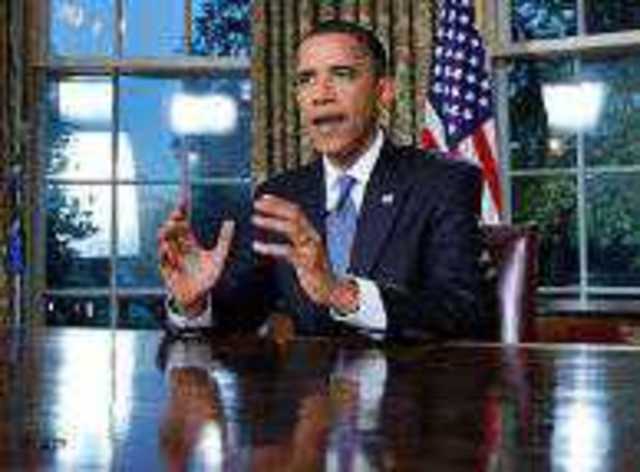
U.S. President Barack Obama told Turkish Premier Recep Tayyip Erdogan during a telephone conversation on Monday that Turkey played an important role for peace in its region.
Obama’s recent praises came only few days after Israeli commender accused Turkey of 1915 incidents and tensions rose between Turkey and Israel.
“I would like to say that your leadership is vital in the Middle East peace process and America always understands Turkey’s sensitivities,” Erdogan’s press office quoted Obama as telling the Turkish premier.
Obama also expressed willingness to work with Turkey in many issues such as maintaining peace in the Middle East, ending PKK terrorism and relations with Armenia.
Erdogan in return highlighted Turkey’s sensitivities regarding Armenia and the Middle East, expressing the importance of fair and impartial stance of the United States to secure that the relations between the two countries were not damaged, said AA.
Obama has also telephoned Turkish President Abdullah Gul, said a statement from Gul’s press office on Monday.
“During the telephone conversation, President Obama underlined the importance that he attaches to Turkish-U.S. relations, saying he appreciated the leadership Turkey has taken in regional issues,” the statement said.
Top on the agenda of telephone conversation was Caucasus. They discussed also developments in Afghanistan, Middle East and EU.
President Gul paid a visit Russia last week and met with Russian counterpart and PM. They discussed energy, trade and developments in the region. Turkey and Russia also signed a trade deal. They also agreed on using Turkish Liras and ruble in bilateral trade, instead of US dolar.
The two leaders also “re-affirmed the will to work together, reviewing regional as well as international issues.”
“In both calls, the leaders discussed a number of current issues, including U.S. support for the growing Turkish-Iraqi relationship, the importance of cooperation in Middle East peace efforts, and the U.S. review on Afghanistan and Pakistan policy,” the White House said in a statement.
Agencies
Source: www.worldbulletin.net, 17 February 2009
Turkey’s growing influence in the Middle East
Turkey has become increasingly “influential in the Middle East” given its diplomatic success in the region, the commentary claims.
Űlgen points to the number of progressive goals that the country has achieved, such as ending “factional strife in Lebanon” and “engineering the start of direct talks between Syria and Israel” over the Israeli-Palestinian conflict.
On top of this, the article praises Turkey’s diplomatic efforts in helping to “ease the nuclear stand-off between Iran and the West”.
Űlgen notes that Turkey’s progress in the Middle East is the result of a “growing lack of US legitimacy and lack of EU influence”. As a result, the country has been “able to leverage both its regional ties and its standing in the transatlantic community to play a more instrumental role vis-à-vis its southern neighbours,” the author asserts.
This has “without a doubt” enhanced Turkey’s role and influence in the Middle East, Űlgen declares.
However, the author wonders whether this comes “at the expense of the country’s EU ambitions”. Indeed, “with so much of the country’s diplomatic and political energy now focused on regional issues, it seems to leave little room for advancing its EU membership ambitions,” the paper observes.
Nevertheless, Űlgen insists that Turkey’s growing influence in the Middle East can be a “sure way of enhancing its asset value for the EU” and facilitating “Turkey’s European bid”.
On the other hand, the author admits this claim is “predicated on the assumption that Europe has the capacity and the willingness to benefit from what Turkey has to offer”.
Indeed, this “strategy can only pay off if the EU is able to strengthen its own capacity for concerted action on foreign policy,” the paper asserts.
In light of Turkey’s diplomatic progress in the Middle East, Űlgen concludes that Turkish EU membership would “make Europe a more influential and capable world power”.
Turkey’s route to the EU may be via the Middle East
The ensuing pro-European euphoria was to be short lived, and for all practical purposes the accession negotiations have now reached deadlock. Turkey started EU membership talks at the same time as Croatia, but while Croatia is now in the final stages of the process, Turkey is struggling to proceed with the negotiations. These difficulties have had a detrimental impact on both Turkish politicians and on public opinion.
Not surprisingly, the Turkish government has also lost its appetite for EU-related reforms. For more than two years now, the European Commission has been hard pressed to find anything positive to say in its annual progress reports on political reform developments. In short, Turkey’s European future is today as clouded as at any point in its contemporary history.Yet just as Europe is looking more distant, the Middle East is looming larger on Ankara’s radar screen. Turkey is shifting its attention from west to south, from Brussels to Beirut and beyond. The question is whether this turnround is a structural phenomenon – a sign of a fundamental shift in Turkey’s – or just a temporary and transitional phase.
Turkey has traditionally remained a bystander in Middle Eastern politics. It was thought the country had little to contribute to or gain from getting involved in the problems that beset Middle Eastern countries. The Ottoman legacy was often used to justify this stance, with the argument being that as long as the legacy endures Turkey will be viewed by its Arab neighbours with suspicion. Developments in recent years have seriously challenged this perception, with Turkey becoming a much more active and visible player in the Middle East.
Turkish diplomacy has scored a number of successes in the region. Ankara played an instrumental role in bringing about an end to the factional strife in Lebanon and its policy on Syria also produced tangible results. Turkish overtures to Syria, undertaken in spite of warnings from Washington, have paid off handsomely. Turkey was able not only to defuse the international tensions surrounding its Arab neighbour, but also to engineer the start of direct talks between Syria and Israel, a crucial contribution to the elusive Middle East peace process. Ankara obtained this result by investing in its relationship with Damascus and eventually gaining the trust of the Assad regime. Turkey’s strong relations with Israel then enabled Ankara to bring the two rivals to the table.
On Iran, Turkish activism has been even more pronounced. In recent months, Turkey has multiplied its diplomatic efforts to help ease the nuclear stand-off between Iran and the west. Ankara went as far as hosting a visit from Iranian president Mahmoud Ahmedinejad in August of last year. Turkey does not want to see a nuclear Iran, but that’s chiefly because Turks are more afraid of the regional repercussions of such a development than of the threat it would pose to their own country.
Turkey’s growing activism in the Middle East is now being underpinned by a confluence of regional factors and geopolitical shifts. Turkey has been able to make headway in the turbulent waters of the Middle East because of the growing lack of U.S. legitimacy and lack of EU influence. In other words, as a rising regional power, Turkey has benefited from the handicaps of the global powers.
The U.S. lost its ability to play a more constructive role in the Middle East following its ill-fated intervention in Iraq. With anti-American sentiments reaching new heights, the ability of many Arab governments to collaborate with the U.S. has been severely impaired. The Bush Administration’s neo-conservative agenda of bringing democracy to the Arab world has also backfired. The U.S. first distanced itself from the more autocratic Arab leaders in a bid to support home-grown democratic alternatives, only to find that the only realistic political alternative to these regimes was to be found in the territory of political Islam. Given the lack of appetite in a U.S. administration conditioned by the “war on terror” for such an option, a return to the traditional policy of supporting the status quo was inevitable.
The EU has faced a different dilemma. Unlike the U.S., the EU’s difficulty stems not from a perceived lack of legitimacy or crude attempts at promoting democracy, but a real lack of unity and, therefore, influence. The quest for a common denominator between the positions of different EU governments has hardly been conducive to the emergence of the sort of cogent and reliable diplomacy needed to address the deep problems of the Middle East. Individual EU countries continue to maintain high national profiles in the region than the sum of countries that the EU purports to be.
In light of these serious deficiencies on the part of the main western powers, Turkey has been able to leverage both its regional ties and its standing in the transatlantic community to play a more instrumental role vis-à-vis its southern neighbours. And Turkey’s potential for influence has been further enhanced by opportune demand and supply conditions. On the demand side, the main structural barrier that traditionally prevented Turkish involvement in the Middle East has been eroding. Arab nationalists are fast becoming an endangered species, replaced by a rising political class more influenced by religion – a supranational ideology. As a result, the Ottoman legacy of a working state structure, tolerant of religion, was beginning to be viewed in a more favourable light. The Turkish model, whose particularity for many Middle Eastern observers was its ability to nurture a democracy-friendly political Islam, was suddenly in demand. And too is Turkey.
On the supply side, Turkey has been more prepared than ever to take advantage of these fundamental shifts. The ruling AKP party traces its roots to political Islam, and many of its leaders have their social networks in Islamic countries – in stark contrast to the secular style of Turkey’s previous leaders, who had proudly displayed their western identity. The result is that formal and informal links between the new Turkish political élite and the Arab world have been considerably easier. Decades-old trust and confidence deficits between Turkey and Middle Eastern countries are thus gradually being overcome.
The frustrations of dealing with an undecided Europe have led Turkish policy-makers to focus their efforts on an area where the expected return on their investment was more immediate and more concrete. Prime Minister Erdoğan has recently visited many countries in the Middle East – Syria, Lebanon, Egypt, Algeria, Jordan, Saudi Arabia, Iran and Iraq – but has not been to Brussels since 2005.
There can be no doubt that Ankara’s growing activism in its foreign policy, especially in relation to the Middle East, has begun to enhance the role and influence of Turkey in its own region. Turkey is now firmly set to become a regional power, with its recent election to the UN Security Council a further testimony to Ankara’s diplomatic prowess.
The question is whether this shift of focus towards the south and towards Turkey’s status as a regional power comes at the expense of the country’s EU ambitions. With so much of the country’s diplomatic and political energy now focused on regional issues, that seems to leave little room for advancing its EU membership ambitions. It is no coincidence that Turkey’s failure to implement a long-term communications strategy with Brussels comes in the face of ever-falling public support in EU countries for enlargement of the common area to include Turkey.
For optimists, Turkey’s growing regional influence is seen as a sure way of enhancing its asset value for the EU. The multi-faceted diplomacy of Ankara and the strengthening of Turkey’s status as a soft power in the region are not necessarily at odds with its EU membership objective. On the contrary, it should facilitate Turkey’s European bid.
Yet this claim is predicated on the assumption that Europe has the capacity and the willingness to benefit from what Turkey has to offer. In other words, this strategy can only pay off if the EU is able to strengthen its own capacity for concerted action on foreign policy. So Turkish accession would not, as European federalists like to argue, lead to a weaker Europe. On the contrary, Turkey’s membership would make Europe a more influential and capable world power.
Source: www.euractiv.com
|
|
Turkey’s route to the EU may be via the Middle East |
|
| INTERNATIONAL | ||
| par Sinan Ülgen |
|
With western influence in the Middle East faltering in the wake of America’s misadventure in Iraq and Europe’s general indecision, Sinan Ülgen argues that Turkish diplomatic successes in Syria and Iran and its growing stature throughout the Middle East have the potential to make it more attractive to the European Union
|
|
|
RELATED ARTICLES:
Just a few years ago, Europe headed Turkey’s agenda. Recep Tayyip Erdoğan’s newly-elected government had embarked on a series of ambitious reforms to meet the EU’s political criteria for joining the common area. At the end of 2004 the EU decided in return to initiate accession talks with Ankara. The ensuing pro-European euphoria was to be short lived, and for all practical purposes the accession negotiations have now reached deadlock. Turkey started EU membership talks at the same time as Croatia, but while Croatia is now in the final stages of the process, Turkey is struggling to proceed with the negotiations. These difficulties have had a detrimental impact on both Turkish politicians and on public opinion. Euro-scepticism is now at an all-time high in Turkey, and continues to be fuelled by the rhetoric of some European political leaders who voice their opposition to Turkey’s accession. The EU’s own failure to dissipate doubts about the feasibility of Turkey’s eventual membership is leading ever-larger constituencies in Turkey to lose faith in Europe and in the likelihood of accession. Domestic support for EU membership had reached 70% at the start of the negotiations, but now that figure is closer to 40%. Not surprisingly, the Turkish government has also lost its appetite for EU-related reforms. For more than two years now, the European Commission has been hard pressed to find anything positive to say in its annual progress reports on political reform developments. In short, Turkey’s European future is today as clouded as at any point in its contemporary history. Yet just as Europe is looking more distant, the Middle East is looming larger on Ankara’s radar screen. Turkey is shifting its attention from west to south, from Brussels to Beirut and beyond. The question is whether this turnround is a structural phenomenon – a sign of a fundamental shift in Turkey’s – or just a temporary and transitional phase. Turkey has traditionally remained a bystander in Middle Eastern politics. It was thought the country had little to contribute to or gain from getting involved in the problems that beset Middle Eastern countries. The Ottoman legacy was often used to justify this stance, with the argument being that as long as the legacy endures Turkey will be viewed by its Arab neighbours with suspicion. Developments in recent years have seriously challenged this perception, with Turkey becoming a much more active and visible player in the Middle East. Turkish diplomacy has scored a number of successes in the region. Ankara played an instrumental role in bringing about an end to the factional strife in Lebanon and its policy on Syria also produced tangible results. Turkish overtures to Syria, undertaken in spite of warnings from Washington, have paid off handsomely. Turkey was able not only to defuse the international tensions surrounding its Arab neighbour, but also to engineer the start of direct talks between Syria and Israel, a crucial contribution to the elusive Middle East peace process. Ankara obtained this result by investing in its relationship with Damascus and eventually gaining the trust of the Assad regime. Turkey’s strong relations with Israel then enabled Ankara to bring the two rivals to the table. On Iran, Turkish activism has been even more pronounced. In recent months, Turkey has multiplied its diplomatic efforts to help ease the nuclear stand-off between Iran and the west. Ankara went as far as hosting a visit from Iranian president Mahmoud Ahmedinejad in August of last year. Turkey does not want to see a nuclear Iran, but that’s chiefly because Turks are more afraid of the regional repercussions of such a development than of the threat it would pose to their own country. Turkey’s growing activism in the Middle East is now being underpinned by a confluence of regional factors and geopolitical shifts. Turkey has been able to make headway in the turbulent waters of the Middle East because of the growing lack of U.S. legitimacy and lack of EU influence. In other words, as a rising regional power, Turkey has benefited from the handicaps of the global powers. The U.S. lost its ability to play a more constructive role in the Middle East following its ill-fated intervention in Iraq. With anti-American sentiments reaching new heights, the ability of many Arab governments to collaborate with the U.S. has been severely impaired. The Bush Administration’s neo-conservative agenda of bringing democracy to the Arab world has also backfired. The U.S. first distanced itself from the more autocratic Arab leaders in a bid to support home-grown democratic alternatives, only to find that the only realistic political alternative to these regimes was to be found in the territory of political Islam. Given the lack of appetite in a U.S. administration conditioned by the “war on terror” for such an option, a return to the traditional policy of supporting the status quo was inevitable. The EU has faced a different dilemma. Unlike the U.S., the EU’s difficulty stems not from a perceived lack of legitimacy or crude attempts at promoting democracy, but a real lack of unity and, therefore, influence. The quest for a common denominator between the positions of different EU governments has hardly been conducive to the emergence of the sort of cogent and reliable diplomacy needed to address the deep problems of the Middle East. Individual EU countries continue to maintain high national profiles in the region than the sum of countries that the EU purports to be. In light of these serious deficiencies on the part of the main western powers, Turkey has been able to leverage both its regional ties and its standing in the transatlantic community to play a more instrumental role vis-à-vis its southern neighbours. And Turkey’s potential for influence has been further enhanced by opportune demand and supply conditions. On the demand side, the main structural barrier that traditionally prevented Turkish involvement in the Middle East has been eroding. Arab nationalists are fast becoming an endangered species, replaced by a rising political class more influenced by religion – a supranational ideology. As a result, the Ottoman legacy of a working state structure, tolerant of religion, was beginning to be viewed in a more favourable light. The Turkish model, whose particularity for many Middle Eastern observers was its ability to nurture a democracy-friendly political Islam, was suddenly in demand. And too is Turkey. On the supply side, Turkey has been more prepared than ever to take advantage of these fundamental shifts. The ruling AKP party traces its roots to political Islam, and many of its leaders have their social networks in Islamic countries – in stark contrast to the secular style of Turkey’s previous leaders, who had proudly displayed their western identity. The result is that formal and informal links between the new Turkish political élite and the Arab world have been considerably easier. Decades-old trust and confidence deficits between Turkey and Middle Eastern countries are thus gradually being overcome. The frustrations of dealing with an undecided Europe have led Turkish policy-makers to focus their efforts on an area where the expected return on their investment was more immediate and more concrete. Prime Minister Erdoğan has recently visited many countries in the Middle East – Syria, Lebanon, Egypt, Algeria, Jordan, Saudi Arabia, Iran and Iraq – but has not been to Brussels since 2005. There can be no doubt that Ankara’s growing activism in its foreign policy, especially in relation to the Middle East, has begun to enhance the role and influence of Turkey in its own region. Turkey is now firmly set to become a regional power, with its recent election to the UN Security Council a further testimony to Ankara’s diplomatic prowess. The question is whether this shift of focus towards the south and towards Turkey’s status as a regional power comes at the expense of the country’s EU ambitions. With so much of the country’s diplomatic and political energy now focused on regional issues, that seems to leave little room for advancing its EU membership ambitions. It is no coincidence that Turkey’s failure to implement a long-term communications strategy with Brussels comes in the face of ever-falling public support in EU countries for enlargement of the common area to include Turkey. For optimists, Turkey’s growing regional influence is seen as a sure way of enhancing its asset value for the EU. The multi-faceted diplomacy of Ankara and the strengthening of Turkey’s status as a soft power in the region are not necessarily at odds with its EU membership objective. On the contrary, it should facilitate Turkey’s European bid. Yet this claim is predicated on the assumption that Europe has the capacity and the willingness to benefit from what Turkey has to offer. In other words, this strategy can only pay off if the EU is able to strengthen its own capacity for concerted action on foreign policy. So Turkish accession would not, as European federalists like to argue, lead to a weaker Europe. On the contrary, Turkey’s membership would make Europe a more influential and capable world power. |
> Email à Sinan Ülgen |