Author: Aylin D. Miller

  • Vice-Chancellor to head Russell Group

    Vice-Chancellor to head Russell Group

    University of Leeds Vice-Chancellor Professor Michael Arthur

    The UK’s leading research universities have chosen University of Leeds Vice-Chancellor Professor Michael Arthur to head their association.  Professor Arthur is to take over chairmanship of the Russell Group from University College London Vice-Chancellor, Professor Malcolm Grant, on 1 September 2009.

    Professor Arthur said he was thrilled to be selected by his peers to represent them.  “On a personal level, this is a tremendous honour,” he said.  “We face the most turbulent period in higher education for some time – with a recession looming, a general election and a fees review– so it’s particular pleasing to be entrusted with navigating the Russell Group through these choppy waters.”

    Director General of the Russell Group, Dr Wendy Piatt, said: “Professor Arthur has made an exceptional contribution to higher education and I have no doubt that his leadership will be a tremendous asset. I am greatly looking forward to working with him to help demonstrate how our world class universities continue to make a huge contribution to the UK’s economy and society”

    Formed in 1994, the Russell Group has been led by the Vice-Chancellors of the Universities of Oxford and Birmingham and University College London; Michael Arthur is its first chair from a northern university.   It provides thought leadership and strategic direction for the UK’s 20 major international universities, developing policy on a wide range of issues relating to higher education underpinned by a robust evidence base and a commitment to civic responsibility, improving life chances, raising aspirations and contributing to economic prosperity and innovation.

    Professor Arthur became Vice-Chancellor of the University of Leeds in September 2004 following a distinguished career in medical research and leadership at the University of Southampton.  He has galvanised the institution with a strategic focus on world-class excellence, and enjoyed steady improvements in performance across research and learning and teaching. 

    Professor Arthur has a significant national profile as chair of the steering group for the National Student Survey (2005-8), on the board of the Qualifications and Curriculum Authority (2008-) and as a member of the Department of Children, Schools and Families’ expert advisory group on the 14 – 19 reforms and a US/UK Fulbright commissioner.  He was invited to join the Medical Research Council in November 2008.  Professor Arthur is also on the boards of Opera North and Yorkshire Forward.

    See also

    For more information, interviews or photographs, please contact University of Leeds director of media relations, Vanessa Bridge on 0113 343 4030 [email protected]   

    For Russell Group media enquiries please contact Daniel O’Connor on 020 7872 5805 or [email protected]

    Source: Leeds University

  • Turkish Forum Posting Policy

    Turkish Forum Posting Policy

    TF-Posting Policy:

    Turkish Forum welcomes expressions of all views. Letters should be brief and become the
    property of Turkish Forum. They may be edited and republished in any format. They must include valid mailing address and telephone number. Pseudonyms and initials will not be used. Letters should be in plain text and not include attachments. Editor has sole responsibility for publication. Property submitted to TF becomes TF’s property and is not returnable.

    TF-Subscriber Conduct:

    Subscriber shall use TF material for lawful purposes only. Subscriber shall not post or transmit through TF any material which violates or infringes in any way upon the rights of others, which is unlawful, threatening, abusive, defamatory, invasive of privacy or publicity rights, vulgar, obscene, profane or otherwise objectionable, which encourages conduct that would constitute a criminal offense, give rise to civil liability or otherwise violate any law, or which, without TF’s express prior approval, contains advertising or any solicitation with respect to products or services. TF contains copyrighted material, trademarks and other proprietary information, including, but not limited to, text, software, photos, video, graphics, music and sound, and the entire contents of TF are copyrighted as a collective work under the United States copyright laws. TF owns a copyright in the selection, coordination, arrangement and enhancement of such content, as well as in the content original to it.

    Subscriber may not modify, publish, transmit, participate in the transfer or sale, create derivative works, or in any way exploit, any of the content, in whole or in part.

    Subscriber may download copyrighted material for Subscriber’s personal use only or in the manner described by TF at the time of posting. Except as otherwise expressly permitted under copyright law, no copying, redistribution, retransmission, publication or commercial exploitation of downloaded material will be permitted without the express permission of TF and the copyright owner. In the event of any permitted copying, redistribution or publication of copyrighted material, no changes in or deletion of author attribution, trademark legend or copyright notice shall be made. Subscriber acknowledges that it does not acquire any ownership rights by downloading copyrighted material.

    Subscriber shall not upload, post or otherwise make available on TF any material protected by copyright, trademark or other proprietary right without the express permission of the owner of the copyright, trademark or other proprietary right and the burden of determining that any material is not protected by copyright rests with Subscriber. Subscriber shall be solely liable for any damage resulting from any infringement of copyrights, proprietary rights, or any other harm resulting from such a submission. By submitting material to TF, Subscriber automatically grants, or warrants that the owner of such material has expressly granted TF the royalty-free, perpetual, irrevocable, non-exclusive right and license to use, reproduce, modify, adapt, publish, translate and distribute such material (in whole or in part) worldwide and/or to incorporate it in other works in any form, media or technology now known or hereafter developed for the full term of any copyright that may exis!
    t in such material. Subscriber also permits any other Subscriber to access, view, store or reproduce the material for that Subscriber’s personal use. Subscriber hereby grants TF the right to edit, copy, publish and distribute any material made available on TF by Subscriber.

    The foregoing provisions are for the benefit of TF, its subsidiaries, affiliates and its third party content providers and licensors and each shall have the right to assert and enforce such provisions directly or on its own behalf.

    ************************
    RULES FOR POSTING
    *************************

    TF has evolved into a global “cyber think-tank” and an “Ataturkist thought center”
    on issues affecting Turkish Americans and Turks around the world, for various
    reasons, including but notlimited to:
    — TF’s massive global network already boasting 220,000 subscribers;
    — TF’s ability to follow Turkish and international events closely;
    — TF’s infra-structure to respond instantly to defamation of Turkish culture and heritage;
    — TF’s capability to make even multiple revised/updated editions on the same day when warranted;
    — TF’s fairness to include many different aspects and viewpoints of events covered;
    — TF’s lure to attract the attention of writers from many nations;
    — TF’s instant and constant access to parliaments, political parties, elected offices, media, academia, think tanks, and other opinion and decision makers around the world;
    — TF’s unique and very influential position to act as Voice of Turkish-Americans;and
    — TF’s rapport with major news reporters.

    The following rules for posting articles submitted to Turkish Forum (“TF”), therefore, shall be strictly enforced.

    1. Please make sure to indicate source of information in all articles, surveys, and other items. Make sure to include information like when the article was published, where, by whom, and on what date.
    If you don’t have them, research them, find them, add them to your article, and then submit the complete package to the Turkish Forum.
    Since news without source can not be checked for truth, it can be a lie, distortion, disinformation, misinformation, manipulation, or propaganda, which in turn, could damage the reputation, respectability, and credibility of your creation TF.

    2. In your letters, please identify clearly, which ideas are yours and which are quoations. Please do not forget that quotation without credit or reference is plagiarism. There is absolutely no room for lies or plagiarism in the TF that you helped create.

    3. Please make sure that your articles are free from insults, curses, lies, and other such unfair, misleading, and/or defaming elements. TF is not the platform for personal vendettas and shall not be allowed to be used for such purposes even indirectly.

    4. If you wish to start a campaign, please make sure that your news is correct; cross check with other news sources to verify its truth beyond a shadow of doubt; if possible write the first letter yourself; then, when the “campaign package is mature”, submit the whole package to TF for posting. If you can’t write the first letter (due to lack of information, expertise, social position, employment, fear of reprisals or even persecution), then at least, please include a tested-and-proven-correct e-mail address. Please show respect for our time and DO NOT SEND HALF BAKED IDEAS WITH HEARSAY WITHOUT VTHIRD PARTY VERIFICATION AND E-MAIL ADDRESS TO WRITE TO.

    Please do not forget that TF is your work, your product… TF has set sail to bigger, better, and more beautiful horizons… TF fills its sails with the wind of TF’s subscribers and contributors… Because of all theses reasosn, we feel obliged to thank you here one more time… The rules above are designed to keep the high quality of TF. Those submissions that conform to TF’s rules will be posted as top priority. Other submissions that do not exactly conform, will be researched, to the extent possible within the time constraints of TF volunteers, and will be decided later if they are fit to be posted, without promising if or when they may be posted.

  • Report for Obama: How to Disarm the PKK

    Report for Obama: How to Disarm the PKK

    Academic Barkey from Lehigh University has prepared a report on conflict prevention in Kurdistan for the Carnegie Endowment for International Peace.

    Bıa news centre – Washington

    12-02-2009


    Erhan ÜSTÜNDAĞ

    Professor Henri J. Barkey, chair of the International Relations department at Lehigh University, USA, has prepared a report entitled “Preventing Conflict over Kurdistan” for the Carnegie Endowment for International Peace.

    The report tells the new Obama administration that the Kirkuk issue is pressing. However, the priority must be the solution of Turkey’s domestic Kurdish issue.

    Kurdish issue needs to be handled with care

    The website of the Carnegie Endowment introduces the report, saying:

    “The invasion of Iraq has surfaced long-suppressed nationalist aspirations among the Kurds, most notably the emergence of the federal Kurdistan Regional Government (KRG). If ignored or mishandled, Kurdish aspirations have the potential to ignite violence and instability in Iraq, as well as the region, at a particularly delicate time.”

    In the report, Barkey warns that US influence in the region will decrease if US forces withdraw from Iraq, one of the main promises of Obama’s election campaign. The academic suggests the following policies:

    • Break the deadlock between the Iraqi government and the KRG over oil and gas revenue sharing and refugee resettlement. This will go a long way toward rebuilding trust and preventing Kirkuk from becoming a flashpoint—the first priority for the United States.
    • Continue to support the federal system outlined in Iraq’s constitution and avoid any suggestion that Iraq be partitioned.
    • Solidify the dialogue between Turkey and the KRG through U.S. involvement. Warming relations between Turkey and the KRG would stabilize the region and aid in a smooth U.S. troop withdrawal.
    • Demobilize the Kurdistan Workers’ Party (PKK) and encourage its fighters to disarm or defect under a joint political and military effort coordinated by the KRG, Turkey, and the United States.
    • Work with European allies to resolve Turkey’s internal Kurdish disputes. Supporting Turkey’s counterterrorism program and its bid for EU accession, and providing development assistance in Turkey’s Kurdish regions would allow the U.S. and Europe to address problems from both sides.

    Barkey warns that the leftist and rightist nationalist movements in Turkey, as well as the army, need to be convinced to accept Iraq’s federal structure.

    Amnesty and disarmament in Turkey

    As far as PKK disarmament is concerned, Turkey must issue an amnesty. PKK militants should hand their arms over to the US, with Turkey monitoring the process. He believes that a transparent disarmament process would help to get public opinion to support it. As for the leadership of the PKK, they must be allowed to leave the region safely.

    Following these steps, so Barkey, Iraqi Kurds would have to announce that they would not tolerate any remaining PKK presence, and the KRG must control the area. US military support might be available at this point.

    Barkey argues that Europe must also take part in this process, and that the PKK must dissolve PJAK, the Iranian branch of the PKK.

    He also believes that US and European leaders should have direct contact with nonviolent Kurdish leaders in Turkey.

    The report was introduced at a panel moderated by Marina Ottaway. Barkey discussed the report with Qubad Talabani, a representative of the KRG, and Ian Lesser of the German Marshall Fund.(EÜ/AG)

    Source: bianet.org, 12.02.2009

    Full text is HERE

  • DUIN: Jews, Kurds linked

    DUIN: Jews, Kurds linked

    Bu konu aylardır ortalıkta… Ignatius’un Washington Times’ının bu kritik dönemde attığı başlık çok ilginç… Tam bir kaç gün sonraya denk geliyor. Makale ile başlık birbirine uymuyor sanki. Zorlama var. Ateist Yahudilerle Marksist Kürtler arasındaki genetik bağ safsatasını eklemeyi unutmuş… Ya da Kral Süleymanın 400-500 adamının Avrupadan kaçırıp getirdiği Avrupalı bakire kızlara zorla sahip çıkmaları sonucu bu zorla elde etmeden üreyen çocuklara “Kurd” denildiği gibi folklorik detayları da unutmuş…*

    Haluk Demirbag

    Julia Duin
    Thursday, February 5, 2009

    Much has been written over the ages as to what happened to the Ten Lost Tribes of Israel.

    The answer is simple, says Ariel Sabar, author of the recent book “My Father’s Paradise: A Son’s Search for His Jewish Past in Kurdish Iraq.”

    “The Bible tells you where they were deposited,” he says. “If you map those places, they are basically Kurdistan.”

    The exiles merged with the local culture, took on Kurdish dress and customs while retaining their Aramaic language, the lingua franca of the known world. Beginning in 722 B.C., Aramaic was the English of its day and the language spoken by Jesus Christ. The Assyrians, then the Babylonians, then the Persians embraced it as their official language.

    Despite the Islamic conquest in the seventh century, the Jews and the Christians of Iraq retained Aramaic. By the time the 20th century rolled around, 25,000 Jews still lived in the mountainous regions overlapping Turkey, Iraq, Iran and Syria. Many more lived in Baghdad, near ancient Babylon.

    Today, only eight Jews remain in Iraq. In 1951 alone, 120,000 left.

    What caused this exodus? The Muslim world, furious at the founding of Israel in 1948, turned on its Jews. Mr. Sabar writes through the eyes of his father, Yona Sabar, who was born in 1938 in Zakho, a city on the Harbur River, a few miles from Turkey and Syria.

    At the time, “Jews lived peaceably among Muslims and Christians,” his son told me. “It was a place that when people did try to stir hatred between religions, the Kurds would not stand for it.”

    I was in Zakho in 2004, so I remembered the extremely dry, mountainous terrain of the area, the blazing summer temperatures and the five-mile-long line of truckers waiting days to get through the Turkish border crossing.

    Yona Sabar was ripped from this life at the age of 13, when his family fled to Israel. He became a linguist skilled in teaching Aramaic, ending up as a professor at the University of Southern California. His facility aroused the attention of movie producers, who have asked him to dub in Aramaic everything from Jesus’ words “Lazarus come forth!” to the voice of the Almighty in the movie “Oh, God!”

    His son, now 37, was disinterested in his father’s unusual career until 2002, when he realized that most Aramaic-speaking Jews, now in their 70s and 80s, were dying off.

    If their story were to be told, it had to be now. He went to Zakho in 2005 and 2006, meeting people his father knew and trying to find a long-lost aunt who was kidnapped by Bedouins back in the 1930s.

    I called the author, happy to find someone who was as entranced with that mysterious area of the world as I was.

    “I show up at book talks, and someone in the audience, about my age, says, ‘My father was an Iraqi Jew, or my father was a Kurdish Jew, and I had no idea we had this rich heritage,’ ” Mr. Sabar says. “It’s cool to see people gain access to a culture they’ve cut themselves off from or there hasn’t been a whole lot written about.”

    He didn’t want his biography “to be just a Jewish book,” he adds. “I thought parts of it would appeal to evangelical Christians and people who care about the Middle East and the Kurds. Many Muslim Kurds have e-mailed me to say, ‘Thank you for appreciating our culture. No one in America understands us.’ ”

    • Contact Julia Duin at [email protected].

    – Julia Duin is the Times’ religion editor. She has a master’s degree in religion from Trinity School for Ministry (an Episcopal seminary) and has covered the beat for three decades. Before coming to The Washington Times, she worked for five newspapers, including a stint as a religion writer for the Houston Chronicle and a year as city editor at the Daily Times in Farmington, N.M. She has published four books. The latest, “Quitting Church: Why the Faithful Are Fleeing and What to Do about it,” was released Sept. 1. She has won many regional and national awards for her writing and has been nominated twice by the Times for a Pulitzer. She has covered events ranging from the election of Pope Benedict XVI in Rome and sex-selective abortions in India to the huge popularity of Christian colleges in the United States and a “new sanctuary” movement in mainline Protestant churches involving aid to illegal immigrants. She has learned seven foreign languages to aid in researching her stories.

    Source: washingtontimes.com, February 5, 2009

    *

    “Another legend in Middle Eastern Folklore … relates how King Solomon reigned over a supernatural world of demons and Djinns. He sent 500 of his most faithful subjects to Europe to abduct the 500 most beautiful young women they could find. On their return they found that the king had died, and so they kept the women for themselves; The product of this forced union was the Kurds. A similar account is  to be found in Jewish Folklore in which, the Kurds are said to be the descendants of devils who raped 400 virgins.”

    Source: “No Friends But The Mountains: The Tragic History Of The Kurds”, by John Bulloch & Harvey Morris, 1992 [Viking]

  • tension between Turkey and Israel

    tension between Turkey and Israel

    IDF: Officer’s criticism of Turkey does not represent official view
    By Barak Ravid and Yossi Melman, Haaretz Correspondents, and Reuters
    An Israel Defense Forces spokesperson on Saturday said that IDF Maj. Gen. Avi Mizrahi’s recent criticism of Turkey does not reflect the official position of the IDF.

    “While referring to the criticism of Israel by Turkey, Gen. Mizrahi made
    statements that could be interpreted as criticism of Turkey’s past,” said a statement by Brig. Gen. Avi Benayahu, a spokesman for the IDF.

    “The IDF spokesperson wishes to clarify that this is not the official position of the IDF.”

    Turkey earlier on Saturday called on Israel to explain remarks quoted in Haaretz by Mizrachi that questioned Turkish policies toward Kurds and Cyprus, saying ties between the Middle East allies could be at stake.

    The Turkish Foreign Ministry also on Saturday summoned Israeli Ambassador Gabby Levy to protest comments by Mizrahi, commander of Israel’s land forces.

    Mizrahi was quoted as saying Turkish Prime Minister Tayyip Erdogan should have “looked in the mirror” before slamming President Shimon Peres last month at the World Economic Forum in Davos, Switzerland.

    Mizrachi also said that Turkey was not in a position to criticize Israel’s actions in the Palestinian territories when it stations troops in northern Cyprus.

    He also accused Turkey of repressing its Kurdish minority and massacring Armenians during World War I.

    The Turkish military said on Saturday that Mizrachi’s criticism threatened to harm relations between the two countries.

    The flap was the latest sign of tension between Turkey and Israel, who maintain close military ties but whose alliance has been strained by the Israeli offensive on Gaza.

    Erdogan accused Peres of “knowing very well how to kill” in a public debate last month at the World Economic Forum.

    The Turkish General Staff, in a statement carried by the state-run Anatolian news agency, said Mizrahi’s remarks were completely unacceptable.

    “The comments have been assessed to be at the extent that the national interests between the two countries could be damaged,” it said.

    Turkey and Israel’s military cooperation includes allowing Israeli jets to use Turkish airspace for training.

    Erdogan told Reuters on Friday there were no plans to halt that agreement.

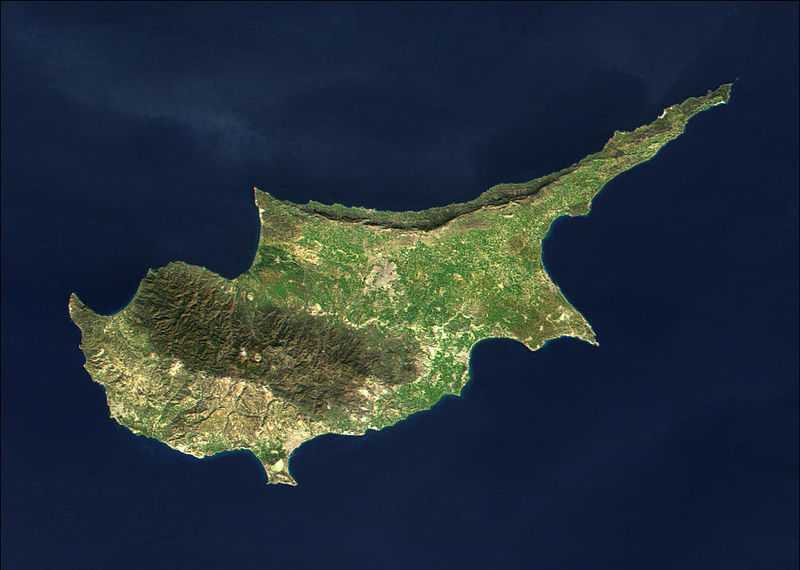
    Turkey keeps about 30,000 troops in northern Cyprus after invading the island in 1974 to thwart a coup attempt by Greek Cypriots. It is the only country to recognize a Turkish Cypriot administration there.

    Turkey has also fought a 25-year war against Kurdish separatists seeking to establish a homeland in the southeastern part of the country.

    Turkey denies accusations that it committed genocide against 1.5 million Armenians during World War I.

    Related articles:

  • WATCH: Turkey PM storms off stage over Peres remarks on Gaza
  • Turkey PM: Israel election results paint ‘very dark picture’
  • Turkish-Israeli ties sour further

    Turkish-Israeli ties sour further

    ISTANBUL (Reuters) – Turkish-Israeli ties soured further on Saturday after Ankara summoned Israel’s ambassador over an army general’s comments which the Turkish military said could threaten cooperation between the Middle East allies.

    Sat Feb 14, 2009 11:57pm IST

    By Paul de Bendern and Ayla Jean Yackley

    The Foreign Ministry called in Israeli Ambassador Gabby Levy to protest over comments by Israel’s land forces commander, reported in the Haaretz newspaper, who criticised Turkey’s occupation of northern Cyprus and its conflict with Kurdish separatists.

    “The relevant statements of (Major General) Avi Mizrahi are ungrounded and unacceptable and as such we have requested an urgent explanation from Israeli authorities,” the ministry said in a statement.

    It was the latest sign of tension between Israel and Turkey, NATO’s only Muslim member, who maintain close military ties but whose alliance has been strained by Israel’s offensive on Gaza.

    Prime Minister Tayyip Erdogan last month angrily accused Israeli President Shimon Peres of “knowing very well how to kill” at the World Economic Forum in Davos, Switzerland.

    Erdogan told Reuters in an interview late on Friday that he was saddened by the results of the Israeli elections this week, which showed gains by right-wing parties.

    “Unfortunately the election has painted a very dark picture,” he said on board his plane during a campaign trip.

    Erdogan urged the next Israeli government to look at how it conducted policies and actions towards the Palestinians and to lift an embargo on the Palestinians who he said lived in an “open-air prison”. He said Israel’s tough stance was failing.

    “LOOK IN THE MIRROR”

    Mizrahi was quoted by Israeli daily Haaretz as saying Erdogan should have “looked in the mirror” before attacking Peres and that Turkey was not in a position to criticise Israel’s occupation of Palestinian lands when it stations troops in northern Cyprus.

    He also accused Turkey of repressing its Kurdish minority and massacring Armenians during World War One.

    The Turkish General Staff said Mizrahi’s remarks were untrue and completely unacceptable and they demanded an explanation.

    “The comments have been assessed at the kind of level that could damage the national interests between the two countries,” the Turkish armed forces said, suggesting military cooperation could be at stake.

    Turkey and Israel have close military cooperation, which includes allowing the Israeli air force to train in Turkey. The two countries also share intelligence and have strong trade ties, including the sale of important military equipment.

    “There are some people saying cut off ties with Israel, but we are not in that understanding. Before taking any such steps, and I’m not saying we are thinking of taking any such steps, we would have to carry out a big study on such a decision,” Erdogan told Reuters through an interpreter.

    He said there were no plans to halt the training agreement.

    Some diplomats and analysts say Turkey’s role as a mediator in the Middle East, and in particular as a neutral negotiator between Israel and Syria, suffered short-term damage because of Erdogan’s fierce criticism of Israel and defence of Hamas.

    Erdogan dismissed such suggestions.

    “I don’t think that way … Turkey is a strong country that has a (unique) international position,” he said.

    “We were not the ones who wanted this negotiations role. In negotiations between Syria and Israel both countries wanted Turkey to be the mediator, that is why we took part in it.”

    Erdogan said critics misunderstood Turkish foreign policy if they thought the government was siding with Hamas or was against Israel. Turkey wanted peace in the region and was defending the helpless, in this case the civilians in Gaza, he said.

    He said the ruling AK Party, which has roots in political Islam, had restored Turkey’s influence in the world and it was only natural that Turkey should use its new-found strength to help solve crises from the Caucasus to the Middle East.

    Erdogan received a hero’s welcome in Turkey and praise in the Arab world after his outburst in Davos, but raised eyebrows among Western diplomats who asked whether Turkey was turning away from the West.

    https://www.reuters.com/?edition-redirect=in

    Turkish military says ties with Israel may be harmed

    Sat Feb 14, 2009 10:55pm IST

    By Ayla Jean Yackley

    ISTANBUL (Reuters) – Turkey on Saturday called on Israel to explain reported remarks by the head of the Israeli army that questioned Turkish policies towards Kurds and Cyprus, saying ties between the Middle East allies could be at stake.

    The Turkish military’s General Staff said criticism by Israeli Major General Avi Mizrahi, the land forces commander, of Turkey’s occupation of Cyprus and its conflict with Kurdish separatists may have damaged strategic relations.

    The Turkish Foreign Ministry also summoned the Israeli ambassador to protest the comments by Mizrahi, reported by Israeli newspaper Haaretz.

    It was the latest sign of tension between Israel and Turkey, NATO’s only Muslim member, who maintain close military ties but whose alliance has been strained by Israel’s offensive on Gaza.

    Turkish Prime Minister Tayyip Erdogan last month accused Israeli President Shimon Peres of “knowing very well how to kill” in a public debate at the World Economic Forum in Davos, Switzerland.

    Mizrahi was quoted by Haaretz newspaper as saying Erdogan should have “looked in the mirror” before slamming Peres and that Turkey was not in a position to criticise Israel’s occupation of Palestinian lands when it stations troops in northern Cyprus.

    He also accused Turkey of repressing its Kurdish minority and massacring Armenians during World War One.

    The Turkish General Staff, in a statement carried by the state-run Anatolian news agency, said Mizrahi’s remarks were untrue and competely unacceptable.

    “The comments have been assessed to be at the extent that the national interests between the two countries could be damaged,” it said.

    Turkey and Israel’s military co-operation includes allowing Israeli jets to use Turkish airspace for training.

    Erdogan told Reuters on Friday there were no plans to halt that agreement.

    The Foreign Ministry said in a statement on Saturday it had summoned Israeli Ambassador Gabby Levy to receive a protest note that called Mizrahi’s remarks “unacceptable imputations and ravings made against our prime minister and our country”.

    Both the General Staff and the Foreign Ministry demanded an explanation for Mizrahi’s statements from Israeli officials.

    Turkey keeps about 30,000 troops in Turkish-occupied northern Cyprus after invading the island in 1974 to thwart a coup attempt by Greek Cypriots. It is the only country to recognise a Turkish Cypriot administration there.

    It has also fought a 25-year war against Kurdish separatists seeking to establish a homeland in the southeast. Turkey denies accusations that it committed genocide against 1.5 million Armenians during World War One.