Year: 2010

  • Istanbul municipality issues stars to its fish restaurants

    Istanbul municipality issues stars to its fish restaurants

    ISTANBUL – Hürriyet Daily News

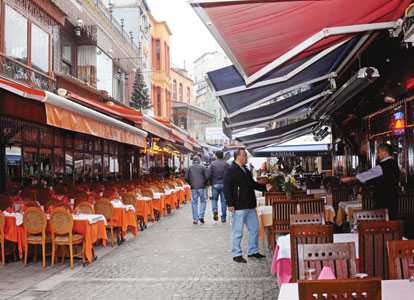
    The restaurants in Kumkapı will be inspected every six months. DAILY NEWS photo, Hasan ALTINIŞIK
    The restaurants in Kumkapı will be inspected every six months. DAILY NEWS photo, Hasan ALTINIŞIK

    Fatih Municipality presented fish restaurants in the district’s Kumkapı neighborhood with flags signifying each eatery’s quality Tuesday as part of a larger push to improve the standards of the premises in the area.

    “The restaurants here should represent us in the best way. By creating a competition, we will make restaurants eliminate their problems,” said Fatih Mayor Mustafa Demir.

    The restaurants were given flags signifying their stars according to their hygiene, cuisine, quality and price.

    The locations will be checked every six months, said Demir, adding that they wanted the restaurants to keep high standards.

    “Restaurant owners should take care of every detail from welcoming guests to serving on tables and should not apply a price policy that abuses tourists’ lack of knowledge about the city,” said Demir.

    Kemal Duranoğlu, head of the Kumkapı Tourist Restaurants and Tradesmen’s Cooperation Association, or Kum-Der, said charging more money from tourists might bring profit in the short run, but would ultimately create a bad reputation.

    “A tourist who is deceived will tell his experience to many foreigners and this will reflect negatively on [Kumkapı entrepreneurs],” said Duranoğlu, who was given four stars for his restaurant, Kartallar Valentino.

    Receiving a five-star flag for his restaurant Kalamar, Celal Öğmen said they were informed about the project just six months ago by the municipality.

    “We reshaped our kitchen from scratch and hired additional chefs. We also put emphasis on health sanitation by keeping our restaurant [spotless] night and day,” said Öğmen, who added that he has kept his menu prices stable for two years.

    Valentino, Gölçek, Köşem, Çapari, İrdem, Ege and Lipsoz received four-star flags while Çapari Arif, Okyanus, Kırmızı Karides, Evren, Hoş seda, Afrodit, Olimpiyat, Patara, Meydan, Sandal and Deniz Kızı received three stars each.

  • VIDEO:  Armenian Community Angry Over Kobe’s Deal with Turkish Airlines

    VIDEO: Armenian Community Angry Over Kobe’s Deal with Turkish Airlines

    WORK OF THE ARMENIAN YOUTH FEDERATION OF AMERICA

    Turkish Deal Will Make Kobe the Face of Oppression and Injustice

    NO ACTIVITY FROM TURKISH  YOUTH FEDERATION OR ASSOCIATIONS

  • Turkish souvenirs made in New Zealand

    Turkish souvenirs made in New Zealand

    By Charlotte Shipman

    The painstaking craft of hand knotting Turkish rugs is thousands of years old and based thousands of kilometres from these shores.

    But the modern versions of the ancient art have a distinctly kiwi connection.

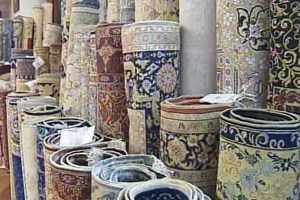
    Throughout the world, Turkish rugs are a highly sought after souvenir. On the streets and in the markets of Istanbul there is a carpet on every corner.

    But what most buyers do not know is how much Kiwi’s weave.

    “It’s 50 percent New Zealand wool and 50 percent local wool,” says Mustafa Gozne, a wool importer.

    Gozne has been getting his wool from New Zealand Wool Services since 1992.

    Last year he imported 60 percent of New Zealand wool exports to Turkey – that is nearly two thousand tonnes of wool, worth $7 million.

    It is mainly used in machine made carpets, blended with Turkish wool

    But 10 percent is used for traditional hand knotted carpets, an art which cheap labour in Pakistan, China and India is threatening to destroy.

    “They give the designs, the colours, patterns and they produce Turkish carpet but not in Turkey,” says Gozne.

    Hand knotting carpet is extremely labour intensive. Each square metre has 360 knots and takes more than a month to complete.

    Our wool is valued for being readily available and having a consistent texture.

    “When you use this wool you will not have any headache. I mean the quality during the dying and the knotting,” says Gozne.

    There is only one problem – customers do not realise the secret of the rugs and do not give New Zealand credit.

    “They wouldn’t really have great understanding that it’s always coming from New Zealand which is something we are looking to change throughout the world,” says Paul Steel from NZ wool services.

    But awareness is growing.

    Twenty years a go, hand knotted carpet manufacturers did not know anything about New Zealand wool. Now it is synonymous with quality

    Of the millions of tourists who visit Turkey every year, some are leaving with a small piece of New Zealand.

    3 News

    via Turkish souvenirs made in New Zealand – Story – Business – 3 News.

  • Agriculture Ministry to hire 2,500 experts in villages in 2011

    Agriculture Ministry to hire 2,500 experts in villages in 2011

    Agriculture and Rural Affairs Minister Mehdi Eker has said his ministry will hire 2,500 specialists to be employed in villages around the country where farming and stockbreeding are the mainstay of the economy.

    Speaking at a press conference held in İstanbul on Saturday, Eker noted that they already have 5,000 such personnel employed in 5,000 villages and that their aim now is to improve the efficiency in agriculture and animal husbandry through direct and frequent contact with producers. “We will prioritize the villages with potential,” he added. The ministry hired 17,000 people — 6,500 of whom were engineers — in the largest wave of recruitment, in 2003, the ruling Justice and Development Party’s (AK Party) first year in office after the general elections that were held in late 2002.

    As part of his Saturday remarks, Eker also said his ministry will be renamed the Ministry of Agriculture and Food next year, a change that was approved by the relevant parliamentary commission as well as the Cabinet, he said.

    On the specific issue of the high prices of red meat, Eker said he personally follows the prices on a daily basis in 13 locations to see if the thousands of tons of imported livestock have helped alleviate the troubling situation in the market. In that regard, he told reporters attending the conference that the cost of one kilogram of domestic red meat for a seller is around TL 14 but some supermarkets are making a hefty profit by selling it at TL 25 to 30.

    “There is an issue that bothers my conscience. If someone is buying red meat for TL 14 per kilogram, they can sell it for up to TL 20 with a 30 percent margin of profit. But if this meat is sold for TL 25 at a supermarket, then this means the market is making an excessive profit. I am complaining about this to you. Ask your consciences. It cannot be legitimized by saying that we have a free market economy and sellers can sell at whatever price they feel like. There must be a measure of fairness,” he said.

    Following the unexpected surge in prices, the government authorized the state-owned Meat and Fish Institution (EBK) to import livestock in April. The EBK then made large purchases from abroad and will continue to do so until its authorization expires at the end of next year. These moves, however, have fallen short of reducing the market prices by as much as expected.

  • Turkey: Homemade Vehicles Take Root in Rural Regions

    Turkey: Homemade Vehicles Take Root in Rural Regions

    December 26, 2010 – 4:12am, by Vladic Ravich

    Ismail Aktekin is a simple farmer in Turkey’s Konya province. But history may also remember him as a local Henry Ford.
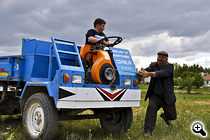
    A farmer starts his paht-paht in a field near Gebecheler. (Photo: Vladic Ravich)More than 40 years ago Aktekin started a cottage industry that built crude vehicles for his fellow farmers. These days Aktekin’s grandson, also named Ismail, runs the business and says his shop produces about three of the vehicles per month. He estimated that some three-quarters of the local farmers own one. Demand these days is so great that several shops across several provinces are working full-tilt. Hundreds of the vehicles are produced every year in these small shops, most of them the size of a garage, usually located in villages. According to some estimates, there are roughly 250 people involved in their production and the sales are mainly in Turkey, although one farmer mentioned exports as far as Afghanistan.

    The vehicles do not have a brand, and they go by different names in different regions of Turkey. In some places they are called “paht-pahts,” so dubbed because of way their motors go “paht-paht-paht-paht-paht.” In Aktekin’s home region, however, they are more commonly known as “tak-taks.” Whatever they are called, these motorized carts clearly favor function over form. Far from status symbols, they have nonetheless endeared themselves to myriad farmers, many of whom are unable to afford a more traditional auto.

    The motors run on diesel fuel and can reach speeds of 80 to 90 kilometers per hour (about 45 mph). Everyone says they get better gas mileage than a car – estimates range from 30 percent to 70 percent more efficient, but it is not easy to pin down exact numbers for an unregulated and hand-built vehicle, so here are some guesstimates from various mechanics and farmers: “it runs for a whole hour on just one liter,” “maybe 100 kilometers from four liters?” “Cheap, cheap, cheap…”

    The main savings come from the purchase price. While the paht-paht doesn’t offer the comforts of a car, it costs only about 5,000 TL ($3,000). Considering that a Dutch-made tractor costs about 60,000 TL – or 100 tons of potatoes, as one farmer remarked – and a car is somewhere around 20,000 TL, it is not surprising that local roads are clogged with paht-pahts.

    The surprise is how they were invented. The first paht-paht sputtered to life in Aktekin’s now-abandoned workshop. A farmer with no formal education, Aktekin, tended his crops in the village of Altuntas, but in his spare time he took apart and rebuilt engines. “He spent 20 years playing with it,” said his grandson, “He improved it day by day, experimenting.”

    His family described him as a tinkerer and a gear-head of sorts. “He wanted to make an airplane,” said his wife, “He was interested in all of those machines – planes, helicopters.” When asked how he managed to create such a useful innovation she just pointed to her head. “He was very smart,” another relative exclaimed.

    Today the Aktekin family is well-known in the area and has reaped the benefits of Ismail’s labors. A large house stands on their land and there are various improvements underway, but Ismail’s mechanical experiments still litter the ground, with a rusty drill here and a modified truck there.

    Sometime in the late 1960s, the first paht-paht hit the road. The modified irrigation pump motor was linked to a crankshaft and a frame and hauled cargo and people alike. These pumps have been a common sight in rural regions for generations, but before Ismail they were only used to irrigate fields. Today’s paht-pahts are still not street legal and lack a license plate, but that hasn’t stopped the mechanics from upgrading the vehicles, installing headlights, various transmissions, even the occasionally enclosed cabin or festive paint job.

    The engine has been retrofitted to power other machines as well – it is not uncommon to see one motor powering the paht-paht while its twin, sitting in the back, turns a large drill that links the irrigation pipes to the water table underground.

    Editor’s note:

    Vladic Ravich is a freelance photojournalist based in Turkey.

    via Turkey: Homemade Vehicles Take Root in Rural Regions | EurasiaNet.org.