Year: 2010

  • Ukraine, Turkey to set up high-level strategic council soon, says ambassador

    Ukraine, Turkey to set up high-level strategic council soon, says ambassador

    Ukraine and Turkey are planning to set up a high-level strategic council next year, Ukrainian Ambassador to Turkey Serhiy Korsunsky has said in an exclusive interview with Interfax-Ukraine.

    “The declaration on the establishment of a high-level strategic council has already been initialed,” the ambassador said, adding that Turkey uses this form of cooperation with its strategic partners.

    He noted that this council would consist of all ministers, the heads of state and the heads of the governments. On the Turkish side the council will be headed by the prime minister, and from the Ukrainian by the president.

    “We are planning to set up this council during the visit of the Turkish prime minister to Ukraine in 2011. Its constituent meeting will be held afterwards,” the diplomat said.

    He also said that Ukraine and Turkey were planning to sign agreements in the transport, energy, culture and education sectors.

    via Ukraine, Turkey to set up high-level strategic council soon, says ambassador – Ukrainian news. Interfax-Ukraine.

  • Canada designates two airlines to fly scheduled services to Guyana and Turkey

    Canada designates two airlines to fly scheduled services to Guyana and Turkey

    Dec 17, 2010 (AIRLINE INDUSTRY INFORMATION via COMTEX) —

    Canada’s transport minister announced today that two Canadian airlines have been designated to operate scheduled international air services between Canada and Guyana and Turkey.

    Enerjet will fly between Canada and Guyana, while Air Transat will fly between Canada and Turkey.

    These designations were made possible by Canada’s 2005 air transport agreement with Guyana and its 2009 agreement with Turkey.

    Under Canada’s Multiple Designation policy, all air carriers in the country may apply to the Minister of Transport for designation to operate scheduled international air services.

    Comments on this story may be sent to [email protected]

    For full details on (TRZAF) TRZAF. (TRZAF) has Short Term PowerRatings at TradingMarkets. Details on (TRZAF) Short Term PowerRatings is available at This Link.

    via Canada designates two airlines to fly scheduled services to Guyana and Turkey | TradingMarkets.com.

  • Turkey to build indigenous fighter jets

    Turkey to build indigenous fighter jets

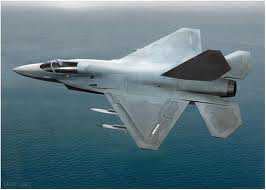
    Turkey’s top defense procurement committee decided late Wednesday that Ankara would develop and manufacture its next air-to-air fighter aircraft, either by itself or in cooperation with another country, Defense Minister Vecdi Gönül said.

    Gönül told reporters after a meeting of the Defense Industry Executive Committee that the Undersecretariat for Defense Industries, Turkey’s procurement agency, would start talks with Turkish Aerospace Industries, the country’s main aerospace company, for a “conceptual design” of a fighter aircraft and a jet trainer to be built after the year 2020.

    “This … effectively is a decision for the making of Turkey’s first fighter aircraft,” he said.

    Committee members include Gönül, Prime Minister Recep Tayyip Erdoğan, Chief of the General Staff Gen. Işık Koşaner and procurement chief Murad Bayar.

    Gönül also said Turkey has rejected an offer by the Eurofighter consortium for the sale of Eurofighter Typhoon fighters. “The Eurofighter is off Turkey’s agenda,” he said.

    The minister said Turkey may cooperate with South Korea, but implied that this is a small possibility. “We can manufacture the new fighter aircraft with them, we don’t rule this out. But the decision we have taken now calls for the production of a totally national and original aircraft,” he said.

    The Eurofighter consortium, the Italian government and Italian companies had recently stepped up efforts for joint development and sale to Turkey of up to 60 jets. Italian Deputy Defense Minister Guido Crosetti in October said Rome wanted to develop a fighter aircraft with Turkey.

    Seeking equal partnership

    Separately, Turkish and South Korean officials earlier have said that Turkey, South Korea and Indonesia jointly may develop the South Korean-led KF-X fighter aircraft.

    But Turkey is now stepping back from this option. “What we need is a true and equal partnership for the development of a fighter. The problem is that South Korea is not likely to agree to an equal partnership,” a senior Turkish procurement officer told the HDN, speaking on condition of anonymity.

    Turkey already has selected the U.S.-led F-35 Joint Strike Fighter Lightning II as one of its next-generation fighter aircraft types. It plans to buy about 100 F-35 aircraft worth nearly $15 billion. Many Turkish companies are members of the Joint Strike Fighter consortium of nine Western countries, and are producing parts for the aircraft. Turkey also will receive 30 modern F-16 Block 50 fighters from Lockheed Martin as a stopgap solution until F-35 deliveries begin around 2015.

    Minister Gönül said Turkey’s newly designed fighter aircraft “would be a next-generation type, would replace the [U.S.-made] F-4Es and would function well with the F-16 and the F-35.” He therefore confirmed that the new aircraft mostly would be meant for air-to-air fighting.

    Meanwhile, a much expected selection of the military’s next utility helicopter type did not come at the Defense Industry Executive Committee meeting. AgustaWestland and Sikorsky Aircraft are vying for the joint manufacture of 109 helicopters, worth up to $4 billion.

    “The offers … were insufficient,” Gönül said. “Talks with both companies will continue, but we think that they should reduce their prices.”

    Thursday, December 16, 2010

    ANKARA – Hürriyet Daily News

  • Turkey’s Financial Conundrum

    Turkey’s Financial Conundrum

    By JOE PARKINSON

    Reuters

    Turkey’s economy has been going great guns this year–but things are starting to get a bit bumpy.
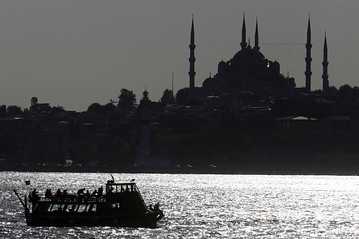
    And policymakers here are gambling that counter-cyclical, pointy-headed policy is the way to ride the waves.

    The bank’s monetary policy committee on Friday completed the second act of a hocus-pocus plan to simultaneously slow booming credit growth and curb the inflows of hot money that’s threatened to destabilize Turkey’s rapid recovery.

    Step one: Late Thursday, the bank cut benchmark interest rates by 50 basis points to 6.5%–a fresh record low. That move was intended to dissuade speculative investments seeking higher yields pouring into Turkey and magnifying the economy’s key weakness: a mushrooming current-account deficit that depends on external finance.

    Fine, but a rate cut also threatens to stoke an expanding consumer lending boom, that many economists warn is overheating the economy.

    So, on to step two: On Friday morning, policymakers announced that bank reserve ratios would be hiked to 8%, draining 7.6 billion Turkish lira ($4.9 billion) from the market and reducing the amount Turkish banks could lend.

    That move mirrors monetary policy measures recently undertaken by China, where the central bank last week lifted banks’ reserve requirement for the third time in a month, in an effort to cool lending.

    In Turkey, a rapid recovery underpinned by comfortably capitalized banks has propelled a lending surge.

    The economy expanded 8.9% in the nine months to October, posting one of the fastest growth rates of any G20 economy. Expansion has been underpinned by record low interest rates, as the central bank slashed its key rate 13 times from an October 2008 high of 16.75%.

    But Turkey’s reliance on imports also saw the country’s trade deficit widen more than 130% on the year in October, spotlighting an imbalance that analysts fear leaves it exposed to external shocks.

    Partly because of that model, the quicker Turkey expands, the quicker the deficit widens, leaving the economy vulnerable to shocks if investor sentiment turns negative.

    That vulnerability is magnified by the fact that a rapidly rising proportion of that deficit is financed by speculative investments, or hot money. This is the speculative demand that sweeps into rapidly growing economies as investors flee low interest rates in the U.S., the U.K. and the euro zone, to seek higher yields.

    So far this year, some 70% of Turkey’s current-account deficit has been financed by speculative portfolio investments, compared to just 14% of longer-term FDI, according to the “Emerging Markets Quarterly Report” published by Barclays Capital, early December.

    So policymakers in Ankara have gambled that cutting rates to dissuade speculative investors is less risky than firing a domestic consumer boom that some fear could see the economy overheat.

    It’s too early to judge whether the complicated policy shift will have the desired effect: reducing hot money flows and cooling runaway lending rates.

    But the policy push has split the market.

    Some have praised the CBRT’s boldness, acknowledging that rate-setters are in a tough spot trying to square competing objectives.

    “Turkey is having to find policy measures to guide itself through this stage of outperformance versus the rest of the world, which comes as a result of solid policy action of the past,” said Simon Quijano-Evans, an economist at CA Chevreaux in Vienna. “This is not an easy time for the central bank.”

    Others are less sanguine, warning that the abrupt shift in policy calls the bank’s credibility into question.

    Brown Brothers Harriman said in a research note that the rate cut was “as we feared”, adding that “the attempt to fine tune policy with a combination of policy rate cuts and reserve requirement hikes is a clumsy one.”

    via Turkey’s Financial Conundrum – The Source – WSJ.
  • Italy understands Turkey better

    Italy understands Turkey better

    Rome — Belonging to the Mediterranean region, in which many conflicts and problems of the eastern and southern seaboards wash over the shores of the Italian peninsula, officials in Rome seem to have a much better grasp of what is at stake in the Middle East.
    They acknowledge and appreciate very much the role of Turkey in the troubled region and fully endorse Ankara’s activism and further involvement in countries such as Iraq, Syria and Lebanon in a bid to shore up stability and bring about democratic values. Obviously, this is one of the reasons why Rome throws its full weight behind Ankara’s bid to become a full member of the European Union.

    At least that is what I sensed last week from senior Italian officials, who spoke to us during the Media Forum organized by the Italian Foreign Ministry and Agenzia Giornalistica Italia (AGI — the Italian Journalist Agency). When responding to questions posed by Turkish journalists, Italian Foreign Minister Franco Frattini made it clear that Turkey is providing something valuable to the 27-nation bloc in Europe because, he said, it can talk frankly, at times bluntly, to all stakeholders in the Middle East region

    Though recent signs indicate otherwise, Frattini sounded upbeat and hopeful about improving the frayed ties between Turkey and Israel, both of which he described as friends of Italy. He interpreted the sending of two firefighting planes from Turkey to tackle the forest fire in northern Israel as a strong indication that Turkey is there for Israel despite the problems that originated from the flotilla incident that resulted in the killings of eight Turkish activists in open seas. Focusing on the indirect negotiations brokered by Turkey between Israel and Syria on the eve of Gaza onslaught in 2008, Frattini said almost all issues over the Golan Heights were resolved during the talks and there was an important opportunity to move into direct talks between the two countries.

    I also had a chance to talk to Giovanni De Michelis, who served as foreign minister of Italy between 1989 and 1992. He seemed to be quite convinced that Europe will not matter anymore if it has no courage to stand up and face challenges in the Middle East region. Leaving the problems unsolved will be a suicide for the EU, he said, while stressing the significance of the role played by Turkey in tackling the issues.

    When I asked him how Turkey would back up the renewed dynamism in its foreign policy with necessary resources like financial aid, political leverage and human resources, De Michelis responded with an interesting but very convincing argument. He said this is exactly why Turkey needs the EU. “Turkey, strongly anchored with the EU, can utilize the resources and the political clout of Europe in promoting its own policies in the region,” he pointed out.

    Both the current and former foreign ministers share the belief that Turkey would bring an added value to the EU because of its shared history, religion and cultural attributes with a number of countries in the Middle East. The problem, however, is that two other heavyweights in the bloc, France and Germany, do not share the same enthusiasm when it comes to membership prospects for Turkey. Both French President Nicolas Sarkozy and German Chancellor Angela Merkel are vocal opponents of the predominantly Muslim Turkey’s bid for a full membership.

    In contrast, Frattini, who is strong advocate for the Christian roots of the EU, argued that this is precisely why the EU should open the door to Muslim Turkey. He explained that Italian foreign policy focuses on dialogue and understanding among countries with different cultures and religions. He acknowledged that some European states have doubts about the Turkish bid because of the country’s Islamic character. “It is exactly because of this that I say Turkey should become a full member of the EU,” he said. Frattini noted that he would be fighting for the rights of Christian minorities in the Middle East as well as Muslim Turkey’s bid to become member of the club.

    Yet he did not hide his frustration with the lack of progress in EU talks, describing the recent situation by saying that “things are not going well.” This is because of the fact that not a single negotiation chapter was opened in the talks during six-month Belgium presidency. It seems Turkey has almost run out of options to open further chapters with the EU. With only 13 chapters out of 35 opened, the EU suspended talks on eight chapters, France blocked five and Greek Cyprus is planning to veto five more chapters.

    Frattini also underlined that the “energy chapter” is very important for Europe and hoped it would be opened soon. Italian companies have been very active in the energy market in Turkey, not only for internal demand but also as a means to utilize Turkey as a transit hub in oil and natural gas. The Italian company ENI participated in building the Blue Stream pipeline to transport gas from Russia to Turkey via the Black Sea. The company also engaged in a joint venture with the Turkish Çalık Group and Russian companies to build a pipeline linking Samsun to Ceyhan.

    Another Italian company, Edison, is involved in the ITGI gas pipeline project to connect Italy, Greece and Turkey. The interest is not limited to the oil and gas industries but also that of renewable energy, in which Turkey has recently began to attract foreign and domestic investors. The Italian company Italgen is investing in this market with plans to build windmills in northwestern Turkey.

    Turkish and Italian mutual interests cover quite an extensive area and overlap with each other on many occasions, prodding the latter to support the Turkish EU drive with much enthusiasm. The problem is how to make skeptics in the EU believe the notion that a Turkey, better integrated and tightly anchored to Europe will benefit all members of the club.

  • TURKEY: Coup trial seen as vital to ‘normalization’ of military’s relationship to government

    TURKEY: Coup trial seen as vital to ‘normalization’ of military’s relationship to government

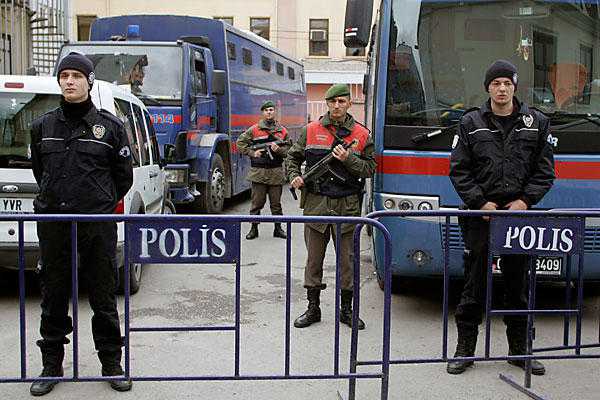
    Nearly 200 mostly military personnel accused of plotting to bomb mosques and assassinate journalists as part of a plan to overthrow the government went on trial Thursday in Istanbul in a milestone case many observers have characterized as a key step in the process to demilitarize Turkish politics.

    The alleged coup, dubbed the “sledgehammer” plot, was reportedly planned for 2003 but only came to light in February of this year when the Turkish newspaper Taraf obtained documents it claimed laid out a detailed plan for overthrowing the government.

    According to the Taraf report, the alleged coup-plotters intended to sow unrest by blowing up two Istanbul mosques and provoking the Greek military into shooting down a Turkish fighter jet. They are also accused of planning to assassinate 19 journalists, arrest 36 others and “make use of” 137 others.

    “The relationship [between the civilian and military branches of government] is normalizing, and Turkey is in a process of transition from a tutelary democracy controlled by the military to a normal democracy,” Sahin Alpay, a senior lecturer in political science at Bahcesehir University, told Babylon and Beyond. “There is public support also in the country for normal role for the military … as a normal, professional army.”

    Turkey has been caught in a tug of war between the military and civilian branches of government for decades, with the armed forces maintaining a powerful influence over domestic and foreign policies and periodically stepping in to overthrow the governments seen as too sympathetic towards Islamism.

    Partly due to reforms introduced as part of Turkey’s bid to join the European Union, the military’s role over the last 10 years has been questioned, and the trial of the alleged coup-plotters has been seen by many as an important step to reigning in what was the nation’s most powerful institution. Among the defendant are many high-ranking officers, including four admirals, a general, and two colonels, according to the BBC.

    But supporters of the military see it as a vital bulwark of secularism against the rise of conservative Islam, and have accused the government of fabricating the alleged coup in order to consolidate its own power.

    “It’s very difficult because we don’t have any opinion polls on this, but I don’t think the trial is that polarizing among Turks,” said Mensur Akgun, an expert at the Turkish Economic and Social Studies Foundation, a think tank.

    “By and large [most people] do trust the judiciary, and I think the majority of Turks believe [the charges] have some substance,” he added. “This is another milestone in the emancipation of Turkish democracy from the control of the military.”

    The opening of the trial followed a setback earlier this week for Turkey’s bid to join to EU when accession talks stalled over Turkey’s unsettled dispute with Greece and Cyprus over the status of the northern part of the island, which is currently under Turkish control.

    — Meris Lutz in Beirut

    Photo: Security teams guard an Istanbul courthouse Tuesday, where proceedings relating to the coup plot were taking place. Credit: Ibrahim Usta / Associated Press

    via TURKEY: Coup trial seen as vital to ‘normalization’ of military’s relationship to government | Babylon & Beyond | Los Angeles Times.