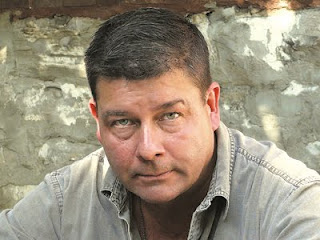
By Former professional soldier, Scott Taylor, editor and publisher of Esprit de Corps
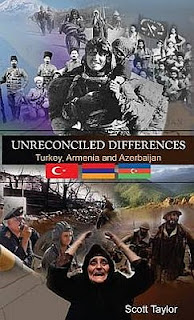
Written by former Canadian Soldier turned war correspondent Scott Taylor, this book is based both on in depth historical research and on Taylor’s personal findings on reporting trips to the area speaking with followers leaders and everything in between on both sides of the conflict.
During the Past century, there have been two major clashes in the Anatolia-Caucasus region, both resulting in the widespread slaughter and forced expulsion of innocent civilians from all sides. The first occurred when the strain of the Great War caused the collapse of both the Ottoman Empire and Czarist Russia.
The second conflict erupted between 1988 – 1994, when the disintegration of the Soviet Union left a temporary power vacuum in the Caucasus, and the new republics of Azerbaijan and Armenia battled over the sovereignty of Nagorno-Karabakh.
What these two confilcts also share is that few in the West have observed, chronicled, or been able to fully understand the complexity of the situation. Those existing accounts are rife with partisan propaganda and widely divergent assessments
Unfortunately, the unreconciled differences of their shared history continue to negatively impact the lives of the Turks, Armenians and Azeris in the present. If left unresolved, this will prevent their progress towards a peaceful and mutually beneficial coexistence in the future.
Unreconciled Differences: Turkey, Armenia, Azerbaijan
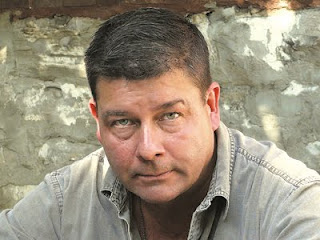
Scott Taylor – Publisher
Throughout the mid-1990s, this little independent magazine embarked on a campaign to expose crime and corruption in the upper echelons of the Canadian Forces. After exposing a number of top-level cover-ups and scandals while defending the rights of the rank and file soldiers, Scott was dubbed the “Voice of the Grunts” by the Globe and Mail, a “Bone in the Brass’ Throats” by the Toronto Star, and a “One Man Army” by the Toronto Sun.
Since the inception of Esprit de Corps, Scott has logged over one million air miles as a war correspondent reporting from such global hot spots as the Persian Gulf, Cambodia, Western Sahara, Croatia, Bosnia, Iraq, Turkey, Yugoslavia, Kosovo, Macedonia, South Ossetia, Armenia, Azerbaijan and Afghanistan.
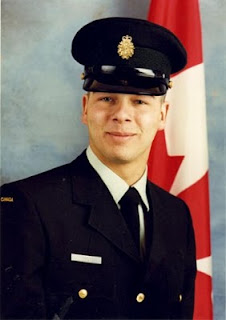
Since August 2000, Scott has made a total of 21 trips into Iraq to report on the effects of the UN sanctions, the ravages of depleted uranium following the 1991 Gulf War, and the heightening tensions with the United States. In March 2003, during his last trip prior to the United States’ intervention, Scott Taylor was asked to leave Iraq for fear of his being a spy for the Israeli Mossad. Following the swift U.S. victory, Scott returned frequently to Iraq to view first-hand the ongoing humanitarian crisis plaguing this still embattled country. Then, for five harrowing days in September 2004, he experienced the rare occasion when “getting the story becomes the story.” Held captive by Ansar al-Islam mujahedeen in northern Iraq, his release generated a wave of international media coverage. He then returned to Iraq in 2005 in order to brief the U.S. soldiers on the Turkmen people of the country.
Scott regularly appears in the Canadian media as a military analyst, and is the recipient of the 1996 Quill Award for outstanding work in the field of Canadian communications. That same year, he also won the Alexander MacKenzie Award for journalistic excellence.
A weekly columnist for the Halifax Chronicle-Herald, he is also a columnist for Embassy Magazine and has contributed to the Ottawa Citizen, Maclean’s magazine, the Globe and Mail, Toronto Sun, Reader’s Digest, and the Global television network as well as several international publications which include the Magyar Nemzet, Indian Defense Review and Al Jazeera. He also serves as an advisor to the CBC Radio play “Afghanada.” Scott also gives presentations to The Executive Committee (TEC) and was named their 2006 Speaker of the Year. In 2008, London based Press TV declared Taylor to be the ‘unembedded journalist of the year’
During the Past century, ther have been two major clashes in the Anatolia-Caucasus region, both resulting in the widespread slaughter and forced expulsion of innocent civilians from all sides. The first ocurred when the strain of the Great War caused the collapse of both the Ottoman Empire and Czarist Russia. The second conflict erupted between 1988 – 1994, when the disintegration of the Soviet Union left a temporary power vacuum in the Caucasus, and the new republics of Azerbaijan and Armenia battled over the sovereignty of Nagorno-Karabakh. What these two confilcts also share is that few in the West have observed, chronicled, or been able to fully understand the complexity of the situation. Those existing accounts are rife with partisan propaganda and widely divergent assessments. Unfortunately, the unreconciled differences of their shared history continue to negatively impact the lives of the Turks, Armenians and Azeris in the present. If left unresolved, this will prevent their progress towards a peaceful and mutually beneficial coexistence in the future. This book draws from historical research and personal investigation conducted by author/journalist Scott Taylor in order to better understand the contextual realities of these conflicts as well as why so little about them is known in the west.
About the Author
A former professional soldier, Scott Taylor has been editor and publisher of Esprit de Corps since 1988. Throughout the mid-1990s, this little independent magazine embarked on a campaign to expose crime and corruption in the upper echelons of the Canadian Forces. After exposing a number of top-level cover-ups and scandals while defending the rights of the rank and file soldiers, Scott was dubbed the Voice of the Grunts by the Globe and Mail, a Bone in the Brass Throats by the Toronto Star, and a One Man Army by the Toronto Sun. Since the inception of Esprit de Corps, Scott has logged over one million air miles as a war correspondent reporting from such global hot spots as the Persian Gulf, Cambodia, Western Sahara, Croatia, Bosnia, Iraq, Turkey, Yugoslavia, Kosovo, Macedonia, Azerbaijan and Afghanistan. Since August 2000, Scott has made a total of 21 trips into Iraq to report on the effects of the UN sanctions, the ravages of depleted uranium following the 1991 Gulf War, and the heightening tensions with the United States. In March 2003, during his last trip prior to the United States intervention, Scott Taylor was asked to leave Iraq for fear of his being a spy for the Israeli Mossad. Following the swift U.S. victory, Scott returned frequently to Iraq to view first-hand the ongoing humanitarian crisis plaguing this still embattled country. Then, for five harrowing days in September 2004, he experienced the rare occasion when ‘getting the story becomes the story.’ Held captive by Ansar al-Islam mujahedeen in northern Iraq, his release generated a wave of international media coverage. He then returned to Iraq in 2005 in order to brief the U.S. soldiers on the Turkmen people of the country.
Scott regularly appears in the Canadian media as a military analyst, and is the recipient of the 1996 Quill Award for outstanding work in the field of Canadian communications. That same year, he also won the Alexander MacKenzie Award for journalistic excellence. A weekly columnist for the Halifax Chronicle-Herald, he is also a columnist for the Osprey newspaper chain and has contributed to the Ottawa Citizen, Maclean s magazine, the Globe and Mail, Toronto Sun, Reader s Digest, and the Global television network as well as several international publications. He also serves as an advisor to the CBC Radio play “Afghanada.” Scott also gives presentations to The Executive Committee (TEC) and was named their 2006 Speaker of the Year. Taylor is the author of five best-sellers Tarnished Brass: Crime and Corruption in the Canadian Military, Tested Mettle: Canada s Peacekeepers at War (both with Brian Nolan), Inat: Images of Serbia, Diary of an Uncivil War: The Violent Aftermath of the Kosovo Conflict and Spinning on the Axis of Evil: America’s War against Iraq. He is the author of Among the ‘Others’: the forgotten Turkmen of Iraq which deals with his experiences in northern Iraq, published in October 2004 by Esprit de Corps Books. In the spring of 2009 Douglas and MacIntyre published his first memoir entitled Unembedded: Two decades of Maverick War Reporting.
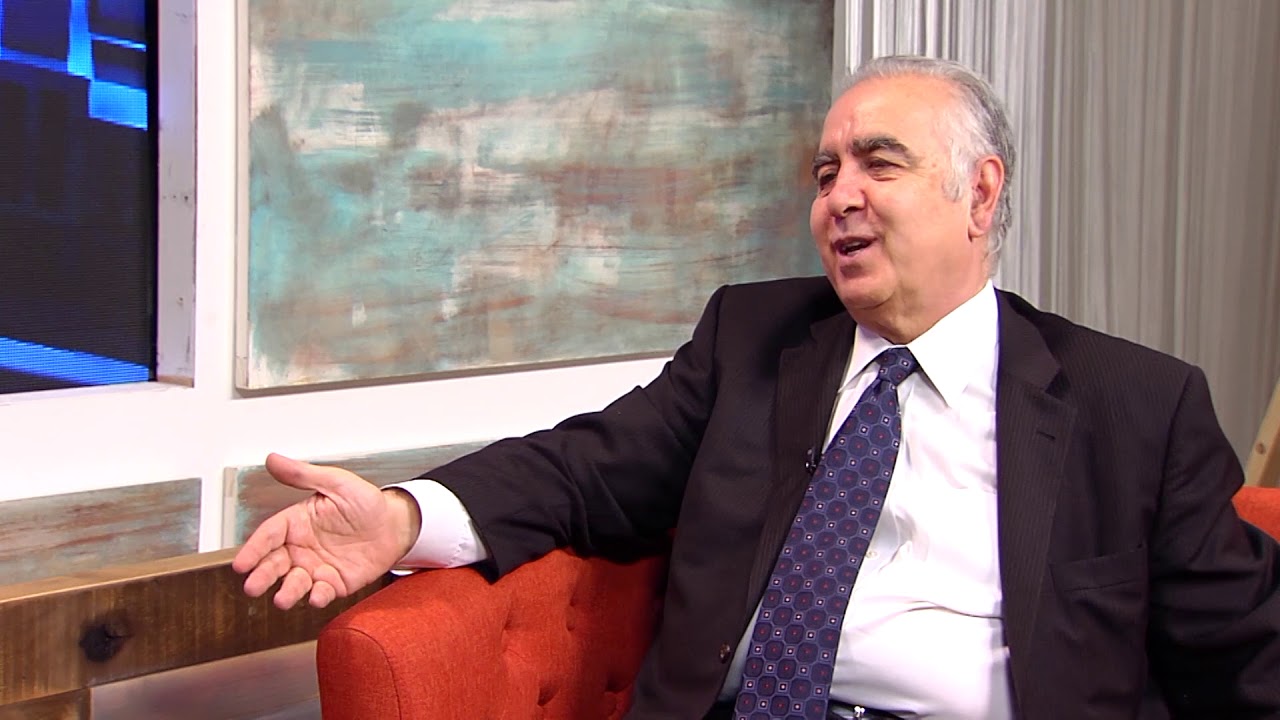
Canadian war journalist Scott Taylor: Armenia can’t move on forward with closed borders 09 February 2010
Exclusive interview with former professional soldier, Canadian war correspondent, and editor and publisher of the Esprit de Corps magazine, Scott Taylor.
Scott Taylor has been editor and publisher of Esprit de Corps since 1988. Since the inception of Esprit de Corps, Scott has logged over one million air miles as a war correspondent reporting from such global hot spots as the Persian Gulf, Cambodia, Western Sahara, Croatia, Bosnia, Iraq, Turkey, Yugoslavia, Kosovo, Macedonia, Azerbaijan and Afghanistan.
Since August 2000, Taylor has made a total of 21 trips into Iraq to report on the effects of the UN sanctions, the ravages of depleted uranium following the 1991 Gulf War, and the heightening tensions with the United States. In March 2003, during his last trip prior to the United States’ intervention, Scott Taylor was asked to leave Iraq for fear of his being a spy for the Israeli Mossad. Following the swift U.S. victory, Scott returned frequently to Iraq to view first-hand the ongoing humanitarian crisis plaguing this still embattled country. Then, for five harrowing days in September 2004, he experienced the rare occasion when “getting the story becomes the story.” Held captive by Ansar al-Islam mujahedeen in northern Iraq, his release generated a wave of international media coverage.
In an exclusive interview, Mr. Taylor speaks about the infamous Nagorno-Karabakh conflict, Armenia, Azerbaijan, and other issues.
As far as I know, this is not your first visit to Azerbaijan. What was the main purpose of you writing the book “Unreconciled Differences”?
The main purpose I think, is to readdress what I believe is an inbound on reporting on the region, mostly on the situation in Nagorno-Karabakh region, between Azerbaijan and Armenia. In every conflict situation I’ve covered in the past, there’s always the other side of the story. Each side has their own story, and truth is somewhere in between. For us, in the West, most of what we hear about the incidents and events between Azerbaijan and Armenia, comes from Armenian side. And looking closely at it, I realized, that there was a vacuum of information, that it was not the full story. The book is of course a small void, but I thought, I’d at least make people realize that this is not the full story of what happened.
Now, from your point of view, how at the present time do you assess the possibility of a military action between Armenia and Azerbaijan? Lets put it like this – if you had the last call, would you even consider this option?
In this particular case, Azerbaijan has the right to claim their own territory.
As far as I am concerned, just a couple of days ago, you were hosted by the International Strategic Research Organization (USAK), and you touched a number of topics during your lecture, including the Nagorno-Karabakh issue. The opinions of the foreign experts differ, some say that the conflict problem is directly connected with the possible opening of the Turkish-Armenian border, some say the opposite. What is your opinion on this?
Well, I think they are connected. Originally, shutting the borders happened because of the conflict between Azerbaijan and Armenia, for Nagorno-Karabakh. And as a result, it became clear, that there won’t be any movements on the border opening, until Armenia leaves the occupied territories of Azerbaijan. Now that there’s a softening, Azerbaijan has the right to be somewhat fearful that the pressure on Armenia will become lesser. At the same time, Armenia has got its own issues, with Turkey.
Both parties have to abandon some of their hardline, I am not sure that either party can do that, given their domestic political issues. The fact, that they are trying to move forward, is a good sign, but as I mention in my book, the past has to be reconsidered, and it will require far more admission on the Armenian side. In order to find this historical truth about the events of 1915, both Turkey and Armenia have to be able to share the information.
During the same lecture, you mentioned the so called Armenian “genocide”, and what you said was “History should be decided by historians and not by foreign governments”…
I mean, if you pull back from the hardliners, the Turks have made far more headway, because they are being accused of something so extreme. As you know, Armenians all over the world are claiming that this was “genocide”, and to be honest, being a Canadian, I am ashamed that the Canadian parliament recognized the “genocide”, without knowing all the needed details. In fact, the Canadians have gone even further ahead that the Armenians, which are still, in theory, prepared to make the re-approachment with the protocols, with Turkey. Canadian government monitors Caucasus from Moscow and Turkey, they don’t have any representation in the Caucasus at all. This is a situation, where I can just state the obvious – we don’t know a thing about Caucasus. The same can be said about Russia and Georgia, you cant just state that this player is good, and this one is bad, it is a lot more difficult than that.
Even with Armenia, and Nagorno-Karabakh, when I interviewed them, the people in Karabakh are a lot different from people in Yerevan. Most people from the elite of Yerevan are formally from Nagorno-Karabakh, and they have their own independent mindsets, but some other, more pragmatic Armenians from Yerevan do understand, that it’s time to move on forward, and you cant do that with closed borders, and its impossible to rely forever on the cash donations from diaspora. But, if you offend the diaspora by making a reapproachment with Turkey and Azerbaijan, they will simply turn their back on you. And then, what are you going to replace the incoming money with? In long term, including pipelines and the normalized neighborly relations it can turn out well, but until that the country will be in big debts, poverty and such for the next 20 years. And no one is prepared for that.
While we are on the subject, what can, in your opinion, happen close to the date of 24th of April, which is considered the “genocide” date for Armenians? Should any major movements on Armenian-Turkish relations be expected?
I don’t think there has been any movement so far, on the Armenian side. So far it’s too soon to state anything. The protocols were a step forward, but this is going to be a game of inches, because in Caucasus, everyone has a gun pointed at someone else’s head. Everyone wants to lower that gun down, but they can’t.
Russia is considered one of the major players in the SC region, and so is Turkey. With all the other problems to deal with (such as AFG, IRAQ), it seems like US began to lose its power in the South Caucasus region. Do you believe it is so?
Up until now, the America has been the only real superpower. Until the Cold War. Now, the US are far too stretched – they have to deal with Afghanistan, they have to deal with Iraq, and Iran for example is not even afraid of being attacked by the US, since, they are too stretched thin to mount any new operation. At this particular time everyone realized, that America is vulnerable. They can simply keep printing money, but it doesn’t solve all the problems. Again, if your interests include to get to the Caspian oil, then you better understand Caucasus. And the more research I do, the less I realize I know. Caucasus is a real minefield.
In your opinion, can we think of some kind of pressure coming from the West towards Turkey, in order to open the borders with Armenia?
It is possible. How Armenia is able to hold on to good relations with America, when they are friends with Iran, and Russia? Normally, when you are friends with either Russia or Iran, to US you are on a blacklist. Armenia is friends with all of them, because of the diaspora in the US. By itself, Armenia is basically resourceless, and here you have Azerbaijan, which is oil rich, and has his ways with the pipelines through Georgia, etc. How does Armenia manage to keep this in the balance, it’s all diaspora’s work. So, yes, I believe there might be some pressure coming from the US towards Turkey on the opening of the borders matter.
How do you assess the current negotiation process on the Karabakh conflict between Armenian and Azerbaijani presidents?
There’s always talks. There is no movement. If something happens quickly – It will come with violence. But, let’s put it like this – as long as there are talks, at least people aren’t dying. It is in Armenia’s interest to delay the negotiation process, because the longer they do that, the longer they keep the occupied territories empty. And I’ve seen them – they destroyed all, for them it’s better to keep it this way, so the people of Azerbaijan, will not come back, and try to rebuild everything from scratch. Armenians are trying to populate the region, which the Azeris should be concerned about. Right now, the time is on the side of Armenians.
T. Teymur
Copyright © 2005-2010 Today.Az