Year: 2010

  • U.S., EU Nations Agree on New Iran Sanctions

    U.S., EU Nations Agree on New Iran Sanctions

    By DAVID CRAWFORD

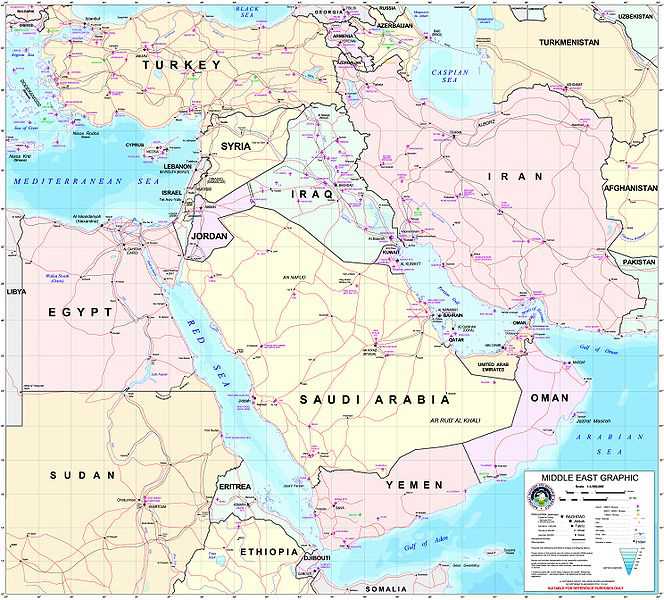
    The U.S. and representatives of the European Union have agreed to impose joint sanctions against Iran in January and are considering breaking off talks with the country, as patience with Tehran’s nuclear activities wears thin, according to people familiar with the matter.

    Western officials are discussing making further talks with Iran contingent on Tehran’s progress toward compliance with existing United Nations Security Council resolutions, which call on Iran to cooperate fully with the International Atomic Energy Agency, the U.N.’s nuclear watchdog.

    Iran returned to the negotiating table this month in Geneva with the five permanent members of the U.N. Security Council plus Germany, which seek to contain Tehran’s nuclear program. The talks led to an agreement to another round of discussions early next year in Istanbul.

    Some Western officials accuse Iran of playing for time by agreeing to talks but refusing to engage in meaningful negotiations. Senior diplomats from the U.S., U.K. and France met in Paris on Tuesday to chart the new course, amid growing frustration over Iran’s obstruction of IAEA inspections. London and Paris help to coordinate policy for the entire EU on Iran.

    The three nations plan to finalize details of the plan by the end of the year, then deliver the proposal to the EU sanctions committee to get the new measures in place before talks resume in Istanbul.

    Iranian officials couldn’t be reached late Friday to comment. Iran says it fully complies with its international obligations.

    It is unclear what shape the new sanctions will take. The three countries agreed that the U.S. and European Union should act together with a uniform set of sanctions, rather than seeking further United Nations sanctions, a time-consuming process with no guarantee of success.

    The IAEA says Iran isn’t fully cooperating with the U.N. agency’s efforts to determine whether Iran’s nuclear program is for peaceful nuclear purposes. The Security Council has imposed and strengthened sanctions against Iran on four occasions since 2006. The U.S. and the EU have imposed even stricter sanctions.

    The measures have hit Iran’s economy hard but have so far failed to break the will of its political leadership. Iran denies it seeks nuclear weapons and says its nuclear program is for peaceful purposes.

    Going into the Geneva talks, Iran stressed its right to produce nuclear fuel is nonnegotiable—contrary to Western demands—and announced scientific gains that would complete its mastery of the nuclear-fuel cycle.

    Write to David Crawford at [email protected]

    via U.S., EU Nations Agree on New Iran Sanctions – WSJ.com.
  • Turkish Airlines signs codeshare agreement with US Airways

    Turkish Airlines signs codeshare agreement with US Airways

    Dec 17, 2010 (AIRLINE INDUSTRY INFORMATION via COMTEX) —

    Turkish Airlines yesterday announced that it has signed a code share agreement with its fellow Star Alliance member US Airways.

    The agreement will allow both airlines to use each other’s flight codes and should allow both of the airline’s customers better access to Turkey and the US.

    Through the agreement US Airways customers will have access to Istanbul via Turkish Airlines service from Frankfurt, Munich and Zurich, and they may also access four new destinations in Turkey via Istanbul: Adana, Izmir, Antalya and Ankara, as well as having nonstop travel to Istanbul via Turkish Airlines service at New York and Chicago.

    Turkish Airlines customers will gain access to Charlotte, Philadelphia and Phoenix via US Airways, flying from Frankfurt, Munich, Zurich, Chicago and New York through the agreement.

    Comments on this story may be sent to [email protected]

    For full details on US Airways Group Inc (LCC) LCC. US Airways Group Inc (LCC) has Short Term PowerRatings at TradingMarkets. Details on US Airways Group Inc (LCC) Short Term PowerRatings is available at This Link.

    via Turkish Airlines signs codeshare agreement with US Airways | TradingMarkets.com.

  • Turkmen judges, prosecutors learn from Turkish judicial system

    Turkmen judges, prosecutors learn from Turkish judicial system

    Friday, December 17, 2010 – Judges and prosecutors from Turkmenistan wound up a one-week trip to Istanbul and Ankara Friday to see how Turkey’s judicial system works.

    Tajik prosecutors and judges spent this week in Istanbul and Ankara learning about the Turkish judicial system
    Tajik prosecutors and judges spent this week in Istanbul and Ankara learning about the Turkish judicial system

    The visiting Turkmen delegation was shown by their hosts how judiciary exams are formulated and also given insight into the workings of the Justice Ministry’s data processing department in Ankara.

    The participants visited the Penal and Arrest Institution in Istanbul, as well as the city courthouse and its Institute of Forensic Medicine.

    The visitors also attended a study course on the activities, mandate and management system at the Justice Academy where Turkish judges and public prosecutors are trained.

    The Organization for Security and Cooperation in Europe (OSCE) organized the trip of Supreme Court and Justice Ministry officials, along with representatives of the General Prosecutor’s Office and Parliament.

    “This working visit helped Turkmenistan representatives to familiarize themselves with the Turkish judicial system as well as with the role of Justice Academy in Turkey,” an OSCE press release on Friday quoted the head of its office in Ashgabat Begoña Piñeiro Costas as saying.

    The Acting President of Justice Academy of Turkey, Sami Sezai Ural, expressed the value of such cooperation.

    “We believe in the importance of exchange of knowledge and experience between counterpart institutions from different countries. I hope this study visit was useful for our Turkmen colleagues,” he said.

    The study visit is the latest activity in a program that saw a workshop on judicial education in Ashgabat in September and a visit to France’s National School of Magistrates last year.

  • The doctor at the heart of Kosovo’s organ scandal

    The doctor at the heart of Kosovo’s organ scandal

    The Turkish donor and the Israeli recipient were laid down on beds beside each other before the kidney was exchanged. Both men would later confirm that their eyes met for a brief few seconds before the anaesthetic took effect.

    Yilman Altun, 23, was the desperate young Turk who said he was promised a rich reward for his organ by a broker in Istanbul. Alongside him lay Bezalel Shafran, a 74-year-old Israeli who had paid £76,400 for the black-market kidney he hoped would prolong his life.

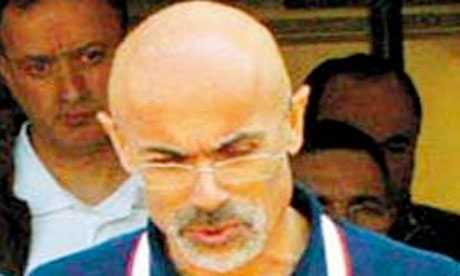
    According to an indictment released this week, the surgeon transferring the kidney between these strangers in the Medicus clinic in a deprived suburb near the Kosovan capital, Pristina, was Yusuf Ercin Sonmez, a 53-year-old medic.

    Sonmez, a Turkish surgeon, is now the subject of an international manhunt. Prosecutors allege he played a central role in the illegal organ transplant clinic, and this week an official inquiry linked the trade to Kosovo’s prime minister, Hashim Thaci.

    Sonmez, a notorious figure known as “Doctor Vulture”, is wanted by Interpol for “crimes against life and health, people smuggling, trafficking and illegal immigration”. An investigation by the Guardian established Sonmez as having been a key player in the unscrupulous organ market for more than 10 years. He was seen this year in Azerbaijian, where, intelligence sources believe, he was doing kidney transplants at the university hospital in Baku.

    Azerbaijan’s prosecutor-general’s office said last month that an investigation prompted by information from Ukranian police found “citizens of various countries” had been brought into the country for illegal kidney transplants. Four Ukrainian doctors have been arrested in connection with the alleged racket. Azerbaijani press reported that Sonmez was “involved” in the ring, which also did operations in Ecuador. At a press conference in Baku this year, which took place before the warrant for his arrest was made public, Sonmez reportedly denied involvement in organ trafficking.

    According to a charge read out on Tuesday by the EU prosecutor Jonathan Ratel, the alleged role of Sonmez in the Medicus clinic became clear when police raided the property in November 2008. The inquiry had been opened just hours earlier, after Altun, the Turk, fainted at Pristina airport. When officials found an fresh wound on his abdomen, he told them his kidney had been stolen.

    Four anaesthetists and a former permanent secretary in the health ministry, who prosecutors allege abused his office to give Medicus a false licence, have pleaded not guilty. So too has Lutfi Dervishi, Kosovo’s leading urologist, who is accused of setting up the clinic with his son, Arban. Ratel told the court that victims were duped “with the false promise of payments” for their kidneys.

    When the Guardian visited Medicus this week, surgical gowns for the Russians, Moldovans, Kazakhs and Turks intending to lose their organs could be seen through the windows. So too could cardboard boxes containing medical supplies printed with the name Sonmez.

    Dervishi, who still works at Pristina university hospital, was using Medicus business cards and phone numbers in another clinic nearby. He refused to speak to the Guardian this week.

    But it is Sonmez who prosecutors believe has been the central figure in the trafficking. The Turk has been repeatedly arrested for organ transplants in his native country, where colleagues describe him as an accomplished but rebellious surgeon. In 1998, Turkish TV, whose reporters posed as donors, found seven patients, mostly from Israel. Sonmez was later banned from working in Turkey’s public health sector.

    Since then he has been linked to clinics operating on donors and recipients from across the world. He has admitted to doing thousands of transplants, but says that his donors sign disclaimer forms declaring they are giving their organs for humanitarian purposes.

    Police found such forms at Medicus, along with a “vast quantity” of medical equipment and records of all the transplants, according to Ratel, who said that up to 30 victims lost their kidneys in the clinic in just eight months in 2008. Patients from Canada, Germany, Poland and Israel had received organ transplants at the clinic. But despite promises of payment of up to €20,000, the donors had left empty-handed, he said.

    A Council of Europe report into organ trafficking in Kosovo linked the Medicus case to a wider criminal network in the Kosovo Liberation Army (KLA), which began trading in organs in 1999. A faction within the rebel guerilla army loyal to Thaci has been accused of overseeing a racket involving Serb captives. A “handful” were said, in the report, to have been shot in the head, then had their kidneys extracted. It is believed the kidneys were flown to Istanbul in ischemia bags. Thaci has strongly denied the claims.

    A Washington-based intelligence source said the kidneys were sold to Sonmez. It was then that the Turkish doctor was said to have struck up a relationship with Kosovan Albanians, who, investigators believe, are implicated in the Medicus clinic case which unfolded in the confirmation hearing case this week. A judge in Pristina district court will decide whether there is sufficient evidence to proceed to trial.

    “In many respects the two are similar operations. In both cases, you’ve got illegal outfits linking senior players among the Kosovar Albanians trading in the organs of innocent victims, playing into an international racket to profit from the surgeries of Sonmez,” a source said.

    via The doctor at the heart of Kosovo’s organ scandal | World news | The Guardian.

  • Blind pop star campaigns on disability

    Blind pop star campaigns on disability

    CNN’s global series i-List takes you to a different country each month. In December, we visit Turkey and look at changes shaping the country’s economy, culture and social fabric.

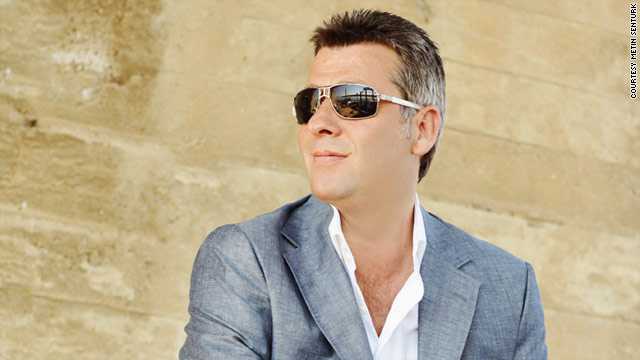
    (CNN) — Metin Senturk is a Turkish pop star and chat show host, with his own weekly television program on music and celebrity gossip, and nine albums to his name.

    He is also blind, and a prominent campaigner on disability issues.

    Senturk, 44, who founded the Istanbul-based World Handicapped Foundation, wants to stand for the Turkish National Assembly to promote disabled rights and says he mentions disability on his television show every opportunity he gets.

    Earlier this year, Senturk set a Guinness World Record for the fastest blind driver, reaching 181 mph in a Ferrari to raise awareness of disability. His car was followed by another driver giving him instructions in an earpiece.

    Senturk considers himself a “pioneer” for the 8.5 million people with disabilities in Turkey.

    “I believe in my heart that if an impaired person believes and trusts herself or himself,” he said, there’s nothing they can’t succeed at. “All we need is being given the chances.”

    He lost his sight in an accident at the age of three. He was the only blind pupil in his mainstream high school and went on to study classical music at university.

    “I didn’t let my impairment be a barrier for me. Things happen to people and we all have stories.”

    The tireless advocate wants people with disabilities to “really grab life from its collar and never feel hopeless.”

    He acknowledges he’s been more fortunate than others. “Being a star in Turkey, I am very lucky to have personal assistants, but for an average person there are certain problems,” he said.

    Many people with disabilities face barriers in getting to work — and even school, says Idil Isil Gul, a disability expert and lecturer in public international law and human rights at Istanbul Bilgi University.

    Only 20% of Turkey’s disabled population is employed, according to the country’s Disability Study 2002, the most recent official data available.

    The world shouldn’t be designed for one type of person, but for every type of people.

    Gul said: “Most disabled people stay at home and do nothing, because they can’t get to work or to school.”

    Employers with more than 50 workers are required by law to employ a 3% quota of disabled staff, and receive financial help to do so.

    Gul claims, though, that many companies simply pay workers to stay at home, or employ them only in the lowest-skilled jobs.

    She was a researcher on a 2007 International Disability Rights Monitor report, which rated Turkey among the least inclusive societies in Europe.

    In recent years, though, there have been efforts in Turkey to remove some of those barriers.

    Turkey’s first Law on Persons with Disabilities, introduced in 2005, is supposed to make all public buildings wheelchair accessible by 2012.

    A website specifically to help disabled people find jobs, Engelsizkariyer — or Barrier-Free Careers — was launched in 2008.

    “Employers are generally reluctant to hire disabled employees since they see them as a burden, even if they are well educated,” said Hasibe Kiziltas of Engelsizkariyer.

    In addition to employment opportunities, Engelsizkariyer provides career guidance and runs a helpline for disabled workers who face bullying at work, which is a major problem, according to Kiziltas.

    Technological innovations are also widening access to some everyday activities, such as banking.

    Earlier this month, Turkey’s Yapi Kredi bank launched an ATM which talks visually-impaired customers through their transactions. It also rolled out point of sale machines that act in a similar manner.

    Developed as part of the bank’s broader efforts to improve services to people with disabilities, Yapi Kredi says the point of sale machine is the first of its kind in the world.

    Yakup Dogan, executive vice president of Yapi Kredi, said disabled people “face countless difficulties at every turn in their everyday lives due to inadequate support.”

    The ATM and point of sale machines are designed to help the visually impaired “participate more in daily life, at least in the banking sector,” he said.

    The Talking ATM has a plug for headphones which triggers text-to-speech technology to provide an audible transaction.

    The first machine was opened at a branch in Istanbul to mark the International Day of Persons with Disabilities on December 3. The bank plans to roll them out across Turkey in coming months.

    According to Gul, the researcher, “things are beginning to change, but not as quickly as they should be.”

    Senturk believes there developments taking place in Turkey are encouraging, but he thinks even more can be done, which is one of the reasons why he wants to stand for Turkish National Assembly.

    “I think the municipalities should work harder for the impaired people and they should handle all those architectural problems for the impaired people to start with,” he said.

    “In short, the world shouldn’t be designed for one type of person, but for every type of people.”

    via Blind pop star campaigns on disability – CNN.com.

  • Kazakh Consulate General in Istanbul organizes reception on occasion of Independence Day

    Kazakh Consulate General in Istanbul organizes reception on occasion of Independence Day

    The Kazakh Consulate General in Istanbul has organized a diplomatic reception on occasion of the Independence Day.

    The policy elite of Istanbul headed by Governor Hüseyin Avni Mutlu, representatives of the consulate corps accredited in Istanbul, public figures of the country of residence, business circles of Turkey, creative intelligentsia, journalists took part in the event. In the course of the reception the Consulate General and Directorate of the VII Asian Winter Games made presentation of the Games in Kazakhstan in 2011.

    The guests noted the growing authority of our country at the international arena, high rates of socio-economic development. Today Kazakhstan actively forms as one of the centers of the world diplomacy, various economic and cultural events. Holding the OSCE Summit in Astana, initiatives on strengthening international and regional security and integration prove it. Upcoming chairmanships of Kazakhstan in the OIC and SCO, organization of the VII Asian Winter Games as well as other various events will keep up high interest of the world community in Kazakhstan.

    via Eng.Gazeta.kz – Kazakh Consulate General in Istanbul organizes reception on occasion of Independence Day.