Year: 2010

  • Did Kobe Lie?

    Did Kobe Lie?

    Once A Voice to End Genocide in Darfur, Kobe Bryant Now Promotes Sudan’s Ally in Denial and 20th Century’s First Perpetrator of Genocide

    BY ALLEN YEKIKAN

    In 2008, Kobe Bryant was a strong voice calling for an end to the genocide in Darfur, but today, he has signed a deal to represent the Republic of Turkey, which denies any genocide in Darfur and is the infamous perpetrator of the first Genocide of the 20th century.

    In May 27, 2008 Bryant made a public service announcement through the Los Angeles-based non-profit Aid Still Required, urging action to unite to end the Genocide in Darfur.

    “In Darfur hundreds of thousands have been murdered, mutilated, families torn apart. Please take a stand with us. We have the power to save lives, to restore lives,” Bryant said in the PSA, published on Youtube. “If we can unite people, who are willing to take a stand, miracles can happen.”

    Since 2003, the Sudanese government in Khartoum has slaughtered half a million people in Darfur, while forcibly uprooting nearly 3 million more from their homes in February 2003. The Sudanese government, like the Republic of Turkey, denies it is committing genocide.

    Turkey is among Sudan’s greatest allies, covering up its genocide and providing arms to the Sudanese government, led by Omar al-Bashir, who has been indicted for war crimes by the International Criminal Court.

    In November 2009, Turkey came under intense international criticism for agreeing to host al-Bashir.  Turkey’s Prime Minister, Recep Tayyip Erdogan, even defended his ally, refusing to arrest al-Bashir and denying the genocide in Darfur. According to Erdogan, there was no genocide raging in Darfur, the international warrant for his arrest was a “mistake,” and Bashir may simply have only “mismanaged the situation.”

    As 2010 comes to an end, Bryant finds himself again in the headlines over the issue of Genocide. This time, however, not as the anti-genocide activist he seemed to be in 2008, but as what appears to be an accomplice to the denial of at least two genocides.

    Earlier this week Kobe signed a two-year agreement with Turkey’s national airline carrier to serve as its “global ambassador,” effectively becoming the face and image of the company and its manager, the Turkish Republic.

    Kobe’s decision has caused uproar within the Armenian-American community in the United States and especially within Southern California, which boasts the largest population of Armenians outside of Armenia, ranging between 600,000 to 750,000.

    Armenians are angered that Bryant would sign a contract with a country that not only denies that the Ottoman Turkish government committed genocide against 1.5 million Armenians in 1915 , but also actively works to defend modern day perpetrators of the crime.

    “We don’t understand how Kobe could forget about Darfur and overlook Turkey’s gross record on human rights and its complicity and support for the genocide there,” said Caspar Jivalegian of the Armenian Youth Federation. “It is troubling that the very country that perpetrated the first genocide of the 20th century and actively supports the first genocide of the 21st century, is now contracting a strong opponent of the Darfur genocide to represent its global brand.”

    For Jivalegian, Bryant’s decision and his complete silence on the matter sets a very bad example for young fans who “look up to Kobe both on and off the court.”

    “Kobe is not just a basketball player, he is local, national, and global a role model with a responsibility to set a positive example to the millions of people who look up to him and support him,” Jivalegian said, adding that Bryant made a poor play by signing a deal with a Genocide perpetrator after making a video calling for an end to genocide in Darfur. “This shows a disconnect between Kobe and the many communities that make up Los Angeles and the Lakers fan base.”

    Armenian Americans hope that Kobe would balance what clearly looks to be a profitable business deal with a strong moral statement against Turkey’s violations of human rights, including its ongoing denial of the Armenian Genocide.

    “Turkish Airlines is not like United or American–it was founded by the Turkish government, which still owns some 49 percent of the company.  They are supporters of groups like the American Turkish Council who lobby against U.S. Affirmation of the Armenian Genocide,” said Jivalegian.

    “Kobe is a champion on the basketball court, and we look to him to be a champion of human rights by speaking truthfully about the Armenian Genocide, supporting U.S. Congressional passage of the Armenian Genocide Resolution (H.Res.252) – and ultimately dropping this ill-advised endorsement deal,” Jivalegian added.

    via Did Kobe Lie? | Asbarez Armenian News.
  • Turkey has the Potential to Override Hot-Money Risks

    Turkey has the Potential to Override Hot-Money Risks

    By JOE PARKINSON

    China may be grabbing the headlines, but one of the biggest winners of the financial crisis has been Turkey.

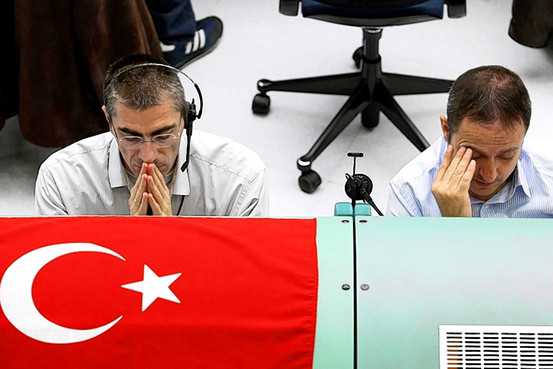
    Traders at their computer terminals in the Istanbul Stock Exchange.

    Its economy is surging—expanding 9% on the year in the 9 months to October, powered by an industrial sector firing on all cylinders. The auto industry is emerging as an alternative production hub, while free-spending consumers are sucking up easy credit from comfortably capitalized banks, helping to fire the boom.

    Emboldened by stellar statistics, Ankara’s policymakers—

    joined by a growing number of economists—lambast ratings agencies for refusing to bump Turkey up to investment grade.

    Istanbul, the booming metropolis driving the recovery, has developed into a fashion and tourism hub and recently ranked above four Chinese cities as the world’s most dynamic metropolitan center, according to the Brooking’s Institution. Gone, it seems, are the bad old days of the 1990s when squabbling coalition governments sidestepped structural reforms and triple-digit inflation erased savings.

    Turkey still has deep political divides. Almost 200 top military officers, including three retired commanders, went on trial Thursday charged with plotting against the Islamist-leaning government of Prime Minister Recep Tayyip Erdogan in a case likely to strain ties between Ankara and the secularist armed forces.

    The administration has also ruffled feathers in Washington and Brussels with a more Islamic-focused policy platform. But investors have embraced the unfamiliar stability of single-party rule. And with Mr. Erdogan widely expected to secure a third term at national elections due next summer, stability—at least by recent Turkish standards—looks set to persist.

    Underpinning that stability is economic potential; with a youthful population of 75 million and a relatively cheap labor force, Turkey looks a lot more like a BRIC than a bubble.

    If only it were that simple.

    Late Thursday the Turkish central bank cut interest rates by 50 basis points to a fresh record low of 6.5%, opting for further stimulus despite this year’s dazzling growth numbers and analysts’ warnings that the economy could overheat.

    Why would policymakers in a rapidly growing economy cut rates? Because, Turkey’s success has caused a rapid inflow of hot money, or speculative investments, which magnifies the economy’s key weakness: a mushrooming current-account deficit that depends on external finance.

    Policymakers in Ankara are gambling that cutting rates to dissuade speculative investors is less risky than firing a domestic consumer boom that some fear could see the economy overheat.

    Turkey’s growth model is most certainly driven by consumer demand, and is heavily dependent on imports, partly because it has few energy resources and it specializes in manufacturing partly-finished goods.

    Latest numbers show imports rising 35% on the year in October, while export growth slowed to 8.8%. That contributed to a current-account deficit of $36 billion in the January to October period—a huge 288% expansion on the same period a year earlier.

    Partly because of that model, the quicker Turkey expands, the quicker the deficit widens, leaving the economy vulnerable to shocks if investor sentiment turns negative.

    That vulnerability is magnified by the fact that a rapidly rising proportion of that deficit is financed by speculative investments, or hot money. This is the speculative demand that sweeps into rapidly growing economies as investors flee low interest rates in the U.S., the U.K. and the euro zone, to seek higher yields.

    So far this year, some 70% of Turkey’s current-account deficit has been financed by speculative portfolio investments, compared to just 14% of longer-term FDI, according to the “Emerging Markets Quarterly Report” published by Barclays Capital, early December.

    For some economists, the starring role that hot money plays in funding Turkey’s deficit is a red flag that could cause problems if another bout of risk aversion drives investors away from emerging markets and into gold, the dollar and other safe havens.

    “The economy is exposed: sure, there’s lot of cheap money flooding in, but if sentiment was to change, we have a yawning current-account deficit funded by bad finance—and that’s making a lot of people nervous,” said Murat Ucer, an economist at Global Source Partners, an Istanbul-based consultancy.

    Ratings agencies say the current account imbalance is the principle reason for keeping Turkey rating below investment grade, while government ministers here warn with increasingly regularity that hot money could undermine the economy’s gains.

    But despite the imbalances and growing spectre of risk, the strength of Turkey’s rebound has shifted perceptions that the economy is a perennial underachiever. Incomes are expanding and inflation is historically low, boosting the credibility of policymakers who have overseen rapid growth and a fall in public debt.

    The raw materials are in place: a strategic location between Asia and Europe, a democratic political system and age-old tradition as a trading hub make Turkey’s vast economic potential obvious.

    There are possible pitfalls and Thursday’s interest rate cut is controversial. But with resurgent growth and growing credibility, policymakers can square sustainable expansion with concerns over hot money, meaning the growth story can continue.

    Write to Joe Parkinson at [email protected]

    via Turkey has the Potential to – WSJ.com.

  • Turkey ranked 89th in Economist’s democracy index

    Turkey ranked 89th in Economist’s democracy index

    ISTANBUL – Vatan

    Press freedom is an area in which Turkey is slipping, according to The Economist Intelligence Unit. Hürriyet photo

    British magazine The Economist, which has published an index of the strength of democracy in 167 countries, said Turkey dropped two levels since 2008 and now ranks among the world’s “hybrid regimes.”

    The 167 countries were examined according to their electoral systems, pluralism, civil freedoms, government executions, political participation and political culture and awarded a quantitative evaluation ranging from 1 to 4, representing “authoritarian regimes,” 4 to 5.9, representing “hybrid regimes,” 6 to 7.9, representing “incomplete democracies,” and 8 to 10, representing “complete democracies.”

    Of the 26 countries nominated as complete democracies, Norway ranked as the most democratic country in the world, receiving an average evaluation of 9.8 out of 10.

    In the category of incomplete democracies, Cape Verde, Greece, Italy, South Africa and France took place in the top five.

    Turkey, however, was accorded average of 5.3 and ranked as a “hybrid regime,” a category characterized by a tendency for increased corruption, where non-profit organization representation is inadequate and press freedoms are incomplete.

    The research showed Turkey was among the countries where press freedoms were deteriorating rapidly. From 2008 to 2010, 36 countries, including Turkey, Italy and France, slipped in their protection of press freedoms, the research said.

    Turkey ranked 89th in the democracy index and only advanced 0.04 percent within the category, compared to the past two years, during which it ranked 87th, with an average of 5.69. As other countries became more democratic Turkey slipped from its former ranking.

    Other nations evaluated as hybrid regimes were Nikaragua, Tanzania, Palestine, Uganda, Sierra, Leona, Pakistan and Haiti.

  • Ilham Aliyev: What about cutting gas supply to Turkey?

    Ilham Aliyev: What about cutting gas supply to Turkey?

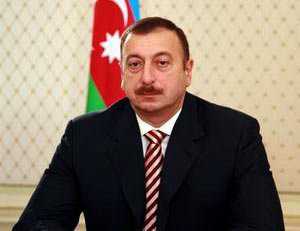
    Azerbaijani President Ilham Aliyev stated that the trilateral meeting of energy ministers in Tbilisi will clarify whether Turkey was willing to help Georgia with its winter gas problems, reads one of the WikiLeaks-published secret cables, the Guardian reported. At the meeting with the U.S. Ambassador, Azerbaijani leader “accused BP for linking commercial issues to the current gas problems, and reported that “nothing had changed” in Azerbaijan’s gas negotiations with Russia during Russia PM Fradkov’s visit to Baku”.

    Aliyev said that BP could deliver more associated gas from the Azeri-Cirag-Gunesli (ACG) field to Azerbaijan for domestic use, but that it was linking its cooperation in this regard with its desire to extend its Production Sharing Agreement (PSA) with Azerbaijan to develop ACG deep gas. According to him, BP was using blackmail.  “If BP won’t give us more ACG associated gas, I have instructed our officials to tell them no PSA extensions or ACG deep gas,” he said.

    “Aliyev concluded by saying that if Turkey agreed to redistribute its 2007 Shah Deniz gas that “would almost be the way out,” but that then Azerbaijan would still need BP support in both redistributing this Shah Deniz gas and also in giving Azerbaijan more ACG associated gas.

    The President also mused that “we could cut the gas supply to Turkey” if need be. The Ambassador pointed out that this would be an extreme measure with serious repercussions. She asked Aliyev if he knew the reasons for Turkish truculence concerning gas redistribution. He said he did not, but suspected it could be monetary, i.e. buying gas at USD 120 per mcm and selling it at USD 230,” the document reads.

    via Ilham Aliyev: What about cutting gas supply to Turkey? | Armenia News – NEWS.am.

  • Turkey, Israel Are Historic Friends

    Turkey, Israel Are Historic Friends

    In a Dec. 9 column (“A Coming Sino-Turkish Axis?”) , Michael Auslin wrote that the relationship between Turkey and Israel “has started to come to an end.” This is far from the case; Turkey and Israel are historic friends and Turkey is among the first nations to recognize Israel upon its establishment.

    Yes, there have been some recent and serious disagreements between our countries. But we believe our two nations will move past these challenges. Indeed, Turkey’s humanitarian assistance during the deadly forest fire at Mount Carmel is just one demonstration of its goodwill towards Israel.

    As President Obama noted, Turkey is a model partner, serving as a bastion of democracy and stability in a volatile region. Our aim has always been and will continue to be to contribute to the peace, stability and welfare in the region and beyond.

    Concerning China, contrary to Mr. Auslin’s suggestion, Turkey’s growing relationship is a reflection of its policy to broaden its outreach to nations around the world. Like the U.S., which has a long-standing and complex relationship with China, our engagement with any one country does not require a shift away from any other.

    In brief, Turkey has a multidimensional foreign policy and as a member of NATO, is well aware of its responsibilities.

    Rauf A. Denktaş

    Spokesman

    Embassy of the Republic of Turkey

    Washington, DC

    via Turkey, Israel Are Historic Friends – WSJ.com.

  • Muslims commemorate Ashura in Turkey

    Muslims commemorate Ashura in Turkey

    Jody Sabral, Press TV, Istanbul

    Thousands of Turkish Shia braved freezing temperatures to commemorate the death of Imam Hussein on the day of Ashura. They walked through Istanbul streets beating their chests as is the religious ritual to feel the suffering of Imam Hussein at Karbala.

    The Turkish Prime Minister Recep Tayyip Erdogan attended the commemorations this year, a first since his party came to power in 2002. Erdogan’s message was one of unity between Shia and Sunni Muslims, he himself a follower of the Sunni hanife faith.

    People here told us that although they were in mourning, the Prime Minister’s message was one of hope.

    The former Iranian Foreign Minister echoing this message by calling on Muslims to stand stead fast in the face of those who want to spread havoc in the Islamic world.

    This perhaps a reference to the latest attack in Iran. An attack the Turkish prime minister strongly condemned.

    Every year, Turkish Shia reenact the battle of Kerbala as is their tradition, however blood letting is forbidden here.

    Turkish Shia perform their religious duty by donating blood to the Turkish red crescent.

    Ashura is an important day on the Shia calendar, and this year it was also acknowledged by Turkey’s Sunni leadership.

    via PressTV – Muslims commemorate Ashura in Turkey.