The season for the regular tension between Ankara and Washington came earlier than expected. We should not be surprised if Turkish-American relations soon enter “crisis management” mode.
The issue at hand will once again be the usual predicament: the Armenian genocide resolution. Every year it is the same story. The sense of déjà vu is becoming painfully cyclical. Despite this familiar routine, there are a couple of factors changing the dynamics this year.
The first one is the early timing. The Armenian issue usually enters the agenda before April 24, the date for “Genocide Remembrance Day.” Considerable pressure on the president of the United States begins usually a few weeks in advance by congressional attempts to pass a non-binding resolution first from the Committee on Foreign Relations and then from the floor of the US House of Representatives. Earlier this year, as you will remember, the resolution narrowly passed the House committee with just one vote. So, it was up to Speaker of the House Nancy Pelosi, from the Democratic Party, to bring the resolution to the floor for a vote. Pelosi did not do so, probably because of the busy political agenda of the House and perhaps because the resolution did not have the support it needed to pass.
I was personally surprised that she did not try before the November mid-term elections. The circumstances appeared optimal around September. The Democrats desperately needed all the votes they could get from the American people. The Armenian lobby also must have had a sense of urgency. It was obvious that the Republicans would win and that chances of an Armenian genocide resolution would diminish. And, of course, most importantly, there was the dismal state of Turkish-American relations. After all, it is no secret that Turkey’s image in the American Congress hit an all-time low this year.
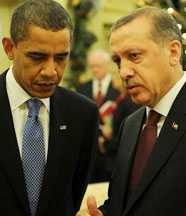
Over the last six months, two major developments poisoned Turkey’s perception among US legislators. The first was Turkey’s identification as a close ally of Iran. Turkey’s “no” vote in the United Nations Security Council concerning sanctions against Iran not only damaged its already tainted image in Congress, but it also infuriated the Obama administration. The day before Turkey voted no, President Barack Obama called Turkish Prime Minister Recep Tayyip Erdoğan and tried to convince him during a 45-minute conversation to vote either “yes” together with the transatlantic (NATO plus EU) community or in the very worst case abstain.
The fact that Turkey voted the way it did clearly demonstrated that Ankara was more concerned about its leverage with Iran or its relations with Brazil than setting back its relations with Washington on a very critical issue for which President Obama had spent considerable political capital. To expect that there would be no consequences for defying the American agenda in such a blatant way is naïve. In that sense, there is nothing surprising in the way the Armenian issue will become more difficult to surmount.
The second development, which somewhat unfairly turned Turkey’s image from bad to worse, is the Mavi Marmara incident. Despite the fact that Turkish citizens were killed by Israeli soldiers in international waters, the whole affair came to be seen by the US Congress as pro-Iran and pro-Hamas and as Turkey challenging Israel. Given the influence of the pro-Israel lobby in Washington and particularly in Congress, it should not be surprising that Turkey’s version of the story falls on deaf ears.
At the end of the day, on two crucial issues — Iran and Israel — Turkey is on the wrong side of the House of Representatives. Under such circumstances, the Armenian lobby should not face a major challenge getting its way in passing the genocide resolution. Now, just before Christmas, Pelosi must be calculating that there is one last chance before the new House, with its new Republican majority, begins the new year. We will see on Tuesday if the House of Representatives will have the numbers and the will to vote on this issue. The next couple of days will be critical. Needless to say, the whole situation is highly embarrassing for a country like Turkey, with such high ambitions on the world stage.
Turkish Foreign Minister Ahmet Davutoglu said Monday that they will not let resolutions on the so-called Armenian genocide hang like the sword of Damocles in Turkish-U.S. relations.
Speaking on the 2011 budget of his ministry at the Turkish Parliamentary Assembly, Davutoglu said that Turkish Prime Minister Recep Tayyip Erdogan sent a letter to U.S. President Barack Obama on Monday on attempts to bring an Armenian resolution to the floor of the U.S. House of Representatives.
We pay high attention to our relations with the United States. We want to carry our relations further than merely a geopolitical and strategic cooperation, Davutoglu stressed.
When President Obama talked about a ‘model partnership’ with Turkey in a speech delivered at the Turkish Parliament, we talked about the need to promote Turkish-U.S. relations not only in the military field but economic as well, Davutoglu said.
Turkish State Minister and Deputy Prime Minister Ali Babacan and State Minister for foreign trade Zafer Caglayan established a joint committee with their U.S. counterparts to promote economic relations between the two countries, Davutoglu underlined.
In the past several days, there have been efforts to bring an Armenian resolution to the floor of the U.S. House of Representatives before the House recesses for holidays. As soon as we have heard the news about the so-called Armenian resolution, we made the necessary warnings to U.S. officials, including U.S. Secretary of State Hillary Clinton. We can no longer permit such resolutions to hang like the sword of Damocles in Turkish-U.S. relations. Within this frame, Prime Minister Erdogan sent a letter to President Obama on Monday. Turkey is determined to protect its national pride against all slanders and baseless allegations. I am confident that our Turkish Parliament will display the necessary sensitivity that it did display in the past (on the Armenian resolution), Davutoglu also said.
-TURKEY’S POSITION ON ARMENIAN ALLEGATIONS-
Turkey has long been facing a systematic campaign of defamation carried out by Armenian lobbying groups. The Armenian diaspora has lately increased its organized activities throughout the world for the recognition of their unfounded allegations in regard to the events of 1915 as genocide by national and local parliaments.
Armenian groups living in various countries try to get the publication of many books on their allegations concerning the events of 1915 and articles written by authors close to Armenian views in well-known magazines and newspapers. Armenian organizations also orchestrate many meetings, conferences and symposia in order to garner support and to give them as much publicity as possible. Armenian groups make sure that researchers and authors close to the Armenian views take part in these meetings so that the issue always remains on the agenda. Armenian circles, similarly, sponsors the making of documentary films that advocate Armenian claims. They also encourage the broadcasting of these films in many television channels. Public opinion especially in Western countries is affected by these films, books and articles published every year and their Parliaments are left under constant pressure to recognize the Armenian allegations as ?undeniable historical truth?. The activities of diaspora organizations are also supported by the Armenian state. It is known that Armenian diplomatic missions abroad carry out certain activities so that their allegations are recognized in national legislatures.
Until today the parliaments of Argentina, Belgium, France, Netherlands, Switzerland, Italy, Canada, Lebanon, the Russian Federation, Slovakia, Uruguay, Greece, the Greek Cypriot Administration, Poland, Germany, Lithuania, Chile, Venezuela and the European Parliament passed either resolutions or issued statements. In addition, some local parliaments in the USA, Canada, Britain, Australia, Argentina and Switzerland passed similar resolutions.
Turkey is of the view that parliaments and other political institutions are not the appropriate fora to debate and pass judgments on disputed periods of history. Past events and controversial periods of history should be left to the historians for their dispassionate study and evaluation. In order to shed light on such a disputed historical issue, the Turkish Government has opened all its archives, including military records to all researchers. Furthermore, Turkey encourages historians, scholars and researchers to freely examine and discuss this historical issue in every platform. In order to have an objective and complete analysis of the Turkish-Armenian relations, the Armenian archives should also be opened and made available to the public and researchers. For reaching the truth, historians must have access to all related archives.
In this respect, in 2005, Turkey has officially proposed to the Government of Armenia the establishment of a joint commission of history composed of historians and other experts from both sides to study together the events of 1915 not only in the archives of Turkey and Armenia but also in the archives of all relevant third countries and to share their findings with the public. Unfortunately, Armenia has not responded positively to this initiative, yet. Turkey’s proposal is still on the table.
If accepted by Armenia, Turkey’s proposal for setting up a Joint Commission of History would also serve as a confidence-building measure paving the way for a dialogue towards normalization of relations between the two countries.
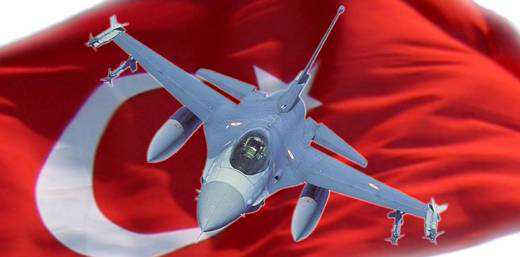
“The decision we have taken now calls for the production of a totally national and original aircraft,” Gonul told reporters last week after a meeting of the powerful Defense Industry Executive Committee decided to nix plans to purchase 60 of the latest Typhoon jet fighters. “This move by the committee effectively is a decision for making Turkey’s first fighter aircraft,” Gonul said. “The Eurofighter is off Turkey’s agenda.”
According to reports, the new aircraft would replace the aging US-made F-4, which had been upgraded by Israel to last well into the next decade, as well as newer F-16s. The expected roll out date for Turkey’s twin-engine combat jet would reportedly be about 2023.
Ankara has already announced it plans to procure some 100 of the next-generation F-35s Joint Strike Fighter aircraft in a deal worth about $15 billion. The first JSF jets are expected to be delivered around 2015. According to Defense News, however, Turkey would take the approximately 30 F-16 fighters only as a “stopgap” measure.
The decision to fly solo in developing a fighter jet comes as Turkey distances itself from its North Atlantic Treaty Organization partners in Europe and North America, and seeks closer ties with its Middle Eastern neighbors. In November, Turkey disputed NATO plans for a missile shield against a possible Iranian attack and has objected to the alliance sharing information with Israel.
Turkey assembles the F-16s on contract from Lockheed Martin at a Turkish Aerospace Industries (TAI) plant. The government named state-controlled TAI, based on the outskirts of Ankara, as the general coordinator of the new fighter jet project. The Turkish Defense Industry’s Procurement agency SSM has allotted some $20 million for a two-year conceptual design study.
“It’s a large endeavor. I’m skeptical that they would be able to do the project on their own since Turkey didn’t have the adequate technological know-how,” said one aerospace executive intimately involved with the design and production of the Israeli fighter jet Lavi in the 1980s.
“But it’s not just technological know-how. Developing a fighter jet requires billions and billions of dollars. It’s certainly not the same as assembling an aircraft. It takes a very long time to develop the technology and then you need to have the influx of funding to bring it all together,” the executive, who spoke on condition he not be named, told The Media Line.
Turkish industry officials told The Media Line that the government decision didn’t make sense. Turkey was currently so heavily engaged in joint international aircraft design projects such as the F-35 that it wouldn’t be feasible to embark on such a costly and risky venture, the officials said.
While hardly world class, the Turkish defense industry is growing and modernizing. But it remains dependent on foreign technology. TAI has designed the Hurkus, a basic training aircraft, but it has yet to make its maiden flight. It has also rolled out an unmanned aerial vehicle this year called the ANKA.
“Development is very, very expensive. Israel was a small country without a big defense budget. Even when we had the infrastructure we decided to give up on it because it was just too expensive,” the executive said, adding that any development today would likely be more successful with international partners.
Israel eventually scrapped the Lavi — built to be a competitor with the F-16 –under heavy US pressure and from a lack of funds.
Defense Minister Gonul said Turkey might cooperate with South Korea, which was developing the KF-X fighter jet with Indonesia. However, that project has sputtered due to lack of funding.
The American people have chosen a new majority in the House of Representatives. Americans have been clear about what they want: more jobs, less spending, and a more open Congress that respects and abides by the Constitution. and ofcourse america set sail to its own interests not TASNAK ARMENIANS DESIRE .
Contact wih Republican Leader / Meclisde cogunlukda olan Cumhuriyetci parti lideri ile e-mail temasi kurunuz. Office of the Republican Leader https://www.majorityleader.gov/
Dostlarim lutfen GECIKMEYIN VAKTIMIZ COK AZ KALDI ALNIMIZA LEKE GELMEMESI ICIN , Cocuklarimizin bu kara leke ile buyumemesi icin, TASARI AMERIKADA GECERSE DUNYA TAKIP EDER .. POLITIKACILAR OY PESINDE HAKIKATIN DEGIL ….. TURKISH FORUM
MECLIS BASKANLIGIMNI TESLIM ALACAK JOHN BOEHNER’E YAZINIZ
ERMENI KUKLASI PELOSI NIN GOREVI SONA ERMEKDE — PELOSININ SON CABASINI GERI DONDURMEK ICIN .. MECLIS BASKANLIGINI TESLIM ALACAK OLAN jOHN BOEHNERE ASAGIDAKI MESAJI VERILEN E-MAIL ADRESINDEN ULASTIRINIZ
Dr. Kayaalp Buyukataman, Baskan
Turkish Forum
================= MAIL THE LETTER BELOW =====================
We are writing to urge you not to be influenced by Armenian activits for yet another vote on H. Res.252.
The supporters of H. Res. 252, about the “Armenian genocide”, are attempting one more time to obtain the vote by US Congress.
Do you know who backs this resolution?
The Armenian National Committee of America (ANCA) is the branch of Armenian Revolutionary Federation (ARF).
Mourad Topalian, chairman of ANCA from 1991 to 1999, and who has still a prominent position in this umbrella, was sentenced by Ohio justice in 2001 for illegal storing of war weapons and explosives, linked to a terrorist organization.
Hampig Sassounian, member of ARF and of its terrorist wing (“Justice Commandos Against Armenian Genocide”, JCAG), was sentenced to life in 1984 for the assassination of Turkish general Consul in Los Angeles; Mr. Sassounian received, and still receives, a constant and unconditional support from both ARF and ANCA.
Such crimes and glorification of crimes should surprise nobody: on December 24, 1933, seven members of ARF assassinated brutally the archbishop L. Tourian during the mass, and were sentenced by New York justice for this crime; their lawyer’s cost were entirely paid by ARF.
Actually, ARF, especially in USA, supported vehemently the Nazi regime.
ARF turned to a pro-American and pro-Western position around 1948, but chose openly the Soviet side in 1972, and remained in such a position — with few clashes — until the end of 1980’s.
The Armenian Assembly of America (AAA) is dominated by Ramkavar party and includes the Hunchak party.
Both supported strongly USSR during the cold war.
The Hunchak party supported the Armenian Secret Army for Liberation of Armenia (ASALA) and the Ramkavar allowed some of his prominent members to support Armenian terrorism of 1970’s/1980’s. Why is this resolution unacceptable?
This draft, copy of propositions made in 2007 and 2008, is misleading, both from legal and historical perspective:
In a democracy, it is not the politicians who write history, but historians.
It is absolutely false to assert that all the historians use the “genocide” label; in fact, the majority of scholars with a specific qualification to deal with Ottoman history reject, or at least criticize, the “genocide” label for the Armenian case; the list includes Gwynne Dyer, Edward J. Erickson, Jacob C. Hurewitz, Bernard Lewis, Guenter Lewy, Justin McCarthy, Andrew Mango, Norman Stone, Malcolm E. Yapp and Gilles Veinstein.
In UK, in both houses, the efforts of the spokespersons (Supporting Armenian claims) have always failed because it is an accepted fact that the historians do not agree on these false claims and that thousands of Turkish people suffered massacres in the hands of Armenian terrorist/activist during the same period (see above sources).
In France, the majority of the most prominent historians created an association claiming the suppression of “memorial laws” and the end of ethnic lobbying in Parliaments:
This initiative was supported by the American Historical Association.
The French National Assembly, frequently mentioned by supporters of Armenian claims in USA and some other countries, published in 2010 a report, written by his president, Bernard Accoyer, concluding that no more “memorial laws” should be voted, especially about Armenian case.
There is no legal, ethical or historical reason to jeopardize the US-Turkish relations in accepting the claims of Armenian nationalist associations, whose fidelity to US values and interests is more than questionable. Respectfuly
YOUR NAME AND ADDRESS
============ YOU NEED NOT TO MAIL REMAINING SECTION ==================
The American people have chosen a new majority in the House of Representatives. Americans have been clear about what they want: more jobs, less spending, and a more open Congress that respects and abides by the Constitution.
===================
yeni meclis baskani olacak john boehner hakkinda
John Boehner, elected to represent the Eighth Congressional District of Ohio for a 10th term in November 2008, is a national leader in the fight for a smaller, more accountable government. Throughout his time as a small businessman, state legislator, and Member of Congress, John has been a straight-shooting and relentless advocate for freedom and security.As House Republican Leader and a staunch opponent of pork-barrel politics, John is fighting to eliminate wasteful spending, create jobs, and balance the federal budget without raising taxes. He has challenged Republicans in the 111th Congress to be not just the party of “opposition,” but the party of better solutions to the challenges facing the American people. Under the new House GOP leadership team John leads, House Republicans have formed “solutions groups” to develop principled alternatives on the issues that matter most to American families and small businesses, and launched the GOP State Solutions project, an initiative aimed at bringing reform-minded Republicans at the state and federal levels together to promote common-sense solutions from outside the Beltway.
Born in Cincinnati in November 1949 as one of 12 brothers and sisters, John has lived in Southwest Ohio his entire life. He and his wife Debbie have been married for 36 years. They have two daughters – Lindsay and Tricia – and live in the northern Cincinnati suburb of West Chester. After graduating from Cincinnati’s Moeller High School in 1968, John earned a bachelor’s degree in business from Xavier University in Cincinnati in 1977.
John’s first two terms in the U.S. House were marked by an aggressive campaign to clean up Congress and make it more accountable to the American people. During his freshman year, Boehner and fellow members of the reform-minded “Gang of Seven” took on the House establishment and successfully closed the House Bank, uncovered “dine-and-dash” practices at the House Restaurant, and exposed drug sales and cozy cash-for-stamps deals at the House Post Office. John also adopted a personal “no earmarks” policy upon taking office in 1991, a no-pork policy he maintains to this day.
Later, John was instrumental in crafting the Contract with America, the bold 100-day agenda for the 104th Congress that nationalized the 1994 elections. One of the Contract’s cornerstones – the Congressional Accountability Act, requiring Congress to live under the same rules and regulations as the rest of the nation – bears the unmistakable imprint of his drive to reform the House. The success of John’s reform-minded agenda earned him election to the House leadership after the GOP election victories in 1994. As House GOP Conference Chairman in the 104th and 105th Congress, John was a powerful voice in the fight to force Washington to stick to the strict spending limits in the Balanced Budget Act. In September 1999, as Vice-Chairman of the House Administration Committee, John joined House leaders to announce the first-ever “clean” independent audit of the House, a reform he first called for as a member of the Gang of Seven in 1992.
John has also long been a leader on education reform. In 1994, working with Rep. Dick Armey (R-TX), he secured passage of legislation allowing school districts to use their Title I funds for public school choice programs, under which parents could choose which public school their children would attend. Later, as chairman of the House Committee on Education and the Workforce, he co-wrote the bill establishing the first private school choice program in the District of Columbia, and worked with Sen. Judd Gregg (R-NH) to ensure parental choice provisions were included in the bipartisan No Child Left Behind Act to reinforce its goal of bringing greater accountability to taxpayer-funded education programs.
In 2006, Boehner authored the Pension Protection Act, the most sweeping reform of America’s pension laws in more than 30 years, which the St. Louis Post-Dispatch said “will make it possible for millions of Americans to save more now for a better future.”
On November 19, 2008, Boehner was elected by his colleagues to serve a second term as House Republican Leader. Boehner believes Republicans can earn back the majority in Congress by renewing their commitment to enduring GOP principles of freedom, security, and smaller government, and developing better solutions to the challenges facing the American people.
Have you been to the Spa at Trump SoHo yet? Well, it’s a must, and get there as soon as possible.
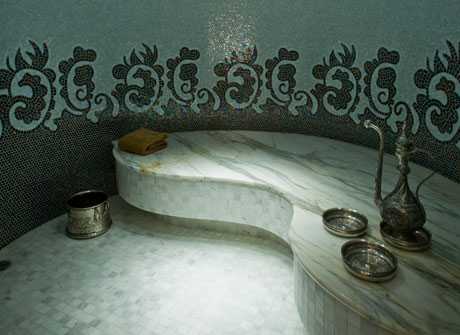
Inspired by her visits to high-end Turkish baths while traveling through Istanbul, Ivanka Trump decided to create her own mosaic-tiled sanctuary at the new Trump SoHo in Manhattan. Spanning two floors of the hotel, the sprawling 11,000-square-foot spa is calming, minimal, and chic. The two Hammam rooms in particular are beautifully designed and well executed. They’re meant for only two people—the guest and the Hammam Attache—but there’s ample space.
A therapist performing a Turkish Hammam Ritual on a guest, encasing her body with bubbles. My Turkish Hammam Ritual began with warm-to-hot water poured from head to toe as I lay on a heated marble bed covered with a couple layers of toweling. Then, using water from a large, shallow silver bowl, my specialist started to alternate between heated water and cool water, which I found to be incredibly exhilarating. (This combination isn’t for the lighted-hearted, or perhaps anyone with a heart condition. It is recommended that you check with your doctor before experiencing the treatment.) I was then exfoliated with a traditional Turkish Kessa mitt (given to me at the end of my treatment as a gift) and detoxified with an oil-based castile soap placed in a small, soft pillowcase-like cloth. The specialist caught air in it and held it like a balloon; then as he caressed it down my body, creating a soapy froth that engulfed me. I was simply in heaven. The Moroccan Hammam starts off in a similar fashion to the Turkish Hammam, but authentic Moroccan black soap made from olive oil is used instead. Then the body is masked with warm, detoxifying Ghassoul clay.
1 of 7
previousnext
The entrance to Trump SoHo’s spa.Trump SoHo’s treatment room.Beautiful Turkish tiles line the spa.Inside a Turkish Hammam Ritual room at the Trump SoHo.A bathtub in one of the treatment rooms. Plush towels and Turkey-inspired lighting pay homage to the spa’s theme.During the summer, guests can swim in the pool, which overlooks the city.
Lucky me, my heavenly Hammam experience was followed by one of the four Trump Signature Gemstone Spa Treatments: Balancing Diamonds, Purifying Emeralds, Revitalizing Rubies, and Calming Sapphires. I opted for the Balancing Diamonds Massage, which was to balance out my crown chakra to provide clarity and enlightenment. I must compliment my massage therapist, Slavic (who was also my Hammam Attache), who knew exactly which muscles needed more attention without my having to say a word.
My assessment? Perfect. It was an all-around feel-good, wonderful experience to the max, from head to toe. I would recommend this combination of the Hammam and Gemstone treatments wholeheartedly. No doubt, I will be going back there again, and again, and again, and again…
via Ivanka Trump Goes Turkish and More | Sunhee’s Beauty Blog | Vanity Fair.
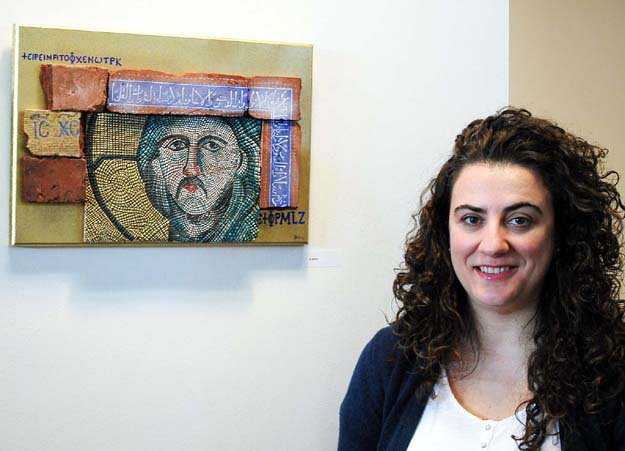
HUNTSVILLE, AL. – Turkish-inspired ceramic sculptures are not an ordinary find in Huntsville.
But Lowe Mill artist and Istanbul native Gökden Alpman-Matthews is not in the business of just selling her exquisite and meticulously detailed creations.
Her vision is to educate and share with people the rich history and culture of Turkey, a country that’s often misinterpreted.
“I want people to learn of Turkey’s culture,” said 39-year-old Matthews. “It’s not east and not west. It’s a bridge with a strong history where Jews, Christians and Muslims live together.
“The culture is mixed, and I want people to understand and understand other people.”
At 19, Alpman-Matthews enrolled at Anadolu University in Istanbul to be a ceramic artist. She completed her undergraduate studies in 1993 and completed her master’s degree thesis “Egyptian Paste and Samples in Our Time” in 1998.
Since the ’90s, the artist has done nothing but excel, including her upcoming New York exhibition Jan. 17, following her reception as the artist of the month this Friday at Lowe Mill.
Expect colorfully glazed figures showing caftans representative of the Ottoman and Byzantium empires along with various mixed-media artwork such as cathedral-style pieces that incorporate tin roof shingles from her husband’s childhood home in Scottsboro.
Also, pay attention to the smallest features of Alpman-Matthews’ artwork. In some pieces she uses a mosaic technique on clay, which she jokingly notes “it takes forever to do,” and the cintamani motif, a signature design element of the Ottoman court that can be found on textiles, rugs and ceramics, among others. The artist also uses Ottoman calligraphy to embellish some of her artwork, and the tulip can be seen on the majority of her work.
“The tulip is a very important Ottoman symbol,” said Alpman-Matthews. “The Netherlands are now famous for the tulip, but it’s originally native to Turkey.”
The artist reception is Friday from 6 to 9 p.m. on the third floor of Lowe Mill. It’s free and open to the public.
Check it out
Artist Reception for Godken Matthews
When: Friday, 6-8 p.m.
Where: Third floor of Lowe Mill, 2211 Seminole Drive
 The season for the regular tension between Ankara and Washington came earlier than expected. We should not be surprised if Turkish-American relations soon enter “crisis management” mode.