Month: September 2010

  • Message to Muslims: I’m Sorry

    Message to Muslims: I’m Sorry

    By NICHOLAS D. KRISTOF
    Published: September 18, 2010

    Many Americans have suggested that more moderate Muslims should stand up to extremists, speak out for tolerance, and apologize for sins committed by their brethren.

    Fred R. Conrad/The New York Times

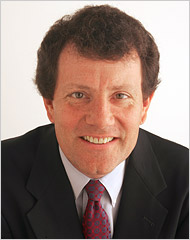
    Nicholas D. Kristof

    On the Ground

    Share Your Comments About This Column

    Nicholas Kristof addresses reader feedback and posts short takes from his travels.

    Go to Columnist Page »

    Related

      Room for Debate: Can Speech Be Limited for Public Workers? (September 19, 2010)

    That’s reasonable advice, and as a moderate myself, I’m going to take it. (Throat clearing.) I hereby apologize to Muslims for the wave of bigotry and simple nuttiness that has lately been directed at you. The venom on the airwaves, equating Muslims with terrorists, should embarrass us more than you. Muslims are one of the last minorities in the United States that it is still possible to demean openly, and I apologize for the slurs.

    I’m inspired by another journalistic apology. The Portland Press Herald in Maine published an innocuous front-page article and photo a week ago about 3,000 local Muslims praying together to mark the end of Ramadan. Readers were upset, because publication coincided with the ninth anniversary of 9/11, and they deluged the paper with protests.

    So the newspaper published a groveling front-page apology for being too respectful of Muslims. “We sincerely apologize,” wrote the editor and publisher, Richard Connor, and he added: “we erred by at least not offering balance to the story and its prominent position on the front page.” As a blog by James Poniewozik of Time paraphrased it: “Sorry for Portraying Muslims as Human.”

    I called Mr. Connor, and he seems like a nice guy. Surely his front page isn’t reserved for stories about Bad Muslims, with articles about Good Muslims going inside. Must coverage of law-abiding Muslims be “balanced” by a discussion of Muslim terrorists?

    Ah, balance — who can be against that? But should reporting of Pope Benedict’s trip to Britain be “balanced” by a discussion of Catholic terrorists in Ireland? And what about journalism itself?

    I interrupt this discussion of peaceful journalism in Maine to provide some “balance.” Journalists can also be terrorists, murderers and rapists. For example, radio journalists in Rwanda promoted genocide.

    I apologize to Muslims for another reason. This isn’t about them, but about us. I want to defend Muslims from intolerance, but I also want to defend America against extremists engineering a spasm of religious hatred.

    Granted, the reason for the nastiness isn’t hard to understand. Extremist Muslims have led to fear and repugnance toward Islam as a whole. Threats by Muslim crazies just in the last few days forced a Seattle cartoonist, Molly Norris, to go into hiding after she drew a cartoon about Muhammad that went viral.

    And then there’s 9/11. When I recently compared today’s prejudice toward Muslims to the historical bigotry toward Catholics, Mormons, Jews and Asian-Americans, many readers protested that it was a false parallel. As one, Carla, put it on my blog: “Catholics and Jews did not come here and kill thousands of people.”

    That’s true, but Japanese did attack Pearl Harbor and in the end killed far more Americans than Al Qaeda ever did. Consumed by our fears, we lumped together anyone of Japanese ancestry and rounded them up in internment camps. The threat was real, but so were the hysteria and the overreaction.

    Radicals tend to empower radicals, creating a gulf of mutual misunderstanding and anger. Many Americans believe that Osama bin Laden is representative of Muslims, and many Afghans believe that the Rev. Terry Jones (who talked about burning Korans) is representative of Christians.

    Many Americans honestly believe that Muslims are prone to violence, but humans are too complicated and diverse to lump into groups that we form invidious conclusions about. We’ve mostly learned that about blacks, Jews and other groups that suffered historic discrimination, but it’s still O.K. to make sweeping statements about “Muslims” as an undifferentiated mass.

    In my travels, I’ve seen some of the worst of Islam: theocratic mullahs oppressing people in Iran; girls kept out of school in Afghanistan in the name of religion; girls subjected to genital mutilation in Africa in the name of Islam; warlords in Yemen and Sudan who wield AK-47s and claim to be doing God’s bidding.

    But I’ve also seen the exact opposite: Muslim aid workers in Afghanistan who risk their lives to educate girls; a Pakistani imam who shelters rape victims; Muslim leaders who campaign against female genital mutilation and note that it is not really an Islamic practice; Pakistani Muslims who stand up for oppressed Christians and Hindus; and above all, the innumerable Muslim aid workers in Congo, Darfur, Bangladesh and so many other parts of the world who are inspired by the Koran to risk their lives to help others. Those Muslims have helped keep me alive, and they set a standard of compassion, peacefulness and altruism that we should all emulate.

    I’m sickened when I hear such gentle souls lumped in with Qaeda terrorists, and when I hear the faith they hold sacred excoriated and mocked. To them and to others smeared, I apologize.

    I invite you to comment on this column on my blog, On the Ground. Please also join me on Facebook, watch my YouTube videos and follow me on Twitter.
  • MI6 dismissed strength of Gallipoli Turks

    MI6 dismissed strength of Gallipoli Turks

    • Records show secret service dismissed Turks
    • “Over-optimism permeated early days of Gallipoli”
    • Nearly 9000 Australians were killed in campaign

    AAP

    THE British secret service grossly underestimated the resistance of Turkish forces before the disastrous Gallipoli campaign, according to an historian allowed unprecedented access to MI6 archives.

    Professor Keith Jeffery has spent the past five years trawling through Secret Intelligence Service (SIS) records from the first half of the 20th century for his book, The History of the SIS 1909-1949.

    He said that documents at the SIS, in its infancy at the time, dismissed the ability of the Turks to defend themselves against any reasonably sized army.

    And he said the reports demonstrated the “over-optimism which permeated the early days of the Gallipoli campaign”.

    “Everybody did (grossly underestimate the Turks),” he told AAP.

    “It was one of those classic cases, they didn’t think there was any resistance.

    “What little I found simply confirms that view. Absolutely.”

    Nearly 9000 Australians were killed and almost 18,000 wounded during the ill-conceived nine-month campaign that ended up costing more than 100,000 lives.

    Former chief of the SIS, Sir John Scarlett said the decision to allow Prof Jeffery access to the secret documents was an attempt to provide the British public with a better understanding of the service and mark its 100 years of operations.

    The 800-page book provides details on a host of colourful spies, including Biffy Dunderdale who was said to be one of the major inspirations behind the James Bond character.

    , 21 sept 2010

  • Free world allies fought for South Korea during war

    Free world allies fought for South Korea during war

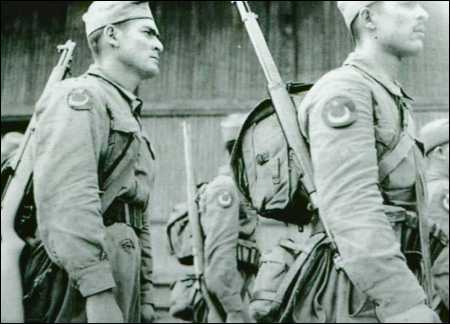
    Turkish troops arrive in the southeastern port city of Busan in 1950 to join the Korean War. Some 21 countries took part in the conflict. / Korea Times file

    UNC waged crusade against communism

    By Andrew Salmon

    On 29 August, 1950, a bright summer day, a startlingly alien sound blasted across Busan docks: A series of flatulent drones followed by a piercing wail.

    The sound was emanating from a group of young men pacing the gun turrets of an approaching heavy cruiser. Their appearance was even more bizarre: They were clad in skirts and chequered, tasseled headgear. The cacophonous lilt emanated from sack-like objects the men were plying.

    The objects were bagpipes; the men were Scottish troops of the Argyll and Sutherland Highlanders, the lead battalion of 27th British Brigade. At an urgent American request, and in response to the deteriorating military situation, this unit had been dispatched. post-haste, from Hong Kong with such speed that they dubbed themselves the “For-God’s-sake-send-something Brigade.”

    27th Brigade were just the first of the non-American contingents to arrive in Busan to help stem Kim Il-sung’s invasion. On the embattled peninsula, a new concept in world affairs was being born: A United Nations military intervention force, or, to give it its formal title in Korea, the United Nations Command, or UNC.

    This was the force enabled by UN Security Council resolutions of 25th and 27th June and 7th July 1950 calling for the “restoration of international peace and security in the area” following Pyonyang’s 25th June invasion. Several contingents, however, would not land until 1951, by which time the South had been saved, the North defeated and counter-invaded – and then the entire situation reversed by the Chinese intervention at the end of 1950.

    Under the U.N. banner, Australia, Belgium, Canada, Columbia, Ethiopia, France, Greece, India (Field Ambulance), Luxembourg, the Netherlands, New Zealand, the Philippines, the United Kingdom, Thailand and Turkey supplied ground combat troops, while South Africa deployed its “Flying Cheetah” fighter squadron. Denmark, Italy, Norway and Sweden provided non-combatant medical units.

    The United States commanded this polyglot force, and, after South Korea, provided its main muscle, contributing seven infantry division and a marine division, as well as logistical support, and the largest naval and air units. In July 1953, a survey showed that South Korea had 590,911 troops in the UNC; the US, 302,482; and other U.N. contingents totaled only 39,145.

    Most of the non-American UNC contingents were small. Once the war entered its static stage in late 1951, the Australian, British, Canadian, Indian and New Zealand units fought together, but the Commonwealth Division was the only unit in the UNC that was operationally independent. Turkey provided a brigade, but all other contingents ― except for little Luxembourg’s, which was a platoon fighting within the Belgian battalion ― were battalion-sized and were absorbed into American parent formations.

    The cosmopolitan expansion of the coalition defending South Korea provided the U.S.-run logistics chain with a range of problems. While the U.S. Army was dry, the Dutch wanted gin, the French wine, and the Australians, Belgians and British, beer to fight on. On the rationing front, the Turks would not eat pork and like the Dutch, demanded fresh bread. The Greeks wanted figs, raisins and olive oil.

    Yet, while these UNC units might cause cultural, linguistic and logistical headaches for U.S. commanders, and while they did not compare in size with the Americans, many of them proved to be exceptionally high quality fighting units. This was particularly so in the first six months of the war when, by comparison, the U.S. Army was suffering significant morale and leadership problems.

    The Turks forged a legend in their first action. Sent to hold the flank of the U.S. 2nd Infantry Division, disintegrating under Chinese onslaught at the end of November 1950, the ferocity with which they employed their bayonets earned them global fame. At the same time, they took massive casualties, partly due to linguistic problems and poor liaison with American forces.

    The French battalion proved a lynchpin at Chipyong-ni, a battle of encirclement in February 1951 that was widely considered the first UNC tactical victory against the onrushing Chinese.

    At the heart of the greatest enemy offensive of the war in April 1951, stood the British 29th Brigade, which earned global attention for its tragic stand on the Imjin River. On the opposite end of the front, the Australian and Canadian battalions of 27th Commonwealth Brigade won plaudits for their masterly defensive battle at Kapyong during the same Chinese offensive.

    The fighting quality of the Commonwealth Division would be evident in the key ground they were assigned to once the war entered its static stage: Flanking the U.S. Marine division, generally considered the best of the U.S. ground units, along the Samichon Valley, at the northern end of the so-called “Uijongbu Corridor” the traditional invasion route to Seoul.

    The Belgians were noted for their enthusiastic professionalism, and the Greeks for their excellence in mountain warfare.

    What compelled such a disparate group of nations to fight for a country that very few of their citizens had even heard of before 25 June 1950?

    Although the ostensible causus belli was the defense of South Korea, Rhee Syngman’s government – a regime of questionable democratic credentials, and one which operated, in the view of many UNC men, with comparable brutality to Kim Il-sung’s – hardly made a compelling case for intervention.

    There were, instead, three main reasons. National desires to win the goodwill of Washington; national suspicions of militant communism; and a more general desire to support the efforts of the then-fledgling, but promising, U.N.

    For the U.K., which fielded the second-largest contingent, it was a fight to stem global communism, but the country was also under pressure to maintain its “special relationship” with the U.S. France, heavily engaged in Indochina, needed to earn American goodwill for aid in that struggle. It is fair to say that all the northern European contingents felt a debt of honor toward the U.S. after World War II, and the Greeks had even more recent reasons to thank the U.S. for its assistance in winning the Greek Civil War.

    Two units that UNC officers were careful not to deploy alongside one another were the traditional enemies of southern Europe, the Greeks and the Turks. Ankara was keen to cement ties with Washington, in order to gain membership in NATO; ironically, Athens shared the same motive.

    After the armistice was signed in July 1953, this international legion, a force as polyglot as any since the Crusades, dispersed. Australian and British veterans headed for a less intense anti-communist struggle in the jungles of Malaya, but for one contingent, the end of the Korean War spelled disaster. The French battalion was assigned to Indochina, where Paris’ position was deteriorating. The much-admired battalion was wiped out by Viet Minh forces in 1954.

    Some who fought under the U.N. banner in Korea were disappointed at the organization’s less effectual role thereafter. The original U.N. resolutions that had underwritten the UNC’s existence had been made possible by the absence of the USSR’s envoy to the body, Josef Malik, who was boycotting the body in summer of 1950 (due to the U.N.’s refusal to grant a seat to communist China).

    Once Moscow rejoined the world body and Cold War politics began affecting its operation, it became difficult to employ U.N. forces on anything other than “peacekeeping” missions — many of questionable effectiveness. It would not be until the end of the Cold War, and the U.N. intervention in the Gulf War of 1991, that the U.N. would again field a military force with real teeth.

    Sixty years later, the leading nation in the UNC, the United States, is still South Korea’s most important political ally, but it is fair to say that the trade and commercial links forged between Seoul and other UNC capitals have fallen in importance since the end of the Cold War. Then-enemy China, for example, has replaced the United States as Korea’s top trade partner.

    Still, emotional ties endure: South Korea and Turkey, for example, displayed a mutual affection during their World Cup semifinal match in 2002 that was born in the war years and after, when Turkish troops founded the “Ankara” orphanage.

    The peninsula had seen international contingents fighting on its soil before. Kublai Khan’s multi-ethnic legions used Korea as a staging area for their doomed invasions of Japan in the 13th century, and Japanese, Manchu, White Russian, Chinese and Soviet troops would all leave blood on Korean soil in succeeding centuries.

    But the UNC troops of 1950 made up of the most cosmopolitan army the peninsula had ever hosted; their ethnic and national diversity would not be witnessed again in Korea until the 1988 Summer Olympics. For modern Korea, the internationalization of its fight for survival in late 1950 was the first, if unacknowledged, step in a process that few South Koreans would start talking about until the early 1990s: Globalization.

    [email protected]

    http://www.koreatimes.co.kr/www/news/nation/2010/09/117_73312.html, 19/09/2010

  • Limbless Father swims across Channel

    Limbless Father swims across Channel

    A Frenchman became the first limbless person to swim the Channel on Saturday night.

    Philippe Croizon, 42, set off from Folkestone, Kent, at around 6am expecting to reach France within 24 hours but managed to complete the feat in just 13-and-a-half hours.

    He was forced to have his arms and legs amputated after he suffered an electric shock while removing a television aerial from a roof 16 years ago.

    He only taught himself to swim in the last two years and does so using prosthetic legs and a snorkel and mask.

    Earlier his spokeswoman said he was swimming faster than expected after completing his first 12 miles in just eight hours.

    After completing the 21-mile challenge, Mr Croizon told the BBC that at no point did he feel he was not going to make it, despite pains and aches all over his body.

    His father said his son had been helped by favourable wind conditions and had even had three dolphins swimming alongside at one point, which was a “sign of good luck”.

    The amputee trained for 35 hours a week for the past two years and his endeavour attracted letters of support from President Sarkozy and other politicians.

    The Telegraph

  • Referendum Deepens Fragmentation in Turkey

    Referendum Deepens Fragmentation in Turkey

    Referendum Deepens Fragmentation in Turkey

    Publication: Eurasia Daily Monitor Volume: 7 Issue: 168

    September 20, 2010

    By Saban Kardas

    In the Turkish referendum held on September 12, voters supported the constitutional amendment package promoted by the governing Justice and Development Party (AKP). Despite earlier forecasts and opinion polls, the changes were approved by a wide margin: 58 percent voted in favor, while 42 percent opposed the amendment (Anadolu Ajansi, September 13). This rather surprising outcome will have significant implications for Turkish politics, possibly accelerating social fragmentation.

    The referendum marks a major victory for the ruling AKP. Through their aggressive campaign, the opposition parties Republican People’s Party (CHP) and the Nationalist Action Party (MHP) had worked hard to present the referendum as a vote of confidence for the government (EDM, July 13). These two parties, which formed a “no front” against the reform package both during the parliamentary debates and in the referendum, had substantial reasons for objecting to the proposed constitutional changes. Yet, overall their mobilization strategy was based on a knee-jerk criticism of the AKP’s policies. In contrast, the AKP stated on many occasions that they would not capitalize on yes votes and present them as support for the AKP. The AKP, instead, defined the changes as a move towards the democratization of Turkish politics. Other smaller parties on the right of the political spectrum, which supported the AKP’s argument, mobilized their supporters in favor of the changes. However, for a great portion of Turkish voters the content of the constitutional changes was less important than their party affiliation (Hurriyet Daily News, September 15).

    The results can be interpreted as a reaffirmation of domestic support for the AKP’s tenure in power. This success represents the sixth major electoral victory for the AKP under Prime Minister, Recep Tayyip Erdogan. Since 2002, the AKP has won two parliamentary elections and two municipal elections, and managed to pass constitutional amendment packages in two referendums. Following the latest result, many observers expect the AKP to win the next national elections slated for 2011. With this unprecedented track record, the AKP machinery has emerged almost as an invincible force in the Turkish political scene, raising the question as to how it will use its power. AKP representatives already indicated that they would revive the debate on introducing a new constitution, most likely following the 2011 elections. Many liberal and reformist groups, as well as the European Union, therefore, welcomed the referendum result, because they believe that the expression of support for the constitutional changes will put pressure on the AKP to maintain its momentum towards the further democratization of the Turkish political system. Earlier, the AKP had come under criticism for slowing the pace of political reform required by the EU membership process (Hurriyet Daily News, September 14).

    A more interesting question, however, concerns how Erdogan, who can claim credit for AKP’s unprecedented track record, will use this power to secure his personal position in Turkish politics. Many observers expect Erdogan to run for the presidency after the current President Abdullah Gul’s term expires in 2012. The next president will be elected by popular vote according to the constitutional changes of 2007. One drawback for Erdogan is that in Turkey’s parliamentary system, presidents can exercise only limited influence. Given Erdogan’s interest in political power, he might also push for a more radical overhaul of the Turkish political system. Erdogan has already initiated a debate on replacing the current parliamentary system with a presidential system. It remains a possibility that Erdogan will revive such a debate, in order that he might eventually lead a strong presidential system (Anadolu Ajansi, September 13).

    This unprecedented popular support and resulting latitude that the AKP and Erdogan have gained in restructuring the Turkish political system has triggered anger among the AKP’s opponents. Erdogan announced that his party will seek consensus with other parties, as they work on a new constitution. However, many of the AKP’s critics argue that after the AKP managed to curb the power of the Turkish military, it has moved on to undermine the power of other state institutions, mainly the independent judiciary. The AKP’s critics believe that as a result of the recent constitutional changes, the system of checks and balances has already been undermined, and if the AKP continues on its current path, it might eventually form a civilian despotism and suppress secular segments of the society.

    Therefore, the representatives of Turkey’s secularist opposition and speakers from the high courts have maintained that although they respect the people’s choice in the referendum, they would continue their struggle to maintain judicial independence and not allow the AKP to take complete control of all state institutions. As a result, the fragmentation in Turkish politics and society appears to be deepening. The aggressive campaign prior to the referendum and the statements from the representatives of the AKP and its opponents indicate that secularist and nationalist groups represented by the CHP and MHP on the one side, and conservative and liberal groups represented by the AKP on the other, will remain engaged in a fierce battle over how to define Turkey’s political system and values. Moreover, this fragmentation also has geographic ramifications. While the provinces in central Anatolia and the Black Sea region supported the constitutional changes, the provinces in the western coastal areas and Thrace voted against the changes. This distribution corresponds closely to the results of the 2009 municipal elections, whereby coastal areas voted for the CHP and MHP and central Anatolian provinces voted for the AKP (EDM, March 31, 2009).

    Another division is hidden in the voting patterns in the Kurdish speaking provinces in Eastern Turkey. Pro-Kurdish Peace and Democracy Party (BDP) called on its supporters to boycott the referendum. Low voter turnout in many of the eastern provinces shows that the BDP controls a large section of the Kurdish vote, which corresponds to the results of the 2009 elections. With this boost of self-confidence, the BDP is likely to intensify its campaign to disconnect the Kurdish-speaking areas from Turkey’s mainstream political system, in line with its strategy of demanding “democratic autonomy” for the Kurds. As such, the referendum results might also deepen the divisions around the Kurdish issue, further accelerating Turkey’s social fragmentation.

    https://jamestown.org/program/referendum-deepens-fragmentation-in-turkey/

  • Is Turkey becoming more democratic, or less so?

    Is Turkey becoming more democratic, or less so?

    ARE THE constitutional amendments approved by a referendum in Turkey last Sunday “a turning point” for Turkish democracy, as Prime Minister Recep Tayyip Erdogan declared? Are they “another important step by Turkey on the road towards Europe,” as the German foreign minister put it? Or do they open the way to a “civilian dictatorship” by Mr. Erdogan and his Islamist Justice and Development Party, as the leader of the opposition is warning? Perhaps the most salient — and worrisome — characteristic of Mr. Erdogan’s government after nearly eight years in office is that the answer is not obvious.

    After a polarizing campaign that became more a referendum on his government than on the 26 proposed constitutional reforms, Mr. Erdogan was rewarded with a decisive victory: 58 percent of voters approved the changes in a charter that had been imposed by the military after a 1980 coup. Many of the changes are indisputably liberal and will strengthen democracy in a Muslim country that is a NATO member and has aspired to join the European Union. For example, military officers will be subject to civilian trials; the rights of women, the elderly, handicapped people and children will be enhanced; restrictions on unions will be lifted; and individuals will have greater privacy rights and the ability to appeal to the Constitutional Court.

    But the constitutional package, which was presented to voters for a single, up-or-down vote, also contains a sweeping reorganization of the Constitutional Court and Turkey’s other top judicial body, the Supreme Board of Judges and Prosecutors. Each would be expanded, and the power of appointment would be shifted to the president and legislature. Until now, Turkey’s judiciary has been a bastion of secularism and thus of resistance to Mr. Erdogan. The Constitutional Court struck down his initiative allowing women to wear head scarves in state schools and came within one vote of outlawing his party.

    Now Mr. Erdogan will have the power to place his appointees in a dominating position. The opposition charges that the courts will become merely another arm of the ruling party — which, it claims, is carrying out a “creeping coup” against the secular state. While some of the critics’ rhetoric may be exaggerated, Mr. Erdogan’s actions give cause for concern. In the last several years his government has used questionable tax charges to lean on opposition media. Sprawling investigations of alleged coup plotters have swept up not just military officers but also businessmen and journalists.

    Mr. Erdogan’s constitutional reforms conspicuously did not include greater protections for freedom of speech and religion, or for the Kurdish minority. But the prime minister, who now is heavily favored to win reelection next year, has promised a more complete constitutional rewrite. If he still wishes to move Turkey toward the West, Mr. Erdogan will have to pursue those reforms while resisting the temptation to strip the judiciary of independence.

    Source: Washington Post