
Month: September 2010

  • United States laid ground for Ergenekon “Deep State” in Turkey

    United States laid ground for Ergenekon “Deep State” in Turkey

    WMR has discovered a formerly Secret document from the U.S. Department of State that confirms the United States not only supported the Turkish military coup that ousted the nation’s democratically-elected government in 1980 but actively supported the military-imposed Turkish Constitution as “reformist.”

    The citizens of Turkey recently voted in a referendum and approved 26 constitutional amendments that will transform Turkey into a democratic state without the threat of the military and national security state-affiliated judiciary trumping the power of the Parliament and the people. Neocons have condemned the referendum as a threat to secularism in Turkey and a move to an Islamic state. However, the neocons and their allies in Israel are concerned that a Mossad -and CIA-imposed Turkish “Deep State” has finally seen its power largely destroyed with the impending adoption of a new Turkish Constitution. The referendum, which passed with 58 percent of the vote, is a victory for the Justice and Development Party (AKP) of Turkish Prime Minister Recep Tayyip Erdogan.

    Many of the roots of the creation of the most recent variant of the Turkish Deep State, known as Ergenekon, can be seen in the State Department policy paper dated September 5, 1981, and titled “USG Policy toward Turkey.” When the State Department document was drafted, Turkey’s military junta leader, General Kenan Evren, was drafting the present Turkish Constitution. The 1981 Turkish military draft Constitution’s “reforms” were referred to in the State Department policy document’s author Lawrence Eagleburger, the Assistant Secretary of State for European Affairs: “It is too early to judge whether the fundamental GOT reforms, now in place or in prospect, will succeed.” The document also talks about the “relief” provided to the United States by the 1980 military coup: “The military takeover of September 1980 brought temporary relief and for the moment broke the back of radical movements — including pro-Islamic ones — which had come to the fore in the 1970s.”

    Eagleburger signaled his and the Reagan administration’s support for the Turkish junta because of the same bogus reasons that neocons today criticize the Erdogan government: the bogeyman of Turkish Islamic political power. Eagleburger warned that Turkey could “drift away from NATO and Western-style government; alignment with Middle East states which supply oil and markets; possibly even neutralism growing out of accommodations with the USSR.” Today, the neocons, Israelis, and their Ergenekon allies in Turkey argue the same points in demonizing the Turkish government: that Turkey is drifting from NATO, that it is turning to oil suppliers and markets like Iran, and has a growing relationship with Russia.

    Eagleburger then outlines how the Reagan administration would cement U.S. ties with Turkey to prevent the above scenarios from being realized. He writes: “ . . . the Turkish-American relationship has no natural constituency in terms of shared history, economic interdependence, ethic or family ties. The absence of a ‘Turkish lobby’ in the United States is indicative.” Two of the recipients of the Eagleburger document would later help fill the void and help create the American Turkish Council (ATC), a lobby group patterned after their friends at the American Israel Public Affairs Committee (AIPAC). Those two recipients of the Eagleburger document were Richard Perle, the Assistant Secretary of Defense for International Security Policy, and Paul Wolfowitz, Director of Policy Planning at the State Department. Other recipients of the Eagleburger policy document on Turkey included Robert Hormats, the Assistant Secretary of State for Economic and Business Affairs [and who is now the Undersecretary of State for Economic, Business, and Agricultural Affairs under Hillary Clinton]; Ronald Spiers, the director of the State Department’s Bureau of Intelligence and Research, former U.S. ambassador to Turkey from 1977 to 1980; and the prospective U.S. ambassador to Pakistan; Richard Burt, the Director of Politico-Military Affairs for the State Department; and Nicholas Veliotes, Assistant Secretary of State for Near Eastern and South Asian Affairs.

    The nature of the bilateral U.S.-Turkish relations were described as a “best effort” to help Turkey in all respects, including an “understanding” of Turkey’s position in Greek-Turkish issues and dealing with “Armenian terrorism.” In 1981, Armenia was a constituent republic of the USSR. Today, it is “Kurdish terrorism” that plagues Turkey since Armenia is now an independent state with a natural and politically-powerful constituency in the United States. The Eagleburger document describes the Evren junta as perceiving the Reagan administration as making a “best effort” in providing financial support to Turkey from Washington’s “weighing in” on the “International Monetary Fund, the International Bank for Reconstruction and Development, the Saudis, and other potential donors.”

    Eagleburger also warns of “nettlesome” issues that could adversely affect U.S. relations with the Turkish junta, for example, “Congressional badgering on Cyprus, on relations with Greece, on the pace of return to democracy, and an Armenian niche in the proposed Holocaust Museum.”

    The United States, through an alliance with Israel and its influence peddlers in Washington, would ensure that the Turkish pace of democracy would not return to normal until the recent approval by the Turkish people of a new constitution that will eradicate the Turkish junta’s military “reforms” championed by Eagleburger and his band of proto-neocons in the Reagan administration in 1981. Attempts over the past eight years by Ergenekon to overthrow the AKP government failed and with the new constitutional changes, Ergenekon’s and Israel’s ability to influence events in Turkish politics have been curtailed, save for the continuing threat of covert Israeli provocation of terrorism involving the Kurds.

    Source: Wayne Madsen Report,  Sept 18, 2010
  • Turkish, Greek journalists to set up joint association

    Turkish, Greek journalists to set up joint association

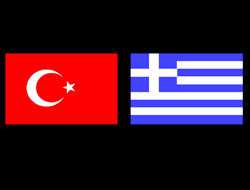
    Turkish and Greek journalists, who got together at a media conference in Turkey’s Aegean province of Izmir on Saturday, agreed to set up a joint association.

    Turkish and Greek journalists, who got together at a media conference in Turkey’s Aegean province of Izmir on Saturday, agreed to set up a joint association.

    Journalists from Turkey and Greece, who met at a round-table meeting as part of “The 6th Turkish-Greek Media Conference”, unanimously approved the establishment of “Turkish-Greek Journalists’ Association”.

    Moreover, the conference’s gala dinner was held at Izmir’s Swissotel with the participation of journalists and high-level officials from Turkey and Greece.

    Speaking at the gathering, Greek Deputy Premier Theodoros Pangalos said Turkey and Greece had a common history and culture, adding that the two countries could use such values against globalization.

    AA

    , 19 September 2010

  • Turkish consulate in Greece attacked

    Turkish consulate in Greece attacked

    FIREBOMBED

    ATHENS, Greece — Unidentified assailants threw firebombs at the Turkish consulate in Thessaloniki on Saturday (September 18th). No one was injured in the attack. The bombs were hurled by a group of 15 people who targeted a guard post outside the consulate. “We consider this an attack against Greek police rather than against the consulate,” the police said. A similar incident happened on August 12th. (AFP, DPA, Hurriyet – 18/09/10)

  • Ready, set — wait. . . India not ready for Commonwealth Games yet

    Ready, set — wait. . . India not ready for Commonwealth Games yet

    The sporting event is set to start Oct. 3 in New Delhi, but preparations are running behind, with new stadiums unfinished and financial irregularities reportedly rampant.

    By Mark Magnier

    Reporting from New Delhi — About the only thing beating expectations ahead of the Commonwealth Games here is the mosquito population, helpfully delivering a dengue fever epidemic that is expected to peak just in time for the opening ceremony early next month.

    The mosquito-borne illness has struck more than 7,000 people across India, including two top cyclists. (The 7,000 athletes and team officials who are about to descend on New Delhi might want to pack some bug spray: Their village is in a prime mosquito breeding area along the fetid Yamuna River. Unusually heavy monsoon rains have worsened the situation)

    When India won the bid in 2003 to host one of the world’s biggest sporting events, boosters said it would propel New Delhi into the ranks of Tokyo, New York and other world-class cities. Others, mindful that a certain faster-developing Asian neighbor successfully hosted the 2008 Summer Olympics, saw it as a practice run in “shining India’s” bid for the 2020 Olympics.

    With the Games opening in less than three weeks, there’s more tarnish than shine amid reports of massive budget overruns, rampant alleged corruption, shoddy workmanship, poor planning, weak accountability and bureaucratic infighting.

    The lead-up to the event has been a litany of unfinished stadiums, collapsed roofs and caved-in roads — some resurfaced more than once after someone forgot to lay sewer and power lines first.

    At least one official has compared the preparations to a big Bollywood wedding in which, after the initial pandemonium, everything comes together for a happy ending.

    But even the most blushing of brides wouldn’t forget the caterers: Despite seven years to prepare, the contract to feed many of the athletes, coaches and support staff was awarded only late last month, with organizers forced to have the specialized equipment needed to prepare hundreds of thousands of meals shipped by air at an added cost of $7.5 million.

    At least seven “final” deadlines have been blown, and construction at venues and related urban-renewal projects is woefully behind. The latest deadline was Sept. 15. But Connaught Place, the city’s showcase shopping district, remains a maze of trenches and debris, prompting one newspaper to dub it “Chaos Place.”

    “Even if the [prime minister] starts wiping the floor, the venues won’t be ready for the Games,” said opposition politician and Gujarat Chief Minister Narendra Modi, who called the event preparation a “debacle.”

    Reports of financial irregularities have also dogged preparations in a nation rated 84th on watchdog Transparency International’s corruption perception index of 180 countries — one novelist termed the Games a “lootfest” — including $85 toilet paper dispensers, $19,500 rented treadmills, $130 wastebaskets, and questionable consulting and real estate deals. The original $133-million administrative budget could reach $516 million, not counting more than $6 billion spent on stadiums and upgrading the capital.

    “The obvious issue of corruption has tainted the whole thing,” said Boria Majumdar, coauthor of the book “Sellotape Legacy” about the Oct. 3-14 Games. “This was supposed to be a portrayal of ‘India shining.’ What a disappointment.”

    As near-daily disclosures of alleged irregularities surfaced in August, Sonia Gandhi, leader of the ruling Congress Party, announced that a full investigation would be held, but only after the Games.

    Those in charge have denied wrongdoing and defended their oversight. “It is normal for every Games to have some charges or the other,” said Suresh Kalmadi, head of the organizing committee.

    With political careers, and India’s reputation, at stake, there’s a lot riding on the Games, the third-largest multidisciplinary sporting event after the Olympics and the Asian Games, a 1930s legacy of British colonialism born amid concern that the United States was dominating the Olympics.

    “We are on track,” Kalmadi told foreign reporters recently. “Leaving aside some minor glitches, the infrastructure are in place and they are world class.”

    Most cities hosting big events have last-minute problems, and New Delhi has had a particularly heavy monsoon season this year, further delaying construction.

    But some say the bigger problem is man-made as weak oversight undermined coordination in India’s legendary bureaucracy. When India successfully hosted the 1982 Asian Games, then-Prime Minister Indira Gandhi took personal charge.

    Awarded the Commonwealth Games in 2003, India didn’t form an organizing committee until 2005, and construction, enmeshed in legal challenges, didn’t begin in earnest until 2007. The committee resisted outside expertise, contending it was too expensive, even as a 2009 report warned that 20 of 34 basic requirements for successful Games were deficient.

    New Delhi has received good marks for its security arrangements, even as one humorous Hindustan Times column suggested that Islamic extremists might be flummoxed by all the unfinished construction. “Setting off bombs inside your vest will take more than a little skill when you are five feet deep in mud and cement,” it said.

    In an eleventh-hour bid to hit reset, Prime Minister Manmohan Singh late last month appointed 10 top officials to assume greater oversight, although some observers fear it could be too little.

    “It’s like trying to save a cancer patient at the end, rather than catching it early,” said Novy Kapadia, a sports commentator. “Unfortunately, not meeting the deadlines will make a lot of stereotypes come out, that Indians are lazy, not efficient. India’s reputation is taking a massive beating.”

    Local enthusiasm remains weak, with more than 70% of residents surveyed saying the expense was unjustified. Ticket and merchandise sales started only in late August, and sponsors, foreign visitors, dignitaries and headline athletes are shying away as broadcasting revenues fall well below projections.

    The shoddy construction, meanwhile, has some wondering what lasting legacy the Games will leave beyond a new subway, an airport terminal and some highway overpasses.

    “There’s been so much focus on pomp and glitter in the obsession with being a global city, when what we need is drainage, sewers, basic health issues,” said Gautam Bhatia, an architect. “Without the budget for maintenance, I’m afraid the stadiums will fall apart.”

    Although many are still hoping for a last-minute miracle, the growing list of problems has some questioning the wedding analogy. As an editorial in the business newspaper Mint put it, “This is turning out to be a wedding that will make prospective in-laws think twice about India.”

    [email protected]

    Anshul Rana in The Times’ New Delhi Bureau contributed to this report.

    , September 17, 2010

  • Weeks out, India’s Commonwealth Games in crisis

    Weeks out, India’s Commonwealth Games in crisis

    By RAVI NESSMAN

    NEW DELHI —

    The sporting event which India hoped would herald its emergence as a regional power and serve as a springboard to an Olympic bid has instead turned into a chaotic mess.

    Less than seven weeks before New Delhi is to host to the Commonwealth Games, venues are still under construction, top officials have been forced out in scandal, costs have soared and many are questioning the wisdom of spending so much money on an event in a nation riddled with social ills.

    To make matters worse, many top athletes, including Jamaican sprinter Usain Bolt, pulled out and even Queen Elizabeth II has said she won’t come to the Games, which brings together the 71 countries of the Commonwealth, or former British Empire.

    After China showcased its economic clout during an impressive Beijing Olympics, India’s Commonwealth Games organizers were under pressure to deliver a comparable spectacle to promote “India Rising.”

    Instead, the bungling of the preparations for this second-tier sports event has highlighted the government corruption and malaise that continues to plague the nation, said Harsh V. Pant, a political analyst.

    “When it comes to implementation, I don’t think India has moved an inch from where we used to be,” he said.

    Hoping to stem the cascade of problems, Prime Minister Manmohan Singh stepped in last weekend, ordering a corruption probe and appointing a group of Cabinet ministers to oversee the final preparations and try to salvage the event.

    The move came as criticism of the Games, to be held in New Delhi from Oct. 3-14, reached fever pitch, with everything from traffic jams to mosquito breeding blamed on preparations.

    The Times of India newspaper showed Shera, the Games’ jaunty, cartoon tiger mascot, on a respirator, and a former sports minister publicly hoped the Games would collapse in disarray so India would not be tempted to bid for future events.

    Delhi’s chief minister, Sheila Dikshit, called the broadsides “unpatriotic.”

    “I plead with people to look at the better side of the Games – the rest will fall into place,” she told The Sunday Express newspaper.

    But the problems are hard to ignore.

    Venues that were supposed to be completed last year to allow for test events, are still in what officials promise is the final phase of construction.

    Workers are still building the corrugated tin roof at the new weightlifting arena, which partially collapsed after springing a leak during recent monsoon rains.

    The Shivaji stadium in central Delhi, which is to be used as a practice field for hockey teams, has been stripped down, its facade left with gaping holes as hundreds of workers navigated large piles of red bricks, gray concrete blocks and rusting reinforcing rods.

    A 4-kilometer-long 4 (2.5-mile-long) road-bridge connecting the athletes village to the main stadium has gaps in it.

    “We have to accept where we are and look forward,” said Mike Hooper, the CEO of the Commonwealth Games Federation, who is in New Delhi helping oversee the preparations. “Everyone’s got a lot of work to do, and that’s what they’ve got to focus on.”

    Much of central Delhi remains torn up by projects that had been intended to beautify the city for the 100,000 foreign tourists the Games committee had anticipated. Many of the projects are so far behind schedule they are being covered up, to be worked on again after the event.

    And there are doubts the tourists are even coming.

    Hotels that expected to be sold out have received only anemic bookings for the Games and regular tourists seem to be deferring travel during what would usually be high season to avoid the spectacle, said Rajindera Kumar, president of Federation of Hotel & Restaurant Associations of India.

    “The response is so weak,” he said. “I’m really fearing for the industry.”

    The cost of hosting the Games – which the government initially pegged at less than $100 million in 2003 – has skyrocketed, with estimates ranging from $3 billion to more than $10 billion.

    A recent report by a government watchdog said contractors were charging unreasonable rates, producing shoddy work and fabricating tests to show the quality of their construction was up to standards.

    Meanwhile, ticket sales have been delayed, sponsorships have not met expectations and over the weekend the official merchandiser pulled out, saying delays in launching his products were costing him unbearable losses. On Thursday, two power companies announced they were canceling their multimillion dollar sponsorship deals with the event.

    Three top officials were fired this month over alleged financial irregularities with the London launching of the Queen’s Baton Relay – a monthslong odyssey akin to the Olympic torch relay. That came a week after the organizing committee’s treasurer resigned amid accusations his son’s firm was given a contract to help build the tennis courts.

    As part of a drive to clean up the city ahead of the event, the government demolished thousands of slum homes and arrested homeless people and beggars, according to a coalition of human rights groups.

    At the venue sites, construction workers earned just half the minimum wage, were not given helmets, gloves or other safety gear and worked in conditions so dangerous that 42 of them were killed in accidents, the group said.

    “Even if the games are a success, even if we are miraculously able to pull out a successful games, the negative social legacy is going to be with us for years to come,” said Miloon Kothari, director of the Housing and Land Rights Network, one of the groups in the coalition.

    Sonia Gandhi, head of the ruling Congress Party, said Thursday that all the allegations would be investigated after the closing ceremony. In the meantime, she called on Indians to unite behind the Games, the biggest sporting event to be held here since the 1982 Asian Games.

    “The prestige of the nation is involved,” she said.

    But the event has turned into an embarrassment for a country that should be focusing instead on fixing its medical and education system and dealing with the hundreds of millions mired in poverty, said Rajan Singh, 29, a software engineer.

    “With a developing country like India, we need to invest in other infrastructure,” he said. “Once that is complete, we can go for Games like this.”

    , 20.08..20rica10

  • Google Acquires Israeli Company

    Google Acquires Israeli Company

    by Elad Benari

    Google announced on Tuesday that it has acquired Quiksee, an Israeli-based company which develops interactive video mapping technologies based on user-filmed videos.

    Founded in 2007 by CEO Gadi Royz, VP R&D Rony Amira, CTO Assaf Harel, and Pavel Yosifovich, Quiksee’s software allows Internet users to turn a simple video clip into an interactive video clip. Its users can photograph any location where they are with a digital camera or mobile device, and then upload the file to Google Maps. The clip thus becomes interactive, allowing people to wander through and get a seemingly real visit experience, without physically being there.

    A report in TheMarker financial newspaper on Monday estimated that the deal was worth $10 million. A spokeswoman for Google told Reuters on Tuesday that it was a “small deal” and did not provide exact figures.

    In an announcement on its website, Quiksee said: “We are delighted to announce that Quiksee has been acquired by Google! We’ve learned a lot from our previous work at Quiksee, and we look forward to bringing our experience, creativity and insight to Google. Both Google and Quiksee share the same innovative vision…we look forward to the opportunity to contribute and do great things together in the future.”

    According to TheMarker, Google sees Quiksee’s technology as “the missing link” in its Street View service which allows users to view photographs of streets around the world.

    Quiksee is Google’s second acquisition in Israel in six months. In April, it acquired web gadgets provider LabPixies for an estimated $25 million. LabPixies specializes in personalized websites and mobile gadgets such as calendars, checklists, games, and news and weather feeds.

    Google Israel’s development center managing director Yossi Matias, said in a statement that Google was committed to continue investing in Israel “both by expanding and deepening our activity as well as by continuing to strengthen our collaboration with companies and start-ups in Israel.”

    (IsraelNationalNews.com)

    Related Links:

    • ►Google Goes With Palestinian Authority
    • ►Google Defines Samaria as ‘Palestinian Territory’

    , 15.09.2010