Month: July 2010

  • Israel’s Critical Security Needs for a Viable Peace

    Israel’s Critical Security Needs for a Viable Peace

    In light of a widening range of threats to Israel’s security, for the first time a group of senior Israeli generals has come together to outline the basic principles of a defense policy – rooted in a consensus spanning past and present Israeli governments – which is focused on Israel maintaining defensible borders.
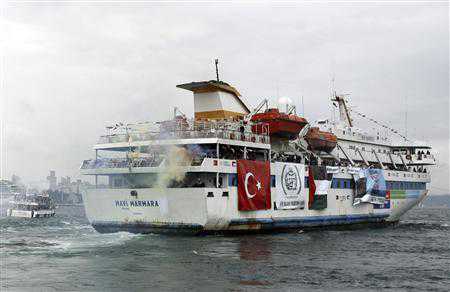
    The crisis over the Hamas flotilla to Gaza illustrates how some of Israel’s critical alliances in the Middle East are changing, especially its relationship with Turkey, and the importance of designing a defense policy that takes into account the uncertainties that Israel faces with many of its neighbors.
    Recent events only underscore that it is critical for Israel to preserve the principle of defending itself by itself.

    Executive Summary
    Download the Full Study (pdf-4Mb)

    Executive Summary
    Introduction: Restoring a Security-First Peace Policy Lt.-Gen. (ret.) Moshe Yaalon In his major policy speech at Bar-Ilan University in 2009, Prime
    Minister B    enjamin Netanyahu
    articulated a major shift in Israel’s policy – a restoration of Israel’s traditional security-based approach to achieving a lasting peace.
    When Prime Minister Yitzhak Rabin entered into the Oslo Accords, he envisioned something along the lines of the “Allon Plan” for Judea and Samaria (the West Bank). Drafted shortly after the Six-Day War, the plan called for Israel to retain sovereignty in some of the territories it came to control in Judea and Samaria, and delineated a security border extending from the Jordan Valley up the steep eastern slopes of the Judea-Samaria mountain ridge and retained sovereignty over Jerusalem as Israel’s united capital.
    In the aftermath of Arafat’s rejection of Prime Minister Ehud Barak’s peace offer, the Palestinian suicide bombing war that followed, Ariel Sharon’s withdrawal from the Gaza Strip, the Second Lebanon War, the failed Annapolis talks, and the recent war in Gaza, the Netanyahu government is readopting the notion that safeguarding Israel’s vital security requirements is the only path to a viable and durable peace with our Palestinian neighbors.
    The Palestinians have adhered to their historical narrative of armed struggle that denies Israel’s right to exist as a Jewish nation-state, regardless of signed agreements or unilateral Israeli withdrawals. The Palestinians have interpreted Israeli territorial withdrawals as signs of weakness and retreat that have energized their struggle to force additional Israeli territorial concessions
    Until now, the Palestinians have only been asked for a “top-down”
    peace process,
    throughout which their leaders have held meetings, shaken hands, attended peace conferences, and even signed agreements with Israeli leaders. But when a peace process does not sprout from the grassroots of a society, it is both pointless and useless. Until threeyear- old children in Ramallah stop being taught to idolize “martyrs” who blow themselves up for jihad against Israelis and Jews, there will only be a “peace process” in the imaginations of the self-deluded.

  • Turkey chides Europe over Kurdish ‘terror’

    Turkey chides Europe over Kurdish ‘terror’

    First Published 2010-06-24

    On the border with Iraq, where PKK attacks are launched

    Erdogan: some EU sates ‘failed to cut’ financial channels of PKK ‘terrorist organisation’.
    ISTANBUL – Turkish Prime Minister Recep Tayyip Erdogan slammed European countries Wednesday for inadequate support against separatist Kurdish militants, Anatolia news agency reported.

    “Unfortunately, some European countries have failed to give Turkey the required support in its long-running struggle against terrorism,” Erdogan told a gathering of Balkans leaders in Istanbul, according to Anatolia.

    “Despite bloody attacks against civilians and security forces (in Turkey), there are countries which have failed to cut the financial channels of the terrorist organisation, turned a blind eye to its activities and propaganda and failed to extradite criminals,” he said.

    Erdogan was referring to the separatist Kurdistan Workers’ Party (PKK), listed as a terrorist group by Ankara and much of the international community, including the EU.

    The PKK has an extensive support network among Kurdish immigrants in Europe.

    Erdogan’s remarks followed Tuesday’s bombing of a bus carrying army personnel in Istanbul, which killed four soldiers and a teenage girl.

    Radical Kurdish militants claimed responsibility for the blast, the latest episode in surging Kurdish rebel violence across Turkey.

    Ankara has long accused EU countries of tolerating PKK activities on their soil and failing to close down organisations affiliated to the rebels.

    It says the PKK obtains much of its finances through drug trafficking, people-smuggling, extortion and money laundering in Europe.

    Many Kurds were granted political asylum in European countries, notably in the 1990s, when the prosecution of activists opposed to Ankara’s heavy-handed policies against its sizeable Kurdish minority was a common occurrence.

    Copenhagen notably has long angered Ankara for refusing to shut down a Denmark-based Kurdish television channel, Roj TV, which Turkey says is a PKK mouthpiece.

    In 2007, Turkey slammed Austria for failing to arrest a senior PKK member wanted on an Interpol bulletin, allowing him instead to board a plane for northern Iraq, where the PKK enjoys safe haven.

    The PKK took up arms for self-rule in Turkey’s Kurdish-majority southeast in 1984, sparking a conflict that has claimed some 45,000 lives.

  • China jails US geologist for stealing state secrets

    China jails US geologist for stealing state secrets

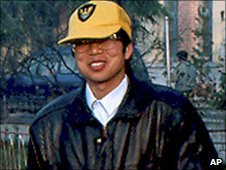
    A Chinese-born American geologist has been sentenced to eight years in jail in China for stealing state secrets.

    Xue Feng (file photo 1993)

    Xue Feng, 44, was detained in 2007 after negotiating the sale of an oil industry database to his employers, an American consultancy company.

    Mr Xue said the information he had acquired about China’s oil industry was publicly available. He claimed he had been tortured while in detention.

    The US embassy said it was “dismayed” and called for his immediate release.

    The jail term handed down was described by his lawyer as “very heavy”. Mr Xue was also fined 200,000 yuan (£19,500; $30,000).

    Mr Xue’s crime was to arrange the sale of an openly available database about China’s largely state-controlled oil industry to his US consulting firm IHS Energy, now known as IHS inc.

    The geologist has claimed that interrogators burned his arms with cigarettes and hit him on the head with an ashtray.

    The US Ambassador to China, Jon Huntsman, was at court for the sentencing, in a show of high-level US concern over the case.

    The embassy later issued a statement saying it was dismayed and urged China to grant Mr Xue “humanitarian release and immediately deport him”.

    Three Chinese nationals were also sentenced for illegally providing intelligence abroad.

    Li Yongbo was sentenced to six years in jail, and Chen Mengjin and Li Dongxu were both given two-and-a-half-year sentences.

    The BBC’s Damian Grammaticas in Beijing says that after this case foreign businesses in China are likely to tread even more warily when dealing with information about state firms.

    Draft regulations released by China’s government earlier this year defined business information held by state firms as state secrets.

    Legal observers have also voiced concern that China’s courts are ignoring legal procedures when dealing with sensitive cases.

    In Xue Feng’s case the two-and-a-half-years it has taken to reach a verdict they say breaches China’s own legal time limits.

    BBC

  • Turkey threatens diplomatic break with Israel over raid

    Turkey threatens diplomatic break with Israel over raid

    Turkey has for the first time threatened to break diplomatic ties with Israel over its raid on a Gaza-bound aid flotilla in May.

    Turkey’s foreign minister said a break could only be averted if Israel either apologised or accepted the outcome of an international inquiry into the raid.

    The Israeli government said it had nothing to apologise for.

    Ankara curtailed diplomatic relations with Israel after the naval raid, in which nine Turks were killed.

    Turkey – which until recently was Israel’s most important Muslim ally – withdrew its ambassador and demanded that the Israelis issue an apology, agree to a United Nations inquiry and compensate the victims’ families.

    A Turkish foreign ministry official told the BBC relations with Israel had hit rock bottom, but Ankara would not rush into cutting ties.

    Foreign Minister Ahmet Davutoglu said Turkey would be satisfied with the ongoing Israeli inquiry if that found Israel to be at fault.

    Mr Davutoglu told Hurriyet newspaper: “[The Israelis] will either apologise or acknowledge an international, impartial inquiry and its conclusion. Otherwise, our diplomatic ties will be cut off.”

    He also said there was now a blanket ban in place on all Israeli military aircraft using Turkish airspace, not just on a case-by-case basis.

    The BBC’s Jonathan Head in Istanbul says that Turkey appears to be hardening its stance towards Israel, just five days after a surprise meeting between Mr Davutoglu and Israeli Trade Minister Benjamin Ben Eliezer in Switzerland.

    Reacting to the new Turkish stance, Israeli Foreign Minister Avigdor Lieberman said: “We don’t have any intention to apologise.”

    ‘Ultimatums’

    Foreign ministry spokesman Yigal Palmor told AFP news agency: “When you want want an apology, you don’t use threats or ultimatums.”

    Israel says its commandos acted in self-defence after being attacked by activists wielding clubs and knives as the troops boarded one of the aid convoy ships.

    Activists on board the Mavi Marmara say lethal force was used from the start of the raid by Israeli forces.

    The vessel was part of a flotilla trying to break Israel’s blockade of the Gaza Strip.

    Israel says the blockade is needed to prevent the supply of arms to Islamist group Hamas, which controls the territory.

    Turkey and Israel forged strong military and trade ties following Ankara’s recognition of Israel in 1949.

    But relations have cooled in recent years. The Turkish government headed by the AK Party – which has Islamist roots – strongly criticised the raid launched by Israel in Gaza in December 2008.

    In January 2009, Turkish Prime Minister Recep Tayyip Erdogan stormed out of the World Economic Forum in Davos, after a clash with Israeli President Shimon Peres.

    In January this year, Israel was forced to apologise over the way its deputy foreign minister treated the Turkish ambassador.

    ANALYSIS

    Jonathan Head

    Jonathan Head,
    BBC News, Istanbul

    Emotions are still raw enough over this incident for both sides, Turkish and Israeli, to maintain the hardest possible line, even if behind the scenes they say they want to salvage the relationship.

    Although Turkish Foreign Minister Ahmet Davutoglu made a hardline statement, it doesn’t look like a fundamental change in position: Turkey is still adamant Israel acted illegally and the flotilla was in international waters.

    Turkey’s demands for an apology, compensation and an international inquiry have been unflinching. But Mr Davutoglu did say Turkey would be satisfied if the Israeli inquiry resulted in Israel being found at fault and if the Israeli government apologised. That seems unlikely.

    Behind the scenes, the Obama administration is pushing these key US allies to fix their ties. But there is no realistic way of them mending relations for some time yet.

    BBC

  • Generous Turks Support American Politicians

    Generous Turks Support American Politicians

    Generous Turks Support American Politicians

    Thursday, 01 July 2010 08:48

    Candidates who compete for the federal and local posts in American political system, receive the biggest financial assistance from their supporters who donate their political campaign. As a part of the political system in United States, Turkish community in US supports candidates in local and national politics. TurkAvenue prepared a report regarding the amount of the donations Turkish-Americans made to support their favourite candidates.

    Turkish businessman Yalcin Ayasli and his family, who established two big organizations:Turkish Cultural Foundation and Turkish Coalition of America, is by far the biggest contributor to the political campaigns of candidates. The amount of the donations that Ayasli family made to 169 different campaigns is $657,100.

    Yalcin Ayasli’s company Hittite Microwave, which he founded in 1985, designs and manufacturers high volume IC products for high-speed voice and data transfer systems focusing on RF to millimeter wave components. Massachusetts based company’s market price is about $1,4 billion.

    Ayasli is followed by another Turkish businessman, Ali Riza Bozkurt, who was taken captive by Saddam Hussein’s Iraq during Gulf War in 1991 and released by the initiatives of late President Turgut Ozal. The sum of the donations that Bozkurt made up to now amounts to $103,750. He is remembered with his donations to GOP in the period when he was considering of nomination for the Congress.

    Bozkurt is followed by Kenan Sahin, who drew attention by donating a total amount of $100 million to globally known MIT University in 1999. The sum of the donations that Sahin made to support American candidates between 1999 and 2004 amounts to $102,000.

    Renown Turkish-American cardiothoracic surgeon and author Mehmet Oz and his spouse Lisa come into prominence with a total support of $70,000 for 58 different campaigns.

    Mehmet Celebi, former President of the Turkish American Cultural Association and a former fund-raiser for Hillary Clinton, is placed among the top five Turkish donors wıth a total amount of $80,000. Celebi, who successfully collected more than $700,000 for the campaign of Hillary Clinton, is also known for his support to Turkish candidates. It should be noted that Celebi could have been the first Turk in the White House if not for the attacks of pro-Armenian and pro-PKK groups during the presidential election campaign in 2008.

    Late Turkish Businessman Ahmet Ertegun draws attention with the amount of electoral campaigns he supported. Supporting 59 different electoral campaign through all his life, Ertegun made a total of $78,700 to nominates. He made his first ever donation during presidential elections in 1980 to the campaign for Jimmy Carter with an amount of $600. Ertegun also supported the election campaign of the first ever Turkish candidate for a seat in the U.S. Congress, Osman Bengur.

    Arif Mardin, renown Turkish- American music producer who was among the contributors of the campaign of Osman Bengur, made $6750 of donation to eight different electoral campaigns.

    The list of most generous Turkish-Americans includes Floridian Turkish businessman Ahmet Sandikci with $47,700, CEO of Calik USA Mahmut Topal with $18,450, owner of the Dervish Restaurant at the Times Square, Salim Gorur with $9,350 and Californian activist Ergun Kirlikovali with $16,041, businessman Sahir Erozan with $29,450 and outstanding entrepreneur Sinan Kanatsiz with $16,150, founder of Turkish Philanthropic Fund (TPF) Businessman Haldun Tasman with $15,250 and Director of Ramamerica Nur Emirgil Bunyak with $14,300.

    ——————————————————————————————————————————————————-

    On the other hand, the amount of the visible private donations that are made by the community leaders who uses  their valuable time to organize major campaigns and effectively contact with politicians on the open issues, and who call Turkish-Americans to be sensitive regarding social issues do not compete with the amounts of the private donations made by Turkish-American businessmen.
    FTAA AND TURKISH FORUM PRESIDENTS

    KAYA BOZTEPE
    DR. KAYAALP BUYUKATAMAN

    President of Federation of Turkish American Associations Kaya Boztepe made a total of $3,300 donation while Turkish Forum’s President, CEO Kayaalp Buyukataman(also the former President of Federation) made a total of $2500. It should be noted that direct/open donations of both community leaders did not include the campaign of Turkish-American candidate Osman Bengur.( They have attended and organized campaign for Osman Bengur, however Their private donations were not made public).

    Turkish Forum is the biggest umbrella organization covering entire turkish diaspora in 5 continents (22 Countries). (Note: Turkish Forum also organized several electoral  campaigns outside the United states.)

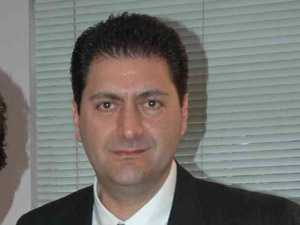
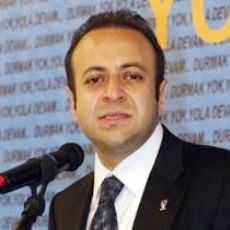
    Former president of Federation of Turkish American Associations, Ata Erim draws attention with an amount of $35,014 which makes him the most generous donor among community leaders. Former presidents Erim and Egemen Bagis were also among the contributors of the electoral campaign of Osman Bengur.  Dr.  Ata Erim also organized electoral campaigns for Osman Bengur, However contributors and amounts were not made public, the reason for that Like other Federations and Turkish Forum  presidents, Dr. Ata Erim Collected contributions directly for Osman Bengur and transfered as such)

    DR. ATA ERIM
    DR. ATA ERIM
    EGEMEN BAGIS
    EGEMEN BAGIS


    ATAA Presidents

    Presidents of the Assembly of Turkish American Associations (ATAA), one of the biggest umbrella organizations in United States encompassing regional organizations across the United States, seem to be more generous than the leaders of FTAA.

    ATAA’s current president Gunay Evinch comes into prominence with a total amount of $20,800 while former presidents of the organization, Dr. Tamer Acikalin gave $9,150, Dr. Orhan Kaymakcalan $8,575, Dr. Tolga Cubukcu $6,850, Vural Cengiz $1,300, Ercument Kilic $1000 and Nurten Ural $1000.

    TurkAvenue.com

  • TURKEY’S TARNISH

    TURKEY’S TARNISH

    JewishTimes.com

    Baltimore, Maryland

    Why the Islamic democracy rocked ties with Israel and the West

    Dr. Robert O. Freedman

    Special to the Jewish Times

    Ideally, relations between two allied countries are composed of
    common interests and values. This has been the case in U.S.-Israeli
    relations since 1967, when strategic cooperation against the Soviet
    Union and its Arab allies was reinforced by the fact that both the
    United States and Israel were vibrant democracies.

    When only common interests hold two countries together, the
    relationship is far less solid, as in the case when the United States
    cooperated with the Soviet Union during World War II against Nazi
    Germany, only to drift into the Cold War immediately thereafter when
    Germany had been defeated.

    In the case of Israel and Turkey, initially there were both
    common interests and common values when the relationship between
    the two countr ies reached its zenith in the late 1990s, as both
    countries opposed Syria and were the only genuine democracies in the
    authoritarian Middle East. In the last decade, however, and especially
    since the coming to power of the Islamic AKP (Justice and Development)
    Party in 2002, relations between the two countries have deteriorated
    as their common interests disappeared, and Turkey was transformed from
    a secularist democracy to an increasingly intolerant Islamic state.

    Indeed, the future of the Turkish-Israeli relationship appears to
    depend upon whether the AKP is again victorious in next year’s Turkish
    election. How did we come to this point?

    Turkish-Israeli Alliance Formsâ~@¨Following the collapse of the Soviet
    Union in 1991, Turkey, which had prided itself as being the southern
    bastion of NATO against the Soviet Union, looked around for a new
    foreign policy focus. There were two goals:

    â~@¢ Entry into the European Union, which Turkey had been seeking
    for several decades.

    â~@¢ Step into what Turkish leaders thought would be a political vacuum
    in Central Asia and Azerbaijan following the collapse of the Soviet
    Union, and the emergence of the independent states of Kazakhstan,
    Uzbekistan, Turkmenistan, Kyrgyzstan and Azerbaijan — all of whom
    had a Turkic heritage.

    The Turkish leaders quickly found, however, that the leaders of the new
    states had no desire to replace one “big brother” (Russia) with another
    “big brother” (Turkey). In any case, the Turkish leadership soon found
    itself embroiled in the rapidly escalating civil war with its Kurdish
    community, led by the terrorist PKK organization, particularly in the
    southeast part of Turkey. The Kurdish revolt was aided and abetted by
    Syria, which harbored the Kurdish opposition leader, Abdullah Ocalan.

    The defensive agreement between Greece — another enemy of Turkey —
    and Syria in 1995 prompted Turkey to respond. The next year, a major
    defense agreement between Israel and Turkey was signed. As a result,
    Syria, which borders Turkey on its north and Israel on its southwest,
    was forced to divide its military forces. The agreement also enabled
    Israeli pilots to train in Turkey, Turkish pilots to train in Israel,
    and provided for extensive anti-terrorism cooperation.

    A Pact’s Benefitsâ~@¨The growing defensive relationship led to major
    Israeli arms deals with Turkey, particularly of refurbished and
    upgraded tanks and planes. By the late 1990s, the Turkish-Israeli
    pact was paying Turkey major dividends. In 1998, Turkey issued an
    ultimatum to Syria to expel Ocalan or face a Turkish invasion. With
    Israeli military forces on its southern border on the Golan Heights,
    Syria had no choice but to comply; Ocalan was expelled, later to
    be captured by the Turks with the help of both U.S. and Israeli
    intelligence, which led to a Turkish- Kurdish ceasefire.

    There were other benefits as well:

    â~@¢ In the late 1990s, Diaspora Armenians began pressuring the U.S.

    Congress to pass a resolution stating that the Ottoman Empire, the
    Turkish Republic’s predecessor, had committed genocide against its
    Armenian population during World War I. With the help of the American
    pro-Israel lobby, Turkey prevented the passage of the resolution.

    â~@¢ The pro-Israel lobby helped to partially neutralize the
    anti-Turkish American Greek lobby, which opposed American arms sales
    to Turkey.

    â~@¢ Israeli rescue crews came to the aid of Turkey after its 1999
    earthquake.

    â~@¢ The two countries — with U.S. forces — began a series of joint
    military exercises, code-named Reliant Mermaid.

    â~@¢ Israeli visitors flocked to Turkey and trade between the countries
    rose rapidly, crossing the $1 billion mark in 2002 and reaching $3.5
    billion in 2008. Israel was exporting military equipmentâ~@¨to Turkey
    and Turkish construction firms were undertaking projects in Israel.

    Course Change

    This warm relationship, however, changed in the first decade of
    the 21st century. That came in part because of a change of Turkish
    interests, and in part because of the increasingly Islamic focus of
    Turkey’s new leadership.

    A number of changes came before the AKP’s 2002 rise to power, but
    were enhanced by the party’s political triumph.

    â~@¢ Turkey sent aid to Greece following the latter’s 1999 earthquake,
    as had been the reverse following Turkey’s earthquake that same year.

    This led to a gradual rapprochement between the one-time enemies.

    â~@¢ Following Ocalan’s ouster from Syria, Turkish-Syrian relations
    gradually improved. That accelerated when Bashar Assad succeeded his
    father, Hafez Assad, in June 2000.

    â~@¢ Russian-Turkish relations, which were in a state of confrontation
    during most of the 1990s due to differences over the Kurds and
    Chechens, and Russian military aid to Greece improved as the Russians
    agreed to sell Turkey large amounts of natural gas.

    â~@¢ Although in 1999 Turkey was accepted for European Union candidacy
    — and was told to undertake domestic reforms to gain admittance — the
    Turks began realizing that the chance for EU membership was dimming.

    That was because of the 9/11 al-Qaida attacks on the United States,
    similar Islamic bombings in London and Madrid, the murder of a Dutch
    filmmaker by an Islamic terrorist, and Europe’s Muslim riots following
    the publication of cartoons of Muhammad in a Dutch newspaper. All of
    that convinced increasing numbers of Europeans that Islamic values
    — even those of a “secularized” Muslim state such as Turkey —
    were not congruent with Europeans ones, reinforcing the opposition
    of some European leaders to Muslim Turkey’s entry into the EU.

    Under these circumstances, Turkish leaders began to look to the
    Middle East as a new focus for their trade and foreign policy. This
    was reinforced when the AKP Party, led by Recep Erdogan, took power
    in 2002. He had come from an Islamic background — and had been
    jailed for his Islamic views, but ran on a platform of moderation;
    the AKP victory came in large part because of a backlash against the
    extensive corruption of the secular parties.

    Soon after taking office, Erdogan was confronted by a major foreign
    policy problem — the U.S. invasion of Iraq. Its three major negative
    consequences for Turkey and for U.S.-Turkish relations were:

    â~@¢ The U.S. invasion raised the possibility of an independent
    Kurdistan bordering southeast Turkey, which could have a major
    irredentist pull on the loyalty of the Turkish Kurds;

    â~@¢ Perhaps seeing a new opportunity, the Turkish Kurds renewed
    their guerrilla war against Turkey’s government;

    â~@¢ And the U.S. was angry that the Turkish Parliament did not
    approve the entry of U.S. forces into Iraq via Turkey.

    This all led to a deterioration of U.S.-Turkish relations and to
    a sharp rise in state-supported anti-American propaganda in the
    Turkish media.

    Meanwhile, the AKP government kept improving relations with its
    neighbors, Greece, Syria and Russia, which had been begun by its
    predecessors.

    One consequence was that Turkey appeared to have less need for a
    strong army, which remained highly suspicious of Erdogan and was the
    main bastion of Turkish secularism. Erdogan also added an Islamic
    dimension to this “Zero Problems” policy. He sought to improve
    relations with the Islamic Republic of Iran and embraced Hamas —
    despite both having openly called for Israel’s destruction.

    Thus, in 1994, Erdogan made a formal visit to Iran and when, in the
    same year, Israel killed Hamas leader Sheikh Yassin, Erdogan called
    the Israeli act “state terrorism” and temporarily withdrew the Turkish
    ambassador from Israel. When Hamas won the 2006 Palestinian Legislative
    Council Election, its leaders were invited to visit Turkey.

    To Erdogan, an Islamic foreign policy meant not only Islamic
    solidarity,but also the concept that Muslims can do no wrong — and
    that non-Muslims who act against Muslims should be severely censured.

    This view was increasingly evident on state-controlled TV, leading the
    American Council on Jewish-Turkish relations to issue the following
    declaration when Erdogan visited the United States in June 2005:
    “As we voice our support for Turkey, we hope to hear Prime Minister
    Erdogan’s confirmation of Turkey’s commitment to a strong and durable
    alliance with the United States, his unequivocal denunciation of
    frequent anti-Americanism and anti-Semitism in the Turkish media,
    and his determination to curb them.”

    Erdogan, however, did not curb the Turkish media’s anti-Americanism
    and the anti-Semitism, which set the scene for a further deterioration
    of both Turkish-American and Turkish-Israeli relations.

    Domestically, Erdogan sought to bolster Turkey’s potential entry to
    the EU by implementing reforms such as improving the conditions of
    the Kurds, curbing the power of Turkey’s secular military, allowing
    women to wear headscarves in state buildings (including universities)
    and at state events, but was rebuffed on the headscarves issue by
    the Turkish courts, also major advocates of secularism.

    Erdogan Cements Powerâ~@¨Re-elected in 2007 with 47 percent of the
    vote (compared to 37 percent in 2002), Erdogan set out immediately to
    attack and weaken the Turkish military, which had strongly opposed his
    election.â~@¨He commenced an investigation of the so-called Ergenekon
    plot of the Turkish Military, which Erdogan claimed sought to overthrow
    his government. Not only were high-ranking military officers arrested,
    so also were a number of his secular opponents. This angered and
    worried Turkish secularists.

    Next, Erdogan’s government imposed a multi-billion-dollar fine on the
    owner of a Turkish media outlet that opposed him, raising questions
    at home and in the EU about Turkey’s freedom of the press.

    Some thought this was related to attempts to stifle discussion of
    corruption charges against members of the AKP, which both sullied its
    reputation and lessened its chances to be re-elected.â~@¨Erdogan then
    tried to push a series of amendments through the Turkish Parliament
    that, among other things, would enable him and the AKP majority to add
    their supporters to secular dominated judicial institutions such as
    the Turkish Supreme Court. While the effort failed, Erdogan secured
    sufficient votes to put them to a national referendum, which will
    take place in September 2010.

    In foreign policy, Erdogan embarked on a more radical Islamic policy.

    He publicly welcomed Sudanese President Hassan al-Bashir, who had
    been indicted by the International Criminal Court for genocide. “It
    is not possible for a Muslim to commit genocide,” Erdogan said.

    He also sought to mediate (with Brazil’s help) a solution to the
    Iranian nuclear problem. This angered the United States, which
    saw a possible diversion from its desired U.N. sanctions against
    Iran. When Turkey subsequently voted against the sanctions resolution,
    U.S.-Turkish relations were chilled further.

    Erdogan, now seeing Turkey as a major Middle East mediator, sought
    to mediate between Israel and Syria. This effort ended in December
    2008 when Israel invaded Gaza to end Hamas rocket attacks, an action
    severely condemned by Erdogan.

    The Turk’s other foreign policy initiatives included signing a
    preliminary treaty with Armenia in October 2009.

    Once signed, an AKP leader reportedly said, “Now we don’t need the
    Jews anymore,” a reference to the aid American Jews, as part of the
    pro-Israel lobby, had given to Turkey in the U.S. Congress to prevent
    the passing of an Armenian genocide resolution.

    Erdogan then offered amnesty to members of the PKK who returned to
    Turkey peacefully from their bases in Iraqi Kurdistan.

    However, the major change in Turkey’s foreign policy came in the
    sharp deterioration of relations with Israel, which appears Erdogan
    himself carefully orchestrated.

    In January 2009, following Israel’s invasion of Gaza, Erdogan bitterly
    attacked Israeli President Shimon Peres at the Davos World Economic
    Forum. “When it comes to killing, you well know how to kill,” he
    said before storming out of the meeting. Upon returning home, Erdogan
    was greeted with cheers, perhaps convincing him that an anti-Israeli
    policy would play well in Turkish politics.

    Then, during 2009, an anti-Israel, anti-Semitic TV series depicting
    Israeli soldiers deliberately murdering Palestinian babies was telecast
    on Turkish national TV.

    Israeli Deputy Foreign Minister Danny Ayalon confronted the Turkish
    ambassador about this and Erdogan responded by calling Israel “the
    greatest threat to peace in the Middle East.”

    Erdogan then canceled Israeli participation in the joint military
    exercise with the United States, which was to take place, in part,
    in Turkey.

    Most recently, in the aftermath of the recent May flotilla incident,
    the only ship that resisted the Israeli takeover was organized
    by the IHH, an Islamic “charity” association in Turkey that had
    been involved in past terrorism (including, according to a French
    magistrate, an attempt to blow up Los Angeles International Airport,
    as well as ties with al-Qaida).

    The IHH clearly sought to provoke a conflict with Israel and Erdogan
    seized on the deaths of nine members of the organization to escalate
    his conflict with Israel. He demanded an apology from Israel,
    and threatened to cut all ties with Israel unless the apology was
    forthcoming.

    Initially, it appeared he could exploit the conflict for major domestic
    political gain, as even the main Turkish opposition parties, the CHP
    and the MHP, also condemned the Israeli attack.

    Nonetheless, it remained to be seen if Erdogan can ride an anti-Israeli
    policy to re-election in next year’s Turkish elections, given the
    major domestic and foreign policy problems now plaguing the AKP.

    What The Future Holds

    In the last year, Erdogan has encountered a series of foreign policy
    and domestic problems that threaten the chances of the AKP in next
    year’s elections.

    First, his initiative to improve relations with Armenia appears to
    have foundered as the Armenians have refused to make concessions
    to Azerbaijan. As Turkish-Armenian relations began to deteriorate,
    Diaspora Armenians again raised the genocide issue in the U.S.

    Congress, and without the pro-Israeli lobby willing to assist Turkey on
    the issue — which it is not, given Erdogan’s anti-Israeli rhetoric —
    the resolution now has a much greater chance of passing.

    Second, Erdogan’s opening to the Kurds has backfired. His amnesty offer
    to the PKK led to a Kurdish political rally welcoming returning PKK
    guerrillas, and the Kurdish party in Turkey’s parliament was banned.

    Even worse, the PKK rebellion has heated up with strikes against
    Turkish officials and army officers all over Turkey; one of the major
    attacks originated in Syria, and the Erdogan government has been
    hard put to suppress the rebellion. Also, recent polls show that 58
    percent of Turks oppose Erdogan’s Kurdish policy.

    A great irony is that Turkey remains dependent on Israeli-supplied
    drones to track the Kurds. For this reason alone, it is doubtful that
    whatever his bluster, Erdogan will cut all ties with Israel.

    It should also be noted that not only has Erdogan alienated the Kurds,
    he is also unpopular with Turkey’s Alawite community, which fears
    increasing Sunni Islamization of Turkey. Both groups are likely to
    oppose the AKP in next year’s election. Indeed, before the flotilla
    incident, the AKP polled only 29 percent — a sharp drop from its
    2007 gains.

    Finally, the main Turkish opposition party, the CHP, has a new and
    vibrant leader in Kemal Kilicdaroglu. He has criticized Erdogan’s
    domestic policy as creating an “empire of fear” in Turkey, and has
    gone so far as to accuse the Erdogan government of being fascistic. He
    also has raised questions about Erdogan’s links to  the IHH and has
    suggested that the Turkish government could have prevented the flotilla
    confrontation. Even one of the CHP’s spiritual leaders, Fethullah
    Gulen, has questioned Erdogan’s policy in the flotilla incident.

    In sum, as next year’s Turkish election draws closer, Erdogan may
    wish to play the Israel card in his re-election bid. Nonetheless,
    given his domestic and foreign policy problems, even vitriolic attacks
    on the Jewish state might not suffice to guarantee an AKP victory.

    Turkey-Israel Dates

    1949 — formal relations established

    1996 — military cooperation accord signed

    1998 — joint naval maneuvers

    1999 — large Israeli rescue team sent after Turkey’s earthquake

    2000 — free trade agreement signed

    2002 — Recep Tayyip Erdogan wins Turkish prime ministership

    2009 — Erdogan storms off stage at Davos Summit as Israel’s Shimon
    Peres speaks

    2009 –Turkey calls Israeli actions in Gaza “crimes against humanity”

    2010 — popular Turkish soap opera depicts Israeli agents kidnapping
    Turkish babies

    2010 — Turkey recalls ambassador from Israeli following Gaza-bound
    flotilla raid

    2010 — Turkey suspends 16 bilateral agreements with Israel

    Dr. Robert O. Freedman is Peggy Meyerhoff Pearlstone Professor of
    Political Science Emeritus at Baltimore Hebrew University and is
    visiting professor of political science at Johns Hopkins University,
    where he teaches courses on the Arab-Israeli conflict and Russian
    foreign policy. Among his recent books are: “Russia, Iran And The
    Nuclear Question: The Putin Record” and “Contemporary Israel.”

    Comments

    Turkey’s Tarnish

    Sadly, by their supporting Turkey’s denial and diminishment of the
    Armenian genocide, Jewish American groups such as the ADL, AJC, JINSA,
    and others have lost all moral credibility.

    Imagine, helping a country like Turkey cover up mass murder. It does
    not get much worse than that. The author sees this as a mere political
    shortcoming, but it is much much more.

    Specifically, these Jewish groups and their constituents have lost
    credibility when it comes to genocide. It is now clear that such
    organizations, being demonstrably insincere about genocide, use the
    Holocaust only for political purposes. That harms not just them but
    the cause of genocide prevention. How can the ADL, AJC, etc. now speak
    against Holocaust denial when they themselves have engaged in the
    same or worse behavior? And let’s be clear that neitherthe national
    ADL nor the AJC has ever issued a truly unambiguous acknowledgment
    of the Armenian genocide. Moreover, they continue to say that they
    are neutral concerning the Armenian genocide resolution.

    Neutral? You mean that after having done incredible damage to the
    cause of genocide recognition and to Armenians, the ADL and AJC are
    now content to just sit back and be neutral? Amazing.

    In the end, their collusion with Turkey proved to be highly damaging
    to themselves and of little benefit. It’s sad.

    Much of the story is here: .