Month: July 2010

  • Turkey and the United States:  How To Go Forward (and Not Back)

    Turkey and the United States: How To Go Forward (and Not Back)

    July 28, 2010

    On Tuesday, July 28, Director of the Dinu Patriciu Eurasia Center, Ross Wilson, spoke at a hearing of the House Foreign Affairs Committee, entitled “Turkey’s New Foreign Policy Direction: Implications for U.S.-Turkish Relations.” Soner Cagaptay, Director, Turkish Research Program at the Washington Institute for Near East Policy; Ian Lesser, Senior Transatlantic Fellow, the German Marshall Fund of the United States; and Michael Rubin, Resident Scholar, American Enterprise Institute, also testified.

    Recent tensions over Iran and Israel have called into question the direction of Turkey’s orientation and especially its role in the Middle East. Ambassador Wilson acknowledged recent problems, urged these developments be viewed in the context of an overall relationship that had important strategic benefits, and emphasized the imperative of more effective engagement of Turkish leaders and public opinion on Iran, Iraq, Afghanistan, the Middle East and other issues.

    Turkey and the United States:  How To Go Forward (and Not Back)

    Statement for the Record

    Ross Wilson
    Director, Dinu Patriciu Eurasia Center
    Atlantic Council of the United States

    July 28, 2010

    House Committee on Foreign Affairs

    Mr. Chairman, thank you very much for the honor of being invited to speak at this hearing on Turkey and U.S. Turkish relations. 

    Turkey is a fascinating, sometimes frustrating, often confusing and very important country in a key part of the world for the United States.  Figuring it out is a challenge.  It is tempting, but always misleading, to see black and white where grays are the dominant colors.  One of the most useful observations I heard while I had the honor to serve as American ambassador in Ankara came from a colleague who had been there many years and left shortly after I arrived.  He said, “Turkey is one of those countries where the more you know, the less you understand.”  I hope that today’s discussions will give me, and maybe others, more knowledge and understanding.

    The reasons for this hearing are self-evident.  Questions are being asked about whether Turkey has changed its axis and reoriented its priorities, about whether it remains a friend and ally of the United States or is becoming, as Steven Cook of the Council on Foreign Relations recently suggested, a competitor or possibly a “frenemy.”  That this debate is happening ought to be disconcerting to Turks who argue – as many in the military, foreign ministry and government did to me – that the United States is Turkey’s most important and only strategic partner.  It frustrates the Obama Administration, which has invested heavily in U.S.-Turkish relations, including when the President visited Ankara in April 2009, when Prime Minister Erdogan came to Washington last December, and at the nuclear security summit here several months ago.

    Of course, there have always been ups and downs in U.S.-Turkish relations.  Those who think they remember the halcyon days of yore should read their history.  Looking at reports in the U.S. embassy’s files put my problems into perspective while I was working there.  Or consider a Turk’s point of view.  He or she might have thought the word frenemy (if it really is a word) applied to the United States when in 2003-2007 we barred cross-border pursuits of terrorists fleeing back into northern Iraq after attacking police stations and school buses, or when the United States imposed an arms embargo after Turkish forces intervened in Cyprus in 1974, or when we accepted the brutal overthrow of Turkey’s civilian government in 1980.

    But to stick with our own perceptions and priorities, a lot of mainstream observers think that it is different this time.  Whether fair or not, or correct or not – and I think this is not an accurate image, Turkey’s picture in many circles here is monochromatic in unflattering ways:  friend to Ahmadinejad and supporter of Iran, friend to HAMAS, shrill critic of Israel, and defender of Sudan’s Bashir.  The flotilla incident and Turkey’s no vote on UN sanctions against Iran sharpened the issue.  Several weeks ago, a senior U.S. military officer and great friend of Turkey confided to me with exasperation, “What in the world are we going to do with Turkey?”  Uncertainty about Turkey and how to proceed with it is widespread.  And that is at least as much a problem for Turkey – for Turks who value its five decade-old alliance with the United States, to which I believe Turkey is committed – as it is for anyone here.

    One thing we have to do about our exasperation is fill out the picture.  How Turkey does see things, and what are its leaders responding to and trying to accomplish?  Picture Turkey on a map and go around it.

    Iran

    Turkey borders on Iran.  For Ankara, it is a problematic country, a rival for hundreds of years.  Most Turks I talked to believe the recent rise of Tehran’s influence has been fueled in part by the U.S. invasion of Iraq and its consequences and by the unresolved Israel-Palestinian conflict.  They regard Iranian actions as inconsistent with Turkey’s interest in a stable, peaceful region, and I think their local geopolitical contest for influence is one we underestimate.  But Turks also have to live next to Iran and do not want its enmity.  So Ankara’s approach has been non-confrontational and continues to be so.  It has worked indirectly to advance Turkey’s interests, including by developing non-Iranian Caspian energy export routes, deploying troops to the UN Interim Force in Lebanon, supporting such moderates as Lebanese Prime Minister Hariri and Iraqi leader Ayad Allawi, and engaging Syrian President Asad, whom it apparently hopes to moderate by lessening his dependence upon – or prying him away from – Iran.

    Turkey does not want a nuclear-armed Iran.  Secretary of State Condoleezza Rice and others worked in 2006-2007 to get Turkish buy-in for the approach taken by the five permanent members of the UN Security Council and Germany – the P5+1.  They were successful.  I believe that Turkish leaders took a tough line on Tehran’s need to reassure the world by complying with its Non-Proliferation Treaty and International Atomic Energy Agency obligations.  But the legacy of the Iraq weapons of mass destruction intelligence failures was that most Turks, including in the military and throughout the political elite, doubt the accuracy of Western intelligence on Iran’s nuclear efforts and fear the implications of war more than they fear the possibility of an Iranian bomb.  Hence the Turks insistence on negotiations – an insistence on which the Turks are not alone, including among our allies.

    Administration officials can speak more authoritatively than I can about how we came to cross-purposes on the Iran nuclear issue this spring.  Suffice it for me to say that at the outset Ankara believed, with good reason, that the Obama Administration shared its objectives on the uranium swap proposal and backed its efforts.  There were problems of timing, delivery and coordination, but this was not a rogue Turkey heading off in a new foreign policy direction with which the United States disagreed.

    Obviously, Turkey’s no vote in the UN Security Council was unhelpful.  In figuring out how we proceed on Iran with Turkey now, my overriding priority would be to comport ourselves in such a way as to ensure Ankara is with us in the next acts of the drama.  I think the political, defense and security implications of what Iran is doing are very serious.  Whatever the future brings, the situation requires us to have the fullest possible support of all our NATO allies, and geography puts Turkey at the top of that of that list.  We can accomplish this through the fullest possible information sharing on what we know (and don’t know) and involving Ankara in the diplomacy – not as mediator probably, but also not as a bystander.  It is a partner; we expect it to act like one, and we should treat it as one.

    Iraq

    Turkey borders on Iraq, where we have poured so much treasure and youth.  Over 90 percent of the Turkish public opposed the U.S. invasion in 2003, and a greater percentage opposes our presence there now.  Despite this, Turkish authorities want us to stay.  They fear, and I think the public at some level shares this fear, that we will walk away too early and then Turkey will face a chronic crisis.  Or, worse, that Iraq might be taken over by some dangerous new tyrant, fall under the control of another neighboring power, break up, or become a home to anti-Turkish terrorists.  The PKK problem along the northern Iraq border is especially serious, but at least 2-3 years ago, so were anti-Turkish al-Qaeda elements in Iraq.  Since 2005 and especially after March 2008, Turkey has been a constructive player on Iraq.  We asked it to help draw Sunni rejectionists out of violence and into politics, and it did.  At our request, Turkey helped facilitate the U.S. engagement with Iraq’s neighbors that the Baker-Hamilton Commission recommended.  We asked it to deal with Kurdistan Regional Government leader Masoud Barzani.  It has done so, getting help on the PKK problem and making itself a more effective player in supporting the Iraqi political process, which will be important as our own role declines.

    Turkey’s role in Iraq is important and positive.  To be frank, it got to be that way because American and Turkish leaders decided to overlook the March 1, 2003 disagreement at the start of the war and found common ground in helping Iraq stand back up.  While it did not seem so simple at the time, in effect we dusted ourselves off and moved on.  That is not a bad model for policymakers now.

    Middle East

    Turkey borders on Syria and the Middle East.  Even before I left for Turkey, I heard people wonder what it was doing mucking about in Middle Eastern affairs.  In the U.S. government, the people dealing with the Middle East are generally not responsible for Turkey, which is handled out of offices dealing with European affairs.  But Ankara is far closer to Jerusalem than Riyadh is.  (For comparison, Ankara is only a little farther from Jerusalem than Washington is from Atlanta.)  There is Ottoman baggage with Arab populations that modern-day Turks do not talk much about, but Turkey is a Middle Eastern country.  It is not surprising that Prime Minister Erdogan is popular there – of course, his populist rhetoric adds to that, as he intends.  In any case, we should forgive Turks for thinking that they have a role there or that they are entitled to their own perspective.  This seems especially the case when on the most important issues – Israel’s right to exist, the goal of two democratic states, Israeli and Palestinian, living side by side in peace and security, and the need for a negotiated (not imposed) solution – Turkey’s perspective is the same as ours.

    Within Turkey, in Israel and in the West, Prime Minister Erdogan has been criticized for his shrill rhetoric toward Israel, especially on Gaza.  Turks do not, of course, universally support his government, but they do almost universally share his underlying view that Israeli-Palestinian stalemate has persisted too long, that what is happening to Palestinians is unfair, and that they need help.  I was in Turkey shortly after the “flotilla incident.”  I heard many views about whether the government’s backing of the Mavi Marmara was wise, properly done or in Turkey’s interest; no one I talked to, and as far as I could tell none of the people they talked with, thought that it was wrong.

    I don’t know what the way forward on Middle East peace issues is.  Clearly, Turkey’s estrangement from Israel limits any role it can play for the foreseeable future.  At no time soon will Ankara again be able to mediate between Syria and Israel –an effort that showed its value in keeping channels open after Israel’s September 2007 destruction of the Deir ez-Zor nuclear site in Syria.  It is constructive that Senator Mitchell has included Turkey among the regional powers that he consults with from time to time, and I hope that continues.

    Caucasus

    Turkey borders on the Caucasus – Armenia, Azerbaijan and Georgia.  I know that you, Mr. Chairman, other members of this committee and many Americans have strong views about the Turkey-Armenia piece and about history that has not been entirely accommodated.  The South Caucasus is a volatile and fragile part of the world, as Georgia 2008 reminded us.  That conflict gave impetus to reconciliation between Turkey and Armenia.  When President Sarksian and President Gul stood together in Yerevan a month after the Russian invasion of Georgia, the two leaders seemed symbolically to say, ‘we have a vision of the Caucasus, it’s not what just happened in Georgia, and we’re determined to take on the most difficult issues between us to try to achieve it.’  Unfortunately, Armenian and Turkish leaders concluded that they could not go forward now to ratify the protocols that called for normalizing relations and opening the border.  I think doing so can still build the confidence needed for resolving the Nagorno-Karabakh conflict between Armenia and Azerbaijan and for Turks and Armenians to deal with their past, present and future together in a forthright manner.  I hope that Congress can support that effort.

    In the interest of brevity, I have omitted mention of Cyprus, Greece, the Balkans and the Black Sea, and such other active items in U.S.-Turkish relations as energy, terrorism, Afghanistan and Pakistan.  Suffice it to say that, in my view, on each of these we want fundamentally the same things, there are of course differences of view, and the United States and Turkey cooperate pretty well.

    Change in Turkey

    I noted earlier the rhetorical question of what other American ally borders on so many problems of such high priority to U.S. foreign policy.  Looked at another way, is there another ally that has such a large stake in how so many problems that are so important to us get addressed?

    A Turkey that is stronger than at any time in a couple hundred years is now inclined to try to influence events on its periphery in ways that it was not in the past.  It does so partly because it can, but also because it is good politics.  This reflects important and positive changes in Turkey.  When it comes to foreign policy, public opinion matters in a way it did not even just a few years ago.  Decades of pro-market policies have made Turkey’s the 16th largest economy in the world.  Migration from rural areas to the cities and an expanding middle class are two other trends with huge political implications.  In this more prosperous and confident Turkey, voters do not want their country to be a subject of others’ diplomacy or a bystander on regional issues.  They want to see their country acting.  They expect their government to do so.  They expect it to act wisely, and I think one of our jobs is to help it do so.

    My answer to my military friend’s exasperated question, “what in the world are we going to do with Turkey,” is that we have no choice but to work with it and work with it and work with it.  It is hard, it is frustrating, and maybe it is messy.  It is harder now with a democratic ally in which power resides in several places – and that is in general a good thing.  It is the only way to go forward and the only way not to go back into recrimination and anger that ultimately could put American interests in the region at risk.  It requires steady senior-level engagement, visits to Turkey by members of Congress such as you, Mr. Chairman, and not letting differences that are mostly tactical overwhelm our strategic interests.  I thought it was highly important that President Obama met with Prime Minister Erdogan on the margins of the recent G-20 Summit in Toronto a month ago.  According to the account I heard, the meeting was long, and the President was very direct, tough and critical.  That is what it will take.

    Thank you.
  • Israel Admits: “Our Troops Are Psychopaths!”

    Israel Admits: “Our Troops Are Psychopaths!”

    Yesterday’s radio guest Gordon Duff just broke a big story:

    GORDON DUFF: ISRAEL CLAIMS “NO PTSD IN IDF,  JEWS IMMUNE TO MENTAL ILLNESS”: STUDY COMPARES “RESETTLING PALESTINIANS” WITH WARS IN IRAQ AND AFGHANISTAN

    Gordon is skeptical of the Zionist claim that their troops, unlike American soldiers, don’t suffer from PTSD. If this is true, Gordon says, maybe it’s because American soldiers are fighting and dying for a Zionist-orchestrated series of lies, and are treated like “broken toys” when they come home; while Israeli soldiers are committing genocide for their own national benefit, and are relatively well-treated by their US-taxpayer-funded regime.

    But there is a simpler explanation: In claiming that its soldiers are immune to PTSD, Israel is implicitly confessing that its troops are psychopaths.

    In On Killing: The Psychological Cost of Learning to Kill in War and Society, Lt. Col. Dave Grossman shows that throughout history, 5% of the soldiers — the psychopaths and borderline psychopaths — have done 95% of the killing. As Grossman explains, studies by S.L.A. Marshall and associates showed that the vast majority of World War II infantry soldiers found ways to avoid firing at the enemy; and archeological evidence suggests that the same was true of previous wars.

    Normal human beings can only kill at tremendous psychological cost, and thus find ways to avoid killing on the battlefield, even if it means losing their own lives. A non-psychopath who kills in wartime will almost certainly suffer some form of PTSD upon returning to civilian life.

    Marshall’s studies spurred the development of intensive Pavlovian conditioning methods that raised the shoot-to-kill ratio to 50% in the Korean war, and 90% in Vietnam. That, Grossman suggests, is why PTSD rates skyrocketed. Normal, non-psychopathic men were being effectively turned into killers for the first time in history. When they came home, they couldn’t live with themselves.

    It is a tribute to the American character — to the fact that only about 5% of American men are psychopaths — that our troops suffer from so much PTSD.

    The Israelis, on the other hand…how to put this politely?

    Andrzej Lobaczewski, in his seminal study of political psychopathyPolitical Ponerology, writes:

    “The pathocratic phenomenon [a society ruled by psychopaths and those who catch the psychopathic contagion] has appeared many times in history…[it sometimes] occurs when the religious association itself succumbs to infection…succumbs to destruction from within, its organism becomes subordinated to goals completely different from the original idea, and its theosophic and moral values fall prey to characteristic deformation, thereby serving as a disguise for domination by pathological individuals. The religious idea then becomes both a justification for using force and sadism against nonbelievers, heretics, and sorcerers, and a conscience drug for people who put such inspirations into effect.

    Clearly the “religious idea” of Zionism has undergone this kind of pathological shift. Israel is a psychopathic state par excellence. Its soldiers slaughter innocent Palestinian children by the hundreds as they play on sidewalks and schoolyards as a de facto national policy:

    “Two thirds of the 621 children (two thirds under 15 years) killed at checkpoints, in the street, on the way to school, in their homes, died from small arms fire, directed in over half of cases to the head, neck and chest – the sniper’s wound…Clearly, soldiers are routinely authorised to shoot to kill children in situations of minimal or no threat.” (British Medical Journal 10/16/04)

    There are countless eyewitness accounts of these child-killings. For example, Chris Hedges,  one of our nation’s most respected journalists,  wrote in Harper’s magazine (October 2001) that he had been in several war zones,  but he had never seen soldiers luring children within range of their guns, then gut-shooting them for sport, until he saw Israeli soldiers doing it in the Occupied Territories.

    The Israeli soldiers who gut-shoot Palestinian children for sport apparently feel no remorse, and therefore suffer from no PTSD. Israeli society and its judicial system feel no remorse either, which is why they never prosecute the child-killers, and why polls show that more than 90% of Israeli Jews approve of the criminal destruction of Gaza by Operation Cast Lead.

    A society that slaughters innocent children without remorse is a society of psychopaths.

    Kevin Barrett
    I’m the author of Questioning the War on Terror: A Primer for Obama Voters; Truth Jihad; A Guide to Mysterious San Francisco; and editor of 9/11 and American Empire v.2, and have taught Arabic, Islamic Studies, French, American Civilization and others subjects. Widely regarded as the world’s leading Muslim 9/11 truth activist (for what that’s worth) I spent 2006-2008 as the only talk show host featured on all three leading patriot radio networks (GCN, RBN, and WTPRN). I ran for Congress in Wisconsin’s 3rd District in 2008: Currently I’m working on a couple of book projects…

    http://truthjihad.blogspot.com/2010/07/israel-admits-our-troops-are.html, July 25, 2010

  • David Cameron backs Turkey’s EU bid

    David Cameron backs Turkey’s EU bid

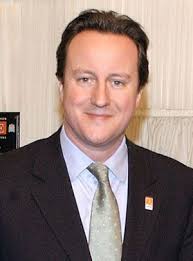
    Prime Minister David Cameron has said he will fight for Turkey to become a member of the European Union as he addressed business leaders in the country’s capital Ankara.

    The PM said Turkey’s economic rise was an opportunity for other EU states, not a threat, and also highlighted the nation’s contribution to the NATO effort in Afghanistan.

    Mr Cameron said he wanted to establish a new partnership between Britain and Turkey because it was “vital” for the UK economy, security and politics.

    The PM said:

    “When I think about what Turkey has done to defend Europe as a NATO ally, and what Turkey is doing today in Afghanistan alongside our European allies, it makes me angry that your progress towards EU Membership can be frustrated in the way that it has been. My view is clear. I believe it’s just wrong to say that Turkey can guard the camp but not be allowed to sit in the tent.

    “So I will remain your strongest possible advocate for EU membership and for greater influence at the top table of European diplomacy. This is something I feel very strongly, very passionately about. Together, I want us to pave the road from Ankara to Brussels.”

    Mr Cameron added that Turkey could be a “unifier” because of its links to both East and West and called on the country’s government to “push forward aggressively” with the EU reforms it is already making to help its bid for membership.

    Later, the PM met Prime Minister Recep Tayyip Erdogan for talks and signed a new Strategic Partnership document setting out how the two Governments will intensify relations in a range of areas, including trade, defence, and culture.

    • Listen to the joint press conference

    Earlier, Mr Cameron laid a wreath at the mausoleum of Mustafa Kemal Ataturk, the founder of modern secular Turkey.

    The visit to Turkey is only Mr Cameron’s fifth bilateral overseas visit since becoming Prime Minister, following trips to France, Germany, Afghanistan and last week’s visit to the US.

    Listen to the speech

    Speeches and transcripts: PM’s speech in Turkey

    Speeches and transcripts: Press conference with Turkish PM

    The Prime Ministers Office

    Number 10

  • AMERICAN Student Injury at Protest Leads to Battle in Israel

    AMERICAN Student Injury at Protest Leads to Battle in Israel

    By ISABEL KERSHNER
    Published: July 27, 2010

    JERUSALEM — A macabre legal wrangle is under way over who should pay the hospital bill for an American art student who lost an eye after being struck by a tear-gas canister fired by an Israeli border police officer at a Palestinian-led protest in the West Bank.

    Enlarge This Image

    Ann Heisenfelt/Associated Press

    Emily Henochowicz at her home in Potomac, Md., on July 1. Ms. Henochowicz, a 21-year-old art student, lost her eye after being struck by a tear-gas canister fired by an Israeli police officer at a protest in the West Bank on May 31.

    Related

    • The Lede Blog: Gaza Protests Will Continue; American Hurt in West Bank (June 1, 2010)
    • The Lede Blog: Three American Subplots in Flotilla Drama (June 3, 2010)
    Enlarge This Image

    Mohamad Torokman/Reuters

    A battle has ensued over who will pay Ms. Henochowicz’s medical bills, which total about $10,000.

    The student, Emily Henochowicz, 21, was injured on May 31 after she joined Palestinian and foreign activists protesting that morning’s deadly raid by Israeli naval commandos on a Turkish boat trying to breach the blockade of Gaza. Israeli security forces fired tear gas to disperse the demonstration after a few Palestinian youths threw rocks.

    Witnesses at the protest, by the Qalandiya checkpoint near Ramallah, said that a border police officer had fired the tear-gas directly at the demonstrators, rather than into the air in line with regulations. The Israeli police have begun a criminal investigation.

    But the lawyer representing Ms. Henochowicz, Michael Sfard, recently received a letter from the Israeli Ministry of Defense rejecting any demand for compensation or payment of hospital costs. The reason, the ministry stated, was that the protest was violent and that the tear-gas canister was not fired directly but had ricocheted off a concrete barricade.

    Ms. Henochowicz, who is Jewish and is a student at the Cooper Union in New York, arrived in Israel in February for what was supposed to be a six-month student exchange. Her father was born in Israel to Holocaust survivors whom he described as “ardent Zionists.”

    Speaking by telephone from her home in Potomac, Md., this week, Ms. Henochowicz said it was “upsetting, when someone gets an injury, not only to have to deal with the physical consequences of something you did not do to yourself, but the economic consequences as well.”

    Ms. Henochowicz, who was treated at Hadassah University Medical Center in Ein Kerem, had her left eye removed and suffered fractures that required the insertion of titanium plates. She returned to the United States in early June, where she is continuing to visit doctors and specialists.

    But more than the cost of the treatment in Israel, which amounted to about $10,000, there are clearly legal principles and interests at stake.

    The student’s father, Dr. Stuart Henochowicz, said by telephone that he had not yet explored the question of whether his daughter’s insurance would cover the bill, because he was under the impression that it would be paid by the Ministry of Defense.

    On Tuesday, the ministry stated that according to preliminary checks, the border police dealt lawfully with the “violent protest at Qalandiya,” and that the firing of tear gas was justified. While expressing sorrow over Ms. Henochowicz’s injury, the ministry added that it did not cover hospitalization expenses in circumstances such as these.

    The ministry said it had acted similarly in the case of Tristan Anderson, an American severely wounded by a tear-gas projectile in 2009. The ministry said that Mr. Anderson had filed a suit in the Tel Aviv District Court, where the issue of hospital expenses would be settled.

    Mr. Sfard, the lawyer, said that from the start he told Dr. Henochowicz, who flew to Israel from the United States to be at his daughter’s bedside, “not to touch his wallet or to sign any check.”

    In a letter to the ministry, Mr. Sfard wrote, “It is insolent and preposterous to expect someone who was shot by the security forces, whether unintentionally, negligently or with criminal intention, to fund her own medical treatment.”

    Yuval Weiss, the director of the medical center in Ein Kerem, said the hospital was “not a party to the argument.”

    “It makes no difference to us who pays, as long as somebody does,” he said. “We cannot work for free.”

    After her arrival in Israel, Ms. Henochowicz, who came to Jerusalem’s Bezalel Academy of Arts and Design, got involved with the pro-Palestinian International Solidarity Movement after meeting activists at a demonstration in Sheikh Jarrah, an East Jerusalem neighborhood where settlers have won court cases and evicted several Palestinian families from their homes.

    From Sheikh Jarrah, Ms. Henochowicz frequented the regular Palestinian protest spots in the West Bank like Bilin, Nilin and Nabi Saleh. The late May protest was her first at Qalandiya. “I did not know what it would be like,” she said.

    The demonstration came hours after Israel’s raid on an aid flotilla. Violent clashes broke out on the Turkish boat and nine activists — eight Turks and an American-Turkish youth — were killed.

    Ms. Henochowicz said she was not standing near the stone throwers. She was holding a Turkish and an Austrian flag when she was struck.

    Avi Issacharoff, an Israeli journalist from the newspaper Haaretz, was watching the demonstration. “The police fired a tear-gas grenade, and then another and another,” he wrote in June “I remember that what surprised me was the volley of grenade fire directly aimed directly at the demonstrators, not at the sky. After the fourth grenade, if I am not mistaken, a shout was heard about 100 meters away.”

    Unusual for a foreign activist in a conflict where battle lines are often starkly drawn, Ms. Henochowicz says she feels a certain affinity with both sides. She said she had wanted to help the Palestinians, but because of her background, she said she also felt “very attached” to Israel “in lots of ways.”

    She added, “If I did not really care about what was happening in the country, I would have hung out on the beach all day.”

    Dr. Henochowicz said he found the whole episode “hurtful,” and was upset that no Israeli officials made any contact with him or his daughter during the five days they were at the hospital.

    Israel’s ambassador to Washington, Michael B. Oren, has since visited the family’s home in Maryland, Dr. Henochowicz said.

    If it was an accident, “Why didn’t they come to the hospital and talk to me?” he asked.

    A version of this article appeared in print on July 28, 2010, on page A4 of the New York edition.

    • Sign In to E-Mail
    • Print
    • Reprints
    Times Reader 2.0: Daily delivery of The Times - straight to your computer. Subscribe for just $4.62 a week.

  • Turkey, Brazil may join Iranian nuclear talks

    Turkey, Brazil may join Iranian nuclear talks

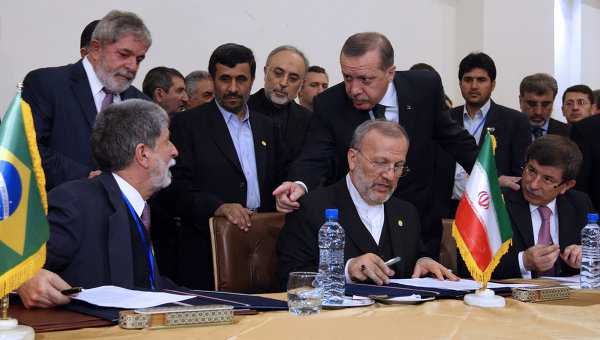
    The European Union will discuss with the Iran Six of international mediators Tehran’s proposal to include Turkey and Brazil in talks on its nuclear program, a spokeswoman for the EU’s foreign affairs chief said on Wednesday.

    Catherine Ashton’s spokeswoman said the decision would be made after consultations with all sides.

    The statement comes two weeks after Iranian Foreign Minister Manouchehr Mottaki said Tehran wanted Turkey and Brazil to take part in talks spearheaded by the Iran Six – a group of international mediators consisting of Russia, the United States, China, France, Britain and Germany.

    Earlier this month, Iran’s top nuclear negotiator Saeed Jalili said Tehran was ready to resume talks in September.

    The West suspects Iran of pursuing nuclear weapons, but Tehran insists its nuclear program is entirely peaceful.

    On June 9, the UN Security Council approved a fourth round of sanctions against Iran over its nuclear program, including tougher financial controls and an expanded arms embargo, as well as an asset ban on three dozen companies and a travel freeze on individuals.

    Later, the United States and the European Union imposed extra unilateral sanctions against Iran, including tougher restrictions on the energy sector and a tougher trade embargo.

    Iran says the sanctions will only hinder talks on resolving the issue.

    BRUSSELS, July 28 (RIA Novosti)

  • An endless war

    An endless war

    Turkey’s long-running battle with Kurdish separatists is intensifying, again

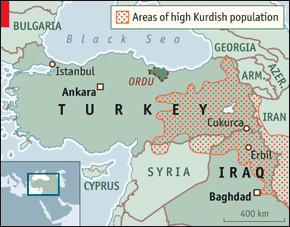
    SHOULD the Turks and Kurds live together? The answer from many of Turkey’s restive Kurds has long been no. A vicious separatist campaign launched by rebels of the outlawed Kurdistan Workers Party (PKK) has been raging since 1984. In recent months the PKK has stepped up its attacks, killing dozens of Turkish soldiers in and beyond the predominantly Kurdish south-east. Most recently, on July 20th, a Kurdish raid near the town of Cukurca killed six Turkish troops and injured at least 15.

    But now a growing number of Turks are questioning the merits of cohabiting with the country’s estimated 14m Kurds. Never mind that Istanbul is the world’s largest Kurdish city, or that few of the provinces claimed by the Kurds are ethnically homogenous. In television debates and across the blogosphere support for the idea that the Kurds should go their own way is growing. Onur Sahin, who heads the Chamber of Agriculture in the Black Sea province of Ordu, says his fellow producers no longer want seasonal migrant Kurds to harvest their hazelnut crops.

    Meanwhile, the military campaign against the PKK is intensifying. The mildly Islamist Justice and Development (AK) party, which has governed Turkey since 2002, plans to deploy a new professional army along the border with Iraq, where the PKK has havens. Some fear a return to the excesses of the 1990s, when over 3,000 Kurdish villages were forcibly evacuated and thousands of Kurds were imprisoned, murdered or disappeared.

    Over the border, Turkish air raids on the PKK’s mountain bases in northern Iraq are increasing. America is helping by providing intelligence and broadening the air corridor used by Turkish fighter jets. Yet the Americans are worried by Turkey’s increasingly strident calls for the Iraqi Kurds to hand over some 200 rebels, including their own leaders. The last thing the Americans want to see, as they pull out of Iraq, is a war between Turkey and Iraqi Kurds.

    All of this is a far cry from last year when AK heralded its so-called Kurdish “opening”. It made peace with the Iraqi Kurds and opened a consulate in Erbil, their capital. At home, a set of political and cultural reforms was meant to coax the PKK into laying down its arms, in the wake of a unilateral PKK ceasefire that was declared in April but that never took full effect. But the opening ground to a halt following the return last October of 34 PKK fighters to Turkey from Iraq. More were meant to follow. But the group prompted a public outcry by touring the south-east in guerrilla outfits, declaring victory. In response the government stepped up its arrests of members of the pro-Kurdish Peace and Democracy Party (BDP), accusing them of PKK membership. Half of the returnees have been put on trial for refusing to repent; ten are in prison. Last month the PKK hit back by calling off its truce.

    Some voices plead for a return to peace. A group of Turkish intellectuals has petitioned the government to change a controversial article of the constitution that deems all Turkish citizens to be Turks. One AK mayor has suggested that Turkish men take Kurdish women as second wives. Others say that AK must talk to the PKK’s imprisoned leader, Abdullah Ocalan. Despite 11 years of solitary confinement in an island prison off Istanbul, Mr Ocalan retains the loyalty of his fighters and the affection of millions of Kurds.

    In fact, secret talks with Mr Ocalan, supposedly conducted by security and intelligence operatives, have reportedly been going on for some time. Murat Karayilan, the PKK’s commander in northern Iraq, says his group wants to talk to politicians, not spooks, and this week proposed a bilateral ceasefire. But as next July’s parliamentary elections draw nearer, Turkey’s prime minister, Recep Tayyip Erdogan, is unlikely to risk nationalist ire by openly talking to a group deemed by Turkey and its Western allies to be terrorists. On the other hand, as Mr Erdogan knows, abandoning reform in favour of war will only strengthen the hand of his opponents within the army. He is, as an old Turkish saying goes, holding a stick with shit at both ends.

    Source: Economist