Month: July 2010

  • Turkish-Israeli Relations Deteriorate Further

    Turkish-Israeli Relations Deteriorate Further

    Turkish-Israeli Relations Deteriorate Further

    Publication: Eurasia Daily Monitor Volume: 7 Issue: 130

    July 7, 2010

    By Saban Kardas

    Turkish-Israeli relations continue to worsen, despite attempts to heal the divisions caused by the flotilla crisis. Ankara has asked Tel Aviv to issue an official apology for the killing of its citizens, pay compensation to the victims’ families, accept an independent international probe into the incident, return the confiscated ships and end its blockade on the Gaza strip. Although Turkey threatened to sever ties if Israel fails to deliver, how far Ankara might go with its “punitive” actions has been a matter of controversy (EDM, June 7).

    Thus far, the steps Israel has taken are far from meeting Turkish expectations, as acknowledged by Foreign Ministry Spokesperson, Burak Ozugergin (Anadolu Ajansi, June 30). For instance, Israel defied a UN-proposal to form an international commission and instead launched its own internal inquiry. The Israeli panel had only limited powers to examine “whether Israel’s Gaza blockade and the flotilla’s interception conformed with international law and also investigate the actions taken by the convoy’s organizers and participants.” Although the panel’s mandate was expanded slightly by the Israeli cabinet, Turkey continues to dismiss it (www.worldbulletin.net, July 4).

    There has been no progress on compensation for the killings. Similarly, Israel has not taken any steps to return the three ships it confiscated during the raid. Although Tel Aviv announced some measures to ease the Gaza blockade, humanitarian aid is not flowing into the area freely. Therefore, the Turkish government has continued its criticism of Israel on various domestic and international platforms. During the G20 summit in Toronto, Prime Minister, Recep Tayyip Erdogan, labeled Israeli actions as state terrorism and vowed to pursue this issue until Israel changed its attitude on Turkey’s conditions (Anadolu Ajansi, June 28). Again, during his state of the union address, Erdogan continued with the same level of criticism against Israel (Anadolu Ajansi, July 1).

    Nonetheless, a secret meeting between Turkish Foreign Minister, Ahmet Davutoglu, and Israeli Industry and Trade Minister, Ben-Eliezer, in Brussels altered the terms of the discussion (www.ntvmsnbc.com, July 1). Although the meeting was allegedly “secret,” the manner in which it entered the press demonstrated that both sides did not want it to remain secret. They probably sought to send signals that they were willing and able to discuss ways of overcoming the stalemate, despite the confrontational public rhetoric adopted by their leaders.

    While government sources from both countries confirmed the meeting, it had significant reverberations on each side. In Israel, the meeting caused a major debate, as it turned out that Ben-Eliezer was acting in consultation with Prime Minister, Benyamin Netanyahu, and Defense Minister, Ehud Barak, while Israel’s hard-line Foreign Minister, Avigdor Lieberman, was not informed.

    The Turkish opposition also capitalized on this story, presenting it as an indication of the government’s “insincere” foreign policy. Opposition parties argued that while the government was lambasting Israel publicly for domestic political reasons, it continued dialogue with Israel behind closed doors. Responding to such criticism, Davutoglu ruled out any “inconsistency” in the government’s foreign policy and defended the meeting. He argued that, the meeting was requested by the Israeli side and he used that opportunity to state Ankara’s demands directly to Israeli officials (www.cnnturk.com, July 1).

    However, subsequent exchanges between Turkish and Israeli sources showed that the parties were far from overcoming differences. In defiance of Turkey’s account of the secret meeting, Netanyahu argued that no compensation was discussed and the panel formed by Israel would satisfy the demands of the international community. Although expressing regret for the loss of life, Netanyahu ruled out any apology and compensation (www.cnnturk.com, July 3).

    This statement prompted Davutoglu to issue further harsh remarks directed at Israel in an interview with Hurriyet, which appeared as an ultimatum: “Israelis have three options: they will either apologize or acknowledge an international impartial inquiry and its conclusion. Otherwise, our diplomatic ties will be cut off” (Hurriyet Daily News, July 4). Davutoglu also indicated that Turkey could not wait indefinitely and would continue to take measures to isolate Israel, which might include extending a flight ban on Israeli military aircraft over Turkish airspace to civilian flights as well.

    In response, Israeli sources again rebuffed Turkey’s demands for an apology. Liberman and Foreign Ministry Spokesman, Yigal Palmor, slammed Ankara’s harsh rhetoric. “When you want an apology, you do not use threats or ultimatums… Everything leads us to believe that Turkey has another agenda in mind,” Lieberman maintained (AFP, July 5; Today’s Zaman, July 6).

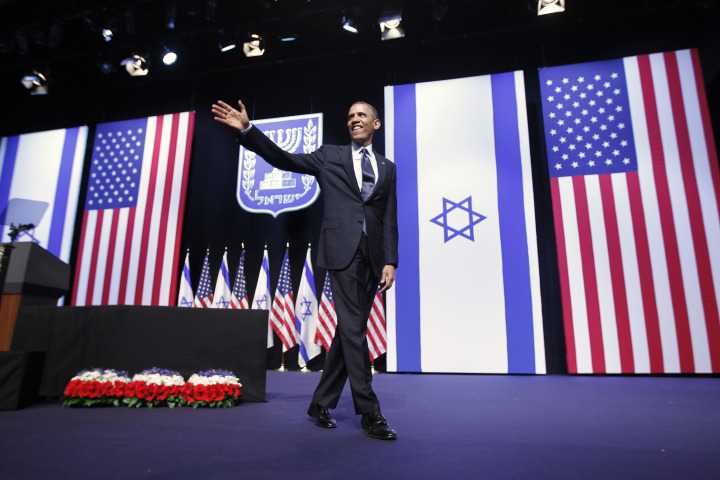
    Turkish-Israeli tensions have been an important issue affecting the course of Turkish-US relations, which also experienced recent turbulence. Since the Davutoglu-Ben-Eliezer talks took place after Erdogan’s meeting with the US President, Barack Obama, at the G20 summit, some speculated that Washington was behind this development. Moreover, Obama arguably sought to convince Erdogan to drop his demand for an international investigation into the flotilla incident (www.cnnturk.com, July 4). Davutoglu has rejected the suggestion that the meeting was held due to American pressure.

    Although it might be difficult to confirm what role US diplomatic sources played in the latest meeting, US efforts to mend ties between Turkey and Israel are no secret. Since the parties started bickering immediately after the revelation of the “secret” meeting, it might indicate that they were encouraged by Obama to meet. Indeed, Turkish-Israeli ties were one of the items on the Erdogan-Obama meeting, where Erdogan extended his gratitude to Obama for his constructive role in the flotilla crisis (Anadolu Ajansi, June 28).

    However, it seems Obama has been less successful in dampening the tension between the two allies in the Middle East and in convincing Erdogan to drop his critical rhetoric towards Israel. The row over the secret meeting, obviously seeking to bridge differences, demonstrated the depth of the Turkish-Israeli rift. As a final straw, it was announced that Turkey will not attend a US-Israeli-Turkish joint naval search-and-rescue exercise, scheduled in the Eastern Mediterranean next month. Dubbed “Reliant Mermaid,” the drill has been held regularly over the past decade (www.ntvmsnbc.com, July 5).

    https://jamestown.org/program/turkish-israeli-relations-deteriorate-further/
  • Quenching your thirst with the sea

    Quenching your thirst with the sea

    By Karin Kloosterman

    Photo by Edi Israel/Flash90.
    A worker at IDE’s desalination plant in Ashdod, which has been operating since 2005.

    Champagne glasses containing the finest fresh water were raised in a toast last month to celebrate the opening of Israel’s third desalination plant, this one in the northern city of Hadera. Lauded as the largest reverse osmosis desalination facility in the world, the plant that takes water from the Mediterranean Sea and makes it safe to drink is expected to produce 127 million cubic meters of water each year – enough to meet the water needs of one in every six Israelis.

    Created with an investment of nearly half a billion dollars, the plant was built by IDE Technologies, an Israeli company that has already built two seawater desalination plants on the country’s Mediterranean Sea coastline, along with the Housing and Construction Group, a real estate and development firm owned by the Arison Group.

    It was the government that put in place the plan to create the desalination plant, to meet the demands of a growing population and an imperiled water supply, dependent almost entirely on winter rainfall.

    In a 25-year agreement with the government and with its full blessing, the water will be produced at just over 50 cents per cubic meter. IDE’s first desalination plant, built on the coast in Ashkelon, has been performing well since 2005, according to company reports. There is a third plant at Palmahim, just south of Tel Aviv, and two more are planned along the coast, in Ashdod and Soreq.

    A new era of cheap water?

    “The success of the mega-desalination plant concept has ushered in a whole new era of plentiful, affordable water for a world facing severe water challenges,” says Avshalom Felber, IDE Technologies CEO, in a press statement. “With the launch of the Ashkelon plant in 2005, we pledged to continue pursuing further breakthroughs in plant capacity and water cost.”

    Ofer Kotler, CEO of the Housing and Construction Group (‘Shikun U’Binui’ in Hebrew) says: “As one of the most complex and largest building projects our group has ever undertaken, we are especially pleased to present this plant to a country facing severe water challenges.”

    The project was financed via a consortium of international banks, including the European Investment Bank, Calyon, a French investment bank, and Portuguese investment bank Esperito Santo. Back in 2007, Euromoney, a prestigious business and investment magazine, touted the ‘global village’-style economic deal for the Hadera plant as the Project Finance Deal of the Year.

    IDE boasts technological breakthroughs in the fields of thermal and membrane desalination, and also, perhaps surprisingly for a country in the Middle East, in snowmaking. In desalination, the salt is removed from seawater using a process called Reverse Osmosis (RO) one of two ways to use desalination membranes to process water. In RO, water from a highly pressurized salty solution is channeled through a water-permeable membrane to separate it from its salty component. The second approach is via a process called electrodialysis.

    IDE is owned by two mega-industrial companies in Israel. The chemical company ICL has a 50 percent stake in IDE (this company also extracts potash and chemicals from the Dead Sea) and Delek Group, an energy and infrastructure investment company and holding tank, owns the other half.

    The new desalination plant at Hadera is the largest in the world, and is expected to produce enough water for one in six Israelis.

    Not an environmentally correct solution

    Environmentalists in Israel do not see desalination as a definitive long-term solution for solving the water crisis in Israel and the Middle East, however. One prominent group is Friends of the Earth Middle East (FOEME), whose Israel director Gidon Bromberg points out that desalination plants have a lot of corporate money at stake, in the hands of a few stakeholders. In addition, in the context of climate change and protection of local environments, reliance on the extremely energy-intensive and pollution-emitting desalination process doesn’t appear to be a viable long-term solution, he says.

    Bromberg and others dedicated to the protection of local water resources suggest that water-strapped countries like Israel, Jordan and others in the region first identify more effective means of reducing water use at home and cut back on water-intensive agricultural practices.

    This debate between industry and the environment isn’t new, and now is the time to create common ground and circumvent a crisis, Shmulik Shai, general manager of H2ID, the Hadera desalination plant, tells ISRAEL21c. He says that for the past five years Israel has been facing a severe shortage in its three main sources of water: The Sea of Galilee, its mountain aquifer and its coastal aquifers. Below the red line in terms of volume and nitrates, if the country doesn’t find a solution now, these sources could be damaged indefinitely, he warns.

    “The balance of rainwater is not good enough,” says Shai. If there’s one short season of rain and a spike in population, Israel’s semi-arid climate could find itself with a “chronic shortage problem,” he continues. And while 70 percent of the country’s water is supplied by rain that falls in the winter months, there are periods of drought in Israel when the rain does not come down at all. To make things worse, rainfall is not evenly distributed, he remarks.

    The new plant will furnish a good portion of the 750 million cubic meters of water that Israelis require for personal use, he tells ISRAEL21c. And among the desalination technologies that the Hadera plant utilizes are those developed by IDE, including new processes and new mechanisms, such as how to pressurize the water. To date, IDE has constructed some 400 desalination plants in 40 countries, with a total water output of 2,000,000 cubic meters per day.

  • LONDON Turkish Festival Jul 17-18 2010

    LONDON Turkish Festival Jul 17-18 2010

    Turkish Festival
    Sat 17 Jul 00:00 – Sun 18 Jul 00:00

    ——————————————————————————————————————————————————

    The 5th Turkish Festival aims to fundamentally develop the profile of regional culture in Turkey; to participate in the processes of integration between world cultures; to attract a wider audience to the new generation of artists, activating the processes for Turkish Art forms, and contributing to the uprising of Turkish Art and Cultural recognition on an international platform; to allow a new generation of Turkish Artists to appear, encourage the appearance and development of Artists and the Art industry, and integrate Turkish Culture in an international Platform.
    This event shall consist of cultural, performing arts such as ethnic music, folk and traditional dancing, cultural arts, ethnic food and handcrafts. We also propose to transform the venue into a Turkish Bazaar with stalls serving the best of Turkish food, drink, spices, textile, leather goods music and crafts.

    TURK FESTIVALI 17 VE 18 TEMMUZ TARIHLERINDE YAPILIYOR

    Her yıl yapılan Turkish Forum UK tarafindan duzenlenen . Turk Festivalinin 5’İnci 17 temmuz cumartesi gunu saat 12’de
    asagidaki adreste basliyor. 18 Temmuz pazar gunu de tum gun surecek festivale hepinizi bekliyoruz. IKi gun boyunca festivale 100 binden fazla ziyaretci bekleniyor. Lutfen aileniz, arkadaslarinizla karnaval senliginde gecen festivale katilmanizi onemle bekliyoruz..

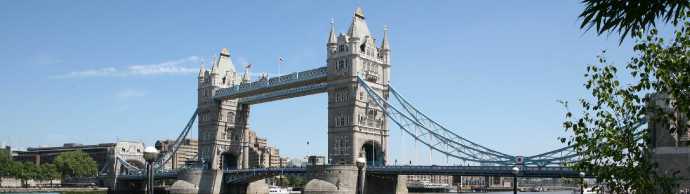
    ADRES;””Festival’in yapılacağı Potters Fields Park’ın adresi ‘Tooley Street/The Queens Walk, Southwark, London SE1 2AA’dır. Londra Büyükşehir Belediyesi binası yakınında ve Tower Bridge’in Güney Londra kesimindeki ayağına yakındır”

    Mihrisah Safa

  • Foreign Business in Turkmenistan: to be or not to be

    Foreign Business in Turkmenistan: to be or not to be

    By Merdan Shakhnazarov

    Open Door policy announced by Ashkhabad strongly increased the flow of foreign investors, hoping either to enter new market with their product or to profit from work contracts in formerly closed Turkmenistan. Evidently the power sector attracts the most foreign interest.  But experts of oil and gas market often underestimate the risks of their business in Turkmenistan, and after first taste of the local reality give up their plans of conquering the market. Among the factors that influence the decision not to come to Ashkhabad are the following: imperfection of laws, corruption and lawlessness of public servants, financial difficulties, non-disclosure of information about failure of foreign investors on the local market. We shall consider some of these.

    Corruption

    International nongovernmental organization Transparency International regularly includes Turkmenistan in the list of most corrupted countries.   This estimation should be some kind of indicator for foreign investors, wishing to start their business in that central Asian republic.

    Evidences of corruption are to be traced not only in the state structure but in all the spheres of life. On one hand it seems to ease the process of getting contracts, while bribery makes communication with  paper pushers easier. But it often turns out that businessmen spend a lot of money to establish contact with Turkmenian authorities but finally back at the bottom of the ladder.

    In some cases foreign investors who came across with local reality are no more capable of doing business in such conditions. According to a businessmen from UAE, who planned to invest  in development of Avaza resort, before he even started his activity he  faced severe retaliatory measures of local law-enforcement authorities, who confiscated his immovable property.

    At meanwhile the nephew of the President under cover of the name of G. Berdimukhamedov started to squeeze money from the Arabian businessman. These circumstances forced the businessmen to refuse from his plans in that country.

    It is difficult for a western businessmen, used to transparent and open business to negotiate with Turkmenian partners, who are vivid representatives of eastern civilization with its contrivances and half-words. There have occurred some cases, when Turkmen representatives of authority agreed to sign a contract with foreign company,  but the procedure of signing extended for an indefinite period.

    Ashkhabad financial difficulties

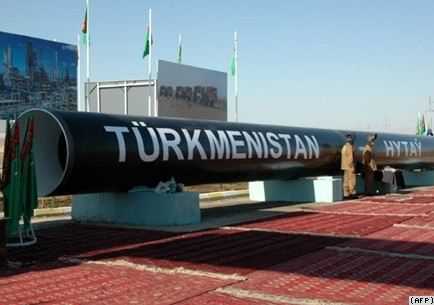
    Despite of launching Turkmenistan-China pipeline, expending gas pipeline in Iran, cutting down the volume of gas sales  in Russia caused decrease of revenue side of the state budget. In that regard Ashkhabad tries to decrease the budgetary gap, cutting down the expenses for second-term projects, and in some cases putting them on hold at all.

    For instance according to one of the employees of “Sekhil”, Turkish company, many of his nationals experience problems with financing in Turkmenistan now. For that reason the project of recreational resort in the resort area Avaza, developed by Sekhil by the order of Turkmenbashy complex of oil refinery plants is at risk.

    Some other companies, including Ozaylar and Ichkale experience same problems. Of course the management of Turkish companies is strongly unsatisfied with arrears in payments by Turkmen authorities, for it forces them to carry on the works at their own cost or take credits.

    Another indicator of financial difficulties, experienced by Ashkhabad, is borrowing funds from strategic partners. For instance in may of the previous year during his visit to PRC President Berdimukhamedov negotiated a grand from Beijing in the amount of $ 10 Mln.

    This amount even though granted on non-repayable basis and without any interest, still has its aim to secure economical preferences and to strengthen PCR’s position on the national market.

    Financial difficulties also force Turkmenistan to pay back foreign companies, carrying out important projects in Turkmenistan, by gas supply contracts. For example investments of the Iran Railways into construction of the a section of the railway Kazakhstan-Turkmenistan –Iran is to be repaid by Ashkhabad by supplying liquefied gas for 4 years.

    Non-disclosure of information about failures of foreign investors

    For foreign business considers the power sector to be the most attractive, it is important to notice, that investment into hydrocarbon field development is not always self-liquidate.

    For example in 2002 American ExxonMobil decided to stop works in Turkmenistan and close representative offices in Balkanabad and Ashkhabad. This was due to failed drilling in Garashsyzlyk, one of Turkmenistan’s biggest minefields. American company was operating the «Garashsyzlyk-2» project, the respective production-sharing contract for 25 years was signed in 1998. Low commercial impact of the block forced Americans to cancel the contract halfway in spite of the discontent and pressure of the Turkmenistan party.

    It’s also known, that in the beginning of 2000s TPAO, Turkish corporation experienced failure on one of the blocks, it had to scale down its activity and live the country.

    Therefore only those foreign companies shall obtain a place in the hot Turkmen sun near gas jets, who are ready to make immense material and moral investments, fight the pressure of the «guardians of law» and to fall on hard times. At the same time they have to be ready to patiently wait for repayments and possibility of inefficient Turkmen field development.

  • The AKP’s Hamas Policy: “Us vs. Them”

    The AKP’s Hamas Policy: “Us vs. Them”

    The AKP’s Hamas Policy: “Us vs. Them”
    By Soner Cagaptay
    Hurriyet Daily News
    July 5, 2010

    At home, the Justice and Development Party, or AKP, has promoted the Islamist mindset of “us Muslims” in conflict with “the bad others” through the media and also by spreading Hamas’ views throughout Turkey, whether through official Hamas visits to Turkey or through AKP-supported conferences and fundraisers.

    Recent changes in media ownership in Turkey under the AKP are closely related to the spread of anti-Western sentiments in the country. Turkey is a country with free media. Media independence in Turkey, however, is increasingly under threat.

    The Turkish media remains free (in that it is not illegal to produce journalism), but the AKP is trying to curb media freedoms by transforming media ownership through legal loopholes. Such was the case in December 2005 when the AKP took over the Sabah-ATV conglomerate, which represents around 20% of the Turkish media market, selling this conglomerate to a media company of which Turkish Prime minister Recep Tayyip Erdogan’s son-in-law Berat Albayrak is the CEO.

    The AKP has also brought a $3.2 billion tax fine against Dogan Yayin, a conglomerate that owns around 50 percent of the Turkish media. This excessive fine exceeds Dogan’s total net worth — is political, because Dogan’s news outlets promote secular, liberal and nationalist views that often criticize of the AKP.

    The transformation of the Turkish media is not an esoteric issue, for it affects the future of Turkish democracy and also has a bearing on Turkish views of the world.

    Where there is no independent media — as in Russia — there is simply no viable opposition to government. Whenever Turkey goes through a political spasm, analysts warn of the collapse of Turkey’s democracy. Despite this, Turkey has survived numerous crises in the past thanks to the balancing power of its fourth pillar.

    As Turkish media becomes less free, there is a higher likelihood that it will become a tool for the government with which to shape an anti-Western public opinion. What is bad for secular liberal western Turks is bad for the West. Turkey’s free media needs to remain free because if it is all either state-owned or owned by pro-AKP businesses, anti-Western and anti-Israeli viewpoints will spread through the media, which we have been witnessing since 2002.

    A recent show on Turkey’s publicly-funded Turkish Radio Television, or TRT, network is a perfect example. The debut of the series, entitled “Ayrilik” (Separation), came on the heels of Turkey’s cancellation of Israeli participation in the Anatolian Eagle exercises. TRT, whose head is appointed by the AKP, and which is entirely funded by Turkish taxpayer money, ran “Ayrilik,” a show with an anti-Israeli stance, including one which depicts an imagined situation in the Palestinian territories where a newborn baby is intentionally killed by Israeli soldiers.

    What do 18-year-old Turks think of Israel now? They hate it, and they will do so because of images depicted in shows like “Ayrilik.” These are the images they have been seeing for the last seven years and this is what they’ll continue seeing. A Turk who has come of age under the AKP is now more likely than not to hate Israel and the West after seven years of such propaganda. Unlike Turks now in their forties or older who came of political age in a different Turkey, younger Turks in their twenties and thirties have more radical and negative views of the West as a result of what they see in government-controlled media as well as media owned by pro-government businesses.

    Through Conferences
    While government-controlled media promotes an evil image of the Israelis, international Hamas conferences in Turkey build legitimacy for Hamas and other extensions of the International Muslim Brotherhood movement. Before the AKP came to power, Turkey had never hosted a Hamas conference. Now, such conferences render the Hamas and Muslim Brotherhood agenda more accessible to Turks, making Hamas’ violent struggle against Israel a part of daily political debate in Turkey.

    In the last three years alone, there have been seven Hamas conferences and fundraisers in Istanbul. The first one of these, held in July 2006 and attended by one of the spiritual leaders of the Egyptian Muslim Brotherhood, Sheikh Yousef al-Qaradawi, was given the title “Muslims in Europe.” Qaradawi’s visit was funded by the British Foreign Office, and Hamas and the Muslim Brotherhood came to talk about Muslims in Europe, exposing Turks and European Muslims to Hamas and its ideology.

    The list continues: other Hamas and Muslim Brotherhood conferences in Turkey include a November, 2007 conference called “Jerusalem Day,” co-organized by nongovernmental organization the Association of Turkish Volunteer Organizations, or TGTV, close to the AKP and Islamic Association of Muslim World Nongovernmental Organizations, or IDSB. This conference, entitled “Jerusalem Day,” called for “liberating Jerusalem through jihad from the Zionists.”

    Other conferences followed in February 2009, April 2009, May 2009, and July 2009. What is interesting is that the frequency of these conferences has been steadily increasing, with four such meetings alone held in 2009.

    Moreover, these meetings have started to espouse a violent agenda. For instance, at the February 2009 conference, Hamas members called for a jihad centered on Gaza. The April 2009 meeting was a “Masjid al-Aqsa symposium” which called to “liberate Masjid al-Aqsa” and it was organized by the Istanbul Peace Platform, or IBP, which includes a number of NGOs close to the AKP. The symposium called on all Muslims to liberate al-Aqsa through violence, if necessary, and also claimed that Israel has plans to demolish it. The “Palestine Collaboration Conference” in May 2009 called for “continued resistance to liberate Palestine.” Conference participants included former Sudanese President Mushir Sivar Ez-Zeheb, President of the International Union of Muslim Scholars Yousef al-Qaradawi, and Hamas Representative and Spokesman in Lebanon Usame Hamdan. In his speech at this conference, AKP deputy Zeyd Aslan said that Israel “commits genocide in Palestine.”

    On the other hand, the “Environment Conference” in July 2009 was organized by the Earth Centre of Dialogue Partners in cooperation with the Islamic Educational, Scientific and Cultural Organization, the city of Istanbul, and the Fatih University in Istanbul. The conference, attended by al-Qaradawi, concluded with the declaration of a seven-year-action plan on climate change. The conference also served as platform to bring Hamas and MB members to Istanbul.

    These conferences are organized by NGOs close to the AKP government. Although they appear to be civil society initiatives, the meetings are held in city halls of Istanbul or convention centers under the control of the AKP city government, which in essence means that taxpayer funds help pay for these events.

    Soner Cagaptay is a senior fellow and director of the Turkish Research Program at The Washington Institute.

  • DIASPORA LEADERS

    DIASPORA LEADERS

    Generous Turks Support American Politicians

    —————————————————————————————————————————-
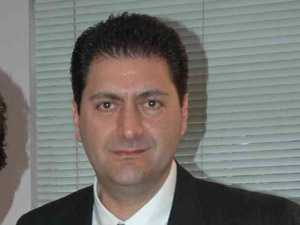
    Generous Turks Support American Politicians

    Candidates who compete for the federal and local posts in American political system, receive the biggest financial assistance from their supporters who donate their political campaign. As a part of the political system in United States, Turkish community in US supports candidates in local and national politics. TurkAvenue prepared a report regarding the amount of the donations Turkish-Americans made to support their favourite candidates.

    Turkish businessman Yalcin Ayasli and his family, who established two big organizations:Turkish Cultural Foundation and Turkish Coalition of America, is by far the biggest contributor to the political campaigns of candidates. The amount of the donations that Ayasli family made to 169 different campaigns is $657,100.

    Yalcin Ayasli’s company Hittite Microwave, which he founded in 1985, designs and manufacturers high volume IC products for high-speed voice and data transfer systems focusing on RF to millimeter wave components. Massachusetts based company’s market price is about $1,4 billion.

    Ayasli is followed by another Turkish businessman, Ali Riza Bozkurt, who was taken captive by Saddam Hussein’s Iraq during Gulf War in 1991 and released by the initiatives of late President Turgut Ozal. The sum of the donations that Bozkurt made up to now amounts to $103,750. He is remembered with his donations to GOP in the period when he was considering of nomination for the Congress.

    Bozkurt is followed by Kenan Sahin, who drew attention by donating a total amount of $100 million to globally known MIT University in 1999. The sum of the donations that Sahin made to support American candidates between 1999 and 2004 amounts to $102,000.

    Renown Turkish-American cardiothoracic surgeon and author Mehmet Oz and his spouse Lisa come into prominence with a total support of $70,000 for 58 different campaigns.

    Mehmet Celebi, former President of the Turkish American Cultural Association and a former fund-raiser for Hillary Clinton, is placed among the top five Turkish donors wıth a total amount of $80,000. Celebi, who successfully collected more than $700,000 for the campaign of Hillary Clinton, is also known for his support to Turkish candidates. It should be noted that Celebi could have been the first Turk in the White House if not for the attacks of pro-Armenian and pro-PKK groups during the presidential election campaign in 2008.

    Late Turkish Businessman Ahmet Ertegun draws attention with the amount of electoral campaigns he supported. Supporting 59 different electoral campaign through all his life, Ertegun made a total of $78,700 to nominates. He made his first ever donation during presidential elections in 1980 to the campaign for Jimmy Carter with an amount of $600. Ertegun also supported the election campaign of the first ever Turkish candidate for a seat in the U.S. Congress, Osman Bengur.

    Arif Mardin, renown Turkish- American music producer who was among the contributors of the campaign of Osman Bengur, made $6750 of donation to eight different electoral campaigns.

    The list of most generous Turkish-Americans includes Floridian Turkish businessman Ahmet Sandikci with $47,700, CEO of Calik USA Mahmut Topal with $18,450, owner of the Dervish Restaurant at the Times Square, Salim Gorur with $9,350 and Californian activist Ergun Kirlikovali with $16,041, businessman Sahir Erozan with $29,450 and outstanding entrepreneur Sinan Kanatsiz with $16,150, founder of Turkish Philanthropic Fund (TPF) Businessman Haldun Tasman with $15,250 and Director of Ramamerica Nur Emirgil Bunyak with $14,300.

    ——————————————————————————————————————————————————-

    On the other hand, the amount of the visible private donations that are made by the community leaders who uses  their valuable time to organize major campaigns and effectively contact with politicians on the open issues, and who call Turkish-Americans to be sensitive regarding social issues do not compete with the amounts of the private donations made by Turkish-American businessmen.
    FTAA AND TURKISH FORUM PRESIDENTS

    KAYA BOZTEPE
    —————————————————————————————————————————————————
    DR. KAYAALP BUYUKATAMAN

    President of Federation of Turkish American Associations Kaya Boztepe made a total of $3,300 donation while Turkish Forum’s President, CEO Kayaalp Buyukataman(also the former President of Federation) made a total of $2500. It should be noted that direct/open donations of both community leaders did not include the campaign of Turkish-American candidate Osman Bengur.( They have attended and organized campaign for Osman Bengur, however Their private donations were not made public).

    Turkish Forum is the biggest umbrella organization covering entire turkish diaspora in 5 continents (22 Countries). (Note: Turkish Forum also organized several electoral  campaigns outside the United states.)

    Former president of Federation of Turkish American Associations, Ata Erim draws attention with an amount of $35,014 which makes him the most generous donor among community leaders. Former presidents Erim and Egemen Bagis were also among the contributors of the electoral campaign of Osman Bengur.  Dr.  Ata Erim also organized electoral campaigns for Osman Bengur, However contributors and amounts were not made public, the reason for that Like other Federations and Turkish Forum  presidents, Dr. Ata Erim Collected contributions directly for Osman Bengur and transfered as such)

    ———————————————————————————————————————————————————–

    DR. ATA ERIM
    DR. ATA ERIM
    EGEMEN BAGIS
    EGEMEN BAGIS
    —————————————————————————————————————————————————


    ATAA Presidents

    Presidents of the Assembly of Turkish American Associations (ATAA), one of the biggest umbrella organizations in United States encompassing regional organizations across the United States, seem to be more generous than the leaders of FTAA.

    ATAA’s current president Gunay Evinch comes into prominence with a total amount of $20,800 while former presidents of the organization, Dr. Tamer Acikalin gave $9,150, Dr. Orhan Kaymakcalan $8,575, Dr. Tolga Cubukcu $6,850, Vural Cengiz $1,300, Ercument Kilic $1000 and Nurten Ural $1000.

    TurkAvenue.com