Month: July 2010

  • Turkey’s tarnish – Why the Islamic democracy rocked ties with Israel and the West

    Turkey’s tarnish – Why the Islamic democracy rocked ties with Israel and the West

    Turkey’s tarnish – Why the Islamic democracy rocked ties with Israel and the
    West

    fBy Dr/. Robert O. Freedman – Baltimore Jewish Times, July 2, 2010

    Turkey’s tarnish – Why the Islamic democracy rocked ties with Israel and the
    West

    fBy Dr/. Robert O. Freedman – Baltimore Jewish Times, July 2, 2010

    “In the case of Israel and Turkey, initially there were both common
    interests and common values when the relationship between the two countr ies
    reached its zenith in the late 1990s, as both countries opposed Syria and
    were the only genuine democracies in the authoritarian Middle East. In the
    last decade, however, and especially since the coming to power of the
    Islamic AKP (Justice and Development) Party in 2002, relations between the
    two countries have deteriorated as their common interests disappeared, and
    Turkey was transformed from a secularist democracy to an increasingly
    intolerant Islamic state.

    Indeed, the future of the Turkish-Israeli relationship appears to depend
    upon whether the AKP is again victorious in next year’s Turkish election.
    How did we come to this point?”

  • The Death of Turkey’s Democracy

    The Death of Turkey’s Democracy

    -I no longer recognize Turkey, the country where I was raised and spend most of my time when I am not teaching in the U.S.
    MAKALENİN  İNGİLİZCESİ VE  TURKCESİ  ASAGİDADİR

    PULAT TACAR, TURKISHFORUM DANISMA KURULU, BUYUKELCI(E)

    The Death of Turkey’s Democracy
    “I no longer recognize the country where I was raised.”
    By DANI RODRIK

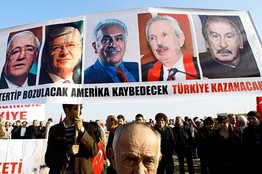
    rodrikltUltra-nationalist supporters holding a banner identifying the “real” villain in the Ergenekon affair: “The plot will be foiled, America will lose, Turkey will win.”

    I no longer recognize Turkey, the country where I was raised and spend most of my time when I am not teaching in the U.S.
    It wasn’t so long ago that the country seemed to be taking significant strides in the direction of human rights and democracy. During its first term in government, between 2002 and 2007, Prime Minister Recep Tayyip Erdogan’s Justice and Development Party (AKP) worked hard to bring the country into the European Union, to reform its legal regime, and to relax restrictions on Kurds.
    But more recently, the same government has been responsible for a politics of deception, dirty tricks, fear, and intimidation that couldn’t present a sharper contrast to its rhetoric on democracy. Several Turkish intellectuals abroad who have expressed critical views have told me they are afraid to return to Turkey. Eavesdropping has reached such levels that even housewives refrain from chatting about “sensitive” matters on the phone.
    The AKP government has launched massive, politically motivated court cases against its opponents. Most glaring are the hundreds of current and retired military officers, lawyers, academics, and journalists who have been charged with membership in an armed terror organization, dubbed “Ergenekon,” which aims to destabilize and topple the AKP government.

    Associated Press
    Ultra-nationalist supporters holding a banner identifying the “real” villain in the Ergenekon affair: “The plot will be foiled, America will lose, Turkey will win.”

    Pursued by a group of specially appointed prosecutors, and loudly cheered by AKP-friendly and AKP-controlled media, these Ergenekon trials make a mockery of due process. They are based on indictments full of inconsistencies, rely on anonymous informants of questionable credibility, and evince systematic prosecutorial misconduct. The evidence behind the charges ranges from the insubstantial to the blatantly manufactured. The main purpose of the prosecutions seems to be to discredit the accused and keep them under detention for as long as possible.
    My personal wake-up call came in February when retired General Cetin Dogan, my father in law, was arrested in a parallel case. Mr. Dogan, an outspoken critic of the AKP, was charged with being the leader of an elaborate coup plot to overthrow the newly elected government in 2002-2003. The documents backing the charges, produced as usual by an anonymous informant, were full of anachronisms, discrepancies, and mistakes, raising serious questions about their authenticity. None of this derailed the government. Prosecutors ignored all indications of forgery, a government-controlled scientific body produced a patently misleading report lending support to the charges, and the pro-AKP media launched a vicious campaign of character assassination against Mr. Dogan. Mr. Erdogan and his circle joined in the chorus of attacks while denigrating judges that would dare rule in favor of the defendants. Mr. Dogan was kept for months in jail pending trial, along with tens of other active-duty and retired officers, despite the absence of credible evidence and obvious signs of fabrication.
    Inexplicably, many supposed Turkish democrats and liberals have made common cause with the AKP government and have acted as cheerleaders for these cases. Their hope seems to be that the Ergenekon trials will bring the so-called “deep state”—clandestine networks of the military and their civilian allies—to account. There is little doubt that Turkey’s pre-AKP secular order featured strong anti-democratic undercurrents. But the AKP government has shown little interest in uncovering actual crimes or bringing real culprits to justice. Even though some of the Ergenekon suspects may be guilty of transgressions, they have been indicted not for specific, demonstrable offences, but for nebulous or fictitious crimes unlikely to result in convictions in a fair trial. Moreover, in these and other cases the government engages in exactly the kinds of activities that the liberals decry and want to bring to justice.
    Consider some other examples. Despite considerable evidence that senior members of the police were, at a minimum, guilty of gross negligence in the murder of the Armenian journalist Hrant Dink in January 2007, none of the policemen have been prosecuted. It is not a coincidence that some of these same police officials have led the Ergenekon investigations. A distinguished chief state prosecutor has been imprisoned on trumped-up charges of being a member of the Ergenekon network, even though he was one of the few prosecutors courageous enough to go after the military gendarmerie’s intelligence branch, a stronghold of the deep state, during 1998-1999. His real crime: Investigating religious orders connected to the AKP. Despite clear indications that the police and prosecutors have been involved in the planting of or tampering with evidence against Ergenekon suspects, there have been no attempts to explain, let alone investigate, the misconduct.
    Given the trail of wrongdoings the AKP is leaving behind, it will likely do whatever it takes to avoid losing power in next summer’s elections. Sadly, Mr. Erdogan’s inclination will be to raise the temperature a few notches higher, both domestically and internationally (see its recent rapprochement with Iran, or its brinkmanship against its old friend Israel).
    It’s clear now that Turkey is no longer the liberalizing, emerging democracy under the AKP that it was only a few years ago. It’s time the U.S. and Europe stopped treating it as such—both for their own sakes, and for the sake of the Turkish people.
    -Mr. Rodrik is the Rafiq Hariri professor of International Political Economy at Harvard University’s John F. Kennedy School of Government.
    *******************************************************
    Türkiye Demokrasisinin Ölümü

    DANI RODRIK, Harvard Üniversitesi Uluslararası Siyasi Ekonomi Bölümü Profesörü.
    rodriklt

    İngilizceden çeviren: Çimen Turunç Baturalp (The Wall Street Journal)

    Büyüdüğüm ve Amerika’daki hocalığımdan arta kalan bütün zamanımı geçirdiğim ülkeyi, Türkiye’yi artık tanıyamıyorum. Ülkenin demokrasi ve insan haklarında dev adımlarla ilerliyor gibi görünmesinin üzerinden çok fazla zaman geçmedi. Hükümetin 2002 ile 2007 yılları arasındaki ilk döneminde Başbakan Recep Tayyip Erdoğan’ın Adalet ve Kalkınma Partisi (AKP) ülkeyi AB’ye götürebilmek ve Kürtler üzerindeki kısıtlamaları gevşetebilmek için çalışmıştı.
    Ama son zamanlarda aynı hükümet kendi demokrasi söylemi karşısında bundan daha keskin bir zıtlık sergileyemeyeceği ölçüdeki kirli oyunların, korku ve sindirme politikalarının sorumlusu haline geldi.
    Eleştirel görüşlerini açıkça ifade etmiş olan yurtdışındaki birçok Türk entelektüeli bana Türkiye’ye dönmekten korktuklarını söylüyorlar. Gizli dinlemeler öyle boyutlara ulaşmış ki ev kadınları bile telefonda “hassas” konularda sohbet etmeye çekinir olmuşlar.
    AKP hükümeti muhaliflerine karşı çok sayıda, siyasi motivasyonlu dava başlattı. En çok göze batan davalılar “Ergenekon” adı verilen ve ülkeyi karıştırarak AKP hükümetinin düşmesini sağlamak amacıyla kurulmuş silahlı bir terör örgütünün üyesi oldukları iddiası ile suçlanan yüzlerce emekli ve muvazzaf subay, avukat, akademisyen ve gazeteci oldu. Özel olarak atanmış bir grup savcı tarafından yürütülen ve AKP dostu, AKP tarafından kontrol edilen bir medyanın sevinç çığlıkları ile desteklenen bu Ergenekon davaları asıl süreçle alay etmektedir. Bu davalar genellikle tutarsızlıklarla dolu ithamlara dayanmakta, güvenilirlikleri tartışmalı adı meçhul ihbarcılara inanıldığını ve sistematik savcılık suiistimallerinin varlığını ortaya çıkarmaktadır. Suçlamaların dayandırıldığı kanıtlar, hayali olanından kabaca kurgulanılanına kadar gider. Savcılığın asıl amacı sanki itham edilenlerin itibarını düşürmek ve onları mümkün olduğu kadar uzunca bir süre gözaltında tutabilmektir.

    Çetin Doğan hakkındaki suçlamalar
    Beni kişisel olarak uyandıran alarm, şubat ayında kayınpederim, emekli Orgeneral Çetin Doğan, paralel bir dava için tutuklandığında çaldı. AKP’ye karşı sesi gür çıkan bir muhalif olan Doğan, 2002-2003 yılında yeni seçilmiş hükümeti devirmek için özenle hazırlanmış bir darbe planının lideri olmakla suçlanıyordu. Suçlamalara temel olan belgeler, her zaman olduğu gibi adı meçhul bir ihbarcı tarafından üretilmiş, orijinalliğine ilişkin ciddi kuşkular uyandıran zamanlama hataları, çelişkiler ve yanlışlarla doluydu. Bunların hiçbiri hükümeti yolundan çevirmedi. Savcılar sahteciliğin tüm belirtilerini görmezden geldiler, hükümetin kontrolündeki bilimsel bir kuruluş suçlamalara destek veren açıkça yanıltıcı bir rapor üretti. Ve AKP yanlısı medya, Doğan’a karşı çirkin bir karalama kampanyası başlattı. Erdoğan ve çevresi bir yandan sanıkların lehine karar almaya cesaret edebilen hâkimlere iftiralar atarken bir yandan da saldırılar korosuna katıldı. Doğan, mahkemeyi beklerken onlarca muvazzaf ve emekli askerle birlikte, güvenilir deliller olmamasına ve sahteciliğin açık işaretlerine rağmen aylarca hapishane de tutuldu. Anlaşılmaz bir biçimde bu mesele birçok sözde Türk demokratı ve liberalinin ortak davası haline geldi ve bu insanlar bu davaların amigoluğunu yapar oldular. Herhalde Ergenekon davalarının derin devlete, yani ordu ve sivil müttefiklerinin kurduğu gizli ağlara hesap soracağı ümidini taşıyorlardı. Türkiye’nin AKP öncesi laik düzeninin güçlü antidemokratik eğilimlerin işaretlerine sahip olduğuna dair pek kuşku yoktur. Ama AKP hükümeti asıl suçların ortaya çıkarılması ve gerçek suçluların adaletin önüne getirilmesi konusuna pek fazla ilgi göstermedi. Bazı Ergenekon zanlıları ihlallerden dolayı suçlu da olabilirler. Ama bu kişilerin somut, kanıtlanabilir suçlar yerine, bulanık, kurmaca suçlarla itham edilmeleri adil bir mahkeme sonucuna ulaşma olasılığını yok etmektedir.
    Dahası hükümetin kendisi bu ve diğer davalarda, liberallerin lanetlediği ve yargının önüne getirmek istediği türden faaliyetlerin tıpatıp aynısına girişmiştir. Başka örneklere bakalım. Yüksek rütbeli polislerin Ermeni gazeteci Hrant Dink’in Ocak 2007’de öldürülmesi olayında en azından, büyük ölçüde ihmallerinin olduğuna dair hatırı sayılır miktarda kanıt bulunmasına rağmen bu polislerin hiçbiri yargılanmadı. Aynı polislerin bazılarının Ergenekon soruşturmasını da yürütmüş olmaları bir tesadüf değildir. Saygın bir cumhuriyet savcısı, uydurma suçlamalara dayanılarak Ergenekon ağı üyesi olduğu iddiasıyla tutuklandı. Bu savcı 1998-1999 arasında derin devletin kalesi sayılan jandarma haberalma dairesinin üstüne gitmeye cesaret gösterebilen çok az sayıda savcıdan biriydi. Gerçek suçu, AKP ile bağlantısı olan tarikatları soruşturmaktı. Polis ve savcıların Ergenekon sanıkları aleyhine kanıtlarla oynanmasına karıştıklarını gösteren somut işaretler olduğu halde görevini kötüye kullanılmasına ilişkin, bırakın bir soruşturma yapılmasını, herhangi bir açıklama bile gelmedi.
    Geride bıraktığı haksızlıkların izlerine bakılarak gelecek yaz yapılacak seçimlerde AKP’nin gücünü kaybetmemek için elinden geleni ardına bırakmayacağı söylenilebilir. Ne yazık ki Erdoğan’ın eğilimi hem iç hem de dış siyasette harareti birkaç derece arttırmak yönünde olacaktır. (Son günlerde İran’la yakınlaşması veya eski dostu İsrail’e karşı gerilim politikası.)
    Şu açıktır ki Türkiye artık daha birkaç yıl önce AKP yönetiminde liberalleşen, gelişen demokrasi değil. Artık ABD’nin de Avrupa’nın da ona sanki öyleymiş gibi davranmaktan vazgeçmesinin zamanı geldi. Hem kendi hem de Türk halkının selameti adına…

  • APO IS BARKING AGAIN

    APO IS BARKING AGAIN

    Turkey: PKK Should Consider Ceasefire – Leader
    July 2, 2010
    Kurdistan Workers’ Party (PKK) leader Abdullah Ocalan said the group’s militants should consider a ceasefire with Turkey following Turkish bombings of PKK areas in northern Iraq, AFP reported July 2. Ocalan said he hopes to resolve the PKK’s conflict with Turkey through democratic channels, rather than through the escalation of violence and internal strife. The Kurds would comply with a ceasefire, should Turkey develop a process of nonviolence, Ocalan said.

  • Ottoman Past Shadows Turkish Present

    Ottoman Past Shadows Turkish Present

    Ankara’s turn against the U.S. on some crucial issues reflects centuries of power plays

    By ANDREW MANGO

    At its height in the 17th century, the Ottoman Empire stretched from the gates of Vienna to the Indian Ocean. It was the greatest military power in the world. It was also a successful administrator, ruling a multitude of ethnic and religious, settled and nomadic communities—from the Unitarian Hungarians to the Iraqi Turkmen—with great tolerance.

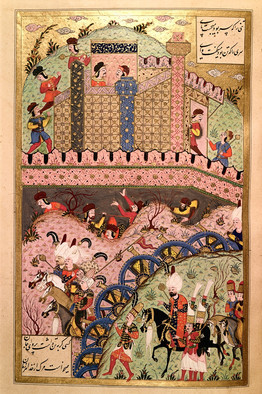
    [turkey]The Bridgeman Art Library‘The Conquest of Belgrade by Sultan Suleyman I,’ a 16th-century depiction of an Ottoman victory.

    The Ottoman experience, which forms part of the historical memory of Turkey’s present-day rulers, teaches them that in order to secure what they have, they must outsmart friends and foes alike, learning how to use them rather than be used by them—and how to turn danger into profit.

    It’s crucial to keep Turkey’s history in mind today, as the alliance between Turkey and the U.S. appears to grow shakier, primarily over the Middle Eastern policy of Turkish Prime Minister Recep Tayyip Erdogan. His finger-wagging rhetoric against Israel since its air strikes on Gaza in 2009, culminating in his endorsement of the Turkish Islamic activists who tried to break the Israeli blockade of Gaza, did not help U.S. efforts to restart the Middle Eastern peace process. Mr. Erdogan’s ill-timed revival of an old proposal to swap enriched uranium with Iran, followed by his decision to vote in the Security Council against the imposition of further sanctions, served only to increase the threat of conflict.

    After the failure of the Ottomans’ attempt to capture Vienna at the end of the 17th century, which revealed their technological backwardness, their main concern was to save the empire from collapse.

    They did so for more than two centuries, and achieved periods of prosperity, by exploiting the rivalries of their enemies. The exploitation ran both ways. The European Great Powers made use of Turkey (the name they used for the Ottoman Empire) against each other, as well as to profit from the empire’s vast trading opportunities. At times the Europeans incited the Christian, and later Arab and Albanian, communities to rise against their Ottoman rulers, but nationalists within the empire also invited foreign support.

    Turkey’s past has provided other lessons. First, national interests trump friendships, however long-established. From the 16th century to the end of the 18th, the French and the Ottomans had a common enemy in the Habsburgs. As a result, the French disregarded Christian solidarity and sent military contraband to the Turks. Then, when Napoleon defeated the Austrians, he invaded Ottoman Egypt. The Sultan’s government saw that the revolutionary liberty proclaimed in France was a cloak for imperialism. The British supported the Ottomans, first against the French and then against the Tsars’ expansionism, until the beginning of the 20th century when, faced with the threat of a militaristic Germany, Britain wrote off the Ottoman Empire to recruit Russia into the Triple Entente with France. British friendship, like that of the French, the Turks concluded, was fickle.

    [turkey]AlamyMustafa Kemal Atatürk.

    Second, divide your enemies. Sultan Abdülhamid II (who ruled from 1876 to 1909) preserved Ottoman rule in Macedonia and the Arab lands for 30 years by pitting the Bulgarians against the Greeks, and threatening Britain and France with the specter of Islamic solidarity.

    Third, be realistic: Avoid adventures at all costs and know your limitations. The empire which Abdülhamid had kept together was destroyed in 10 years by the Young Turks, who took over in 1908. They were politically naive but power-hungry young officers, who thought that the institution of a constitutional monarchy would reconcile the conflicting nationalities in the Ottoman Empire. Their one-size-fits-all constitutionalism did unite the various ethnic communities of the empire, but it united them against the Turks, who were then gradually converted to a defensive nationalism of their own. Foreign states that had acquired a privileged position in Ottoman possessions launched preemptive strikes, catching the Young Turks off-balance. In a last desperate gamble, the leaders of the Young Turks propelled their country into World War I on the side of Germany. The jihad, a holy war they proclaimed against the Allies, showed that Islamic solidarity was a myth: Indian Muslims, French Muslim Senegalese and Algerians, and the Tsar’s Tatar subjects fought in the armies of their imperial masters.

    Mustafa Kemal (who later took the surname of Atatürk—Father of the Turks) learned from the mistakes of his predecessors. In 1919, at the age of 38, he became the leader of the Turkish national resistance against the Allies’ plans to partition what was left of Turkey. A successful commander who had won his spurs in Gallipoli, and an even better politician, he believed that to hold its own against the West, Turkey had to become part of it. Atatürk played off the major Allies one against the other, and convinced them all that an independent Turkish nation-state was perfectly compatible with their interests. As a result, he had to fight only the Greeks and the Armenians.

    Atatürk did not believe in nonalignment: He used alliances where it suited him. In 1934 he became a founder of the Balkan Pact with his western neighbors and erstwhile foes, and, three years later, of the Saadabad Pact with Iran, Afghanistan and Iraq, whose Hashemite rulers had fought against Atatürk when he commanded Ottoman forces in Syria during World War I. The Saadabad Pact disproves the myth that Atatürk turned his back on the Middle East. But he knew that the key to progress lay elsewhere: in the West, the center of the universal human civilization he was determined to join. His was not an either/or foreign policy. He cultivated the friendship of the Soviet Union and, at the same time, drew nearer to Britain and France.

    Atatürk’s slogan was “Peace at home and peace abroad.” Peace was the key to rebuilding a ruined country and of spreading modern knowledge among its illiterate peasant population. When peace abroad came crashing down with the outbreak of World War II soon after Atatürk’s death, his successor Ismet Inönü managed to keep Turkey out of the hostilities. He used delaying tactics to resist Winston Churchill’s pressure to enter the war on the side of the Allies. He neutralized local nationalists who thought that by joining Germany, Turkey could realize the Young Turks’ dream of creating an empire of Turkic-speaking peoples. Inönü’s tactics raised the hackles of the Allies, but the outbreak of the Cold War came to his aid as he sought support to resist Stalin’s expansionism. The proclamation of the Truman Doctrine in 1947, promising help to Greece and Turkey against the Soviets, ended Turkey’s brief period of isolation and marked the beginning of the American Alliance.

    Critics of Turkey today, who complain that the country has drifted away from the West and toward the Middle East, forget that when Turkey sought the security of NATO membership at the beginning of the Cold War, Britain tried to foist on it a role in making the Middle East safe against Soviet subversion, and counter-proposed that Turkey join a Middle East Defense Organization. The leaders of the Democrat Party, who took over from Inönü after Turkey’s first free elections in 1950, saw off that effort by sending troops to Korea and earning U.S. support for Turkey’s NATO membership.

    [TURKEY]The Bridgeman Art LibrarySultan Bayezid II, who welcomed Jews exiled from Spain.

    Turkey’s U.S. alliance soon came under strain. In 1964, when the Greek Cypriots denounced the constitution under which their island had achieved independence four years earlier and attacked their Turkish neighbors, President Lyndon Johnson sent a letter to Ankara, warning that if Turkey intervened, the North Atlantic Treaty Organization guarantee would not apply and NATO weapons could not be used. Inönü, who had returned to power after the hapless Democrat Party leader Adnan Menderes had been ousted by the military (and subsequently hanged), retorted: “If there is to be a new world, so be it! Turkey will find a place in it.”

    The Johnson letter raised a wave of anti-Americanism in Turkey, which was given added impetus as student radicalism spread from France to Turkey in 1968. In 1974, when Turkey finally landed troops, and Cyprus was divided along lines that have persisted to this day, the U.S. Congress forced an unwilling administration to impose an arms embargo on Turkey. America, the Turks concluded, was an unreliable ally.

    The embargo had two unintended consequences. Turkey developed its own defense industry (using the main U.S. technology under license), and gradually began acquiring (largely U.S.-designed) weaponry from Israel. Turkey had been prompt to recognize Israel, the first Muslim state to do so, on the simple grounds that diplomacy had to recognize reality. But relations were discreet and slow to develop. Israel had from the outset a number of Turkish admirers. A leading Turkish secularist journalist famously called it “a republic of reason.”

    It would be silly to claim that Turkey is free of anti-Semitism, but relations between Turks and Jews have been amicable more often than not, since the Ottoman Sultans welcomed Jews expelled from Spain. While anti-Semitism was largely absent, envy of prosperous Christians and Jews was ever-present and peaked during World War II, when a discriminatory capital levy despoiled Christians and Jews alike of most of their wealth. Paradoxically, at the same time, Turkey welcomed a host of German Jewish academics and artists. The insecurity caused by the capital levy led to a mass emigration of Turkish Jews to Israel soon after the creation of the state. But the emigrants bore little animosity toward the country where they and their ancestors had lived and prospered for centuries.

    Today, Turkish and U.S. interests have diverged on a number of issues. They coincide on Iraq, whose unity Turkey wants to promote, lest Iraqi Kurds, Sunnis and Shiites compromise their neighbors’ stability as they fight each other. They differ on Syria, which is a promising destination for Turkish exports and investments, and above all on Iran, which Turkey neither fears nor particularly likes, but with which it hopes to develop profitable economic ties.

    CorbisA map of the Turkish empire, circa 1600.

    turkey

    turkey

    The European Union no longer needs the Turkish security shield, and its electorate, particularly in a period of recession, resists the idea of Turkish membership and the prospect of the free circulation of labor. Russia, no longer a threat, is becoming Turkey’s most important economic partner. The EU still takes more than 40% of Turkish exports and is the country’s main source of investments and tourists, but the prospects of growth lie elsewhere—in trade with producers of oil and gas, which Turkey lacks, including Russia, the Arab countries and Iran.

    Turkey has also changed. Its economy, which earns it a place in the G-20, has survived the crisis well, and is growing at a rate second only to China’s. Social change has brought power to conservatives, who dominate the government. But just as Turkish secularists are split between authoritarian and liberal followers of Atatürk, so too Turkish conservatives include fundamentalists (who manned the flotilla to Gaza) and the upwardly mobile followers of the preacher Fethullah Gülen (long resident in Pennsylvania) who want to engage with the modern world.

    Finally, there is the unpredictable personal element in political leadership. Mr. Erdogan started as a shrewd calculator of the national interest. Domestic difficulties and a perception of his country’s growing importance seem to have bred in him a desire to cut a figure on the world stage. The lesson of the disasters brought about by the Young Turk adventurers have inspired Turkey’s careful and wise foreign policy. Friends of Turkey can only hope that the same lesson does not have to be learned again.

    —Andrew Mango is the author of “Atatürk: The Biography of the Founder of Modern Turkey” and “From Sultan to Atatürk.”
  • U.S. Capabilities to Manage Irregular Conflicts in the 21st Century

    U.S. Capabilities to Manage Irregular Conflicts in the 21st Century


    U.S. Capabilities to Manage Irregular Conflicts
    in the 21st Century
    Speakers: Roy Godson, Ph.D.

    President of the National Strategy Information Center (NSIC) and Emeritus Professor of Government, Georgetown University

    Richard Shultz, Ph.D.

    Professor and Director, International Security Studies Program,
    Fletcher School, Tufts University and NSIC Research Director

    Ariel Cohen, Ph.D.

    Senior Research Fellow, The Heritage Foundation

    Host: James Jay Carafano, Ph.D.

    Deputy Director, The Kathryn and Shelby Cullom Davis Institute for International Studies, The Heritage Foundation

    Date: Thursday, July 8, 2010
    Time: 12:00 – 1:00 PM
    Location: The Heritage Foundation’s Lehrman Auditorium

    or call (202) 675-1752

    News media inquiries, please call (202) 675-1761

    All events can be viewed live at heritage.org.
    Guests are subject to Terms and Conditions of Attendance,
    which can be read at heritage.org/Events/Terms-and-Conditions-of-Attendance.

    Defying common wisdom, most security challenges in the world today are not random, unrelated happenings. Rather, they are part of a conflict environment in which a burgeoning number of armed groups and other non-state actors, sometimes aided by authoritarian states, constitute the predominant and persistent sources of instability. Clear patterns can be seen in the global security environment and they will continue to threaten peace and security for at least the next quarter of a century. Dr. Roy Godson and Dr. Richard Shultz will discuss these patterns and highlight key findings and recommendations from a new report – Adapting America’s Security Paradigm and Security Agenda. The report was produced with the assistance of senior security practitioners from democracies around the world under the auspices of the National Strategy Information Center. Godson and Shultz argue that the United States needs a set of tools and skills suited to the world as it is and as it is likely to evolve, not as it was.

    214 Massachusetts Avenue, NE
    Washington, D.C. 20002-4999
    ph 202 546 4400 | fax 202 546 8328
    heritage.org
  • Operation Cage: a case study in Israeli false flag tactics

    Operation Cage: a case study in Israeli false flag tactics

    By Wayne Madsen
    Online Journal Contributing Writer

    (WMR) — Top Turkish government and intelligence sources told WMR in Ankara and Istanbul that Turkish intelligence has obtained evidence that Israeli intelligence is squarely behind repeated Ergenekon “deep state” plots aimed at overthrowing the Turkish government of Prime Minister Recep Tayyip Erdogan, including Operations Sledgehammer and Cage.

    Israeli special operations personnel have also been discovered by Turkish intelligence providing support for Kurdish Workers Party (PKK) terrorist attacks aimed at Turkish army and navy personnel. Israeli forces, operating from northern Iraq, are believed to have provided support for a recent PKK attack on a Turkish army post near the town of Semdinli. Ironically, Turkish forces used an Israeli-supplied Heron unmanned aerial vehicle system to track down the PKK in Iraq and identify their Israeli support team.

    Mossad support for the Cage Operation Action Plan, hatched within the ranks of the Turkish Naval Forces Command, is a textbook lesson in Mossad false flag operations around the world.

    As reported by Today’s Zaman, Cage plans were found on a CD last year in the office of retired Major Levent Bektas, who was linked to caches of buried weapons in Istanbul. Cage plans called for the assassination of non-Muslim figures in Turkey and then casting the blame on Erdogan’s Justice and Development Party (AKP). Cage was actually implemented in the assassinations of Turkish-Armenian journalist Hrant Dink, Catholic Father Andrea Santoro, and three Christian missionaries in Malatya. Behind these assassinations of gentiles was the hidden hand of the Jewish state’s intelligence service, Mossad, according to informed Turkish sources.

    Cage also targeted school children. TNT was have to been placed in a submarine on display at the Rahmi M. Koc museum in Istanbul and detonated at the same time a group of school children were due to visit the site. According to Today’s Zaman, Cage was divided into four parts: “Preparation,” “Raising Fear,” “Shaping Public Opinion,” and “Action.” The similarities between Cage and the well-documented Israeli pre- and post-involvement in the 9/11 attack on the United States are stark, particularly the “preparation” phase involving hundreds of Israeli “art students” and furniture movers who were, in reality, Mossad and Israeli Defense Force special operations personnel.

    The “Action” phase included assassinations and kidnappings of major non-Muslim figures in Turkey, as well as the planting of bombs near non-Muslim targets and arson attacks on their homes and offices. The “Action” plan also called for placing propaganda in key media outlets, including pre-designated web sites, blaming the terrorist attacks on Erdogan’s AKP government.

    Previously published in the Wayne Madsen Report.

    Copyright © 2010 WayneMadenReport.com

    Wayne Madsen is a Washington, DC-based investigative journalist and nationally-distributed columnist. He is the editor and publisher of the Wayne Madsen Report

    , Jun 23, 2010