Month: June 2010

  • Rabbi Menachem Froman Present A Peace Plan To Turkish PM

    Rabbi Menachem Froman Present A Peace Plan To Turkish PM

    Erdogan received Rabbi Menachem Froman and Sheikh Ghassan Manasra from Jerusalem Peacemakers initiative.

    Turkish Prime Minister Recep Tayyip Erdogan received on Thursday Rabbi Menachem Froman and Sheikh Ghassan Manasra from Jerusalem Peacemakers initiative.

    The 45-minute meeting was held at Erdogan’s residence in the Turkish capital of Ankara.

    Rabbi Menachem Froman from Jerusalem Peacemakers initiative said that they presented a peace plan to Erdogan on Thursday.

    Replying to questions of AA correspondent, Froman said they believed that Turkish Premier Erdogan could bring peace to the region.

    Froman said they would also present the peace plan to Israeli government, Palestinian government, governments of Arab countries, European countries, Russia and the U.S. government.

    Replying to a question, Froman said Erdogan was a great leader for settlement of peace.

    Froman said he came to Turkey after Israel’s raid on a Gaza-bound aid flotilla and several ministers in Israel were waiting for the result of his visit to Turkey.

    Sheikh Manasra quoted Prime Minister Erdogan as telling them that he would support efforts for peace in Middle East in Thursday’s meeting.

    Only Turkey could bring peace to the region, Manasra said.

    WorldBulletin

    AA

  • LONDRADA GAZA BLOCKADE DEMOSTRATION

    LONDRADA GAZA BLOCKADE DEMOSTRATION

    An emergency demonstration has been called in central London on Saturday 5
    June 2010 to protest against the Israeli assault on a flotilla of aid ships
    heading for blockaded Gaza.

    The march will start from Downing Street at 1.30 pm and head to the Israeli
    Embassy in Kensington where there will be a rally. The organisers are the
    Palestine Solidarity Campaign along with CND, the Stop the War coalition,
    the British Muslim Initiative and Viva Palestina.

    Palestine Solidarity Campaign’s General Secretary, Betty Hunter, says: “For
    us in the head office of PSC, the reality of Israel’s ceaseless campaign of
    attrition has been brought even closer to home with the news that our
    Director of Campaigns, Sarah Colborne, is one the campaigners illegally
    being held hostage by the Israeli Government. I am sure I speak for all
    members and supporters when I say that our thoughts are with all those being
    held hostage and particularly with Sarah, her family and her friends.”

    The UK trade union movement has been quick to show its support for and those
    travelling on the flotilla, following Israel’s attack on Mavi Marmara.

    At its annual conference in Manchester, the UNITE union passed an emergency
    motion calling for an end to the illegal blockade of Gaza.

    ———————————-

    Cumartesi gunu saat 13:30’da Downing Street (Basbakanlik Binasi) onunde
    baslayacak olan yuruyuste Turklerin katilimi ve Turk Bayraklarinin sayisi
    cok onem kazanmistir..

    Bu yuruyuse  lutfen herkes katilmaya calismalidir.Israil’in yapmis oldugu
    nu her zaman gormezden gelen  hukumetler Israil denilen korsan devletle
    ilgili ve hatta Turkiye’yi ilgilendiren bir konuda takkelerini onlerine
    koyacaklardir..

    Bu oradaki kalabaliga ve Turk Bayraklarinin sayisina baglidir.Bu yuruyus biz
    Turkler acisindan tarihi bir oneme haizdir….Lutfen bu tarihi firsati
    kacirmayalim.

    YER:13:30 DOWNING STREET -Parlamento binasina cok yakin…

  • Turkey Prioritizes Independent Regional Policies in the Middle East and the South Caucasus

    Turkey Prioritizes Independent Regional Policies in the Middle East and the South Caucasus

    Turkey Prioritizes Independent Regional Policies in the Middle East and the South Caucasus

    Publication: Eurasia Daily Monitor Volume: 7 Issue: 105

    June 1, 2010

    By: Saban Kardas

    Turkey continued its regional diplomacy, following the historic visit by Russian President Medvedev to Ankara (EDM, May 20). Prime Minister Tayyip Erdogan paid back-to-back trips to Greece, Iran and Azerbaijan, which underscored Turkey’s rising activism in its neighborhood, as well as highlighting divergence with the United States.

    The most controversial development was the deal Turkey brokered jointly with Brazil regarding the Iranian nuclear issue. Building on the groundwork laid by their foreign ministers, Turkish and Brazilian leaders convinced their Iranian counterpart to agree on a proposal made earlier by the international community, under which it would swap its low-enriched uranium with enriched rods for a medical research reactor. The exchange will take place in Turkey.

    Turkey portrayed the agreement as a historic achievement that would end the stalemate over Iran’s nuclear program, and bring peace to the Middle East, emphasizing that Iran agreed to sign a document stipulating concrete obligations (www.cnnturk.com, May 17). However, the reactions to the deal from the United States and Western powers put Turkey in a rather controversial position rather than to earn the sort of praise it was anticipating. Since the deal came amidst news that the United States succeeded in getting other permanent members of the UN Security Council agree on new sanctions, this development increasingly pit Ankara and Washington against each other.

    From an American perspective, the deal was not satisfactory because Iran agreed to the conditions proposed back in October 2009 while it did not commit to end its nuclear program. In particular it is emphasized that while the amount of fuel Iran agrees to return, 1,200 kilograms, was significant at the time it was first proposed, since then Iran is likely to have expanded its stockpile of enriched uranium, which is not under inspection. Turkish Foreign Minister, Ahmet Davutoglu, remained defiant. Arguing that the United States was kept informed about the negotiations with Iran, Davutoglu contended that Iran’s promises were satisfactory and should be the basis of efforts to solve the diplomatic standoff (Today’s Zaman, May 20). Meanwhile, a recent development somehow adds credibility to Turkey’s arguments. Reportedly, Obama sent a letter to Brazilian President in April wherein he urged him to pursue the efforts to convince Iran to accept the exchange the 1,200 kilograms of uranium on Turkish territory, though noting that the US would also pursue the sanctions path (letter available at:www.politicaexterna.com/archives/11023.

    Amid statements coming from the United States and other powers that concerns over Iran’s nuclear program did not disappear, Erdogan sought to mobilize the international community behind the deal with Iran. He telephoned President Barack Obama, Russian Prime Minister Vladimir Putin and many other leaders, as well as sending letters to many others, asking them to prevent sanctions against Iran and give diplomacy a chance. Although Obama appreciated Turkish efforts, he underlined that they would expect to see Iran’s interpretation of the deal, and kept the option for sanctions open (Anadolu Ajansi, May 20, May 22).

    Iran sent a letter to the International Atomic Energy Agency (IAEA) on Monday explaining the deal brokered by Turkey and Brazil in detail. As anticipated, while the United States did not find Iran’s commitments satisfactory, Turkey insisted on its earlier position. Meanwhile, Erdogan started his historic tour of South America. Speaking in Brazil, he reiterated in strong words that the deal brokered by Brazil and Turkey was a historical breakthrough, and they would continue to work toward a nuclear free world (www.haberturk.com, May 28).

    The challenges posed by Iran’s nuclear program are unlikely to subdue, as Iran remains committed to continue with its program. Turkey’s policy so far demonstrates that it is increasingly self-confident in undertaking foreign policy initiatives in its region and toward that end it could even risk confrontation with the United States. Especially the fact that Turkey went ahead with these efforts despite the news about a new draft UN Security Council being prepared is worth mentioning here. Turkey has made clear on many occasions that it would not approve tougher measures against Iran considering the negative repercussions of such a move (EDM, March 20). Reiterating this position on several regional and international platforms, Davutoglu invested much of his time on this issue over the last couple of months, as he and his team held numerous meetings with their Iranian counterparts to find a negotiated solution. Therefore, Turkish leaders would not like to see all their efforts go in vain as a result of a new round of sanctions, which would pose a serious blow to their credibility in the region and at home.

    Overall, the Turkish leaders seem to assume good will on Iran’s part and do not seriously consider the possibility that Iran might be manipulating their willingness to mediate in this crisis to undermine the quasi-coalition the United States has delicately managed to form. Given Iran’s track record, the United States is increasingly concerned that Iran might not be acting in good faith and is using such last-minute deals to avoid tougher reactions (Today’s Zaman, May 24). Given these conflict interpretations of Iran’s nuclear program, we might observe growing divergence of opinions between Ankara and Washington.

    Erdogan also paid a visit to Baku and Tbilisi, following his trip to Tehran, which also underscored another dimension of Ankara’s regional policies, conducted independently of Washington’s priorities. After the normalization with Armenia, which was promoted by Washington, hit an apparent deadlock, Erdogan’s trip to Baku served as yet another affirmation of Ankara’s determination to keep Baku at the center of its Caucasus policy. Erdogan reiterated support for the Azeri position on Karabakh, which seemed to go a long way toward repairing the damage caused by Turkey’s efforts to achieve a rapprochement with Armenia.

    As a concrete indication of such a thaw, it is expected that Azerbaijani leader Ilham Aliyev will visit Turkey in early June. Aliyev had avoided visiting Turkey in apparent protest of Turkish-Armenian normalization and Turkey’s position on the natural gas negotiations (EDM, October 21, 2009). A deal recently reached between the two countries would bring an end to the negotiations concerning the price for Turkey’s purchases from Azerbaijan and conditions for the passage of Azeri gas to Europe through Turkish territory. Although the agreement was expected to be signed during Erdogan’s visit, it is postponed for Aliyev’s visit by which time the two parties will also finalize the remaining details. While saying that they “will crown the agreement during Mr. President’s visit,” Erdogan perhaps expressed how much he attaches significance to Aliyev’s upcoming trip (Hurriyet, May 17).

  • NATO or Israel?

    NATO or Israel?

    James Joyner | June 03, 2010

    Israel’s attack on a Gaza aid flotilla, killing nine, has earned near-universal condemnation, with even sympathetic observers terming it the act of a bully, tone deaf, staggeringly stupid, tactically incompetent, a major tactical blunder, a moral victory for Hamas, and an unqualified disaster for Israel’s reputation. But Israel is rather accustomed to international scorn and has every right to chart its own course. However, this latest incidence has potentially grave consequences for United States and its transatlantic allies.

    Turkey, a founding member of the NATO alliance and heretofore Israel’s only friend in the region, is apoplectic.

    Foreign Minister Ahmet Davutoglu proclaimed Tuesday morning, ““Psychologically, this attack is like 9/11 for Turkey.” As idiotic as that may seem — there were 9 deaths, not 3000, and the incident involved provocateurs flouting a naval blockage, not innocents in the Turkish homeland — the actions of his government indicate that the sentiment is genuine.

    Prime Minister Recep Tayyip Erdogan accused Israel of “state terrorism” and he told his parliament the Israeli assault violated “international law, the conscience of humanity and world peace.” Erdogan proclaimed the incident “a turning point in history. Nothing will be the same again.” Serkan Demirtas, writing in Hurriyet, sees “a long-term diplomatic war between Turkey and Israel” as “unavoidable.” Similar statements have been made by Turkish pundits and analysts, including those considered moderates.

    Erdogan, noting what seems to be the end of the Turkish-Israeli alliance for the foreseeable future, proclaimed, “Turkey’s hostility is as strong as its friendship is valuable.” And veteran columnist Sami Kohen proclaims, “Turkey now is one of the sides in the Middle East conflict. It is quite clearly opposed to Israel.”

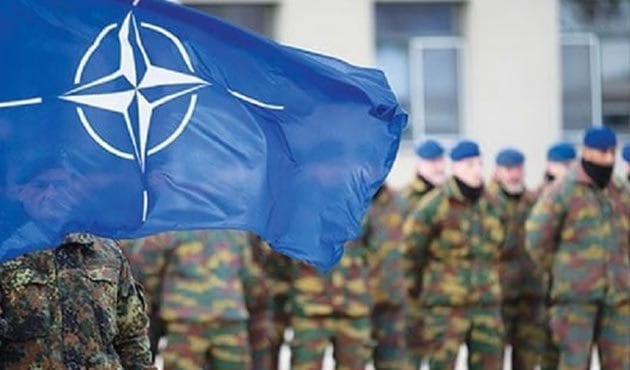
    Erdogan also raised the specter of Article 5: “Citizens of member states were attacked by a country that was not a member of NATO,” he said. “We think that should be discussed in NATO.” Again, this is overblown. Whatever one thinks of the Israeli action, it was decidedly not an attack on Turkey “in Europe or North America.” And, while Article 6 makes provisions for extending the umbrella of protection to “forces, vessels, or aircraft of any of the Party” operating in the Mediterranean Sea, it rather clearly is intended to apply to the defense of colonial territories.

    But security analysts Steve Hynd and Robert Mackey think this irrelevant and that if Turkey invokes the Charter, the U.S. will face a dire choice, indeed. As Mackey puts it:

    Because if Turkey invokes the NATO charter and the US doesn’t react, then NATO is GONE. GONE and DEAD. Why? Because when the US was attacked on 9/11, the NATO charter was invoked–and that is why NATO troops are in Afghanistan today. 9/11 was proof that NATO was not just an ‘anti-Russian’ pact–that it applied anywhere. If the US doesn’t go along with a Turkish response…it will reveal NATO as being a “US pact”–that the entire alliance exists only to help the US. Oh, there will still be mutual defense treaties with the UK and maybe Germany. But that is just about it. And the US will have to go on its own in Afghanistan.

    Legally, this strikes me as over-reach. But politically? At very least, Turkey’s continued membership in the alliance would be in question. They’ve already moved to distance themselves from the West in recent years. And, goodness knows, the European allies would be happy for any excuse at all to get out of Afghanistan.

    All the major European powers have criticized Israel’s actions, with Angela Merkel, Nicolas Sarkozy, and David Cameron all issuing stern statements. More interestingly, NATO Secretary General Anders Fogh Rasmussen has weighed in with uncharacteristically stern words:

    I offer sincere condolences to the families of all victims and condemn the acts which have led to this tragedy. I add my voice to the calls by the United Nations and the European Union for a prompt, impartial, credible and transparent investigation into the incident.

    As a matter of urgency, I also request the immediate release of the detained civilians and ships held by Israel.

    While tame by op-ed standards, diplomats don’t use words like “victims” and “condemn” lightly.

    National Interest senior editor Jacob Heilbrunn asks the right question: “Where does this leave Israel and America?”

    Thus far, the Obama administration is keeping its powder dry, issuing a cautious statement expressing “deep regret at the loss of life in [the] incident, and concern for the wounded” while also stressing “the importance of learning all the facts and circumstances around this morning’s tragic events as soon as possible.” That’s exactly the right position for the world’s superpower—and perhaps Israel’s only remaining friend—to take at the outset. But the facts are quickly coming in and it will be time to make tough calls.

    In the meantime, stalling for time isn’t going to please anyone. Certainly not the Turks, who have already declared themselves “deeply unsatisfied” with the response.

    Does it matter? American administrations have stood shoulder-to-shoulder with Israel and against the international community dozens of times in the past. But the stakes are higher now.

    Writing in this space, journalist and author Barbara Slavin declared, “Israel has scored an own-goal, shifting the narrative from Iran and its nuclear and human rights transgressions to Israel’s lack of regard for pro-Palestinian lives.” Former National Interest editor and current Naval War College professor Nick Gvosdev agrees, noting that the “argument that Iran is violating its international commitments and so should be sanctioned may be much harder to make.” And, as the Financial Times’s Gideon Rachman notes,

     . . . a sanctions package against Iran is arguably as much in the interests of Israel, as in the interests of the US itself. The US may now feel that it has to go along with a UN condemnation of Israel to preserve the chances of getting its Iran resolution through. It would be a classic Israeli own goal, if their assault on the Gaza ships sank the choices of a new resolution on Iran.

    Apparently, the impending World Cup has analysts thinking of soccer.

    But Iran isn’t the only issue at stake. Turkey is a pivotal state bridging East and West, Christendom and Islam. The Christian Science Monitor’s Yigal Schleifer:

    Ankara’s shift complicates a historic alliance between Turkey and the US, which has become more important in recent years. An air base in southern Turkey is one of the most important transit bases for ferrying troops and supplies to Afghanistan. Turkish mediation, meanwhile, had gotten Israel and Syria back to the peace table until that effort was aborted when the Gaza war broke out.

    Increased tension between Turkey and Israel clouds one of the few sunny spots the US had previously enjoyed in the region.

    The deterioration in the once-close relationship between Turkey and Israel has been mirrored by an equally precipitous rise in Turkey’s visibility and involvement in the Middle East, an area that it had kept at arm’s length for decades because of historical enmity and mutual suspicion.

    Switching sports, the ball is now in Obama’s court. Will he handle this according to the national-security interests of the United States? Or will he continue a bipartisan tradition of subordinating our interests to Israel’s? My bet, alas, is on the latter. 

    James Joyner is managing editor of the Atlantic Council.  This essay was originally published by The National Interest. Photo credit: Getty Images.

  • New Israeli Tack Needed on Gaza, U.S. Officials Say

    New Israeli Tack Needed on Gaza, U.S. Officials Say

    Bulent Kilic/Agence France-Presse — Getty Images

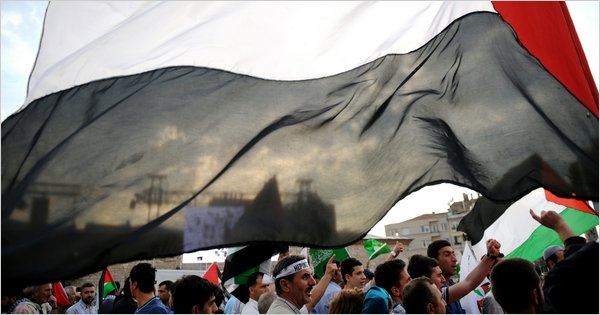
    Demonstrators waved Palestinian flags in Istanbul on Wednesday during a protest against Israel’s raid on a Turkish ship.

    By ETHAN BRONNER
    Published: June 2, 2010

    WASHINGTON — The Obama administration considers Israel’s blockade of Gaza to be untenable and plans to press for another approach to ensure Israel’s security while allowing more supplies into the impoverished Palestinian area, senior American officials said Wednesday.

    Related

    • In Bid to Quell Anger Over Raid, Israel Frees Detainees (June 3, 2010)
    • Pressure Mounts on Israel as Activists Vow to Test Blockade Again (June 2, 2010)
    • Room for Debate: Rethinking a Blockade (June 1, 2010)

    The officials say that Israel’s deadly attack on a flotilla trying to break the siege and the resulting international condemnation create a new opportunity to push for increased engagement with the Palestinian Authority and a less harsh policy toward Gaza.

    “There is no question that we need a new approach to Gaza,” said one official, who spoke on the condition of anonymity because the policy shift is still in the early stages. He was reflecting a broadly held view in the upper reaches of the administration.

    Israel would insist that any approach take into account three factors: Israel’s security; the need to prevent any benefit to Hamas, the Islamist rulers of Gaza; and the four-year-old captivity of an Israeli soldier held by Hamas, Staff Sgt. Gilad Shalit.

    Since the botched raid that killed nine activists on Monday, the Israeli government has said that the blockade was necessary to protect Israel against the infiltration into Gaza of weapons and fighters sponsored by Iran.

    If there were no blockade in place, Prime Minister Benjamin Netanyahu said on Israeli television on Wednesday evening, it would mean “an Iranian port in Gaza.” He added, “Israel will continue to maintain its right to defend itself.”

    But the American officials said they believed that even Mr. Netanyahu understood that a new approach was needed.

    Yet Mr. Netanyahu has resisted American pressure in the past. The Obama administration initially demanded a complete freeze on Israeli settlements in the West Bank, but had to accept a 10-month partial freeze. Pressure on Israel also carries domestic political risks for Mr. Obama, given the passion of its supporters in the United States.

    Israel withdrew its soldiers and settlers from Gaza five years ago and built the makings of an international border. But after Hamas, which rejects Israel’s existence, won Palestinian parliamentary elections in 2006, Israel cut back on the amount of goods permitted into Gaza. When Sergeant Shalit was seized in a raid in June of that year, commerce was further reduced.

    A year later, Hamas drove the Fatah-dominated Palestinian Authority entirely out of Gaza in four days of street battles, leading Israel to cut off all shipments in and out except basic food, humanitarian aid and urgent medical supplies.

    Hamas declines to recognize Israel’s right to exist, renounce violence or accept previous accords signed between Israel and the Palestinian Authority. The diplomatic group known as the Quartet, made up of the United States, Russia, the European Union and the United Nations, has said that until Hamas meets those requirements, the Quartet will not deal with it.

    But the world powers have grown increasingly disillusioned with the blockade, saying that it has created far too much suffering in Gaza and serves as a symbol not only of Israel’s treatment of Palestinians but of how the West is seen in relation to the Palestinians.

    “Gaza has become the symbol in the Arab world of the Israeli treatment of Palestinians, and we have to change that,” the senior American official said. “We need to remove the impulse for the flotillas. The Israelis also realize this is not sustainable.”

    At a meeting of the Quartet a year ago in Italy, for example, the group asserted that the current situation was not sustainable and called for the unimpeded provision and distribution of humanitarian aid within Gaza, as well as the reopening of crossing points.

    But Obama administration officials made it clear that the deaths had given a new urgency to changing the policy.

    Pressure against the blockade continued to grow on Wednesday: Turkey, which withdrew its ambassador to Israel after the raid, said full restoration of diplomatic ties was contingent on an end to the blockade.

    The new British prime minister, David Cameron, also called for an end to the blockade, criticizing the raid as “completely unacceptable.”

    In Israel, officials say there is no humanitarian crisis in Gaza because the Defense Ministry makes sure that enough food and medicine reach the population. But international aid groups assert that real malnutrition is growing to about 10 percent and that problems with medical and sanitation supplies are rising perilously because of the Israeli and Egyptian embargoes.

    In recent months, Israel has permitted increased — although still quite limited — movement of goods and people into and out of Gaza. One Israeli official said that under Mr. Netanyahu there had been a 20 percent increase in goods, including some limited building materials under third-party supervision so that Hamas would not get hold of them.

    But Israel remains adamant, saying that if cement and steel were allowed to pass in any serious amount, they would end up in Hamas missiles and other weapons that would be aimed at Israel.

    Discussion in Israel this week has largely focused on the details of the seizure of the ship where the deaths occurred rather than on the broader question of whether the blockade is good policy.

    Amos Gilad, a senior defense official, said in an interview that in Gaza, “we only have bad solutions, worse solutions and worst solutions.” He added: “Hamas is a terrorist organization sworn to Israel’s destruction. We, on the contrary, are facilitating them to bring in all kinds of food, materials; they are even exporting strawberries and flowers.”

    Aluf Benn, a senior editor and columnist for the left-wing Israeli newspaper Haaretz wrote on Wednesday that the time had come for a new Gaza policy.

    “The attempt to control Gaza from outside, via its residents’ diet and shopping lists, casts a heavy moral stain on Israel and increases its international isolation,” he wrote. “Every Israeli should be ashamed of the list of goods prepared by the Defense Ministry, which allows cinnamon and plastic buckets into Gaza, but not houseplants and coriander. It’s time to find more important things for our officers and bureaucrats to do than update lists.”

    He suggested sealing the Israel-Gaza border and informing the international community that Israel was no longer responsible for Gaza in any way, forcing Gaza to turn to Egypt as its corridor to the outside world.

    Egypt has consistently rejected such an idea in the past, asserting that Gaza is Israel’s responsibility because it has occupied it since 1967.

    One of the primary rationales for the blockade offered by Israeli officials is the need to create a material and political gap between the West Bank, run by the Fatah-dominated Palestinian Authority, and Gaza, run by Hamas. And political surveys have shown a preference for Fatah and discontent with Hamas among Palestinians. But the latest events, the American officials say, have given Hamas a dangerous lift.

    Isabel Kershner contributed reporting from Jerusalem.
  • İsrail başbakanının basın açıklaması – 2 Haziran 2010

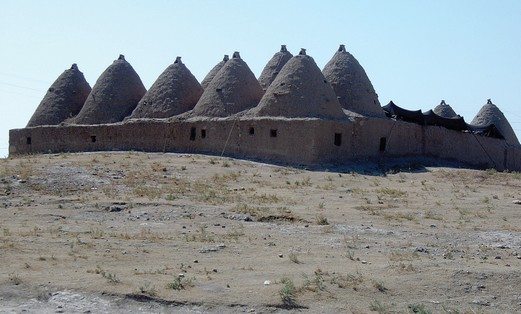
    İsrail başbakanının basın açıklaması – 2 Haziran 2010

    İsrail Başbakanı Netanyahu

    ” Aşk gemisi değil”

    Bir kez daha İsrail iki yüzlülük ve önyargıyla karşı karşıya. Maalesef bu bir ilk değil

    Geçen sene İsrail Hamasın binlerce havan ve roket saldırısını durdurmak için harekete geçti. Hamas bizim sivil halkımıza saldırırken kendi sivil halkının arkasına saklandı. İsrail kendini korurken  tarihte görülmemiş tedbirler alarak Filistin halkına gelecek zararı önlemeye çalıştı. Sonuçta ise Hamas değil İsrail BM tarafından savaş suçlusu olmakla suçlandı.

    Üzülerek görüyoruz ki aynı olay tekrarlanıyor.

    Gerçek odur ki Hamas İsraile saldırmak için İrandan binlerce roket, havan topu ve diğer silahları Gazze şeridine kaçak yollardan sokabiliyor. Bu roketler İsrailin büyük şehirleri Aşdod ve Berşevayı vurabilecek kapasitede. Tekrar üzülerek söylüyorum ki bu roketler bugün Tel Avivi ve yakın bir gelecekte Yeruşalayimi de vuracak kapasitede olacaklar. Elimize geçen bilgilere göre kaçak olarak getirilmeye çalıştıkları silahlar arasında İsrailin en uzak köşelerini bile vurabilecek silahlar mevcut.

    Uluslararası kanunlara ve sağduyuya göre İsrail bu silahların Gazzeye girmesini önlemek amacıyla bu silahları getirebilecek gemileri kontrol etme hakkına sahiptir.

    Bu sadece kuramsal bir tehlike değildir. Şimdiye kadar İranın Hizballah ve Hamasa gönderdiği yüzlerce ton silahlarla yüklü gemileri durdurduk. Sadece FrancoP adlı gemide Hizballah a gönderilen yüzlerce ton silah ve cephane ele geçirdik. Karin A adlı diğer bir gemi gene İrandan Hamasa gönderilen onlarca tonluk silah taşıyordu. İsrail denizden Hamasa silah ve savaş malzemesi girmesine müsaade edemez!

    Daha da ileri gideceğim. İsrail İrana Akdenizde, Tel Aviv ve Yeruşalayimden sadece düzinelerce kilometre uzakta bir liman kurmasına izin veremez. Hatta şunu da söyliyeyim. Mesuliyet hissi olan tüm devlet başkanlarına sesleniyorum. Uluslararası toplum İranın Akdenizde bir limanı olmasına izin veremez. Onbeş sene önce dünyayı İrana karşı uyardığımda kimse dikkate almamıştı. Bugün herkes tehlikenin farkında. Bugün herkesi İranın İsraile bitişik, Avrupanın burnunun dibinde bir limanı olma tehlikesine karşı  uyarıyorum. Bugün bizi eleştiren ülkeler yarın kendilerinin de hedef olacaklarını bilsinler.

    Bu ve daha birçok sebepten Gazzeye giden malları kontrol etmeye hakkımız vardır.

    Düşünce ve hareket tarzımız ise çok basittir. İnsani yardım ve diğer malzemeler Gazzeye girebilir. Silah giremez. Ve gereken malzemeler Gazzeye giriyor. Her hafta ortalama on bin ton malzeme giriyor. Gazzede açlık yok. Gazzede ilaç eksikliği yok. Gazzede herhangi bir eksiklik te yok.

    Bu sefer de, filoyla gelen malları kontrolden geçirip Gazzeye teslim edebilmek için birçok teklifte bulunduk. Mısır da benzer tekliflerde bulundu. Tüm teklifler reddedildi.

    Deniz kuvvetlerimizin bu gemilere çıkmaktan başka seçenekleri yoktu. Beş gemide askerlerimize karşı ciddi şiddet hareketleri ve ciddi yaralanmalar olmadı. Fakat gemilerin en büyüğünde başka olaylar yaşandı.

    Videolardan görebilirsiniz – ilk askerler gemiye çıktıklarında acımasız bir kalabalıkla karşılaştılar. Bıçaklandılar. Sopalarla dövüldüler. Üzerlerine ateş edildi. Bu askerlerle ben görüştüm. Biri midesinden vurulmuş. Diğeri dizinden. Ölmemek, ve kendilerini korumak için ateş açtılar.

    Saldırganların bu şiddeti önceden hazırladıkları barizdir. Gemiye binerken yanlarında bıçaklar, demir sopalar ve diğer silahları da getirdiler. BU saldırganların aşırı radikal bir gruba ait olup uluslararası terörü desteklediklerini, ve şimdi de Hamas adındaki terör örgütü için çalıştıklarını biliyoruz. Saldırırken Yahudilere karşı savaş çığlıkları atıyorlar. Bunu videolarda görebilirsiniz.

    Bu bir aşk gemisi (Love Boat) değildi. Bu bir nefret gemisiydi. Gemidekiler barış insanları değildi. Bunlar şiddetli terör taraftarı insanlardı.

    İsrailli askerlerin hayatlarının tehlikede olduğu aşikardır. Önyargısız bir izleyiciyseniz videoları seyredince bu basit gerçeği göreceksiniz. Fakat üzülerek belirtiyorum ki uluslararası kamuoyunda çoğu kimsenin hiçbir delile ihtiyacı yoktur. İsrail, suçu ispat edilene kadar suçlu kabul edilir.

    Bir kez daha, İsraile kendisini koruma hakkı olduğunu söylenmesine rağmen bu hakkını kullandığında suçlu ilan ediliyor. Bilinir ki kullanılamıyan bir hakkın hiçbir değeri yoktur. Bütün dünya biliyor ki kendimizi savunma hakkını –  son çare olarak, şehirlerimize roket saldırıları olduğunda, askerkerimiz ölüm tehlikesinde olduklarında – kullandığımızda bnu tüm uluslararası standartlara uygun bir şekilde yaparız.  Dünya liderleriyle konuştum, şimdide dünya kamuoyuna soruyorum. Siz ne yapardınız? Şehirlerinizin sivil halkınızın çocuklarınızı üzerine yağacak binlerce roketin düşmana ulaşmasını önlemek için ne yapardınız? Askerleriniz ne yapardı? Eminim ki kalbinizde bu sorunun cevabını biliyorsunuz.

    İsrail olarak olan can kaybından dolayı üzüntü duyuyoruz. Ancak kendimizi savunduğumuz için hiçbir zaman özür dilemiyeceğiz. İsrailin,  düşmanlarının eline öldürücü silahların geçmesini önlemeye hakkı vardır. İsrail askerlerinin kendi hayatlarını ve vatanlarını korumaya hakları vardır.

    Söyliyeceğim size size imkansız bir talep veya istek gibi gelebilir fakat gene de söyliyeceğim. İSRAİLE ÇİFTE STANDARTLA  BAKMAYIN. Diğer tüm devletler gibi Yahudi devletininde kendini korumaya hakkı vardır.

    Teşekkür ederim.

    Çeviri: Hastürk