Month: June 2010

  • TIES WITH ISRAEL MAY OUTLAST TURKISH ANGER AT RAID

    TIES WITH ISRAEL MAY OUTLAST TURKISH ANGER AT RAID

    ” Deputy Prime Minister Bulent Arinc said Monday. “No one should expect us to declare
    war on Israel over this.”

    By SELCAN HACAOGLU and SUZAN FRASER (AP)

    The Associated Press
    01/06/10
    ANKARA

    Turkey – Israel’s deadly raid on a Gaza-bound aid ship has ignited
    unprecedented anger in Turkey and driven the Jewish state’s relations
    with its most important Muslim ally to their lowest point in six
    decades.

    There are signs, however, that the countries’ long-term strategic
    alliance and military ties will endure.

    Prime Minister Recep Tayyip Erdogan furiously told parliament Tuesday
    that the “bloody massacre” of at least four Turkish activists among
    nine passengers slain by Israeli naval commandos was a turning point
    in the long-standing alliance.

    “Nothing will be the same again,” Erdogan said, gesturing angrily,
    his voice shaking at times.

    Thousands of Turks staged protests across the country and pockets of
    demonstrators shouted “down with Israel!” on streets near the Israeli
    ambassador’s well-protected residence – an unusual sight in one of
    the capital’s most affluent districts.

    Pro-Islamic daily Yeni Safak newspaper described the Israeli troops as
    “The children of Hitler,” in a banner headline.

    But other officials were delivering messages of restraint and Turkey
    said it was not canceling plans to accept $183 million (euro150.56
    million) worth of Israeli drone planes this summer.

    “We will find a solution within law and diplomacy,” Deputy Prime
    Minister Bulent Arinc said Monday. “No one should expect us to declare
    war on Israel over this.”

    Turkey’s eight-year-old Islamic-rooted government has publicly and
    frequently expressed outrage over Israel’s 2008-2009 war in Gaza
    and continuing blockade of the strip. But Turkey’s deeply secular
    military remains heavily dependent on high-tech Israeli arms in its
    battle against Kurdish separatist guerrillas based along Turkey’s
    mountainous southeastern border with Iraq.

    Israel’s right-leaning government said that the countries’ defense
    ministers had agreed hours after the raid that the incident wouldn’t
    affect Israeli weapons sales to Turkey.

    The massive Heron drones to be delivered this summer can fly at least
    20 hours nonstop and first saw action against Hamas militants in the
    Gaza war. Turkey hopes they can gather crucial intelligence on Kurdish
    rebels and allow pinpoint strikes at a time of escalating insurgent
    attacks. Israel also recently completed a more than $1 billion upgrade
    of Turkey’s aging tank fleet and U.S.-made F-4 warplanes. Turkey has
    opened its airspace to Israeli pilots for training purposes.

    “There are still common interests, common needs,” said Ofra Bengio,
    a professor of Middle Eastern history at Tel Aviv University’s Dayan
    Center. “For the time being, we’re in the middle of a crisis…but
    governments change.”

    Erdogan held a meeting with the military’s second-ranking general, the
    defense minister and national intelligence chief that ended minutes
    before his speech and another key security meeting was scheduled for
    Wednesday. His speech, while heated, notably shied from proclaiming
    a broader change in Turkish policy toward Israel.

    “Lying has become state policy for Israel and it knows no shame for
    the crimes it has committed, he said. “From now on, it is no longer
    possible to turn a blind eye on the lawless behavior of the current
    Israeli government.”

    Ordinary Turks of all classes and political beliefs are incensed,
    and there are widespread calls for a tougher response than Turkey
    scrapping three joint army and navy exercises and pulling its
    ambassador to Israel.

    “I would like to see a harsher Turkish government reaction in the
    face of such an attack against Turkish people,” said Ali Goktas,
    an 18-year-old air conditioner repairman. “It was inhumane.”

    Turkish/Israeli ties have flourished since the signing of military
    cooperation agreements in 1996 but they date decades to the founding
    of the Jewish state.

    Founded on secular principles and intensely focused in recent decades
    on closer ties with the West, Turkey welcomed Jews fleeing Nazi
    persecution during the World War II and was among the first Muslim
    countries to recognize Israel in 1948.

    Bilateral trade stands around $2.6 billion – roughly one percent of
    Turkey’s overall trade – and Israeli have given crucial support in
    recent years to Turkey’s efforts to prevent the deaths of 1.5 million
    Armenians in Ottoman Turkey during World War I from being labeled
    a genocide.

    “The relations are based on mutual trust and I don’t think they
    are permanently damaged,” said Mahfi Egilmez, an analyst with NTV
    television. “The relations can improve when there is a new government
    in Israel or when the Gaza conflict is solved.”

    Organized by the Istanbul-based Foundation for Human Rights and
    Freedoms and Humanitarian Relief under the unofficial auspices of
    the Turkish government, the flotilla was the ninth attempt by sea to
    breach the three-year-old blockade of Gaza. Israel and Egypt imposed
    the blockade after the violent 2007 seizure by Hamas militants of
    Gaza, home to 1.5 million Palestinians. Israel allowed five seaborne
    aid shipments to get through but snapped the blockade shut after the
    2008-2009 war.

    Turkey’s Foreign Ministry said four Turkish citizens were confirmed
    slain by the Israeli commandos and another five were also believed to
    be Turks, although Israeli authorities were still trying to confirm
    their nationalities. Turkey sent planes to pick up the wounded after
    refusing an Israeli offer to bring them home.

    Turkey called for emergency meetings of the United Nations Security
    Council and NATO to condemn the killings. But Turkey’s representative
    to NATO did not demand that the alliance take collective action against
    Israel, according to a diplomat who attended the talks. The official
    asked not to be named because of the sensitivity of the matter.

    Turkey’s Islamic-rooted administration has been increasingly assertive
    diplomatically in the Middle East in recent years, backing Iran’s
    attempts to quash new U.N. sanctions over its nuclear program and
    trying to mediate Israeli talks with Syria, which demands the full
    withdrawal of Israeli troops from the Golan Heights as a condition
    for peace.

    Relations with Israel’s year-old government and have been deteriorating
    steadily since Israel’s Gaza war.

    Erdogan walked off the stage last year after berating Israel’s
    President Shimon Peres at an international gathering in Davos,
    Switzerland, over the war in Gaza – an action that boosted Erdogan’s
    image in the Muslim world.

    In January, Turkish Ambassador Oguz Celikkol was not greeted with
    a handshake and was forced to sit on a low sofa during a meeting in
    Israel with Deputy Foreign Minister Danny Ayalon, who later apologized.

    Arinc, the deputy prime minister, said Turkey would launch legal
    action in a Turkish court against Israel over the deadly raid.

    Israel’s Foreign Minister Avigdor Lieberman told The Associated Press
    that he will not order the recall of the Israeli ambassador to Turkey,
    saying “I have no intention of worsening relations.”

    Lieberman said Israel would seek common ground with Turkey to preserve
    stability.
  • After Flotilla Raid, U.S. Is Torn Between Allies

    After Flotilla Raid, U.S. Is Torn Between Allies

    After Flotilla Raid, U.S. Is Torn Between Allies

    By MARK LANDLER
    Published: June 1, 2010

    WASHINGTON — Struggling to navigate a bitter split between two important allies, the Obama administration on Tuesday tried to placate an outraged Turkish government while refusing to condemn Israel for its deadly raid on a flotilla of aid ships bound for Gaza.

    President Obama telephoned Prime Minister Recep Tayyip Erdogan of Turkey to express his “deep condolences” for the deaths of Turkish citizens in clashes with Israeli soldiers on the ship, the White House said. He told Mr. Erdogan that the United States was pushing Israel to return their bodies, as well as 300 Turks who were taken from the ship and being held in Israel.

    Mr. Obama called for a “credible, impartial and transparent investigation of the facts surrounding this tragedy,” the White House said. Secretary of State Hillary Rodham Clinton said such an investigation could include international participation, something the Israelis said they opposed.

    It is far from clear that these efforts will mollify Turkey, which accused Israel of state-sponsored terrorism and likened the psychological impact of the raid to the Sept. 11, 2001, terrorist attacks in the United States. “No one should think we will keep quiet in the face of this,” Mr. Erdogan declared during a visit to Chile.

    The deep rift between Israel and Turkey, which had cultivated close ties, puts the Obama administration in a tough spot on two of its most pressing foreign-policy issues: the Middle East and Iran.

    The United States does not want to abandon Israel, which has been subjected to international opprobrium since the raid. The administration is desperate to keep alive indirect peace negotiations between the Israelis and Palestinians brokered by its special envoy, George J. Mitchell.

    But it also does not want to alienate Turkey, which is playing an increasingly vocal role on the world stage. Relations were already tender after the United States threw cold water on a Turkish and Brazilian effort to resolve the impasse over Iran’s nuclear program. Turkish officials complain that they negotiated the deal with the encouragement and agreement of the administration.

    “Turkey and Israel are both good friends of the United States, and we are working with both to deal with the aftermath of the tragic incident,” Mrs. Clinton told reporters at the State Department after meeting with Turkey’s foreign minister, Ahmet Davutoglu.

    She conferred with Mr. Davutoglu for more than two hours, rearranging her schedule. Mr. Obama’s national security adviser, Gen. James L. Jones, went to see him at his hotel before Mr. Obama called Mr. Erdogan.

    Earlier in the day, Mr. Davutoglu harshly criticized the cautious American response to the raid, saying: “We expect full solidarity with us. It should not seem like a choice between Turkey and Israel. It should be a choice between right and wrong, between legal and illegal.”

    He complained that the United States had delayed and watered down the United Nations Security Council statement on Israel, which condemned the actions on the ship rather than Israel itself.

    Mr. Davutoglu demanded that Israel apologize for the attack, release the detained passengers, return the bodies of the dead, agree to an independent investigation and lift its blockade of Gaza. He said Turkey was prepared to go back to the United Nations for further action against Israel.

    Israel, which defended the actions of its soldiers as a legitimate response to armed attacks by those on the ship, said it could not release the 300 passengers more quickly because they were illegal aliens and had to be held for at least 42 hours under Israeli law. Israel was also questioning 20 to 30 people who it says were directly involved in clashes with the soldiers.

    “We’re going to do our best to heal the wounds with the Turks,” said Michael B. Oren, Israel’s ambassador to the United States, who also met with General Jones and other White House officials.

    But Mr. Oren said Israeli authorities had asked Turkey to divert the flotilla to the Israeli port of Ashdod to avoid a confrontation with Israeli forces. He said Israel would have unloaded the cargo of construction material and humanitarian aid and arranged for it to be shipped to Gaza.

    Mr. Oren said the Israelis would undertake their own investigation, but he resisted calls for international involvement. Israel has been leery of international investigations since the Goldstone report, which faulted Israel for excessive force in its military strike on Gaza in 2008.

    More recently, the South Korean government has won praise for an investigation into the torpedoing of one of its warships, which was aided by the United States, Australia, Sweden and other countries. The report found that a North Korea submarine fired the torpedo.

    “The Israelis have traditional and well-founded concerns about international investigations,” said a senior administration official, speaking on the condition of anonymity. “But everyone recognizes that for an investigation to be credible, others have to be able to vouch for the results.”

    The flotilla case seems likely to harden Turkey’s skepticism about a United Nations resolution on Iran. Imposing more sanctions now, Mr. Davutoglu said, would only precipitate a confrontation with Iran in a few months, one that would be even riskier because of the broader tensions.

    Asked what the best policy toward Iran is, he said, “Diplomacy, diplomacy, diplomacy and more diplomacy.”

    Ethan Bronner contributed reporting.

    ======================

    Enlarge This Image

    Mustafa Ozer/Agence France-Presse — Getty Images

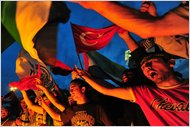
    As protests continued across Turkey for a second day Tuesday, demonstrators shouted slogans at the Israeli Consulate in Istanbul.

    Related

    • Pressure Mounts on Israel as Activists Vow to Test Blockade Again (June 2, 2010)
    • Turkish Funds Helped Group Test Blockade (June 2, 2010)

    Rethinking the Gaza Blockade

    Is there a way to prevent attacks against Israel while providing humanitarian relief to the Palestinians?

  • The Milli Görüs Connection

    The Milli Görüs Connection

    Gates of Vienna 2 June 2010
    By Baron Bodissey

    The world is aghast at what Israel did early this morning off the coast of Gaza. It is shocked — shocked! — at the indiscriminate slaughter of “unarmed civilians” in the Free Gaza Flotilla.

    According to AKI, the Italian foreign minister is outraged:

    “I strongly condemn the killing of civilians,” Italian foreign minister Franco Frattini said Monday in response to the incident. The Italian government asked the Israeli ambassador in Rome for an explanation about the attack. [emphasis added]

    And the Turkish foreign ministry condemned Israel’s actions:

    “Israel has once again clearly demonstrated that it does not value human lives and peaceful initiatives through targeting innocent civilians,” the statement said. [emphasis added]

    Leaving aside for the moment the adjectives “innocent” and “unarmed” modifying the word “civilians” — how civilian were the operatives who attempted to run the blockade into Gaza?

    The Israeli government insists that the organizers of the flotilla were no more “civilian” than terrorists are:

    Deputy Israeli foreign minister Danny Ayalon on Monday sought to justify an attack on an aid flotilla bringing supplies to Gaza by saying the organisers of the blockade-breaking effort had ties to international terrorists…

    “We couldn’t allow the opening of a corridor of smuggling arms and terrorists,” Ayalon said during a news conference at the foreign ministry.

    But what were the specific connections between “Free Gaza” and Islamic terrorism?

    Our Flemish correspondent VH has answered this question for us: the trail of breadcrumbs leads back to the militant Turkish Islamic organization Milli Görüs. Many thanks to VH for compiling the following report based on English-language articles and material translated from the Dutch:

    First, from Trouw:

    Turkish organization IHH linked to extremism

    The Turkish organization IHH, also known as “Foundation for Human Rights and Freedom and Humanitarian Relief” [its German sister organization is “Internationale Humanitäre Hilfsorganisation”, and the Dutch branch is “Internationale Humanitaire Hulporganisatie”], is an international Turkish NGO operating in over a hundred countries and enjoying consultative membership status in the United Nations Economic and Social Council, which was present at one of the ships in “aid convoy” to Gaza, has two faces: a relief organization and friend of extremists. In Turkey the organization primarily enjoys support from “conservative” Muslims.

    Founded in 1992, IHH was one of the largest aid agencies, active in Turkey and worldwide. Early this year they offered assistance to the victims of the earthquake in Haiti. On the other hand, IHH is not secretive about its ties with the strict Islamic movement Hamas, which holds power in the Gaza Strip.

    IHH supports Hamas financially. The support is further evidenced by, among other things, exhibitions, information briefings, and the publication of books on the situation in Gaza (and not the problems in other Palestinian areas). The ship that sailed in the convoy to Gaza departed last week from Antalya on the Turkey’s southern coast, brings both faces together.

    In the late nineties there was a criminal investigation in Turkey against IHH. The organization was suspected of involvement in supplying arms to Muslim terrorists. That did not lead to a ban of the organization. During disaster relief in Turkey itself, such as earthquakes, the IHH has indeed been kept at a distance ever since.

    Last year, the PVV [Party for Freedom] in the Netherlands, asked parliamentary questions [Dutch language, pdf] on financial aid by the Turkish Milli Görüs and IHH to Hamas. The Minister of integration, Van der Laan [PvdA, Labour Party, Socialists] replied that there was no evidence that Milli Görüs and the Dutch branch of IHH were involved in “support for Hamas in favor of facilitating terrorism.”[1]
    And from Elsevier:

    Milli Görüs chairpersons involved in support of Hamas

    by Robbert de Witt

    Several chairpersons of the Turkish Islamic organization Milli Görüs work closely together with a German foundation that supported the Palestinian terrorist organization Hamas, as newspaper “De Telegraaf” writes.

    The Turkish mosque association “Milli Görüs” was one of the organizers of the demonstration against Israel, in which SP MP Harry van Bommel and Gretta Duisenberg called together the Palestinians for an intifada against Israel.

    As the newspaper states, two directors of Milli Görüs Amsterdam are also board members of the Foundation for International Humanitarian Aid, which works closely with the German Internationale Humanitäre Hilfsorganisation (IHH).

    According to Israel, the IHH is part of a network of organizations that fund Hamas. The Israeli Defense Ministry has banned IHH for that reason. Also in America the network of organizations — the Union of Good [link to Intelligence and Terrorism Information Center:

    “The Union of Good: an umbrella organization comprised of more than 50 Islamic charitable funds and foundations worldwide. It in fact channels ‘charity’ money and provides other items for Hamas-affiliated institutions in the Palestinian Authority-administered territories, contributing to sustaining the support-system infrastructure of Palestinian terrorism through the so-called financial jihad,” and shows “Part of a Union of Good (UG) table of shahids, including suicide bombers in Israeli cities.”] — is placed on the list of terrorist organizations.

    Leader of the Union of Good is Sheikh Yusuf al-Qaradawi, who is the ideologue of the Muslim Brotherhood, and also a source of inspiration to the Dutch PvdA [Labour Party, Socialists] candidate for Parliament, Ahmed Marcouch. In 2005 Marcouch and Milli Görüs tried to invite the controversial sheikh to the Netherlands [following the murder of Theo van Gogh, to help “build bridges”].

    In De Telegraaf Milli Görüs denies[2] that it has any links with the German IHH. Also, the Dutch IHH would not transfer money to Hamas. In September 2008 an analysis of the Regional Intelligence Service showed that Milli Görüs has ties with financiers of terrorism and extremism. According to an intelligence report, the German director Ibrahim El-Zayat is a representative of the extremist Muslim Brotherhood.

    Earlier on, the Dutch Milli Görüs Chairman Fatih Dag came into disrepute when he threatened riots by Muslims if the construction of the controversial Wester Mosque in Amsterdam failed to go through.

    Notes:

    [1] 2163

    Questions from members Fritsma and Wilders (both PVV) to the Minister for Housing, Communities and Integration on the news that Milli Görüs financial supports the terrorist organization Hamas (Submitted January 15, 2009)

    1. Are you aware of the report “Milli Görüs indirectly supports Hamas?[2]
    2. What is your assessment of the fact that the directors of the very large (in the Netherlands) Islamic organization Milli Görüs are active in the “Internationale Humanitaire Hulporganisatie” [international humanitarian relief organization] (IHH), which (according to Israel and the U.S.) financially supports the Hamas terror organization?
    3. Do you agree that this is unacceptable, since it is clear that Hamas is bent on the destruction of Israel and has willfully murdered many innocent Israeli civilians? If not, why not?
    4. Are you prepared, just as Israel and the U.S. have done, to ban the foundation IHH, which is part of the dangerous “Union of Good”?
    5. What steps are being taken against the relevant directors of Milli Görüs, who are active in the foundation IHH?
    6. Are you prepared to cut all ties with Milli Görüs now that leaders of this organization (indirectly) support Islamic terrorists?
    7. Does Milli Görüs (still) receive a subsidy? If so, are you willing to put a hold on it? If not, why not?

    Reply from Minister Van der Laan (Housing and Integration), also on behalf of the Ministers of Interior and Kingdom Relations and Justice (received April 1, 2009). See also Appendix to Proceedings, session 2008-2009, No 1522

    1. Yes.
    2. The AIVD [Dutch Intelligence Service] does not currently have any indication that Milli Görüs in the Netherlands is involved in serious radicalization and terrorism, nor that Milli Görüs or the IHH Foundation in the Netherlands is involved financial support for Hamas in favor of facilitating terrorism.
    3. See answer to question 2.
    4. There is no reason to, see answer to question 2.
    5. No, see answer to question 2.
    6. No, see answer to question 2.
    7. Under integration policy, Milli Görüs no longer receives subsidies. The organization previously received financial support for four subprojects to address integration-related problems. The two most recently funded sub-projects were completed in 2008.

    [2] De Telegraaf, 9 January 2009.

    Additional material on Milli Görüs:

    At the beginning of the 1970’s, the decision of the Turkish Constitutional Council to outlaw Rafah, an Islamist political party directed by Necmettin Erbakan, encouraged a number of its members to create Milli Görüs, meaning “nationalist view” in Turkish (and named after the manifesto by Necmettin Erbakan of 1975, in which he promoted the political Islam and was opposed to rapprochement with Europe], which since 1995 has called itself “The Islamic Community of Milli Görüs [IGMG]”). One of the principal founders was the former Prime Minister of Turkey, Necmettin Erbakan, who was forced out of power in 1997 by the Turkish military and found too radical by the Turkish constitutional court.

    This organization was initially based in Germany and France, but soon spread over the whole of Europe via the Turkish diaspora. The article “Milli Görüs, wolves in sheep’s clothing,” states: “The Islamic Association of Milli Görüs is Europe’s largest ‘radical’ Islamic religious association, monitored [in Germany] by the Office of the Protection of the Constitution”. In Germany, for instance, they helped a Turkish immigrant family who did not want their children “to learn poems that describe Christian traditions” and refused to let them join swimming lessons and children’s birthday parties as a part of their battle against school authorities and their demand to enforce Islamic rules in school.

    When the French branch decided to “place emphasis on the Europeanization” of their political identity, a schism on this issue caused the founding of the Milli Görüs offshoots COJEP (Coordination des jeunes patriotes) and from that LICEP (Cojep League of Popular Education), which both lobby for Turkey’s accession to the EU. That the “schism” and offshoots are cosmetic is not only shown by their cooperation and share of the cojep.com domain, but even more in their having a shared frontman of the “Federation LICEP-COJEP”, General President Muhammed Çavus.

    On its website today, COJEP states it is “launching an urgent appeal to the world community, governments, solidarity organizations and NGOs working against anti-Semitism to voice their strongest condemnation against the barbaric attacks by Israeli commandoes on unarmed flotilla of boats going to Gaza with 700 passengers and ten thousands tons of relief supplies including food and medicine,” and threatens: “We also know that an unfortunate side effect of this cowardly action would be an increase in primitive anti-Semitic excesses throughout the world and especially in Europe.”

    According to the German Protection of the Constitution office, the IGMG in its ideology states the “the Western social order, democracy, human rights, and rights of equality and freedom are worth nothing.”

    An internal memo from Milli Görüs, discovered by the German Interior Ministry in 1999, reads: “The Community (i.e. the Turkish community) is a means working for an end — the end being to Islamize (German) society.” […] “Milli Görüs is a shield that protects our compatriots from European barbarity.” […] “Democracy is a Western error.” (source)

  • CYPRUS: NEWS FROM TRNC

    CYPRUS: NEWS FROM TRNC

    PRESIDENT  EROGLU BRIEFS POLITICAL PARTIES

    President Dervis Eroglu has briefed leaders of political parties having seats at the TRNC parliament on course of the negotiation process. The President will also inform the Council of Ministers on the issue today.

    Following the two hours long  meeting, the  leaders of the political parties  commented on the meeting to the press respectively.

    Prime Minister Irsen Kucuk said the President gave information regarding his first meeting with the Greek Cypriot leader and also commented on the next meeting.

    Main opposition party, Republican Turkish Party Leader  Ferdi Sabit Soyer speaking to the reporters draw importance to the recent decisions taken by the  European Court of Human Rights and said the ECHR   has confirmed the fact that  it is not only the former owner of  a particular property  that has rights but  those people  who are currently in possession of  that particular property  have rights as well.

    The Leader of Democrat Party Serdar Denktas  said they warned President on a possible fait accompli and said give and take process should not start at the  negotiations  before agreeing on all issues.

    The Leader of the Communal  Democracy Party Mehmet Cakıcı pointed out that   it was wrong to start the property chapter before completing  the chapter on governance and power sharing.

    For his part,  the Leader of the  Freedom and Reform Party Turgay Avcı said  they were pleased to see that the negotiation process would continue from where it was left off.

    EROGLU “I WILL PROTECT THE RIGHTS OF TURKISH CYPRIOTS AT THE NEGOTIATING TABLE”

    President Eroglu – who will meet with Greek Cypriot Leader Christofias on Thursday – has repeated that he would be protecting the rights of the Cyprus Turkish People at the table.  He said everyone  should know that he  was not intending to give up  Turkish Cypriots’ rights  at the negotiating table.

    Speaking during a visit paid to him yesterday, President Eroglu said that the Cyprus issue does not only concern the presidency but also all segments of society. The President also reiterated that he does not intend to leave the negotiations table.

    Referring to his first meeting with the Greek Cypriot Leader last week, he said that there were attempts to play tricks.

    What is binding on me is the letter I sent to the UN Secretary General. In this letter, the strategy and policies to be followed by me at the talks were explained in detail. The UN Chief or his representative may issue some statements. These are not binding on us” the President said, noting that there hasn’t been an agreement reached yet.

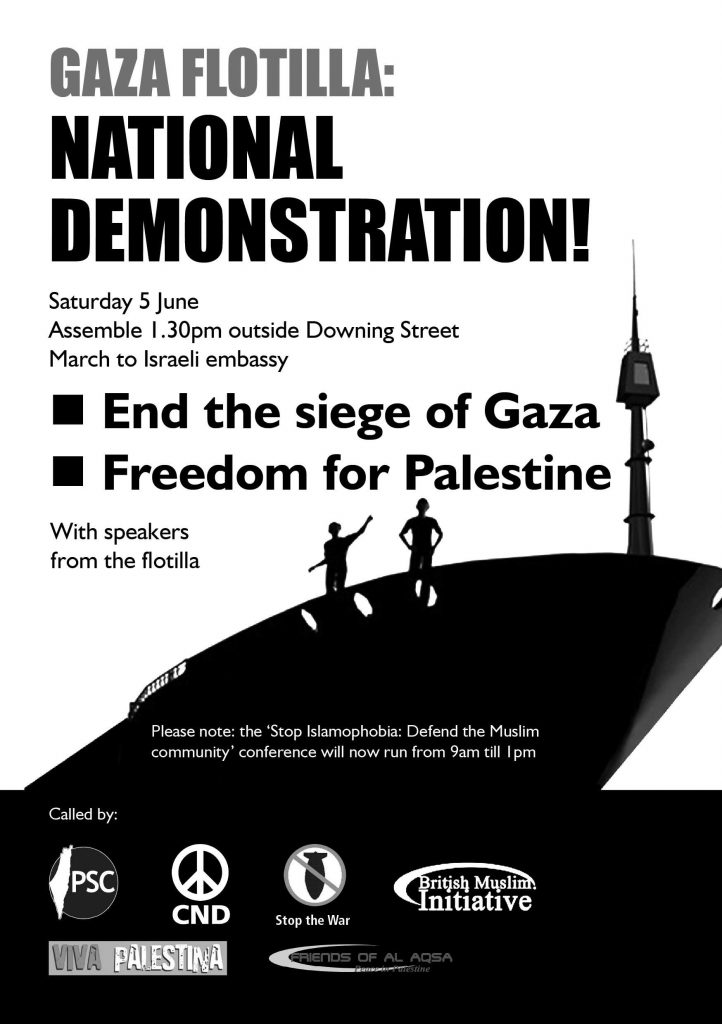
  • GAZA FLOTILLA: NATIONAL DEMONSTRATION IN UK!

    GAZA FLOTILLA: NATIONAL DEMONSTRATION IN UK!

    GAZA FLOTILLA: NATIONAL DEMONSTRATION IN UK!
    GAZA FLOTILLA: NATIONAL DEMONSTRATION IN UK!

    Date: Saturday 5th June

    Assemble 1:30pm outside Downing Street, LONDON, UK

    March to Israeli Embassy

    with speakers from the Flotolla

  • End the Siege of Gaza
  • Freedom for Palestine
  • Remembering The USS Liberty Attack

    Remembering The USS Liberty Attack

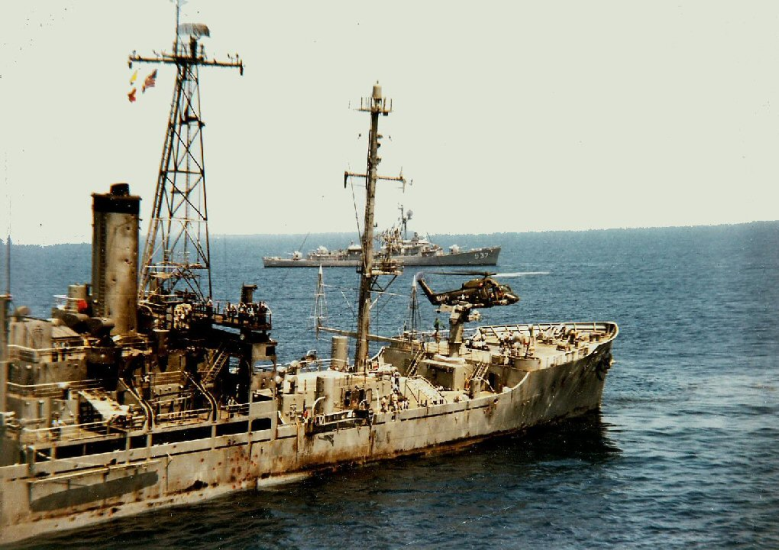
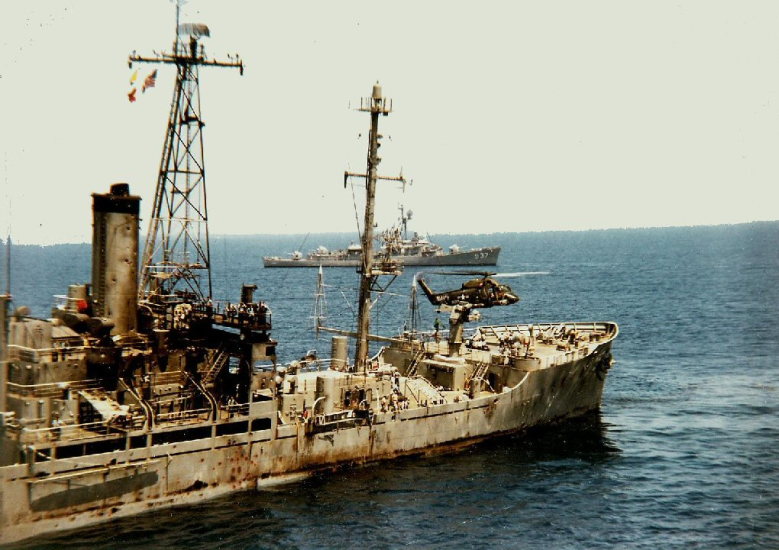
    The USS Liberty incident was an attack on a United States Navy technical research ship, USS Liberty, by Israeli Air Force jet fighter planes and motor torpedo boats, on June 8, 1967, during the Six-Day War. The combined air and sea attack killed 34 crew members (naval officers, seamen, two Marines, and a civilian), wounded 171 crew members, and severely damaged the ship. At the time, the ship was in international waters north of the Sinai Peninsula, about 29.3 mi northwest from the Egyptian city of Arish.

    Both the Israeli and U.S. governments conducted inquiries into the incident, and issued reports, which concluded that the attack was a mistake, due to Israeli confusion about the identity of the USS Liberty. Some U.S. diplomats, veterans and intelligence officials involved in the incident continue to dispute these official findings, saying the Israeli attack on the USS Liberty was not a mistake, and it remains the only major maritime incident in U.S. history not investigated by the U.S. Congress.

    In May 1968, the Israeli government paid US$3,323,500 as full payment to the families of the 34 men killed in the attack. In March 1969, Israel paid a further $3,566,457 in compensation to the men who had been wounded. On 18 December 1980, it agreed to pay $6 million as settlement for the U.S. claim of $7,644,146 for material damage to the Liberty itself.

    The ship, a $40-million dollar state-of-the-art signals intelligence platform, was later declared unsalvageable and sold for scrap.

    On December 17, 1987, the issue was officially closed by the two governments through an exchange of diplomatic notes.

    Turkish Press