Month: April 2010

  • Lieberman: Sarah Palin Can’t Be Underestimated

    Lieberman: Sarah Palin Can’t Be Underestimated

    Monday, 12 Apr 2010 07:07 PM

    By: Jim Meyers

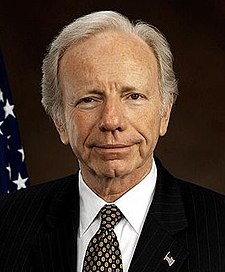
    Sen. Joe Lieberman tells Newsmax that anyone who underestimates former Alaska Gov. Sarah Palin as a political force “does so at some peril.”

    In an interview with Newsmax chief Washington correspondent Ronald Kessler, Lieberman was asked about the success of Palin in galvanizing a following.

    “I got to know her a little bit during the 2008 campaign when I was campaigning for John McCain. She’s a very warm and likable person,” Lieberman says.

    Story continues below.


    “I think Sarah Palin for a lot of people has become a spokesperson. People worried that government has forgotten them, has grown too big, that the deficit is growing too large, and in some sense that we’re not being as strong as we should be in the world — Governor Palin has spoken to those concerns as much as anyone.

    “I do disagree with her on some of the specifics that she has said, but I think anybody who underestimates Sarah Palin as a political force in America does so at some peril, because she is speaking for a lot of people out there.

    “I don’t know what her future is, but I’m just saying everybody should listen.”

    Editor’s Note: See “Lieberman: U.S. Should Attack Iran’s Nuclear Program if All Else Fails”

    Editor’s Note: See: “Lieberman: Likely Running in 2012 as an Independent.”

    ===============================================================

    Joseph IsadoreJoeLieberman (born February 24, 1942) is the junior United States Senator from Connecticut. First elected to the Senate in 1988, Lieberman was elected to a fourth term on November 7, 2006. In the 2000 United States presidential election, Lieberman was the Democratic nominee for Vice President, running with presidential nominee Al Gore, becoming the first Jewish candidate on a major American political party presidential ticket. The Gore–Lieberman ticket won the popular vote but ultimately failed to gain the electoral votes needed to win the controversial election. Lieberman ran for re-election to the U.S. Senate while he was also Gore’s running mate, and he was re-elected by the voters of Connecticut.[1] He was an unsuccessful candidate for the Democratic presidential nomination in the 2004 presidential election.

    During his re-election bid in 2006, he lost the Democratic Party primary election but won re-election in the general election as a third party candidate under the party label “Connecticut for Lieberman.” Lieberman has been officially listed in Senate records for the 110th and 111th Congresses as an “Independent Democrat”[2] and sits as part of the Senate Democratic Caucus. But since his speech at the 2008 Republican National Convention in which he endorsed John McCain for president, Lieberman no longer attends Democratic Caucus leadership strategy meetings or policy lunches.[3] On November 5, 2008, Lieberman met with Senate Majority Leader Harry Reid to discuss his future role with the Democratic Party. Ultimately, the Senate Democratic Caucus voted to allow Lieberman to keep chairmanship of the Senate Committee on Homeland Security and Governmental Affairs. Subsequently, Lieberman announced that he will continue to caucus with the Democrats.[4]

    Lieberman remains a registered Democrat.[5] He was one of the Senate’s strongest advocates for continued prosecution of the war in Iraq. He is also an outspoken supporter of the U.S.-Israel relationship. On domestic issues, he strongly supports free trade economics while reliably voting for pro-trade union legislation. He has also opposed filibustering Republican judicial appointments. With Lynne Cheney and others, Lieberman co-founded American Council of Trustees and Alumni in 1995. Lieberman is a supporter of abortion rights and the rights of gays and lesbians to adopt children and be protected with hate crime legislation.[6] Lieberman is one of the Senate’s leading opponents of violence in video games and on television. Lieberman describes himself as being “genuinely an Independent,” saying “I agree more often than not with Democrats on domestic policy. I agree more often than not with Republicans on foreign and defense policy.”[7]

    Lieberman’s approval rating in a poll taken January 4–5, 2010, was 25% approve versus 67% who disapprove, making him one of the least popular Senators currently in office.[

  • Turkey, leader of the Muslim world?

    Turkey, leader of the Muslim world?

    Neil Reynolds

    Turkey, leader of the Muslim world? AP

    Political scientist George Friedman thinks so. When the next global war breaks out, he reckons, Turkey will join Japan to drive the U.S. out of the Middle East and the Pacific

    ==============================

    Neil Reynolds

    Published on Monday, Apr. 12, 2010 5:00AM EDT Last updated on Monday, Apr. 12, 2010 11:25PM EDT

    In mid-March, Turkish President Abdullah Gul travelled to Cameroon for his country’s first trade mission to a central African nation. He got a warm welcome, The Economist reported. “Turkey must reclaim its mantle,” one Islamic cleric told him, “as leader of the Islamic world.” In this context, you’re not talking restoration of the Ottoman Empire – you’re talking expansion. Although the Ottoman Empire embraced Egypt, Libya, Algeria and Sudan, it never reached central Africa. For its part, The Economist recognized the credibility of resurrected Turkish ambitions. African countries have bitter memories of Western colonialists and Arab slave traders, the magazine noted. In contrast, they regard Turks as enlightened and humane. Read political scientist George Friedman’s The Next 100 Years: A Forecast for the 21st Century and you find yourself pondering – almost against your will – the apparent implications of otherwise insignificant news events. You’ll be skeptical, for instance, of Mr. Friedman’s assertion that Turkey will put together an Ottoman alliance before 2050 – with Ankara the capital of a Muslim brotherhood of nations that stretches from Bosnia-Herzegovina to Saudi Arabia, from Morocco to Afghanistan. Yet, Mr. Friedman presents his geopolitical analysis with a stern and, in many ways, compelling logic. Why would Turkey emerge as the leader of the Muslim world? Mr. Friedman notes that Turkey is the richest Muslim country – the only Muslim country with “a modern economy.” Turkey is the 17th-largest economy in the world with GDP of $600-billion (U.S.). Iran is 29th (GDP: $300-billion). Egypt is 52nd (GDP: $125-billion). Think of Turkey as a European country and it ranks seventh. Further, Iran is too erratic and too radical to assume regional leadership, and Pakistan is too unstable. When the next global war breaks out, Mr. Friedman guesstimates, Turkey will join Japan to drive the United States out of the Middle East and the Pacific. He says the war is most apt to begin at 5 p.m. on Nov. 24, 2050 – American Thanksgiving – when Japan, mimicking its Second World War success at Pearl Harbor, launches a sneak attack on U.S. space-based communications satellites. As bizarre as this prediction sounds, Mr. Friedman is no crank. Author or co-author of six books on war and peace, he is an academic who founded Stratfor, a private intelligence consulting company based in Austin, Tex. He holds a doctorate in government from Cornell University. Born in Hungary, son of Holocaust survivors, his family was a classic example of refugees who “made it” in America. Mr. Friedman’s Next 100 Years became a New York Times bestseller when it was published a year ago. However contrary to conventional expectations (in asserting, for example, that China and Russia will both falter economically in the next two decades), this book warrants the reading time. Even where and when it’s wrong (or most apt to be wrong), Mr. Friedman’s analysis is instructive. As with the First World War, Mr. Friedman argues, the next global conflict will be a war that no one wanted. Driven by demographic decline, Japan will feel compelled to acquire a captive work force on the Chinese mainland. Driven by the collapse of Russia, Turkey will feel compelled to bring order to anarchic neighbouring states. The U.S. will feel obliged to restrain these countries – by force. History doesn’t necessarily repeat itself, Mr. Friedman says. But it often mimics itself. Each war creates the conditions for the next – and the perceptive observer can rationally anticipate the rise and fall of empires. The conflict that begins midway through the 21st century, he says, will be primarily a space war between Japan and the U.S. and a land war between Turkey and U.S.-allied Poland, the two countries that will seek to fill the vacuum when Russia implodes. Because most of the war will take place in space, there’ll be few civilian casualties – and perhaps only 50,000 soldiers killed in four years of war. Who wins? Mr. Friedman says the U.S. never goes to war to achieve something, only to prevent something. For this reason, it doesn’t need to win to accomplish its objectives. This makes an American victory in war almost axiomatic. Further, the U.S. is so powerful that the rest of the world combined can’t defeat it. Mr. Friedman notes that no vessel sails anywhere in the world without the implicit protection – some would say the implicit permission – of the U.S. Navy. Like it or not, the 21st century belongs to the United States. Incidentally, Turkish Prime Minister Recep Tayyip Erdogan travelled to Sarajevo last week for the country’s first state visit to Bosnia-Herzegovina – a country that thrived as a client state of the Ottoman Empire for 400 years.

    Latest Comments

    Republic of Saturn
    4/13/2010 3:41:22 PM
    That Mr. Friedman even forgot his own history. America reached the status of no 1 economic power before 20th century already, but it took them another 50 years, and quite reluctantly, to reach the dominant status. And let's talk about German and Japan, how they jumped up and down for the "hegemony status"? It didn't work out for them. Americans didn't want that status at the first place, the danger for them now, is to overreact to maintain that status, like Bush Jr did. It's counter-productive.
    0
    1
    Republic of Saturn
    4/13/2010 3:10:13 PM
    "This will be the last attempt by a nation to achieve global hegemony - whether it will succeed or not, is the giant question. " That's way of over blowing. Chinese have been the "global hegemony" in their sphere for many times, they know more than anyone else what you can do and what you can't. It didn't take long for the biggest empire builder, Mongols to collapse into nowhere, even they defeated all their rivals. That doesn't work. The strength of Chinese isn't how they can gain hegemony, but how they cope with down turn - that's the biggest trick. Until now, no one could pass that test except Chinese. They came and gone, but Chinese are always there.
    0
    0
    bwanadon
    4/13/2010 12:54:57 PM
    Wow ! Can I buy whatever he's drinking ?!? No, no, Turkey in no way would be able to knock off the U.S! And Japan, of all countries, has no army of international repute. The next global war will pit the Communist Chinese against the world. China will call in the U.S. loans, starting an economic collapse in the West. The West has no manufacturing, and when the Chinese halt shipments to the West, the West won't be able to produce enough goods to kickstart the economy. Note China will have broad trade with most of the 3rd World, so the stopped shipments, to the West, won't hurt the Chinese economy significantly. To be sure, there will be included in this 'push' a huge cyber-attack, coupled with the destruction of America's satellites, thereby crippling U.S. intelligence, as it relies too heavily on satellites and too little on the ground intelligence. China will push the Russians out of Siberia, to collect its oil/gas wealth. To create havoc in the enemy countries, China will have the largest 5th column ever seen in the history of man. China may well wait out the current Judeo-Christian - Muslim disharmony, letting the West spend billions and billions of more dollars, weakening them for the crucial push. This will be the last attempt by a nation to achieve global hegemony - whether it will succeed or not, is the giant question.
    2
    0
    M.Yakut
    4/13/2010 9:54:27 AM
    @CanucksAbro​ad "Yields to maturity on Turkish eurobonds are certainly not 15-18%. Even Turkish bonds denominated in lire are circa 6.5% p.a. looking at government issues. You are using data from 2002, which was a long-time ago, and not long after the emerging market default of Russia in 1998, but around the time of the Argentine debt default when EM rates spiked." Thank you for challenging only one of my Turkey's economic metrics. You might be right, might be though! How about the others? By the why, my Turkish Lira investments in Is Bank returns me 12 % annual interest, and if I compound it with monthly returns I reach 14 % - 16 % annual compounded gain.
    1
    1
    name already taken
    4/13/2010 9:15:29 AM
    Hi Mr. Mell, China breaking up into several pieces is a real problem. I think that the answer is to give Chinese Regions real power, and change China into a federation of Regions: e.g. Manchuria, Central China, Wu, Yue, Min, Tibet, Xinkiang, Zhuang, Taiwan .... This was actually proposed after the fall of the Qing Empire: but Chiang Kai Zhek led his army north and conquered most of China. (Once China is federated, then it will be open for other countries to join this federation: e.g. Thailand, Singapore ....)
    0
    1

  • Call to the Parliament and the Government by Canadians of Turkish Descent Across the Country

    Call to the Parliament and the Government by Canadians of Turkish Descent Across the Country

    Monday, April 12, 2010

    A s Turkish Canadians of varied political views, social status and religious identity, we call on the Parliament
    and the Government to resist being drawn into re-writing history and passing a legal verdict by labelling
    the tragic events of 1915 as “genocide” to characterize much disputed history.
    As the Ottoman Empire collapsed during the First World War, the humanitarian cost of this process were incurred by all ethnic groups,
    including Turks and Armenians. For over 800 years Turks and Armenians lived peacefully together. The ensuing Great European Power
    rivalry, a rise of fervent nationalism, violent uprisings, forced relocations, failure of governance, inter-communal reprisals, epidemics
    and hunger regrettably changed this relationship. In 1915, as the Ottoman Empire was trying to defend itself against major military
    campaigns by European powers in the west and south during the First World War, signifi cant numbers of Armenians living in Eastern
    Anatolia took up arms, revolted and joined the invading Russian forces coming from the north. In their nationalistic fervour to create
    a territory where Armenians could become the majority, they committed atrocities on local residents, killing people of other ethnic
    backgrounds. This led to an inter-communal war and bloodshed among the peoples of the region, which prompted the Ottoman
    government’s decision to relocate the Armenians to a southern region of the Empire. During this displacement, Armenians suffered
    immensely. Both sides’ affl ictions were confi ned to the war zone. The history of the era is far too complex for non-specialists and
    political bodies to pass judgment at the expense of insulting a nation and the heritage shared by over 50,000 Canadians.
    The memory of so much loss of life needs to be respected. We acknowledge this time in history and need to ensure it never happens
    again. We also need to establish a reliable factual account of the events of 1915. Given the diverging evidence and massive
    losses on both sides, presenting this tragedy simply as “genocide” by one party against another is deeply problematic on a legal,
    factual and moral level, while violating Canadian fairness, the principle that we cherish dearly. As applicable to any serious crime,
    genocide needs to be ascertained by due process before a verdict can be pronounced. This era was a tragic period in which too
    many innocent Turks, Armenians, and others lost their lives. We have to understand and respect the memory of all those who
    perished and draw the right lessons from history. However, this cannot be achieved by lending exclusive support to one side. It is
    equally wrong and unfair to present the legitimate and scholarly challenges brought against the Armenian claims as “denials.”
    We believe Canadian politicians are sincere and well intentioned in their sympathy towards victims of human suffering, abroad
    and at home. However, taking the step of branding a nation or people as guilty of the crime of genocide, based on the ethnic
    narrative of one side alone, is not just. Genocide is not a generic term to describe a grave human atrocity; it is a clearly defi ned
    crime by international and Canadian law. It has to be investigated by historians, archivists and forensic scientists. Only then, can
    it be properly addressed in an International Court of Justice prior to being used by our Canadian government.
    We therefore call on all Canadians, especially those of Armenian descent, to join us in supporting Turkey and Armenia to improve
    their relations and objectively investigate the Ottoman-Armenian tragedy of 1915 through an international historical commission.
    We believe that Canada’s support of the recently signed protocols between Turkey and Armenia, which provide for the establishment
    of a historical commission to study the tragic events of 1915, will increase chances of peace between these two nations as
    well as between Canadians of Turkish and Armenian descents. Canada’s promotion of this constructive process for a much needed
    reconciliation between Turkey and Armenia will help all of us here in Canada to build a future together within the Canadian mosaic.
    In this appeal, we ask the Parliament and the Government to join in this positive initiative and support the
    normalization process between Turkey and Armenia. At the same time, we ask the Members of the Parliament
    to encourage Armenian Canadians and Turkish Canadians to join in a peaceful co-existence and remembrance
    of both their losses. Most earnestly, we ask you to refrain from passing one-sided judgements by using the term
    genocide on the disputed tragedy of 1915.

  • In Turkey, military’s power over secular democracy slips

    In Turkey, military’s power over secular democracy slips


    Sunday, April 11, 2010

    PHOTOS
    Previous        Next
    A power struggle between Turkey's Islamic-rooted government and  its secular military presents a defining moment for a key Washington  ally.
    A power struggle between Turkey’s Islamic-rooted government and its secular military presents a defining moment for a key Washington ally. (Burhan Ozbilici/associated Press)
    Mustafa Kemal Ataturk, the founder of modern Turkey, set its  military-political order.
    Mustafa Kemal Ataturk, the founder of modern Turkey, set its military-political order. (Associated Press)

    By Janine Zacharia
    ISTANBUL -- Since the Turkish republic's founding 87 years ago, the military has stood as unquestioned guardian of secular democracy, intervening when it deemed necessary to keep religion out of politics in this overwhelmingly Muslim nation. But now, battered by allegations of corruption and scandal, the authority of the once-unchallenged military is being whittled away by an increasingly assertive and confident public. The critics are a diverse array of democracy advocates, head-scarf-wearing Muslim women, journalists and others who complain that the military's grip on power has largely benefited wealthy and secular elites. Old taboos are collapsing amid the new questioning of a military-political order established by revered national founder Mustafa Kemal Ataturk. Ceren Kenar, 25, a graduate student in Istanbul, recalled marching in the streets of Ankara to protest against a blunt military foray into domestic politics in 2007. She said that when she wasn't detained, "that was the moment I knew Turkey had changed." Turks now freely discuss and criticize the military. Most remarkably, senior officers, once immune from any kind of prosecution, have been arrested in an alleged conspiracy to oust Prime Minister Recep Tayyip Erdogan's party from power. A secret organization The officers are accused of taking part in an underground organization, known as Ergenekon, that allegedly plotted to overthrow Erdogan after he was elected in 2002. The arrests have deeply demoralized and rattled the military upon which Washington depends. The United States wants Turkey to continue with democratic reforms, but it also wants its military to remain a strong, reliable ally in the region. President Obama signaled the importance of Turkey -- which borders Iran, Iraq and Syria -- a year ago when he made it his first international destination as president. After visiting Ataturk's tomb, Obama told the Turkish parliament that the founder's "greatest legacy is Turkey's strong and secular democracy.'' That legacy is at the heart of Turkey's current power struggle.
    Erdogan is pushing a major overhaul that would amend the country's 28-year-old military constitution with reforms including changes to statutes covering the prosecution of military officers. In a recent poll, 58 percent of respondents said Turkey needs a civilian constitution compared with 20 percent who said it doesn't. Three months ago, a law was passed limiting the military's role to guard against external threats rather than perceived domestic ones. The Turkish military is not clearly controlled by civilian leaders -- unlike that of the United States, where the president is commander in chief of the armed forces. "The Turkish army chief of staff doesn't consider himself subordinate to the minister of defense. He does not consider himself subordinate to the prime minister, either,'' said Yasemin Congar, 43 and editor of Taraf, the two-year-old Turkish newspaper that has broken most of the Ergenekon stories. "In Turkey, the elected governments have never been the real power,'' she said. "That's what's changing now. It's kind of an unwritten law that they always abide by the military. It's the founder of the republic, guardian of the regime, guardian of secularism. Now it's changing a bit. But it's a very, very hard process." Because of her dangerous central role publicizing the Ergenekon plot, Conger travels with bodyguards. She is careful not to take the ferry to work across the Bosporus, the beautiful strait that splits Istanbul and separates Europe from Asia, presumably for fear that she could be assassinated and dumped overboard. Ergenekon is maddeningly complex and filled with pulp-fiction plots such as alleged plans by the military to blow up mosques to create chaos. Some Turks say the stories sound too fantastical to be real. But many others say that they ring true in a nation where the military has a history of orchestrating coups to oust governments it doesn't like. For many, the most startling aspect of Ergenekon is that it is discussed at all, and that the military has not been able to quash it. "The significant thing about Ergenekon isn't that it's happening -- because there's some amount of truth behind some of these allegations,'' said a Western diplomat in Ankara who spoke on the condition of anonymity. "The significant thing about this is that they've managed to resolve these things up until now without any kind of crisis.'' Beyond more open criticism of the military, society is shifting in more subtle ways. Symbolic change Ataturk's image is still just about everywhere, but when Turkey issued a new currency last year, the founder of the republic was put on only one side of the bill rather than both. The military no longer guards the parliament building, a symbolic change. Still, the military has many fans who believe it has nobly guarded against religion undermining the nation's secular character. Many here suspect, for example, that Erdogan wants to turn Turkey into an Islamic state. Critics cite Erdogan's push to allow women to wear head scarves at state universities -- a major political issue here -- and to make adultery illegal. He failed at both. His advocacy of taxes on tobacco and alcohol, both prohibited under Islam, also raised red flags. Erdogan's biggest political problem may be that he has failed to convince much of the traditional elite that he won't take away their secular freedoms. One prominent critic, retired Brig. Gen. Haldun Solmazturk, said he doesn't trust Erdogan to make decisions that will preserve Turkey's secularism. Still, many Turks are questioning whether Ataturk's vision is appropriate in modern, diverse Turkey, a burgeoning economic and regional power with aspirations to join the European Union. Kenar, the Ankara graduate student, predicted that protests against the military's dominant role in society would continue to grow. "The overuse of Ataturk created a generation like mine,'' she said.

  • The Blooming Friendship Between Azerbaijan And Israel

    The Blooming Friendship Between Azerbaijan And Israel


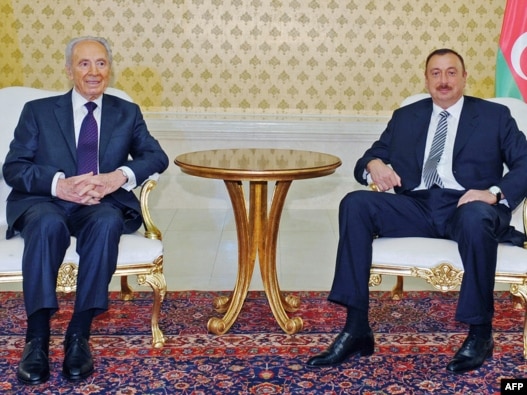
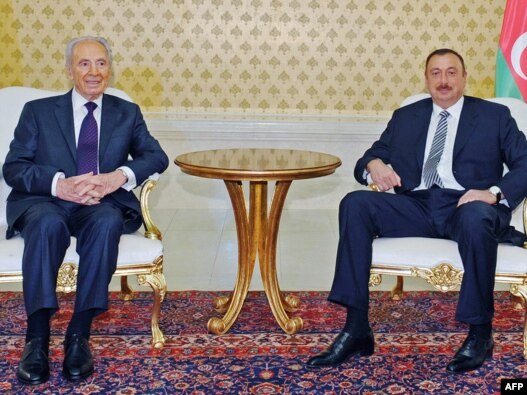
    Israeli President Shimon Peres (left) and his Azerbaijani counterpart, Ilham Aliyev, in Baku on June 28, 2009

    Last updated (GMT/UTC): 09.03.2010 15:24
    By Anna Zamejc
    When 13 years ago the late Azerbaijani President Heydar Aliyev received Israeli Prime Minister Benjamin Netanyahu in Baku, it was considered a bold and politically risky decision. No red carpets were rolled out, and the meeting was purposely kept low-key.

    Today, however, no such precautions are needed, as visits of Israeli leaders to Azerbaijan are no longer matters of domestic controversy. However, the peculiar relationship of the two countries continues to elude easy characterizations. Some external observers see it as a typical marriage of convenience, while others tend to take it as an alarming threat.

    Although Azerbaijan is a predominantly Shi’ite Muslim country and a majority of ethnic Azeris live in neighboring Iran (a ferocious enemy of Israel), Baku routinely shares intelligence with the Jewish state, buys its arms, and considers it trustworthy in security matters, completely contradicting stereotypes about a “clash of civilizations.”

    Further, the informal alliance seems to undermine the geopolitical game that the strongest actors — Russia and Iran — are determined to play in the region.

    Given how advanced bilateral relations are and how strong the mutual trust appears, it might sound surprising that 18 years of diplomatic contacts have not produced a single official treaty between Israel and Azerbaijan. Moreover, Azerbaijani authorities remain vague to this day about the widely anticipated potential opening of an embassy in Israel.

    Why? The answer can be found in Iran.

    Thorn In The Side

    “Today, everyone understands why Iran wants to block the Azerbaijani-Israeli rapprochement by any means,” Baku-born former Knesset member Yosef Shagal, a major champion of Israeli-Azerbaijani ties, said in an interview with RFE/RL’s Azerbaijani Service. “It is one of the most important strategic priorities of the Islamic republic. Tehran is perfectly aware of the following: the stronger the connection between Baku and Jerusalem, the more weakened Iran will be.”

    Iran, which aspires to be a regional leader, would like to see Azerbaijan play by its rules. But Azerbaijan, whose secular system is a thorn in the side of the Islamic regime, not only refuses to conform to Tehran’s dictates but has also crossed a red line by befriending the sworn enemy of Iran’s president.

    Azerbaijan has always felt threatened and continues to feel threatened [by Iran] from an ideological, economic, and political point of view.
    “Very characteristic in this regard is the reaction of Iranian President Mahmud Ahmadinejad to the official visit of Israeli President Shimon Peres to Azerbaijan in…2009. In hysterical tones, the Iranian leader demanded that the leadership of Azerbaijan immediately cancel the visit of ‘the head of the Zionist entity’ and ‘the main enemy of Muslims,'” Shagal recalls, adding that all Tehran’s efforts proved counterproductive as Peres was received in Azerbaijan with the highest honors.

    “It is worth noting the dignity and tact with which Azerbaijani President Ilham Aliyev recommended that his Iranian counterpart refrain from giving advice to a leader of a sovereign state on to whom to show hospitality and to whom to refuse it,” he added.

    Although Iran may not be in a position to keep Israel and Azerbaijan completely apart, it has been successful in one respect: Despite numerous calls from the Jewish state, Azerbaijan has still not opened an embassy in Israel because of pressure from Tehran.

    This creates a sort of diplomatic asymmetry as it has been 16 years since Israel established its embassy in Azerbaijan. However, Baku has thus far been reluctant to reciprocate. The advanced contacts with Israel have already put a grave chill on Baku’s relations with Tehran, and provoking Iran with an embassy in Israel could prove too costly for Azerbaijan, even triggering a backlash from other Muslim states.

    “Repeated efforts by Baku to find out how its southern neighbor would react to opening an Azerbaijani Embassy in Israel have always encountered Iranian ultimatums,” Shagal says, stressing that it would not only be Iranian-Azerbaijani relations that would suffer a massive blow, but Baku would eventually have to pay the price in the area that is of vital importance for the Caucasus republic: Nagorno-Karabakh.

    “If Azerbaijan opens an embassy in Israel, then Iran will declare on behalf of the Organization of the Islamic Conference (OIC) a refusal to support Azerbaijan in its conflict with Armenia, and would also disavow all the efforts of Azerbaijan and its supporters in the OIC for the restoration of its territorial integrity and the return of Nagorno-Karabakh,” Shagal says.

    Influence Stability

    Alexander Murinson, an independent researcher and academic writer who follows developments in Israeli-Azerbaijani relations, is also afraid that Baku could face difficulties once it decides to open the embassy.

    “Iran can cause trouble for authorities in Azerbaijan and influence the stability of the country. So obviously that’s another way of Iran trying to influence the diplomatic relationship between Israel and Azerbaijan,” Murinson says.

    “Azerbaijan has always felt threatened and continues to feel threatened [by Iran] from an ideological, economic, and political point of view. Iran obviously has a religious network in Azerbaijan that could undermine the secular nature of the current regime in Azerbaijan,” Murinson adds.

    Despite those dangers, the IzRus portal reported last month, quoting Israel’s ambassador to Azerbaijan, Michael Lavon-Lotem, that Baku will soon open an embassy in Tel Aviv. Murinson warns that this might be mere posturing, like a similar announcement in 2006. But he believes that this time it could be for real.

    “That development has been expected for many years, because the relationship is thriving both in terms of economic trade ties and also in the military field,” Murinson says. “It might be an indication that some agreement has been reached on very deep strategic cooperation between the two parties that may not have been publicized.”

    A potential embassy would certainly be a culmination of Israel’s long-term efforts to persuade Baku to formalize relations and could boost Israel’s position abroad.

    “For Israel, which is now faced by tremendous diplomatic pressure around the globe for many reasons, when a Muslim country, especially a Shi’ite country, makes this kind of announcement, it indicates for Israel that it has a friend in the region. In such an environment, Azerbaijan making this diplomatic move [would] create a very important, positive dynamic for the state of Israel,” Murinson says.

    What’s In It For Baku?

    Aran Amnon, an expert on the Middle East who lectures at City University in London, adds that Israel might be now particularly interested in strengthening ties with Baku as the threat of Iranian nuclear capacity takes center stage in Israeli foreign policy.

    “Israel has an interest in trying to improve its standing with as many countries as possible, especially those who may be directly affected by Iran and might by persuaded to be supportive of Israeli efforts,” Amnon says.

    But in international relations, every nation acts on its own interests. The gains seem obvious for Israel, but why should Baku be willing to take the risk? Murinson links the potential switch to the new dynamics that were created by Turkish-Armenian rapprochement and the deteriorating relations between Ankara and Tel Aviv.

    In fact, Baku has a lot of other reasons for being interested in deepening ties with Israel. Israel is an important source of military equipment, and reportedly it was Israel who helped Baku rebuild its army after the heavy losses it suffered during the war over Nagorno-Karabakh. The military aspect of the relationship has been present ever since.

    “During the visit of Simon Peres, a very important contract was signed which included construction of a plant in Azerbaijan that would produce unmanned aerial vehicles. By doing so, Azerbaijan would become an important producer of very advanced systems in the region — even Russia doesn’t have advanced unmanned aerial vehicles,” Murinson says, stressing that the lack of such systems proved problematic during the August 2008 Russia-Georgia war.

    Israel plays an important role in Azerbaijani security arrangements. The electronic fence around Baku’s international airport was built by Israeli companies. Reportedly, Israeli firms are supplying equipment to ensure the safety of Azerbaijan’s energy infrastructure, and there were also rumors that Israelis provide security for Azerbaijan’s president on his foreign visits.

    Last but not least, Azerbaijan is the home of an ancient Jewish community, which remains an important aspect in mutual contacts.

    “We estimate that there are approximately 25,000 Jews living in Azerbaijan,” Mark Levin, the executive director of National Conference of the Soviet Jewry says. “Azeri Jews have lived side by side with their non-Jewish neighbors for centuries, and they are treated very well.”

    https://www.rferl.org/a/The_Blooming_Friendship_Between_Azerbaijan_And_Israel/1978312.html
  • Turkish diplomats hospitalized in Macedonia

    Turkish diplomats hospitalized in Macedonia

    Associated Press
    2010-04-13 02:16 AM

    Government and medical authorities in Macedonia say eight visiting Turkish diplomats have been treated in the hospital treatment for food poisoning.Four of the diplomats remained in the hospital Monday. The others were released.

    Private A1 television says the diplomats visited several restaurants, including a kebab place, in the Old Turkish bazaar in the capital, Skopje.

    The diplomats arrived are in Macedonia at the invitation of the Foreign Ministry to speak at seminars at the country’s Diplomatic Academy.

    ,  13 04 2010