Month: September 2009

  • Erdogan Hopes Sarkisian Will Visit Turkey

    Erdogan Hopes Sarkisian Will Visit Turkey

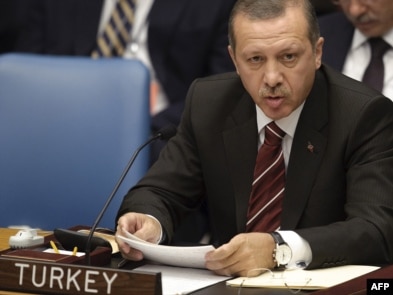
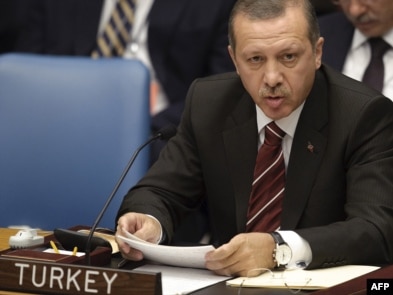
    U.S. — Turkish Prime Minister Tayyip Erdogan attends the United Nations Security Council meeting during the UN General Assembly at UN Headquarters in New York, 24Sep2009
    25.09.2009

    Prime Minister Recep Tayyip Erdogan has expressed hope that President Serzh Sarkisian will pay a landmark visit to Turkey next month and said Ankara’s fence-mending agreements with Yerevan could be submitted to the Turkish parliament for ratification before that.

    Sarkisian has been invited by his Turkish counterpart, Abdullah Gul, to watch with him the return match of the two countries’ national football teams in the Turkish city of Bursa on October 14. The two presidents’ presence at their first World Cup qualifying played in Yerevan in September last year gave new impetus to the Turkish-Armenian rapprochement.

    “If the Turkish president can easily go to Armenia to watch a game, then it should be just as easy and simple for the Armenian president [to visit Turkey,]” Turkish media on Thursday quoted Erdogan as saying in a speech at Princeton University in the United States said. “I think asking for certain conditions to be met to decide to come is not the right way forward in international politics anymore.”

    Sarkisian has repeatedly stated that he will accept Gul’s invitation only if Turkey takes “real steps” to establish diplomatic relations and open its border with Armenia. The August 31 publication of two relevant draft protocols finalized by Ankara and Yerevan is thought to have made his visit much more likely.

    The trip would come just days after the anticipated signing of the Turkish-Armenian protocols, most probably in a third country. Various Turkish sources said last week that the signing ceremony has been tentatively scheduled for October 11-13.

    But Erdogan implied in his speech that the two sides could put pen to paper on the Western-backed deal even before that. “If we don’t see prejudice or some domestic political considerations at play, I believe the preparation for the agreement, which has been initialed between Turkey and Armenia, could be taken to Parliament to be ratified,” he said, according to “Today’s Zaman” newspaper. “We hope to take those steps by the 10th or 11th of next month.”

    Erdogan did not specify whether his government will seek to push the documents through Turkey’s Grand National Assembly, in which his ruling Justice and Development Party has a majority, if Armenia and Azerbaijan fail to achieve a breakthrough in their peace talks on Nagorno-Karabakh. Sarkisian and Azerbaijan’s President Ilham Aliyev are expected to a potentially decisive meeting on October 6.

    The Turkish premier reportedly said late last week that the Turkish-Armenian frontier will not be reopened until “Azerbaijan’s occupied territories are returned.” Armenian Foreign Minister Eduard Nalbandian swiftly criticized the remark, saying that it contradicts “the letter, spirit and aims” of the Turkish-Armenian agreements.
    https://www.azatutyun.am/a/1836254.html
  • ‘Last Ottoman’ dies in Istanbul

    ‘Last Ottoman’ dies in Istanbul

    By Roger Hardy
    Middle East analyst

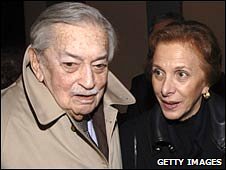
    Ertugrul Osman and his wife, Zeynep, file pic from March 2007

    Osman spent most of his years living modestly in New York

    Ertugrul Osman – the would-be sultan known in Turkey as the “last Ottoman” – has died in Istanbul at the age of 97.

    Osman would have been sultan of the Ottoman Empire had Turkey’s modern republic not been created in the 1920s.

    As the last surviving grandson of Sultan Abdul-Hamid II, he would have been known as his Imperial Highness Prince Shehzade Ertugrul Osman Effendi.

    Born in Istanbul in 1912, Osman spent most of his years living modestly in New York.

    No political ambition

    He was a 12-year-old at school in Vienna when he heard the news that his family was being expelled by Mustafa Kemal Ataturk, the soldier who founded the modern Turkish republic out of the ashes of the old empire.

    Mustafa Kemal Ataturk, file photo from 1937

    Osman would have been sultan had Ataturk, pictured, not founded Turkey

    Osman eventually settled in New York, where for more than 60 years he lived in a flat above a restaurant.

    Always insisting he had no political ambition, he only returned to Turkey in the early 1990s at the invitation of the government.

    During the visit, he went to Dolmabahce – the palace by the Bosphorus where he had played as a child.

    Characteristically, he joined a tour group in order to avoid any red-carpet treatment.

    Ertugrul Osman is survived by his wife, Zeynep, a relative of the last king of Afghanistan.

    http://news.bbc.co.uk/2/hi/europe/8273396.stm

  • Turkish Military Supports the Government’s Kurdish Initiative

    Turkish Military Supports the Government’s Kurdish Initiative

    Publication: Eurasia Daily Monitor Volume: 6 Issue: 175September 24, 2009 By: Emrullah Uslu

    General Ilker Basbug


    As Turkey has recently concentrated on the debate over whether the Justice and Development Party’s (AKP) Kurdish initiative to end the long running campaign of violence, the two key actors in the conflict, the Turkish military and the Kurdistan Workers’ Party (PKK) have entered the debate. The Chief of the General Staff, General Ilker Basbug visited troops in the Kurdish populated part of the country and shared the views of the Turkish Armed Forces (TSK). Basbug said that fighting against terrorism requires time and patience as well as pursuing every possible option aimed at ending the use of political violence. Regarding the Kurdish initiative, Basbug explained that the TSK supports the government’s policy (Star, September 23)

    The opposition Republican Peoples Party (CHP) reacted negatively to Basbug’s statement. The Deputy Chairman of the CHP, Hakki Suha Okay stated that the CHP does not approve of the TSK’s involvement in politics (www.nethaber.com, September 23).

    The critical issue is how and to what degree the TSK will support the Kurdish initiative. Indeed, the PKK has often asserted that if the TSK ends its combat operations against it in the mountains it will reciprocate by no longer targeting Turkish military units or civilians in the region (Radikal, September 13). Yet, the TSK does not consider this offer as a viable option to end the conflict. In fact, on September 14 the TSK applied to the Turkish parliament to prolong its mandate to conduct military operations in northern Iraq (NTV, September 18). Prime Minister Recep Tayyip Erdogan has declared that his government will review the TSK’s request and ask parliament to extend the mandate which authorizes the TSK to conduct operations in Iraqi territory (Star, September 22).

    While the Turkish actors have concentrated on the Kurdish initiative process, Kurdish actors have adopted a more skeptical view. Ahmet Turk, the Chairman of the pro-Kurdish Democratic Society Party (DTP) criticized the AKP for not addressing the root causes of the problem, but instead presenting the state’s traditional position toward the Kurds as if it were a new initiative.

    At this critical moment, the PKK announced its decision to extend its unilateral ceasefire for the fourth time this year. The PKK issued a press statement criticizing the AKP’s Kurdish initiative for not recognizing Abdullah Ocalan, the imprisoned leader of the PKK as a negotiating figure, or suspending counter-terrorist operations conducted against its militants in mountainous areas (Firat News Agency, September 23).

    The PKK’s decision to extend its ceasefire will potentially impact positively on the Kurdish initiative for two reasons. First, it will allow the government and the DTP to prepare the psychological basis for a possible peace settlement. The main obstacles, however, are the funeral ceremonies for Turkish soldiers and PKK militants. In recent years sharp divisions have existed over how to organize such funerals. For instance, on September 23, 50,000 Kurds attended the funeral of a PKK militant (ANF News Agency, September 23). Similarly, approximately 40-50,000 Kurds attended another funeral on September 13 in Hakkari province (Firat News Agency, September 13).

    The funerals of Turkish soldiers have become places of protest against the PKK and even the government. On September 10, there were three funerals held for soldiers in various Turkish provinces. In Kirsehir province 5,000 people attended, in Siirt province 3,000, and in Kutahya 10,000 (Vatan, September 10). To a certain degree, these funeral ceremonies have recently become contested zones for the Turkish and Kurdish communities, which serve to further divide both societies. Thus, the PKK’s decision to extend its ceasefire will help the political actors involved in the peace process to ease these tensions.

    Moreover, the extension of the PKK’s ceasefire will allow time for the political actors involved to agree on the details of any possible peace. One of the problems for the government is to implement the Kurdish initiative rapidly, since the debate on the issue has raised expectations among ordinary citizens. As the process has unfolded, popular support has thus been tested. Therefore, the PKK’s decision to extend its ceasefire provides an additional opportunity for the Turkish government to widen support for the Kurdish initiative. Nevertheless, it is too soon to speculate on whether the process will prove successful, since many factors might yet serve to disrupt the initiative.

    https://jamestown.org/program/turkish-military-supports-the-governments-kurdish-initiative/

  • Turks Breach Security Around Obama Limo

    Turks Breach Security Around Obama Limo

    By Asbarez Staff on Sep 24th, 2009


    NEW YORK (Combined Sources)—A group of Turkish diplomats breached the security bubble around President Obama on Tuesday, provoking a frenzied reaction by security personnel, around the president who pushed and shoved the intruders away from the president’s limousine, reported FOX News.

    The incident occurred as Obama was preparing to leave the Sheraton Hotel in Midtown Manhattan after speaking to an annual meeting of former President Bill Clinton’s Global Initiative. Clinton was seen escorting Obama to the limousine moments before the incident occurred.

    The Secret Service on Tuesday blamed the quarrel on a language barrier, saying that the Turkish security agents accompanying Prime Minister Recep Tayyip Erdogan did not heed verbal instructions to stop proceeding toward the president’s limousine because of their inability to understand English, reported the Washington Times.

    The limousine was hidden from view inside a large white tent, a regular Secret Service tactic to protect the president. Moments after Obama arrived at the car, a large number of uniformed police and plainclothes Secret Service agents converged on the back corner of the tent, shouting loudly.

    “A foreign delegation got confused and was trying to enter the president’s departure tent and didn’t understand the verbal instructions being given. They had to be physically restrained,” said Ed Donovan, a spokesman for the Secret Service.

    The Washington Times reported that the Turkish government Wednesday rejected that explanation out of hand, saying that its security agents were accompanied by a Secret Service team that was escorting them to the same hotel that Obama was leaving, and that the Secret Service detail with Erdogan brought them near the Obama limousine without telling the main U.S. security contingent guarding the president.

    Also on Tuesday, Erdogan was set to deliver a speech at the Clinton Global Initiative, but he canceled his address after the scuffle between Turkish and American bodyguards, reported the Hurriyet newspaper.

    Related Posts

    1. Obama, Gul Discuss Karabakh, Armenia-Turkey Talks
    2. Turkish FM Meets Top Officials from Obama Administration
    3. Turkey Criticizes Obama for Not Marking ‘Suffering of Turks’ on April 24
    4. Obama to Visit Turkey on April 6-7, Says Erdogan
    5. Armenia’s Lose Obama Advisor; Turks Lose Clinton Fundraiser
  • Sarkisian to Visit Diaspora to Muster Support For Protocols

    Sarkisian to Visit Diaspora to Muster Support For Protocols

    By Asbarez Staff on Sep 24th, 2009

    YEREVAN (RFE/RL)–President Serzh Sarkisian said on Thursday that he will tour major Armenian communities abroad early next month to explain and promote his far-reaching diplomatic overtures to Turkey which the Diaspora have been following with unease.

    Sarkisian made the announcement as he met with His Holiness Karekin II, the Catholicos of All Armenians at Echmiadzin. He said he will start on October 1 a series of visits to Paris, New York, Los Angeles, Beirut and Rostov-on-Don, Russia.

    All of those cities and their surrounding areas have sizable Armenian communities. Sarkisian was quoted by his press service as telling the Catholicos that he wants to hear community leaders’ “views on the process of the normalization of Turkish-Armenian relations.”

    Karekin II welcomed the initiative.

    “The Diaspora is an important and inseparable part of our people and it is only right for our Diaspora sons … to be able to hear answers from you personally to questions preoccupying them,” said Karakin II, according to the presidential press service. “Also, you will expose yourself to the thoughts, opinions and concerns of our Diaspora sons.”

    Diaspora leaders have expressed serious concern about key points of two Turkish-Armenian draft protocols envisaging the normalization of bilateral relations. They are particularly critical of the planned creation of a Turkish-Armenian panel of historians that would probe the Genocide.

    The Diaspora also opposes another protocol clause that commits Armenia to recognizing its existing border with Turkey based on past relevant treaties. This clause will preclude future Armenian claims to the territories of historic Armenia illegally occupied by the Republic of Turkey.

    His Holiness Aram I, Catholicos of the Great House of Cilicia added his voice to those concerns in a letter to Sarkisian made public on Thursday. “The ongoing developments in the establishment of diplomatic relations between Armenia and Turkey have become a cause for serious concern in the Diaspora,” he wrote.

    Aram I singled out the planned “sub-commission” of historians for criticism. He said its existence would make it easier for Ankara to deny the Armenian Genocide.

    Etchmiadzin has rarely challenged Yerevan governments and will likely be more supportive of the Turkish-Armenian rapprochement. Karekin II told Sarkisian that the church’s Supreme Spiritual Council will meet soon to discuss and formulate its position on the issue.

    The planned meetings will be part of “internal political consultations” which Ankara and Yerevan pledged to initiate before signing the controversial protocols by mid-October. Sarkisian described the intensifying debates on the matter as “very useful.”

    “Of course, they have some emotional manifestations and elements,” Sarkisain told Karekin II. “And it could not have been otherwise because a huge segment of our people are a generation of persons subjected to genocide. Besides, we have our shrines, our churches, our [medieval] capital and the remnants of many, many people’s ancestral homes across the [Turkish] border.”

    “I do realize this because often times I myself internally struggling with my emotions,” added Sarkisian.

    Related Posts

    1. Pro-Turkish Congressmen Support Protocols
    2. Aram I Appeals to Sarkisian on Protocols
    3. Markarian Says Sarkisian Should Not Sign Protocols
    4. US Hopes For Sarkisian Visit To Turkey
    5. Karekin II, Aram I Visit Sarkisian, Express Support

    9

  • AMBASSADOR Nabi Sensoy’s letter to editor of WSJ

    AMBASSADOR Nabi Sensoy’s letter to editor of WSJ


    Turkey Is a Good Friend to America

    Fouad Ajami implies in “9/11 and the ‘Good War’ ” (op-ed, Sept. 11) that the Turks “feign desire for our [the U.S.] friendship while they yearn for our undoing” in the Middle East and beyond. It is simply untrue. The Turkish-American friendship, partnership and alliance are longstanding and solid. The depth and breadth of cooperation between the two countries refutes Mr. Ajami’s argument. Turkey’s prominent role in Iraq, Afghanistan and elsewhere in the region bodes well for resolving disputes and helping to create a stable and peaceful environment. Turkey’s stance serves not only its interests but also the interests of all the other countries in the neighborhood which share a desire for peace.

    I don’t see why Mr. Ajami advises a solitary path for U.S. decision-makers. Contrary to Mr. Ajami’s view, history attests that the U.S. and for that matter its friends and allies have been kept safe by a benevolent mutual appreciation and by standing together.

    Ambassador Nabi Şensoy

    Turkish Embassy

    Washington

    https://www.wsj.com/articles/SB10001424052970204518504574416942066521408

    =================================

    Nabi Sensoy

    BIO
    His Excellency Nabi Sensoy became Ambassador of Turkey to the United States on January 1, 2006. Ambassador Sensoy previously served as Deputy Undersecretary of General Political Affairs at the Ministry of Foreign Affairs and has worked throughout the world as an ambassador and consul general. His most recent posts include Russia and Spain.

    The Ambassador has assumed many other important roles throughout his service to the Turkish government.  From 1997-1998 he served as Deputy Undersecretary of Political Affairs for the European Union.  He was also Chief of Staff to the President from 1988-1990.  Before advising the president he was the advisor to the Prime Minister for two years.  The Ambassador was also the Head of Section at the Department of Bilateral Political Affairs for Western Europe.

    Ambassador Sensoy is a graduate of the Faculty of Political Sciences of the University of Ankara.