Month: September 2009

  • Armenians Lick Lips at Prospect of Turkish Trade

    Armenians Lick Lips at Prospect of Turkish Trade

    Economists predict huge boost for Armenian economy if ties between Yerevan and Ankara are normalised.

    By Hasmik Hambardzumian in Yerevan (CRS No. 512, 25-Sep-09)

    Economists have welcomed the progress Yerevan and Ankara have made towards normalising relations, anticipating it will open up vast new markets for Armenian producers.

    There is currently a near-total blockade on Armenian goods going to Turkey. In 2008, according to Armenia’s National Statistics Service, less than two million US dollars worth of Armenia products were exported to Turkey, whereas more than 250 million dollars of Turkish goods were imported.

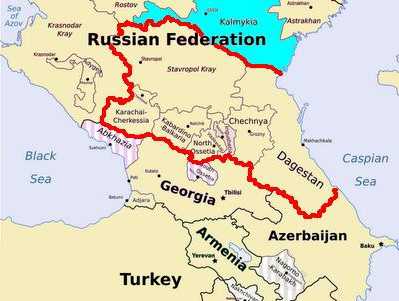
    Correcting this imbalance could prove revolutionary for Armenia, which currently depends on exporting most of its goods to Russia via Georgia, since its borders with both Turkey and Azerbaijan are closed.

    “A significant growth in the economy is expected, with an increase in the volume of exports and a growth in investment, as well as an improvement in the population’s living conditions,” said Mark Lewis, the head of the International Monetary Fund’s mission in Yerevan.

    Armenia and Turkey have lacked diplomatic relations since shortly after Yerevan gained independence from Moscow. Ankara, in a mark of support for its allies in Azerbaijan, who were fighting Armenian forces for control of the region of Nagorny Karabakh, cut ties in 1993 and has not restored them. Armenians still rule Karabakh, and the Azerbaijan-Armenia peace process is mired in difficulties.

    Armenia and Turkey, however, have made significant progress since the two presidents met at a football match between their national sides a year ago.

    They issued two protocols at the end of August, pledging to sign them after six weeks of public discussion. Appropriately, the six week discussion period, which should end with the border being opened, is due to end just before the return fixture.

    The initial meeting also featured a deal between the Turkish UNIT company and High-Voltage Electric Networks of Armenia to sell 1.5 billion kilowatt/hours of Armenian electricity to Turkey. The size of the contract is a clear sign of the potential for cooperation.

    Harutiun Khachatrian, an economic analyst from the Noyan Tapan agency, did not believe the official explanation for why no electricity has been sold so far. Officials say technical complications have prevented progress being made, but Khachatrian said its failure was linked to the progress of the peace talks.

    “The fact that the project is not yet completed is obviously political,” he said. “You cannot even imagine how beneficial this cooperation will be for Armenia. Completely new possibilities will be opened, joint ventures will appear, products will be exported.”

    Some economists have predicted, however, that the businessmen who currently dominate the Armenian market will object to the border with Turkey being opened, since it would let in a flood of competing products and services that could well undercut them on price.

    Few of the so-called oligarchs Armenian have actually expressed a negative opinion of the peace process, with just Hrant Vardanian, president of the tobacco and confectionary company Grand Holding, being quoted in April as saying he looked on it “without particular enthusiasm”.

    “The opening of the Turkish border means an end to monopolies. This is a significant step,” said Hrant Bagratian, a former prime minister and an economist by training.

    Bagratian said some reluctance to open the border to competition from Turkish operators was natural, since Armenian businesses have faced little competition since independence.

    He said Armenia just had to exploit its strengths, and trust its producers to become efficient enough to combat Turkish competitors.

    “Whatever they do in Turkey, they won’t have the same harvest of tomatoes, apricots and grapes that we have and in this sense, I think the opening of the border won’t do much harm to our farmers. It’s possible that there will be a temporary shock, but within one or two years we will see that we have good chances for development,” he said.

    Other businessmen agreed that Armenians should not be concerned, and should just rely on their country’s natural advantages. Besides the agricultural sector, the energy business, for example, is one where Armenia has a clear advantage, thanks to the Soviet legacy of decent infrastructure.

    “With the correct implementation of international standards, there is no cause for concern, since in Armenia the industrial base, the infrastructure and the workforce are cheaper than in Turkey, where there are high salaries. It is necessary to occupy ourselves with increasing the productivity and efficiency of our production methods,” said Gurgen Arsenian, founder of the Arsoil company.

    Hasmik Hambardzumian is a correspondent from www.panorama.am. IWPR country director Seda Muardyan contributed to this report.

  • Is Turkey new light ray in darkness of Middle East?

    Is Turkey new light ray in darkness of Middle East?

    UlviyyaSadigovaTrend News Middle East Desk Commentator, Ulviyya Sadikhova

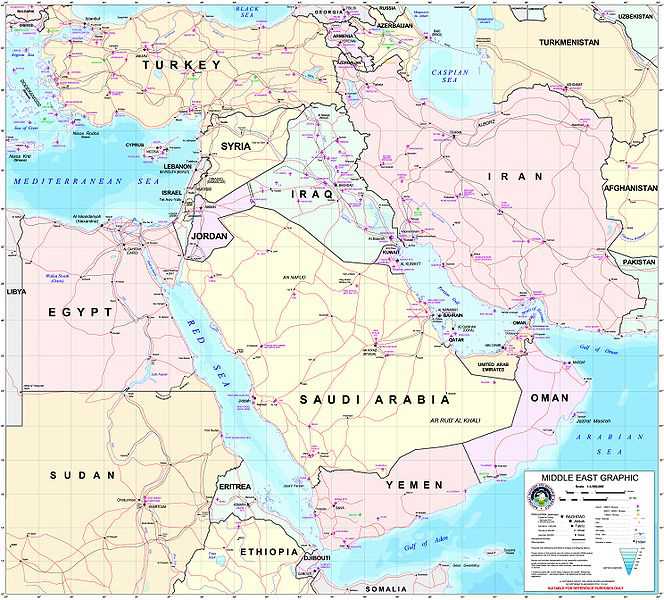
    Perhaps, after the end of the Israel – Hamas war in the Gaza Strip in January, 2009, Turkey did not seek to solve the acute problems in the Middle East with such zeal, as it has shown in the last two months.

    Ankara made its debut in the Middle East by nominating itself as the chief mediator in the resolution of the Syrian-Iraqi dispute, which erupted after Iraqi Prime Minister Nouri al-Maliki accused the Syrian regime of sheltering organizers of two major terrorist attacks on Baghdad, which killed nearly 100 people.

    Although Turkish Foreign Minister Ahmet Davudoglu said his country does not mediate in the reconciliation of Damascus and Baghdad, since the very beginning of disagreements Davudoglu has met with Bashar al-Assad in Damascus and then with al-Maliki in Baghdad.

    At a meeting of the League of Arab States in Cairo the Arab countries acknowledged Turkey’s success in preventing acute Syria-Iraq conflict.

    In fact, Ankara needs to pacify the situation in the Middle East, which went out of control as a result of constant internal collisions. One can mention several reasons, but the most prominent are two: the fight against the separatists of the Kurdistan Workers Party (PKK) and the immense progress in relations with Syria.

    Regarding the PKK matter, the Iraqi government has never been the best assistant for Turkey. Firstly, views on cooperation with Turkey in the fighting against separatists, who are based in the north, have split up in Iraq. Despite President Jalal Talabani, a Kurd by origin, expressed his full support in the fight against PKK terrorists in Iraq, the issue of an independent Kurdistan is still questionable. Analysts also believe the Shiite parties in Iraq, including al-Maliki’s party, are unlikely to disregard the Kurdish political organizations on the eve of elections in January 2010. Therefore, Turkey will not benefit from the agreement with Iraq to cooperate against the PKK. Taking into account the internal weakness of Iraqi state power due to the struggle among of pro-Iranian Shiite, Kurdish and Sunni parties, new differences with Syria could offer a ground for further division of the country. Realizing this risk and the fear that the PKK will take advantage of the situation to strengthen fighting, Turkey demanded the Iraqi authorities to clarify accusations against Damascus and provide substantial evidence.

    Besides, a slight warming has been observed recently between the Iraqi pro-Iranian bloc and Turkey. One of the most influential Iraqi Shiite leaders, Muqtada al-Sadr, visited Turkey in summer.

    The cooperation with Syria in the fight against PKK terrorists is another issue. Though the PKK issue was about to cause the Syria -Turkey war ten years ago, now this is one of the pillars of relations between the two countries. Syria, where head of the Kurdistan Workers Party, Abdullah Ocalan, hid more than ten years ago, stated on its readiness to open its borders to the Syrian citizens of Kurdish origin, who are fighting against the Turkish government in mountainous areas, if the latter lay down their arms against Ankara.

    It seems Syria could not offer better one, because Turkey virtually received a guarantee and the place, where it will be able to banish the terrorists and extremists, whereas the Kurdistan administration of Iraq and the Kurdish parties in Iraq do not give any guarantee to Ankara in suppressing the PKK.

    It is interesting, since 2008, Turkey has focused on improving relations with Syria. Turkey started with the weak point – negotiations with Israel and the returning of the Golan Heights. Although a year later Turkey’s mediation failed, Syria and Israel were able to come together in only one – both were satisfied with Ankara’s role.

    In addition, Turkey’s rapprochement with Syria is not accidental. Damascus – Iran’s main ally among the Arab countries – has a direct impact on the internal situation in Lebanon, where a pro-Iranian Party of Hezbollah operates. More likely, Turkey wants to participate in an internal crisis in Lebanon and the Palestinian split, as well as to find alternative routes to Iran through Syria, given the ambitions to assume the role of chief peacemaker in the Middle East.

    Cooperation with Turkey is advantageous also for Syria, especially to improve relations with Sunni and pro-Western Arab countries.

    Al-Assad’s surprising visit to Riyadh on Wednesday, following the Turkish president’s meeting with King Abdullah II in Jeddah, was the first signal that Damascus resumed dialogue with the Saudis, who will have a direct impact on the political crisis in Lebanon, shaken by grim struggle for power between the pro-Saudi majority of Saad al-Hariri and the pro-Syrian opposition Hezbollah. Analysts predicted that the formation of government in Lebanon will delay until Syria and Saudi Arabia come to an agreement. However, Syria and the Saudi kingdom have very different interests in Lebanon and now Turkey, which is one of the largest Sunni countries, interferes in the dialogue. Ankara wants to show Saudi Arabia that it could persuade Syria to take a more moderate position in Lebanon. Al-Assad’s visit to Riyadh, on the backdrop of the refusal of the Saudi king Abdullah II to visit Damascus, is a great chance for Syria to demonstrate its “humility” in the Middle East policy and select a diplomatic way to solve the Arabian interior problems.

    Experts believe that attraction of Syria to the pro-Western Ankara is a hidden attempt to weaken Iran.

    Ankara has never had open tensions with Tehran and even enshrined Iran the right to peaceful atom in the issue of nuclear program. However, speaking to the 64th UN General Assembly in New York, Turkish Prime Minister Recep Tayyip Erdogan supported Russia’s plan and the United States to clear up the Middle East from nuclear weapons. Is Turkey decided to throw down a secret challenge to Iran? Although nuclear program exists in Israel and will soon appear in Saudi Arabia, it is still associated with the enrichment of uranium by Iran. Does Turkey strive for a new mediation in the nuclear program between Tehran and Western countries, what had Davudoglu hinted at during a visit to Iran?

    To prove and to demonstrate the effectiveness of its diplomacy in the Middle East – that is what Turkey wants to demonstrate to the West. Still the old interests of the Middle East will define whether Turkey will achieve it easily and what else Ankara has to do.

    Source:  en.trend.az, 26.09.2009

  • SOITM submits report to the United Nations’ Universal Periodic Review of Iraq

    SOITM submits report to the United Nations’ Universal Periodic Review of Iraq

    Date: September 15, 2009
    No.: PRe.25-I1509

    The Universal Periodic Review (UPR) was created by the UN General Assembly on 15 March 2006 to provide a regular review of the human rights records of UN member states through a common mechanism.
    Once a state comes under review, it may prepare its response to a background note and initial questions raised by the United Nations Human Rights Council (UNHRC). The UNHRC should then engage in a dialogue with the state under review to examine how well it is meeting its human rights obligations and implementing recommendations for improvement from special procedures or treaty bodies.
    Iraq is included in the eighth group of states to have their human rights records reviewed under the UPR process during the seventh session of the UNHRC that begins in February 2010.
    SOITM has compiled a report for submission to the UNHRC under sections B, C, and D of the Information and Guidelines for Relevant Stakeholders on the Universal Periodic Review Mechanism:

    ü In Section B, SOITM focuses on the normative and institutional framework of the state, placing particular focus on:
    · The undemocratic drafting process of Iraq’s constitution;
    · Discrepancies in the Iraqi Constitution;
    · Discrimination in the Iraqi Constitution
    · The ongoing deadlock over issues of federalism
    ü In Section C, SOITM comments on the implementation and efficiency of the Iraqi normative and institutional framework, drawing attention to the following in the north of Iraq
    · Inefficiencies in administration
    · Lack of human rights monitoring and evaluation
    · Demographic changes
    · Imbalance in standard of living
    · Incidences of ethnic cleansing
    ü In Section D SOITM issued a number of recommendations to:
    · Iraqi National Assembly
    · Iraqi Government
    · UN Assistance Mission for Iraq (UNAMI) and international human rights organizations
    · Members of the United Nations
    Eight annexes were attached to SOITM’s submission to the UNHRC:
    · Statements submitted by SOITM to the Office of the High Commissioner for Human Rights
    · Satellite maps of Kerkuk of 2002 compared with maps of 2007
    · Official documents about the population of Kerkuk city before and after occupation
    · Official documents about the complaint cases in the Propriety Claim Commission of Kerkuk
    · Ethnic allocations of high-ranking posts in Kerkuk
    · Lists of Turkmen who had been intimidated, arrested, kidnapped or assassinated

  • The principles of justice in attitudes of the occupation authorities

    The principles of justice in attitudes of the occupation authorities

    Date: September 16, 2009
    No.: rep.26-I1609
    Mr. Raymond Odierno, the current commanding general of the Multi-National Force in Iraq, was commander of coalition forces in northern Iraq when occupation troops entered Kerkuk province on 10 April 2009. He founded the first Kerkuk province council and was a lead organizer in the rebuilding of Northern Iraq’s administration after the fall of the Ba’ath regime.
    Mr. Odierno allocated six members for each component of Kerkuk city, for the Chaldea-Assyrians too, who constituted less than 5% of the Kerkuk population. Latter on, selected a Chaldea-Assyrian and 5 Kurds claiming that they represent independents and social groups such as teachers, lawyers, religious leaders and artists, whilst the Kurdish social groups have never been larger in the province. Six of the 7 selected Chaldea-Assyrians were pro-Kurdish. There was a pro-Kurdish member in each of Turkmen and Arabic groups.
    Thus, the Kurdish group dominated the decision-making process in Kerkuk province. The council elected a Kurdish governor, mayor and chief of police. Most of the high-ranking officials were replaced by Kurds. Thousands of Kurds were appointed in the governmental offices. Hundreds of thousands of Kurds redeployed to Kerkuk province. Kerkuk, which had hosted a population of 870,000 at the time of occupation, today hosts up to 1,400,000 even though more than 100,000 Arabs left the province. The Iraqi general elections in 2005 were organized by the Kurdish dominated administration and supervised by occupation troops – two factors that further increased Kurdish authority over the city councils.
    The upcoming Iraqi general elections in January 2010 are a major concern for non-Kurdish peoples and politicians. The country’s previous experience of two general elections, in 2005, gave the Kurdish dominated administration the opportunity to increase Kurdish control of the whole region. Notably, in areas where the Iraqi army replaced Kurdish militias, results of the provincial elections of January 2009 were significantly changed. The occupation troops who promised to control the northern and eastern boundaries of Kerkuk province during the general elections of 2005 to prevent voters coming from Kurdish provinces did not keep the promise.
    Throughout the north of Iraq, an area inhabited by an estimated 10 million Iraqis, similar processes of land and job appropriation have been exposed. Consequently, thousands of square kilometers populated by non-Kurds were handed to Kurdish political parties enjoying support and security from Peshmerga militias. Additionally, most of this area has been assertively claimed by the Kurdish parties.
    Hundreds of cases have been reported of non-Kurdish ethnic groups facing political intimidation, arrests, detentions, torture in prisons, kidnapping, and assassinations. In response, large numbers of non-Kurdish communities have left the region.
    After an escalation in the transfer of population and miscommunication about brutal violations of human rights reported by non-Kurdish communities, the Iraqi government mobilized the recently formed Iraqi army as a presence throughout the region. The Iraqi government could deploy the army sections of the region until it was confronted by Kurdish militias and security agents and the deployment was stopped to prevent fighting.
    A new proposal has subsequently been designed to bring Peshmerga militias into a collaborative security policy alongside Iraqi and occupation troops throughout the disputed area of Northern Iraq. This proposal parallels, in essence, the previously enforced Kurdification process that began when the post-occupation rebuilding of the administration played a major role in empowering Kurdish hegemony.
    The proposal to form joint MNF-Iraqi-Kurd forces would bring Kurdish forces into so-called disputed areas and give Kurdish militias control over areas supposedly protected by Iraqi army units. The outcome of the policy will be to legally support a militant force that facilitates further Kurdification of these areas and the continued suppression of non-Kurdish inhabitants in the region.
    The proposal could represent a breach of the US-Iraq Status of Forces Agreement (SOFA) and clearly violates the Iraqi Constitution, which by design unequally benefits Kurdish authorities. Moreover, Article 121.5 of the Constitution denotes that the Kurdish Peshmerga militia should be given the status of guard and determines their presence to the three provinces ruled by Kurdish parties. The possession of heavy weaponry and the presence out of those three regions can be considered as a violation of the Iraqi constitution and international laws and should be addressed.
    Despite assessments accusing al-Qaida of responsibility for recent bombings in several regions, the violence may reflect other scenarios:
    – Forceful claim of Iraq’s disputed area by Kurdish authorities, some of whom threaten to fight to secure them if required.
    – The rejection, by the region’s different ethnic or religious communities, of both Kurdish claims to the disputed areas and the presence of Kurdish militias and security agents.
    – The growing spread of Kurdish militias affiliated to political parties within the region
    – Claims by some local authorities that Kurdish Peshmerga have culpability in the bombings
    – The proposal came after the Kurdish authorities created a sphere of war and threatened to fight against the Iraqi government.
    However questions remain as to:
    – Which groups have the ability to organize such attacks?
    – Who would ultimately stand benefit from the situation and the subsequent joint MNF-Iraq-Kurd security proposal?
    The proposal provoked massive storm of outrage and protest, particularly by the peoples and politicians of the non-Kurdish communities in the region. The Arab group in Kerkuk council threatened to boycott the province council if the proposal realized. Almost all Arab and Turkmen authorities in the region rejected the proposal. Mosul province council, non-Kurdish politicians and notables have refused the proposal and considered the presence of Kurdish militias in so-called disputed regions as illegal. Political parties in Diyala also expressed their opposition while many Iraqi parliamentarians considered it a violation of the Iraqi constitution and stated that the Iraqi constitution authorizes the Iraqi army to include soldiers from all the Iraqi communities to guard these regions. Others believed that this proposal is a threat to the boundaries of the provinces and the effective legalization of a militia forces. Other politicians complained that the Kurdish Peshmerga militants and security agents are already present in the region like Kerkuk and in the regions which were exposed to the attacks.
    In fact, the presence of a militia forces with a political agenda claiming the region should be considered the source of insecurity. As a result, the best proposal would be to send to the region units of the Iraqi army, which comprise soldiers from all the Iraqi ethnic and religious groups alongside large numbers of Kurdish soldiers. Such a solution would be supported by the constitution and will strengthen the state. The Iraqi army is also wanted by the non-Kurdish inhabitants of the region, who are the majority. At the same time, the Kurdish authorities should be asked to adhere to the Iraqi Constitution, Temporary proposals in favor of Kurdish side will only deepen animosity between communities and threatens the future of the region, particularly, after the departure of the occupation troops. Accordingly, the region is in need of permanent and impartial solutions from the occupation authorities.
    The USA and the international community therefore bear a moral responsibility to stop the politicized Kurdish militia system and the threat that it poses to:
    – Terrorize the Iraqi non-Kurdish peoples
    – Distort unity of the state
    – Disturb the stability in the region
    – Threaten the regional peace

  • BEHOLD TURKEY! BEHOLD YAŞAR KEMAL!

    BEHOLD TURKEY! BEHOLD YAŞAR KEMAL!

    Friday, September 25, 2009

    CEM RYAN

    Behold Turkey! The land where the innocent go to jail and the criminals go to parliament. A land wracked by poverty and unemployment, a land whose young people seethe with hopelessness. A land ransacked, divided, destroyed by craven politicians who have pandered to American interests for generations. A nation represented by mannerless, embarrassing people that are boundless in their oblivion. Indeed, behold all this and weep.
    For those millions of us fed up with all of the above, take heart. There is yet a greatness in this suffering land. And as a break from the unrelenting depression of Turkish life, I offer the matchless prose of the magnificent, incomparable Yaşar Kemal, Turkey’s greatest writer. All one needs to know about Turkey-past and Turkey-present can be found in his books. So if you haven’t read him, read him now. And if you have read him, read him again, now.

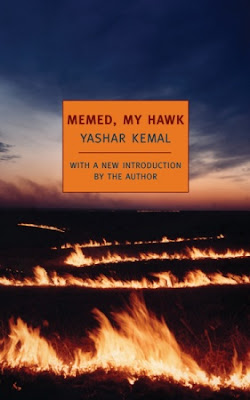
    Behold an excerpt from Memed, My Hawk by Yaşar Kemal.

    ______________________________________________________
    Houses, trees, rocks, stars, moon, and earth, whatever there was in the world, all was lost, melted in the darkness. It was raining and a light wind was blowing, a cold wind. Every now and then the dogs howled in the darkness. Then a lone cock crowed lustily. Surely that cock, crowing at such an hour, would be killed in the early morning by its owner.

    Far away, from the road on the other side of the mountain, a bell tinkled. The tinkling would stop, then begin again, sometimes at long intervals, a sure sign that the approaching travellers were tired.


    For a long while Memed had been waiting, hidden under the fence by the great mulberry tree, with its branches spreading like an umbrella. He was thinking, though in his present mood he could scarcely be said to think. He was cold, aware of many things without actually thinking. It was drizzling. Ever since night had fallen Memed had been soaking up the rain, letting it penetrate him. At times he shivered, then no longer felt the cold. Beyond the fence he heard a sound and listened. It seemed to be a cat jumping over the fence. He then thought of his mother. His body ached in places as though the flesh had been wounded. He felt the bitterness of poison in his heart. They would make his mother suffer for his own actions. A long way off the lightning flashed, lighting up the branches and trunk of the mulberry, which was otherwise lost in the darkness. It seemed to light up the darkness in Memed’s heart too.

    At this hour the whole village, with its horses, donkeys, cows, goats, sheep, insects, loves and fears, cares and courage, all were smothered in a deep sleep. Only its dreams were stirring with life at this hour.


    No matter how limited a man’s field of vision, his imagination knows no bounds. A man who has never been outside his village of Deyirmenoluk can still create a whole imaginary world that may reach as far as the stars. Without traveling, a man can penetrate to the other end of the world. Even without much imagination the place where he dwells can become different in his dreams, a true paradise. Now, at this moment, in their sleep, dreams made everything appear wonderful to these poor distressed people of Deyirmenoluk.

    Memed was also dreaming, in spite of his fears. Suddenly a light flashed through his mind. The rich sunlight of the Chukurova flooded it, spreading and growing more intense. Then this light disappeared and Memed began to worry. “If she doesn’t come,” he thought, “what shall I do?” Various plans of action offered themselves to his mind. “If she doesn’t come, I know what I’ll do,” he said. His hand slipped down to the holster of his revolver, and all his cares vanished, all his fears were forgotten.
    ***

    ________________________________________________________

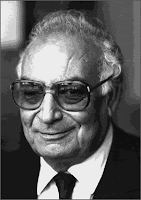
    Yashar Kemal (b. 1922) was born into a Kurdish family in a village in southern Anatolia and saw his father brutally murdered at the age of five, which left him with a severe stutter for years to come. He received his basic education in village schools before working as a farmer, factory worker, public letter-writer, and journalist. Memed, My Hawk, his first novel, was published in 1955 and won the Varlik Prize for best novel of the year. Kemal’s numerous other books include The Wind from the Plain trilogy, Salman the Solitary, Seagull, and four books recounting the exploits of Memed, including, Memed, My Hawk and They Burn the Thistles. Yashar Kemal lives in Istanbul.

    Posted by Cem Ryan, Ph.D. Istanbul, Turkey————————————————– [email protected] at 1:55 PM

  • Azerbaijan sends note to Turkey

    Azerbaijan sends note to Turkey

    25 September 2009 [17:09]

    The Azerbaijani Foreign Ministry has presented a note to the Turkish Embassy in Azerbaijan.

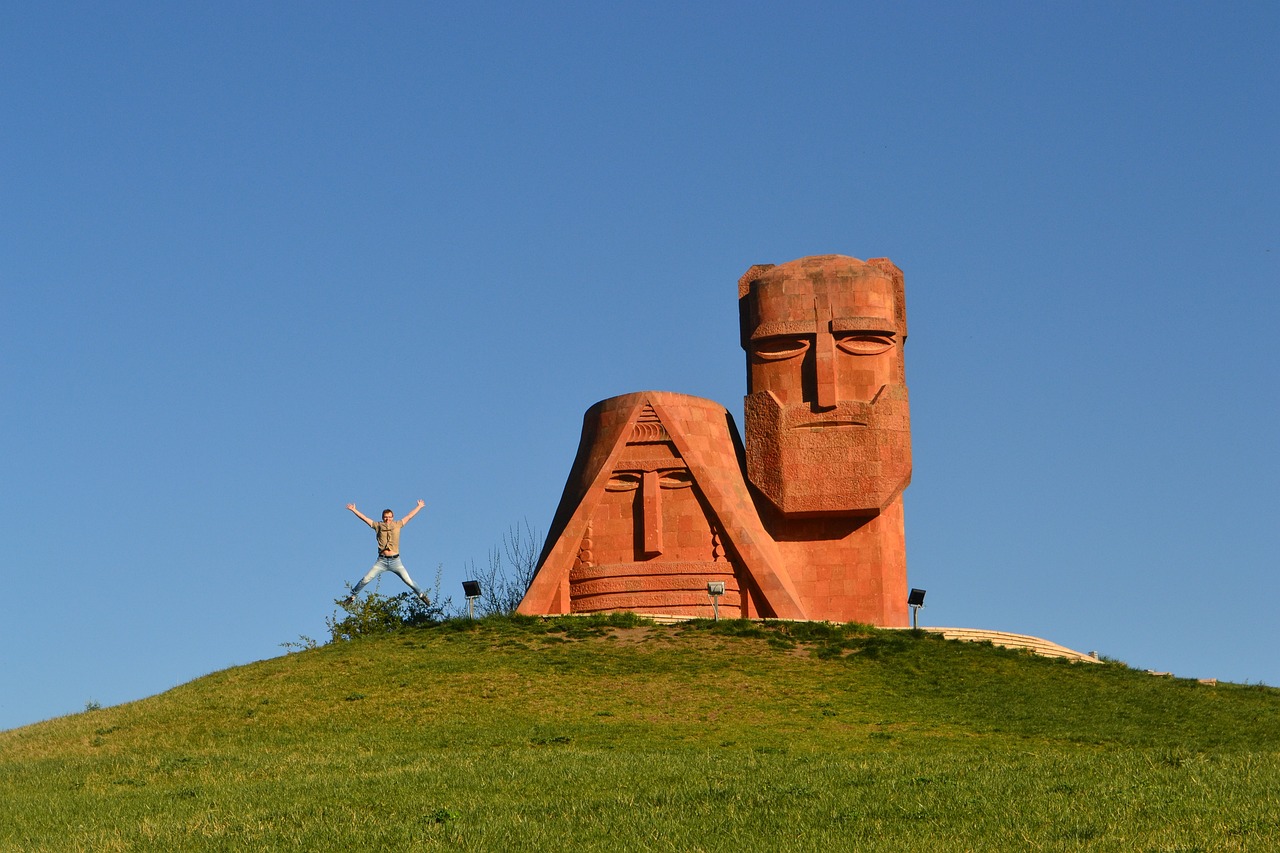
    “The note stated that a while ago journalists of the Turkish NTV TV channel, who were issued accreditation in the so-called “Foreign Ministry of the Nagorno-Karabakh”, visited the occupied Nagorno-Karabakh region of Azerbaijan. The fact disappointed Azerbaijan. The Azerbaijani Foreign Ministry strongly opposes such visits to country’s occupied territory and requests the Turkish Foreign Ministry to investigate this fact and take measures,” Foreign Ministry’s Spokesperson Elkhan Polukhov said.

    http://www.today.az/news/politics/55915.html