Month: September 2009

  • Georgia challenges Russia to detain its ships in Abkhaz waters

    Georgia challenges Russia to detain its ships in Abkhaz waters

    TBILISI, September 15 (RIA Novosti) – Georgia said on Tuesday it would resist any attempts by Russia to detain its ships in the waters of its former province of Abkhazia.

    A Russian border protection service official said earlier in the day that Russian border guards would detain all vessels that violate Abkhazia’s maritime border. Tbilisi considers Abkhazia and its waters part of Georgian territory, and has declared any unauthorized maritime shipments of goods illegal.

    The Georgian Foreign Ministry condemned the Russian statement and said it would not tolerate any attempts to detain its ships.

    In a statement Georgia said, it “is determined to block any pirate-like actions on the Russian side by all legal, diplomatic and political methods available.”

    It stressed that in accordance with the UN Convention on the Law of the Sea, Abkhazia’s 12-mile maritime zone, as well as the special zone and continental shelf, is part of Georgia.

    Georgia seized the Panama-flagged Buket tanker and its cargo of gasoline and diesel fuel off Abkhazia last month as it sailed from Turkey to the tiny republic on the Black Sea.

    Abkhaz Foreign Minister Sergei Shamba said in early September that Abkhazia was ready to resort to force as President Sergei Bagapsh had given the order “to open fire on Georgian ships if they continue their acts of piracy.”

    Russia recognized Abkhazia and another former Georgian republic of South Ossetia last August after a five-day war with Georgia over the latter, which was attacked by Tbilisi in an attempt to bring it back under central control. Most residents of both Abkhazia and South Ossetia have held Russian citizenship for several years.

    Under mutual assistance treaties signed last November, Russia pledged to help Abkhazia and South Ossetia protect their borders, and the signatories granted each other the right to set up military bases in their respective territories.

    Russia’s Defense Ministry has said it plans to open a base in Gudauta, in the west of Abkhazia, and staff it with at least 1,500 personnel by the end of this year.

  • Russia: Asserting Influence in the Black Sea

    Russia: Asserting Influence in the Black Sea

    Stratfor.com
    September 15, 2009

    Summary

    The Russian maritime border patrol chief said Sept. 15 that Russia will detain any ships illegally entering the waters of Georgia’s breakaway republic of Abkhazia. Moscow’s warning is aimed at Georgia, which has used its navy to detain several vessels heading for Abkhazia. Now that Russia has officially threatened to capture ships, Georgia has lost another way to contain Abkhazia and will likely think twice before it detains a ship sailing to Abkhazia, as the Georgians are well aware that their navy is no match for the Russian navy.

    Analysis

    The head of Russia’s coastal division of the border guards service, otherwise known as the FSB coast guard, issued a warning Sept. 15 that it will detain any ships entering the maritime territory of the Georgian breakaway region of Abkhazia without permission. The statement was directed specifically at Georgia, whose navy and coast guard have carried out numerous detainments of cargo ships traveling to Abkhazia via the Black Sea. The latest such interception occurred Aug. 15, when the Georgian coast guard detained a ship, with a Turkish captain and a crew of Azerbaijanis and Turks, carrying $2.4 million worth of fuel heading toward the Abkhazian port of Sukhumi. The crew was released on bail, but the Turkish captain was not released until Turkey’s foreign minister traveled to Georgia to appeal the decision personally. The governments of Turkey and Azerbaijan clearly were not happy about the detainment.

    In addition to irking the ship’s crew and their respective governments, the uptick in such naval detainments off the coast of the Black Sea has particularly angered Abkhazia ­ and by extension its security guarantor in Moscow. Such hostilities have been common ever since the Russo-Georgia war broke out in August 2008, when Moscow wrestled control over the regions of Abkhazia and South Ossetia from Georgia. Russia has since established a significant military presence in these regions, and tensions have been high ­ both on land and sea ­ between Tbilisi and its breakaway republics. Following the incident on Aug. 15, Abkhazian President Sergei Bagapsh threatened to open fire on Georgian ships if Georgia continued such detainments. Georgia’s leadership dismissed these claims, saying that Abkhazia lacked the military capability to carry out such attacks, referring to the Abkhazian leader’s threats as a “bluff”.

    Georgia did acknowledge, however, that if someone did have the means to respond aggressively to such detainments, it would be Russia. Until this point, Moscow had been relatively quiet about the detainments, simply issuing statements for Georgia to stop intercepting ships. But this could have been Russia’s strategy of allowing the Georgians to dig themselves in a deeper hole before making a decisive threat. Now that Russia has officially threatened to seize ships, Georgia has lost another lever for containing the Abkhazians, as the Georgians are well aware that their navy is no match for the Russian navy.

    Most of the larger warships in Georgia’s small navy were lost during the war with Russia. What remains of an already hollow naval force are mostly gunboats, including some five patrol boats fitted with old Soviet 23mm anti-aircraft artillery pieces (possibly for use as naval guns). It is these gunboats and patrol vessels that likely would be involved in any security or interdiction effort off the coast.

    Just north of Abkhazia, the Russian FSB has provided coastal security forces of its own to the breakaway republic now recognized by two countries in addition to Russia. The size and disposition of these forces are unknown; Russia has simply stated that its forces patrolling the area will seize ships and “do everything to ensure the security of the Russian state, the Abkhaz state.” While it is possible that the FSB contingent is somewhat smaller than the remaining Georgian navy, it may have the overall capacity to be more active; especially considering that Russia has significant ports in the Black Sea in Novorossiysk and Sochi, it likely has better overall access to spare parts and support from Moscow.

    The bottom line is that the difference between the two forces is not so great that the finer points of a hypothetical tactical engagement could not push the outcome in either direction. But unlike Georgia, the FSB contingent has access to reinforcements in its much larger and more powerful Black Sea Fleet that could be quickly deployed to the waters off Abkhazia (the very ones used in the August 2008 war). The issue, however, is speed. Deploying a warship to sea unexpectedly can take as much as a day on the optimistic end of the spectrum, and transit to the Georgian coast would be the better part of another day. The amount of trouble Georgia could get itself into in the intervening time also merits consideration. Ultimately, Russia has a keen interest in keeping decisive military control over the situation. And in the end, without assistance from NATO ­ assistance clearly not coming ­ the Russian Black Sea Fleet, for all its challenges from maintenance to morale, is the dominant naval reality for Tbilisi.

    As such, these new developments may suggest that Georgia will now think twice before it detains a ship heading to Abkhazia. If it does not, there very well may be a much higher price to pay the next time.

  • Bosnian Muslims Protest Against UN Tribunal Ruling

    Bosnian Muslims Protest Against UN Tribunal Ruling

    Former Bosnian Serb President Biljana Plavsic in 2003

    September 16, 2009

    SARAJEVO (Reuters) — About 200 Bosnian Muslim relatives of victims of the 1992-95 war protested have against the UN war crimes tribunal’s decision to grant early release to former President Biljana Plavsic.

    The International Criminal Tribunal for the Former Yugoslavia (ICTY) decided to release Plavsic, a former Bosnian Serb President, after she served two-thirds of an 11-year sentence for persecuting Muslims during the war.

    “They don’t think about the blood of so many of our children, whom we are still digging out of mass graves,” said Kada Hotic, a mother still searching for a son who went missing in the 1995 Srebrenica massacre of 8,000 Muslims.

    “Nobody feels sorry for them, but they feel sorry for Plavsic, who spent her prison days very comfortably, writing books, and memoirs,” Hotic said.

    Plavsic, a close associate of former Bosnian Serb leader Radovan Karadzic, pleaded guilty at her trial to persecutions on political, racial, and religious grounds.

    The relatives and wartime detainees who came from across Bosnia also protested before the UN office in Sarajevo against the court’s decision to trim the scope of the case against Karadzic, indicted for genocide in the Bosnian war.

    Protesters carried banners and burned pictures of Karadzic and tribunal judges. They called for the resignation of tribunal judge O-Gon Kwon, who last week asked prosecutors to cut Karadzic’s indictment to avoid an over-lengthy trial.

    Zumreta Sehomerovic of an association of Srebrenica mothers said: “The Hague tribunal is politically corrupted, punishing the victims and awarding the criminals.”

    But while Bosnian Muslims, the biggest victims of the Bosnian war in which more than 100,000 people were killed, were outraged at Plavsic’s release, Bosnian Serbs celebrated.

    Bosnian Serb Prime Minister Milorad Dodik traveled to Sweden, where Plavsic is being detained, to visit the woman who installed him as a prime minister after Karadzic left politics in the late 1990s.

    Dodik caused public outcry last weekend when he denied hundreds of civilians were killed and wounded in the Bosnian Serb wartime shelling of the northern town of Tuzla and the Bosnian capital of Sarajevo in 1995.

  • NORMALIZING TUKISH-ARMENIAN TIES: WILL DAVUTOGLU’S GAMBLE PAY OFF?

    NORMALIZING TUKISH-ARMENIAN TIES: WILL DAVUTOGLU’S GAMBLE PAY OFF?

    Svante E. Cornell and M. K. Kaya

    14 September 2009 issue of the Turkey Analyst at http://www.turkeyanalyst.org

    In its laudable attempts to reduce tensions with its neighbors and to gain a greater influence in the South Caucasus, the AKP government has made itself dependent on forces that it cannot control. Unless Armenia and Azerbaijan strike a deal rapidly, Turkey will inevitably be forced to choose between reneging on its commitment to normalize relations with Armenia or risk a breakdown in its relations with Azerbaijan. In either situation, Moscow will be the geopolitical winner. Western, in particular American, activity to support an agreement on principle between Armenia and Azerbaijan is urgently called for.

    BACKGROUND: On August 31, the Turkish and Armenian foreign ministers announced they had agreed to sign two protocols on establishing diplomatic relations and on broader bilateral ties. This breathed new life into the Turkish-Armenian reconciliation process, which had been ongoing for months, mediated by the Swiss Foreign Ministry. But it also opened wounds from last spring, when hard opposition both from Turkish public opinion and the Azerbaijani government and public forced the AKP government to halt the rapprochement. As was the case then, the main issue that Turkish opposition political parties and the Azerbaijani government oppose is the planned opening of the Turkish-Armenian border. Last spring, the timing of the first protocol for April 2009 was planned to fall before April 24, Armenian Remembrance Day in the United States, but after the Turkish local elections of March 29. But as it happened, the electoral setback the AKP suffered in those elections made it more, not less vulnerable to tough opposition coming from the Nationalist Action Party (MHP) and Republican People’s Party (CHP), and in fact contributed to the postponement of the announcement of the concrete protocols. The campaign initiated in Turkey by the Azerbaijani government was the other reason that forced the AKP to step back. Indeed, Azerbaijani parliamentarians visited Turkey to argue their case, appealing to Turkey not to open the border as long as Armenia’s occupation of Azerbaijani territories continued. In a spectacular move, Azerbaijani President Ilham Aliyev canceled a planned trip to Istanbul during the summit of the Alliance for Civilizations, in spite of repeated pleas for his attendance by U.S. officials, including Secretary of State Hillary Clinton. In an act of damage control, Prime Minister Recep Tayyip Erdoğan then visited Baku and made clear in his address to the Azerbaijani Parliament that the Turkish-Armenian border will remain closed until a mutually acceptable solution to the Nagorno-Karabakh conflict is found. In effect, Turkey had reverted to its long-standing policy of linking its relationship to Armenia with the Armenian-Azerbaijani conflict. During the summer of 2009, three important developments contributed to changing the regional atmosphere. Following the electoral setback, the AKP in May announced a broad cabinet shakeup. (See May 8 issue of the Turkey Analyst) The long-time architect of the AKP’s foreign policy, Ahmet Davutoğlu, was appointed Foreign Minister. His elevation from being Erdoğan’s chief foreign policy advisor cemented his influence over Turkish foreign policy. (See June 5 issue of the Turkey Analyst) Second, partly as a result of the same cabinet shakeup that included the appointment of a new Minister of Energy, Ankara became much more constructive on the Nabucco pipeline negotiations. (See May 22 issue of the Turkey Analyst). This contributed to the signing on July 13 of an Inter-Governmental Agreement on the Nabucco pipeline, in which Azerbaijani President Aliyev, significantly, did not participate, sending instead his energy minister. Almost immediately, Moscow went on a counter-offensive to this move, with Prime Minister Vladimir Putin visiting Ankara on August 6, where he managed to get a Turkish signature to a Protocol on the rival South Stream pipeline. (See August 17 issue of the Turkey Analyst) It is in this complex and rapidly shifting geopolitical environment that the Protocols were announced on August 31, and introduced to the respective publics of the region. The plan appeared to be to allow for public debate of the Protocols, and to present them for ratification by parliament at the end of September. This again raised the political temperature, with acrimony concerning not so much the prospect of establishing diplomatic relations, but of opening the Turkish-Armenian border without progress on the Karabakh conflict.

    IMPLICATIONS: The rationale for the rapprochement with Armenia is as clear today as it was in April. From Armenia’s perspective, the normalization of relations with Turkey will result in the revival of the Armenian economy which has been under a heavy burden, and the reduction of the gravest perceived threat to Armenia’s security. Although the border is closed, approximately 70,000 Armenians work in Turkey. Clearly, that number would grow if relations were normalized. More importantly, Armenia would be relieved of its regional isolation. The opening with Turkey would do a lot to counter the last decade’s tendency of depopulation and isolation of Armenia. Armenian nationalist and Diaspora organizations are nevertheless hostile to the rapprochement, since it includes the recognition by Armenia of Turkey’s territorial integrity and the current Armenian-Turkish border. The Armenian Revolutionary Federation last spring left the governing coalition precisely over this issue. As for Turkey, such a rapprochement conforms with Davutoğlu’s “zero problem” approach to relations with Turkey’s neighbors. In fact, after successive rapprochements with formerly antagonistic neighbors including Greece and Syria, Turkey’s relationship with Armenia stand out as the one in need of attention. Secondly, the rapprochement with Armenia fits directly into Ankara’s relations with both the United States and the European Union, both of whom are putting pressure on the AKP government on the issue. American pressure in particular affects the AKP, since the Turkish-Armenian opening was President Barack Obama’s main justification for reneging on electoral promises to acknowledge the Ottoman-era massacres of Armenians as genocide. Finally, the AKP sees the opening to Armenia as a way to reinvigorate its presence in the South Caucasus following the Russian invasion of Georgia last year. The problem from Ankara’s vantage point, of course, is that the closure of the Turkish-Armenian border was the main concrete way in which Turkey supported Azerbaijan following the 1992-93 Armenian occupation of close to a fifth of Azerbaijan’s territory and the ensuing ethnic cleansing of hundreds of thousands of Azerbaijanis from their homes. As such, as long as the Armenian-Azerbaijani conflict is unresolved and Azerbaijani internally displaced persons are unable to return to their homes, Turkish policy towards Armenia cannot be dissociated from its relations with Azerbaijan. Whether one likes it or not, this implies that Turkish moves toward Armenia cannot avoid affecting its relations with the several times larger, richer, energy-endowed, and more strategically located Azerbaijan, which on top of everything is a brotherly Turkic country. Indeed, Azerbaijani as well as Turkish leaders have adopted the phrase “one nation, two states” to indicate their closeness. In that context, an opening to Armenia that is generally perceived as detrimental to Azerbaijan is explosive stuff in Turkish domestic politics, let alone in Ankara’s relationship with Baku. This conundrum is replicated in the AKP government’s recent statements, which are contradictory. On the one hand, at least judging by the available draft text, the government in signing the protocol effectively commits to opening the Turkish-Armenian border within two months of ratification. Indeed, Davutoğlu himself publicly suggested the border could open by the end of the year. Meanwhile, Davutoğlu and other officials have stated that no move hurting the interests of Azerbaijan will be taken, including explicit references to the border opening. The only way these conflicting statements can be reconciled is if the parallel process of conflict resolution between Armenia and Azerbaijan reaches concrete goals. Indeed, the AKP’s only hope to calm both its domestic opposition and Azerbaijan lies in the anticipated conclusion of a preliminary deal between Baku and Yerevan envisaging the withdrawal of Armenian forces from the five occupied provinces of Azerbaijan outside Nagorno Karabakh itself. If that were to happen, the AKP would come off as a winner, and could take credit for contributing to this important process.

    CONCLUSIONS: In its laudable attempts to reduce tensions with its neighbors and to gain a greater influence in the South Caucasus, the AKP government appears to have made itself dependent on forces that it cannot control. Indeed, negotiations between Armenia and Azerbaijan have gone on for a decade and a half without reaching concrete results. Even if recent months appear to have seen greater progress toward an agreement in principle on a process of resolution to the conflict, it is far too early to assume that such an agreement on principle is about to be signed. As earlier attempts have shown, there is much that could derail the process at the last minute. By apparently indexing its hopes on that prospect, Ankara is taking a significant risk. Should presidents Sarkisian and Aliyev fail to reach an agreement on principle in coming weeks, the AKP will be forced either to renege on its commitment to normalize ties with Armenia, or to fulfill them but causing a breakdown in its relations with Azerbaijan – itself hardly consistent with a zero-problem policy with its neighbors. In either situation, Ankara loses – and the sole winner in geopolitical terms would be Moscow, which has long courted Azerbaijan and seems to feel that it is on the verge of ‘capturing’ Baku from the West, just as it ‘captured’ Uzbekistan in 2005. Azerbaijan’s foreign policy is considerably more stable, but may be reaching the limits of its balancing capacity. Two conclusions can be drawn from Ankara’s delicate balancing. The first is the urgency for Western, in particular American, activity to support a possible agreement on principle between Armenia and Azerbaijan. In spite of much disillusionment in earlier negotiations, the alignment of stars appears of a different order now, more conducive to progress. And in that sense, Turkish activism could be the key ingredient to achieving success on both fronts. A second and unrelated conclusion is that the Turkish parliament’s role in this process should not be underestimated. Indeed, it is very doubtful if the AKP, despite its large majority in parliament, could get the votes for an opening of the Armenian border without progress on Nagorno Karabakh. Indeed, strong voiced within the party are in strong disagreement with the leadership. In this sense, the situation is reminiscent of the 2003 vote on the Iraq war. Back then, the party leadership allowed members to vote freely according to their conscience, thereby avoiding having to enforce party discipline on an unwilling parliamentary group – and giving itself an exit strategy. Once again, the Turkish parliament could fulfill much the same function should Davutoğlu’s gamble not pay off.

    Svante E. Cornell is Research Director of the CACI & SRSP Joint Center and Editor-in-Chief of the Turkey Analyst. M.K. Kaya is a contributing editor.
  • Didier Billion: “ARMENIAN DIASPORA SHOULD LEAVE LIVING IN THE PAST”

    Didier Billion: “ARMENIAN DIASPORA SHOULD LEAVE LIVING IN THE PAST”

    BILLION: ARMENIAN DIASPORA SHOULD LEAVE LIVING IN THE PAST
    HISTORY OF TRUTH
    Tuesday, 15 September 2009
    Deputy chairman of the Paris based International and Strategical Relations Institute (Institut de Relations Internationales et Stratégiques -IRIS) Didier Billion said, “I hope Armenian diaspora does not prevent realization of protocols.”
    Deputy chairman of the Paris based Institut de Relations Internationales et Stratégiques, Didier Billion evaluated the process of normalization between Turkey and Armenia. Billion observes Turkey and Turkish world closely and has two books and several articles about Turkey.
    Turkey specialist Didier Billion stated that the protocols that are initialized with Armenia is a great opportunity. Billion stressed that Nagorno-Karabakh problem should not be forgetten and that it should be resolved meantime. Billion stated that Armenian diaspora should stop growing hatred with using the pain in the past and intead of trying to prevent the solution, it should focus on the future.
    French expert stated that most of diaspora Armenians are traditionally against rapprochement between Turkey and Armenia. He said that diaspora Armenians demand recognition of so called Armenian genocide as a precondition for establishment of good relations between two countries. Billion said, “In my opinion, that is a great mistake. Turkish and Armenian administrations were so clever to not to propose any preconditions. They do not hide anything. As we see in the protocols, a  sub-committee will be established that include historians from Turkey, Armenia and third countries to make researches on 1915 events. That is a perfect method. I hope Armenian diaspora does not prevent realization of this protocols.”
    Billion said, “Even we do not agree on the term of ’genocide’, massacres and terrible events had happened. But i believe that we cannot live in the past. We should look to future.”
    Stating that there are politic circles in Armenian diaspora who are interested to use the pain in the past, Billion said, “They do all they can to prevent Armenians to learn about Turks.”
    NAGORNO-KARABAKH SHOULD BE INCLUDED IN THE PROCESS
    Stating that the process of normalization of relations between Turkey and Armenia should not be independent of Azerbaijan, Billion said, “Prime Minister Erdogan had stated that they will not open borders unless Nagorno-Karabakh problem is resolved. But we see that there is no such thing in protocols. There we witness a political struggle there. I believe in the dynamism of Turkish diplomacy. With usage of the dynamism that emerges with the efforts of OSCE Minsk Group, Nagorno-Karabakh problem will be brought to the center of discussions.”
    Billion stated that Turkey should be one of the co-chairs in the OSCE Minsk Group with Russia, United States and France. “Nagorno-Karabakh conflict should not be ignored because if that problem remains nothing else could be solved. Normalization of relations, opening of borders, unzipping Armenian diaspora and responding to the demands of Azerbaijan; those should be solved all together.”

    GÜNLÜK BÜLTEN – DAILY BULLETIN
    TARİH / DATE : 15.09.2009 – SAYI / ISSUE : 1

    DİASPORA GEÇMİŞTEN KURTULMALI
    Zaman

    15 Eylül 2009

    Türkiye uzmanı Fransız siyaset bilimci Didier Billion, Türkiye ile Ermenistan arasında diplomatik ilişkileri tesis edecek protokollere sert tepki gösteren diasporanın tutumunu eleştirdi. Billion, Türkiye-Ermenistan yakınlaşmasına başından beri itirazda bulunan Ermeni diasporasını, çözümü engellemeye çalışmak yerine geleceğe bakmaya çağırdı.

    Paris merkezli Uluslararası ve Stratejik İlişkiler Enstitüsü’nün (IRIS) Yardımcı Direktörü Didier Billion, Ermeni diasporasının geçmişin acılarını kullanarak nefret yetiştirmeye son vermesi gerektiğini söyledi. Geleneksel olarak diasporanın Türkiye ile yakınlaşma perspektifine karşı olduğunu ve Ermeni soykırımı iddialarının tanınmasını ön koşul olarak istediklerini dile getiren Fransız uzman, bu yaklaşımı “çok büyük bir hata” olarak nitelendirdi. Türkiye-Ermenistan ilişkilerindeki normalleşme sürecini Cihan’a değerlendiren Billion, “Türk ve Ermeni yönetimleri hiçbir ön koşul öne sürmeyerek çok akıllıca hareket etti. Hiçbir şey saklamış değiller. Protokollerde görüyoruz ki tarihî incelemelerde bulunmak üzere Türk, Ermeni, İsviçreli ve diğer milletlerden uzmanlardan oluşan bir alt komisyon kurulacak.” diye konuştu.

    Türkiye üzerine iki kitabı ve çok sayıda makalesi bulunan Billion, diaspora Ermenilerinin çocukluklarından bu yana Türk nefreti ile yetiştiğinin altını çizerken, “Yalnızca geçmişte yaşanamayacağına da inanıyorum. Geleceğe bakmak gerek.” dedi. Billion, Ermeni diasporası içerisinde acı geçmişi kullanmaktan çıkarları olan siyasî gruplar olduğunu belirterek, “Ermenilerin bugün Türkleri daha yakından tanımamaları için ellerinden geleni yapıyorlar.” ifadelerini kullandı. Türkiye ve Ermenistan’daki bazı kesimlerin müzakerelerin sürmemesi için çalışacağı uyarısında bulunurken sürecin akıbeti konusunda umutlu konuştu: “Bana göre siyasî inisiyatif bağnaz milliyetçiliğin aşılmasını sağlayabilir. ” şeklinde konuştu.

    Fransız siyaset bilimci, Kafkaslar’da kalıcı barış için Azerbaycan-Ermenist an ihtilafının giderilmesi gerektiğinin de altını çizdi. Bu kapsamda, Türkiye’nin Minsk grubunun eşbaşkanlığını sürdüren Rusya, ABD ve Fransa ile birlikte Yukarı Karabağ sorununun çözüm sürecine dahil olması gerektiğini söyledi. Billion, “Yukarı Karabağ sorunu unutulmamalı çünkü o mesele halledilmezse hiçbir şey çözülmez. İlişkilerin normalleşmesi, sınırların açılması, diasporanın direncinin kırılması ve Azerbaycan’ın taleplerinin karşılanması, hepsi bir arada çözülmeli.” ifadelerini kullandı. ZAMAN

    HAKKI ÜNAL STRASBOURG, CİHAN

  • Responce to Declaration on Armenia-Turkey Protocols

    Responce to Declaration on Armenia-Turkey Protocols

    ARF Eastern Region USA

    From: Ergun KIRLIKOVALI
    To: ARF Eastern Region USA Central Committee
    Sent: Wednesday, September 16, 2009 7:02 AM
    Subject: Turkish response to ARF Declaration on Armenia-Turkey Protocols

    Turkey Does Not Need Armenia To Prosper; But Armenia Desperately Needs Turkey To Survive

    © This content Mirrored From  http://armenians-1915.blogspot.com

    One Turkish-American Response
    By Ergün KIRLIKOVALI,
    ATAA, President-Elect, Los Angeles, CA, USA

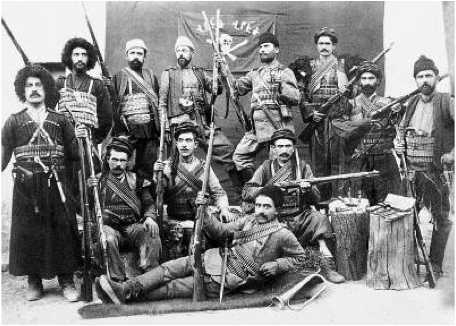
    ARF Eastern Region USA Central Committee response is typical Armenian (Dashnak) propaganda and rhetoric: cold, calculating, selective, deceptive, incorrect, and insincere.   Armenian history is full of distortions like this.

    The irrefutable facts of the matter as I see it are quite different, plain and simple:

    1) Turkey does not need Armenia to prosper; but Armenia desperately needs Turkey to survive.

    2) Armenia was going bankrupt when Turkey gave it a “kiss of life” with the protocols. .

    3) Azerbaijan will be insulted with this rapprochement when Armenia still militarily occupies Karabakh and seven regions surrounding it, all Azeri soil.

    4) This move rewards Armenia for aggression, terrorism, and massacres.

    5) There are still about a million Azeri refugees exiled from their home at gunpoint by Armenian thugs whom this move does not address.

    6) Armenia refuse to recognize its neighbors’ sovereignty, in itself a cause for war according to international law. Armenia covets Javakheti region from Georgia, eastern Anatolia from Turkey, and Karabakh with surroundings from Azerbaijan. Compare that with the fact that America started a transatlantic war for much less than that in 1991 when Saddam’s Iraq invaded Kuwait, neither countries being neighbors of America or having anything in common. Compare also that America bombed Yugoslavia back to the stone age in 1998 when the Serbs had resorted to brutal aggression, senseless mayhem, and hateful ethnic cleansing in Bosnia and Kosovo. Armenia committed all of those heinous crimes and more in Azerbaijan in 1992-1994 and got American…uh…. aid! If this is not double standards, hypocrisy, bias, bigotry, and racial and/or religious discrimination, in full view, I don’t know what is.

    7) Armenia still promotes a bogus claim of genocide, ignoring the complicity of the Armenian revolutionaries in propaganda, agitation, terror, raids, revolts, treason, territorial demands, civil war, Turkish dead and suffering at the hands of Armenians, and more, in that order, from 1877 Turkish-Russian war to 1920 Alexandretta (Gumru) agreement. Keeping archives sealed will not save Armenians from facing their past hate crimes before, during, and after the alleged genocide.


    Sent: Wednesday, September 16, 2009 4:11 AM
    Subject: Declaration on Armenia-Turkey Protocols


    Declaration on Armenia-Turkey Protocols

    The Central Committee of the Armenian Revolutionary Federation Eastern United States denounces the protocols agreed to for the normalization of diplomatic relations between Turkey and Armenia.

    It has been almost six months since the “road map” was announced and all efforts aimed at placing the process on the correct path have failed. The announced protocols codify the mistakes in Armenia’s foreign policy.
    It is time for the entire Armenian nation to be heard. The issues being addressed are Pan-Armenian and our principles can not be compromised.
    Turkey must acknowledge the Genocide and atone for the crime. The self-determination of Artsakh must be ensured. Armenian cultural sites must be protected. Turkey and Azerbaijan must stop their anti-Armenian agenda.
    Turkey and Armenia, geographic neighbors, must naturally have diplomatic relations. But it must not be done at the expense of the basic ideals which guarantee an equal partnership. The protocols instead solidify the subjugation of Armenia and the Armenian people. As such, the protocols can not serve as the foundation for respectful and friendly relations between Turkey and Armenia.
    Armenian Revolutionary Federation
    Central Committee
    Eastern United States